A Russian general was killed in Moscow on Monday when an explosive device detonated underneath his car. Authorities say they are investigating whether Ukrainian special services were involved.
Abubakar Shekau, a founding leader of the Boko Haram terror group, killed himself with a suicide vest four years ago at his base in Sambisa, during an attack by ISWAP, an offshoot of his group. Through archived materials and interviews with over ten individuals, including former associates, friends, bodyguards, and captives of Shekau, HumAngle’s Editor-in-Chief, Ahmad Salkida, penned what is arguably the most in-depth exposé into the life of the terror leader.
Following its publication in November, our website suffered a cyber attack that took us offline for a while, but it didn’t hinder a widespread reception of the story, which sparked a national discourse on the history of the insurgency that has gripped Nigeria for over a decade, and how the terror that Shekau ignited has outlived him.
2. Maitatsine: The Preacher of Fire (1927 – 1980)
Maitatsine is a Cameroonian and Kano-based Islamic preacher whose teachings and activities turned violent, birthing several cult-like movements in Nigeria’s North that radicalised and also influenced young people. In December 1980, his ideology culminated in one of the deadliest urban uprisings in Nigerian history. This ideology, the rejection of modernity, would later influence terror leaders like Muhammad Yusuf and Abubakar Shekau.
The exposé carefully examined the unhealed wound that Maitatsine created. It is yet another archival documentation that seeks to contribute to the understanding of Nigeria’s contemporary security challenges and how they emerged from unassuming places.
3. The Boys Lured into Boko Haram’s Enclave with Food Rations
When terror groups are referred to in the media, the description is often ‘armed men’, but that’s not always the case, as we’ve reported on women terrorists and this time, young boys. For this investigation, we spent time with Hassan Audu, a 16-year-old who, alongside his brother, was captured by Boko Haram terrorists, who in turn used food to keep him within their ranks.
The story offers insight into the terror group’s recruitment strategy for child soldiers and what the governance structure is like in their enclaves in North Central Nigeria, including in the group’s logistics department, where Audu worked.
4. A Robbery Incident Killed His Wife and Unravelled His Whole Life
We spent eight months tracking the effects of one tragedy on the life of one man and then represented the story in an interactive story that blends photos, videos, illustrations, and animations. Modu Bakura, a 30-year-old resident of Bama, northeastern Nigeria, was robbed three years ago. He lost his wife in the attack and also suffered several injuries that took months to recover from.
We penned a tender narrative of this incident, and the years that have followed, and how he continues to survive amidst debt and emotional hurt.
5. What Life Could Have Been for Leah Sharibu at 22
In May, Leah Sharibu turned 22. It was also her seventh year in captivity after Islamic State West Africa Province (ISWAP) abducted her alongside 104 other schoolgirls from their dormitory in Dapchi, northeastern Nigeria. She’s the only one among the girls who remains in captivity, and has since become a global face of schoolchildren abducted in Nigeria during the reign of the insurgency in the country.
To commemorate her birthday, we sat with her only sibling to understand who she was before captivity and what she imagined her life would be like in seven years. That conversation gave birth to a speculative non-fiction narrative where we constructed what would have been, while also reflecting on her current reality, and how his family has continued to grieve her absence.
6. The Disappearing ₦aira
Two years ago, we interviewed everyday Nigerians to highlight the cost-of-living crisis that is faced in the country and how it has impacted their lives. This time around, we looked at the root of the crisis, not just the fruits. Through a data-driven interactive storytelling approach, we showed how the smaller denominations of the Nigerian Naira are disappearing
7. From Elephants to Warthogs: The Shadow Wildlife Trade Financing Boko Haram in Nigeria
Terrorism financing is one issue that comes up every time there’s a discussion about insurgency in Nigeria, and even across the world.
In this investigation, we uncovered how terror groups like Boko Haram are using wildlife to fund their activities in the country. Not only is this causing harm to communities, but animals like Elephants have also vanished in conflict-affected areas in the North East, prompting poachers and terrorists to turn to Warthogs, an overlooked species with tusks just as valuable.
8. Boko Haram is Tracking and Assassinating Defectors in Nigeria’s North East. Here’s How
Since the Nigerian government started the deradicalisation of terrorist deserters, we have extensively covered the struggle of reintegration that they face. But this report is different, it explores a challenge that is not often spoken about: the assassination of terrorists deserters by the groups they were once loyal to. Boko Haram, for instance, has created a spy network that tracks its defectors and assassinates them or forces them to return to their enclaves.
Through interviews with some deserters, we revealed how this approach has increased issues of recidivism and its impact on the Operation Safe Corridor programme.
9. The Intersection Between Healthcare and Loyalty to Terror Groups in Nigeria
In last year’s Atypical List, we featured the story of Mariam, who we used to represent women as willing participants in terror. We spoke to her again recently, and she is on the brink of recidivism. The recent USAID funding cut is making it difficult for her to access the anti-retroviral medications that were the very reason why she defected.
10. To Those We Miss
When we report on missing persons, we often tell you how they went missing and how their families are faring. So, we thought, how about we give the families of these missing persons the mic and allow them to bare their minds unfiltered? This gave birth to this heartwarming video, where families sent words to their loved ones who have gone missing, some for decades.
The provided articles delve into various socio-political issues afflicting Nigeria, highlighting key aspects of terrorism, personal tragedies, and socio-economic challenges. One article investigates Abubakar Shekau’s life and the terror he perpetuated through Boko Haram, which persisted even after his death during an ISWAP attack. Another piece explores Maitatsine, a preacher whose violent ideology influenced radical groups, affecting Nigeria’s socio-political landscape.
Further, the role of young boys being recruited into Boko Haram with promises of food, and the impact of terrorism on individuals such as Modu Bakura who lost his wife to robbery, are examined. Leah Sharibu’s continued captivity serves as a poignant reminder of unresolved insurgency impacts. Economic analysis discloses the disappearance of smaller Naira denominations amid a cost-of-living crisis. Additionally, investigations reveal Boko Haram’s reliance on illegal wildlife trade for funding and their spy networks targeting defectors. Healthcare access issues for former terrorists highlight the complex interplay between resources and loyalty. Lastly, a video gives a voice to families of long-missing persons, shedding light on their enduring hopes and struggles.
Thomas Skinner was said to be ‘suing’ the BBC over his early exit from Strictly and has claimed that the BBC ‘rigged’ the votes to orchestrate his elimination from the dance competition
09:51, 22 Dec 2025Updated 09:51, 22 Dec 2025
Tom Skinner hits out attention over BBC fight in Good Morning Britain statement(Image: PA)
Thomas Skinner has hit back at press attention of his rumoured feud with the BBC in furious statement made on Good Morning Britain. Ahead of the Strictly Come Dancing live final on 20 December, it was reported that Skinner was ‘suing’ the BBC as he believed they had ‘rigged’ the votes to ensure he would be eliminated first, which the BBC strongly denied. The broadcaster made clear that they had not received any legal paperwork and Skinner did not confirm that he was suing.
However, after refusing to appear in the live final, Skinner posted a statement to X where he said he “received an anonymous email claiming to be from a BBC exec with stats, saying I’d received far more votes than it appeared and it wasn’t right”. Following the statement, The Mirror exclusively revealed that Skinner’s voting figures may not be as high as he believes.
A source pointed to an independent exit poll of 125,000 viewers as “clear evidence of his unpopularity.” It showed how Skinner attracted just 1805 votes, which was the lowest of any contestant on the BBC programme. The source claimed: “The poll – which is larger than an exit poll for a general election – comprehensively shows that Skinner was the least popular contestant by a long way. There is no conspiracy. These are the cold, hard facts.”
Hitting back at the article in a statement shared on Good Morning Britain, Skinner said he was “struggling to understand” why his words on X were getting so much attention. He said: “I don’t hate the BBC – they gave me my big break on The Apprentice. I had discussions with my representatives on Wednesday evening which I believed to be private and confidential and I spoke openly with them in confidence.
“I was obviously gutted when I received the email on the evening I left the show, and at first I didn’t believe it was true. When I raised this in conversation, I was advised by the BBC to seek legal advice. I’ve had a difficult year with the press attention I didn’t seek, and I’m honestly struggling to understand why this continues to escalate. “
Similarly, when approached by The Mirror, Skinner said he did not believe the low voting figures were accurate but refused to reveal how he was able to verify the “anonymous email” his information came from.
He said: “Regarding the anonymous email and verification process, I don’t wish to comment further at this time or release anything publicly. As for the voting figures, I know for a fact that the information you have is not accurate. That said, it doesn’t materially matter to me now, and I’m not looking to contest this publicly.”
Despite “not looking to contest this publicly”, Skinner made a lengthy public statement on X where he insisted his elimination was “unfair” and that a BBC exec had told him that the broadcaster was angry over his friendship with JD Vance.
He wrote: “On the night I left the show, I received an anonymous email claiming to be from a BBC exec with stats, saying I’d received far more votes than it appeared and it wasn’t right. I’ve since had the email independently verified.”
“That same email mentioned the BBC was very angry an nervous simply because I had met JD Vance (USA VICE PRESIDENT). Let me be clear, I’m not a political bloke. Never have been. I just love my country and am patriotic. I’ve been made out by the press to be this political figure. If anyone was to get an opportunity like what I did, they would have taken it. I still think it is mad that a man like me who sells mattresses out of a van can call someone that senior in the world ’s politics a friend now.”
“I have asked to see the official voting figures to back up the ones I was sent in the email but was told they couldn’t be shown to me. And have never been shown in the history of the show. I have spoke about the email I had received to senior people and the BBC welfare team, who btw I genuinely respect. And they was the ones who advised me to get legal advice because of how unfair it all was. (This was not my idea).”
However, a BBC spokesperson said Skinner never shared the email he referenced. They told the Mirror: “”In response to Tom’s latest statement, the BBC said: “Strictly Come Dancing’s public vote is independently overseen and verified to ensure complete accuracy every week. Any claims to the contrary are entirely without foundation. Unfortunately, despite requests for it, Mr Skinner is yet to share the email he references with anyone from the BBC so we are unable to comment on it.”
Results of the Korea Federation of SMEs’ “2026 SME Export Outlook Survey.” Graphic by Asia Today and translated by UPI
Dec. 21 (Asia Today) — Nearly half of South Korea’s small and medium-sized exporters expect their overseas shipments to decline next year, with many citing intensifying low-price competition from China as their biggest challenge, a survey released Sunday found.
The Korea Federation of SMEs said its “2026 SME Export Outlook Survey” polled 1,300 exporting SMEs from Dec. 1-12.
In the survey, 68.6% of respondents said they expect exports to increase in 2026 compared with this year, while 31.4% forecast a decrease, the federation said.
Among firms expecting export growth, cosmetics exporters (86.4%) and medical and biotech exporters (86.1%) were the most optimistic, the federation said. The most common reason for expecting export growth, in multiple responses, was improved product competitiveness through new product launches and quality improvements (47.1%), followed by diversification of export markets (29.8%) and improved price competitiveness due to exchange rate appreciation (21.6%).
Among SMEs forecasting weaker exports, 49.3% cited intensifying low-price competition from China as their main export challenge, followed by greater exchange rate volatility (44.6%), sharp increases in raw material prices (37.0%) and uncertainty over U.S. and European Union tariff policies (35.0%), the federation said.
Planned responses to weaker export performance included diversifying export markets (28.2%), improving quality or launching new products (23.0%) and reducing production costs such as labor and raw materials (21.8%), according to the survey.
Despite tariff concerns, the United States ranked first among markets SMEs most want to enter or expand into, at 21.0% when combining first-, second- and third-priority choices, the federation said. Europe followed at 15.2%, with Japan and China tied at 10.6%.
For government priorities to strengthen export competitiveness, respondents most frequently called for expanding support for an export voucher program (53.5%), followed by building a system to counter China’s low-cost offensive (35.8%) and strengthening diplomacy to respond to U.S. and EU tariffs (35.1%), the federation said. Other priorities included expanding support for participation in overseas exhibitions, including in emerging markets (31.5%) and supporting overseas certification and regulatory compliance (27.2%).
Chu Moon-gap, head of the federation’s economic policy division, said it was significant that SMEs are projecting export growth by improving competitiveness despite external headwinds such as tighter export regulations by various countries. He added that companies’ ability to reduce total costs, including production and logistics costs, tariffs and lead times, will be key to export competitiveness and said the government should prepare cost-reduction support measures to help SMEs respond to China’s low-cost competition.
Honduras’ presidential election occurred on November 30, but nearly three weeks later, there is still no clear winner. The elections have faced issues with the vote counting process, allegations of fraud, and U. S. involvement. Conservative candidate Nasry Asfura of the National Party leads center-right candidate Salvador Nasralla of the Liberal Party by about 43,000 […]
HELEN Flanagan looked sensational as she stripped to Santa-themed lingerie for a sexy social media post.
The actress’ sizzling snaps, which saw her posing in a plunging lace bodysuit with white fur trim as well as a red camisole with matching thong, came as she teased “Meet the new Santa Clause”.
Sign up for the Showbiz newsletter
Thank you!
Helen Flanagan looked sensational as she posed in Christmas Ann Summers lingerieCredit: Instagram/hjgflanaganThe actress, 35, teasingly pulled at a red ribbon on her sparkly camisoleCredit: Instagram/hjgflanaganThe soap star made sure to pen her Christmas listCredit: Instagram/hjgflanaganShe flashed her black suspender stockings as she put a present under her treeCredit: Instagram/hjgflanagan
She then hopped over to wrap some presents under her tree in a fir-trim one piece.
The screen star, best-known for playing Corrie’s Rosie Webster, then held two jugs of milk while donning her Christmassy bodysuit before pouring one into a mug emblazoned with the words “Santa’s little helper”.
She finished off the clip by teasingly untying her one-piece and flashing a cheeky smile to the camera.
In her caption, Helen wrote: “Meet the new Santa Clause.”
A fan wrote: “You look stunning.”
Another put: “Well hello gorgeous.”
A third put: “Wow Helen your so beautiful merry Christmas.”
HUGE CLASH
Helen split from her ex-fiancé in 2022 after 13 years together and they share three children Matilda, 10, Delilah, seven, and Charlie, four.
Soap operas are staple viewing for many people, but even some of the most famous characters have been played by different actors. Here are some examples from over the years.
Tracy Barlow: Kate Ford took on the role of Corrie legend Tracy Barlow in 2002. Before Kate, three other actresses had played Tracy – most notably Dawn Acton from 1988 to 1999.
Nick Tilsley: Ben Price has been playing Gail’s oldest child in 2009, but the former Footballers’ Wives star is the third actor to take on the part.
Sarah Platt: Although Tina O’Brien debuted as Sarah Platt in 1999, she is the third actress who has played the iconic role of Sarah Platt.
David Platt: Completing the line-up of Gail’s children, David was initially played by Thomas Ormson for a decade before Jack P. Shepherd took over.
Daniel Osbourne: For almost a decade, the role of Ken Barlow’s son Daniel has been portrayed by actor Rob Mallard. Before Rob joined, two other actors had previously played Daniel.
Bethany Platt: Fans know Lucy Fallon as Bethany nowadays but before her, three other actresses had stepped into the character’s shoes.
Kirk Sutherland: Before Andy Whyment took on the role of Kirk, he played by an uncredited actor in his very first appearance.
Todd Grimshaw: Gareth Pierce stepped into the role of Todd back in 2020, becoming the second performer to play this part.
Summer Spellman: Harriet Bibby became the second actress to play Summer, taking over the role from Matilda Freeman in 2020.
Ryan Connor: Ryan Prescott currently plays the long-running character, but Ben Thompson and Sol Heras had earlier portrayed the role.
Martin Fowler: Although Martin was the first baby born on-screen in EastEnders, he hasn’t always been played by the same person. His current portrayer, James Bye, is the third actor to star as the character.
Peter Beale: Seven actors have portrayed Ian Beale’s elder son, with the current actor, Thomas Law, in his second stint as the character.
Ben Mitchell: Ben has been played by a total of six actors – with Max Bowden bowing out of the role in March 2024.
Bobby Beale: Before Clay Milner Russell, Ian’s younger son had been played by four other actors.
Freddie Slater: Bobby’s best mate, Freddie Slater, had been previously played by twins Alex and Tom Kilby before Bobby Brazier took over in 2022.
Chelsea Fox: Former Coronation Street actress Zaraah Abrahams took over the role of Chelsea in 2020. The character had been first played by Tiana Benjamin from 2006 to 2010.
Lauren Branning: Jacqueline Jossa took on the role of Lauren in 2010, succeeding Madeline Duggan who’d played her from 2006 to 2010.
Johnny Carter: Johnny has been played by three actors since debuting in 2013 – most recently, Charlie Suff has taken on the role.
Meanwhile Helen posted a snap of her cuddling their son, writing: “Loved Charlie’s nativity. My star, my heartbeat.”
She recently hinted at trouble “co-parenting” with Scott, telling The Sun: “He lives like Somerset and I live in Lancashire. So we live so far away from each other, which is really difficult when you’ve got three young children.
“I hate calling it co-parenting because I don’t really feel like a co-parent to be honest with you anyway.”
She posed in a one piece with a fur trimCredit: Instagram/hjgflanaganHelen then switched to a lace bodysuit as she held up jugs of milkCredit: Instagram/hjgflanaganIt comes as she is locked in a feud with her ex Scott SinclairCredit: Instagram
United States President Donald Trump’s second administration has introduced a bold and unconventional strategy for the Middle East. The administration intends to recalibrate US influence in a region historically scarred by conflict, prioritising regional stability through economic strength and military consolidation by asserting a stronger, business-minded US presence.
At the centre of Trump’s ambitious goal is what the new US envoy to Iraq, Mark Savaya, described as his goal to “make Iraq great again”. This approach moves away from traditional endless war tactics towards a transactional, results-oriented diplomacy that aims to restore Iraqi sovereignty and economic vitality. It could be the “great gamble” for Trump, who seeks an Iraq that serves as a stable, sovereign regional hub rather than a battleground for foreign interests.
Trump’s primary plans and wishes for Iraq involve a twofold mission: consolidating all armed forces under the command of the legitimate state and drastically reducing the influence of malign foreign players, most notably Iran. The administration seeks to open Iraqi markets to international investment, upgrade the country’s infrastructure, and secure the independence of its energy sector. Hence, the plan is to ground a genuine partnership that respects Iraq’s unity while ensuring that it is no longer a central node for militia activity or external interference.
Militias and political gridlock
This assertive US strategy lands directly in a highly contested and fractured political environment in Iraq, which is less a single state than a patchwork of competing powers. The heart of the problem lies not just in parliament, but also in the persistent shadow influence of armed factions and militias that often operate outside the formal chain of state command. Those groups were among the biggest winners in the November 2025 elections.
Now the ongoing government negotiations have thrown a stark light on these non-state actors.
Their power raises crucial concerns for the future: How can Iraq enforce the law and, crucially, attract the foreign investment needed for revival if armed groups challenge state authority? The consolidation of the country’s armed forces under complete state control is an urgent necessity, underscored by rising regional tensions and security threats.
Moreover, the path to achieving genuine stability is severely obstructed by entrenched political interests.
For Iraq to achieve stability, it must urgently strengthen its institutional frameworks and clearly establish a separation of powers. Yet, many political parties seem more focused on maintaining control over lucrative state resources than on implementing the meaningful reforms the country desperately needs. The result is a governance model struggling to stand firm amid the crosscurrents of competing loyalties and power grabs.
Washington’s play
To achieve these high-stakes goals, Trump has bypassed traditional diplomatic channels by appointing Mark Savaya as the US special envoy to Iraq on October 19. Such an appointment signals a shift towards “deal-making” diplomacy. Savaya’s mission is to navigate the complex political turmoil following Iraq’s parliamentary elections to steer the country towards a stable transition. His job is to bridge the gap between institutional support and massive financial investment, acting as a direct representative of Trump’s business-centric foreign policy.
Savaya is an Iraqi-born, Detroit-based businessman lacking the traditional diplomatic background; his experience is rooted in the private sector in the cannabis industry, but he gained political prominence as an active supporter of Trump’s campaign in Michigan.
He played a key role in the delicate negotiations that secured the release of Elizabeth Tsurkov, the Israeli-Russian academic and Princeton University student who had been kidnapped by an Iraqi militia for more than two years.
Savaya’s communal and ethnic ties have given him significant access to Iraqi power centres that traditional diplomats often lack.
The Iran factor
Iraq’s position in a geopolitical tug-of-war is compounding the internal struggles, forced to balance its critical relationships with two giants: the US and Iran. On the one hand, Washington’s objective is clear: it wants to bolster Iraq’s sovereignty while simultaneously pushing back against the dominance of powerful, often Iran-backed, militias. The US believes that allowing these armed groups too much sway could leave the nation isolated and wreck its fragile economic stability.
But Iranian influence remains a formidable and enduring force. Tehran views Iraq not just as a neighbour but also as a crucial strategic ally for projecting its power across the entire region. The Islamic Revolutionary Guard Corps (IRGC) has been actively working to maintain unity among key Shia factions in Baghdad. This move clearly signals Iran’s deep and enduring interest in shaping Iraq’s political alignment and its future path. Iraq must therefore navigate this high-stakes balancing act to survive.
Savaya’s mission unfolds at a time when Iran’s regional “axis of resistance” is under unprecedented pressure. Having already lost their primary foothold in Syria after the fall of the Assad regime in late 2024, and seeing Hezbollah’s political and military standing in Lebanon severely decimated by the 2025 conflict with Israel, Iranian proxies now face the very real prospect of losing their grip on Iraq too.
In Lebanon, a new government is committed to regaining the state’s monopoly on the use of force, leaving Hezbollah increasingly isolated. This regional retreat means that for Tehran, maintaining influence in Baghdad is a final, desperate stand to remain a relevant regional power.
Other regional actors
The success of Trump’s gamble also depends on the roles of other regional players. Turkiye has recently recalibrated its strategy to integrate Iraq into ad hoc regional trade and security frameworks, effectively diluting Iran’s centrality. Simultaneously, Gulf monarchies such as Saudi Arabia and the United Arab Emirates are emerging as key economic and security partners for Baghdad, offering an alternative to reliance on Iran.
However, these regional actors also bring their own agendas — such as Turkiye’s focus on containing Kurdish movements — which may conflict with US objectives. If Savaya can successfully align these diverse regional interests with Trump’s plan, he may fundamentally rewrite Iraq’s turbulent future.
A realist pragmatism
The “Make Iraq Great Again” strategy reflects a pragmatic reassertion of US interests within the anarchic international system, prioritising Washington’s security and economic power over idealistic goals.
By appointing Savaya — an unconventional, business-oriented envoy — the Trump administration is employing “transactional realism”, utilising economic diplomacy and personal ties as strategic tools to pull Iraq away from Iran’s orbit. This approach views the US-Iran rivalry as a zero-sum game of power politics, where integrating Iraq’s armed forces under centralised state control is fundamental to restoring a state-centric order and sidelining non-state militias that currently feed Tehran’s regional influence.
The new US envoy to Iraq has made clear that “there is no place for armed groups in a fully sovereign Iraq”. His calls resonated with Iraqi officials and militia leaders alike – now at least three militias close to Iran have publicly agreed to disarm. However, other groups have yet to do the same, while rejecting the call from the outset.
However, this high-stakes attempt to shift the regional balance of power faces a significant “security dilemma”, as aggressive moves to diminish Iranian influence may trigger a violent defensive response from Tehran to protect its remaining strategic assets. While the strategy seeks to exploit a regional shift – leveraging the weakened state of Iranian proxies in Syria and Lebanon – it must contend with the “hybrid” power of Iraqi militias and the narrow self-interests of neighbouring players like Turkiye and the Gulf states.
The success of this gamble depends on whether the US can dismantle the shadow economies that facilitate foreign interference and establish a stable, autonomous Iraqi state capable of navigating the intense geopolitical tug-of-war between Washington and Tehran.
The stakes for Iraq’s future
Ultimately, the appointment of Savaya serves as the definitive stress test for Iraqi sovereignty, marking a high-stakes transition towards a transactional “America First” strategy aimed at “Making Iraq Great Again”. By attempting to consolidate military command under the state and dismantle the shadow economies fuelling Iranian influence, Savaya’s mission seeks to exploit the current regional weakening of Tehran’s proxies to transform Iraq into a stable, autonomous hub.
However, the success of this “Great Gamble” hinges on Savaya’s ability to overcome entrenched political opposition and reconcile the presence of US forces with the demand for national unity. If this unconventional diplomatic push can bridge internal divides — particularly between Baghdad and the semi-autonomous Kurdish region in the north — Iraq may finally secure a path towards economic independence; otherwise, the nation risks remaining a perpetual battleground caught in the geopolitical crossfire between Washington and Tehran.
The views expressed in this article are the author’s own and do not necessarily reflect Al Jazeera’s editorial stance.
On December 16, Sudanese political parties, armed movements, civil society organisations, and prominent political figures signed a nine-point political roadmap in Nairobi, presenting it as a civilian-led initiative aimed at ending Sudan’s war and restoring a democratic transition.
Framed as an antiwar, pro-peace platform, it seeks to position civilians as a “third pole” against the two military actors in Sudan’s conflict: the Sudanese Armed Forces (SAF) and the paramilitary Rapid Support Forces (RSF).
Its authors say it represents an attempt to reclaim political agency for civilians after months of marginalisation by armed actors and foreign mediators, even though the declaration does not outline any concrete steps towards military reform.
The roadmap reignited longstanding debates within Sudanese political and civic circles about representation, legitimacy, and the persistent dominance of elite-driven civilian politics.
The roadmap
The Nairobi declaration emerged after a statement released by the Quad – Egypt, Saudi Arabia, the United Arab Emirates (UAE), and the United States – in September.
The Quad statement called for an immediate three-month truce to lead to a permanent ceasefire, humanitarian access to help civilians, and the creation of a political process for a civilian transition.
It also emphasised excluding remnants of former President Omar al-Bashir’s regime and reforming Sudan’s security forces under civilian oversight, all points that the Nairobi declaration echoed.
The Nairobi signatories included the National Umma Party, the Sudanese Congress Party, civil society organisations – including the Darfur Lawyers Association and the Coordination of Internally Displaced Persons and Refugees – and the Sudan Liberation Movement (SLM-AW) led by Abdelwahid al-Nur.
Former Prime Minister Abdalla Hamdok, who led Sudan’s transitional civilian government from al-Bashir’s overthrow in 2019 until the October 2021 military coup by the SAF and the RSF working in concert, also signed the declaration.
It was likewise endorsed by al-Nur, longtime leader of the SLM-AW armed group that controls Jebel Marra in Darfur and has historically rejected what he describes as “elite-driven” political settlements.
Falling short
Sudanese researcher Hamid Khalafallah told Al Jazeera that despite the intent to present a civilian leadership, the declaration falls short of reflecting Sudan’s broader civic movement.
The Nairobi coalition, he argued, mirrors earlier civilian formations that failed to connect with Sudanese citizens, particularly those most affected by the war.
“It’s in many ways a reproduction of former groups that have … struggled to represent the Sudanese people,” he said. “It’s still very much an elite group that does politics in the same way they always have.”
Although resistance committees – neighbourhood groups that emerged from Sudan’s protest movement and helped topple al-Bashir in 2019 – were referenced in the declaration, no committees formally endorsed or signed it.
Former Prime Minister Abdalla Hamdok, left, and Abdelwahid al-Nur met in 2019 in Khartoum [File: Embassy of France in Sudan/Facebook]
Drafts were reportedly shared with some grassroots groups, but the process advanced without waiting for collective deliberation – reinforcing concerns that civilians on the ground remain politically instrumentalised rather than empowered.
While al-Nur’s participation was hailed by some as a breakthrough, Khalafallah questioned the underlying motivation, arguing that his inclusion was intended to counterbalance rival military-aligned forces rather than transform civilian politics.
Before the Nairobi declaration, there were three main civilian coalitions in Sudan, each aligned with a warring party or accused of such an alliance.
Tasis is the coalition of political parties and armed movements that was founded in February 2025, before forming the RSF’s parallel government in July 2025, while the Democratic Bloc is a grouping of parties and armed groups aligned with the SAF.
Finally comes Hamdok’s Sumoud, comprising political parties and civil society organisations and accused by SAF of supporting the RSF.
Europe’s one-track civilian strategy
European officials have distanced themselves from the Nairobi initiative.
A senior European Union diplomat, speaking on condition of anonymity, told Al Jazeera that Brussels does not see the Nairobi roadmap as the foundation for a unified civilian process.
“We would like to see only one civilian process, that’s why we are helping the African Union [AU],” the source said. “Everything else is a distraction, like this Nairobi one.”
According to the EU official, the priority is not multiplying civilian platforms but consolidating them under a single credible framework, led by the AU and broadly accepted by Sudanese society.
“Our aim is to create a credible third pole – versus RSF and SAF,” the source said. “An inclusive one, supported by most Sudanese citizens.”
The EU plans to build a broad coalition that can take the lead after the Quad’s humanitarian truce and ceasefire proposals are accepted by the SAF and the RSF, including reforms placing security forces under civilian-led oversight.
The EU’s language reflects growing frustration among international actors with Sudan’s fragmented civilian landscape, while insisting that abandoning it would legitimise military rule by default.
“Of course, we are not naive that civilians will take over tomorrow,” the source said. “But we have to stand for our values.”
The EU official was blunt in assessing the conduct of Sudan’s warring parties, rejecting narratives that frame either side as a governing authority.
“I would not call what RSF does in Darfur ‘governing’, SAF is a bit better – but not much,” the source said.
“Look at the oil deal they did,” the official added. “Money is important; people are not.”
They referred to the latest agreement between the SAF and the RSF – under South Sudanese mediation – that both would withdraw from the Heglig oil facility, with South Sudanese troops deployed to secure the refinery following SAF’s pullout and the RSF’s capture of the site.
Warring parties as spoilers?
US-Africa policy expert Cameron Hudson told Al Jazeera that the Nairobi declaration appears to mimic the Quad’s recent statement, effectively presenting to the international community a roadmap that aligns with pre-existing objectives to gain Quad support.
“My sense is that the Nairobi declaration reverse engineers what the Quad has said,” Hudson said, suggesting that the initiative is designed more to attract international endorsement than to build genuine domestic consensus.
Hudson warned that this approach mishandles the sequencing of Sudan’s political transition, “prematurely” linking ceasefire efforts with reforms of the army or other political changes, arguing that these should remain on separate tracks until violence subsides.
“If what the Quad wants is an unconditional ceasefire, then it needs to pursue that, not create opportunities to trade a ceasefire for political assurances during a transition,” he said.
“For that reason, it is premature to be talking about reforming the army or other political reforms. These should remain in separate tracks for now.”
The tension is stark. The Quad and the European Union increasingly state that neither the SAF nor the RSF should have a political future and that remnants of the Bashir regime must be excluded entirely.
Yet both armed forces remain indispensable to any cessation of hostilities, creating an unresolved contradiction at the heart of international strategy.
Imax is having a moment. More than 50 years after debuting at the 1970 Osaka world’s fair with the 17-minute experimental film “Tiger Child,” the format has become the ascendant king of spectacle. Today, Imax counts 1,829 screens in 89 countries — just 1% of theaters — yet makes up an increasingly vital part of the theatrical box office, with 50% market share growth since 2018 and an estimated $1.2-billion take in 2025. And the company shows no signs of slowing down.
“As long as there are filmmakers who are fans as well as studios who are fans, we’re going to make a difference,” says Chief Executive Richard Gelfond, who acquired the company in 1994 with business partner Bradley Wechsler.
Breaking into mainstream Hollywood didn’t come easy. For decades Imax films were largely documentaries, often about space exploration, nature or discoveries, with systems installed in museums and science centers. The flash point came in 2008 with Christopher Nolan’s “The Dark Knight,” which featured 28 minutes filmed with Imax 70mm cameras. Film buff and industry content creator Lizzy Gonzalez vividly remembers when the Joker (Heath Ledger) unmasks himself during the chaotic bank heist. “It was my earliest Imax experience, and my jaw dropped in awe,” she says. Ever since, she’s been hooked, admitting the premium format is “the only legit movie experience that immerses you in the story.”
Directors are now leaning in, with the “Filmed for Imax” (FFI) lineup expanding to 14 titles in 2025 — doubling last year’s total. The program lets filmmakers shoot with Imax cameras or other approved cameras and provides additional production support, such as a longer window with the equipment and more publicity during release. “In previous years, Imax used to do about 10% of the box office in North America, but [with] FFI movies we’ve averaged about 15%. It means more dollars to whoever makes them and more profit to the studio,” says Gelfond.
Regina Hall in “One Battle After Another.”
(Warner Bros. Pictures)
Not all movies exhibited in Imax formats are shot under the FFI banner — indeed, from James Cameron’s original “Avatar” to Paul Thomas Anderson’s “One Battle After Another,” the majority of Imax releases are instead enhanced using digital media remastering. But movies that take advantage of FFI, including “Sinners,” “Superman” and “F1,” are seeing box-office benefits and a palpable moviegoing experience.
“Today’s audiences are searching for an emotional connection; they want to feel something, to step inside the filmmaker’s vision. That’s exactly what we wanted to give them by shooting in 65mm Imax,” says “Sinners” cinematographer Autumn Durald Arkapaw, who was the first woman to shoot in the format. “When you sit in a dark theater and take in a full 1.43:1, 15-perf Imax image, it fills your field of view, and you finally understand what cinema can be.”
Claudio Miranda, the cinematographer behind Joseph Kosinski’s “Top Gun: Maverick” and “F1,” agrees. “For me, Imax is all about immersion. It brings audiences more into the movie than any other format, surrounding them from the north, south, east and west with the film, which is needed for a story of the size and scope of ‘F1.’ Joe and I operate under the shared understanding that audiences react more viscerally to a film that’s been shot authentically, and they can feel it in their bones if it’s not. So we gravitate towards telling immersive, human stories.”
Imax is improving technical capabilities too, including a new Imax 70mm film camera system nicknamed “The Keighley” in honor of late Chief Quality Officer David Keighley, who oversaw hundreds of Imax projects. Its most significant improvement is reduced noise. The previous model was bulky, heavy and notoriously loud. Thanks to the quieter design, Nolan’s “The Odyssey” will become the first theatrical movie shot entirely on Imax film cameras, something he couldn’t achieve on “Oppenheimer” due to sound issues.
“Brad Pitt” in “F1.”
(Warner Bros. Pictures)
Nolan’s adaptation of Homer’s epic has already caused a stir, as most Imax tickets sold out a year before its release next July. Imax superfan Shane Short, who saw “Oppenheimer” 132 times and once sat next to Arkapaw during a screening of “Sinners,” says it’s a good thing. “What really pulls me into movies is the emotional aspect when connecting with something. For me, it’s hard to get that in a normal theater. Imax is truly the ultimate immersive experience that draws me in.”
Of course, Imax is not the only big-screen game in town. There’s AMC Prime, Cinemark XD, Regal RPX, Dolby Cinema, Real3D and 4DX, to name a few. All share one thing in common: an extra premium for a ticket. “The upcharges for a lot of people are worth it,” says Comscore senior media analyst Paul Dergarabedian. “When you go into Imax or other premium formats, it’s really about the sound and vision coming together. And for the right movie, the right screen, fans who don’t go to the movies every day are going to splurge.”
How much that will cost audiences going forward is left up to theaters. “By way of our agreement, it’s not our place to get involved,” says Gelfond about pricing. “We believe there could be more elasticity if it’s a big release, but again, it’s up to the exhibitor.” Any indication of a price squeeze on consumers will likely surface in the next two years with the forthcoming “Project Hail Mary,” “Supergirl,” “The Batman: Part Two” and “Dune: Part Three,” for which director Denis Villeneuve shot scenes using the new Imax 70mm cameras.
Four residents of Pari, a low-lying Indonesian island, filed the complaint in January 2023.
Published On 22 Dec 202522 Dec 2025
Share
A Swiss court has agreed to hear a legal complaint against cement giant Holcim, accusing the company of failing to do enough to cut carbon emissions.
NGO Swiss Church Aid (HEKS/EPER), which is supporting the complainants, said on Monday that the court had decided to admit the legal complaint. Holcim confirmed the decision and said it plans to appeal.
Recommended Stories
list of 4 itemsend of list
The complaint was filed in January 2023 by four residents of Pari, a low-lying Indonesian island that has suffered repeated flooding as rising global temperatures drive up sea levels. The case was submitted to a court in Zug, Switzerland, where Holcim has its headquarters.
According to HEKS, this is the first time a Swiss court has admitted climate litigation brought against a big corporation.
If successful, it would also be the first case seeking to hold a Swiss company legally responsible for its contribution to global warming, the group has previously said.
The lawsuit is also among the first climate cases brought by people in the Global South directly affected by climate change and forms part of a growing push for compensation for “loss and damage”, campaigners backing the case said.
The nongovernmental organisation supporting the plaintiffs said Holcim was selected because it is one of the world’s largest carbon dioxide emitters and the biggest so-called “carbon major” based in Switzerland.
A study commissioned by HEKS and conducted by the United States-based Climate Accountability Institute found that Holcim emitted more than 7 billion tonnes of carbon dioxide between 1950 and 2021 – about 0.42 percent of total global industrial emissions over the period.
Holcim has said it is committed to reaching net-zero emissions by 2050 and is following a science-based pathway to meet that goal. The company says it has cut direct CO2 emissions from its operations by more than 50 percent since 2015.
The plaintiffs are seeking compensation for climate-related damage, financial contributions to flood protection measures on Pari Island, and a rapid reduction in Holcim’s carbon emissions.
Cement production accounts for about 7 percent of global carbon dioxide emissions, according to the Global Cement and Concrete Association.
Salfordian comedian Jason Manford was forced to defend himself when Royal Variety Performance viewers went in on him after he hosted the annual televised charity event
22:57, 21 Dec 2025Updated 22:57, 21 Dec 2025
Jason Manford hits back as he’s branded ‘unfunny’ after hosting Royal Variety(Image: ITV)
But Jason Manford appeared to divide opinion with his jokes about class, opening the show with a quip about his kids being middle class, after he was brought up as a working class lad. Kicking off proceedings on the ITV show, Jason stated: “I’ve created monsters,” before explaining his kids refused warm ‘smashed avocado’, joking that it was actually mushy peas from the chippy.
Although his comedy seemed to go down well with the royals, even getting a chuckle from the Prince of Wales, viewers at home were more critical of the comedian. One viewer commented on social media: “Can’t believe Jason Manford is rehashing all this stuff about his brother and class. Been doing it for years #royalvariety.” Another added: “Nice enough bloke but he ain’t that funny. #RoyalVarietyPerformance.”
A third viewer wrote: “You complete ****hole! 99% of Uk can’t stand u!!” But Jason wasn’t accepting any negativity, replying to the unhinged comment: “Merry Christmas mate.” Not letting go, the viewer added: “You jumped up halibut! You’re a pauper in most eyes!” Jason responded: “And a Happy New Year xx”
Another viewer – who also had no profile picture – commented: “It would be better if he did not shout so much.” On one, Jason added: “It’s a a big room sweetie.”
Someone else commented that they thought Jason is being eyed up for the Strictly job, to which Jason joked: “Funnily no one has called, unless it’s a surprise to me too.” Oblivious, another viewer replied: “No one will either.” Jason got shirty, hitting back: “That was the joke f*** face.”
When another fan commented that Jason was “smashing it”, a disgruntled viewer replied: “We must be watching different shows,” to which Jason said: “Maybe you’re just not in the mood.”
But for every critic, there was praise for Jason’s hosting skills. One viewer posted: “You’re brilliant on Royal Variety! Definitely need to host again next year!” Others realised they’d caught feelings, with one typing: “How good does @JasonManford look!!! I mean DAMMN the crush I have on him wasn’t on the bingo card for 2025 #RoyalVarietyPerformance”
The event, which was recorded in November at the Royal Albert Hall, but aired on Sunday, raises funds for the Royal Variety Charity. The organisation supports entertainers and their families facing hardship and poverty.
For this year’s show, Westlife performed World Of Our Own ahead of their huge tour in their matching black suits and bowties. It was followed by a special performance from the Live Aid musical ‘Just For One Day’ followed, with Sir Bob Geldof and Midge Ure making an appearance to tell the story.
Stephen Fry appeared as Lady Bracknell from The Importance of Being Earnest, while Jessie J performed an emotional version of her track I’ll Never Know Why. Elsewhere, Britain’s Got Talent winner Harry Moulding performed an trick with the help of members of the audience, while Strictly’s Johannes Radebe led a performance from musical Kinky Boots.
Impressionists followed, with impressions of political leaders including Sir Keir Starmer, Donald Trump and Boris Johnson, while Jason went on to take part in a panto section. The show concluded with a Les Misérables performance, which saw 400 performers, including Michael Ball, Matt Lucas, Katy Secombe, Bradley Jaden and Killian Donnelly, mark the show’s 40th anniversary.
Dec. 21 (Asia Today) — South Korea’s industry ministry said Sunday it has raised concerns with Canada over strengthened tariff-rate quota measures on steel set to take effect Dec. 26 and asked Ottawa to consider steps including an exemption or expanded quota for South Korea.
A tariff-rate quota (TRQ) is a trade system under which a limited volume of steel imports can enter Canada at a lower or zero tariff, while shipments exceeding that quota face much higher duties. Under Canada’s revised measures, the amount of South Korean steel that can enter Canada at the lower tariff rate will be reduced, and shipments above that limit would face much higher tariffs.
The Ministry of Trade, Industry and Energy said Trade Negotiations Director General Yeo Han-gu met Canadian Minister of International Trade Maninder Sidhu and Canadian Deputy Minister of Foreign Affairs Ali Essassi in Toronto on Dec. 18 local time and conveyed the position of South Korean industry on the measures.
Canada plans to lower the TRQ utilization rate for free trade agreement partners including South Korea from 100% to 75% and for non-FTA countries from 50% to 20%, the ministry said. Imports exceeding the quota would face a 50% tariff and a new 25% tariff would be applied to certain steel derivative products, according to the ministry.
The ministry said Yeo traveled to Canada one week after a phone call with Sidhu on Dec. 11 to hold detailed discussions. It said he asked Canada to take favorable measures for South Korea, citing large-scale investments by South Korean companies in Canada including battery makers and cooperation potential in sectors such as steel, electric vehicles, batteries, energy and critical minerals.
Yeo also said some steel items, including pipelines used in Canada’s oilsands crude production, are difficult to produce domestically and are largely supplied through imports, including from South Korea. Tightening TRQ measures on South Korean steel could affect both South Korean exporters and Canadian industry, he said, according to the ministry.
The ministry said Yeo and Sidhu agreed to establish a new strategic sector dialogue channel between trade ministers under the Korea-Canada free trade agreement, which marks its 10th anniversary this year. They also agreed to set up a hotline for discussions on issues including steel, electric vehicles, batteries, energy and critical minerals, the ministry said.
Sidhu proposed using Canada’s duty drawback system, which the ministry said remains in operation through the end of January 2026 for certain steel items not produced domestically. The ministry said South Korea plans to continue consultations on steel TRQs through high-level and working-level channels.
The ministry said Yeo also met South Korean companies operating in the Toronto area in sectors including steel, autos, home appliances and minerals to hear concerns about trade uncertainty. It said he visited a battery plant backed by LG Energy Solution in Windsor on Dec. 19 and toured the facilities.
The ministry said Yeo later held a meeting in Detroit with South Korean auto parts companies and reviewed issues including Section 232 tariffs on automobiles, Mexico’s announced tariff increases on non-FTA countries and trends related to USMCA revisions. It said he also met potential foreign investors in the auto parts sector to discuss investment opportunities tied to South Korea’s smart factory and manufacturing AI capabilities.
Yeo said shifting trade conditions across the United States, Canada and Mexico pose challenges for South Korean firms operating locally, but also create opportunities tied to changes in North American supply chains, the ministry said.
London, United Kingdom – Two Palestine Action-affiliated remand prisoners on hunger strike have been taken to hospital, according to a family member and a friend, adding to fears that the young Britons refusing food in protest could die at any moment.
Twenty-eight-year-old Kamran Ahmed, who is being held at Pentonville prison in London, was hospitalised on Saturday, his sister, Shahmina Alam, told Al Jazeera.
Recommended Stories
list of 4 itemsend of list
Amu Gib, 30, who has not eaten food for 50 days at HMP Bronzefield in Surrey, was taken to hospital on Friday, said the Prisoners for Palestine group and friend Nida Jafri, who is in regular contact with them. Gib uses the pronoun they.
Ahmed and Gib are among six detainees protesting across five prisons over their alleged involvement in break-ins at the United Kingdom’s subsidiary of the Israeli defence firm Elbit Systems in Bristol and a Royal Air Force base in Oxfordshire.
They deny the charges against them, such as burglary and violent disorder.
“It’s day 42 [of Ahmed’s hunger strike], and at this point, there’s significant risk of organ damage,” said his sister, Alam. “We know that he’s rapidly been losing weight in the last few days, losing up to half a kilogram [1.1lbs] a day.”
Ahmed’s last recorded weight was 60kg (132lbs).
When Al Jazeera first interviewed Alam on December 12, Ahmed, who is 180cm (5′ 11”), weighed 64kg (141lbs), having entered prison at a healthy 74kg (163lbs). On Thursday, Alam told journalists at a news conference in London that he weighed 61.5kg (136lbs).
Ahmed’s speech was slurred in a call with the family on Friday, said Alam. He is said to be suffering from high ketone levels and chest pains.
“Honestly, I don’t know how he’s going to come out of this one,” said Alam.
It is the third time Ahmed has been hospitalised since he joined the hunger strike.
Shahmina Alam with her younger brother, Kamran Ahmed, a Palestine Action-linked hunger striker [Courtesy of the Alam family]
‘Critical stage’
The hunger strikers’ demands include immediate bail, the right to a fair trial and the de-proscription of Palestine Action, which accuses the UK government of complicity in Israel’s war crimes in Gaza. The UK government banned Palestine Action in July, branding it a “terror” group, a label that applies to groups such as ISIL (ISIS).
The protesters have called for an end to their alleged censorship in prison, accusing authorities of withholding mail, calls and books. They are also urging that all Elbit sites be closed.
The six are expected to be held for more than a year until their trial dates, well beyond the UK’s six-month pre-trial detention limit.
Qesser Zuhrah, a 20-year-old who has refused food for 50 days, is also in hospital, having lost 13 percent of her body weight, according to her lawyers. The other protesters are Heba Muraisi, Teuta Hoxha and Lewie Chiaramello, who is diabetic and refuses food every other day.
There was no immediate comment from either Pentonville or HMP Bronzefield.
‘I’m scared’
Gib called their friend, Jafri, on Thursday from prison, telling her they needed a wheelchair to attend a doctor’s appointment where their vital signs would be checked.
Prison staff at first “refused” to provide a wheelchair, and later, after offering one, “refused to push” it, Jafri said. “So they laid there with … no check of their vitals on day 47 of their hunger strike,” Jafri said.
When they are hospitalised, the prisoners are unable to call their loved ones, as they can from jail.
Jafri told Al Jazeera, “I’m scared they’re there alone with no phones and no calls allowed.”
Gib, who has lost more than 10kg (22lbs), is below the normal range for most health indicators, which is “highly concerning” for their immune system, their lawyers have said.
Prison officials have “failed to provide [Gib] with thiamine [a vitamin] consistently, and Amu is feeling the effects on their cognitive function”, the lawyers said.
Gib’s eyes are also “sore with the bright [prison] lights”, Jafri said.
Amu Gib (left) with their friend, Nida Jafri [Courtesy: Nida Jafri]
The lawyers have demanded a meeting with Secretary of State for Justice David Lammy, hoping his intervention could be life-saving. Thousands of everyday Britons, hundreds of doctors and dozens of MPs have urged Lammy to heed their call. But so far, he has refused, leading critics to accuse the UK government of wilfully ignoring the issue.
The UK media have also been accused of downplaying the protest and its dangers.
The protest is said to be the largest coordinated hunger strike in UK prisons since 1981, when Irish Republican inmates led by Bobby Sands refused food.
“In contrast to the robust media coverage of the Irish hunger strikes in the 1980s, the Palestine Action hunger strikes have been largely met with media silence,” wrote Bart Cammaerts, a professor of politics and communication at the London School of Economics.
“What will it take for the British media to pay attention to the plight of jailed pro-Palestinian activists? The death of an activist? Or the awakening of a moral conscience?”
THE Muppet Show is making a 50th birthday comeback — with pop superstar Sabrina Carpenter joining as a special guest.
Disney has revealed Kermit the Frog, Miss Piggy and the gang are back for a one-off special, more than four decades after the curtain came down on the beloved original series.
Sign up for the Showbiz newsletter
Thank you!
Sabrina Carpenter will be a special guest on The Muppet Show as well as serving as an executive producerCredit: GettyThe Muppet Show is making a 50th birthday comeback on Disney+Credit: Alamy
The show will stream on Disney+ from February 4, promising fans “music, comedy and a whole lot of chaos” from the original Muppet Theatre.
In a teaser clip, Kermit’s green arm can be seen turning on the lights of an old studio, before placing down a mug with his name on it.
The show originally ran from 1976 to 1981, with a generation of kids singing along to the theme tune: “It’s time to play the music. It’s time to light the lights.”
The series became so popular that big name stars clamoured to be guests, including Sir Elton John, Johnny Cash, Diana Ross, John Cleese and Debbie Harry.
It was broadcast in more than 100 countries and in 1978 Time magazine called the show “the most popular television entertainment now being produced on Earth”.
The series won a host of awards, including Emmy, Grammy and Bafta gongs.
Despite the lights going out on the main series, the Muppets Tonight talk show ran from 1996 to 1998.
Other short-lived TV projects followed, including a mockumentary series in 2015, the Muppets Now short form series in 2020 and The Muppets Mayhem musical comedy series in 2023.
The last film, Muppets Most Wanted, in 2014, starred British comedian Ricky Gervais.
Muppets creator Jim Henson died in 1990 and Disney bought the rights in 2004.
Sabrina, who has had four UK No1 singles and two UK No1 albums, is an executive producer for the new show, as is Canadian comedian and actor Seth Rogen, who was in the 2020 series.
The show will stream on Disney+ from February 4Credit: YoutubeDisney+ released a teaser showing a mug with Kermit’s name on itCredit: Youtube
US Special Envoy Steve Witkoff has hailed talks on ending Moscow’s war in Ukraine as “productive and constructive”, after holding separate meetings with Ukrainian, European and Russian negotiators in the state of Florida.
The talks in Miami on Sunday were the latest in a series of meetings between the US, Russia and Ukraine on a 20-point plan touted by US President Donald Trump to end the nearly four-year-old war.
Recommended Stories
list of 4 itemsend of list
Despite the optimism from the US, there have been no clear signals of imminent resolutions to key hurdles, including on the issue of the territory Russia has seized during the conflict.
Witkoff, who met with Russian President Vladimir Putin’s special envoy Kirill Dmitriev on Saturday, held talks on Sunday with officials from Ukraine and Europe. He then held separate talks with the Ukrainian delegation, led by senior official Rustem Umerov.
Trump’s son-in-law, Jared Kushner, also joined the meetings.
Witkoff, in a joint statement with Umerov, called Sunday’s talks “productive and constructive”, saying they focused on a “shared strategic approach between Ukraine, the United States and Europe”.
“Particular attention was given to discussing timelines and the sequencing of next steps,” they said.
Witkoff and Umerov said that bilateral discussions between Ukrainian and US officials on Sunday focused on developing and aligning positions on four key documents: the 20-point plan, a “multilateral security guarantee framework,” a “US Security guarantee framework for Ukraine”, and an “economic & prosperity plan”.
In a separate X post that used some of the same language, Witkoff said his talks with Dmitriev were also “productive and constructive”.
“Russia remains fully committed to achieving peace in Ukraine,” Witkoff said in the post. “Russia highly values the efforts and support of the United States to resolve the Ukrainian conflict and re-establish global security.”
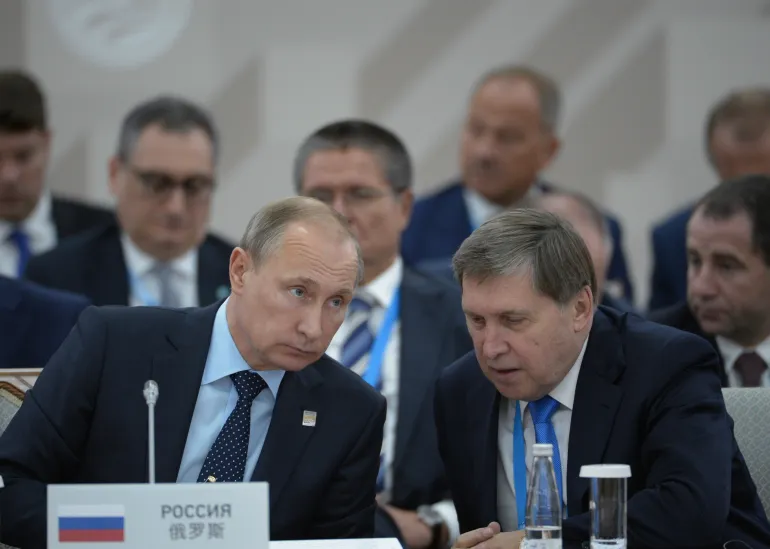
Russian President Vladimir Putin with presidential aide Yury Ushakov [File/Handout: RIA Novosti via Getty Images]
Earlier on Sunday, Putin’s top foreign policy aide, Yury Ushakov, said that the changes requested by Ukraine and its European allies to the framework put forth by the US were not improving prospects for peace.
Ushakov said that Dmitriev was due to return to Moscow on Monday and would report to Putin on the outcome of his talks.
“After that, we will formulate the position with which we will proceed, including in our contacts with the Americans,” he said.
Russia, which launched a full-scale invasion of Ukraine in February 2022, sees Europe as “pro-war” and argues that its participation in the talks only hinders them.
Separately on Sunday, Kremlin spokesman Dmitry Peskov said that Putin was ready to talk with his French counterpart, Emmanuel Macron, after the latter said Europe should reach out to the Russian president to end the war.
Putin has “expressed readiness to engage in dialogue with Macron”, Peskov told Russian state news agency RIA Novosti. “Therefore, if there is mutual political will, then this can only be assessed positively.”
Macron’s office welcomed the Russian statement.
“It is welcome that the Kremlin has publicly agreed to this approach. We will decide in the coming days on the best way to proceed,” it said.
Trump first shared his plan consisting of 28 points to end the war in Ukraine last month, triggering immediate criticism from European leaders who said it echoed the Kremlin’s demands.
Zelenskyy has since said that Ukraine and its European allies have shared their own version of a 20-point plan, which was based on the initial plan put forward by the White House.
One of the key sticking points between Russia and Ukraine remains Russia’s demand to retain some of the land it has captured in Ukraine since launching its full-scale invasion after years of fighting in Ukraine’s east.
Zelenskyy has described the talks as “constructive” and said they were “moving at a fairly rapid pace”. He nevertheless cautioned that “much depends on whether Russia feels the need to end the war for real”.
He also hailed this week as “historic” for Ukraine, thanking Europe for pledging $100bn of funding over the next two years.
US and Ukrainian envoys say “productive and constructive” talks have taken place in Miami, but there still appears to be no major breakthrough in efforts to end Ukraine’s war with Russia.
Donald Trump’s special envoy, Steve Witkoff, issued a joint statement with the top Ukrainian negotiator, Rustem Umerov, after three days of meetings with European allies.
The pair said the meeting focused on aligning positions on a 20-point plan, a “multilateral security guarantee framework”, a “US Security guarantee framework for Ukraine” and an “economic & prosperity plan”.
Separate talks have been taking place in Miami between the US and the Russian envoy, Kirill Dmitriev.
“Our shared priority is to stop the killing, ensure guaranteed security, and create conditions for Ukraine’s recovery, stability, and long-term prosperity,” Witkoff and Umerov said in a statement.
The meetings are the latest step in weeks of diplomatic activity, sparked by the leaking of a 28-point US peace plan which shocked Ukraine and its European allies for appearing to favour Russia, which launched a full-scale invasion of Ukraine nearly four years ago.
Witkoff said representatives from Russia had met himself and other US officials in southern Florida, including Trump’s son-in-law Jared Kushner.
Witkoff said the meetings with Russian envoy Dmitriev were also “productive and constructive” and that “Russia remains fully committed to achieving peace in Ukraine”.
Trump has been pushing Ukraine and Russia to come to an agreement on ending the war, but so far the two countries have been unable to agree on major issues, including Moscow’s demand to keep land it has already seized.
US intelligence reports continue to warn that Russian President Vladimir Putin still wants to capture all of Ukraine and reclaim parts of Europe that belonged to the former Soviet empire, six sources familiar with US intelligence told the Reuters news agency.
The stand-up comic turned actor has spent the past decade as one of Hollywood’s most bankable and visible stars, headlining megahits like the “Jumanji” films alongside a steady output of comedies and animated features, while still selling out arena tours and releasing hit Netflix comedy specials. Off-screen, his face turns up everywhere: pitching banking apps, tequila and energy drinks.
In the era of artificial intelligence, though, that guarantee has begun to erode. A quick Google search for “Kevin Hart AI” turns up unofficial versions of his voice, available with a few clicks.
A series on how the AI revolution is reshaping the creative foundations of Hollywood — from storytelling and performance to production, labor and power.
That helps explain why, one evening last month on the Fox lot, the head of Hart’s entertainment company, Hartbeat, was on an industry panel talking not about box office or release strategies but AI. Jeff Clanagan painted a picture of a landscape in which movie stardom is no longer protected by traditional channels, as attention splinters across platforms and audiences fragment. In that environment, AI can be both a risk and a lever.
“The most valuable resource right now is attention,” Clanagan told the audience of 150 studio executives, filmmakers, investors and technologists gathered at Hollywood X, an invitation-only event focused on responsible adoption of AI. “You’re competing for it everywhere — everybody is always on a second screen. That fragmentation is where the disruption is.”
Hollywood was built on the idea that a small number of stars could reliably command attention and turn it into leverage. As AI and algorithm-driven platforms reshape how attention is created and distributed, even the most recognizable names are newly exposed — not only to dilution but to the prospect of being replaced altogether.
Jeff Clanagan, right, president and chief distribution officer of Kevin Hart’s entertainment company, Hartbeat, speaking on a panel at last month’s Hollywood X event.
(Randall Michelson)
In parts of Asia, synthetic performers are no longer hypothetical. In Japan, the anime-style virtual pop star Hatsune Miku has sold out concerts and headlined festivals. In China, AI hosts run shopping streams on the video platform Douyin. And in the U.S., Lil Miquela, a computer-generated influencer created by the Los Angeles startup Brud, has amassed millions of followers and appeared in major fashion campaigns, including a Calvin Klein ad with Bella Hadid.
For studios, brands and producers, the appeal isn’t hard to see. A virtual performer doesn’t call in sick, miss a shoot or carry off-screen baggage. There’s no aging out of roles, no scheduling crunch. They don’t need trailers, negotiate contracts or arrive with riders, entourages and expense accounts in tow.
The old mythology was that a star might be discovered at Schwab’s lunch counter or in an audition room. Hollywood has always chased the “it factor.” What happens when the performer is, quite literally, an it?
That question came into sharp focus this fall with the appearance of Tilly Norwood, a photorealistic, AI-generated character that took the guise of a rising British actor, styled to read mid-20s and approachable — exactly the kind of star Hollywood is always looking for.
It landed in an industry already on edge. Hollywood was still reeling from strikes, layoffs and a prolonged contraction, with anxiety about AI simmering just below the surface. The response was immediate and visceral.
SAG-AFTRA warned that projects like Tilly risked relying on what the union called “stolen performances,” arguing that AI-generated actors draw on the work of real performers without consent or compensation, concerns that were central to the union’s 2023 strike. On a Variety podcast, Emily Blunt was shown an image of Tilly and paused. “No — are you serious? That’s an AI?” she said. “Good Lord, we’re screwed.”
SAG-AFTRA members march in one “Unity Picket” on strike day 111 at Walt Disney Studios in Burbank on Nov. 1, 2023.
(Myung J. Chun / Los Angeles Times)
Even some of Hollywood’s most tech-forward figures have drawn a line. On the press tour for his latest film, “Avatar: Fire and Ash,” James Cameron — the director who once warned of Skynet in “The Terminator” — called the idea of AI replacing actors “horrifying,” arguing that human performance would become increasingly “sacred.”
Yves Bergquist, an AI researcher who directs the AI in Media Project at the USC Entertainment Technology Center — a think tank supported by major studios and technology companies — expects AI to continue to encroach on territory once reserved solely for humans.
“Will we see AI movie stars?” Bergquist asks. “Probably.” But he draws a line between what the technology can generate and what audiences are willing to invest in emotionally.
“Prince writing his songs is a great story,” he says. “Pushing a button and making music is not. Very soon — it’s already starting — we’re going to have this us-versus-them mentality. These are the machines and we’re the humans. And we’re not the same.”
The actor that didn’t exist
“Are you allowed to speak to me from L.A.?” Eline van der Velden, the creator of Tilly Norwood, asks with a quick, nervous laugh on a video call from London — a nod to how radioactive the subject of synthetic performers has become.
The question isn’t entirely a joke. Three months ago, when Van der Velden presented her latest project at an industry conference in Zurich, it touched off one of Hollywood’s most heated debates yet over AI and performance, one that still hasn’t fully cooled.
Van der Velden, 39, came up as an actor before pivoting into production, eventually landing in London, where she founded Particle6, a digital production company known for short-form video work for broadcasters and major platforms. She was in Zurich to introduce its newest offshoot, Xicoia, an AI studio designed to build and manage original synthetic characters for entertainment, advertising and social media. “It’s not a talent agency — we’re making characters,” she says. “So it’s really like a Marvel universe studio in a way.”
Eline van der Velden, creator of the AI-constructed Tilly Norwood, at Web Summit 2025 in Lisbon, Portugal.
(Florencia Tan Jun/Sportsfile via Getty Images)
Tilly Norwood was meant to be the first and most visible example of that approach. Conceived as a recurring character with an unfolding story arc, Tilly was built to exist across short-form videos and scripted scenarios. As part of the Zurich presentation, Van der Velden screened a short satirical video titled “AI Commissioner,” introducing Tilly as a “100% AI-generated” actor — smiling on a red carpet and breaking down on a talk-show couch.
Other short videos featuring Tilly had already circulated online, including a montage placing her in familiar movie genres and a parody riffing on Sydney Sweeney’s controversial American Eagle jeans ad (“My genes are binary”). The “AI Commissioner” video itself had been posted on YouTube months earlier. By then, photorealistic synthetic characters were no longer novel and similar experiments were spreading online.
In Hollywood, it triggered an immediate backlash. Press accounts out of Zurich, amplified by Van der Velden’s remark that Tilly might soon be signed to an agent, collided with an industry already on edge about AI. Van der Velden was stunned at the intensity of the outcry: “Tilly was meant to be for entertainment,” she says. “It’s not to be taken too seriously. I think people have taken her way too seriously.”
Across the industry, working actors, already facing shrinking opportunities, recoiled at the idea of a fabricated performer potentially taking real jobs. Some called for a boycott of any agents who might take on Norwood. Speaking to The Times, SAG-AFTRA President Sean Astin demanded that the real-life actors used for AI modeling be compensated. “They need to know that it’s happening,” he said. “They need to give permission for it and they need to be bargained with.”
As the coverage ricocheted far beyond the trades and went global, the reaction escalated just as quickly. Asked when she knew Tilly had struck a nerve, Van der Velden answers matter-of-factly: “When I got the death threats. That’s when I was like, oh — this has taken a very different turn.”
Van der Velden understands why the idea of a synthetic performer unsettled people, especially in a business already raw from layoffs, strikes and contraction. “Tilly is showing what we can do with the tech at this moment in time, and that is frightening,” she says. But she argues that much of the backlash rests on fears that, in her view, haven’t yet materialized — at least not in the way people imagine them.
Tilly Norwood, an AI construct created by Particle6.
(Particle6)
“There’s a bad reputation around AI,” she says. “People try to swing all sorts of things at it, like, ‘Oh, it’s taking my job.’ Well, I don’t know of anyone whose acting job has actually been taken by AI. And Tilly certainly hasn’t taken anyone’s job.”
Union representatives argue that displacement is already occurring through subtler mechanisms: background roles increasingly filled by digital doubles, commercials replacing actors with synthetic performers and projects that never get greenlighted because AI offers a cheaper alternative. The impact shows up not in pink slips but in opportunities that vanish before auditions are ever held.
Even as the controversy grew, Van der Velden says she began hearing something else privately. Producers and executives reached out, curious about what Tilly could do, with several asking about placing the character in traditional film or television projects — offers she says she declined. “That’s not what Tilly was made for,” she says.
Van der Velden insists the character was never intended to replace actors, framing Tilly instead as part of a different creative lineage, closer to animation. “I was an actor myself — I absolutely love actors,” she says. “I love pointing a camera at a real actress. Please don’t stop casting actors. That’s not the aim of the game.”
With a background in musical theater and physics, Van der Velden spent her early career in Los Angeles acting, improvising at Upright Citizens Brigade and making YouTube sketches. An alter ego she created, Miss Holland — designed to make fun of rigid beauty standards — won an online comedy award and helped launch her career in the U.K., where she founded Particle6.
Tilly began as an exercise: Could Van der Velden design a virtual character who felt instantly familiar, the kind of approachable young woman audiences would naturally be drawn to? “It’s like building a Barbie doll,” she says, noting at one point she considered making Tilly half robot. “I had fun making her. It was a creative itch.”
She pushes back on the idea that synthetic characters are simply stitched together from parts of real people. “People think you take this actress’ eyes and nose and that actress’ mouth,” she says. “That’s not how it works at all.”
Over six months, a team of about 15 people at Particle6 worked on developing Tilly, generating more than 2,000 visual versions and testing nearly 200 names before selecting Tilly Norwood, one that fit what Van der Velden calls the “English rose” aesthetic they were looking for and wasn’t already taken. “It’s very human-led,” Van der Velden says, likening AI tools to a calculator for creatives. “You need taste. You need judgment. You still have to call the shots.”
Even as the technology advances, the uncanny valley remains a stubborn barrier. Van der Velden says Tilly has improved over the last six months, but only through sustained human steering. “It takes a lot of work to get it right,” she says.
That labor, she says, is what separates an emerging form of storytelling worth taking seriously from AI slop. “I’ve seen some genuinely amazing work coming out of AI filmmaking,” she says. “It’s a different art form but a real one.”
She sees Tilly less as a provocation than as a reflection. “She represents this moment of fear in our industry as a piece of art. But I would say to people: Don’t be fearful. We can’t wish AI away. It’s here. The question is, how do we use it positively?”
Her focus now is on what she calls Tilly’s “inside” — the personality, memory and backstory that give the character continuity over time. That interior life is being built with Particle6’s proprietary system, DeepFame, software designed to give the character memory and behavioral consistency from one appearance to the next.
“People ask me things like what her favorite food is,” Van der Velden says. “I’m not going to answer for Tilly. She has a voice of her own. I’d rather you ask her yourself — very soon.”
Hollywood fights back
While Van der Velden wishes the industry were less afraid of what AI might become, Alexandra Shannon is helping Hollywood arm itself for what’s already here.
As head of strategic development at Creative Artists Agency, one of the industry’s most powerful agencies, Shannon works with actors, filmmakers and estates trying to navigate what generative technology means for their work — and their identities.
The questions she hears tend to fall into two camps. “First is, how do I protect myself — my likeness, my voice, my work?” she says. “And then there’s the flip side: How do I engage with this, but do it safely?”
Those concerns led to the creation of the CAA Vault, a secure repository for approved digital scans of a client’s face and voice. Shannon describes it as a way to capture a likeness once, then allow performers to decide when and where it can be used — for example, in one shot created for one film. It doesn’t eliminate uncertainty, she says, but it gives talent something they’ve rarely had since AI companies entered the picture: control.
“There’s a legitimate way to work with them,” she adds. “Anything outside that isn’t authorized.”
Creative Artists Agency’s headquarters in Century City, where talent representatives are grappling with how to protect clients’ likenesses.
(Robert Gauthier / Los Angeles Times)
Those risks are no longer abstract. Unauthorized AI-generated images and videos resembling Scarlett Johansson have circulated online. Deepfake ads have falsely enlisted Tom Hanks to promote medical products. AI-generated images have placed Taylor Swift in fabricated scenarios she never endorsed. Once a likeness becomes live and responsive, Shannon says, control can erode quickly.
For all the panic around AI, Shannon rejects the idea that digital likeness will undercut human stars overnight. “It’s not about all of a sudden you can work with Brad Pitt and you can do it for a fraction of the cost,” Shannon says. “That is not where we see the market going.”
What CAA is intent on preserving, she says, isn’t just a face or a voice but the accumulated meaning of a career.
“For an individual artist, their body of work is built over years of creative decisions — what roles to take, what brands or companies to work with, and just as importantly, what roles not to do, what companies not to support,” she adds. “That body of work is a fundamental expression of who they are.”
Shannon doesn’t dispute that the tools are improving or that some AI-native personas will find an audience. But she believes their growth will sharpen, not weaken, what distinguishes human performance in the first place. “In a world where there’s this vast proliferation of AI-generated content, people will continue to crave live, shared, human-centered experiences,” she contends. “I think it’s only going to make those things more valuable.”
Not everyone is convinced the balance will tilt so neatly.
“The genie’s out of the bottle,” Christopher Travers says by phone from Atlanta, where he runs Travers Tech, advising companies and individual creators on generative video and digital-identity strategy. “There are now more than a million characters across all sorts of media, from VTubers to AI-generated performers.”
Travers got his start in generative AI with the backing of Mark Cuban, founding Virtual Humans in 2019, a startup focused on computer-generated performers and digital identities. These days, his journey would have been much easier. “It costs nearly nothing now,” he says. “And when cost drops, volume increases. There’s pressure on celebrities to keep up.”
Having watched countless virtual characters come and go, Travers wasn’t particularly impressed with Tilly Norwood herself. What mattered to him was the reaction.
“Tilly is maybe 1% of the story,” he says. “The other 99% is the worry and the fear. What it did was strike a chord. We all needed to have this conversation.”
What stardom looks like now
Few people have spent more time inside Hollywood’s old star-making system than mega-producer Jerry Bruckheimer, whose films like “Beverly Hills Cop,” “Top Gun” and “Pirates of the Caribbean” helped turn actors into global commodities.
Even amid the disruption reshaping Hollywood, he believes the industry still knows how to discover and elevate stars. “It’ll happen,” he told The Times earlier this year. “Timothée Chalamet is a star and Zendaya is a star. Glen Powell is becoming a star — we’re going to bring him up. Damson Idris is going to be a star. Now they have to be smart and make good choices on what they do. That’s up to them.”
Stellan Skarsgård as Luthen Rael in the series “Andor.”
(Des Willie / Lucasfilm Ltd.)
The industry may still know how to make stars, but keeping them there has become harder. Chalamet’s biggest box office successes, like “Wonka” and the “Dune” films, have arrived as part of franchises rather than as standalone vehicles. Powell’s latest film, last month’s remake of “The Running Man,” fell short of expectations.
Bruckheimer himself has been pragmatic about AI. During postproduction on his recent Brad Pitt–led Formula One drama, an AI-based voice-matching tool was briefly used to replicate Pitt’s voice when the actor was unavailable for looping, a demonstration of how AI can extend a star’s reach rather than replace them. “AI is only going to get more useful for people in our business,” he says.
If Hollywood has been having more difficulty launching fresh faces, it has become adept at keeping familiar ones on the screen. AI tools can smooth a face, rebuild a voice or extend a performance long after an actor might otherwise have aged out. Stardom no longer has to end with retirement — or even death.
Stellan Skarsgård, for one, is uneasy with the idea. In recent years, the veteran actor — a current Oscar front-runner for “Sentimental Value” — has been part of two of Hollywood’s most valuable franchises, playing Luthen Rael in the “Star Wars” series “Andor” and Baron Harkonnen in the “Dune” films, roles built to carry on through sequels and spinoffs.
Asked about the prospect of an AI version of himself playing those characters after he’s gone, the 75-year-old Skarsgård bristles. The question carries particular weight. Three years ago he suffered a stroke, an experience that forced a reckoning with his craft and sense of mortality.
“SAG has been very adamant — there was a strike about it,” Skarsgård says. “And I do hope it won’t be like that in the future, that it will be controlled and that money won’t have all the rights.” He pauses. “You should have rights as a person, to your own voice, your own personality.”
Those questions — about control, consent and what survives a person — moved from the abstract to the practical last month at Hollywood X on the Fox lot.
Onstage, Jeff Clanagan mentioned a documentary that Hartbeat, Kevin Hart’s entertainment company, is producing with the estate of comedian Bernie Mac, who died in 2008. Built around Mac’s own audiobook narration, the documentary will rely on authorized existing recordings, not newly generated performances, pairing traditional animation with AI-assisted imagery to visualize moments Mac had already described. Clanagan said the technology offered a faster, less expensive way to bring those scenes to life.
But that took some convincing. An Oscar-winning director attached to the project initially wanted to tell the story entirely through traditional animated reenactments. Clanagan said it took months of persuasion — including creating sample scenes to demonstrate the approach — before that resistance eased. “Once he saw it, he was converted, and now we’re doing a little bit of a hybrid,” he said.
That work, Clanagan added, has become part of the job, not just externally but inside Hartbeat as well. “Part of it is educating the talent community on what you can do and still be aligned,” he said, noting that much of the hesitation comes from fear stoked by headlines and unfamiliarity with the tools. “It’s about helping people understand the process. People are starting to believe.”
As the Hollywood X panel ended, attendees filed out of a theater named for Darryl F. Zanuck, one of the architects of the studio-era star system, then crossed the Fox lot toward a reception. Along the way, they passed by cavernous soundstages, some painted with towering murals: Marilyn Monroe in “The Seven Year Itch,” Julie Andrews in “The Sound of Music,” Bruce Willis in “Die Hard.” Faces from another era, still watching as the industry weighs what will endure.
Dec. 21 (UPI) — The U.S. Coast Guard is chasing down a third foreign oil tanker in the Caribbean, which refused to be boarded amid President Donald Trump‘s pressure campaign against Venezuela, reports said Sunday.
“The U.S. Coast Guard is in active pursuit of a sanctioned dark fleet vessel that is part of Venezuela’s illegal sanctions evasion,” an unnamed official told NBC News. “It is flying a false flag and under a judicial seizure order.”
The tanker Bella 1 was placed under U.S. sanctions in June 2024 under counterterrorism authorities, according to the Treasury Department, which said the vessel was part of a shipping network linked to Sa’id al-Jamal, a U.S.-designated Houthi financial facilitator.
Vessels in that network have been used to transport sanctioned oil, including Iranian crude, and the proceeds are directed to militant groups, U.S. officials have said in describing the basis for the sanctions.
Separately, U.S. officials said federal authorities obtained a seizure warrant from a magistrate judge authorizing them to take possession of the Bella 1, The New York Times reported. Officials cited Bella 1’s alleged prior involvement in the Iranian oil trade rather than any alleged links to Venezuela.
The ship was allegedly not flying a valid national flag when U.S. forces approached it, which would allow for it to be boarded at sea under international law. But the ship refused to be boarded and continued sailing, one official told The New York Times as another called it “an active pursuit.”
If seized, the Bella 1 would become the third tanker apprehended by U.S. authorities. On Saturday, the U.S. Coast Guard seized another tanker in international waters near Venezuela after Trump declared a blockade of Venezuela.
That tanker was flying a Panamanian flag and was carrying Venezuelan oil that it expected to sell in Asia, officials alleged.
Last Wednesday, a sanctioned oil tanker called The Skipper was also seized after it left a Venezuelan port. The ship was diverted to Texas and was allegedly flying the flag of Venezuela’s neighbor, Guyana, which said the ship is not among those registered there.
President Donald Trump holds a signed executive order reclassifying marijuana from a schedule I to a schedule III controlled substance in the Oval Office of the White House on Thursday. Photo by Aaron Schwartz/UPI | License Photo
NEWS BRIEF President Donald Trump launched his midterm election campaign push in North Carolina on Friday, seeking to reframe the economy as a winning issue despite sagging consumer confidence and low approval ratings. In a sprawling speech, he touted stock market gains, cooling inflation, and a recent pharmaceutical pricing deal while deflecting blame for persistent […]
Death in Paradise star Don Warrington has been happily married to actress Mary Maddocks for many years with the couple sharing two children together
Aaliyah Rugg Under 35s Screen Time reporter and Katie Palmer
23:40, 21 Dec 2025
Death in Paradise star Don Warrington has been happily married to actress Mary Maddocks for many years(Image: BBC / Red Planet Pictures / Lou Denim)
Death in Paradise is set to grace our television screens once more with a Christmas Special in just a few days, promising “even more heart” according to the BBC.
The beloved Death in Paradise Christmas cast makes their way back to Saint Marie for another year of holiday celebrations, though what begins as the ultimate office party quickly descends into darkness.
Broadcasting on December 28 at 8.30pm on BBC One, the BBC reveals: “The office Christmas party of a lifetime takes a dark turn when four co-workers wake up with the hangover from hell to find a stranger shot dead in the pool of their villa.
“DI Mervin Wilson and the team identify the murder weapon, but they’re left baffled after discovering that it was locked in a drawer when the shooting took place… thousands of miles away from the crime scene.”
Running for approximately 90 minutes, the festive episode promises the return of beloved characters, reports the Express.
Earlier this year, the 14th series concluded, leaving fans anxious about Don Warrington’s character Commissioner Selwyn Patterson.
After 14 years on the programme, the actor became a viewer favourite, making his departure in March all the more heartbreaking for audiences.
During the final series of Death in Paradise, Selwyn decided to leave Saint Marie following the loss of his Commissioner role, turning down the opportunity to reclaim his position when it was offered back to him.
Nevertheless, fans must wait patiently to see whether the Commissioner will make his comeback… particularly given his recent appearance in the Christmas special of Beyond Paradise. But who exactly is Don Warrington and what’s his marital status?
Don Warrington is happily married and has been for quite some time. The Death in Paradise actor is currently married to Mary Maddocks, with the couple enjoying many years of marital bliss.
Don prefers to keep his personal life private and away from the public eye, with their exact wedding date remaining a mystery, but it’s clear that his family life continues to thrive away from the limelight.
His wife Mary has herself graced several iconic productions including ITV’s Coronation Street as well as Doctor Who and Midsomer Murders.
She has also directed numerous theatrical productions ranging from musicals to dramas, and even took centre stage in the hit musical The Rocky Horror Show.
Don and Mary are parents to two children, Jacob and Archie, both carving out their own paths in the entertainment industry.
As a playwright and comedian, Archie has contributed to the creation of the 2023 thriller Gassed Up as well as the TV series Intergalactic, receiving full backing from his parents.
It was previously reported that Archie paid tribute to his parents, stating: “Both my parents are actors. My mum, Mary Maddocks, is an actress: she was in The Rocky Horror Show when it was in the West End and my dad is Don Warrington.
“The main thing I get from both of them is they understand the art of performance and the need to perform.”
For the latest showbiz, TV, movie and streaming news, go to the new **Everything Gossip** website
Death in Paradise Christmas special will air December 28 on BBC One.
1 of 3 | House Minority Leader Hakeem Jeffries, D-NY, said Sunday that he expects the House to pass a three-year extension of tax credits for people buy health insurance through Affordable Care Act exchanges. Photo by Bonnie Cash/UPI | License Photo
Dec. 21 (UPI) — House Minority Leader Rep. Hakeem Jeffries, R-N.Y., said Sunday that he expects lawmakers to pass a bipartisan compromise on extending Affordable Care Act tax credits.
Jeffries said on ABC News’ “This Week” that lawmakers will pass a bi-partisan compromise to extend ACA tax credits extension in the House, potentially forcing Senate Republicans hand on health insurance subsidies for at least 22 million Americans who will face higher premiums in the new year.
Congress adjourned for Christmas without reaching a deal on extending on the tax credits, which Jeffries promised that House lawmakers will address in early January.
“That will put pressure on John Thune and Senate Republicans to actually do the right thing by the American people, pass a straightforward extension of the Affordable Care Act tax credits, so we can keep health care affordable for tens of millions of Americans who deserve to be able to go see a doctor when they need one,” Jeffries said.
Democrats have said if the two sides are unable to reach a deal on an extension, they will wield it against Republicans in next year’s midterm elections.
Rep. Pat Ryan, D-N.Y., has said access to affordable health care remains among the most pressing issues among voters.
“It’s just pathetic,” Ryan said. “The last time there was a major national Republican effort to repeal the ACA, we had an overwhelming wave where they got absolutely wiped out, and I think that’s likely what will happen here again.”
A handful of centrist Republicans in vulnerable congressional districts bypassed the authority of House Speaker Mike Johnson to team up with key Democrats to authorize a vote on a three-year tax credit extension when the House returns to Washington the week of Jan. 5.
Some Republican leaders have said they favor allowing Covid-era tax credits that made health care more affordable for millions of Americans to expire or be phased out over several years. Other members of the GOP, however, have said they favor extending the credits for longer.





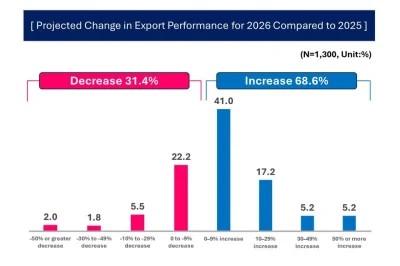




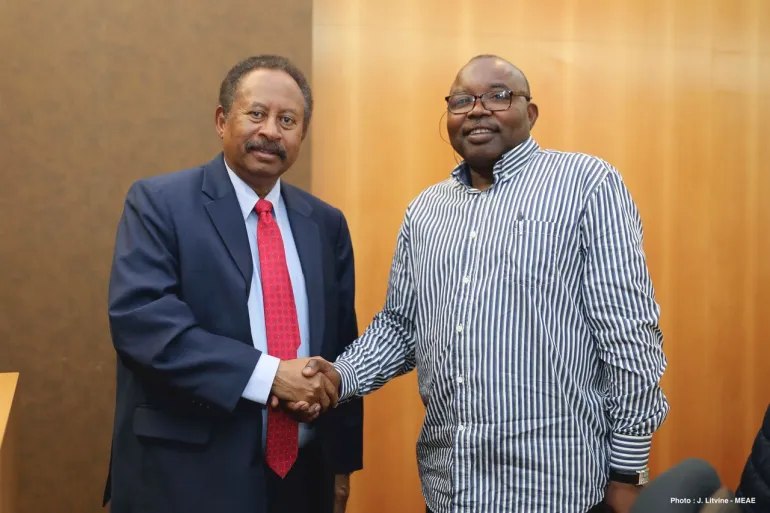










![Shahmina Alam with Kamran Ahmed - Palestine Action linked hunger striker [Courtesy of Alam family]](https://i0.wp.com/www.aljazeera.com/wp-content/uploads/2025/12/WhatsApp-Image-2025-12-15-at-15.26.19-1-1765801678.jpg?w=640&ssl=1)