Weekly insights and analysis on the latest developments in military technology, strategy, and foreign policy.
Welcome to Bunker Talk. This is a weekend open discussion post for the best commenting crew on the net, in which we can chat about all the stuff that went on this week that we didn’t cover. We can also talk about the stuff we did or whatever else grabs your interest. In other words, it’s an off-topic thread.
This week’s second caption reads:
25 July 2022, Hamburg: In front of an entrance to the Steintor underground bunker, yellow and black pressure doors can be seen. The inscription “Stand back from the door” can be read on the doors. The 140-meter-long and 17-meter-wide facility near the main train station had been built from 1941 to 1943. During the Cold War, it had been converted into a nuclear bunker and would have provided shelter for 2700 people in an emergency. Since 2007, the Hamburg Underworlds association has organized guided tours and cultural events in the underground bunker so that the history of this place is not forgotten. Photo: Julian Weber/dpa (Photo by Julian Weber/picture alliance via Getty Images)
Also, a reminder:
Prime Directives!
If you want to talk politics, do so respectfully and know that there’s always somebody that isn’t going to agree with you.
If you have political differences, hash it out respectfully, stick to the facts, and no childish name-calling or personal attacks of any kind. If you can’t handle yourself in that manner, then please, discuss virtually anything else.
No drive-by garbage political memes. No conspiracy theory rants. Links to crackpot sites will be axed, too. Trolling and shitposting will not be tolerated. No obsessive behavior about other users. Just don’t interact with folks you don’t like.
Do not be a sucker and feed trolls! That’s as much on you as on them. Use the mute button if you don’t like what you see.
So unless you have something of quality to say, know how to treat people with respect, understand that everyone isn’t going to subscribe to your exact same worldview, and have come to terms with the reality that there is no perfect solution when it comes to moderation of a community like this, it’s probably best to just move on.
Finally, as always, report offenders, please. This doesn’t mean reporting people who don’t share your political views, but we really need your help in this regard.
Shirley Ballas has admitted that she has had her fair share of sleepless nights after this year’s season of Strictly took an unexpected turn when Lewis Cope was eliminated
Shirley Ballas says she didn’t sleep all night after Lewis Cope was axed from this year’s season of Strictly(Image: BBC)
Strictly Come Dancing judge Shirley Ballas has admitted she was left wide awake all night after Lewis Cope’s emotional exit from the competition.
While on BBC spin-off show It Takes Two, Shirley opened up to host Fleur East about the toll this stage of the competition has taken on her, especially as the remaining couples edge closer to the final.
When Fleur asked how she was feeling with the semi-final less than 24 hours away, Shirley replied sombrely: “Well I didn’t sleep yesterday, I didn’t sleep when Lewis got eliminated and I probably won’t sleep tonight because you never know where the show is going to go at the moment.”
She went on to explain just how unpredictable this year’s contest has become, adding: “It is not set and it could be anyone who goes home and anyone who can win, so it will be very interesting tomorrow.”
Lewis, who is best known to viewers for his role on Emmerdale, was eliminated last week after going head-to-head with Love Island star Amber Davies in the dreaded dance-off.
Many fans were devastated to see him leave just before the semi-finals. But Lewis spoke fondly of his time on Strictly after his exit, saying: “It’s been more than I could have ever wished for. If someone would have said that I’d have done 11 weeks on the show at the beginning, I’d have been over the moon and snap their hand off.”
He went on to thank the show and his professional partner Katya Jones, telling her: “You’ve literally given me absolutely everything I could wish for as a friend, as a teacher, and yeah, I couldn’t imagine it with anybody else.”
An emotional Katya returned the praise, calling Lewis one of the most memorable contestants the show has seen. “You will be remembered as one of, if not, the best male celebrity we’ve ever had on the show,” she said, adding that he would also be remembered for being “an incredible person”.
Away from the ballroom, Lewis’s girlfriend Rachel Lopez also spoke out following his exit, hitting back at viewers’ claims that he had an unfair advantage due to his musical theatre background.
In a heartfelt Instagram post, she wrote: “What most people never saw was the pressure you carried, especially with people assuming you would walk in as a trained dancer (which you absolutely weren’t!).”
Rachel praised Lewis for handling the criticism he received with grace, adding: “The heartbreak isn’t a sign you have failed, it just shows how much courage you had.”
On It Takes Two Shirley went on to offer some quick advice to the remaining couples ahead of the semi-final, encouraging Amber and Nikita to “bend knees and have a lot of fun,” while calling for more “connection and partnering” from some of the other contestants.
Admiral Alvin Holsey relinquished his leadership of U.S. Southern Command on Friday ahead of his pending retirement after serving 37 years in the Navy. Photo by Mariano Macz/EPA
Dec. 12 (UPI) — U.S. Southern Command leader Adm. Alvin Holsey relinquished his command on Friday amid his pending retirement from the Navy after 37 years of service.
Holsey announced his pending retirement in October without giving a reason, CBS News reported.
He relinquished his command over military forces in South America during a ceremony Friday at Southern Command headquarters.
“We have worked hard and tirelessly to build relationships and understand requirements across the region,” Holsey said during a command-change ceremony.
“That work must continue across the whole government to deliver at the point of need to respond to shared threats in our neighborhood — the time is now.”
Joint Chiefs of Staff Chairman Gen. Dan Caine bestowed the Defense Distinguished Service Medal upon Holsey during the ceremony and included a citation that was signed by Defense Secretary Pete Hegseth.
“One of Adm. Holsey’s most significant achievements was the transformation of USSOUTHCOM into a more agile, capable and operationally present force,” U.S. Southern Command officials said Thursday in a news release, as reported by The Hill.
“Under his leadership, the command expanded from roughly 3,500 personnel to nearly 15,000 personnel in direct support of operations in the region,” the release said.
“The operational impact was immediately felt, with the expanded U.S. presence across the region, improving responsiveness and strengthening deterrence.”
Holsey initially was scheduled to lead Southern Command for four years, but stepped down amid the U.S. military buildup in the region after taking command in November 2024.
Holsey and Hegseth have had disagreements regarding strikes on alleged drug vessels and other actions that have raised tensions between the United States and Venezuelan President Nicolas Maduro, according to CBS News.
The U.S. military has targeted at least 22 vessels in strikes that have killed at least 87 crew members deemed “narco-terrorists” by the Trump administration and Hegseth since the strikes began in September.
Hegseth also accused Holsey of moving too slowly in developing options to ensure the United States has unhindered access to the Panama Canal, which President Donald Trump has said the nation should reclaim from Panama, according to The Wall Street Journal.
Air Force Lt. Gen. Evan Pettus is scheduled to replace Holsey as acting commander of Southern Command.
China has successfully achieved economic development in recent years by shifting towards a model that relies on stimulating domestic demand. This not only ensures economic stability but also addresses crucial considerations related to China’s national security and international competitiveness. China has indeed succeeded in this by focusing on four key factors that are the main determinants of its remarkable economic growth: economic reform policies, the government’s commitment to Chinese-style reform, the government’s dedication to integrating into the global economy, and industrial upgrading and technological innovation. The Chinese government has also unveiled measures to boost service consumption and pledged to open up more sectors, such as the internet, culture, and the promotion of hosting international sporting events, in an effort to bolster the Chinese economy and connect it globally.
China’s Fifteenth Five-Year Plan further spurred this shift from high-speed growth to high-quality growth, placing science and technology at the forefront of national priorities. Over the past five years, China has strengthened its comprehensive opening-up policy, implementing practical measures to improve the business environment and fostering continued cooperation with all countries, especially developing nations of the Global South, through its Belt and Road Initiative. The Belt and Road Initiative has become a model for a new type of international cooperation and has been recognized as such by international organizations, including the United Nations. During this same period, China has also made concerted efforts to improve the ecological environment and fulfill its international commitments through its “green economy” policy. This policy emphasizes the Chinese government’s commitment to environmentally friendly economic projects worldwide, particularly in African, developing, and Globally Southern countries. China is rapidly advancing a cleaner and greener economy, with strong commitments to environmental protection, clean energy, ecological protection, and the development of green industries.
China’s economic development has achieved remarkable success in recent years through a long-term plan focused on economic reforms. This plan involved transitioning from a centrally planned economy to a market-oriented one, adopting a policy of openness to foreign investment, establishing special economic zones to attract foreign investment, and investing heavily in infrastructure development, particularly in transportation, energy, communications, information technology, and artificial intelligence. China has also become the world’s largest exporter of advanced technology, with the Chinese government allocating approximately 2.6% of its GDP to research and development across various economic sectors. Furthermore, China boasts the world’s fastest-growing consumer market and is the second-largest importer of goods. China’s industrial output is double that of the United States. The Chinese government has addressed poverty through development, guided by market principles, economic restructuring, the utilization of domestic resources, peaceful production development, and the strengthening of self-reliance and development capabilities. It has employed various methods and approaches to reduce poverty through self-reliance and hard work, building infrastructure in agriculture, industry, roads, and irrigation, providing the necessary funds for development and training, and allocating all necessary resources for technological advancements in each sector. Simultaneously, efforts have been made to protect the environment by conserving soil and water, promoting ecological construction, and implementing the sustainable development strategy set by the central government. China has not only eradicated poverty but has also raised the standard of living in all areas, enabling it to compete with developed nations in many fields.
One of the most prominent strengths of the Chinese economy in recent years is its success in achieving high levels in education and scientific research. China spends 2.5% of its GDP on research and development. The number of people employed in research and development sectors is approximately 1,687 per million inhabitants, enabling China to remain a leading exporter of high-tech goods globally. This has been achieved while the Chinese government has encouraged the formation of rural and private enterprises, liberalized foreign trade and investment, eased state control over certain prices, and invested in industrial production and workforce education.
Sex Pistols frontman John Lydon has slammed singer Chrissy Hynde in a furious rantCredit: GettyThe former I’m A Celeb star had a lot to say about Chrissie even alleging that she was jealous of his late wife Nora ForesterCredit: Getty
John, who’s stage name is Johnny Rotten, first crossed paths with music star Chrissie in the 1970’s becoming close friends, amidst London’s punk scene.
But years later, Lydon has revealed he has a very different view of his longtime pal, launching into a furious rant about the singer.
Speaking to comedian Paul Whitehouse and his wife Dr Mine Conkbayir, on the latest episode of their podcast I’m ADHD! No You’re Not, John unveiled the shocking revelation.
Paul opened up the line of fire, saying: “Anyone would think you were in the Sex Pistols?
“Talking of which, by the way, Chrissie Hynde sends her love,” he chimed.
John replied: “F*** her. No, no. She did a very, very nasty thing. I met her before Nora died and on all of that. And she never told me what they were doing behind my back.
“Oh, sorry,” Paul quipped.
John continued: “And she knew, and she was involved with all that, that film and like and these are my friends. Yeah. And you’re not telling me, you know.”
“It was hurtful,” he added.
Mine went on to further question the music star: “And you never had it out for her?”
To which he replied: “She was always jealous of Nora as you know. Right. I don’t date horse hair blankets. Hello, Chrissie. How you doing?”
The punk icon became the primary carer of his beloved wife Nora following her battle with Alzheimer’s – she sadly passed in 2023.
Chrissie herself opened up about her own experiences with Lydon this week.
Speaking to The Guardian about a wild night with the star, she said: “The one thing I remember about that Nashville Rooms show was that I had drunk a lot of tequila beforehand and I never drank before a show again because it impaired my abilities.”
“That night, I pierced Johnny Rotten’s ear in the toilet, by pushing an earring through it into a bar of soap.”
The American born singer had even proposed to Johnny Rotten and his Sex Pistols bandmate Sid Vicious in 1976, but not for romantic reasons.
Chrissie proposed the idea of marriage after needing a visa so she could stay in the UK.
When asked what she thought her life would be like if she had married either star, she said: “That was just so I could stay in the country, but life with either of them would have been chaos.”
‘I’m ADHD! No You’re Not’ is available every Thursday on all podcast platforms.
John Lydon became the primary carer of his beloved wife Nora following her battle with Alzheimer’s – she sadly passed in 2023Credit: GettyChrissie Hynde proposed to Johnny Rotten in 1976 in order to get a UK visaCredit: GettyChrissie herself opened up about her own experiences with Lydon this weekCredit: Getty
Ukrainian President Volodymyr Zelenskyy said the Russian attacks ‘had no … military purpose whatsoever’.
Russian forces have attacked two Ukrainian ports, damaging three Turkish-owned vessels, including a ship carrying food supplies, according to Ukrainian officials and a shipowner.
Friday’s attacks by Russian forces targeted Chornomorsk and Odesa ports in Ukraine’s southwestern Odesa region on the Black Sea. A Ukrainian navy spokesperson told the Reuters news agency that three Turkish-owned vessels were damaged in total, but did not provide additional details.
Recommended Stories
list of 3 itemsend of list
Posting video footage on social media of firefighters tackling a blaze on board what he described as a “civilian vessel” in Chornomorsk, Ukrainian President Volodymyr Zelenskyy said the Russian attacks “had no … military purpose whatsoever”.
“This proves once again that Russians not only fail to take the current opportunity for diplomacy seriously enough, but also continue the war precisely to destroy normal life in Ukraine,” Zelenskyy said.
“It is crucial that … the world maintains the proper moral compass: who is dragging out this war and who is working to end it with peace, who is using ballistic missiles against civilian life, and who is striking the targets that influence the functioning of Russia’s war machine,” he said.
Today, the Russian army carried out a missile strike on our Odesa region, and last night there was also a Russian attack on Odesa’s energy infrastructure. At one point we talked about the situation in this city and the people of Odesa with President Trump.
— Volodymyr Zelenskyy / Володимир Зеленський (@ZelenskyyUa) December 12, 2025
Zelenskyy did not name the vessel, but it was identified as the Panama-flagged and Turkish-owned Cenk T by Reuters, which matched cranes and buildings to satellite imagery of Chornomorsk port.
The ship’s owners, Cenk Shipping, confirmed it was attacked at about 4pm local time (14:00 GMT). There were no casualties among the crew, and damage to the ship was limited, it added.
An employee of a private company was also injured in a separate attack on Odesa port, where a cargo loader was also damaged, Ukraine’s Deputy Prime Minister Oleksii Kuleba confirmed.
He added that Russia had used drones and ballistic missiles in the port strikes, which were “aimed at civilian logistics and commercial shipping”.
Ukraine’s three large Black Sea ports in the Odesa region are a key economic artery for Kyiv.
Late on Friday, Turkiye’s Ministry of Foreign Affairs confirmed the vessel had been attacked in Chornomorsk port. It added that there were no reports of injured Turkish citizens.
The ministry said in a statement that the attack “validates our previously stated concerns regarding the spread of the ongoing war in the region to the Black Sea, and its impact on maritime security and freedom of navigation”.
“We reiterate the need for an arrangement whereby, in order to prevent escalation in the Black Sea, attacks targeting navigational safety as well as the parties’ energy and port infrastructure are suspended,” it added.
Hours earlier, in talks with Russian President Vladimir Putin in Turkmenistan’s capital of Ashgabat, Turkish President Recep Tayyip Erdogan called for calm in the Black Sea and suggested that a limited ceasefire for energy facilities and ports could be beneficial for regional security.
Turkiye, which has the longest Black Sea coastline at approximately 1,329km (826 miles), has grown increasingly alarmed at the escalating attacks in its back yard and has offered to mediate between Kyiv and Moscow.
The attacks come just days after Putin promised retaliation and threatened to cut “Ukraine off from the sea” for Kyiv’s maritime drone attacks on Moscow’s “shadow fleet” – unmarked tankers thought to be used to circumvent oil sanctions – in the Black Sea.
Kyiv says the tankers are Moscow’s main source of funding for its almost four-year-old war. It has also tried to squeeze Russian revenues by expanding attacks to the Caspian Sea, where it struck a major oil rig this week.
A New York Times reporter told Jeffrey Epstein that he could write an article that would define the financier on his own terms as he faced allegations of sexually abusing minors in the months leading up to his 2008 conviction, newly uncovered emails reveal.
After a negative article about Epstein was published in September 2007, then-New York Times journalist Landon Thomas Jr advised Epstein to “get ahead” of more bad publicity by doing an interview that would define the story “on your terms”.
Recommended Stories
list of 4 itemsend of list
“I Just read the Post. Now the floodgates will open — you can expect Vanity Fair and NYMag to pile on,” Thomas wrote to Epstein in an email dated September 20, 2007, referring to the magazines Vanity Fair and New York Magazine.
“My view is that the quicker you get out ahead of this and define the story and who you are on your terms in the NYT, the better it will be for you.”
Thomas, who left the Times in 2019, urged Epstein to quickly do an interview to prevent the “popular tabloid perception” about him from hardening, and expressed sympathy over his legal troubles.
“I know this is tough and hard for you, but remember jail may [be] bad, but it is not forever,” Thomas wrote.
As part of his pitch to Epstein, Thomas recalled a 2002 profile he wrote about the financier for New York Magazine, titled Jeffrey Epstein: International Moneyman of Mystery.
Written before Epstein’s first arrest in 2006, the profile portrayed the financier as an enigmatic but highly successful businessman with the appearance of a “taller, younger Ralph Lauren” and a “relentless brain that challenges Nobel Prize-winning scientists”.
The piece contained glowing appraisals from Epstein’s many high-profile associates, whose praise-filled descriptions included that he was “very smart”, “amazing”, “extraordinary”, and “talented”.
“Remember how for a while my NY Mag piece was the defining piece on you? That is no longer the case after all this,” Thomas wrote to Epstein.
“But I think if we did a piece for the Times, with the documents and evidence that you mention, plus you speaking for the record, we can again have a story that becomes the last public word on Jeffrey Epstein.”
Jeffrey Epstein is pictured for the New York State Sex Offender Registry on March 28, 2017 [File: New York State Sex Offender Registry via AP]
A little more than a week later, on September 28, Thomas sent Epstein an email reiterating the importance of “getting out ahead” of other publications.
Thomas suggested that he begin reaching out to associates of Epstein who could talk about the financier’s business activities and scientific and philanthropic work, including former Harvard President Larry Summers and Israeli Prime Minister Ehud Barak.
“Before I get a glimpse of the legal material, I was thinking that I should at least start calling around to people who know you. Again to focus on the business and scientific/philanthropic aspect of the piece,” Thomas wrote.
“Could I start to do that — call people like Larry Summers, Jess Staley, George Mitchell, Ehud Barak, Bill Richardson and others?” Thomas finished the email expressing his hope that Epstein was “holding up okay” and stating his view that “we need to move on this.”
It is not clear how Epstein responded to Thomas’s emails, which were included in a trove of emails from Epstein’s personal accounts that were made available to Al Jazeera by the whistleblower website Distributed Denial of Secrets.
Thomas did not respond to a request for comment.
Following Thomas’s correspondence with Epstein, the Times went on to publish an article by the journalist detailing the financier’s downfall the following year.
The article, published a day after Epstein’s guilty plea on June 30, 2008, drew from in-person and phone interviews that Thomas had conducted with the financier, including during a visit to Epstein’s island of Little St James several months earlier.
In the article, Thomas described the financier sitting on the patio of his island mansion as he likened himself to the eponymous character of the satirical novel Gulliver’s Travels.
“Gulliver’s playfulness had unintended consequences,” Epstein was quoted as saying.
“That is what happens with wealth. There are unexpected burdens as well as benefits.”
Little St James, a small private island formerly owned by the late financier Jeffrey Epstein, is pictured in the US Virgin Islands on November 29, 2025 [File: Marco Bello/Reuters]
A 2019 report by NPR said colleagues of Thomas at the Times had been “appalled” by the article when they reviewed it years later, following the journalist’s admission that he had solicited a $30,000 donation from Epstein for a cultural centre.
The emails obtained by Al Jazeera also show that Epstein emailed an error-strewn Word document to himself in which Thomas is described discussing the legal case against Epstein with then-Florida prosecutor David Weinstein.
The purpose and origin of the document, which describes Thomas and Weinstein discussing technical aspects of the charges facing Epstein, is unclear. Weinstein said he spoke to Thomas in January 2008, but that the document did not contain an accurate description of their conversation.
Weinstein said they had spoken about the “criminal justice process and general state and federal statutes”, but not Epstein’s case specifically.
He said he did not know where the information in the document came from or who provided it to Epstein.
“I never spoke with him about the specific facts of the late Mr Epstein’s case, nor did I offer any opinion about that matter,” Weinstein told Al Jazeera.
The emergence of the emails between Thomas and Epstein comes after correspondence the two men shared from 2015 to 2018 came to light last month in a batch of documents released by US lawmakers.
Among other revelations, those emails showed that Thomas let Epstein know that the late investigative journalist John Connolly had contacted him for information for Connolly’s 2016 book Filthy Rich: The Jeffrey Epstein Story.
“He seems very interested in your relationship with the news media,” Thomas wrote to Epstein in an email dated June 1, 2016. “I told him you were a hell of a guy :)”.
A spokesperson for the Times said Thomas had not worked for the newspaper since early 2019 “after editors discovered his failure to abide by our ethical standards”.
You often hear that short stories make the best movies, as if the notion is to take something compact and widen it with cinema’s scalability. But the reverse can also be true: Certain movies benefit from feeling pocket-sized and unfettered, as if you’ve curled up with a tight, evocative short story, filled with just enough humor, detail and feeling to evoke a warm glow.
Set over two days during the instant relationship between a desperate young man from New York and a lonely older Los Angeles street musician, the black-and-white micro-indie “Burt” from director and co-screenwriter Joe Burke is one such half-slice of heart and calories, neither too much nor undercooked. You could watch a lot of films made with its equivalent budget (think that of a used 2007 sedan) and sense an ambition straining against constraints or a deliberate attempt at slumming. Not so with “Burt,” the movie equivalent of a cherry sour drop on a day when you need something a little tart, a tad sweet and that won’t outstay its welcome.
“Burt” stars Burt Berger as, well, Burt Berger, a 69-year-old troubadour type whom we first see in a sparsely attended coffeehouse plucking away at his guitar and, as if the ’60s never went away, singing about freedom. (Via Berger’s earnest, aged voice, the concept sounds hard-won.) Watching him intently is Sammy (co-screenwriter Oliver Cooper), who asks for a moment of Burt’s time. Over a picnic table in a field, this kind-eyed, spindly musician, visibly dealing with Parkinson’s, is informed that Sammy is the son he never knew he had. To which you might think: Finally, a movie that doesn’t waste time getting straight to what we’re already thinking.
Burt is tickled by the news and very quickly wants Sammy to stay overnight in the modest North Hollywood house he shares with his live-in landlord Steve (Steven Levy), a suspicious, rules-obsessed crank with mad-prophet facial hair, a nascent vegetable garden and, he’d like this new visitor to know, a gun. The distrust is mutual for Sammy, but he’s trying to stay focused on getting to know Burt for reasons that soon become apparent and which give this quirky, Jarmusch-inflected scenario an extra dab of seriocomic urgency.
But “Burt” isn’t driven by narrative. Director Burke is way more invested in the interpersonal dynamics of oddballs than anything else and, to that end, a fair amount of humorous tension is maintained — from Sammy’s fearful accommodation of Steve’s peculiarities to some contentious phone calls with a haranguing aunt (Caitlin Adams) who lives in a trailer park, is behind on rent and apparently makes a fine soup. Meanwhile, one of the more endearingly amusing aspects of “Burt” is how spiritedly the title character takes to sudden dadhood, especially his immediate adopting of such phrases as “No son of mine is …” and “That’s my boy!”
There’s no way for a general moviegoer to know what the ratio of fiction to nonfiction in is a scruffy DIY object like “Burt,” with characters playing versions of themselves. (If Levy doesn’t have an agent, he should consider it.) And while you don’t expect things to get sentimental, there’s a quiet faith as “Burt” shuffles along — its jazz-tinged music score a little rough and the editing not always smooth — that the movie won’t ignore the feelings its director has efficiently triggered. Most notably, Berger, whose life inspired the film, is a natural, easy to root for and an ideal center for a movie with a warmhearted view of life as best appreciated when you can set aside your hang-ups and adopt the occasional stray.
‘Burt’
Not rated
Running time: 1 hour, 18 minutes
Playing: Opens Friday, Dec. 12 at Laemmle Glendale
The staff of a Goodwill store in Palatka, Fla., found a live hand grenade among donations that a local bomb squad recovered and safely detonated at a secure location on Thursday. Photo by Bonnie Cash/UPI. | License Photo
Dec. 12 (UPI) — Staff at a Goodwill store in Palatka, Fla., found a live grenade among donations, which prompted the store’s evacuation on Thursday.
A store employee discovered the grenade in a bin near a door reserved for donations at the Goodwill store at 103 South State Road 19 in Palatka.
Officials for the Palatka (Fla.) Police Department said they responded immediately upon the grenade being reported and evacuated the building, First Coast News reported.
Personnel with the St. Johns County Sheriff’s Office Bomb Squad removed the grenade and remotely detonated it in a secure location.
A Goodwill spokeswoman Liz Morgan said the grenade was not placed on the store’s retail floor and said it’s important for people to ensure they don’t accidentally donate dangerous items.
“We want to remind the community to thoroughly check all items before donating, ensuring that hazardous items, such as explosives, firearms or ammunition, are not accidentally included,” the Palatka Police said in a prepared statement shared with NBC News.
“If you ever locate something that appears to be a hand grenade or other explosive device, do not touch it or handle it,” the PPD statement said. “Immediately evacuate the area and call law enforcement.”
Palatka is located in northeastern Florida and about 60 miles south of Jacksonville.
Cambodia’s Ministry of Defence said Thai F-16 fighter jets continued to bomb targets inside country.
Published On 13 Dec 202513 Dec 2025
Share
Cambodia has accused Thailand of continuing to drop bombs in its territory hours after United States President Donald Trump said Bangkok and Phnom Penh had agreed to stop fighting.
“On December 13, 2025, the Thai military used two F-16 fighter jets to drop seven bombs” on a number of targets, the Cambodian Defence Ministry said in a post on social media on Saturday.
Recommended Stories
list of 4 itemsend of list
“Thai forces have not stopped the bombing yet and are still continuing the bombing,” the ministry said, listing aerial attacks on hotel buildings and bridges earlier in the morning.
The reports of continued bombing follow after President Trump said that Thailand and Cambodia had agreed “to cease all shooting” on Friday.
“I had a very good conversation this morning with the Prime Minister of Thailand, Anutin Charnvirakul, and the Prime Minister of Cambodia, Hun Manet, concerning the very unfortunate reawakening of their long-running War,” Trump said on his Truth Social platform.
“They have agreed to CEASE all shooting effective this evening, and go back to the original Peace Accord made with me, and them, with the help of the Great Prime Minister of Malaysia, Anwar Ibrahim,” he said.
This is a breaking news story. More to follow soon.
Basketball legend Jason Collins has opened up about his Stage 4 brain cancer diagnosis.
Back in September, Collins’ family announced that the former NBA star, who made history as the league’s first openly gay player, was undergoing treatment for a brain tumour.
They added: “Jason and his family welcome your support and prayers and kindly ask for privacy as they dedicate their attention to Jason’s health and well-being.”
Over the last few months, Collins has kept additional details about his treatment and diagnosis private.
However, on 11 December, the 47-year-old talent peeled back the curtain on his journey in a new heartfelt essay shared on ESPN.
“A few months ago, my family released a short statement saying I had a brain tumour. It was simple, but intentionally vague,” he wrote.
“They did that to protect my privacy while I was mentally unable to speak for myself, and my loved ones were trying to understand what we were dealing with. But now it’s time for people to hear directly from me.”
Collins then revealed that he was diagnosed with “one of the deadliest forms of brain cancer,” Stage 4 glioblastoma, adding that it came on “incredibly fast.”
The former Brooklyn Nets player explained that he first noticed something was “really wrong” in August, two months after he got married to his husband, film producer Brunson Green.
“We were supposed to go to the US Open, just as every year, but when the car came to take us to the airport, I was nowhere near ready,” he continued.
“And for the first time in decades, we missed the flight because I couldn’t stay focused to pack. I had been having weird symptoms like this for a week or two, but unless something is really wrong, I’m going to push through. I’m an athlete.”
Due to his symptoms, Collins said that he had a CT done at UCLA, but it only lasted five minutes.
“The tech pulled me out and said they were going to have me see a specialist. I’ve had enough CTs in my life to know they last longer than five minutes, and whatever the tech had seen on the first images had to be bad,” he wrote.
Following the scan, the trailblazing athlete said that his “mental clarity, short-term memory and comprehension” disappeared within hours, adding that he turned into the “NBA player’s version of Dory from Finding Nemo.”
“What makes glioblastoma so dangerous is that it grows within a very finite, contained space – the skull – and it’s very aggressive and can expand,” he explained.
“What makes it so difficult to treat in my case is that it’s surrounded by the brain and is encroaching upon the frontal lobe – which is what makes you, you. My glioblastoma is ‘multiforme.’ Imagine a monster with tentacles spreading across the underside of my brain, the width of a baseball.”
Collins discovered just how severe his glioblastoma diagnosis was after a biopsy, which revealed that it had a growth factor of 30%.
“Meaning that within a matter of weeks, if nothing were to be done, the tumour would run out of room and I’d probably be dead within six weeks to three months,” he said.
“My glio is extraordinary for all the wrong reasons, and is ‘wild type’ it has all these mutations that make it even more deadly and difficult to treat. What’s that mythical creature where you cut off one head, but it learns to grow two more? The Hydra. That’s the kind of glio I have.”
Fortunately, Collins isn’t showing any signs of giving up, writing that he has been hard at work researching all of his options and receiving different forms of treatment, which included taking the drug Avastin and undergoing radiation treatments.
“We aren’t going to sit back and let this cancer kill me without giving it a hell of a fight. We’re going to try to hit it first, in ways it’s never been hit: with radiation, chemotherapy, and immunotherapy that’s still being studied but offers the most promising frontier of cancer treatment for this type of cancer,” he wrote.
“Currently, I’m receiving treatment at a clinic in Singapore that offers targeted chemotherapy – using EDVs – a delivery mechanism that acts as a Trojan horse, seeking out proteins only found in glioblastomas to deliver its toxic payload past the blood-brain barrier and straight into my tumours.
“The goal is to keep fighting the progress of the tumours long enough for a personalised immunotherapy to be made for me, and to keep me healthy enough to receive that immunotherapy once it’s ready.”
Collins came out in 2013 on the cover of Sports Illustrated, becoming the first active male athlete from one of the four major North American professional sports leagues to do so.
At the time, he said: “I didn’t set out to be the first openly gay athlete playing in a major American team sport. But since I am, I’m happy to start the conversation.”
Read Collins’ full essay here and watch his full interview with ESPN below.
These are the key developments from day 1,388 of Russia’s war on Ukraine.
Published On 13 Dec 202513 Dec 2025
Share
Here’s where things stand on Saturday, December 13:
Fighting
Ukrainian forces said they had retaken parts of the northeastern town of Kupiansk and encircled Russian troops there, as President Volodymyr Zelenskyy visited the area and praised the operation, saying it strengthened Ukraine diplomatically.
In a video clip, President Zelenskyy, wearing a bulletproof vest, is seen standing in front of a sign bearing the town’s name at the entrance to Kupiansk. “Today it is extremely important to achieve results on the front lines so that Ukraine can achieve results in diplomacy,” he said.
Ukrainian drones struck two Russian oil rigs in the Caspian Sea, an official in the Security Service of Ukraine (SBU) said. The SBU drones hit the Filanovsky and Korchagin oil rigs, which both belong to Russia’s Lukoil. The Filanovsky rig – part of Russia’s largest Caspian oilfield – came under attack earlier this week as Ukraine steps up its campaign to disrupt Russian oil and gas output.
Ukraine said it conducted an operation alongside a local resistance movement to hit two Russian ships transporting weapons and military equipment in the Caspian Sea. They did not specify when the strike took place.
Ukraine’s military also said it attacked a major Russian oil refinery in Yaroslavl, northeast of Moscow, and industry sources said the facility had suspended output.
Russia attacked Ukraine’s Chornomorsk and Odesa ports, damaging three Turkish-owned vessels, including a civilian ship carrying food supplies, Ukrainian officials said.
Moscow previously threatened to cut “Ukraine off from the sea” in retaliation for Kyiv’s maritime drone attacks on its “shadow fleet” tankers thought to be used to export oil.
Russia also attacked energy facilities in the southern Ukrainian Odesa region overnight, causing fires and leaving several settlements in the region without electricity, the local governor and emergency service said.
Russia’s Ministry of Defence said it had destroyed 90 Ukrainian drones over the country and the Black Sea overnight.
Moscow’s Sheremetyevo airport said it suspended departures amid the overnight drone attacks, while in the city of Tver, 181km (112 miles) northwest of Moscow, authorities said seven people were injured.
Peace deal
Turkiye has called for an urgent end to the war in Ukraine after Turkish-owned vessels were damaged in an attack on Ukraine’s Chornomorsk port by Russia, saying the incident underscored risks to Black Sea maritime security.
Ankara called for an arrangement to suspend attacks targeting navigation safety, energy and port infrastructure “to prevent escalation”.
Turkish President Recep Tayyip Erdogan also met with Russian President Vladimir Putin, telling him that a limited ceasefire around energy facilities and ports in particular could be beneficial.
Ukrainian, European and United States national security advisers met and discussed coordination of their positions on proposals for a settlement to the conflict in Ukraine, the head of the Ukrainian negotiating team, Rustem Umerov, said.
Ukraine’s Prime Minister Yulia Svyrydenko said the meeting was attended from the US side by Jared Kushner and Steve Witkoff, as well as World Bank chief Ajay Banga and BlackRock CEO Larry Fink.
We continue our joint work with our American partners and the leadership of international financial institutions on the economic track within the broader effort to secure a just and lasting peace for Ukraine.
President Donald Trump said a US-proposed free economic zone in the Ukraine-controlled parts of the eastern Donbas would work after Washington suggested creating such an economic zone as a compromise between Ukraine and Russia.
Ukraine, the US and European powers are still working to find a joint position that would outline the contours of a peace deal, including security guarantees for Kyiv, in a ceasefire deal that “American negotiators are willing to bring to the Russians”, a French presidency official said.
Kremlin foreign policy aide Yury Ushakov said a ceasefire is only possible after Ukrainian forces withdraw from the entire Donbas region, and the area Kyiv currently controls is taken over by the Russian National Guard.
“If not by negotiation, then by military means, this territory will come under the full control of the Russian Federation. Everything else will depend entirely on that,” Ushakov said.
Sanctions
The European Union agreed to indefinitely freeze 210 billion euros ($246bn) worth of Russian sovereign assets held in Europe, removing a big obstacle to using the cash to help Ukraine defend itself against Russia. The agreement removes the risk that Hungary and Slovakia, which have better relations with Moscow than other EU states, could refuse to roll over the freeze at some point and force the EU to return the money to Russia.
Russia’s central bank said the EU plans to use its assets to support Ukraine were illegal and it reserved the right to employ all available means to protect its interests.
The bank said separately it was suing Brussels-based financial institution Euroclear – which holds many of the assets – in a Moscow court over what it said were damaging and “illegal” actions.
In advance of the vote to freeze the funds, Hungary lodged a protest against what it called an “unlawful” step by the EU to hold Russian assets indefinitely. Prime Minister Viktor Orban said the decision would “cause irreparable damage to the Union”.
“Hungary protests the decision and will do its best to restore a lawful situation,” Orban said.
International affairs
North Korean leader Kim Jong Un attended a welcoming ceremony for the 528th Regiment of Engineers of the Korean People’s Army that returned home after carrying out duties in Russia, praising the officers and soldiers for their “heroic” conduct and “mass heroism” during a 120-day overseas deployment.
Berlin has summoned Russia’s ambassador over what it said was a huge increase in threatening hybrid activities, including disinformation campaigns, espionage, cyberattacks and attempted sabotage. “[We] made it clear that we are monitoring Russia’s actions very closely and will take action against them,” Germany’s Federal Foreign Office spokesperson Martin Giese said.
Dili, East Timor – On the 50th anniversary of Indonesia’s invasion of East Timor, longtime independence advocate and now the country’s President Jose Ramos-Horta reflected on the last half-century of politics and diplomacy in his country.
Ramos-Horta was serving as the foreign minister of the newly declared Democratic Republic of East Timor in the days leading up to Indonesia’s invasion in December 1975.
Recommended Stories
list of 4 itemsend of list
Formed by the independence party Fretilin after colonial Portugal’s withdrawal from the country, the new government in East Timor’s capital Dili was under pressure from Indonesia and its threat of invasion.
As the danger intensified, Ramos-Horta flew to the United Nations in New York to plead for international recognition and protection for East Timor’s fragile independence. Despite unanimous support at the UN for Timorese self-determination, Indonesian troops launched their invasion on December 7, 1975.
Ramos-Horta’s colleagues, including Prime Minister Nicolau Lobato and other Fretilin leaders, either went into hiding or were killed in the ensuing attack. Unable to return home, Ramos-Horta became East Timor’s voice in exile for the next 24 years.
During his exile, Ramos-Horta lobbied governments, human rights organisations, and the UN to condemn Indonesia’s occupation, which resulted in the deaths of an estimated 200,000 Timorese through conflict, famine, and repression.
Silenced by a military-imposed media blackout for much of the 1980s, it was only in the 1990s that reports of Indonesian atrocities – including the 1991 Santa Cruz massacre – began to filter out and East Timor’s struggle for independence gained international attention.
Ramos-Horta’s tireless advocacy earned him a Nobel Peace Prize, along with Bishop Carlos Belo, in 1996.
A UN-sponsored referendum delivered an overwhelming vote for independence in 1999, leading to a fully independent East Timor in 2002. However, the country continues to face economic challenges and remains one of Southeast Asia’s poorest nations.
In the years overseeing his country’s transition from conflict to reconciliation, Ramos-Horta has held the roles of foreign minister, prime minister and now president.
Al Jazeera’s Ali MC sat down with Ramos-Horta on a recent trip to East Timor, where the president spoke about his country’s long road to peace and hopes for it to prosper from membership of the Association of Southeast Asian Nations (ASEAN), increased trade with China, and development of the offshore Greater Sunrise gas field.
Al Jazeera: Reflecting on your role as an ambassador for East Timor after Indonesia’s 1975 invasion, what were some of the key challenges that you faced while advocating for your country on the international stage?
Ramos-Horta: First, we were in the midst of the Cold War with that catastrophic US engagement in the wars against North Vietnam, Cambodia and Laos.
Then, you can say – the US defeat, if not military defeat, it was a total political defeat at the hands of the Vietnamese. So, it was in the midst of all of this that Indonesia invaded Timor-Leste [the official Portuguese-language name for East Timor], on December 7, 1975. The day before, US President Gerald Ford and Secretary of State Kissinger were in Jakarta, and they officially gave the green light to President Soeharto to invade – immorally – with the use of American weapons.
So, it was within this context that it was very challenging for us to mobilise sympathy, support and the media. The invasion merited only one small, short column in The New York Times.
In Australia, there was more coverage. But the coverage didn’t last long, because Indonesia did a very good job, with Australian complicity, in blocking any news out of East Timor. At that time, not a single journalist came – the first foreign journalist to come here was in 1987.
The absence of [proof of] death is the worst enemy of any struggle. There were terrible massacres on the day of the invasion, hundreds of people shot and dumped into the sea, including an Australian, Roger East [a journalist killed by Indonesian forces on the day of the invasion].
Many, many countless people shot on the spot. Many were alive and dragged to the port of Dili, shot and fell into the sea. Many more killed randomly around town. And zero media coverage, not a single camera.
East Timorese President Jose Ramos-Horta addresses the 78th Session of the UN General Assembly in New York City, US, in 2023 [File: Brendan McDermid/Reuters]
AJ: How did that lack of media coverage make it difficult for you, as an ambassador overseas, to describe to the international community exactly what was happening in East Timor?
Ramos-Horta: Terribly difficult.
To mobilise people who are potentially sympathetic, you can do so effectively if you have a backup for what you say, what you allege, what you report. This must be backed up with visuals.
But people were sympathetic and listened to me. I was persuasive enough for them to believe what might be going on.
AJ: Given your own personal experience in the struggle for independence in East Timor, does that influence the way that you advocate? Does that bring a more personal response to your diplomacy?
Ramos-Horta: My personal instinct as a person is not shaped by anyone, by any school, any religion. It is me, always, against injustice and abuse.
Then came our experience and the fight for independence. When we fought for independence and for freedom, I went around the world begging for support, begging for sympathy. Then, we became independent.
Well, how can I not show sympathy in a real way towards the Palestinians? Why would I not show sympathy in a real way towards the people of Myanmar? Just showing sympathy, because we cannot do much more.
What can we do? We are not even a mid-sized country. But speaking out – a voice – is very important.
AJ: What are your reflections on what has occurred in Gaza?
Ramos-Horta: It is one of the most abominable humanitarian catastrophes in modern times, in the 21st century, next to the killing fields in Cambodia during Pol Pot’s regime.
The amount of bombs dropped on Gaza is more than the combined amount of the bombs dropped on London and Dresden during World War II, and more than the bombs dropped on Cambodia by the Americans during the Vietnam War.
The suffering inflicted on civilians, women and children is just unbelievable.
How we, human beings in this 21st century, can descend so low and how Israel, a country that I always admired, first out of sympathy for what Jewish people went through, through their lives, through their history – always persecuted, always having to flee, and then culminating in the horrendous Holocaust. When you survive a Holocaust experience, like the Jews, I would think that you are a person that is the most sympathetic to anyone yearning for freedom, for peace, for dignity. Because you understand.
They [Israelis] are doing the opposite.
And you have to understand, also, the people who are on the other side. You know the Palestinians, who had 70 years of occupation and brutality, they are not going to show any sympathy to the Jews or Israelis. So, this whole situation has generated hatred and polarisation as never before.
Palestinian President Mahmoud Abbas, right, meets East Timor’s President Jose Ramos Horta in the occupied West Bank city of Ramallah in 2011 [File: Mohamad Torokman/Reuters]
AJ: What can the international community learn from the experience of East Timor and people such as yourself?
Ramos-Horta: I am thoroughly disillusioned with the so-called international community, particularly the West, that enjoy entertaining themselves lecturing Third World countries on democracy, human rights, transparency, anticorruption, etc, etc.
They could never find the case to help poorer countries getting out of extreme poverty. But they found billions of dollars for the last three years to pump into the war in Ukraine.
I don’t condemn that. It is white people supporting white people being attacked. But then they are silent on Israel as it bulldozes the whole of Palestine; carpet bombing, killing tens of thousands of civilians.
And yet, with incredible, nauseating hypocrisy, when they are asked to comment on this, they say Israel has the right to defend itself!
Defend itself against children, against women, against students, against academics, against universities, that they bulldoze completely. Defend themselves against doctors and nurses in hospitals that they bulldoze.
And in an incredible contortion, you have the secretary-general of NATO say Iran presents a threat to the whole world. I know the whole world, literally, and I don’t know of anyone in the whole world that I know that considers Iran a threat to them.
I feel nauseated with such dishonesty, such inhumanity. So, I’m thoroughly disappointed. And I was always an admirer of the West.
AJ: Reflecting on many decades in politics in East Timor, is there anything that stands out to you as a personal success or something that you feel most proud about?
Ramos-Horta: I feel proud that we have been able to keep the country at peace. We have zero political violence. We have zero ethnic-based or religious-based tensions or violence. We don’t have even organised crime. We have never had a bank robbery or armed robbery in someone’s home. We don’t have that. And we are ranked among having the freest media in the world and the freest democracy in the world. I’m proud of my contribution in that.
A Pride Parade from East Timor’s capital, Dili, to the famed Cristo Rei statue of Christ, which was built by the Indonesians during the occupation. While East Timor has a large Catholic population, LGBT rights have become more accepted, with even President Ramos-Horta expressing support [Ali MC/Al Jazeera]
AJ: East Timor is set to join the Association of Southeast Asian Nations (ASEAN). What will be the benefits of being a part of that?
Ramos-Horta: We’ll be part of a community of 700 million people, a community whose combined GDP is at least $4 trillion.
And that means the possibility of Timor-Leste benefitting from our neighbours is greater. There will be more free movement of capital. There’ll be more people attracted to visit Timor-Leste and more embassies opening.
These are the benefits of being associated with an organisation like ASEAN. There are concrete, material benefits besides the importance of the strategic alliance, the strategic partnership, with our neighbours.
AJ: China is really emerging in the Southeast Asia and Pacific regions. Are there any tensions over East Timor’s relationship with China?
Ramos-Horta: We don’t view China as an enemy of anyone, unlike some in America.
The US is not able to digest the fact that China today is a global superpower, that China today is a major global financial and economic power. That it is no longer the US that rules this unipolar world, that it has a competitor.
But the Chinese are very modest, and they say they are not competing to be number one with the US.
Any rational, intelligent person who is informed about China – even if a leader emerged in China that would view Australia and the US with hostility – would, in his right mind, think that you can overpower the US economically and militarily.
AJ: What is the projected benefit economically for East Timor from the Greater Sunrise Gas Field?
Ramos-Horta: The existing studies point to it taking seven years for the whole project to be completed and deliver gas and revenue to Timor-Leste.
But long before that, the day we sign the agreement, within the following few months, two years, a lot of investments already start to happen. Because we have to build all the infrastructure on the south coast that will run into the tens of millions of dollars, hundreds of millions of dollars.
The pipeline will take its time to reach Timor, but the pipeline will be served by all the infrastructure built on the south coast, plus housing. Hundreds, maybe thousands of houses for workers, for people and so on. Then improvement in the agriculture sector. Farmers in the community benefitting because they will sell produce to the company, to the workers and so on.
Despite more than two decades of independence, East Timor remains one of the poorest countries in the region [Ali MC/Al Jazeera]
BBC bosses have reportedly selected their top ten options for replacing Tess Daly and Claudia Winkleman as Strictly Come Dancing hosts, and they are set to undergo ‘chemistry tests’
23:10, 12 Dec 2025Updated 23:15, 12 Dec 2025
The BBC is preparing to audition replacement hosts for Strictly Come Dancing(Image: Guy Levy/BBC/PA)
The BBC is ramping up its search for the next faces of Strictly Come Dancing, with insiders revealing that a shortlist of ten high-profile presenters is set to be put through intense on-screen chemistry tests as the corporation prepares for a new era of the hit show.
Now that Tess Daly and Claudia Winkleman are stepping down from the series after more than two decades at the helm, bosses are said to be leaving nothing to chance.
According to insider sources, a “Golden Ten” have been assembled to take part in a secret studio session next month where presenters will reportedly be paired up in various combinations to see who has the strongest rapport on camera.
A source told The Sun: “Replacing Claudia and Tess is a mammoth task, but the BBC have whittled down the talent to ten people. They will go to a studio and be put into different pairs to see who works together best.”
Some of the frontrunners are Bradley Walsh, The One Show’s Alex Jones and British comedian Alan Carr, who is understood to be the current favourite among senior BBC figures.
Rylan Clark, Rob Rinder, Zoe Ball, Holly Willoughby, Amanda Holden, Alison Hammond and Angela Scanlon are also taking part. The source added: “It could be two women or two men paired, or a mix. They will ultimately choose whoever has the best chemistry in each partnership.”
Some contenders already have tried and tested on-screen dynamics. Rylan and Rob currently front a BBC travel series together, while Alan and Amanda host a home renovation show.
Meanwhile, Zoe Ball is seen as a safe pair of hands after previously presenting the Strictly spin-off It Takes Two. Alan’s growing appeal at the BBC has reportedly pushed him into first place among the talent being considered.
Given he is fresh off winning the Celebrity Traitors and has just recently landed a new quiz show, insiders believe he could bring a whole new audience to the ballroom.
Meanwhile, Strictly fans are bracing themselves for a sad goodbye to Tess and Claudia. The pair announced their decision to leave the show in October, explaining that it felt like “the right time” to step away after years at the helm.
Tess, who has presented Strictly since its launch in 2004, and Claudia, who joined in 2014, insisted they were always determined to leave together, calling their partnership “an absolute dream”.
The duo hosted Strictly for their penultimate episode tonight, and have already filmed their final Christmas special. Those at the recording studio said emotions were running high, with one insider revealing: “Tess was wiping away tears. The last Strictly episode next week is going to be emotional.”
The presenters were recently honoured with a touching message from the widow of the late Sir Bruce Forsyth, Wilnelia Forsyth, who praised both women for the “laughter, the elegance and the heart” they brought to the show.
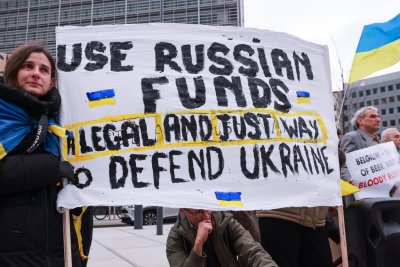
Ukrainians hold signs during a protest demanding the use of frozen Russian assets on the sidelines of the Economic and Financial Affairs Council meeting in Brussels on Friday. Belgium has been blocking an EU plan to approve a large “reparations loan” for Ukraine backed by frozen Russian state assets because it fears major legal and financial risks. Russia has filed a lawsuit as a warning. Photo by Olivier Hoslet/EPA
Dec. 12 (UPI) — Russia’s Central Bank has filed suit against the Belgian bank that holds about $217 billion in frozen Russian state assets to stop the European Union from using that money to make a large loan to Ukraine.
Most of Moscow’s frozen cash is held in Belgian bank depository Euroclear. The EU wants to extend a loan to Ukraine, which is running out of money to fight the Russian invasion of the country. But Russia wants to block that loan and accuses the EU of theft.
The Central Bank filed the suit in the Moscow City Arbitration Court as a warning to the EU. It said in a statement that Euroclear was participating in “unlawful activities” and that it filed the suit because the EU’s executive was “considering proposals for direct or indirect use of Bank of Russia assets without authorization.”
“A Moscow court cannot force Euroclear to comply, and any ruling would be unenforceable abroad,” said Alexandra Prokopenko, a former Russian Central Bank official and a fellow at the Carnegie Russia Eurasia Center, told The New York Times.
“But it is not meaningless: It creates formal documentation of Russia’s legal claims and serves as a political signal ahead of international litigation.”
Prokopenko also said an investment protection agreement exists between Russia, Belgium and Luxembourg that requires any loss to be compensated. That means Moscow could use that in future international arbitration against Belgium. So Belgium is worried about being left responsible in the future.
EU leaders will discuss the potential loan at a meeting Thursday in Brussels of leaders of all 27 member states. Belgium’s Prime Minister Bart de Wever was in London to meet with British Prime Minister Keir Starmer on Friday. The frozen assets were on the agenda, British officials have said.
European countries have been pushing Belgium to agree to the plan, but it’s trying to convince other countries to share the risk. Although most of Russia’s cash is at Euroclear, but smaller amounts are held in other European countries.
The loan plan would use the frozen assets to back a $106 billion loan to Ukraine, meted out over the next two years. Ukraine would only have to pay it back if Russia pays reparations.
Ukraine’s President Volodymyr Zelensky said about the funds, “It’s only fair that Russia’s frozen assets should be used to rebuild what Russia has destroyed — and that money then becomes ours.”
The loan plan could also cause a clash with Washington. In the U.S.-created peace plan that is still being negotiated, that frozen money was to be used to help rebuild Ukraine. But EU officials argue that if Ukraine falters financially, it will be in a weakened position in peace negotiations.
Using the frozen funds could “destabilize the international financial system,” Euroclear chief executive Valérie Urbain said.
“Belgium is a small economy,” Veerle Colaert, professor of financial law at KU Leuven University, told the BBC. “Belgian GDP is about [$661.5 billion] — imagine if it would need to shoulder a [$216.5 billion] bill.” She also said the loan may violate EU banking rules.
“Banks need to comply with capital and liquidity requirements and shouldn’t put all their eggs in one basket. Now the EU is telling Euroclear to do just that,” Colaert said.
“Why do we have these bank rules? It’s because we want banks to be stable. And if things go wrong it would fall to Belgium to bail out Euroclear. That’s another reason why it’s so important for Belgium to secure water-tight guarantees for Euroclear.”
European champion Gian van Veen has booked his place in the second round of the PDC World Championship but 12th seed Ross Smith suffered a shock first-round exit.
Expectations are high for Van Veen after a successful 2025 and, after falling at the first hurdle in his two previous visits to Alexandra Palace, there will have been an element of relief following his 3-1 win over Spain’s Cristo Reyes.
The Dutch 10th seed, a two-time world youth champion, battled to victory in the first set despite being short of his best before stepping it up in the second, averaging 107, to go 2-0 up.
Reyes hit back in the third after taking out 167 to win the first leg and earned a break in the fourth, only for Van Veen to show his grit and come back to secure his first win at the tournament.
“Finally across that line,” the 23-year-old, who averaged 98.91, told Sky Sports.
“Today, walking on this stage, you feel like a 16-year-old again – I was so nervous! But as soon as the first darts went in, I was like ‘OK, you belong here’.”
But while Van Veen can prepare for round two, Smith is heading home after a 3-2 loss to 50-year-old debutant Andreas Harrysson of Sweden.
Smith missed six match darts in the fourth set and was made to pay as Harryson pressed on to win the deciding set by three legs to one.
Also in the evening session, England’s Ricky Evans beat Hong Kong’s Man Lok Leung 3-0 and Australian 16th seed Damon Heta earned a 3-1 win over Ireland’s Steve Lennon.
MODEL Emily Ratajkowski looks fab-yule-ous as she poses in a red dress for a festive event.
The 34-year-old wore the minidress, tights and heels at the event for hair brand Kérastase in New York on Thursday evening.
Sign up for the Showbiz newsletter
Thank you!
Model Emily Ratajkowski posed in a festive red dress at an event for a hair brandCredit: GettyEmily was in attendance for Kérastase in New York, wearing a minidress, tights and heelsCredit: Getty
Emily finalized her divorce with the film producer, who faced a slew of sexual misconduct allegations, in July, after filing for divorce in September 2022.
Incident in November latest reported instance of Trump administration’s increasingly aggressive maritime tactics.
Published On 12 Dec 202512 Dec 2025
Share
United States forces raided a cargo ship travelling from China to Iran last month, according to the Wall Street Journal, in the latest reported instance of increasingly aggressive maritime tactics by the administration of US President Donald Trump.
Unnamed officials told the newspaper that US military personnel boarded the ship several hundred miles from Sri Lanka, according to the report on Friday. It was the first time in several years US forces had intercepted cargo travelling from China to Iran, according to the newspaper.
Recommended Stories
list of 3 itemsend of list
The operation took place in November, weeks before US forces seized an oil tanker off the coast of Venezuela earlier this week, citing sanctions violations. It was another action Washington has not taken in years.
US Indo-Pacific Command did not immediately confirm the report. An official told the newspaper that they seized material “potentially useful for Iran’s conventional weapons”. However, the official noted the seized items were dual-use, and could have both military and civilian applications.
Officials said the ship was allowed to proceed following the interdiction, which involved special operation forces.
Iran remains under heavy US sanctions. Neither Iran nor China immediately responded to the report, although Beijing, a key trading partner with Tehran, has regularly called the US sanctions illegal.
Earlier in the day, Chinese Foreign Ministry spokesperson Guo Jiakun condemned the seizure of the oil tanker off the coast of Venezuela, which was brought to a port in Texas on Friday.
The action came amid a wider military pressure campaign against Venezuela, which Caracas has charged is aimed at toppling the government of leader Nicolas Maduro.
Beijing “opposes unilateral illicit sanctions and long-arm jurisdiction that have no basis in international law or authorisation of the UN Security Council, and the abuse of sanctions”, Guo said.
White House spokesperson Karoline Leavitt told reporters on Thursday the Trump administration would not rule out future seizures of vessels near Venezuela.
Weekly insights and analysis on the latest developments in military technology, strategy, and foreign policy.
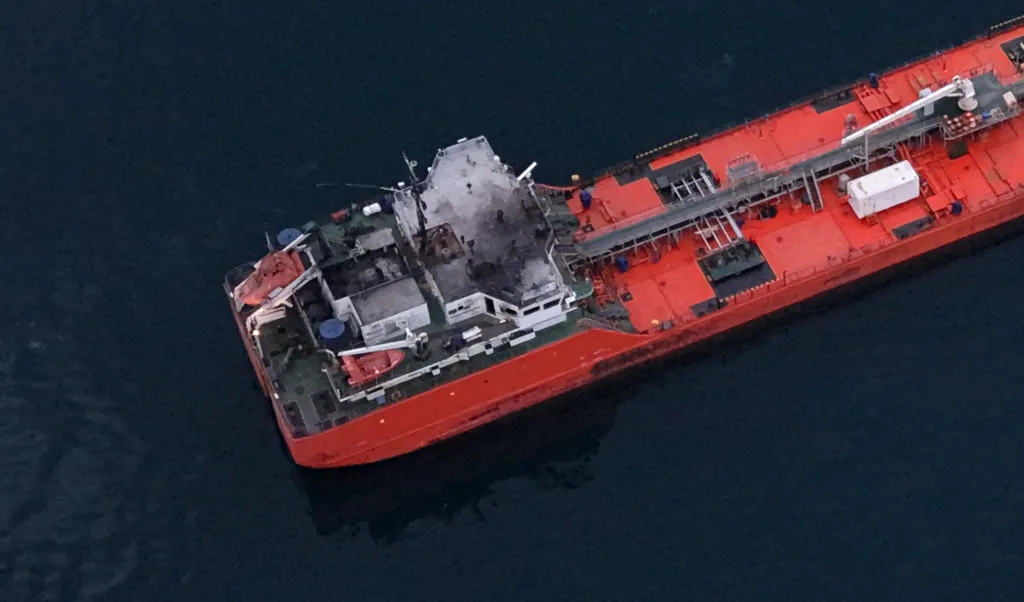
A Russian Shahed kamikaze drone strike on a ship in the port of Chornomorsk was in retaliation for a recent spate of Ukrainian attacks on Russian oil tankers in the Black Sea, the Ambrey maritime security firm tells us. The attack on the Turkish-owned CENK-T roll-on, roll-off cargo ship comes after Russian President Vladimir Putin warned he would “cut Ukraine off from the sea” in response to Ukraine’s stepped-up campaign against Russian commercial shipping.
As we have previously reported, Ukraine carried out three attacks on Russian-connected oil tankers in the Black Sea in late November and early December. Reports emerged on Wednesday that they carried out a fourth one, which you can read more about later in this story.
“This attack was the first retaliation,” Joshua Hutchinson, a former Royal Marine commando now serving as the company’s Managing Director of Risk and Intelligence, told us Friday afternoon.
Video emerging on social media showed several angles of the attack. One showed theShahed flying over the port of Chornomorsk before the CENK-T‘s bow became engulfed in flames.
Early reports on this incident from both Ambrey and Russian media claimed Russia used an Iskander-M ballistic missile to carry out the attack, but the video clearly shows otherwise. While it’s possible another strike occurred using a ballistic missile, we have seen no evidence of it at this time.
SON DAKİKA | Türk gemisinin vurulma anı Türk gemiciler tarafından kaydedildi.
🔴 Türk kargo gemisi CENK-T Rus füzesiyle vuruldu.
🔴Sakarya-Karasu’dan kalkan gemi, Romanya üzerinden Ukrayna Odesa Limanı’na giderken saldırıya uğradı. pic.twitter.com/9U1TlI2BTg
A separate video showed different views of the 606-foot-long Panamanian-flagged vessel in flames following the strike. One view appeared to be across the harbor, while another was a closer view, dockside, with the ship burning and people running from the scene. The strike injured at least one person, according to Ambrey.
Kargo gemisi CENK-T, Rus füzesiyle vuruldu.
▪️Sakarya-Karasu’dan Romanya’ya, oradan Ukrayna’nın Odesa Limanı’na giden jeneratör taşıyan Panama bayraklı yolcu ve konteyner gemisi CENK-T, Rus İskender füzesinin hedefi oldu.
In addition to the CENK-T being hit, Ukrainian President Volodymyr Zelensky said several other targets in the Odesa region were attacked in a volley of missile and drone strikes. Though Russia has frequently attacked Ukrainian ports, this incident marks an escalation to the Black Sea shipping wars, increasing the danger to commercial vessels regardless of nation of origin, Hutchinson told us.
“We are heading to an uncharted time,” he explained. “We are now seeing two state actors attacking commercial shipping.”
While Russia has hit Ukrainian ports before, strikes on ships have been largely incidental. A concerted campaign against vessels would make shipping companies think twice before sending vessels into this area due to the risks to ships and crews. We saw that play out when the Houthis were attacking Red Sea shipping and a large percentage of companies opted to avoid the region. This would be very problematic for Ukraine.
Zelensky decried the attack, saying it was another sign Russians aren’t interested in peace.
“Today’s Russian strike, like many other similar attacks, had, and could not have, any military sense,” the Ukrainian leader stated on X. “A civilian ship in the Chornomorsk port was damaged. This once again proves that the Russians not only do not take the current chance for diplomacy seriously enough, but also continue the war aimed at destroying normal life in Ukraine.”
Today, the Russian army carried out a missile strike on our Odesa region, and last night there was also a Russian attack on Odesa’s energy infrastructure. At one point we talked about the situation in this city and the people of Odesa with President Trump.
— Volodymyr Zelenskyy / Володимир Зеленський (@ZelenskyyUa) December 12, 2025
The Russians have not officially commented on the CENK-T strike; however, Russian media acknowledged that it was in response to the attacks that damaged the four Russian ships and that the tempo could increase.
“Earlier, Vladimir Putin directly stated that the strikes by the Russian Armed Forces on Ukrainian ports are a completely justified response to Kyiv’s actions,” the Russian Readovka media outlet suggested. “At the same time, the sinking of just 10-15 ships in one port could paralyze its operations.”
The most recent of those took place on Wednesday when Sea Baby drones from Ukraine’s state security service (SBU) attacked the Serbian-flagged crude oil tankerDashan in the Black Sea. Video of that attack showed the drones approaching the ship, which erupted in flames.
Ukraine’s SBU security service says its Sea Baby naval drones today struck another Russian “shadow fleet” tanker in the Black Sea.
Video from an SBU source purports to show the oil tanker “Dashan” being hit by the attack drone and explosions in the stern area. “The vessel,… pic.twitter.com/mtfBqYe1gQ
The Dashan attack, as we noted in our previous coverage, was preceded by others. On Dec. 2, a Ukrainian aerial drone struck the Russian-owned oil tanker Midvolga-2 about 80 miles north of the Turkish city of Sinop. A few days earlier, oil tankers, Kairos and Virat, were struck in quick succession off Turkey’s Black Sea coast by Ukrainian Sea Baby drones. These vessels are reportedly part of Russia’s “shadow fleet” that evades sanctions.
An aerial view of the Midvolga-2, a vessel sailing from Russia to Georgia, as it arrived off the coast of Sinop, a northern province of Turkiye following an attack in international waters in the Black Sea on December 2, 2025. (Photo by Ramazan Ozcan/Anadolu via Getty Images) Anadolu
Ukraine, as we have frequently reported, is waging a campaign against Russia’s energy infrastructure involving numerous attacks on refineries, ports and other supply hubs inside Russia. The attack on the Dashan is a further indication that Ukraine is taking this fight to Russian vessels at sea.
Meanwhile, the Trump administration has reportedly signaled its support for the Ukrainian attacks on Russian vessels
The Atlantic suggested that while the Biden administration feared escalation and opposed attacks on Russian vessels in international waters, Trump has taken the opposite tack. The publication reported that not only did the Trump administration not object to strikes, but in a number of cases, approved the transfer of intelligence to Kyiv, which was used to hit oil infrastructure facilities in Russia. The War Zone cannot independently verify that claim.
In the wake of today’s attack, Ambrey issued a warning to all ships making Black Sea port calls. These vessels “are advised to conduct comprehensive voyage threat assessments,” the company stated. “The crew is advised to remain within the designated Safe Muster Point (SMP) during missile attacks on infrastructure. The SMP should be located above the waterline, amidships and low-down in the superstructure.”
The coming days will tell if both parties continue to prosecute commercial shipping targets and what that could mean for maritime access to Ukraine.
Lord Krishna, Hinduism’s compassionate god of divine love, is often portrayed with a flute in hand. Perhaps that has something to do with the story that when he cut a large drum in half, producing two hand drums for rhythmic accompaniment, which is a mythical origin for the tabla, these small hand drums came to be treated like a back-up rhythm section. Melody was the star. In classical Indian music, sitar masters were stars, and tabla players traveled second class and were poorly paid.
A father and son changed that. Alla Rakha was the loyal tabla partner of Ravi Shankar, who created an international rage for raga in the 1960s, holding sway over the likes violinist Yehudi Menuhin, the Beatles and Philip Glass. His son, Zakir Hussain, an equally great tabla guru, expanded tabla allure into jazz, swaths of pop music, film and television. He became one of the most convincing early proponents of the world music movement, readily fitting in tabla with flamenco as well as with African, Indonesian , Afro-Cuban, you-name-it drumming. Hussain and his tabla’s most warmly human sounds have entered the wide world’s soundtrack.
Monday will be the first anniversary of Hussain’s death, at age 73, from a pulmonary illness. His last work was a collaboration with Third Coast Percussion, which commissioned “Murmurs of Time” in celebration of the Chicago ensemble’s 20th anniversary. It was the only work by one of the world’s greatest percussionists for a percussion ensemble. Hussain lived long enough to record “Murmurs” with the group but not hear the final mix, let alone play it in public.
The recording with Hussain, “Standard Stoppages,” along with other percussion works, came out just in time for 2026 Grammy nominations and shows up in — and should be an obvious shoe-in to win in — the category for chamber music/small ensemble performance. In the meantime, Third Coast has been touring “Murmurs” featuring a Hussain disciple, Salar Nader, as soloist. Last weekend Third Coast brought the engaging CD program to a sold-out Nimoy, as part of the CAP UCLA season.
Nader, who was born in Hamburg to a family of Afghani refugees and grew up in California, began studying with Hussain at age 7. He is one of the most prominent of the next generation of tabla players poised to take the next step for their instrument, begging the question of whence tabla.
In retrospect, the path taken by Alla Rakha and Zakir Hussain was a lesson in how to create something new and widespread out of the devotion to a profound, yet arcane, learned, physically demanding and extraordinarily complex tradition.
Rakha may have been a formidable traditionalist, so much so that tabla was his whole education, but he found pleasure (and income) writing songs for Bollywood films in the early 1950s. When he returned full time to classical Hindustani music, working with various soloists, he eventually hooked up with Shankar, with whom he then worked almost exclusively. With their quirky and exciting question-and-answer dialogues, the duo riveted the the Monterey Jazz Festival and San Francisco’s Fillmore Auditorium (where I heard them regularly as a college student), to say nothing of Woodstock. No one wanted one without the other.
Hussain (his name was given him by a wandering holy man who showed up at his parents’ door one morning shortly after he was born) heard tabla in the womb. His father lovingly tapped delicate rhythms on his baby boy as he held him in his arms. By his early teens, Hussain was already a Mumbai sensation.
However strict a teacher, Rakha believed in individuality, carbon copies being for the waste bin. And Hussain grew up not only on Hindustani music but the records by the Doors, the Grateful Dead and Jefferson Airplane his dad brought back from his West Coast appearances with Shankar. It wasn’t long before Hussain found himself on the West Coast as well, heady with its 1960s pop music scene. He became friends with Dead drummer Mickey Hart. He met George Harrison, who convinced him that there were thousands of rock drummers but no one with Hussain’s tabla talent.
Even so, Hussain became a tabla master of all trades. He acted, engagingly, in the 1983 feature “Heat and Dust,” along with contributing to the soundtrack. He became part of world-music-jazz ensemble Shakti, founded by guitarist John McLaughlin. Hussain was the drumming glue for Hart’s percussion revolution begun with “Planet Drum,” the recording that brought world music into the world of pop.
Before long, Hussain became a fixture in jazz (playing with the likes of Herbie Hancock and Charles Lloyd). He showed up on the soundtracks of “Apocalypse Now” and made Ryuichi Sakamoto’s score for “Little Buddha” work. He played bluegrass with Béla Fleck. He counted Michael Tilson Thomas, Barack Obama and Nancy Pelosi among his fans.
But while Hussain put tabla center stage, his real accomplishment was as a collaborator. Indian rhythm is incredibly complex and sophisticated. Its own center is religious practice. Tabla players sing the rhythms as well as playing them, the most difficult and astonishing form of chanting there is. The drums can produce melody and, while mellow, come alive with a speed that dramatically raises the pulse rate.
In “Murmurs of Time,” Hussain created a kind of tabla concerto. The ensemble spends much of its time on mallet instruments, setting the stage, keeping a melodic line or pulse going. The opening is an awakening, with group vocalized rhythms, but that is something only a tabla player can really pull off. “Murmurs” is ultimately through with a rousing tabla and drum set dialogue at the end, reminiscent of his father and Shankar’s gripping finales.
Hussain wrote “Murmurs” for himself, working closely with Third Coast over a year. “Wrote” isn’t quite right. He didn’t write down his own part; he needed room for freedom and improvisation. Nader, very impressively, learned the demanding solo from the recording, and he then, as Hussain would have expected, added his own character.
That is something that will need to grow over time. On recording, we have a deeply moving farewell. In concert, “Murmurs” transitions into something new, while, as yet a work in progress, still honoring the guru.
In a discussion on stage after the concert, Nader, who lives in Los Angeles, emphasized his own interest in what’s next for tabla. He too has worked in film, including participating on the soundtrack for Mira Nair’s “Reluctant Fundamentalist.” He’s had fling with Broadway with “The Kite Runner.” He said he’s ready for almost anything. He’s worked in hip-hop, noting tabla is a natural — and it is, “Planet Drum” having been an early influence.
Monterrey, Mexico – In April, Mexican President Claudia Sheinbaum announced the country’s aerospace industry could see sustained annual growth of as much as 15 percent over the next four years, and attributed the sector’s expansion to a robust local manufacturing workforce, increasing exports, and a strong presence of foreign companies.
But with the review of the United States-Mexico-Canada Agreement (USMCA) coming up – the free-trade treaty between the three countries that helped Mexico’s aerospace sector to grow and flourish – the industry’s future is no longer certain.
Recommended Stories
list of 4 itemsend of list
Stakeholders warn that ensuring investment stability and strengthening labour standards are essential to protecting the sector’s North American supply chain.
Mexico is striving to become one of the top 10 countries in aerospace production value, a goal outlined in Plan Mexico, the country’s strategic initiative to enhance global competitiveness in key sectors.
As the sixth-largest supplier of aerospace parts to the US, the industry has benefited significantly from the USMCA, which fostered regional supply chain integration, said Monica Lugo, director of institutional relations at the consulting firm PRODENSA.
However, the integration is no guarantee of business continuing to grow as the country is at an “unprecedented moment” with US President Donald Trump and his wide-ranging tariff policies.
Lugo, a former USMCA negotiator, said that recent tariffs on materials like steel and aluminium — critical to the aerospace sector— have eroded trust in the US as a reliable partner. She predicts that if current conditions continue, the sector risks losing capital, investments and jobs.
“Having this great uncertainty – one day it’s on, the next it’s off, who knows tomorrow – and based on no specific criteria, but rather on the president’s mood, creates chaos and severely damages the country and the economy,” she said.
On December 4, Trump suggested the US might let the USMCA expire next year, or negotiate a new deal. This follows comments by US Trade Representative Jamieson Greer to US news outlet Politico that the administration is considering separate deals with Canada and Mexico.
A booming aerospace sector
The Mexican aerospace market is valued at $11.2bn, and is expected to more than double to $22.7bn by 2029, Sheinbaum said, citing data from the Mexican Aerospace Industry Federation (FEMIA). Home to global companies like Bombardier, Safran, Airbus, and Honeywell, Mexico has established itself as a key player in the global aerospace market and is now the world’s twelfth-largest exporter of aerospace components.
Marco Antonio Del Prete, secretary of sustainable development in Queretaro, attributes this success in part to heavy investment in education and training. In 2005, the Queretaro government promised Canada’s Bombardier that it would invest in education and set up the Aeronautical University, which now offers programmes ranging from technical diplomas to master’s degrees in aerospace manufacturing and engineering.
“Since Bombardier’s arrival, an educational and training system was created that allows us to develop talent in a very efficient way, let’s say, fast track,” Del Prete told Al Jazeera.
Bombardier has served as an anchor, propelling Queretaro’s rise as a high-skilled manufacturing hub for parts and components.
While the Bombardier plant in Queretaro originally focused on wiring harnesses, it has evolved to specialise in complex aerostructures, including the rear fuselage for the Global 7500, Bombardier’s ultra-long-range business jet, and key components for the Challenger 3500, the mid-sized business jet.
Marco Antonio Carrillo, a research professor at the Autonomous University of Queretaro (UAQ), pointed out that the area’s wide educational offerings have cultivated a powerful workforce, which has gained significant attention from aeroplane makers, mainly from the US, Canada and France.
“This development [of Queretaro] has been, if you look at it in terms of time, truly explosive,” Carrillo said.
Mexico also aims to join France and the US as the third country capable of fully assembling an engine for Safran.
But the International Association of Machinists and Aerospace Workers (IAM) Union, which represents more than 600,000 workers in Canada and the US, is worried that progress could lead to more advanced manufacturing and assembly work to eventually shift to Mexico, given the local investment in aeronautical universities and training.
“Right now they’re [Mexican workers] doing more entry-level type things, but our concern is that later on, larger pieces of the aerospace operation will go to Mexico,” Peter Greenberg, the IAM’s international affairs director, told Al Jazeera.
High-skilled, low-cost workforce
Of the three countries in the USMCA agreement, Mexico’s biggest attraction has been its low-cost manufacturing.
Edgar Buendia and Mario Duran Bustamante, economics professors at the Rosario Castellanos National University, cite Mexico’s low labour costs and geographical proximity to the US as the country’s key advantages. This is partly why the US has intensified pressure on the Mexican government, including during the initial USMCA negotiations in 2017, to raise wages to level the playing field and reduce unfair competition.
“Most US companies have incentives to move their production here in Mexico, given the [low] wages and the geographic location. So, to prevent that from happening, the United States is pressuring Mexico to raise labour standards, ensure freedom of association, and improve working conditions,” Buendia told Al Jazeera, things that will benefit Mexican workers even as employer-dominated labour groups worry that they may lose their advantage.
The IAM originally opposed the USMCA’s predecessor, NAFTA. Greenberg said that while they acknowledge USMCA will continue, US and Canadian workers “would probably be perfectly happy” if the agreement ended as the NAFTA deal had led to plants being shuttered and workers being laid off as jobs moved from the US and Canada to low-cost Mexico.
“There is a need for stronger incentives to keep work in the United States and Canada. We want to see the wages in Mexico go up so that it doesn’t become automatically a place where companies go to because they know they will have lower wages and workers who do not have any bargaining power or strong units,” Greenberg added.
Under Sheinbaum’s Morena party, Mexico has raised the minimum wage from 88 pesos ($4.82) in 2018 to 278.8 pesos ($15.30) in 2025, with the rate in municipalities bordering the US reaching 419.88 pesos ($23). On December 4, Sheinbaum announced a 13 percent rise in the minimum wage — and 5 percent for the border zone— set to begin in January 2026.
Despite these increases and the competitiveness of wages in the aerospace sector, researchers agree that a significant wage gap persists between Mexican workers and their US and Canadian counterparts.
“The wage gap is definitely abysmal,” said Javier Salinas, a scholar at the UAQ Labor Center, specialising in labour relations in the aerospace industry. “The [aerospace] industry average is between 402 [Mexican pesos] and 606, with the highest daily wage being 815. [But] 815, converted to US dollars, is less than $40 for a single workday.”
By contrast, Salinas estimates that a worker in the US earns an average of about 5,500 pesos, or $300, per day.
‘Protection unions’
The USMCA required Mexico to end “protection unions”, a longstanding practice where companies sign agreements with corrupt union leaders — known as “sindicatos charros” — without the workers’ knowledge. This system has been used to prevent authentic union organising, as these sindicatos often serve the interests of the company and government authorities rather than the workers.
Salinas argues that despite the 2019 labour reform, it remains difficult for independent unions to emerge. Meanwhile, “protection unions” continue to keep wages low to maintain competitiveness.
“But imagine, a competitiveness based on precarious or impoverished working conditions. I don’t think that’s the way forward,” Salinas said.
Even with new labour courts and laws mandating collective bargaining, organising in Mexico remains dangerous. Workers attempting to create independent unions frequently face firing, threats, or being blacklisted by companies.
Humberto Huitron, a lawyer specialising in collective labour law and trade unionism, explains that Mexican workers, including in the aerospace sector, often lack effective representation. “There’s discrimination during hiring or recruitment. They don’t hire workers who are dismissed for union activism,” he said.
Beyond demanding that Mexico enforce its labour reform, the IAM is calling for the expansion and strengthening of the Rapid Response Mechanism (RRM), which allows the US to take action against factories if they fail to uphold freedom of association and collective bargaining rights.
While not in the aerospace sector, the US recently invoked the RRM against a wine producer in Queretaro. Previous such actions in the state had been limited to the automotive sector.
“No one knows exactly what is going on in all of the factories in Mexico,” Greenberg said.
According to FEMIA, there are 386 aerospace companies operating in 19 states. These include 370 specialised plants that generate 50,000 direct jobs and 190,000 indirect jobs.
Del Prete, however, assured Al Jazeera that, in Queretaro, unions are independent and “they have their own organisation.”
Salinas points out that in Queretaro, there has not been a strike in decades, adding, “Imagine the control of the workforce: 29, 30 years without a single strike in the private sector.”
Netflix has announced a proposed $72 billion acquisition of Warner Bros Discovery, aiming to absorb HBO Max and consolidate a subscriber base of 428 million. To justify the massive scale, Netflix argues it needs this merger to compete effectively with YouTube, which Nielsen ranks as America’s most-watched TV platform. However, antitrust experts and former regulators are deeply skeptical, noting that YouTube’s model built on user-generated content, influencers, and advertising, differs fundamentally from Netflix’s premium, scripted, subscription-based ecosystem. The Department of Justice and global regulators are expected to scrutinize the deal closely, particularly Netflix’s claim that it competes in the same market as YouTube.
Why It Matters
This isn’t just another media merger, it’s a defining test for how regulators view competition in the digital entertainment era. If accepted, Netflix’s “YouTube as rival” argument could set a precedent allowing giant streaming platforms to consolidate further by defining their market extremely broadly. The deal would give Netflix unprecedented control over both premium original content and major legacy film/TV libraries, potentially allowing it to dominate pricing and distribution in the paid streaming sector. How regulators respond will signal whether antitrust enforcement can keep pace with the evolving, platform-driven media landscape.
Critical Analysis
Netflix’s YouTube argument faces several critical weaknesses. First, content and business models are fundamentally different: Netflix invests billions in exclusive, scripted originals and operates on a subscription-first model, while YouTube monetizes user-generated videos through ads and creator partnerships. Second, historical precedent works against Netflix: regulators have repeatedly rejected broad market definitions in favor of specific “sub-markets” (e.g., “premium natural supermarkets” in the Whole Foods case), and internal company documents often reveal how firms really view their competition.
Third, new merger review rules will force Netflix to turn over internal strategic documents early, which could undermine its public claims if those materials don’t mention YouTube as a primary competitor. Finally, Netflix’s claim that bundling will lower prices for consumers is viewed with extreme skepticism by regulators, who often see such promises as unenforceable and worry more about price hikes for non-bundled users.
Conclusion
Netflix faces an uphill battle to convince regulators that swallowing Warner Bros Discovery is necessary to compete with YouTube. The DOJ is likely to define the relevant market narrowly, around premium, subscription-based streaming, where the combined entity would hold overwhelming share and pricing power. Unless Netflix can produce compelling internal evidence that it genuinely views YouTube as a direct competitor for the same viewer time and dollars, this deal is at high risk of being challenged or blocked. The outcome will not only shape the future of streaming consolidation but also test the boundaries of modern antitrust logic in a platform-dominated world.
This briefing is based on information from Reuters.




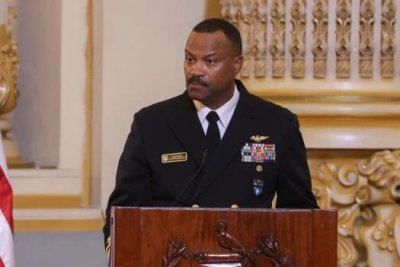






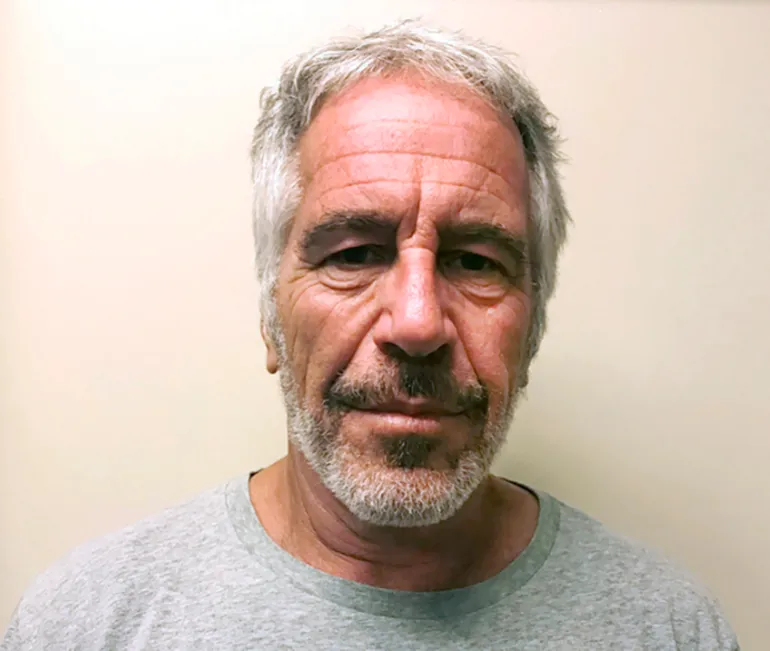







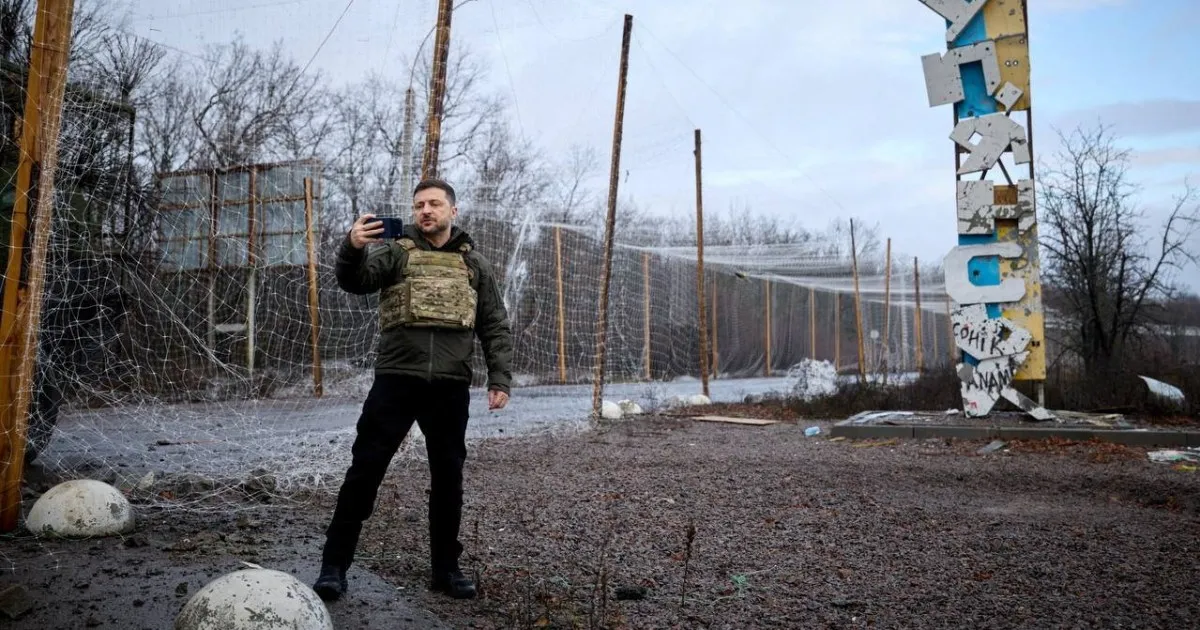
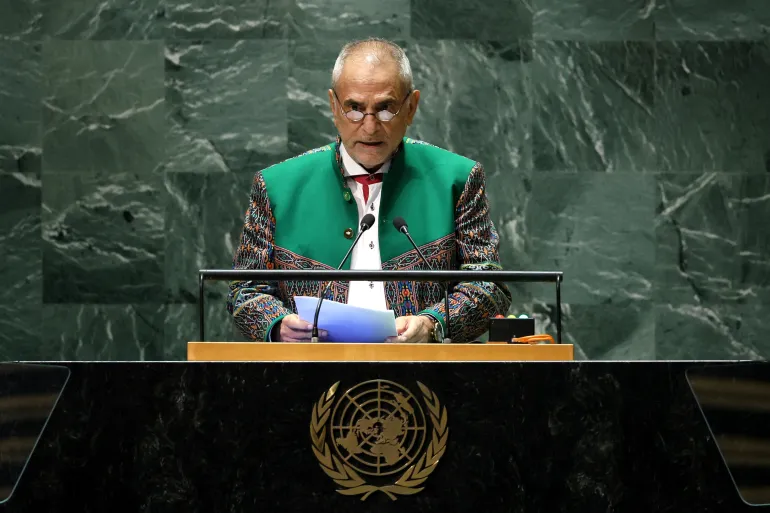


![While East Timor has one of the highest Catholic populations worldwide, LGBT rights have become more accepted, with even President Ramos - Horta a supporter. 2. Pride Parade from East Timor ’ s capital, Dili, to the famed Cristo Rei statue of Christ, built by the Indonesians during the occupation [Ali MC/Al Jazeera]](https://i0.wp.com/www.aljazeera.com/wp-content/uploads/2025/12/East-Timor-Additional-2-2-1765528720.jpg?w=640&ssl=1)
![Despite more than two decades of independence, Timor - Leste remains one of the poorest countries in the region (Ali MC/Al Jazeera]](https://i0.wp.com/www.aljazeera.com/wp-content/uploads/2025/11/Ramos-Horta-Article-6-1764315950.jpg?w=640&ssl=1)