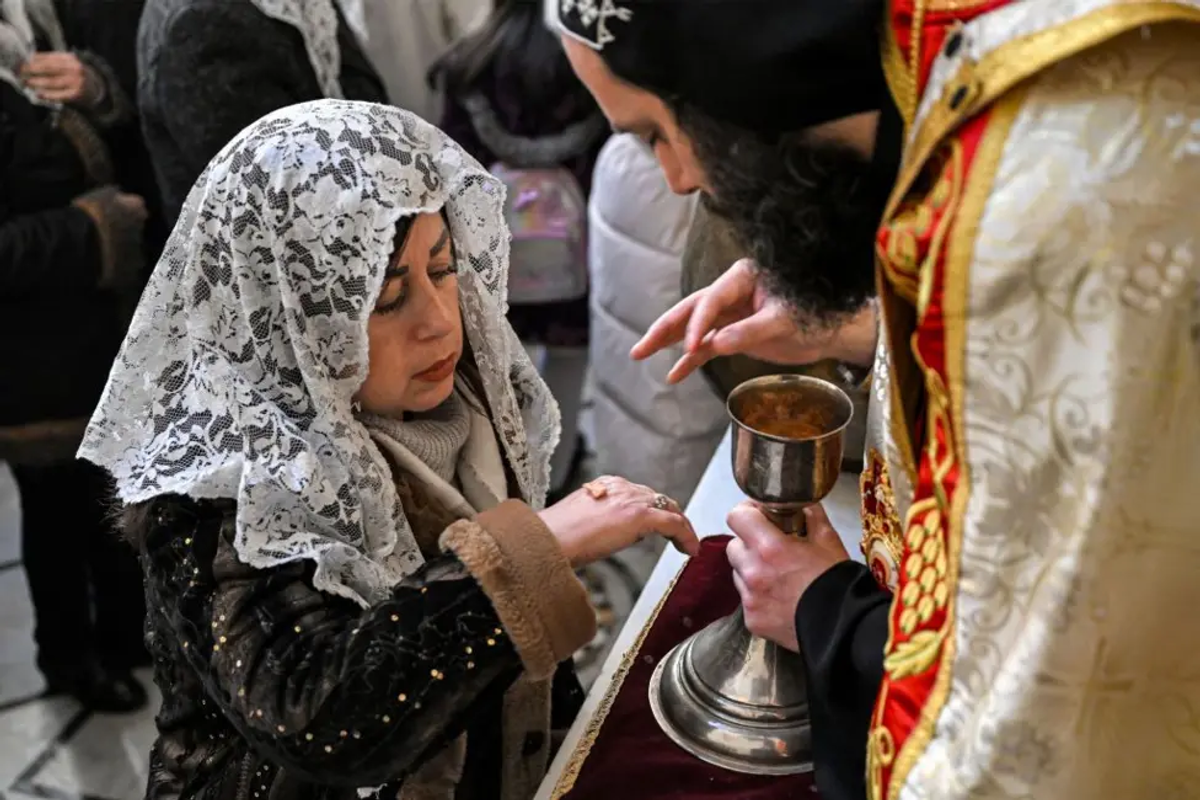
Armenian Christmas is a culmination of celebrations of events related to the birth and baptism of Christ.
The reason for the different date is that until the fourth century, Christ’s birth was celebrated by all Christian churches celebrated Christ’s birth on January 6th. Two of the Gospels in the Bible mention the birth of Christ but neither give any details as to the date. This lack of detail also combined with the celebration of birthdays not being a big Christian tradition and Easter being seen as the more important date.
As Christianity expanded into Western Europe, the people there had been celebrating a Roman holiday (‘Solis Invicti’) on December 25th. Rather than compete with an already popular holiday, the church simply decided to move Christmas Day to December 25th and celebrate January 6th as the Feast of the Epiphany. Undoubtedly, Solis Invicti itself was a holiday created to overwrite previous Pagan winter solstice celebrations.
In Armenia however, there was no such solstice tradition and Armenian Christians didn’t feel bound to move their Christmas from January 6th.
Two Apostles of Jesus, Bartholomew and St. Thaddeus (Jude) brought Christianity to Armenia in the first century. Because of these two founding apostles, the official name of the Armenian Church is the Armenian Apostolic Church. Christianity was declared as the state religion of Armenia in 301, making Armenia the first nation in the world to do so.
Things got more complicated with the adoption of the Gregorian calendar, as some regions in the Middle East stayed with the Julian Calendar and therefore Armenian Christmas there is still celebrated on 18th January.