zohran mamdani

U.S. marks 25 years since the Sept. 11 attacks

Americans commemorated the 25th anniversary of 9/11 on Friday, remembering the shock, the dead and the sweeping consequences of the al Qaeda attacks on symbols of U.S. might and prosperity.

The milestone anniversary brought memorial rituals — wreath-laying, flag-flying, moments of silence, vigils and readings of victims’ names — and volunteer projects in tribute to a day that about half of U.S. adults remember as the most historic event of their lifetime, according to a new poll. On Sept. 11, 2001, al Qaeda extremists hijacked four commercial jets and crashed them into New York’s World Trade Center, the Pentagon and a field near Shanksville, Pennsylvania, killing nearly 3,000 people.

Elsie Caldwell carried a photograph of her son Kenny Caldwell to the trade center to hear his name and all the others read aloud Friday morning. She last spoke to him that morning a quarter-century ago.

“Mom, I just want to let you know that I love you,” Caldwell said he told her in a final phone call. His remains, like those of many other victims, have never been recovered.

Trump attends Pentagon observance

The attacks brought down the World Trade Center’s twin towers — icons of U.S. economic power, and among the tallest buildings on Earth — and blew a hole in the Pentagon, the U.S. military’s fortress-like headquarters near Washington. The fourth plane was headed for Washington, officials concluded, but the aircraft went down in Pennsylvania after passengers and crew members stormed the cockpit and fought the hijackers.

“Sept. 11 reminded us of the terrible power of hate,” President Trump said Friday at the Pentagon’s anniversary ceremony Friday.

“The 25 years since have shown us the even greater power of the American spirit to endure and prevail, and to win,” added the Republican, who was in his native New York on 9/11.

Former President George W. Bush, who was in office on 9/11, and ex-Presidents Clinton, Obama and Biden and current Vice President JD Vance convened for the observance at the National Sept. 11 Memorial in New York. Other administration officials went to the Flight 93 National Memorial in Pennsylvania.

At ground zero, a new tribute to those who fell ill

For Angilic Casalduc, attending the New York commemoration “helps to show you’re not alone.” She lost her mother, Vivian Casalduc.

“There’s no timeline for grief, and unfortunately, no one can say how can you can grieve, but coming here once a year makes it feel just a little bit better,” she said.

Traditionally, there are no political speeches at the ground zero commemoration, where victims’ relatives read aloud the long list of names and added personal messages. They thanked first responders and the military, invoked religious faith, appealed for national unity and touched on the U.S. relationship with Saudi Arabia. The kingdom was the homeland of most of the hijackers but denied any involvement in the attacks.

Mostly, relatives spoke of, and to, loved ones — who some were too young to remember.

“You dreamed my whole life for me, and you only got eight months of it,” said Trisha Pakka, who lost her mother, Deepa Pakkala.

The ceremony has long been punctuated with moments of silence at key points in the attack timeline and this year organizers added another moment to honor people who were exposed to the clouds of toxic dust released by the twin towers’ fiery collapse and have since died of cancer and other illnesses. Questions remain about how many people developed health problems linked to the dust.

The impact of 9/11 endures

It’s a reminder of how the attacks’ long shadow has reached into many corners of life in the U.S. and beyond.

The U.S.-led global war on terrorism included invasions of Iraq and Afghanistan — the latter Washington’s longest war — and detentions and harsh interrogation of terror suspects in an international network of secret CIA prisons. The U.S. found and killed al-Qaida leader Osama bin Laden in Pakistan in 2011, but accused 9/11 mastermind Khalid Sheikh Mohammed still awaits a trial 23 years after his capture.

The attacks changed U.S. air travel, led to the creation of the Department of Homeland Security, prompted new federal surveillance and intelligence-gathering powers and banking regulations and generated ongoing debate over the balance between security and freedom.

Sept. 11 engendered a culture of individual vigilance summed up by the slogan “ if you see something, say something,” while a wave of patriotism propelled some Americans to join the military, fire departments, police forces or other public agencies.

Casey Kloepfer became a New York police officer this June. He was 4 when his father, Officer Ronald Kloepfer, was killed at the trade center.

“It’s big footsteps to fill, but it’s definitely something that I take very seriously and want to continue to honor him and be the best police officer I can,” the 29-year-old, who wears his father’s badge number, said by phone this week.

New York’s mayor comes under scrutiny

Amid the post-9/11 calls to service and appeals for national unity, the attacks also fanned mistrust, prejudice and hate crimes directed at Muslims.

In the quarter-century since, Muslim Americans have played a growing role in public life from statehouses to Congress to New York City Hall, where Zohran Mamdani is the city’s first Muslim mayor. Yet he faced some criticism for attending the anniversary ceremony at ground zero.

Republican ex-Gov. George Pataki and 9/11 victims’ relatives cited, among other things, past remarks that some of Mamdani’s political associates have made about the attacks. Former Mayor Rudy Giuliani, a Republican, also inveighed against Mamdani attending the remembrance, though the two shook hands there Friday.

Mamdani, a Democrat, said this week he loves the city and country and that he wanted the anniversary to focus on victims’ families, first responders and New Yorkers who helped one another after the attacks, which he called a “horrific act of terror.” The 34-year-old mayor was an elementary school student in New York on 9/11.

Times Square billboards pause advertisements

Remembrances extended far from the attack sites, including beams of light projecting from New Hampshire’s Mount Washington, a stair climb at Mississippi State University’s football stadium and a ceremony at Honolulu’s 9/11 memorial.

Sept. 11 isn’t a federal holiday, but Congress has designated it both Patriot Day and a National Day of Service and Remembrance.

“One appropriate way to remember is by serving,” says Jay Winuk, who lost his brother Glenn Winuk and then co-founded the volunteer organization 9/11 Day with friend David Paine. The group helps people find volunteer opportunities and this year arranged for dozens of Times Square billboards to pause their advertising at 9:11 a.m. Friday.

Instead, they simply displayed the time.

Peltz and Shaffrey write for the Associated Press. AP journalists Michael R. Sisak, Anthony Izaguirre, and Julie Walker contributed to this report.
Source link

Arab News | Netanyahu will make a quick trip to speak at the UN after Mamdani urged his arrest, diplomat says

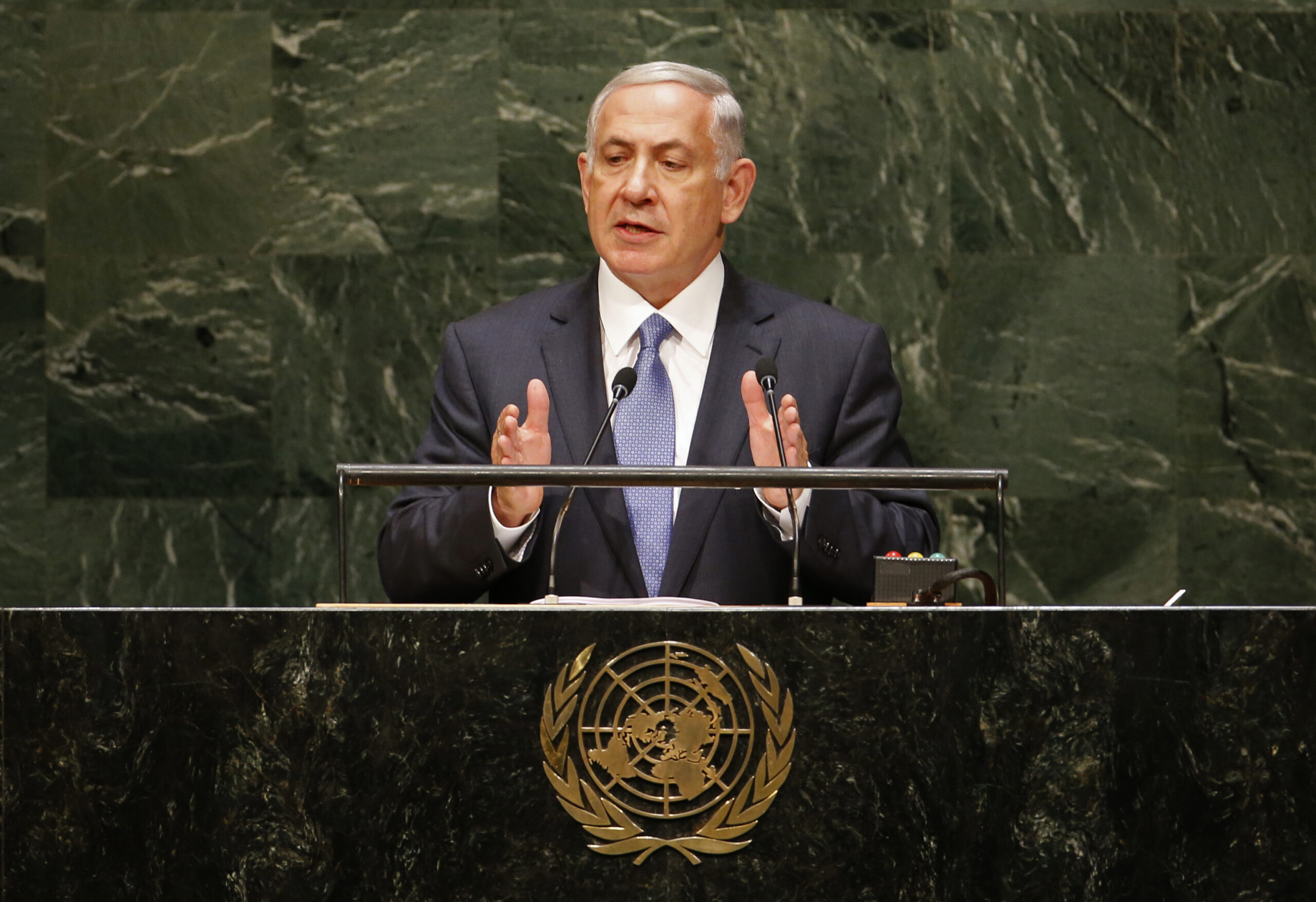
UNITED NATIONS: Israeli Prime Minister Benjamin Netanyahu is making a whirlwind 24-hour trip to speak at the annual U.N. gathering of world leaders this month because “there is no option” after New York’s mayor urged his arrest over the war in Gaza, Israel’s U.N. envoy said Tuesday.

Ambassador Danny Danon accused Mayor Zohran Mamdani of “doing politics” when he called the prime minister a “war criminal” and called for his arrest, which he had to withdraw because New York City does not have authority to take Netanyahu into custody.

“You know, it became very trendy to do politics by blaming Israel,” Danon added. He stressed, “For us, it’s important the prime minister will come.”

Netanyahu has become an increasingly polarizing figure over Israel’s war against Hamas in Gaza. Mamdani, whose office did not immediately respond to messages seeking comment Tuesday, has pointed to the arrest warrant issued by the world’s top war crimes tribunal against Netanyahu in November 2024, accusing him and another Israeli official of crimes against humanity.

The International Criminal Court warrant said there was reason to believe Netanyahu used “starvation as a weapon of warfare” by restricting humanitarian aid and intentionally targeting civilians in the campaign against Hamas — charges Israel denies.

While New York City does not have legal authority to execute an ICC arrest warrant, Mamdani has encouraged the federal government to do so. The U.S. and Israel are not members of the court, and the Trump administration has imposed a series of sanctions on ICC staffers in a campaign to dismantle the tribunal.

Netanyahu is scheduled to arrive in New York late on Sept. 23, address the U.N. General Assembly the afternoon of Sept. 24 and fly back to Israel that night, Danon said.

Danon noted that the meeting of leaders from the 193 U.N. member nations is taking place during the Jewish holidays and an election campaign as Netanyahu tries to keep his job as prime minister.

Danon said protests against Netanyahu would “create more chaos” on New York streets during the high-level meetings the week of Sept. 22-28.

Last year, there was a mass walkout from the U.N. General Assembly hall when Netanyahu started to speak from the podium. This year, Danon said, “I expect that there will be something like another show.”

But the ambassador said Netanyahu is experienced, “and I’m sure he will deliver his speech despite those attempts.”

Source link

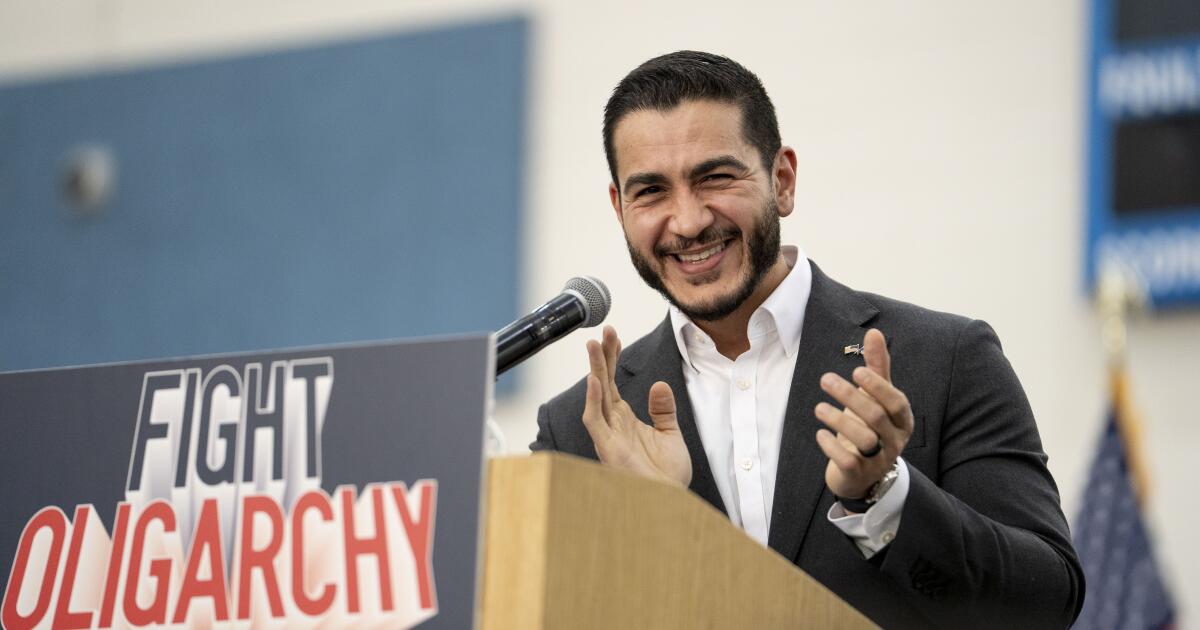
Abdul El-Sayed is the latest Muslim candidate to labeled an anti-American extremist.

Muslims are embroiled in yet another war, but this one isn’t in the Middle East, Southeast Asia or another predominantly Islamic region.

The battleground is Michigan. New York. Minnesota. Or anywhere else in the U.S. where a politician with a name like Abdul El-Sayed, Zohran Mamdani or Ilhan Omar have run for office — and won.

Today’s primary target is Michigan Democratic U.S. Senate candidate El-Sayed. Since his victory in August, the right’s main strategy to beat him this fall is a familiar one: paint El-Sayed, the Muslim son of Egyptian immigrants, as an anti-American extremist.

Vice President JD Vance recently told a crowd that “there’s something about Abdul El-Sayed that is very, very evil,” suggesting that Democratic nominee represents a divisive ideology. Representative Nancy Mace warned of a larger problem when she said that “every single Muslim holding public office in America” is “a threat to both national security and our republic.” Senator Tommy Tuberville flat-out called El-Sayed a “terrorist.”

“The message is that these candidates are a civilizational threat that is going to destroy American society and Western civilization from within,” says Salam Al-Marayati, president and co-founder of the non-profit Muslim Public Affairs Council. “You saw that a lot when Mamdani was elected.”

And given that he was elected, the Islamophobia playbook may need an overhaul.

New York City Mayor Mamdani and El-Sayed are among the more than 255 Muslim elected officials serving across 26 states and at nearly every level of government, according to the Council on American-Islamic Relations. That number includes a historical high of four Muslim Americans in Congress.

But as their political power has grown, so too has the bigoted rhetoric about the dangers of electing a Muslim to office. But now, there’s pushback.

CBS News, now under the leadership of conservative editor-in-Chief Bari Weiss, caught flack this week for publishing a story with the headline: “Michigan Democrat Abdul El-Sayed’s deleted tweets on Sept. 11 attacks invite scrutiny of past remarks.”

Criticisms of the piece were immediate, including commentary in The Atlantic that called the story a political dog whistle for using a tenuous connection to align El-Sayed’s name with the phrase “9/11 attacks.”

The pandemic-era posts from El-Sayed did not celebrate the tragedy or the terrorists who perpetrated the attacks. He instead compared the nearly 3,000 people killed in the September 11 attacks to the growing COVID-19 death toll in the U.S., and called for a strong response against the virus as there was to the 9/11 attacks. In the second tweet, El-Sayed wrote that more Americans had died from COVID than in the 9/11 attacks, so he hoped “that means we’ll spend the next ten years fighting a war for public health & against poverty … like we launched a global #WaronTerror after 9/11. We could save lives rather than take them.”

Hardly the smoking gun that puts him in an Afghan cave, scheming with bin Laden.

The tweets were deleted along with all of Al-Sayed’s other posts dated before July 2023. His campaign said he did so to prevent “old posts from being taken out of context.” Oh the irony.

Similar tactics were used against Mamdani in his run for mayor. After a particularly rousing speech leading up to his 2025 win, the New York Times noted that “…Republican elected officials and right-wing media figures [are] accusing him of promoting Islamic law, supporting terrorism and posing a threat to the safety of New Yorkers, especially Jews.”

Before Mamdani, Somali-American Rep. Ilhan Omar (D-MN) was the subject of “Send her back” chants at Trump rallies. Rep. Lauren Boebert (R-CO) publicly referred to Omar as a member of the “Jihad Squad.”

Nevertheless, Omar became the first African refugee to become a Member of Congress when she assumed office in January of 2019.

“What we have found out from previous elections is that candidates like Abdul Sayed are speaking to the masses,” says Al-Marayati. “They’re not speaking to the Democratic and Republican establishment who believe in this hierarchical structure where you only have a few in control, whether it’s corporate influence or lobbies or a certain race and religion that that are on top and the rest of us are merely visitors who should just be thankful for getting the crumbs from the economy. [El-Sayed and Mamdani] are returning to the vision of a pluralistic democracy.”

The latest efforts to derail El-Sayed’s campaign include weaponizing his association with leftist Twitch streamer Hasan Piker. Piker, who earlier this year appeared on the campaign trail with El-Sayed, is a major influence among progressives and a bogeyman to establishment Republicans and Democrats alike. The right can’t stop talking about his sharp criticisms of MAGA leadership, disdain for US foreign policy, and his pro-Palestinian stance. The left is terrified of being associated with Piker.

Now the candidate is pressed daily to answer for things said by Piker’ stretching as far back as 2019, when the influencer commented that “America deserved 9/11” (a quote that was incorrectly attributed to El-Sayed). El-Sayed has denounced the statement as “stupid,” and Piker has walked back his words.

But the unyielding scrutiny over dubious associations doesn’t cut both ways. Relative to El-Sayed, there’s been little inquiry of Michigan’s Republican U.S. Senate candidate, Mike Rogers, and his close ties with Pastor Lorenzo Sewell. A member of Roger’s faith advisory team, Sewell in August co-organized and led a “Christian Crusader March” and anti-Islam protest in Dearborn, MI alongside far-right activist and January 6 pardoned defendant Jake Lang.

Campaigns that leverage hate and fear against Muslim candidates and elected officials are nothing new, but they appear to be less effective with each passing election season. It’s possible more and more voters see through the prejudiced subterfuge, but it’s more likely that folks simply need a change.

“The real threat that Abdul Sayed represents is that he is knocking down that hierarchical structure, and that’s why you have the attacks on him of being a radical, being a terror sympathizer, being a threat to civilization,” says Al-Marayati. “When Thomas Jefferson was drafting the Charter on Religious Freedom, he included Muslims, and even he was accused of being a Muslim. So you’ve had this problem for a long time. Abdul Sayed’s affiliation with Thomas Jefferson is a badge of honor.”

Source link