zarif

Iran’s ex-FM Zarif proposes peace roadmap; Gulf points at erosion of trust | US-Israel war on Iran News

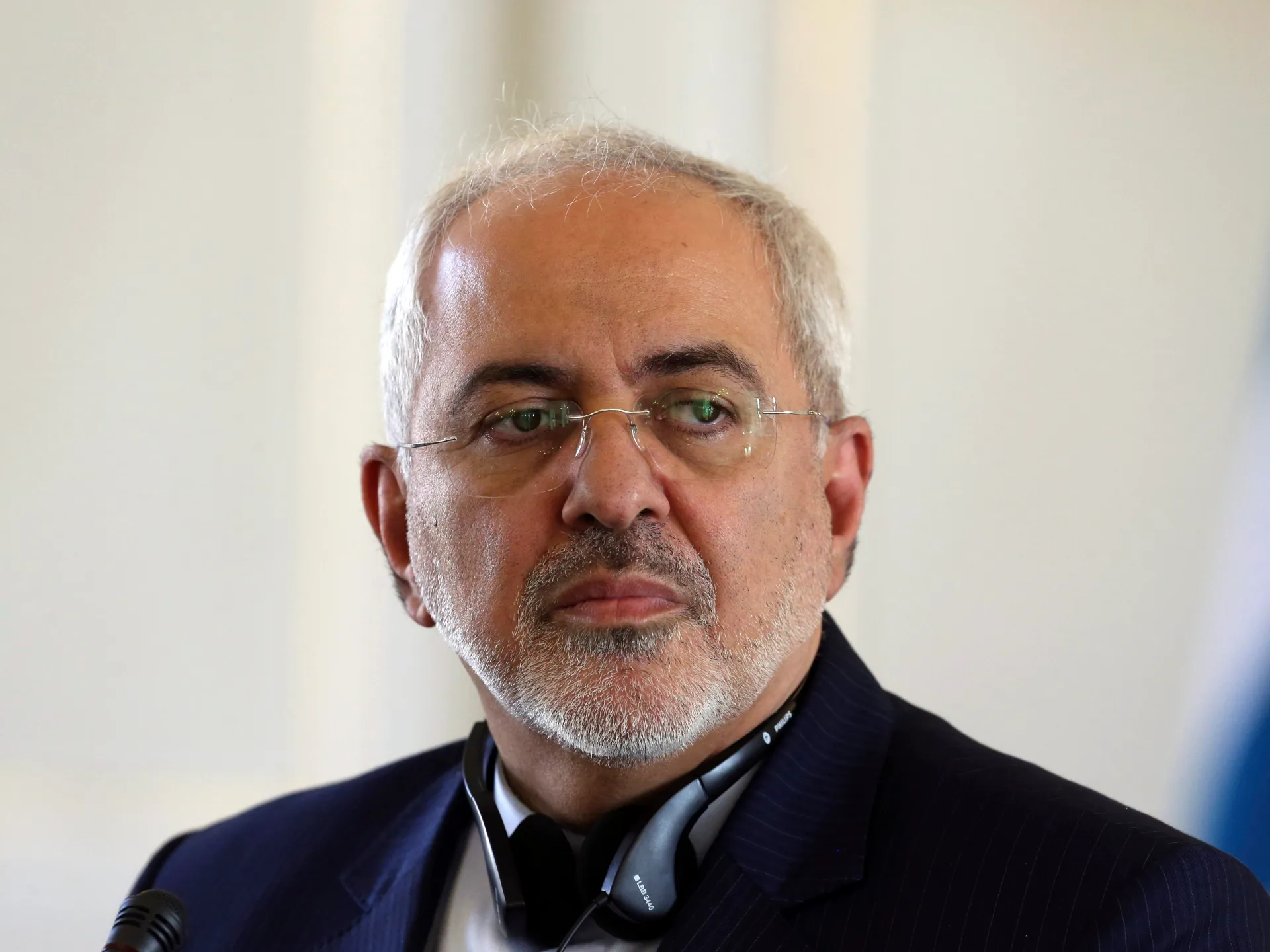
Former Iranian Foreign Minister Mohammad Javad Zarif has proposed a roadmap for ending the United States-Israeli war on Iran as tensions escalate across the Middle East.

Zarif’s plan was published by Foreign Affairs magazine on Friday and goes “beyond a temporary ceasefire”.

Recommended Stories

list of 4 itemsend of list

The war, which erupted on February 28 with US-Israeli strikes on Iran, has spread across the Middle East and convulsed the global economy as Tehran attacked its neighbours, claiming to be targeting US assets there and restricting movement of vessels in the Strait of Hormuz.

Regional hostilities showed no signs of abating on Sunday, a day after US President Donald Trump said Iran had 48 hours to cut a deal or face “all hell”.

Against this backdrop, Zarif’s roadmap said that although Iran viewed itself as successful in the war, prolonging the conflict – while potentially “psychologically satisfying” for Tehran – would only result in further loss of civilian lives and destruction of infrastructure.

Iran should, therefore, offer to “place limits on its nuclear program” under international monitoring as well as “reopen the Strait of Hormuz in exchange for an end to all sanctions”, Zarif wrote.

Since the war began, Iran has virtually blocked the key waterway, through which one-fifth of the world’s crude oil and natural gas supplies normally pass.

Nuclear limits on Iran would include a commitment to never seek nuclear weapons and to blend its entire stockpile of enriched uranium so its enrichment levels fall below 3.67 percent, Zarif said.

According to the International Atomic Energy Agency (IAEA) estimates, Iran is believed to have about 440kg (970lb) of uranium enriched to 60 percent, a level at which uranium can be quickly enriched to the 90 percent threshold needed to produce a nuclear weapon.

Zarif called Trump’s demand for zero enrichment “fanciful” thinking.

Iran should also “accept a mutual nonaggression pact with the United States” in which both countries pledge to not strike each other in the future, the former minister said.

The US should also end all sanctions and United Nations Security Council resolutions against Iran, he added.

Regional consortium

Zarif also outlined potential roles for regional and international actors.

He suggested that China and Russia along with the US could help create a regional fuel-enrichment consortium with Iran and its Gulf neighbours at West Asia’s sole enrichment facility with Iran transferring all enriched material and equipment there.

Zarif additionally proposed that Gulf states, UN Security Council powers and possibly Egypt, Pakistan and Turkiye should form a regional security framework to “ensure nonaggression, cooperation and freedom of navigation”, including arrangements to guarantee safe passage through the Strait of Hormuz.

“To further consolidate peace, Iran and the United States should initiate mutually beneficial trade, economic and technological cooperation,” Zarif added.

The Iranian politician said this roadmap would benefit Trump, offering him a “well-timed off-ramp” and an opportunity to claim peace.

“Emotions may be high, and each side is boasting about its war-front victories. But history best remembers those who make peace,” he said.

The US has presented Iran with a 15-point plan for a ceasefire as Pakistan, Turkiye and Egypt have been trying to achieve direct talks, but there has been no signs of progress on the diplomatic front.

What about the Gulf?

Officials from Gulf states have responded to Zarif’s proposal, criticising it for overlooking Tehran’s attacks against its neighbours.

“Reading M. Javad Zarif’s article in Foreign Affairs ignores one of the core flaws in Iran’s strategy: aggression against its Gulf Arab neighbors,” Anwar Gargash, the diplomatic adviser to the president of the United Arab Emirates, said on X on Saturday.

“Thousands of missiles & drones targeting infrastructure, civilians, even mediators, is not strength; it is hubris & strategic failure. The Arab world has seen this before: destruction peddled as victory,” he added.

Former Qatari Prime Minister Hamad bin Jassim Al Thani also responded to Zarif’s plan, writing on X on Sunday that he “agreed with much of it” and it took a “clever” approach.

Still, he pushed back, stating that the war has “led us all into a path that is more complicated and dangerous” and chiding Iran for its attacks on the Gulf.

“You may believe that you have achieved progress in some aspects, and perhaps temporary tactical gains, but the cost was clear: the loss of an important part of your friends in the region, and the erosion of the trust that was built over years,” he wrote.

“Today, we need a voice like yours [Zarif’s] merging from within Iran to propose solutions to this war,” he added.
Source link

U.S. rescues pilot who ejected after fighter jet was shot down by Iran, officials say

A crew member was rescued after an American aircraft went down Friday in Iran, the Associated Press reported, citing U.S. and Israeli officials.

U.S. forces launched a rescue mission in southwestern Iran after at least one American crew member ejected from a fighter jet downed by Iranian defenses, according to a U.S. official and news outlets.

The downing of the jet, an F-15E, was confirmed to The Times by a U.S. official who was not authorized to speak publicly. That type of jet reportedly carries a standard crew of two, but it was not clear if more than one crew member ejected.

Defense Secretary Pete Hegseth has maintained for weeks that the U.S. has “complete, uncontested control of Iranian airspace” after destroying the country’s air defenses.

“Iran has no air defenses, Iran has no air force,” he said at a March 13 Pentagon news conference. “Today, as we speak, we fly over the top of Iran and Tehran, fighters and bombers all day, picking targets as they choose, as our intelligence gets better and better and more refined.”

But the Islamic Revolutionary Guard Corps claimed that a new type of Iranian air defense system deployed for the first time in recent days had shot down a warplane on Friday.

The statements stirred a flurry of conflicting instructions from Iranian state-affiliated broadcasters. One local television channel initially encouraged viewers to search for the downed pilot and “shoot them as soon as you see them.”

It then changed the instructions, according to the Associated Press, after local police issued a statement asking the public to capture and turn in American pilots alive to security agencies to “receive a precious prize.”

On social media, Iranian accounts posted videos purporting to show helicopters searching for downed pilots in Iran’s western and southern provinces, according to a report from Fars News.

Fars also reported officials in Iran’s southwest were offering a “valuable reward” to anyone “who captures the American pilot alive.”

Images of a tail section posted on social media had markings indicating it was from the 48th Fighter Wing, which is based at RAF Lakenheath in the United Kingdom, according to Peter Layton, a visiting fellow at the Griffith Asia Institute in Australia, in an interview with NBC News.

U.S. and Israel escalate attacks on infrastructure

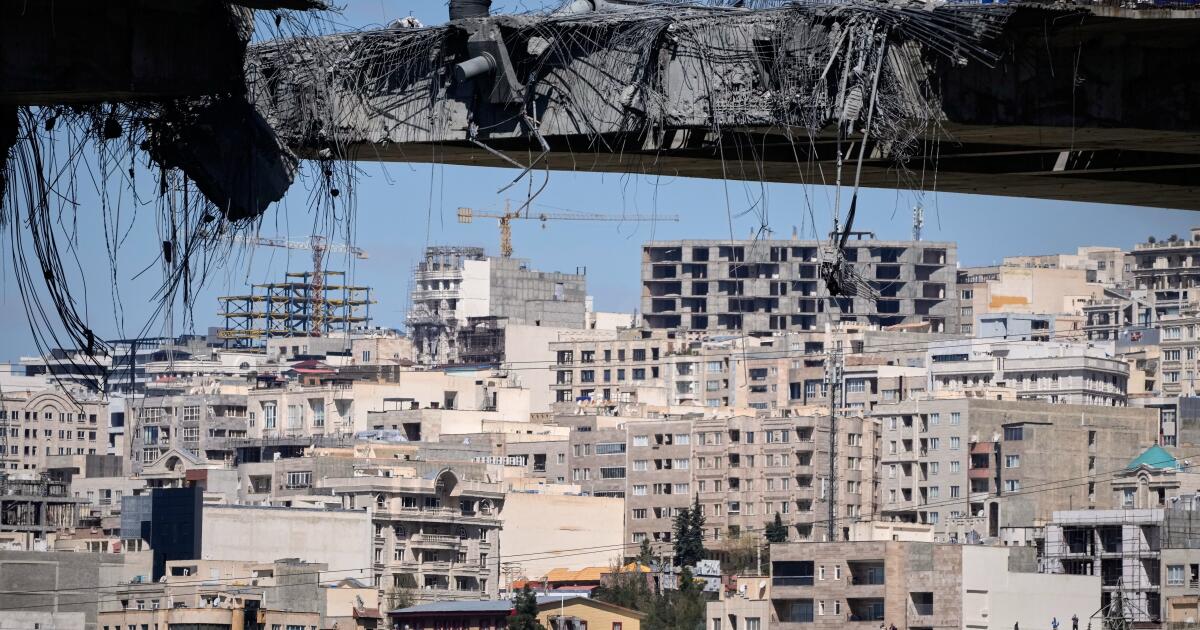
The development came as U.S. and Israeli forces escalated attacks on civilian sites and key infrastructure across Iran Friday, including strikes on residential buildings, health centers and Iran’s largest bridge, with President Trump warning that the U.S. “hasn’t even started destroying what’s left in Iran.”

On his social media, the president posted dramatic images of the smoldering B1 bridge, a towering cable-suspended viaduct that was severed in U.S.-Israel strikes late Thursday.

“The biggest bridge in Iran comes tumbling down, never to be used again — Much more to follow!” Trump wrote.

Connecting Tehran to the city of Karaj, the $400-million bridge was Iran’s largest, and was often regarded as one of the most prominent, expensive and complex engineering endeavors in the Middle East.

Iranian Foreign Ministry spokesperson Esmail Baghaei labeled the attack a “war crime in the style of ISIS terrorism.” Foreign Minister Seyed Abbas Araghchi called the act a sign of moral collapse by “an enemy in disarray,” stating that such actions will not compel Iranians to surrender.

“Every bridge and building will be built back stronger. What will never recover: damage to America’s standing.”

The attacks come after Trump announced what he described as a two- to three-day “off-ramp” from hostilities, while simultaneously warning he would bring Iran “back to the Stone Ages” if it didn’t cede to U.S. demands.

Reports from Iranian state media and international monitoring groups indicate strikes have also hit homes, religious centers, universities and municipal infrastructure across multiple provinces, raising concerns among humanitarian organizations about the widening scope of targets.

World Health Organization Director-General Tedros Adhanom Ghebreyesus said Friday that the U.S. and Israel have carried out routine attacks on Iranian healthcare facilities since March 1.

“WHO has verified over 20 attacks on health care in Iran, resulting in at least nine deaths, including that of an infectious diseases health worker and a member of the Iranian Red Crescent Society,” Tedros wrote on X.

Iran’s health ministry estimated about 2,076 people have been killed and 26,500 wounded by U.S.-Israeli attacks since fighting broke out Feb. 28. An estimated 1,300 have been killed in Lebanon, according to its health ministry, while more than two dozen people have died in Gulf states and the occupied West Bank.

Thirteen U.S. service members have been killed, and 19 Israeli service members have been reported dead in a five-week-old war that has triggered growing unease stateside.

A recent Pew Research Center survey conducted in late March found that most Americans opposed direct U.S. military involvement in a war with Iran. A separate Gallup poll reported declining approval for the administration’s handling of foreign policy.

Lawmakers in both parties have raised concerns about Israel’s influence in the Trump administration’s decision to enter a lengthy conflict, stoking debates over military aid and executive war powers.

Rep. Alexandria Ocasio-Cortez (D-N.Y.) said Wednesday that she plans to oppose future military aid to Israel, including for its Iron Dome defense systems. She argued that the Israeli government recently funded a $45-billion defense budget and is “well able” to bankroll its war without U.S. help.

“I will not support Congress sending more taxpayer dollars and military aid to a government that consistently ignores international law and U.S. law,” she said on X.

Iran hit desalination plant and oil refinery

Iran returned fire, again aiming at infrastructure targets operated by its Gulf neighbors. A series of airstrikes set Kuwait’s Mina al-Ahmadi oil refinery on fire, the Associated Press reported, as Kuwaiti firefighters were working to knock down several blazes there.

Kuwait also reported that an Iranian attack significantly damaged a desalination plant, which supplies drinking water to the region.

Bahrain, Saudi Arabia and Israel all scrambled to intercept incoming Iranian missiles Friday, according to reports, despite the Pentagon’s assurances that Iran’s military facilities and missile capacity have been largely wiped out.

Meanwhile, the United Arab Emirates shut down a gas field after a missile interception reportedly rained debris on it and started a fire, the Associated Press reported.

The war has pushed Iran to tighten its grip over the Strait of Hormuz, sending oil prices soaring 50%, upending stock markets, and stirring supply chain disruptions that threaten to destabilize global food markets.

Americans felt the oil rally again this week, after Trump’s Wednesday address dashed investors’ hopes of a swift end to the conflict, sending U.S. crude prices up 11% Thursday and another half point on Friday.

Source link