The War Machine Beating All Security Measures in Nigeria
There is almost no landscape across the West African Sahel that cannot be accessed from the back of a motorcycle. That is why terrorists operating in the region prize them so highly. In various terror operations, motorcycles are used not only as vehicles, but as weapons, and even as a form of currency.
In April, terrorists abducted five residents from their farms in Anka, Zamfara State, in Nigeria’s North West, and demanded a ₦3.8 million ransom. After the affected families managed to raise the money and paid it, the abductors issued another demand: they were to return with motorcycles before the hostages would be released.
“They told the families that they would kill the victims if they did not bring a motorcycle,” Ciroma Ade* said. He was tasked with travelling to parts of Sokoto, or somewhere else, to buy the motorcycles and deliver them to a location that would be communicated to him later, in his experience, usually around Gurusu Forest between Anka and Gusau.
It was not the first time he had made the run. Over time, he unintentionally became a ‘middleman’ in the motorcycle ransom economy. He was also one of its victims. In 2024, he bought motorcycles to secure the release of many of his relatives. Buying a ransom vehicle is never straightforward because the region is now more conscious of its purchase, and many vendors will no longer sell the vehicle in that part of the country.
Sometimes the terrorists arrange for an anonymous ‘middleman’ to travel far, often to the trading hubs in Kano, to source motorcycles on their behalf. Ciroma has his own networks. He knows which traders to approach in Sokoto or Zuru, in Kebbi State, despite the growing difficulty of buying the machines.
Over the years, he has repeatedly relied on those contacts to secure abducted villagers, including many of his relatives. Once the motorcycles were purchased, the terrorists would arrange a meeting point for delivery. He did the same this time. Most of the time, the hostages returned alive. The terrorists appeared to understand the continuing value of keeping captives alive; they were useful leverage for future negotiations.
This time was different. The victims were killed anyway.
An emerging trend has taken hold across parts of northern Nigeria. Terrorists have created a self-sustaining system in which motorcycles have become a form of ransom. Each abduction helps replenish the very machines used to carry out the next one. The motorcycle has become both the means of violence and its reward.
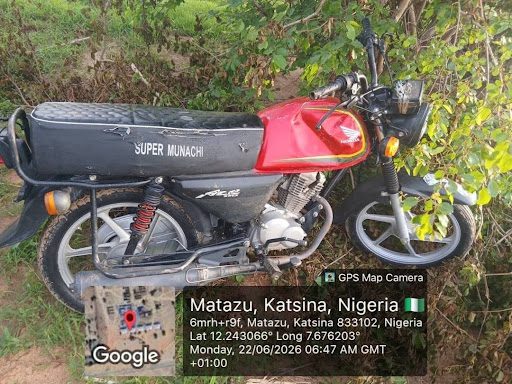
HumAngle learned that terrorists in the region frequently use commercially available motorcycles, especially Honda models, for their durability, availability, and suitability for rough terrain. They ride them into battle, use them to swarm a target, and conduct large-scale operations like mass abductions.
Ciroma, for one, knows this too. As one of the reluctant middlemen who helped bring ransom motorcycles into the system, he believes his community has become both a source of motorcycles for terrorists and one of the least safe places in the country.
While researching how motorcycles have become inseparable from conflict in the Sahel, I could not find many stories that told the tales of war from the motorcycle’s perspective. Almost every day brings reports of non-state armed groups using motorcycles to attack villages, ambush troops, abduct civilians, or simply move from one place to another. Yet the motorcycle itself rarely occupies the centre of those stories.
Conflict reporting understandably focuses on bloodshed, casualties, military operations, and the growing sophistication of insurgents’ weaponry. Compared with assault rifles, rocket launchers, or improvised explosive devices, motorcycles appear almost mundane. But this overlooks one of the constants of modern insurgency.
Across Nigeria’s conflict theatres, and much of the wider Sahel, the motorcycle is present regardless of the group, geography, or operation. It functions simultaneously as a transport, a logistics platform, an escape vehicle, and a weapon. There should be a literature that treats it as the protagonist rather than merely part of the scenery.
This is what we are attempting to do.

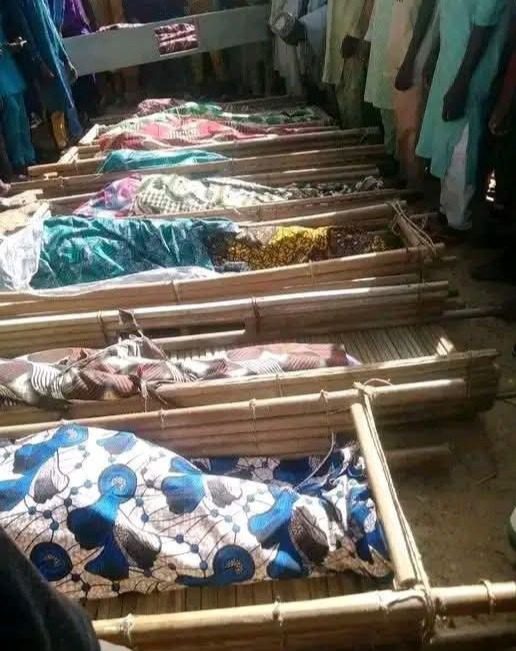
Ciroma had just returned from the cemetery, where he and other villagers buried five people killed by the terrorists, when he heard that a journalist wanted to know about the motorcycle ransom economy. He spoke passionately about the suffering of his community.
During his final assignment, he deliberately delayed delivering the motorcycles until every option had been exhausted. After the victims were killed, he sold the motorcycles and distributed the proceeds back to their families.
As he told members of his community, he wanted nothing more to do with the “thieves”, including playing a part in the supply chain that sustained them.
If soldiers were willing to follow the motorcycle tracks into the forests, he said, he would guide them himself. He knew the routes. He knew the delivery points. Together with the local vigilantes, they could reach the camps where he had previously delivered motorcycles. “They could clear the thieves out,” he said.
The rider
Back in Abuja, I needed more perspective if I was going to write this story.
I left my estate and approached a commercial motorcyclist waiting by the roadside. He eyed me suspiciously. He wanted no association with terrorists, even if it meant nothing more than answering a journalist’s questions.
Standing nearby was another rider, Musa Abba. He waved me over, introduced himself, and agreed to speak, but only off camera. I asked him what it felt like to ride his bike every day.
“There is no place I cannot reach with this machine,” he said.
Musa trusts his motorcycle more than anything else. He kicked the engine to life and gestured for me to climb on. He had decided the interview would be better conducted while we were moving.
As I settled in behind him, my thoughts drifted, not to motorcycles, but to horses. I found myself thinking about how civilisations across the ancient world discovered the extraordinary power of a mounted rider. Horses became indispensable: first for farming and transport, then, most significantly, for war. They were the all-important multipurpose machines of their age.
They could hardly have imagined that one day a two-wheeled machine would replicate the power of a cavalry many times over. Perhaps they wondered about it. Back then, even with other machines of war, such as the horse-drawn cart, the camel caravan, and eventually some mechanised infantry, the role of the rider in battle remained central.
Motorcycles have inherited that role.
Some recent research has begun to recognise this. Analysts have documented the emergence of a ransom economy in which insurgents increasingly demanded motorcycles instead of cash. Communities are taxed to replace bikes lost during military operations. The most in-depth literature was compiled by the Global Initiative, an international think tank that interviewed people across the West African Sahel and found that motorcycles were stolen and trafficked over the years to sustain transnational criminal operations in Mali, Niger, Burkina Faso, and the Republic of Benin.
Not much was said about Nigeria in the report. However, the Nigerian Army has, in press statements, documented the seizure of thousands of motorcycles in counterinsurgency operations in Nigeria. Beyond those records, evidence also lies along the routes connecting illicit smuggling and trafficking hubs, with networks tracing back to the organised trans-Saharan trade from the 8th to the 16th centuries. Today, those same corridors still carry motorcycles used for smuggling and for slipping along clandestine routes that let riders avoid conventional roads and border checkpoints.
The motorcycle is now so woven into life across West Africa, the Sahel, and the Lake Chad Basin that the mobility it provides sustains entire communities, and many people in the lower and middle classes cannot imagine life without it.
As we continued the ride, Abba said, “When it is time to work, the only road I cannot enter is a place I am not allowed to work.”

The war machine
How does a bike measure up to the cavalry? Scottish engineer James Watt coined the term ‘horsepower’ in the late 18th century, defining one horsepower as the daily output of a strong working horse. In reality, a horse sustains only about half that output over the course of a day.
I wondered whether the rider ever feels limited by terrain, and what it must feel like to have such command of the road.
“Surely you cannot climb rocks with it,” I said in Hausa, pointing at a hill we were riding past. “There is no place I cannot reach with this machine,” he repeated over the soft rush of wind. “Wannan karfe ne,” he continued. This is metal.
His Hausa made the argument sound more emphatic.
“It is not like rubber-rubber,” he went on, referring to the flashier plastic-bodied motorcycles. “A bike like this,” he said, gesturing at his motorcycle, “is the most durable of them all. You don’t need to maintain it much, and it doesn’t consume as much fuel as most other brands. You can change the oil just once in a while if you like. It can go anywhere, enter almost anywhere, and its second-hand value is even better than rubber-rubber [brands].”
Abba went on and on about what makes a motorcycle valuable in everyday life, and in doing so, he laid out exactly what makes it valuable to a terrorist across the conflict zones of Nigeria.
Measured by sustained power output, a Honda CG125 delivers roughly the equivalent of about 16 working horses. By that measure, a single terrorist on a motorcycle is riding with the power of about 16 horses at a time.
What we found
Over months of work, we built a database by measuring hundreds of military operations conducted over the past decade, logging every reported incident of motorcycle seizure and the count attached to it. Between February 2015 and November 2025, the Nigerian Army reportedly seized at least 2,607 motorcycles across 300 separate encounters. Taken together, this aggregated press data describes the logistical philosophy of the terror groups that the troops fight.
The seizure records also reveal distinct phases. At various points, different armed groups appear to have dominated motorcycle use, and there were periods when almost every operation reported by the military involved recovering bikes. Yet the headline figure of 2,607 motorcycles over ten years tells only part of the story.

In the early years of military engagement in the insurgency, the totals were driven by a handful of major discoveries, followed by long runs of tens of operations, each yielding only a single vehicle. These recoveries were not sustained by patrol pressure; they came when a campaign stumbled on a cache.
Over time, however, the army evolved its tactics. It pushed deeper into the terror enclaves in the forests, adopting specialised strategies, including the so-called strangulation strategy of the late 2010s, which was designed to starve the groups of the fuel and resources that kept their motorcycles running, and in many ways they set up the clearance operations that produced the few thousand vehicles in the record.
The earliest phase of this campaign against the motorcycle is unclear in the data. In late 2015 and 2016, at the peak of the Boko Haram insurgency, motorcycles were still being treated as secondary characters in the war. At the time, Boko Haram could field a 15-gun-truck convoy against a Forward Operating Base in Borno, sustain multi-wave assaults with machine guns and specialised Type-36 hand grenades in a single engagement, and then publish videos of the attack to showcase its strength and firepower.
Counterinsurgency reports from the period mention motorcycles only in passing. The focus was on weapons recovered, fighters neutralised, and territories retaken. But the bikes grew more prominent as larger caches began to appear in the record around 2017. Most seizure events still involved a single motorcycle, but occasionally the numbers jumped to a few or to a large cache, almost always the product of a one-off encounter or an ambush on a terrorist base.
As the military expanded its operations deeper into the forest to dislodge the groups, recoveries increased, especially in the northeastern region. I designate this as the first of two eras of riders, as the aggregated data reveal the core role of motorcycles in the wars.
The era of riders
On Feb. 17, 2016, soldiers of the 7 Division Garrison, on a clearance mission, entered Gulumba in Bama Local Government Area in Borno State. They found what they described as a small city where they had expected a makeshift camp. Inside were medical supplies stored in a field hospital, a sizable market, two logistics trucks, a grinding machine, and an industrial 100KVA Mikano generator. The most important find, though, was the transport garage of 180 motorcycles and 750 bicycles. In a single operation, at least 930 potential combatants were denied transport that day.
The period between 2016 and 2017 belonged to Boko Haram’s riders. Operation Lafiya Dole, a counterinsurgency operation of the Nigerian government, alone accounts for 57 per cent of all seizures in the dataset, with 1,792 motorcycles across 96 records, almost all recovered during camp-clearance operations in Borno. That works out to an average of 19.7 motorcycles per recorded operation.
Viewed over the full 2015–2025 period, the distribution of motorcycle seizures tells the story of two distinct conflicts. The first peaks in 2016; the second begins to emerge after 2022.
The defining year is 2016. Alone, it accounts for almost half of all motorcycles recorded in the dataset: roughly 1,300 bikes recovered across just 86 records, an average of 17 per record, far above any other year. This was the peak of Operation Lafiya Dole’s deepest push into Boko Haram’s territorial strongholds in Borno, where large-scale camp clearances dismantled the insurgency’s mobile logistics in bulk.
The pattern continued into 2017. Although the database contains only 10 records for that year, it accounts for 331 bikes, carried almost entirely by a single cache of 301 bikes recovered at Njibulwa, an insurgent enclave in Borno State.

After that, the numbers collapsed. Between 2018 and 2022, annual recoveries averaged just 49 motorcycles.

The second era of riders
Then there was another uptick in 2023, but it is a different case from 2016. This time, the centre of gravity shifted westwards. Kaduna led the increase, accounting for 88 recovered motorcycles, mostly linked in military reports to “terrorists”. The change reflected the growing prominence of motorcycle-riding armed groups in north-western Nigeria from around 2020 onwards.
Unlike the Boko Haram years, recoveries were no longer dominated by massive camp clearances. Instead, the database settles into a consistent pattern of around five to eight motorcycles per record, with a steady climb. The groups they were recovered from were labelled by the security forces as “bandits”, not Boko Haram.

After 2022, the number of seizure records rose sharply, even as the number of motorcycles recovered in each operation remained relatively low. Instead of discovering large transport depots, security forces were finding motorcycles in small clusters during repeated engagements. Operation Shaaran Daji became the leading source of recoveries in the northwestern region, signalling that the motorcycle had become embedded not in large insurgent camps but in dispersed, highly mobile armed networks.
The informal motorcycle networks through the Sahel
There are dirt roads in the desert that cross international borders and run through the Sahel’s sands, following routes that have connected communities for centuries. Many trace the arteries of the trans-Saharan trade, linking illicit hubs of smuggling and trafficking through networks first established hundreds of years ago. These pathways did not disappear as modern states emerged across the Sahel. Instead, they evolved alongside them. Most still exist today, at least as part of a broader web of formal and informal routes connecting contemporary roads to historical trading corridors that continue to facilitate cross-border movement.
Consider the recent ruins of Metele, which is comparatively recent than the historical networks, a Borno town brought down to rubble by the Boko Haram insurgency and abandoned for years, and crumbling into building blocks. After a decade of silence, the one thing that has only grown more visible is the roads, and in particular the ones made by motorcycle tracks. These have deepened with continued use, suggesting activities likely by insurgents operating in the area.
Metele and hundreds of villages in northern Borno around it have been abandoned, leaving only insurgent camps and military bases that occasionally clash in the parts where these routes link them. Yet the old roads have only grown deeper, and new paths have opened across the empty ground, as seen in the satellite imagery below.

Let’s follow the Metele tracks eastward and see where it leads. It runs for about eight kilometres of the bike route, crossing onto the shore of an island in Lake Chad, and continuing from there across the flat terrain of the island, with many sub-tracks splitting off toward different corners, while the main track presses on east, along the shore and onto a much larger island with road networks also branching off on every side and onto other islands. We stop here because this island matters for a particular reason. Among its thousands of tracks sits a largely isolated compound in the island’s north.
In May 2026, US forces, working with Nigerian Army intelligence, carried out an airstrike on that compound and killed a senior ISWAP commander, Abu Bilal Al-Minuki. The site was geolocated using video of the strike released by United States Africa Command (AFRICOM).
Al-Minuki served as a liaison between ISWAP’s various commands across the Lake Chad Basin and the wider Islamic State organisation. Different factions of the group operate on multiple fronts, with administrative functions carried out in locations such as this island. Senior commanders often gathered in secluded places like these, whether in forest compounds in Sambisa or in camps scattered across the islands of Lake Chad.
When fighters enter Nigeria, they may arrive by boat from neighbouring islands, or blend in with ordinary travellers using the road network. Once inside the theatre of conflict, however, the motorcycle becomes the preferred means of movement. It allows commanders to visit training camps, inspect fighters on different fronts, and travel rapidly between operational bases.


These tracks travel far and wide, meeting at certain points across the Sahel. They run north into Lake Chad, or northwest toward the Niger Republic. Cross-border routes make neighbouring communities, places like Diffa in Niger, feel as close as the other side of the street. The motorcycle gives its riders command at border crossings, and they hardly worry about checkpoints on official roads unless they intend to attack the location and run into state forces on either side.
Here, the border itself counts for far less. This indistinguishable, landlocked frontier has been reshaped by centuries of informal movement, by daily life that transcends the very idea of nationality. These places have long borne the brunt of regional security forces unable to fully command the area, and in a geography this vast, with so many options and pathways, smuggling and trafficking are barely a challenge.
The network of informal motorcycle routes is still more intricate. Some lead into the ruins of the hundreds of villages, like Metele, abandoned across the area. The ruins of Metele is within 50 kilometres of the nearest fringe of communities where people still live. The tracks also connect to minor and major roads leading to inhabited areas, giving the motorcycles access for incursions.
Eventually, these routes connect to every community in the region. Across the flatlands of Metele and Lake Chad through the desert of the border country, the motorcycle is highly effective, and this is why it is such a powerful weapon in the typical insurgent arsenal, despite the secondary attention it tends to receive next to the AK-47s and rocket launchers recovered alongside it in a raid.
The forest route
You will rarely hear about motorcycle–riding terrorists being caught at a military checkpoint, on their way to an operation or simply travelling. For anyone who knows the terrain, there is often no need to cross a major road on most journeys in the region.
The forests of Sambisa, Kyumbana, Mando, and the Mandara Mountains welcome the tyres of the war machine. HumAngle has previously reported on fighters travelling, moving, even migrating to another state through the interconnected, ungoverned forest reserves of the region, which give them multi-state reach and the ability to turn up in almost any part of the country.

Once through the forests and the mountain wilderness of the northeastern region, riders reach the other end of the country, though not necessarily in one go. They drop down now and then onto the main road, sometimes to refuel; there are reports of the military intercepting them and warning filling stations not to serve them. They settle for a while in certain towns, or in camps near towns, using the towns as supply bases before picking up the trail back into the wilderness and on toward their destination.
The machines are useful throughout the journey, should they wish to travel from the northeast to the northwest. In 2022, HumAngle reported how fighters from the forests of the northwestern region, such as the Birnin Gwari and Kamuku forests, often travel through towns, stopping at communities where they are repeatedly reported to assault local residents, particularly women, often sexually, before continuing toward an operation elsewhere. The very sight of them on their bikes has already terrified those communities into compliance with whatever they demand. It has become a kind of tradition in Kaduna, in Niger, and even in Kwara State when these riders come into town.
From this end, too, groups like the Lakurawa have been reported riding into Nigeria. Locals often describe them as Arab-looking non-Nigerians entering through the porous borders in the northwest, and a similar pattern is evident along the Lake Chad Basin on the other side of the north. Recent reporting has confirmed the group as a faction of the Islamic State operating in West Africa, and in Nigeria in particular.
They move through the Sahara along a network of ancient routes and illicit hubs where trafficking and underground resources are available to anyone on the road. This underworld of hubs and crossings is what lets riders pass between countries.
The Sahel underworld
When the collapse of Muammar Gaddafi’s regime released Libya’s vast weapons stockpiles into the region, it was this same illicit Sahelian underworld that carried many of those weapons into West Africa, including Nigeria.
Before he was killed, the terrorist kingpin Halilu Sububu was reported to ride with his gang across this terrain, loaded with gold sourced from the artisanal mining pits they controlled, and to return to Nigeria with weapons traded for that gold. Those weapons became the lifeblood of banditry in the country’s northwestern region and made Sububu the chief arms supplier to the various groups there.
His advantage was not simply access to weapons, but access to the routes. He reportedly knew how to travel to the Sahel and return with arms without significant interference. His command of the motorcycle corridors enabled his network to move across borders with relative ease. The same routes connected him to weapons originating from the post-2011 Libyan arms outflow, and even allowed combat vehicles acquired by his organisation to be delivered through the network.

Critical transit and logistics networks span multiple border regions across the Sahel and West Africa, including the Burkina Faso–Côte d’Ivoire border, the Côte d’Ivoire–Mali–Burkina Faso tri-border area, and the Ghana–Burkina Faso frontier, where Hamile, Tumu, and Bawku serve as key crossing points. Further north, Ansongo in Mali, Arlit and Agadez in Niger, and numerous settlements across the Mali–Niger–Burkina Faso tri-border region function as centres for acquiring, consolidating, and redistributing illicit resources.
Perhaps the most famous network that leads into northern Nigeria is the one from Libya. It crosses through illicit hubs and artisanal mining sites, most of which are controlled by armed groups. The network of arms smuggling runs from Libya, usually from the desert oasis of Sabha; the journey flows through Fazzan in southern Libya and crosses the infamous Salvador Pass into the Republic of Niger, where illicit hubs and mining networks link to Sokoto, Borno and Zamfara states, connecting through Niger Republic routes from Agadez, Maradi, Tahoua, following ancient trade routes that continue to shape movement today.
These hubs share a profile of remote geography, thin state presence, weak governance, and established illicit trade networks that move goods and people across borders.
Motorcycles rule in this terrain.

Of middlemen and motorcycle bans
We met another middleman, Abu Dogara*. Unlike Ciroma, he was not interested in sharing his experience, as his job still leaves a bad taste in his mouth. He answered mostly with short replies, with the occasional long clarification about the details of his involvement in the motorcycle ransom economy.
Earlier, we talked about the middlemen: the mostly anonymous intermediaries who know how to secure the motorcycle for victims’ families when all other options are lost. Abu was a middleman, at least until terrorists abducted his sister-in-law. He wanted me to understand that the last time he was on the job, he had not dealt with the terrorists himself. They had taken his younger brother’s wife, so it was his brother who spoke to them. He had played the same role as always, travelling to buy the motorcycles.
As awareness of the terrorists’ reliance on motorcycles has grown, buying one anywhere near the axis has become increasingly difficult. Most of the people we spoke to about sourcing a ransom vehicle named far-off places like Kano, Kebbi, and even Lagos. This is part of what has driven the rise of the anonymous middleman, sometimes known to the kidnappers, and sometimes hired by the victim’s family.
Abu travelled to Sokoto to buy the bikes. He searched and found nothing. An issue he hadn’t faced before. But finally, he met a vendor with a single one in stock, a Honda, exactly the kind the kidnappers wanted. The vendor let him have his last one, but warned that they were getting harder and harder to find in the area.
Across northern Nigeria, state governments have introduced strict motorcycle bans and usage restrictions to counter-terrorism and “banditry”. Niger State went so far as to ban motorcycle sales outright, specifically targeting high-capacity models such as Hondas, which are frequently demanded as ransom. Elsewhere, the measures range from outright commercial bans to localised movement restrictions, all intended to disrupt terrorist logistics. Katsina and Zamfara states have also introduced night-time curfews and complete movement bans in forested areas.
Abu does not like to dwell on the last job. He remembers only that the motorcycle cost more than ₦2 million, and that finding it was painfully difficult. At one point, he even asked his brother to persuade the kidnappers to accept cash instead. They refused. In the end, the Honda he bought in Sokoto secured his sister-in-law’s freedom.
In Kano and Kebbi, the approach moved away from banning sales altogether, focusing instead on restricting how the bikes can be ridden to stop criminals from using them for quick getaways and remote logistics. Many sources we spoke with named Kano, Kebbi (Zuru), and Sokoto as sources for the machines, with Kano and Kebbi most consistently described as the last resort.

The machine they cannot beat
To replace the motorcycles seized by the troops, terrorist groups tax the very communities near where those seizures take place. In one incident, terrorists taxed a community that had narrowly escaped a planned terror attack, saved only because soldiers happened to be in the village at the time. In another, one kingpin abducted a district head and party chieftain in a village in Zamfara, saying that his confiscated motorcycles were the reason for his actions, and he must be compensated.
The military, meanwhile, has continued its effort to take this logistics core out of play. Beyond the strangulation strategy and the more than 2,600 confiscated motorcycles, different state security forces have also made a show of their counter-insurgency, such as setting whole sets of captured bikes ablaze to send a message, and recording large-scale successes in neutralising entire gangs and seizing hundreds of machines at a time. The groups have only pushed back harder, embedding motorcycles into ransom negotiations to secure both the financing and the means to replace whatever war machines they lose.
Across much of Nigeria’s North, attacks launched from the back of a motorcycle are becoming more common. The country is still dealing with motorcycle-facilitated crises at both extremes. It is the one insurgent tactic the Nigerian security forces have not been able to beat. Not with trenches on the battle fronts of the northeastern region, nor in the communities across the country where these raids have become a regular part of recent reporting.
The Nigerian Army has itself adopted motorcycles for parts of the same war. Boko Haram deserters recruited to support counterinsurgency operations ride ahead of advancing troops on motorcycles, scouting for ambushes, improvised explosive devices, and landmines. The machine has become indispensable to both sides.
For many survivors, the sound of a motorcycle engine will always bring up the worst of their memories.
The names of the middlemen have been changed to protect their identities.