youve

After the Flood cast and where you’ve seen them before from Peaky Blinders to Hollywood film star

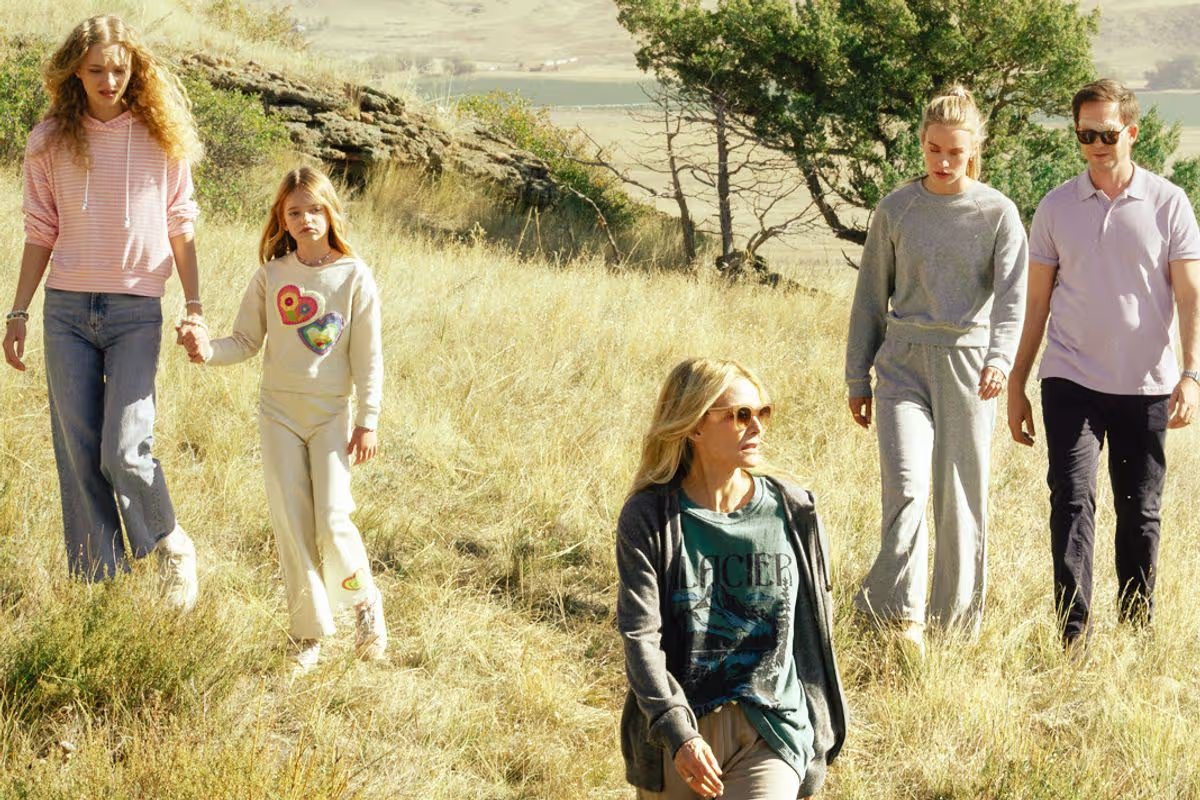
After the Flood features an impressive cast of familiar faces from hit shows including Peaky Blinders, The Crown and Bridgerton – here’s your guide to the ITV drama’s stars

After the Flood is back for series two and it boasts a star-studded cast that fans will recognise from popular shows like Peaky Blinders and Bridgerton.

The first series saw an unidentified man found dead in an underground car park after a devastating flood with PC Jo Marshall, played by Sophie Rundle, commissioned to investigate the truth of the man’s death with devastating and shocking revelations.

The second series of After the Flood follows newly promoted detective Jo as she embarks on a perplexing murder investigation. As Waterside teeters on the brink of disaster due to the looming threat of moorland fires and potential flooding, a body is found under strange circumstances.

Jo’s pursuit of the killer puts her at odds with the town’s powerful and influential figures, leading her into an investigation that becomes deeply personal.

To uncover the corruption that has plagued the town’s police force – and her own family – for years, she’ll need to conduct her investigation covertly.

But who are the new and returning familiar faces gracing series two? Let’s take a look…

Sophie Rundle – Jo Marshall

Sophie, 37, takes centre stage in After the Flood as Jo Marshall. Viewers may recognise her from a host of TV programmes such as ITV’s miniseries Titanic, Merlin, The Bletchley Circle, guest appearances in Call the Midwife, Happy Valley, and Brief Encounters.

Her most notable role came in 2013 when she landed the part of Ada Shelby in BBC’s historical drama series Peaky Blinders, where she starred for all six series until 2022. In the show, Sophie shared the screen with Cillian Murphy, who played her character’s brother and notorious gang leader, Tommy Shelby.

Sophie has also graced Sky One’s Jamestown as Alice Kett and a year later, she portrayed Vicky Budd in BBC’s thriller Bodyguard, sharing the screen with Keeley Hawes and Richard Madden. Fans of Gentleman Jack will recall Sophie for her role as Ann Walker, while viewers of the 2020 surrogacy drama series The Nest will recognise her as Emily.

Jill Halfpenny – DS Sam Bradley

Jill Halfpenny, 50, is joining After the Flood for series two as DS Sam Bradley. Jill first soared to fame playing Nicola Dobson in Byker Grove in 1989. Jill later gained roles in Coronation Street as Rebecca Hopkins in 1999 and later EastEnders as Kate Mitchell in 2002.

Other roles include Izzie Redpath in Waterloo Road, Emma in Mount Pleasant, Fiona in Wild at Heart, Diane Manning in In The Club, Julie Winshaw in Three Girls, Jennifer in Liar, Jodie Walsh in The Drowning, Roisin in Everything I Know About Love, Doreen Hill in The Long Shadow, Emma Bartlett in The Feud and Eve Riser in Girl Taken.

Nicholas Gleaves – DS Phil Mackie

Nicholas Gleaves, 57, is known for his role as Sergeant Phil Mackie, Jo’s boss and surrogate father figure in the series but he’s hiding a dark secret. Nick, as he’s often called, has certainly carved out a successful career since his TV debut in 1993 as Carl in Boon.

Since then, he’s amassed an impressive list of credits, having starred in Casualty, The Bill, Faith and Soldier, Soldier. In 1997, he landed the role of PC Rudy Whiteside in Wokenwell before securing the role of Rick Powell in the hit series Playing the Field, which also featured his wife Lesley Sharp.

Other TV roles include Eddie in Being April, Duncan in The Queen’s Nose, and Ray Fairburn in Conviction. He’s also known for his performances as DS Gary Tate in City Lights, Tom Bedford in The Chase, Oliver in Murderland, James Whitaker in Survivors, and Richard Whitman in Waterloo Road.

In 2011, Nick took on the role of DS Andy Roper in Scott and Bailey, where he starred alongside his real-life wife once again. He went on to secure minor roles in Cold Feet, Death in Paradise, The Split, and Midsomer Murders before landing a part in Bodyguard as Roger Penhaligon.

Soap enthusiasts will remember the actor from his stint on Coronation Street, where he portrayed Duncan Radfield from 2018 to 2019. He’s also ventured into film, with roles in Spider-Man: Far From Home and a portrayal of John Birt, the former director general of the BBC, in Netflix’s The Crown in 2022.

Philip Glenister – Jack Radcliffe

Audiences will recognise Philip Glenister, 62, who takes on the role of property developer Jack Radcliffe, from his successful television career. He is most renowned for his portrayal of DCI Gene Hunt in the BBC’s Life on Mars from 2006 to 2007, and its sequel Ashes to Ashes from 2008 to 2010.

Beyond these popular TV series, Philip has landed roles in David Walliams‘ sitcom Big School in 2013 as Trevor Gunn, in the horror series Outcast as Reverend Anderson, and in Belgravia playing the lead role of James Trenchard. Most recently, he assumed the lead role of DCI Paul Bethell in Steeltown Murders.

Some might also recall his film roles, including his part in 2003’s Calendar Girls as Lawrence, as Squire in Kingdom of Heaven in 2005, or as Charles Forestier in 2012’s Bel Ami.

Lorraine Ashbourne – Molly Marshall

Another standout cast member is Lorraine Ashbourne, 65, who portrays Jo’s worried mother Molly. Her acting career spans over three decades, with one of her most beloved roles being Mrs Varley – the housekeeper for the Featherington family – in Netflix’s Bridgerton.

The actress has also portrayed Barbara Castle in The Crown, DI Tessa Nixon in Unforgotten and Lace Polly in Jericho. Her impressive television portfolio includes roles in Playing the Field, Clocking Off, The Syndicate, Cheat, Jericho, and Vera.

In 2022, she brought to life the character of Daphne Sparrow in the popular TV series Sherwood. Lorraine also played Karen in I Hate Suzie, Joan in the comedy Alma’s Not Normal and Michelle Lafferty in Silent Witness.

Off-screen, Lorraine is part of a renowned family, being married to actor and filmmaker Andy Serkis, famed for voicing Gollum in The Lord of the Rings films. Their son Louis Ashbourne Serkis is carving out his own acting path, having appeared in 2020’s The Queen’s Gambit as Georgi Girev and alongside Sheridan Smith in the 2022 drama No Return.

Faye McKeever – Kelly

Actress Faye McKeever, 40, is known for her role as Kelly, but recently she was seen as Tanya Helsby in BBC’s prison drama Time. One of her most memorable roles was Linda in the comedy Trollied, though she’s graced our screens in numerous gripping dramas.

She featured in the Shannon Matthews-inspired BBC drama The Moorside in 2017 as Petra Jamieson, and in ITV’s chilling miniseries Des in 2020 as Linda Jay. In 2022, Faye took on the role of Jodie Sweeney in The Responder and a year later starred in BBC’s The Reckoning as Alison – which is a factual drama examining the crimes of Jimmy Savile.

Matt Stokoe – Pat Holman

Matt Stokoe, aged 37, portrays Jo’s on-screen husband Pat Holman, and off-screen, the couple – Matt and Sophie – are engaged and proud parents to two children who are four and one. Matt first gained recognition for his role as Alex in Channel 4’s Misfits, which paved the way for roles in The Village and the third series of The Musketeers.

In 2018, he starred as Luke in the TV series Bodyguard, alongside his future wife Sophie who played Vicky Budd in the BBC thriller. The couple also shared screen time in Sky One’s Jamestown and the film Rose, penned by Matt himself.

Matt took on the role of Gawain in Netflix’s original series Cursed and the contentious character Raoul Moat in The Hunt for Raoul Moat. He’s also appeared in films such as Hollow and Outlaw King, and lent his voice to several Final Fantasy video games.

Jacqueline Boatswain – Sarah Mackie

Jacqueline Boatswain brings to life local politician Sarah Mackie in After the Flood, boasting an impressive resume in both television and film. Audiences may recognise Jacqueline from her roles as Mima Blodwen in Carnival Row, Victoria in Wolfblood, and Patreesha St Rose in Shameless.

Fans of Grange Hill will also recall her memorable portrayal of headmistress Mrs Bassinger from 2003 to 2006 in the popular BBC teen drama. She later joined the Hollyoaks cast as Simone Loveday, a role she held from 2015 until 2019.

More recently, Jacqueline graced an episode of The Good Ship Murder and shared the screen with After The Flood co-star Sophie Rundle in The Diplomat.

Alun Armstrong – Alan Benson

Alun Armstrong is joining After the Flood series two as Alan Benson. Alun, 79, is known for roles such as Cardinal Jinette in Van Helsing, Mornay in Braveheart, Baltus Hafez in The Mummy Returns, and the High Constable from Sleepy Hollow.

Other roles include Gary Jackson in Sherwood, John Southouse in Garrow’s Law and Brian Lane in New Tricks – to name a few.

Ian Puleston-Davies – Tony Rower

Ian Puleston-Davies is joining After the Flood series two as Tony Rower. Ian, 65, is best known for playing Owen Armstrong in Coronation Street from 2010 to 2015.

Other roles include Terry Williams in Hollyoaks from 1995 to 1996, Jimmy in EastEnders in 1998, Mick Glover in The Bill, Phil Wiley in I’m Alan Partridge, Charlie Fisher in Waterloo Road, Peter Cullen in Marcella, Arthur Pennyworth in Pennyworth, Brian in The Teacher, Supt. Ross Beardsmore in D.I. Ray, Terry McGregor in The Bay and Eric in The Responder.

After the Flood returns on Sunday, 18 January, airing weekly on Sundays and Mondays on ITV. All episodes are available on ITVX.

For the latest showbiz, TV, movie and streaming news, go to the new **Everything Gossip** website.

Source link

The best Spanish resorts you’ve NEVER heard of

FROM the Canaries to Costa Blanca, these under-the-radar Spanish destinations should be on your holiday wish list.

We’ve picked out some of the best hidden gems across Spain, with whitewashed villages, beach towns and exotic city breaks for a fraction of the usual price and no crowds.

Manilva in Costa del Sol is an overlooked Spanish gemCredit: Alamy

Manilva, Costa del Sol

If you’re heading to the Costa del Sol, leave behind the tourist hotspots of Malaga, Marbella and Torremolinos. 

Instead, head to the local favourite of Manilva, around 27 miles south of Marbella

This resort has a traditional hilltop white village (pueblo) with stunning coastal views, plus a marina and beach town, San Luis de Sabinillas. 

The area is also full of vineyards – with producers like Nilva offering wine tastings and modern dry whites at a fraction of the price you’d pay in France or Italy.

For example, you’d pay £26.50 for a two-hour wine tour or £15 for a bottle of Dry Muscatel.

The pueblo and marina have loads of affordable tapas bars, such as Susi Gastro Tapas, where a plate of croquettes costs less than £4. 

It’s also amazingly affordable to stay in Manilva.

A seven-night getaway here in 2025 cost an average of just £371 according to TravelSupermarket.

And hotel rooms cost from as little as £30 per night in spring, according to Hotels Combined.

It’s a great time of year to travel, with average highs of 20C and actual highs of 25C in April.

The vineyards in Manilva produce mainly dry white wineCredit: Alamy
S’illot in Majorca is a calmer choice than Palma or MagalufCredit: Alamy

S’illot, Majorca

Get away from the hordes of Brits that flock to Magaluf and Palma, and make a beeline for S’illot on the other side of the island. 

Around halfway down Majorca’s east coast, it’s quieter and calmer than the mainstream resorts, making it a hit with families and locals. 

And it’s easy to see why. The water is turquoise, shallow and calm, beaches have soft sand and you can watch fishing boats in action.

Another advantage of S’illot is its location – you can jump on a bike and cycle the island’s beautiful coastline on a path linking several beach towns

And at £449 per person for a week’s break according to TravelSupermarket, it’s also an affordable Spanish beach resort. 

El Palmar de Vejer on the Costa de la Luz has a laid-back vibeCredit: Alamy
El Palmar de Vejer is within the province of CadizCredit: Getty

El Palmar de Vejer, Andalucía

This little surf town on the south-west coast in the province of Cádiz, is one of Spain’s best-kept secrets. 

El Palmar de Vejer – or just El Palmar to locals – is loved by Spanish holiday-makers – but you’re unlikely to spot many Brits here because it’s less packaged for mass tourism. 

It’s not the easiest destination to reach – from Malaga, you need to catch a three-hour train to Cádiz and board a bus down the coast that takes around an hour. 

But the journey is well worth it. You’ll be greeted by a long, wide beach with soft golden sand, independent surf lodges and laid-back chiringuitos (beach bars). 

Most of these serve proper Andalusian paella and fresh seafood, which you can eat with your toes in the sand while watching the Atlantic rollers.

You can bag a great meal with drinks for under €20 if you know where to go. 

Try La Cerveceria, where a beer costs just £1.50 and a glass of white wine is less than £2.

Accommodation isn’t expensive either – instead of high-rise developments and hotel chains, you’ll find locally-run bungalows and guest houses. 

Casa Reyes El Palmar has rooms from just £43.50pp per night (£87 for a double room). 

Wake up to the sound of the sea, hit the beach, maybe book a surfing lesson and then head to a beach bar for lunch.

This place has the same relaxed, surfy vibe you get in California – no wonder locals call it “Cádizfornia”.

The Basilica of Santa Maria is a landmark church in Elche on the Costa BlancaCredit: Getty

Elche, Costa Blanca

Just outside the main city is El Palmeral de Elche, a huge palm tree park and gardenCredit: Getty

For an under-the-radar city break, head to Elche. 

Around half an hour inland from Alicante, this city offers all the classic Spanish features – minus the crowds. 

You may not have Costa Blanca’s famous beaches within walking distance, but you are only a short stroll to cultural highlights like pink palaces and Europe’s largest palm grove. 

Built during the 11th and 13th centuries, Palau d’Altamira is a fortress that looks pink in the sun. 

It’s now a museum packed with artefacts about the history of Elche – and has a nominal entrance fee (€3/£2.59 for anyone above the age of six; €1/86p for students; free entry for anyone on Sundays).

Just outside the main city is El Palmeral de Elche, a huge palm tree park and garden. 

Home to a whopping 200,000 palm trees, it’s also completely free to enter. 

If you do want beaches, the coastal towns of Urbanova and Arenales del Sol are a 25-minute drive away.

The city is filled with cosy tapas restaurants, like local hangout Bar Paquito, which has been serving homemade dishes like paella and fried rice since 1970, with prices from just €6.

You can also bag a bargain on hotels – The Ibis Elche has rooms from just £29.50pp per night (€59 for a double room).

Nerja has a number of sweeping golden beaches to choose fromCredit: Getty
Mountainside Burriana houses make Nerja a postcard-perfect Spanish spotCredit: Getty

Nerja, Costa del Sol

This former fishing village is around a 50-minute drive east of Malaga and is less built up than its Costa del Sol neighbours.

Pronounced “Ner-ha”, it;s a scenic resort on the Andalusian coast with a number of beaches, a 17th-century church and mountain-and-sea views.

With its soft sand, clear water and lively restaurants, the Blue Flag Burriana is arguably the best beach.

Powdery sand stretches for almost ten miles in Nerja, and you can try activities like water skiing and scuba diving. 

Nerja is also packed with history, with Andalusian white villages and ancient caves dotting the seafront.

Balcon de Europa is an expansive, cliffside promontory, home to the 17th-century Church of El Salvador.

Worked up an appetite? Chiringuito Mauri is a rustic beachside restaurant serving seafood, chicken and paella cooked on a converted fishing boat. 

It also won’t break the bank to eat here – paella costs from €6 (£5.30) and chicken dishes from €8.50 (£7.50).

Around a 25-minute walk along the seafront from the centre of town, Hotel Balcón de Europa has rooms from £57pp per night.

Mojácar is a traditional pueblo close to the city of AlmeriaCredit: Alamy
Cabo de Gata is a nature reserve in AlmeriaCredit: Getty

Almería, Andalucía

How about a holiday in Spain’s happiest city?

With a warm climate, low rainfall and excellent tapas bars, a stint in Almería will leave a smile on your face. 

Despite the recent launch of new flights from the UK, this port city on the Iberian Peninsula is still often overlooked by Brits who flock to Madrid or Barcelona instead. 

Its main attraction is the 16th-century Moorish Alcazaba (fortress) that has the best views of the city.

There is also the Barrio de la Chanca, a small quarter of the old town where colourful houses are built into the caves.

Beach lovers can head to Playa del Zapillo and Playa de Las Olas – both located just a stone’s throw away from the city’s trendy restaurants and bars.

There’s no shortage of tapas bars in Almeria, including Jovellanos 16, where small dishes like mushrooms in garlic sauce are served for free with every drink you order.

Almeria is also Europe‘s only city with a hot desert climate thanks to its proximity to the continent’s only desert.

A 30-minute drive away, the Tabernas Desert has been used as a filming location for famous Westerns, including The Good, the Bad and the Ugly.

And with rooms from as little as £35 a night at the likes of the Hostal Estacion, you can stay somewhere central without having to splash the cash.

El Rompido is a lesser-visited traditional coastal boroughCredit: Alamy
The beaches of El Rompido are often far less busy than those of MarbellaCredit: Alamy

El Rompido, Andalucía

Around half an hour west of Huelva city, El Rompido is a small seaside resort with plenty of beach bars, boat trips and good-value restaurants. 

Backed by natural marshland and with narrow streets and whitewashed houses, this fishing village has a local feel, with many Spanish families choosing to holiday here in summer.

When it comes to activities, much of it is tied to the coast – think kayaking, a segway through the marshes and walking in the dunes – and there is a golf course with sea views.

La Flecha is an eight-mile spit of land that is accessible only by boat – offering incredible beaches of powder sand and a feeling of remoteness.

El Rompido is known for its “gambitas de Huelva” (small prawns) – try them at Doña Gamba, a local seafood bar in the village square (from €8.50/£7.50).

You won’t find any expensive boutique hotels or big chains here, meaning El Rompido is still both affordable and charming.

On the edge of town, Hotel Nuevo Portil has rooms from just £28pp (doubles from £56).

Tarifa is a top destination for wind-sportsCredit: Alamy
Tarifa sits at the tip of the Iberian PeninsulaCredit: Getty

Tarifa, Andalucía

Europe’s southernmost point, Tarifa is loved by locals but often overlooked by Brits.

It features pristine, white sand beaches and, thanks to its location, lots of wind, meaning kitesurfers and windsurfers flock to the area. 

It’s a great spot to watch or even try the sport for yourself, with group lessons with Captain Kite Tarifa costing around £58 (€66 for three hours). 

For something less energetic, boat trips offer dolphin and whale watching, and you have views of Morocco across the Strait of Gibraltar. 

Another option is to explore the 800-year-old Tarifa Castle, dip in the natural sea pools along the coast or simply hit the beach. 

The town’s surf scene means it has a laid-back vibe, with lively tapas bars like El Lola serving just-cooked tortillas, local sherries and wine from Cádiz to diners on its terrace.

Don’t expect to see many chain hotels in Tarifa – that’s part of its appeal.

Located just 500 yards from the beach, the whitewashed La Casa de la Favorita has rooms from £44 per night, while the three-star Beach Hotel Dos Mares has rooms from £37.50pp per night (£75 for a double).

Arrieta is a quieter option when visiting LanzaroteCredit: Getty
Playa la Garita in Arrieta is small, sandy and unspoiltCredit: Alamy

Arrieta, Lanzarote

Most of Lanzarote’s popular beach resorts, such as Playa Blanca and Puerto del Carmen, are found on the south of the island. 

Instead, head north towards the more rugged coastline and you’ll discover the lesser-known fishing village of Arrieta

With volcanic mountains on one side and the sea to the other, it offers the classic features of a holiday in the Canaries – but is blissfully uncrowded. 

Join locals at La Garita beach, a sheltered cove where you can surf small waves, build sandcastles and sip €5 cocktails from a mojito truck parked by the sand.

You’re also within easy reach of Lanzarote’s wine-growing region, La Geria.

Minerally dry whites are paired perfectly with traditional Canarian potatoes (boiled and salty) and spicy red “mojo” sauce.

You can sample them on a wine tour with a company like Wine Tours Lanzarote or direct through the bodega (vineyard). 

Accommodation in Arrieta tends to be small-scale, from villas to family-run places, rather than mega resorts

The Eco Cabin at Finca de Arrieta costs from £40pp per night based on four sharing (€180).

Cala Aigua Blava in Begur is a breath-taking bay with a few fantastic seafood restaurantsCredit: Getty
Nearby Sa Tuna is a tiny picturesque fishing village, and is only 11-minutes down the roadCredit: Alamy

Begur, Costa Brava

Around an hour north of Barcelona, and 30 miles beyond the package holiday favourite Tossa de Mar, sits the charming town of Begur.

Its golden sand, Moorish history and tapas bars keep the locals coming back year on year for stylish Spanish beach holidays

You can happily spend your time hopping from cove to cove, each with steep walls plunging into turquoise water.

The Cami de Romda coastal path is a great hike between coves, while kayaking and stand-up paddleboarding gets you even closer to the sea caves.

But it’s not just a beach town. You’ll also find a medieval castle, narrow old town streets and “Indiano” mansions – homes built by people who went to Latin America and returned.  

Begur is known for its fresh fish – try traditional Catalan fish stew and wines from the DO Emporda region.

One of Begur’s oldest restaurants, Restaurante Casa Juanita is known for its fresh, local rock fish – cooked before your eyes in an old wood oven.

Set in a 19th-century “Indiano” house, the three-star Cluc Hotel has rooms from £52.

Source link