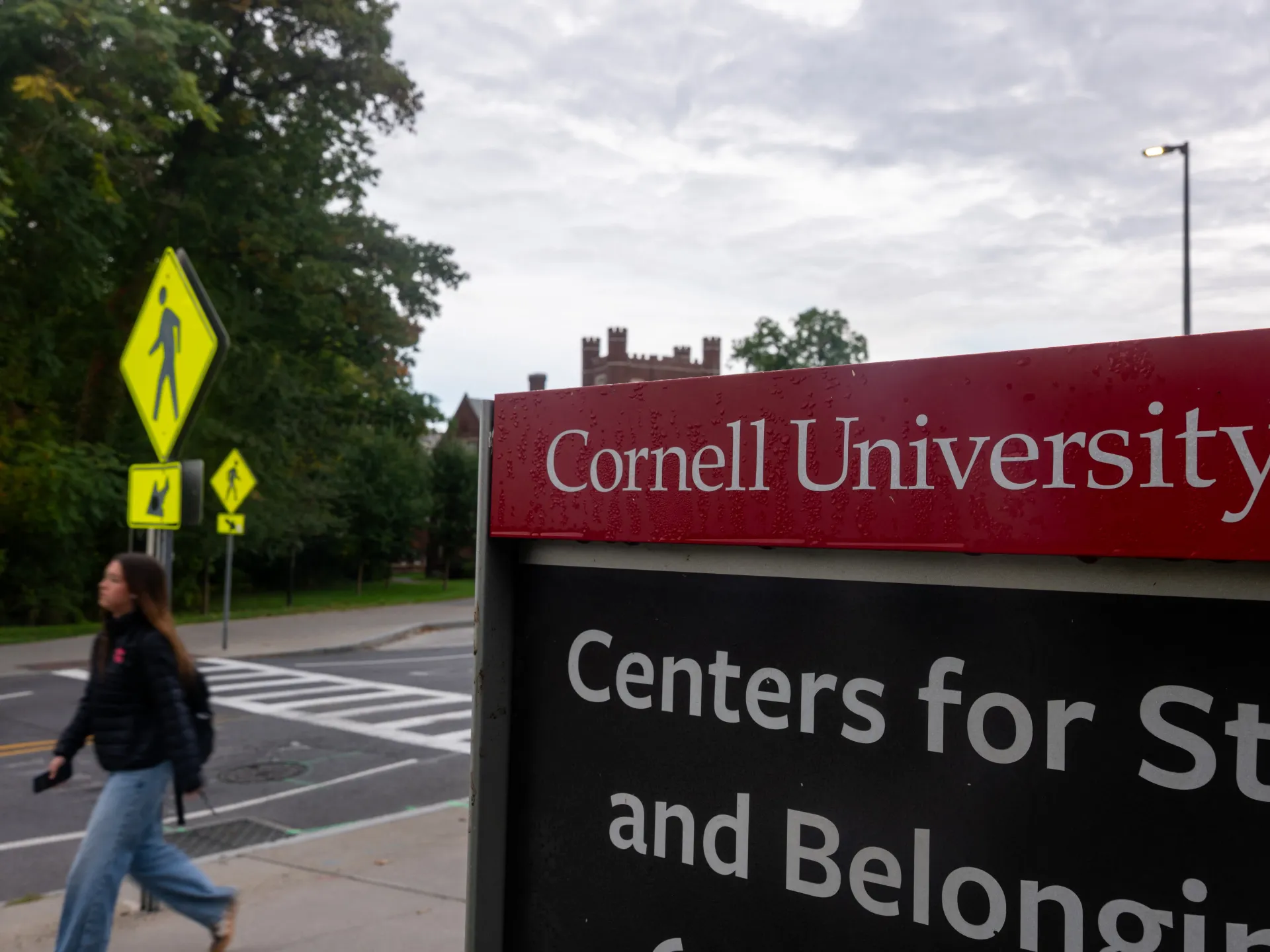
New York lawmakers are renewing a push to change the state’s sexual assault laws after prosecutors in the United States said the current rules made it difficult to bring charges for an alleged gang rape at a Cornell University fraternity house.
At issue is whether someone who willingly becomes intoxicated can be considered mentally incapacitated and therefore unable to consent to sex.
Recommended Stories
list of 4 itemsend of list
Under current New York law, only someone who was drugged or given alcohol without their knowledge can be considered “mentally incapacitated” because of intoxication and unable to consent. The same does not apply to someone who willingly consumed alcohol or drugs.
State Assemblyman Jeffrey Dinowitz and State Senator Nathalia Fernandez are sponsoring bills in their respective chambers that would change that.
In the state Senate, the bill is known as S10632, and in the New York Assembly, it is filed as Assembly Bill A101.
In a post on the social media platform X, Dinowitz said the proposed law would allow prosecutors to focus on whether someone was capable of consenting, rather than how they became intoxicated, and whether the accused “knew or should have known” that the person was unable to consent.
He said people who voluntarily drink or take drugs currently face significant barriers in sexual assault cases, particularly if they remain partly conscious or responsive during an alleged assault.
“The fact that someone made the choice to consume alcohol or another intoxicating substance should never be used to undermine their experience or shift responsibility onto the survivor when they’ve been sexually assaulted,” Dinowitz wrote.
The years-long reform effort has gained new momentum after Tompkins County District Attorney Matthew Van Houten said the existing law was one reason his office initially declined to pursue charges against several Cornell students accused of sexually assaulting a woman on October 19, 2024.
The woman, identified only as Jane Doe, was 20 at the time. She has since filed a civil lawsuit against seven members of the Chi Phi fraternity, as well as Cornell University and several other defendants.
The lawsuit alleges fraternity members gave her alcohol and ketamine and sexually assaulted her after she became incapacitated.
Doe also reported her allegations to campus police in November 2024.
In a statement explaining why his office did not pursue charges afterwards, Van Houten said Doe never claimed at the time that she had been involuntarily intoxicated, physically forced or unconscious. He also said she did not clearly express that she did not consent.
Any of those circumstances could have provided grounds for prosecutors to pursue rape charges under New York law, according to the district attorney.
“On the contrary, Jane Doe’s statement described her participation in drug use and sexual conduct as voluntary, conscious, and consensual,” Van Houten wrote.
“In this case, multiple prosecutors and criminal investigators reviewed Jane Doe’s statement and correctly determined the alleged facts as set forth in the statement do not constitute a crime.”
Since the lawsuit was filed, Van Houten’s office has faced intense scrutiny. It said on Monday that it will reopen the investigation and bring the case before a grand jury, which will consider whether there is enough evidence to indict anyone.
Van Houten also told CBS News on Wednesday that he had not seen a transcript of a campus police interview conducted three weeks after the alleged assault in which the woman said: “I can say with 100% confidence I was raped.”
Cornell has defended its handling of the case, saying it investigated the allegations and disciplined the accused students, with penalties ranging from suspension to expulsion.
On Wednesday, New York Governor Kathy Hochul said the university had agreed to her request to bring in an outside law firm to conduct a new investigation into its handling of the case.
Previous efforts to change New York’s sexual assault laws have foundered in the state legislature. Senate bill S10632 has passed its chamber but has never received a vote on the Assembly floor.
“Rape is the only crime that I’m aware of where, if the victim was drunk, they may not get justice,” Dinowitz, the assembly member, said in an interview with Reuters. “There shouldn’t be any difference in terms of the survivors of sexual assault between the people who are voluntarily intoxicated and who are involuntarily intoxicated.”
New York is one of 19 states where a person can be considered mentally incapacitated because of intoxication only if they did not willingly become intoxicated, according to Elizabeth Jeglic, a professor at John Jay College of Criminal Justice who studies sexual abuse.
“It doesn’t make sense,” Jeglic said. “If you’re incapacitated, you’re incapacitated, regardless of whether you consumed it yourself or somebody else gave it to you without your consent.”
Indirect talks between the United States and Iran aimed at ending the seven-month-long war continue – most recently via Qatar as mediator on the sidelines of the United Nations General Assembly (UNGA) in New York – but the two sides still disagree about the agenda.
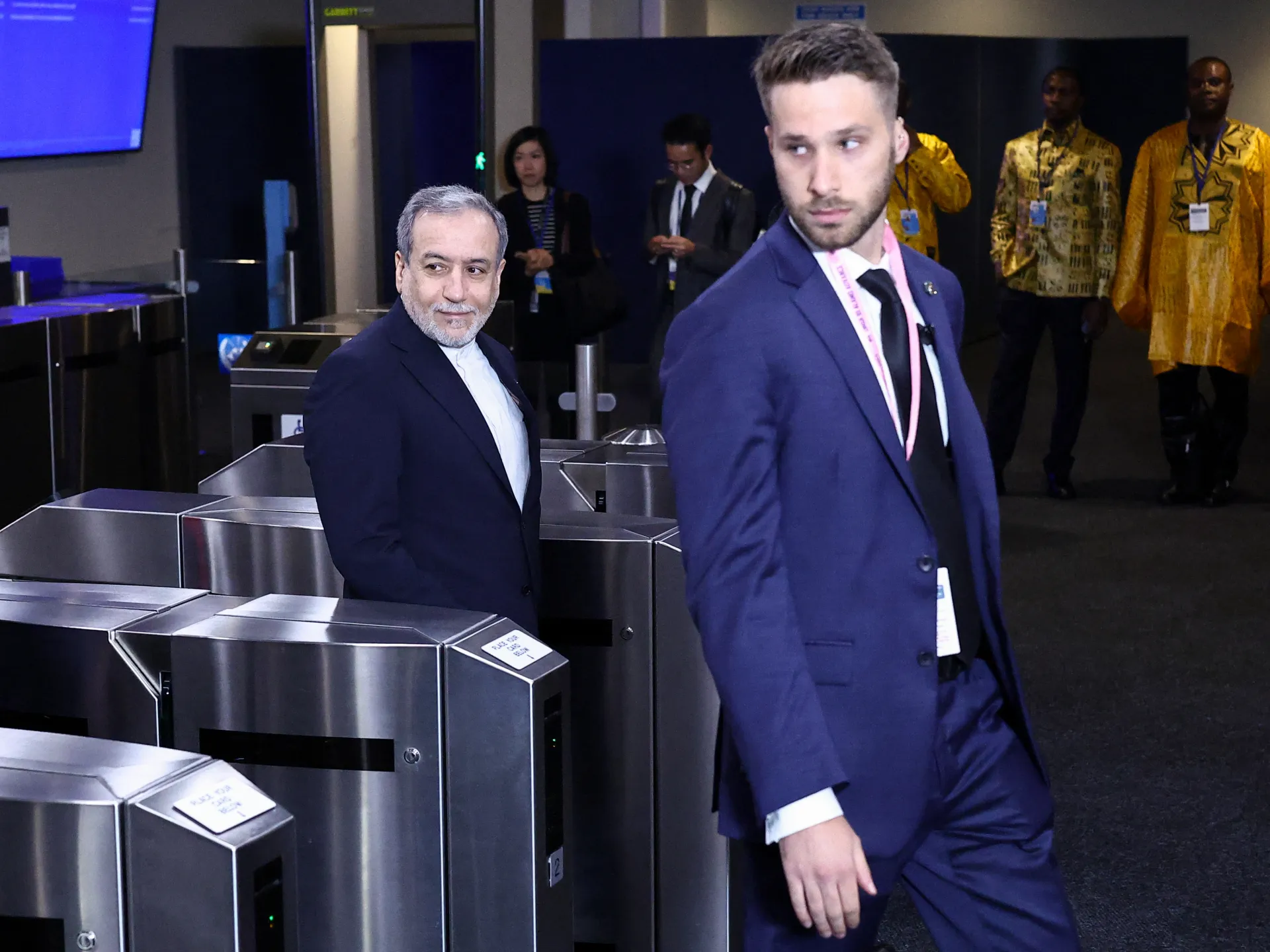
Iranian Foreign Minister Abbas Araghchi left New York on Tuesday after telling state-run Islamic Republic of Iran Broadcasting (IRIB) that he expects an official response to Tehran’s proposal to reopen the Strait of Hormuz by the end of the day. The proposal, which Iran said would see the strait reopened within seven days, was first passed to the US via Qatari mediators last week.
Recommended Stories
list of 3 itemsend of list
United States President Donald Trump was reported to have rejected that offer, under which Tehran would reopen the strait in return for Washington lifting its naval blockade, waiving sanctions, releasing an estimated $12bn in frozen Iranian assets and enforcing a wider regional ceasefire that includes Lebanon.
Under Iran’s proposal, wider peace talks, including discussions of its nuclear programme, would begin only then
Despite Trump’s public rejection, Araghchi says he has not yet received a formal response from Washington. Meanwhile, US media reports that Trump may well be willing to relax sanctions and unfreeze Iranian assets have been strongly denied by the US president.
Instead, US officials say, the US wants a deal that resolves all outstanding issues, particularly Tehran’s nuclear programme, in one go, rather than pursuing a gradual, step-by-step approach.
Here’s what we know about the talks:
Qatari mediators met Araghchi in New York on Monday to discuss how to advance Tehran’s proposal for reopening the Strait of Hormuz and then progressing to wider peace talks.
In a post on Telegram, Araghchi insisted that the talks focused solely on the Strait of Hormuz. He denied that the US had formally rejected the Iranian proposal.
“Despite what the US president said, I said that we were waiting for the official US response through the mediators … They [Qatar] had ideas, and we discussed them. They are going to raise this issue with the American side again, and then the final response from the American side will be conveyed to us through the Qatari mediator,” Araghchi said late on Monday.
Araghchi also said negotiations had become more “serious”, but cautioned that Tehran’s position has not changed.
“I state firmly that there has been no change in Iran’s position. Our conditions for opening the strait are clear. Our position on other issues is also clear. At present, there has been no discussion at all about flexibility,” he added.
Tehran’s proposal includes elements of the Islamabad memorandum of understanding (MoU), which was signed by both the US and Iran on June 17.
Is Trump willing to accept some Iranian demands?
A US official told The Associated Press news agency last week that Trump is not willing to make a final peace deal with Iran until the issue of its nuclear programme is addressed. According to the official, who has not been named, the US president would be willing, however, to grant Iran sanctions relief and release some frozen funds if progress is made on the nuclear file.
Then, on Monday, US-based news outlet Axios also reported that Trump had offered Iran sanctions relief in return for concessions on its nuclear programme. The report also cited US officials, one of whom told Axios that the indirect talks had been “positive and constructive”, adding that Tehran had indicated it was “flexible” on nuclear issues.
Trump, however, angrily denounced the story as a “hoax” in a post on Truth Social, the social media platform he owns. He said the story was “not true” and demanded Axios remove the article.
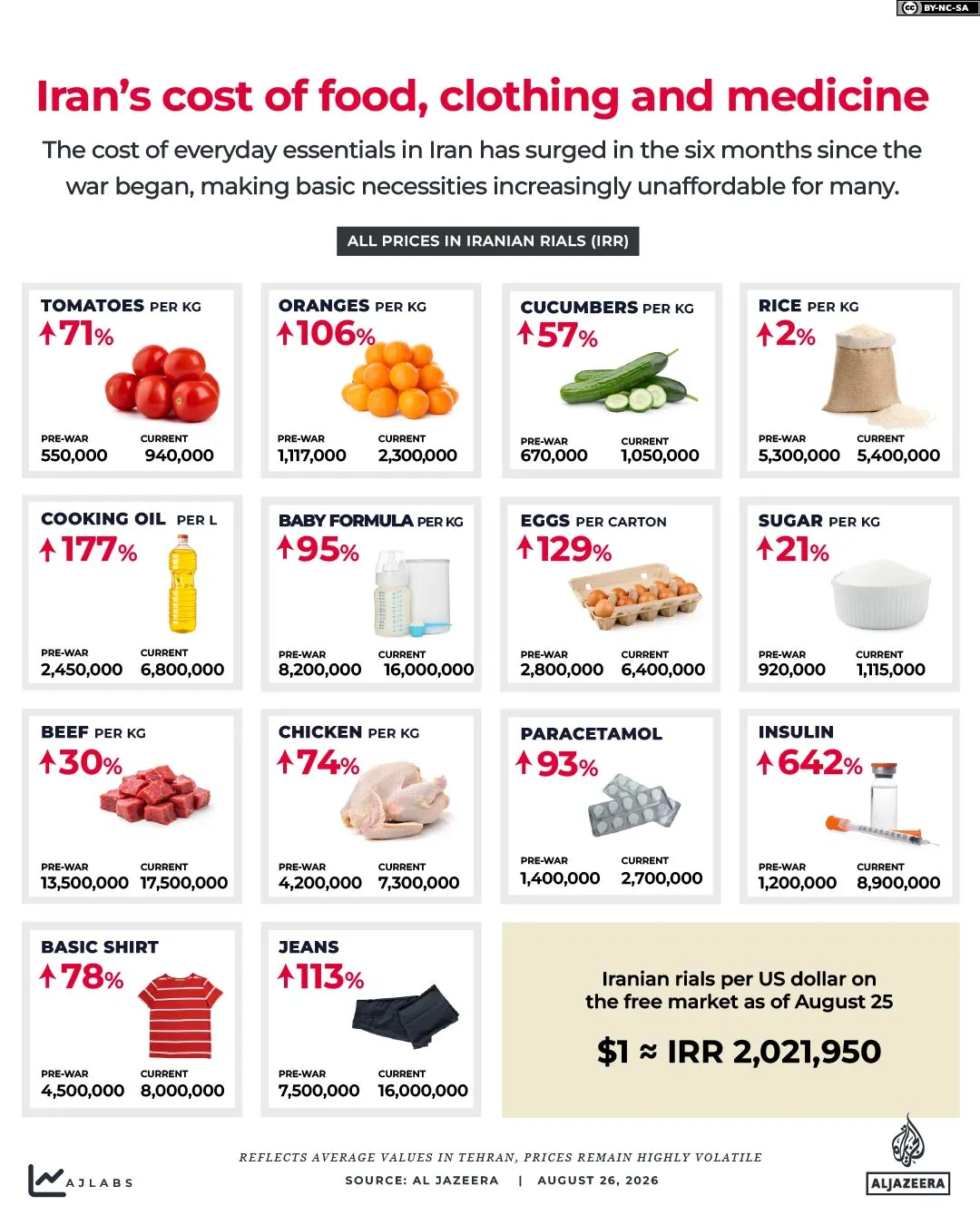
Iran has been heavily sanctioned for decades. The restrictions have severely affected Iranians’ quality of life, including their access to essential medicines and healthcare.
In August, the US announced yet more sweeping economic sanctions on Iran and countries that trade with it as it sought to apply more economic pressure to isolate the country from the global economy during the diplomatic deadlock in their war.
US Treasury Secretary Scott Bessent described the campaign as the “economic asphyxiation” of Iran.
It is difficult to quantify exactly how many Iranians have been killed by what Tehran views as “economic warfare”. However, a study published last year by the highly regarded medical journal The Lancet Global Health concluded that more than 564,250 people worldwide die annually as a result of US sanctions.
What does the US want?
In late February, just before the US launched its first strikes on Iran, the two sides were already holding talks hosted by Oman, which included the issue of Iran’s nuclear programme.
But before those talks could conclude, the US and Israel launched strikes, triggering the closure of the Strait of Hormuz, through which one-fifth of the world’s oil and natural gas is shipped in peacetime, by Iran. The closure of the strait has since become the primary point of contention between the two sides, when it had not been an issue before the war began. The strait is currently subject to blockades by both sides.
Throughout the war, Trump has repeatedly expressed his desire to strike a deal with Tehran. However, serious differences between the two sides will need to be resolved first, including the order in which issues are addressed for the purpose of peace talks.
Iran wants to establish its control of the Strait of Hormuz, have sanctions lifted and assets unfrozen, as well as ensure an end to US-Israeli strikes before it will go back to negotiating other issues, such as its nuclear programme. This was the order of events laid out in the MoU agreed between Iran and the US in June, but which quickly fell apart.
The US, however, wants everything to be on the table at the same time – it does not want to agree to anything relating to these Iranian demands before it addresses the other issues.
Scott Lucas, professor of US politics and international relations at University College Dublin, told Al Jazeera that Washington effectively wants Iran to surrender.
“The Strait of Hormuz has become a fundamental issue. The question here is, will both sides give? The memorandum of understanding clearly gave Iran a role in the management of the strait,” Lucas said.
“When the Trump administration pulled away from negotiating on the basis of the memorandum, they effectively went back to the idea of Iran having to completely allow passage through the Strait of Hormuz with no guarantees over it, in terms of not only what it means for Iran financially, but [also] in terms of Iranian security. The Iranian government is not going to agree to that, so we’re stuck in this limbo right now,” he added.
“Are the Trump folks going to come back to the talks on the basis of the memorandum of understanding or something that is a revised version of it, or are they going to try and break the government with economic warfare until at least after the US elections in November? That’s where we are right now.”
What does Iran want?
After half a century of bitter enmity with Washington, Iran wants to consolidate what it sees as the strategic gains it has made during a war it did not start. This specifically includes its newly established ability to close the Strait of Hormuz, sending global energy markets into a tailspin and placing additional pressure on the Trump administration.
Since US-Israeli strikes on Iran began on February 28, Hormuz has dominated talks aimed at ending the war and emerged as Tehran’s greatest point of leverage. Prior to the conflict, Iran did not exert control over the waterway and all commercial shipping passed through freely.
For this reason, Iran will not move on to wider peace talks until it has leveraged its control of the strait to get its demands met. “Our discussion is clear. Right now, it is only about the Strait of Hormuz,” Araghchi said late on Monday.
“The opening of the Strait of Hormuz is also subject to the fulfilment of a series of conditions that we announced to the other side.”
Ali Salehian, director of the Center for Intellectual Diplomacy at the Governance and Policy Think Tank in Iran, told Al Jazeera that Tehran does not believe Washington will honour any future deal as it did not honour what was agreed under the Pakistan-brokered June MoU.
“For Iran, the bottom line of every negotiation with Trump, considering all of his misbehaving and [military] targeting of Iran during negotiations, is the Islamabad MoU,” Salehian said.
“Tehran thinks that if the US doesn’t fulfil its commitments based on the MoU, there is no guarantee that any kind of future deal would be sustainable.”
Iranian-made Zolfaghar missiles are seen on display beside a large portrait of Iran’s Supreme Leader Mojtaba Khamenei at Baharestan Square in Tehran on September 28, 2026 [AFP]
What is likely to happen next?
It does not look likely that the diplomatic standoff will be eased anytime soon, analysts say.
Both the US and Iran have indicated throughout the war that they would prefer a diplomatic settlement to a continuation of the war. However, Trump has continued to threaten Iran with more strikes if it does not agree to a deal, and Araghchi told US news outlet NBC on Sunday that Tehran is also prepared to resume fighting, even though it has not abandoned diplomacy.
“We are fully prepared for the time for the war to be resumed, and I repeat, we stand firm in the face of any new aggression, even if it comes to a doomsday war,” he said.
Trump said last week that he expects a deal will be reached, but not until after the US midterms on November 3.
“For the moment, the Trump administration is going to try to make the Iranian government capitulate through economic warfare,” Lucas said.
However, a deep sense of distrust remains between the two sides. Senior Iranian officials believe Trump will restart the war after the midterms on a far greater scale and that Israel would also participate.
If that theory proves true, Tehran may well prefer the fighting to resume before November’s elections, as it would allow Iran to impose a greater cost on Trump.
“The reaction of the Iranians to that might be to actually trigger the war themselves, early, right before the midterm elections in order to maximise the pain that [it] will impose on the US president,” Trita Parsi, executive vice president of the US-based Quincy Institute for Responsible Statecraft, told Al Jazeera earlier this month.
The man has been identified as 56-year-old Leighton Brown, an employee of the New York City Housing Authority.
According to local news, he was walking through east Brooklyn neighbourhood working an extra shift when the deadly incident occurred.
“We mourn deeply for the loss of Leighton Brown, a NYCHA employee who faithfully served Brooklyn residents and who was known for his warm personality,” the Office of the NYC Public Advocate wrote on social media.
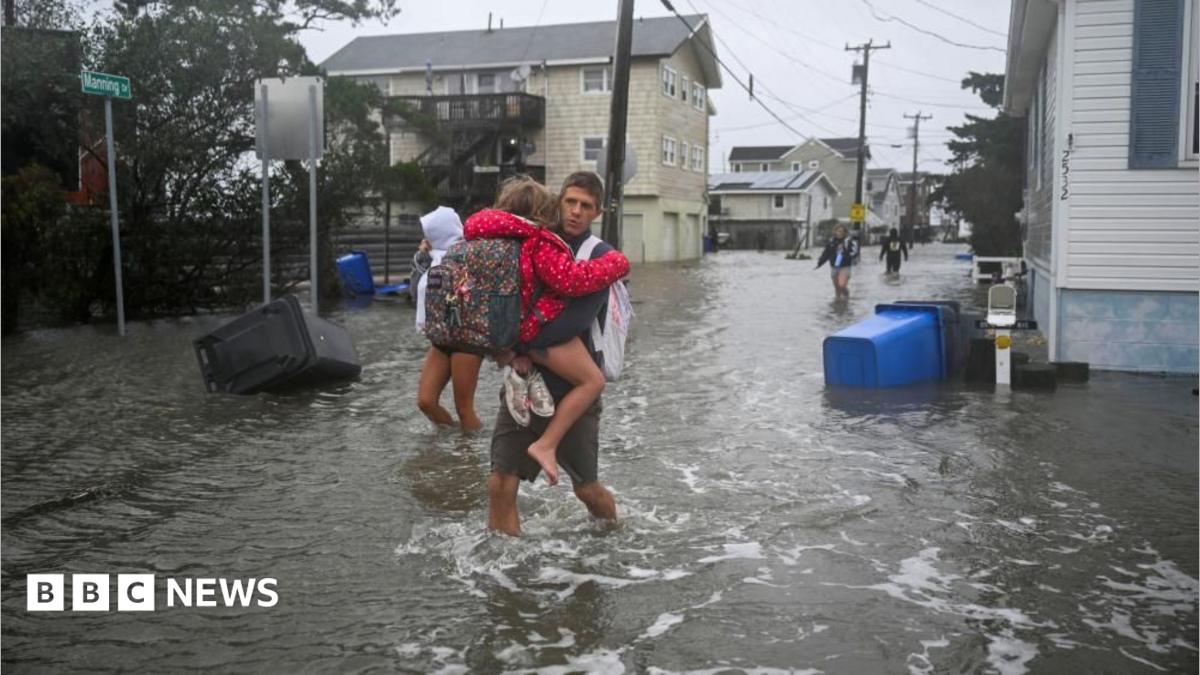
The nor’easter has caused widespread power cuts. More than 160,000 households, nearly all in the north-eastern US, have lost electricity, according to tracker PowerOutage.
More than 2,400 flights were delayed and another 1,199 grounded on Saturday, according to FlightAware.
A full moon was projected to worsen coastal flooding. Streets and homes were inundated with floodwater in the coastal New Jersey communities of Surf City and Manasquan on Saturday.
The lawsuit comes two months after the state filed a similar lawsuit against competitor Kalshi.
New York State has filed a lawsuit against prediction market company Polymarket amid allegations that it violated state laws against illegal gambling.
The suit, filed on Thursday by New York State Attorney General Letitia James, comes two months after the state filed a similar lawsuit against competitor Kalshi. That followed the state suing Coinbase and Gemini for offering users the ability to bet on “sports, entertainment, and elections, in violation of New York laws”, according to a release from the attorney general’s office at the time.
Recommended Stories
list of 4 itemsend of list
The state accused all the companies of operating without licences from the State Gaming Commission.
“Our gambling laws exist to protect New Yorkers, prevent the potential harms of problem gambling, and ensure funding for educational and public benefit programs,” James said in a statement announcing the suit.
“By skirting New York’s laws, Polymarket is targeting the most vulnerable and depriving New York families of critical services and support. My office will never hesitate to take action to defend our laws and keep New Yorkers safe.”
The suit also alleges that the company encouraged gambling among young people. It accuses Polymarket of targeting users as young as 18, while state law requires users to be at least 21 years old to take part in mobile sports betting.
“By running an unlicensed gambling operation, Polymarket has done more than just knowingly violate state law, they have put New Yorkers at risk, especially those underage who are most vulnerable to problem gaming,” New York Governor Kathy Hochul said in a statement.
The more than 30-page lawsuit claims that Polymarket, which is valued at more than $20bn, has advertised sports betting in particular since July 2025. It pointed to a post on X from August 17, 2025, about the launch of its US mobile app that said it was “BAD NEWS (For sportsbooks)”.
Prediction markets allow users to wager on so-called event contracts, covering political events, sports, elections and even award shows. Concerns about the role of prediction markets came to a head earlier this year when wagers were made in the hours before the United States and Israel first struck Iran, prompting widespread backlash in Washington.
Polymarket pushed back on the allegations.
“We chose to engage with them directly on the substance and address their concerns,” chief legal officer Neal Kumar said in a statement.
“They preferred the media hit. Any time the [attorney general’s] office wants to swing by, our door is open for a conversation about how we protect consumers and offer fair, transparent and legal markets.”
Kalshi is facing similar allegations in New York State. Kalshi has been critical of reporting on lawsuits against it and allegations that it is akin to a sports betting or gambling platform.
Polymarket did not respond to Al Jazeera’s request for comment.
The Polymarket lawsuit comes days after reporting from the Wall Street Journal that alleged a wave of users had linked stolen bank debit cards and then used them to make wagers, effectively draining the accounts. According to the report, when CEO Shayne Coplan was made aware of the issue, he responded: “Just keep growing and pay a fine if regulators ever find out.”
Political pressure
New York State’s lawsuit joins a growing list of states that have sued prediction market platforms, including Arizona, Massachusetts, Nevada and many others. Those states are at odds with the federal government, as the Commodity Futures Trading Commission has claimed that the federal agency exerts authority over the regulation of prediction markets.
Polymarket has close ties with the family of US President Donald Trump. The prediction market platform has investment from 1789 Capital, a venture capital firm backed by Donald Trump Jr, the president’s eldest son, who also serves on the company’s advisory board.
At the colloquium established shortly after the second world war to prevent future wars, United States President Donald Trump did just the inverse: He platformed his unceasing threats against Iran, suggesting almost casually on Tuesday that he could “annihilate” the country he has waged war against since February 28.
But behind closed doors on the sidelines of the United Nations General Assembly (UNGA), a flurry of diplomatic activity concerning the ongoing US-Iran war has also been unfolding, as world leaders gather in New York.
Recommended Stories
list of 4 itemsend of list
The US and Iran held indirect talks for three hours on Tuesday. US special envoys Steve Witkoff and Jared Kushner met Iranian Foreign Minister Abbas Araghchi, with Trump calling it a “very good” and “very productive” meeting. Trump also met Gulf Cooperation Council (GCC) leaders that day, with senior officials from the region mulling a Qatari proposal for a common security framework involving Iran and the Gulf states.
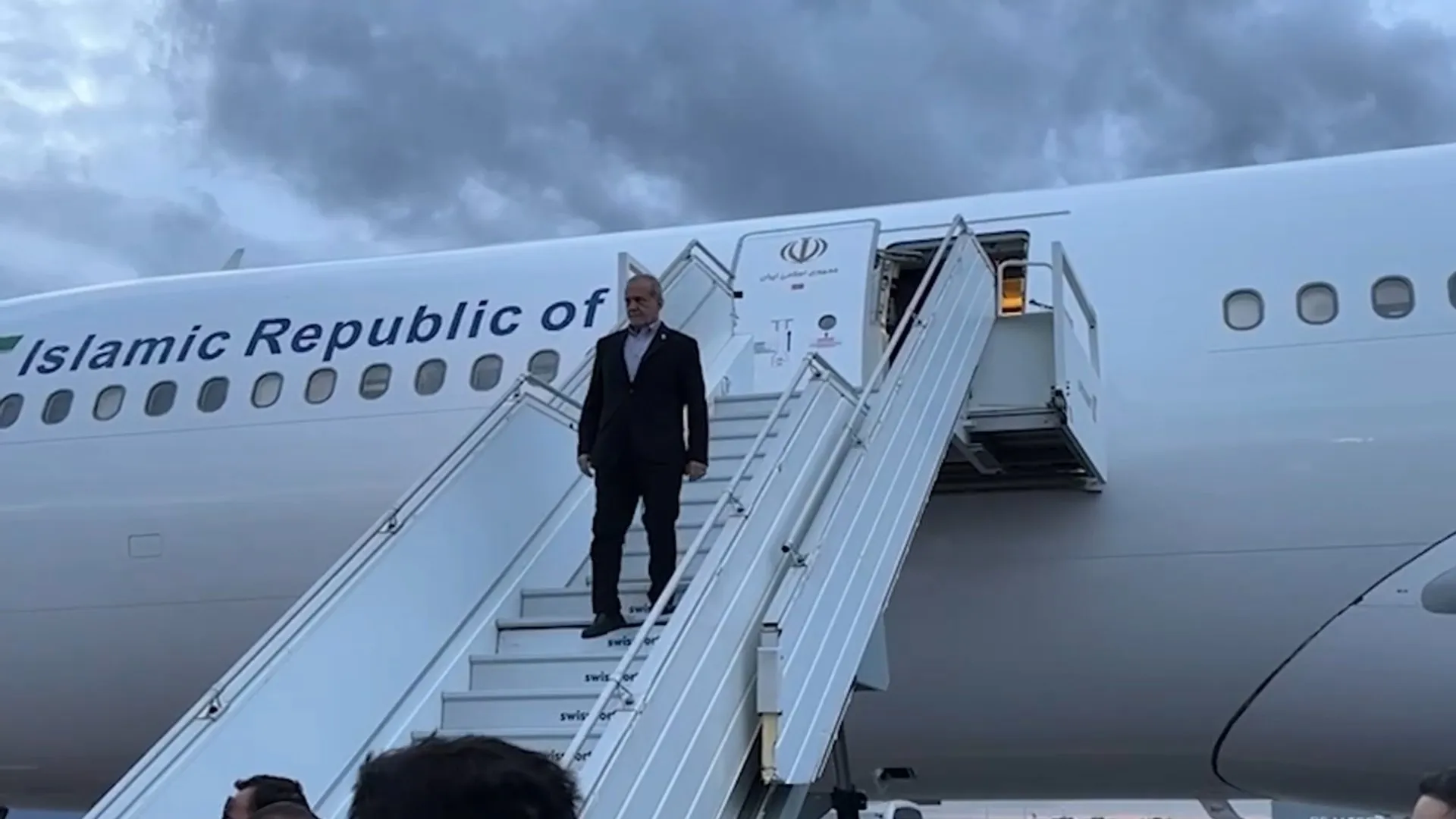
Meanwhile, Iranian President Masoud Pezeshkian arrived in New York early on Wednesday – the first time a leader whose country is at war with the US has set foot on US soil to address the gathering. And Chinese President Xi Jinping will skirt New York to instead meet Trump one-on-one in Washington, DC – his first state visit to the US in just less than a decade. Xi lands on Wednesday evening.
All these separate diplomatic initiatives, analysts tell Al Jazeera, are parts of a push to bring Iran and the US back to the negotiating table. According to Al Jazeera’s correspondent in Tehran, Tohid Asadi, Araghchi’s meeting with Witkoff and Kushner was to convey Tehran’s latest set of conditions to end the war, following the collapse of the June 60-day memorandum of understanding (MoU) finalised in Islamabad, Pakistan.
But analysts say expecting an actual deal to emerge this week from the diplomatic meetings in the US would be unrealistic. Multiple actors and mediators in the conflict are testing possible off-ramps, but core disagreements between Washington and Tehran remain unresolved.
“I am sceptical that a breakthrough deal can emerge this week, but a series of understandings can build confidence for renewed diplomacy,” Sanam Vakil, the director of the Middle East and North Africa Programme at Chatham House, told Al Jazeera.
Too early for a breakthrough
Vakil is hesitant to call the current moment ripe for a diplomatic breakthrough – it is far too early, and there is a history of negotiations failing, she said.
“Both sides have been negotiating for over two years and on two occasions, that ended with military conflict and these negotiations continue amid persistent military threats,” she said.
Iran has long pointed to its previous rounds of diplomatic talks with the US – in 2025 and again this year – as evidence that Washington can veer from negotiations to military action. It has cited the 12-day war last June, and the current conflict, which began with joint US-Israeli strikes on Tehran at a time Washington and Tehran were engaged in Oman-mediated dialogue.
Adel Abdel Ghafar, a senior fellow focusing on the Middle East at the Australian Strategic Policy Institute, said that there appears to be “genuine” movement towards reigniting negotiations – but also “a fair amount of posturing”. He referenced Trump’s praise for Tuesday’s indirect Iran-US talks and his pugnacious UNGA speech the same day.
A breakthrough hinges on whether Iran’s diplomats in New York can actually deliver, he said.
“Araghchi and Pezeshkian can negotiate, but any deal will need the consent of the [Islamic Revolutionary Guard Corps] and the hardliners in charge of the war back home,” Abdel Ghafar told Al Jazeera.
There are specific indicators to watch for another round of US-Iran contact, the analysts said.
“The signs to watch for are another confirmed round of US-Iran talks, agreement on sequencing or reciprocal steps, and language from both sides becoming more specific about implementation rather than simply repeating maximalist demands,” said Vakil.
Abdel Ghafar added that, against the backdrop of UNGA, signs could include Araghchi or Pezeshkian meeting directly with US officials, in addition to supportive statements from more hardline elements of the Iranian administration back home.
The appearance of such indicators could lead to a stronger push for such talks when Trump meets Xi, as well as an easing of fighting between the Iran-backed Houthi group and the Saudi-led coalition in Yemen, which has escalated in recent weeks, the analyst added.
The limits of Gulf and Chinese diplomacy
The analysts agreed that the Gulf states remain crucial in brokering a return to talks because they have channels to both warring sides, as well as a very strong interest in preventing further escalation, having absorbed the cost of the fighting since February. Qatar, Oman and other Gulf states have been involved in mediation efforts throughout the conflict.
“Qatar and Oman, in particular, can help translate broad political messages into workable arrangements on issues such as Hormuz and regional security,” said Vakil.
China, meanwhile, has less capacity or interest to mediate, she argued.
Beijing, however, could use its economic and political leverage with Tehran “to encourage compromise and give Iran greater confidence that any agreement will not leave it completely isolated”, said Vakil.
Abdel Ghafar pointed out that China remains Iran’s main customer for its oil, explaining why Beijing has pushed for a return to the June interim deal and the reopening of the Strait of Hormuz.
“Still, I think neither can impose a settlement – it ultimately comes down to Washington and Tehran,” he said.
Hostilities and Hormuz
The tit-for-tat rhetoric has resulted in continued deadlock in the conflict, with each side unwilling to relinquish to the other’s demands and appear to admit defeat.
On Tuesday, following Trump’s remarks on annihilating Iran, Iran’s military warned that it is ready to respond with “crushing” attacks more severe than earlier in the war.
“The main challenge is finding a formula that both governments can present domestically as a negotiated compromise rather than capitulation,” said Vakil.
The Strait of Hormuz remains a key obstacle.
“It’s Iran’s strongest card and the thing Washington most wants back, with oil prices high and midterms approaching,” said Abdel Ghafar.
“Tehran will be reluctant to give it up without firm guarantees in return.”
Still, he warned that even if Washington and Tehran de-escalate, that does not automatically extend to the Red Sea.
The wider landscape of regional instability and conflict has created new conditions for Yemen’s unresolved war to flare up once again. The Bab al-Mandeb, now under effective Houthi control, has gained greater significance amid Iran’s effective closure of the Strait of Hormuz, a vital artery for global oil and gas supplies.
“Calm in Hormuz won’t necessarily mean calm in Bab al-Mandab,” said Abdel Ghafar.
Iranian President Masoud Pezeshkian has arrived in New York as the US-Iran war continues. He’s due to address the UN General Assembly, where Iran is expected to press its case over the conflict and seek diplomacy aimed at easing tensions.
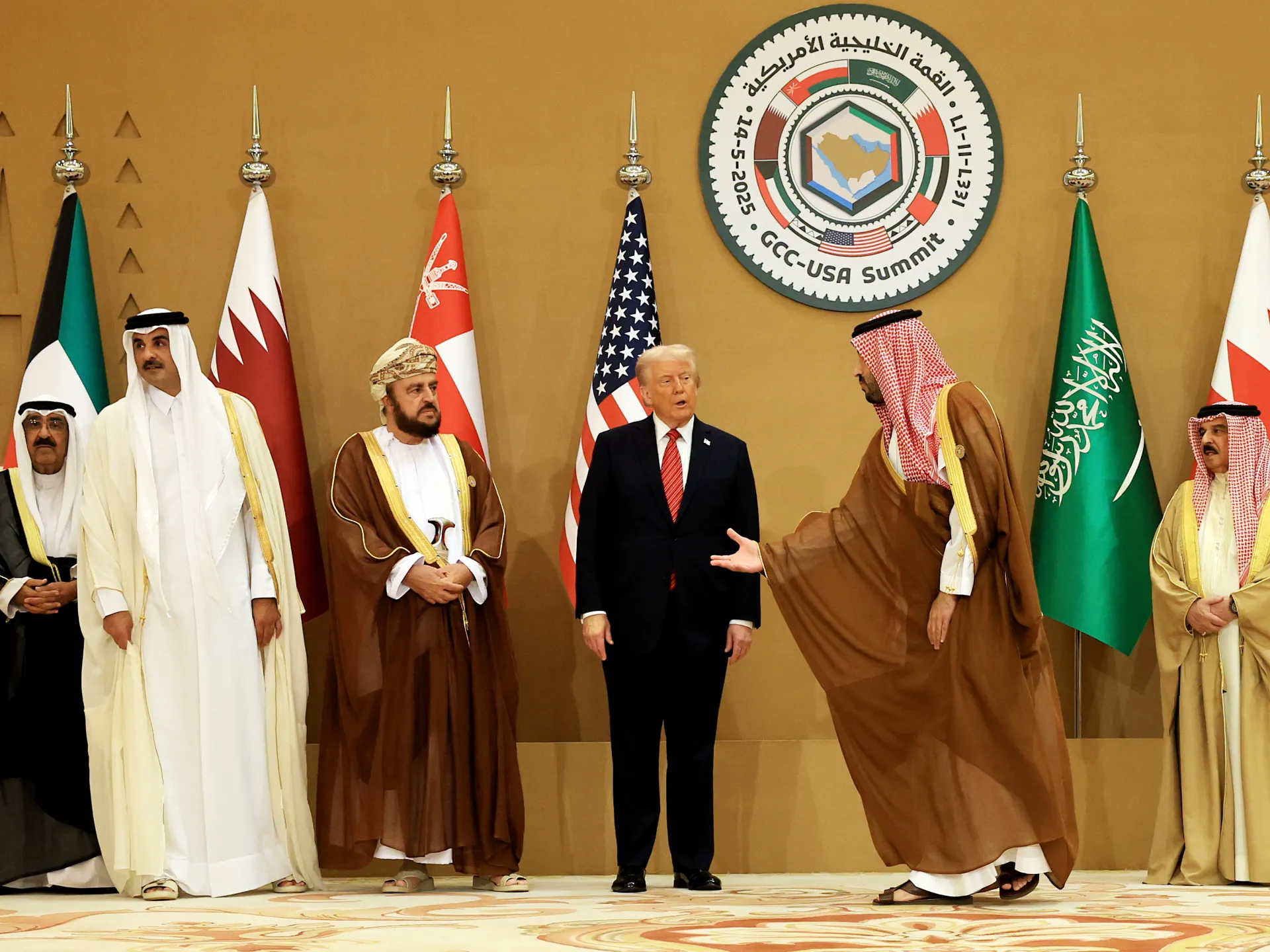
Leaders of the six Gulf Cooperation Council (GCC) states are set to meet United States President Donald Trump in New York on Tuesday, as the US-Israel war on Iran nears seven months.
The meeting, to be held on the sidelines of the United Nations General Assembly (UNGA), brings together countries that have borne much of the fallout from a war they did not start.
Recommended Stories
list of 4 itemsend of list
Since the war began on February 28, Iran has repeatedly struck US bases across the Middle East as well as airports, energy facilities and hotels. The war has particularly hit the Gulf nations hard, as their oil and gas exports – the mainstay of their economies – have been disrupted, causing a global energy crisis.
A June memorandum of understanding (MoU) briefly raised hopes of an end to the war, but it collapsed last month amid disputes over navigation through the Strait of Hormuz, which remains effectively closed.
These talks come as Trump says he faces a “big decision” on the war, and as Iran’s president and foreign minister are also in New York for the UNGA.
So what is on the table and what might come out of the talks? Here is all you need to know:
What do we know about the GCC-Trump meeting?
Trump is set to meet the leaders from Bahrain, Kuwait, Oman, Qatar, Saudi Arabia and the United Arab Emirates, which form the GCC, on the sidelines of the UNGA.
Trump told US media outlet Axios on Thursday that he wanted to meet the GCC leaders as he faced a “big decision” on the war and wanted to speak with them directly.
Experts say there are two interconnected issues – the US-Israel war on Iran and the conflict between Houthi rebels and the Saudi-backed government forces in Yemen.
What do the GCC countries want from the meeting?
Broadly, experts say, the GCC nations share a common goal for the meeting.
The GCC has “shared positions on the main principles of regional security and de-escalation”, Luciano Zaccara, a researcher with the New Ground Research think tank in Doha, Qatar, told Al Jazeera.
“With Trump recently threatening to ‘wipe out’ Iran, I expect the six GCC states, or at least most of them, to convey to the US president their grave concerns about the likely consequences of another round of intense US military strikes on Iran,” Giorgio Cafiero, CEO of Gulf State Analytics, told Al Jazeera.
“They will probably seek to underscore their own vulnerabilities to a renewed cycle of all-out fighting between the United States and Iran,” he said, adding that they will try to persuade Trump into making certain concessions to Tehran.
Cafiero said they will look to develop an arrangement that builds on the MoU and which “offers the most viable path toward winding down the crisis”.
Chief among their common concerns is freedom of navigation through the Strait of Hormuz and the Red Sea, according to Ahmed Helal, managing director for the Gulf region at The Asia Group.
‘Divergent’ goals
Despite common goals, the Gulf states have still experienced “divergent” outcomes from the war and will also look to persuade Trump to address their particular predicaments, Helal said.
The UAE, he explained, has been able to keep exporting oil by pipeline to its port of Fujairah, which bypasses the Strait of Hormuz, although not at the volumes it would like.
But fellow GCC member Qatar, whose gas exports depend on the strait, has seen its LNG shipments severely curtailed and wants to avoid any renewed escalation that could see its energy infrastructure targeted again, Helal said.
Speaking at an event in New York, US, on Sunday, Qatar’s Prime Minister Sheikh Mohammed bin Abdulrahman bin Jassim Al Thani described the economic fallout from the US-Israel war on Iran as an “earthquake”.
Saudi Arabia has another problem, as it is now under “enormous pressure” as the Houthis gain ground in Yemen, and has been “intensifying their lobbying” for US strikes on the group, he said.
What does Trump want from the meeting?
Predicting what the US president plans has been difficult since the outbreak of the US-Israel war on Iran, experts say.
“It could be possible that the US is expecting a more direct GCC engagement against Iran in exchange for a direct US intervention to stop the Houthi attacks against Saudi Arabia, but without the GCC leaving the main role in defending themselves”, Zaccara told Al Jazeera.
“Regarding Iran, Trump has not ruled out another major military escalation. At the same time, the administration seems to be open to exploring diplomatic options,” he said, adding there are rumours of a possible indirect US-Iran meeting on the sidelines before Iranian President Masoud Pezeshkian’s speech on Wednesday.
Helal said the administration’s focus is domestic, with the midterm elections weeks away and Trump’s approval ratings at a record low; there is “immense pressure” to lower petrol prices.
While Trump has threatened further military action, he remains politically sensitive to an “escalatory ladder” that could spike oil prices, Helal said.
The talks are unlikely to produce a breakthrough, he added, with the best-case scenario an agreement to return to negotiations potentially brokered by Qatar or Pakistan.
Myles Garrett is out for four games following knee surgery, but other Rams edge rushers said they were ready to step up against the New York Giants on Monday night at SoFi Stadium.
Aaron Donald will play for the Rams against the New York Giants on Monday, but will Puka Nacua be on the field?
“I’m not going to go out there and be Myles Garrett,” said Stewart, who made six tackles and had one quarterback hit in the Rams’ season-opening defeat by the San Francisco 49ers, “but as a group we’ll fill our role and help do the job.”
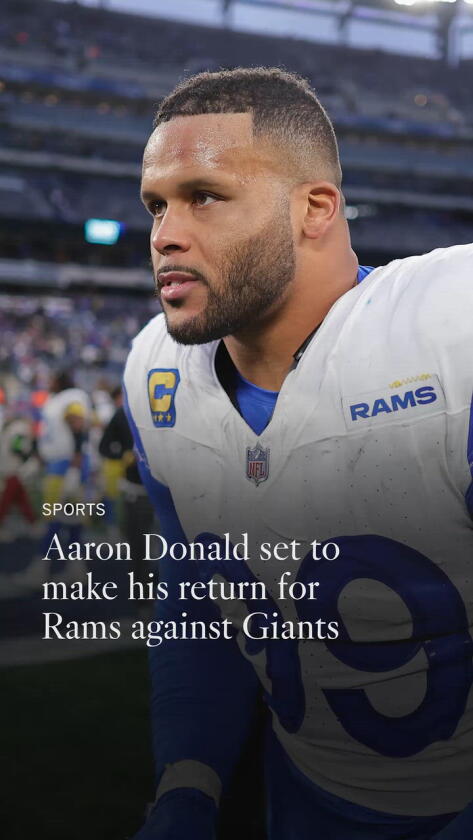
The Rams’ pass rush will be aided by the addition of lineman Aaron Donald, the three-time NFL defensive player of the year who will make his season debut after coming out of two-year retirement.
But the outside linebackers plan to contribute.
“The room is full of talented guys, so everybody always smells blood,” said Johnson, a fourth-year pro. “We’re all sharks in the room, but we’re all helping each other. … It’s time for everybody to put on them big-boy boots.”
Bailey was the only first-year undrafted free agent to make the roster. He did it with outstanding performances in preseason games.
Young said losing Garrett was “huge” but he is confident the group will perform well.
“We’ve got guys that can definitely rush,” Young said. “I definitely think as a collective we can affect it together. He’s going to be back soon, and while he’s gone we’re going to hold it down and do what we do.”
Britain’s most valuable private company has clarified where it intends to sell its shares.
ADVERTISEMENT
ADVERTISEMENT
Nik Storonsky, Revolut’s founder and CEO, told French newspaper Les Echos on Thursday that the group is weighing a dual listing across the London Stock Exchange and the Nasdaq, confirming earlier media reports.
A spokesperson for Revolut confirmed the report to Euronews.
The US remains Storonsky preference, and he was candid about why, stating that “it’s a larger market. It includes institutional investors, hedge funds, fund managers and a considerable number of individual investors.”
“So we have the choice between selling in a small market with few buyers, or in a gigantic market with a huge number of buyers who will compete fiercely for our shares,” Storonsky added.
The comments mark a softening.
The Revolut CEO argued in 2024 that the London Stock Exchange simply could not compete with American venues, citing thin liquidity and the UK’s 0.5% stamp duty on share purchases, and had appeared to rule out listing at home altogether.
The London exchange has endured a prolonged drought of new listings, with companies either staying private or heading west. For instance, payments group Wise moved its primary listing to New York this year, and AstraZeneca has also expanded its presence in the US.
Revolut going public at anything near its current valuation would make it one of Britain’s largest listed companies, potentially worth more than Barclays or NatWest.
A secondary share sale in July valued the business at roughly $115 billion (€100bn), up from $75 billion (€65bn) in November.
No date for the IPO yet
When asked by Euronews about internal discussions regarding a timeline for the IPO, the spokesperson refused to comment, but pointed to a previous interview with Bloomberg in April of this year where the Revolut CEO stated “in two years time, but it depends on how good the market is.”
Progress as certainly been made as the company has spent this year assembling the regulatory foundations a listing will require.
It secured a full UK banking licence in March after a long wait that Storonsky has publicly blamed on British regulators, obtained a French licence in August, received conditional approval for a US national bank charter this month, and announced on Wednesday that it had applied for a Swiss licence alongside plans to invest more than 150 million Swiss francs (€158m) there.
Revolut has not stated which venue would host the primary listing, whether the two would happen simultaneously, or when formal preparations might begin.
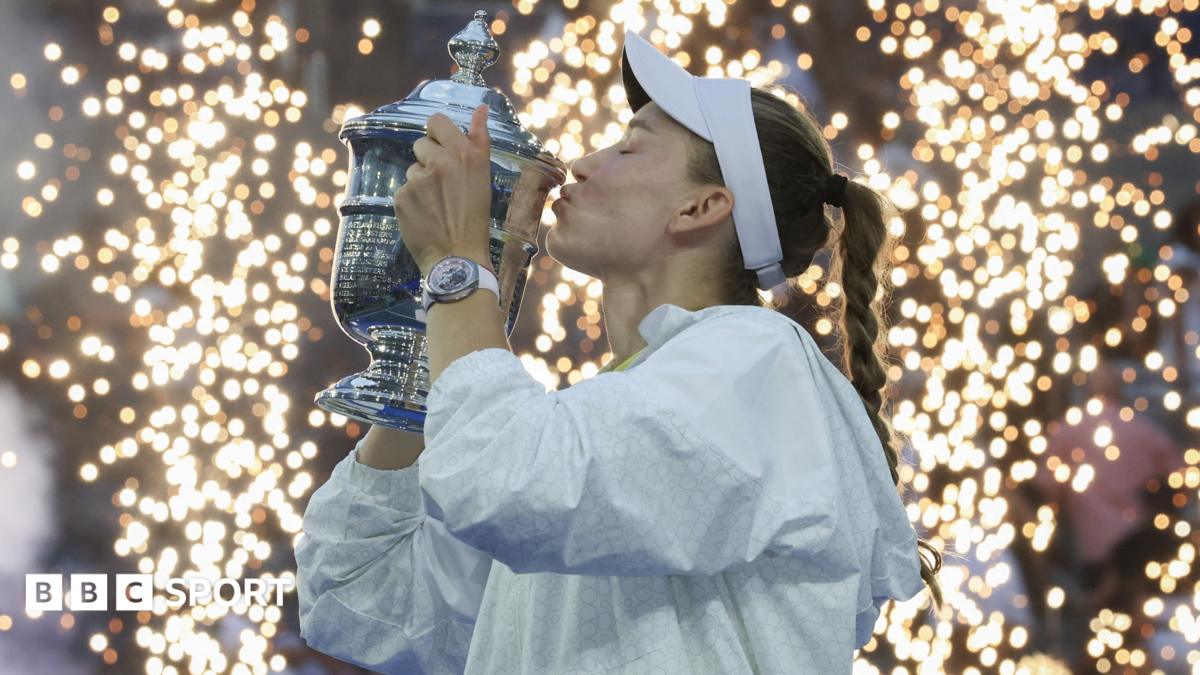
Rybakina rarely shows emotion on the court but there was a brief flash of a smile as she clinched her second major victory of an outstanding 2026 season.
That illustrated the sense of satisfaction she felt after winning a title few had predicted – not only because she had never previously gone beyond the last 16 in New York but the circumstances coming into the final major of the season.
With her penetrating serve and thunderous groundstrokes, Rybakina has a brand of first-strike tennis that can take the racquet out of anyone’s hands.
Therefore it has been a surprise she has not enjoyed greater success on the Flushing Meadows hard courts, perhaps a result of her personality not being particularly suited to the brash nature of New York.
“I was coming here for the last 10 years and it was never successful. I’m falling in love with New York more and more,” Rybakina, 27, said.
What makes the second seed’s victory even more remarkable is that she was unsure if she would be fit enough to even play.
Rybakina was unable to walk for several days after injuring her ankle in the Cincinnati Open quarter-finals, putting her chances of competing here in serious jeopardy.
Not only was Rybakina able to play, but she cruised through her opening four matches thanks to a huge service game that rarely allowed opponents to get into points.
Rybakina’s next two wins over China’s Zheng Qinwen and home favourite Coco Gauff required more work after losing the first sets, proving she had the durability to come through tough battles.
Against Sabalenka, she showed both facets of her game, bullying her from the baseline and digging in when necessary to leave her only a French Open title away from the career Grand Slam.
“Some magic is happening. I was unlucky with injury and just going day by day,” Rybakina told Sky Sports.
“We didn’t know how it was going to be so I’m super happy and still can’t believe it.”
Brooks Nader stepped out in another risky outfit in NYCCredit: Instar ImagesThe sexy star gave onlookers a thrill as she ditched the bra againCredit: Instar Images
Brooks stepped out in the Big Apple in a daring bejewelled top.
The sexy star also ditched her bra for the occasion, baring her figure for all to see.
Aryna Sabalenka was fully aware she would have to win the US Open to stand any chance of stopping Elena Rybakina overtaking her as world number one.
Even that would not necessarily be enough. And as the pair prepare to meet in Saturday’s final, Sabalenka knows her 99-week stay at the top of the world rankings is at an end.
Kazakhstan’s Rybakina is assured of replacing Sabalenka at the top of the rankings, guaranteeing that by reaching the semi-finals.
Having also beaten the Belarusian to win this year’s Australian Open title, Rybakina now has the opportunity to inflict further damage.
But that provides extra motivation for Sabalenka before their fourth meeting of the year.
“It is going to be red rag to a bull for her – she is not going to be happy,” said former British number one Annabel Croft on BBC Radio 5 Live.
“Now she has the opportunity to end this year on a high.”
Sabalenka, who has beaten Rybakina in Indian Wells and Miami since the Melbourne final, still has history in her sights as she bids to become only the third woman in the Open era to win the New York singles title three years in a row.
The four-time Grand Slam champion’s victory over American third seed Jessica Pegula in the semi-finals was her finest display in months, playing with a fire and freedom that had been missing previously.
Afterwards, Sabalenka played down the significance of losing her ranking, joking she did not care about it.
But she clearly does. Sabalenka’s coach Anton Dubrov said as much when he spoke about how the issue has been hanging over her.
“I actually like this [losing the ranking] happened. It’s ended and it’s extra fuel,” Dubrov said.
“There is no more extra draining [of mental energy] or thinking about it.
“There’s a next chapter right now. You have to chase again. It’s extra motivation for you. Just go and get it.”
If you want the perfect staycation weekend, this is one of the best
This article contains affiliate links, we will receive a commission on any sales we generate from it. Learn more
If you want the perfect staycation weekend, this is one of the best
England is beautiful in the autumn, the leaves come alight with colour, and the many cobbled lanes and cosy pubs scattered across the country begin to beckon to eager tourists. However, there is one place where the magic of autumn shines brightest of all.
It’s jam packed with heritage, atmosphere and charm and perfect for a weekend getaway. The historic city of York is one of the best places to see the seasons change.
Hazel Rickett, travel expert at small-group tour operator Rabbie’ssaid: “There’s something about York in autumn that’s hard to put into words.
“As the temperature drops and the evenings grow darker, the city takes on a wonderfully atmospheric quality, with its narrow cobbled streets, ancient walls and glowing pub windows creating the perfect backdrop for a seasonal escape.”
One of the best things about York is that it’s small and walkable – you don’t need to worry about how you’re going to get around, you can just wrap up warm and wander through its streets, soaking up the history.
York has got history in spades, from the towering Gothic Cathedral of York Minster to the beautifully preserved medieval lanes of The Shambles.
The Shambles are an iconic part of the city. This lane is flanked by timber-framed buildings, leaning so dramatically that they almost touch overhead. It’s packed with independent cafes, shops and boutiques, making it a fabulous place to get lost.
On its outskirts, there’s the city walls which encircle the city and date back to medieval times.
Hazel said: “York is encircled by the longest and most complete medieval city walls in England, tracing a roughly two-mile route around the historic centre. The walls offer a raised walk that takes in some of the city’s finest views.
“Visitors can stroll the ramparts between the historic gateways, known as bars, and look out over the Minster, the rooftops and the surrounding countryside as the trees turn shades of amber and gold.
“It’s one of the most rewarding ways to see the city and appreciate just how much history is packed into its streets.”
For the brave, the city comes alive after dark. Famously one of the most haunted places in Europe, the city is packed with spooky tales of ghosts. Those looking for a paranormal experience can join one of the many ghost tours offered in the city and learn more about the legends said to stalk its streets.
NEW YORK: An Iranian American jeweler from New York has been released from prison in Iran, but he is prohibited from leaving the country, according to his family and federal officials.
Kamran Hekmati was let out of Tehran’s notorious Evin prison on Sept. 5 after completing about half of a two-year sentence, his family recently wrote on a website advocating for his release.
The family said they are also “desperately afraid for his health and well-being” as he requires regular medical checkups to ensure his bladder cancer doesn’t relapse.
“The Iranian regime couldn’t care less,” the family wrote of Hekmati’s medical challenges. “Much like other wrongful detention cases in Iran, Kamran appears to be caught up in Iran’s traditional approach of detaining Americans to obtain political concessions from the US.”
Representatives for the family and the federal government didn’t say where Hekmati, who turned 62 in August, is currently staying in Iran.
But Shohreh Nowfar, Hekmati’s cousin in California, said Friday that the family is “excited” and hopeful that his passport can be returned soon so he can leave the country, which has been at war with the US and Israel for more than six months now.
“We continue to hope this is a signal from the Iranian side as to their willingness to send Kamran home,” added Kieran Ramsey, chief investigative officer at Global Reach, a US nonprofit working on Hekmati’s case.
The Iranian American, who is also Jewish, owns a jewelry business in Manhattan’s Diamond District and has lived with his family for years in Great Neck Estates, on suburban Long Island.
He was arrested by Iranian authorities last July after having his passport seized while trying to fly out of the airport in Tehran that May.
Hekmati’s family says he was charged under an Iranian law that bans Iranian citizens from visiting Israel within the last 10 years. But they maintain his last trip to Israel was 13 years ago — prior to the passage of the law — for his son’s bar mitzvah.
“Mr. Hekmati did nothing wrong,” said US Rep. Thomas Suozzi, a Long Island Democrat who advocated for the State Department to officially designate Hekmati as wrongfully detained earlier this year. “We cannot rest until he is reunited with his family.”
The State Department similarly called on Iran to lift its so-called exit ban so Hekmati can return to the US It also said the country should “immediately release” Iranian American journalist Reza Valizadeh and other Americans “unjustly detained in Iran.”
Valizadeh and Hekmati are the two Americans so far officially designated as wrongfully detained in Iran, while up to eight others who have not been publicly named are prohibited from leaving the country, according to Ramsey.
Valizadeh’s lawyer, Ryan Fayhee, declined to comment Friday, citing the risks his client could face behind bars.
But in recent months, the journalist has sent voice messages describing conditions inside Evin prison, a high-security facility that holds many of the Islamic Republic’s political prisoners.
In an August recording, Valizadeh, who has been imprisoned since 2024, said prison officials have not allowed his family to visit for the past five months. He also said medical care is “almost non-existent,” save for the most basic medications.
“Diseases that were eradicated decades ago have returned inside the prison, including pulmonary and gastrointestinal tuberculosis,” he said in the voice message, which was shared by CBS.
Valizadeh also said that prior to his release, Hekmati had been granted a medical furlough for cancer treatment but was ordered back to prison after about a month, rather than being allowed to begin chemotherapy.
Valizadeh is among at least nine reporters currently jailed in Iran, according to the Committee to Protect Journalists.
He was arrested after returning to Iran to visit his elderly parents and charged with collaborating with the US government.
Valizadeh obtained US citizenship in 2022 while working in Washington, D.C., for Radio Farda, the Persian-language arm of Radio Free Europe, which receives US government funding.
The sprawling snack-food factory in upstate New York appeared to be closed when a small army of immigration officers arrived after 9 a.m. Following a brief discussion of whether to force their way inside, a manager opened the front door.
Over the next several hours, body cameras were running as federal authorities from several agencies made 57 arrests, debated which files to seize and when to release employees who were U.S. citizens. They also searched for anyone in hiding.
The footage from September 2025 shows the raid at the Nutrition Bar Confectioners plant in Cato, N.Y., town of 2,500 people east of Syracuse, and offers a rare glimpse inside a workplace immigration sweep. The Associated Press analyzed the video, which was part of a lawsuit filed Thursday that accuses authorities of overstepping their search warrants.
The officers ordered a manager to announce their presence over loudspeakers while they entered the building and caught employees on the production line, in the warehouse and a few in the bathroom. Officers covered all exits while others swept the interior, including homing in on locked doors.
Male officers encountered a locked bathroom and began shouting instructions in broken Spanish at female employees through the door, demanding that they come out. After about 10 seconds, officers broke through the door.
One woman was outside of a stall and another in the stall. A male officer peered through a locked stall door, and his body cam video revealed a woman sitting on the toilet.
“Miss, pull up your pants. Come out of the bathroom,” he told her.
“You have to wait. I can’t come out like this, naked!” she replied.
Investigators interviewed the general manager and said they were looking into hiring practices and potential fraudulent documents. Inside and outside the building, officers checked every office, storage room and hallway for anyone who was hiding.
Employees were lined up and separated into groups of U.S. citizens and potential noncitizens. Officers asked for their immigration status, requested documents and posed questions about their entry into the U.S. Some employees were pregnant.
Some were parents and expressed concern for their children at home. Others said they would not answer questions without first speaking to their attorneys, and officers told them they would be arrested.
One employee refused to answer questions. “Will you let me talk to my attorney?” she asked the officer. He raised his voice and continued asking about her immigration status.
U.S. citizens were asked for personal information, including their phone numbers and addresses before they were allowed to leave.
A Border Patrol agent who spoke to another official wearing a camera used disparaging language about children from other countries when recounting his experience working at a South Texas immigrant detention center. He said President Biden’s administration allowed millions of people to enter the United States from countries where children are treated “differently” than they are by American parents.
“In other countries, kids are more of a commodity or it’s more of like, I’m going to put it in those terms. It’s more like an animal, right? It’s not prized the way that we do it,” he said.
“There’s countries like Brazil and other places where they’re literal street rats at a very young age who commit crimes, and then they come here. I don’t know if you have kids, but they’ll eat our kids for breakfast.”
The Homeland Security Department said Friday that it executed a criminal search warrant at the plant as part of an investigation that is still open. Its statement did not address the contents of the video or the merits of the lawsuit.
Not all officers wore body cameras, but those who did often indicated to other officers that they were recording before they initiated a conversation.
ICE’s Homeland Security Investigations unit is responsible for workplace raids, which have been relatively few and low-key compared with ICE’s removal unit, which arrests people in the street, at homes and in public and also manages detention centers. The Trump administration’s largest workplace raid was last year at a Hyundai electric vehicle plant in Georgia. It resulted in nearly 500 arrests and fueled diplomatic tension with South Korea.
The lawsuit against Homeland Security claims federal officers exceeded the authority of their warrants and violated workers’ constitutional rights against unlawful search and seizure.
“There were no arrest warrants,” said Perry Grossman, a supervising attorney at the New York Civil Liberties Union, which filed the lawsuit with the Worker Justice Center of New York.
“There was no suspicion that individual workers had committed crimes. And they seized easily 100 people for nonconsensual questioning. They arrested 57. Out of those 57 people, criminal charges were brought against only five. And the most serious charge was unlawful reentry.”
Grossman said one employee got her charges dismissed after contending in a lawsuit that her 4th Amendment rights were violated. He said he was not aware of any charges or indictments against the employers.
Officers detained about 60 people and deported some employees, including two plaintiffs who are part of Thursday’s lawsuit. One plaintiff has since been allowed to reenter the country. Attorneys for the second deported plaintiff are seeking his return.
Law enforcement agencies have come under criticism for not using body cameras and for refusing to release footage when they do. ICE, in particular, has been scrutinized after a $75-billion infusion from Congress and an expanding street presence that has led to three fatal shootings this year.
ICE’s own rules on releasing video are unclear. Its policy calls for expedited release of footage after a serious injury or death in custody when doing so is determined to be in the “ best interests of the agency.”
The Trump administration has repeatedly promised to equip ICE field agents with body cameras, as required by Congress. Homeland Security Secretary Markwayne Mullin said last week that the agency was “on track” to do so by the end of September.
Gonzalez and Vancleave write for the Associated Press.
Jude Terry and Armindo Sieb each scored a goal, Hugo Lloris had his MLS-leading 12th shutout this season, and LAFC beat the New York Red Bulls 2-0 on Wednesday night to end a six-game winless streak.
The Red Bulls (7-11-6) are winless in six straight dating to a 3-2 home victory over Orlando on Aug. 1.
Son Heung-min cut back to evade a defender, darted toward the end line past another and then fired a shot from the left side of the area that was parried by goalkeeper Ethan Horvath at the near post. Terry, a 17-year-old homegrown, tapped in a first-touch putback from the top of the penalty box in the 21st minute.
Sieb subbed on for Jacob Shaffelburg in the 60th minute and his first MLS goal capped the scoring in the sixth minute of stoppage time. The 23-year-old forward, acquired Aug. 13 from Bayern Munich of the Bundesliga, made his debut for LAFC in a 2-2 tie at Real Salt Lake on Saturday.
LAFC is 11-0-2 this season it scores first.
Dennis Nelich and Sekou Kone, who were added earlier Wednesday from Red Bull New York II, made their MLS debuts. Kone came on for the Red Bulls in the 33rd minute when 17-year-old midfielder Adri Mehmeti went off due to an apparent leg injury.
New York had 57% possession but was outshot 15-8, 8-1 on target.
Horvath had six saves, including three in the closing minutes of the first half.
Rybakina, 27, dropped only four points in a near flawless performance on serve against four-time Grand Slam champion Osaka, who said after the match she was struggling with pain in her leg.
She faced the 28-year-old full of confidence, having not dropped a set in her opening three matches at the tournament, and took control of the contest in a dominant first set.
Reigning Australian Open champion Rybakina opened up a double break over Osaka, before sealing the set in just 21 minutes.
Osaka showed greater resistance early in the second set but, after failing to convert her only break point of the match, Rybakina soon seized control again.
She broke to go 4-3 up, before safely seeing out the rest of the match, with Osaka unable to contend with her opponent’s deep groundstrokes.
Rybakina sealed the match inside 66 minutes with her seventh ace of a match where she hit a total of 29 winners to Osaka’s nine.
Asked about the gap of almost six years since her last major win, at the 2021 Australian Open, Osaka said: “I thought about it, and if I win another Grand Slam, it’s not going to change my life.
“That’s kind of crazy that I can say that, because I remember the first Slam that I won, it was, like, a huge whirlwind.”
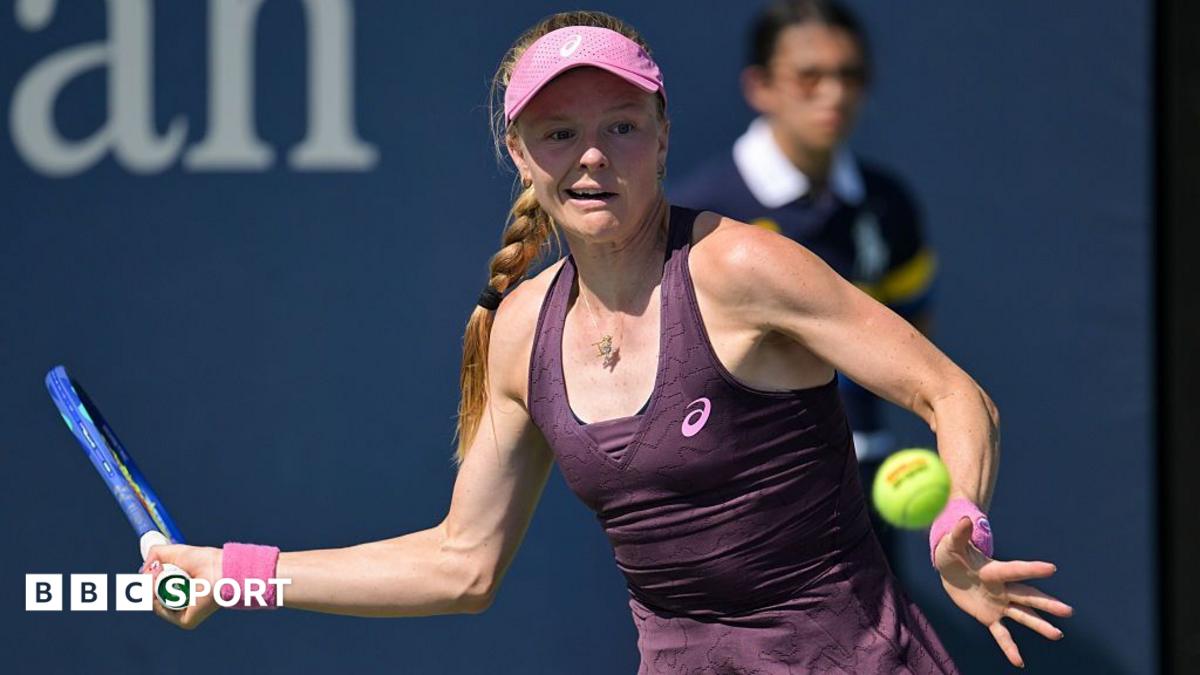
Harriet Dart and Francesca Jones both fell to seeded players as British interest in the US Open singles ended in the second round.
Dart said she felt “under the weather” during her 6-2 6-2 defeat by Czech 25th seed Marie Bouzkova as temperatures reached around 30C in New York.
Her loss meant Jones was the last Briton standing in either singles draw, and she acquitted herself well before falling 6-4 6-4 to 14th seed and rising American star Iva Jovic.
Nine British players competed in the US Open main draws – the most since 1981 – with four coming through qualifying.
Five of them reached the second round, but Jacob Fearnley was the only player to win a set as they all fell to seeded players.
Lucky loser Fearnley fell in four sets to 27th seed Tomas Martin Etcheverry, while qualifier Toby Samuel was beaten by 18th seed Jiri Lehecka.
Katie Boulter lost to Wimbledon runner-up Karolina Muchova in only 58 minutes on Wednesday.
In the men’s draw, Cameron Norrie, Arthur Fery, Harry Wendelken and Jan Choinski exited in the first round.
Jones, ranked 90 places lower than Jovic, made the American work for one hour and 54 minutes to reach the third round.
Humid conditions meant both players frequently dashed to the back of the court between points to dry their hands and face.
It was Jovic who started on the front foot, opening up a double break and a 3-0 lead as the 18-year-old controlled the rallies with some deep hitting from the baseline.
Jones snatched a break back and kept in touch with Jovic – but she could not make the most of a break point as Jovic served for the set.
After wrapping up the opener, Jovic raced into a 4-1 lead in the second, only to once again be dragged back by Jones.
The Briton saved three match points on her own serve but Jovic produced one of her best service games to seal victory and set up a meeting with good friend Alexandra Eala.

![Iranian-made Zolfaghar missiles are seen on display beside a large portrait of Iran’s Supreme Leader Mojtaba Khamenei at Baharestan Square in Tehran on September 28, 2026 [AFP]](https://i0.wp.com/occasionaldigest.com/wp-content/uploads/2026/09/afp_6abbb983ec1b-1790687619.jpg?w=640&ssl=1)