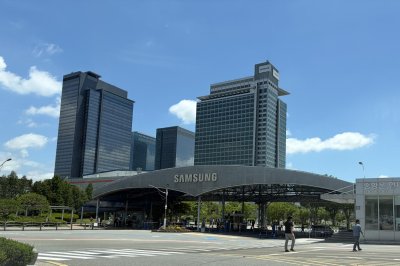
The entrance to Samsung Electronics’ Suwon campus in Suwon, South Korea, is seen under a clear sky. Photo by Hyojoon Jeon / UPI
June 5 (Asia Today) — Samsung Electronics said Friday it will launch a monthlong customer appreciation campaign worth 400 billion won, or about $261 million, as part of a broader social contribution plan linked to strong performance in its semiconductor business.
The campaign, called “Together With the People, Samsung Electronics Appreciation Festival,” will begin Monday. Customers who buy Samsung Electronics products during the event will receive Onnuri gift certificates equal to 20% of the purchase price, the company said.
Onnuri gift certificates can be used like cash at traditional markets and small neighborhood businesses across South Korea. Samsung said it chose the certificates instead of direct discounts to help stimulate local economies and support small merchants.
The event is part of Samsung Electronics’ earlier pledge to expand social contributions by 5 trillion won, or about $3.26 billion, over the next five years. The company announced the plan after reaching a labor-management agreement last month, saying it would invest in “mutual growth and a healthy ecosystem” as well as “future talent development.”
Samsung said soldiers, police officers, firefighters and correctional officers, which the company refers to as “K-heroes,” will receive a 30% benefit when buying products through the Samsung Electronics Family Mall. More than 700,000 people are expected to be eligible.
Samsung Electronics has operated a separate “K-Hero Family Festa” since 2024 to provide price benefits to members of the military, police, fire services and correctional service.
“The dedication and sacrifice of K-heroes made South Korea one of the safest countries in the world, and Samsung Electronics was able to achieve strong performance and growth thanks to that,” the company said. “The program is intended to honor the devotion and hard work of the heroes around us and express our gratitude and support.”
Samsung is also reviewing additional social contribution measures, including support for partner companies, inclusive finance and artificial intelligence talent development.
The company said those plans may include strengthening the competitiveness of industrial ecosystems through supplier support, expanding financial access for vulnerable groups and small business owners and increasing university-industry cooperation to train talent in AI and other future industries.
“We will continue to think deeply about what role a company should play in our society while considering the expectations of the people,” Samsung Electronics said. “As a company that grows together with society, we will faithfully carry out our responsibilities and role.”
New York Mayor Mamdani was among those critical of FIFA’s decision to ban water bottles at World Cup stadiums.
Published On 7 Jun 20267 Jun 2026
FIFA has made changes to its stadium policy, allowing fans to bring disposable water bottles into match stadiums after a ban earlier this week drew backlash from supporters and tournament host city officials.
FIFA’s initial policy permitted fans to carry empty, transparent, reusable plastic bottles up to 1 litre (34oz). However, the governing body made a U-turn on that policy on Thursday and banned fans from carrying reusable water bottles into venues due to safety concerns.
Recommended Stories
list of 4 itemsend of list
The move essentially meant fans would have to buy water or soft drinks from concession stands in the stadium, where prices would “remain consistent with other events held at each stadium”, according to FIFA.
The backlash prompted FIFA to issue what it called a “clarification” on its stadium policy, saying: “All fans will be permitted to bring in one soft, plastic, 20-ounce (590ml), factory-sealed disposable water bottle into any FIFA World Cup 2026 match in the USA and Canada.
“Fans will not be permitted to bring in hard-sided, reusable water bottles due to safety and security reasons.”
The updated policy made no mention of the policy for stadiums in Mexico.
New York City Mayor Zohran Mamdani was pleased with FIFA’s decision to reverse the water bottle ban.
“No one should have to fear being priced out of being hydrated, especially fans who are often waiting for hours before a game in extreme heat,” said football fanatic Mamdani, who has championed equitable prices for this World Cup in his home city. Last month, he made 1,000 tickets costing $50 available to city residents as match tickets reached well into four figures.
Forecasters have warned that fans could face health risks from extreme heat at open-air venues during the World Cup, which is being cohosted by the United States, Canada and Mexico from June 11 to July 19.
A report published by the World Weather Attribution research group last month estimated that 26 of 104 games at the World Cup are likely to be played in conditions where the Wet Bulb Global Temperature (WBGT) exceeds 26 degrees Celsius (78.8 degrees Fahrenheit).
WBGT is a measure of heat stress on the human body, which combines temperature, humidity, wind and sunlight.
At last year’s FIFA Club World Cup in the US, where fans complained of searing temperatures, supporters were also barred from bringing water bottles into venues.
FIFA has noted that misting stations, fans, hydration stations and cooling tents would be available in “the stadium footprint”.
Fans at the 2022 Qatar World Cup were also not permitted to bring reusable water bottles into stadiums.
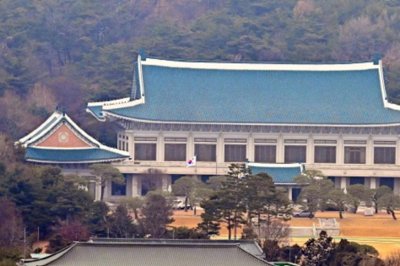
The South Korean flag flies over Cheong Wa Dae in Seoul. Photo by Asia Today
June 5 (Asia Today) — South Korea’s presidential office said Friday there has been no major change in the plan to build nuclear-powered submarines in South Korea as Seoul and Washington resume talks on nuclear cooperation and wartime operational control.
A senior Cheong Wa Dae official told reporters that recent security talks between South Korea and the United States were “very productive and useful.”
“There has been no major change in the position that nuclear-powered submarines will be built in South Korea,” the official said.
The official said the two sides discussed uranium enrichment, spent fuel reprocessing and nuclear-powered submarines. The talks also included what the official described as an “umbrella” consultation framework.
“We have not set a target deadline, but we will move quickly and try to produce concrete results by the end of the year,” the official said.
South Korea and the United States held formal talks in Seoul this week on follow-up discussions related to Seoul’s push for nuclear-powered submarines and expanded rights for uranium enrichment and spent fuel reprocessing. The talks followed earlier bilateral agreements on nuclear cooperation and submarine development.
On enrichment and reprocessing, the senior official said Seoul and Washington need “several new frameworks of agreement.”
“We intend to make progress, including by revising what needs to be revised,” the official said.
The official said talks on enrichment and reprocessing are now moving into a full-fledged phase.
“These discussions are based on trust in South Korea’s denuclearization, so there are no additional denuclearization conditions,” the official said.
Asked about coordination between Seoul and Washington on the timing of South Korea’s recovery of wartime operational control, the official said the two allies do not have a significant difference of opinion.
“Efforts to meet the conditions have continued for more than 10 years, and several years ago there was even an assessment that the conditions had been more than 90% met,” the official said. “Because there is little difference in views on the conditions, we can coordinate and align them.”
The official said the two sides also do not differ sharply on the timing of the transfer.
“There is a gap of a little over a year, about one year-plus,” the official said. “We do not see that gap as something that cannot be adjusted.”
Germany earned a 2-1 victory against World Cup co-hosts United States in the final warm-up game for both teams.
Kai Havertz had an early goal for Germany cancelled out by Antonee Robinson’s stunning volley before Leroy Sane’s winner for Julian Nagelsmann’s side.
“I’m happy with the performance of everyone,” said US coach Mauricio Pochettino, who believed his side were “unlucky” to lose.
“We played one of the most important teams in the world. I think we need to be happy with that.”
The US will start their World Cup campaign against Paraguay on 12 June, while Germany, who have won nine games in a row, begin with a game against Curacao on 14 June.
Germany coach Julian Nagelsmann said his side’s win against the US had been a “perfect test for us, both in terms of the weather and the opponent”.
Brazil beat Egypt 2-1 in the final warm-up game for both countries, with Newcastle United midfielder Bruno Guimaraes scoring early on for the winners.
Mostafa Zico equalised for Egypt but Raphinha set up Endrick to win it for the South American side, who had to take defender Wesley off after 17 minutes.
Egypt forward Mohamed Salah, who recovered from a “minor muscle injury” to play for Liverpool towards the end of the season, came on for the second half against Brazil.
“Salah underwent a rehabilitation program with Liverpool and then with the national team, and he is now ready for matches,” said Egypt coach Hossam Hassan.
Egypt’s opening game of the World Cup on Monday, 15 June will be against Belgium, who thrashed Tunisia 5-0.
Leandro Trossard, Charles de Ketelaere, Kevin de Bruyne, Dodi Lukebakio and Nicolas Raskin each scored against a Tunisia side reduced to 10 men following the dismissal of Ismael Gharbi after 62 minutes.
Belgium boss Rudi Garcia brought Romelu Lukaku on after 66 minutes as he manages the striker’s return to action.
“It is a good preparation for the World Cup, we know this team can do great things,” said Garcia, whose side were beaten 2-0 by Croatia in their previous game.
1 of 2 | Pope Leo XIV blesses infants on his visit to the Caritas Charity Centrer in the Lucero neighborhood of Madrid Saturday. The pontiff is visiting Spain from from June 6 through June 12, with stops in Madrid, Barcelona and the Canary Islands. Photo by Ciro Fusco/EPA
June 6 (UPI) — Pope Leo XIV landed in Madrid Saturday to begin his one-week papal visit to the country, the first in 15 years.
Leo was greeted at the airport by King Felipe VI and his wife Queen Letizia, then addressed them at the Royal Palace along with politicians and diplomats.
He acknowledged political polarization and called for an end to it in Spain and elsewhere in the West.
“I come among you to affirm, encourage and instill a renewed fidelity to the Gospel among believers, as well as a deeper reconciliation and collaboration among the various elements of this nation,” the first American pope said.
“In reality, the message of peace, which at present unfortunately strikes some as naive and others as confrontational, is welcomed by those who do not shut themselves off in preconceived ideologies, but are rather open to the truth,” Leo said.
Spanish Deputy Prime Minister Yolanda Díaz told the Washington Post that the left in Spain embraces the pope.
“The [left’s] alignment with Pope Francis was immediate: He defended Spain’s labor reform and the Episcopal Conference also supported it, something that would have seemed unthinkable 20 years ago,” she said. “With Leo XIV, that alignment deepens.”
The Spanish far-right are battling the Church, which they believed an ally. They are particularly upset over the church’s advocacy for migrants, The Washington Post reported. The left once saw the Church as complicit in the Franco dictatorship.
“The far right in Spain wants to copy the far right in the United States,” Bishop José Mazuelos Pérez, who heads a Canary Islands diocese providing shelter, food, blankets and medical care for arriving migrants, told The Post. “To go to war with the bishops over the issue of migration.”
On Monday, Leo will address the Spanish parliament, which is gridlocked. He’s expected to discuss that type of polarization, and his other visits around the country highlight differing segments of the Church.
He will have a prayer vigil with young people Saturday, then march Sunday in a traditional Spanish street procession.
On Thursday, Leo plans to visit the Canary Islands, a landing for Latin American migrants and for those arriving by sea from the African coast. He is planning to visit Lampedusa on July 4, an Italian island where migrants from Africa and beyond land.
On his flight to Spain, Leo acknowledged that he would be competing popular with Puerto Rican singer Bad Bunny, who played the Super Bowl halftime show this year, for Spanish attention. Bad Bunny is scheduled to perform in Madrid Saturday night.
Leo said that more young people are turning to the Church, looking for something more.
“If they are confronted with the question: do they want to see Bad Bunny or do they want to see the pope, I think many will see Bad Bunny,” Leo said. “But I think there will also be a few here to see the pope. And that says something.”
On Sunday, the pope will celebrate mass on the feast of Corpus Christi in the Plaza de Cibeles. There will be a Corpus Christi procession, the Vatican said. He will also meet privately with members of the Order of St. Augustine to which he belongs.
Later, he will go to a gathering of representatives of culture, arts, business and sports at Madrid’s Movistar Arena.
The Vatican spokesperson Matteo Bruni said, “Leo XIV’s trip to Spain is a sign that, despite the secularization of society, the pope still has something to say in many areas, in Spain and in Europe, where he can play a constructive role in public debate,” Euro News reported.
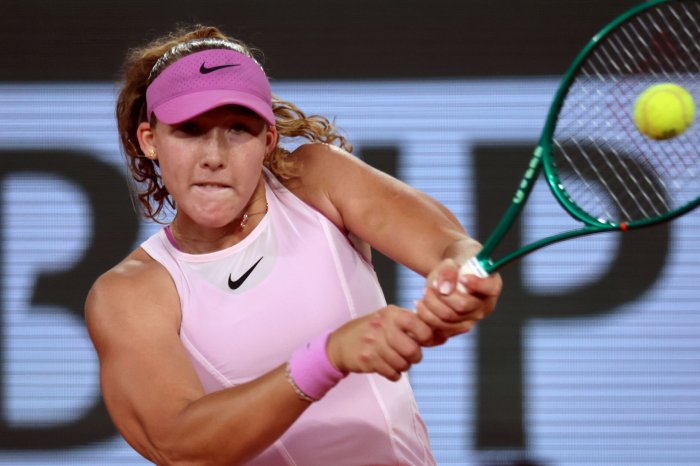
Russian Mirra Andreeva plays against Ukrainian Marta Kostyuk in their semi-final match during the 2026 French Open in Paris on June 4, 2026. Andreeva won 6-1, 6-3. Photo by Maya Vidon-White/UPI | License Photo
June 6 (UPI) — A second case of New World screwworm was confirmed in Texas this week in a one-month old calf nearly six miles from where the first case was detected.
The U.S. Department of Agriculture announced the second confirmed case on Friday, which was detected in Zavala County, Texas, but 5.6 miles away from the first one.
The second case was confirmed just 24 hours after the first, which had been detected in a three-week old calf, and has spurred the USDA to step up surveillance, as well as take other actions to prevent the infestation from spreading.
New World screwworm is spread by flies that lay their eggs in the exposed flesh of living animals — livestock, pets, wildlife and humans are all susceptible — and when the fly larvae, or maggots, emerge from the eggs they burrow through muscle as they grow.
Although screwworm was eradicated from the United States in the 1960s, severe infestations in recent years in Central America slowly moved toward the southern border and was detected here in 2025, according to the USDA.
“With our partners in Texas, we are responding with speed and strength,” the USDA said in a statement about the second case that was posted on X.
“We have defeated this pest before, and we will do it again,” the agency said. “America’s livestock producers have USDA’s FULL support.”
The primary way of controlling the spread of New World screwworm is a combination of trapping flies for testing, implementing detection and quarantine zones where it confirmed, and releasing sterile flies into the area it has been detected to prevent infected insects from reproducing, the agency said.
The USDA has encouraged people in the area of the two cases to check their pets and livestock for draining or enlarging wounds, if not maggots or eggs around bodily opening such as the nose, ears or genitals, or around the navel of newborn animals.
Although screwworm infection in humans is relatively rare, the infestations can happen in ways similar to animals and require immediate medical attention.
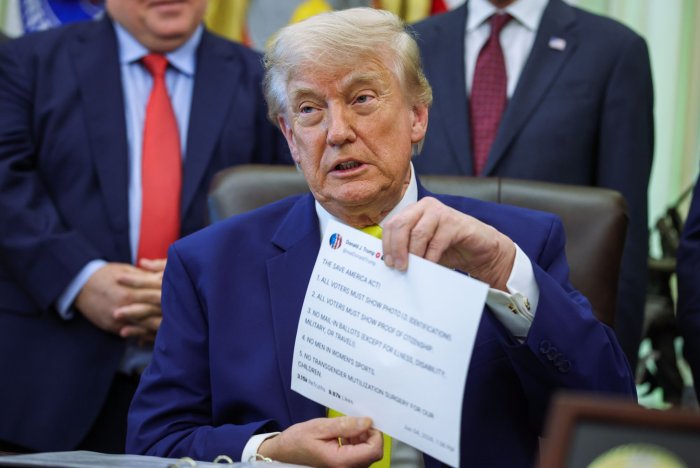
President Donald Trump discusses renovations to the Lincoln Reflecting Pool and makes an announcement on coal in the Oval Office at the White House on Thursday. Photo by Samuel Corum/UPI | License Photo
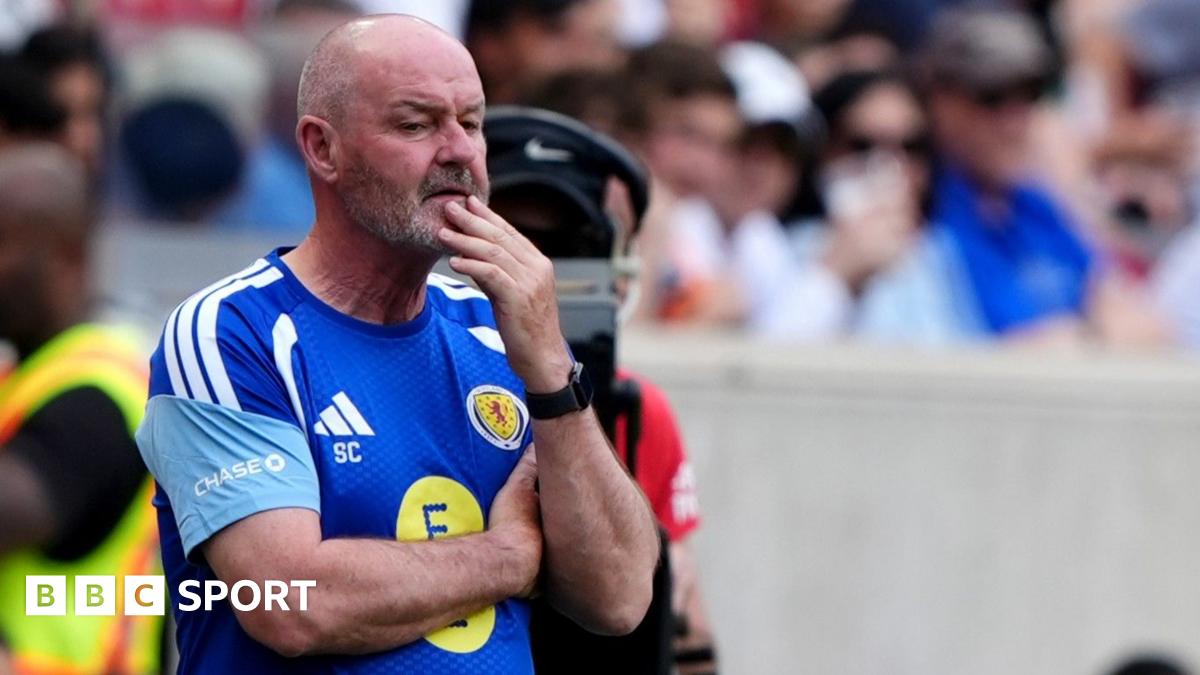
To think that four-goal first-half performance didn’t even involve John McGinn.
A traditional 4-4-2 brought the best out of Scott McTominay, if that’s even more possible. Although we all know the Napoli star’s position was never in any doubt.
Bologna’s Lewis Ferguson, who captain Robertson said “turned into a man” , externalduring the qualification campaign, again showed his maturity and ability to dictate play in the middle of the park. Cultured, some might say.
But, in truth, the first half was dominated by the work done down the wings by Bournemouth pair Ben Gannon-Doak and Ryan Christie.
Long before he was even in the squad, Gannon-Doak excited supporters. He was the Billy Gilmour of the Euro 2024 team, picking up an injury before the squad jetted off to Germany.
Since then, he’s reminded everyone what they missed with his absence. The epitome of a Duracell Bunny, the 20-year-old dazzled on Saturday.
At times, his end-product has been his downfall, but it wasn’t of concern stateside.
“Ben did himself the power of good today,” Clarke acknowledged. “We know what he can give us.”
Clarke also knows what Christie can provide. In many positions. He was lively down the left, with an instinct to cut in and create.
Many were crying out for Findlay Curtis to start, given his first international goal last weekend, but its hard to make a case for Christie not starting somewhere on Sunday.
It’s perhaps the biggest head-scratcher of them all for Clarke, but what a problem to have.
The World Cup arrives in L.A. on Thursday. This marks the first time the festivities have taken place in the Southland since 1994, when Pasadena’s Rose Bowl hosted the final between Brazil and Italy, which famously ended in a scoreless tie and was decided by a penalty shootout that led to Brazil winning its fourth World Cup title. (The U.S. hosted the Women’s World Cup in 1999 and 2003, with the finals at the Rose Bowl and Home Depot Center [now known as Dignity Health Sports Park], respectively.)
Soccer is art and art is soccer and soccer is life — and also one of the most beloved sports on the planet — and thankfully for you, dear arts lover, you can mix your passion for art and fútbol by heading to a free public viewing party at a number of local museums and cultural institutions.
This year sees Spain and France as favorites, with England, Brazil, Portugal and defending champions Argentina all in the running. No matter who your team is, there is a museum watch party for you. Here are your top choices, in no particular order:
The Getty Center: A variety of watch parties will take place on newly installed big screens at the museum’s Trellis Bar & Lounge and Garden Terrace Cafe, which will also feature themed menu items and drinks. The Getty will stay open until 9 p.m. on June 12, 19, 26 and July 3 to accommodate evening games. Normal Friday hours will resume July 10. Admission is free, but a reservation is required. Parking is free after 5 p.m.
Los Angeles County Museum of Art: The museum is hosting two free outdoor watch parties on large screens located on its Smidt Welcome Plaza on Wilshire Boulevard. Mexico vs. Korea can be seen from 6 to 8 p.m. on June 18; and Uruguay vs. Cape Verde will take place at 3p.m. on June 21.
LACMA is also hosting a few soccer-themed events, including “Andell Family Sundays: ‘Fútbol Is Life’,” set to take place on June 7, 14 and 28 from 12:30 to 3:30 pm. The event features art-making workshops inspired by the museum’s ‘Fútbol Is Life’ exhibit featuring soccer miniatures by Lyndon J. Barrois Sr., and led by artists Karl Petion and Patricia Yossen. There is also an event called “Let’s Play: Soccer Juggling,” from noon to 3 p.m. on June 21. This is also tied to the exhibit and offers lessons in soccer basics through a drop-in juggling and accuracy workshop led by representatives from American Youth Soccer Organization. All ages and experience levels are welcome. RSVP required.
The Autry Museum of the American West: The Autry’s free Griffith Park watch party will take place at 4 p.m. June 12 when Paraguay takes on USA. The event will feature food trucks, themed cocktails, soccer-inspired games and activities, and local vendors selling specialty wares. Free, but an RSVP is required.
The Music Center: It’s not a museum, but it’s one of the city’s most beloved cultural centers. It’s also hosting a free public screening of Spain vs. Uruguay from 5 to 7 p.m. on June 26 on its lovely Jerry Moss Plaza, including family-friendly activities and themed refreshments. Bring a picnic or pick your dinner from an on-site restaurant. Stick around after the game for a free global dance party celebrating the start of the 22nd season of the Music Center’s Dance DTLA.
I’m Arts editor Jessica Gelt putting my game face on. This is your arts and culture news for the week.
You’re reading Essential Arts
Our critics and reporters guide you through events and happenings of L.A.
By continuing, you agree to our Terms of Service, which include arbitration and a class action waiver. You agree that we and our third-party vendors may collect and use your information, including through cookies, pixels and similar technologies, for the purposes set forth in our Privacy Policy such as personalizing your experience and ads.
The week ahead: A curated calendar
FRIDAY
Gustavo Dudamel: Celebrating 17 Years In his final concert as L.A. Phil music director at Disney Hall, the maestro joins his Venezuelan and American identities, conducting two poetry-inspired choral symphonic works. John Adams’ “Harmonium” borrows texts from Emily Dickinson and John Donne to explore time, harmony and rhythm. “Cantata Criolla” by composer Antonio Estévez follows a Venezuelan troubadour who squares off against the devil. 8 p.m. Friday and Saturday; 2 p.m. Sunday. Walt Disney Concert Hall, 111 S. Grand Ave., downtown L.A. laphil.com
Haunted In this one-act dance opera, composer Paul Salerni unites poetry and music to share a tale of doomed love entwined with a ghost story with an unexpected conclusion. Based on a libretto by former California Poet Laureate Dana Gioia. 8 p.m. Friday and Saturday. Sierra Madre Playhouse, 87 W. Sierra Madre Blvd. sierramadreplayhouse.org
SATURDAY
Family Fest: Pride A free, outdoor event celebrating love, identity and inclusivity, featuring Bob Baker Marionette Theater, Iwalani Music, Everybody Dance LA, Drag Story Time, Color Me Face Painting and more. 11 a.m.-2 p.m. The Wallis, 9390 N. Santa Monica Blvd., Beverly Hills. thewallis.org
“Catapult” by Alex Gardner, 2025. Acrylic on canvas. 48 1/16 x 96 1/16 inches.
(Wild Don Lewis Photography; courtesy of Alex Garden and Perrotin)
Alex Gardner, Gabriel Rico and Makiko Kudo A trio of new exhibitions connected through the natural world and the creatures, great and small, who inhabit it: In “Animals,” painter Alex Gardner explores his experience of fatherhood; Gabriel Rico’s “Gabrielinos (I Am You And What I See Is Me),” the artist’s first solo show in Los Angeles, uses textile, assemblage and sculpture to encourage viewers to think about the world around them; the life and death of Japanese painter Makiko Kudo’s pet cat inspired “Reincarnation,” a series of oil paintings. Opening reception, 6-8 p.m.; exhibitions run through July 11. Perrotin Los Angeles, 5036 W. Pico Blvd. perrotin.com
Magnificent Mozart & Mahler Eckart Preu conducts the Long Beach Symphony in two classical masterpieces, “Eine Kleine Nachtmusik” and Mahler’s Fifth. 7:30 p.m. Long Beach Terrace Theater, 300 E. Ocean Blvd. longbeachsymphony.org
Will Geer Theatricum Botanicum The summer repertory season launches with Shakespeare’s “Romeo and Juliet” and “A Midsummer Night’s Dream” in the great outdoors of Topanga Canyon. “Romeo and Juliet,” 7:30 p.m. Saturday-Sept. 26; “A Midsummer’s Night Dream,” Sunday-Oct. 10. Will Geer Theatricum Botanicum, 1419 Topanga Canyon Blvd., Topanga. theatricum.com
SUNDAY
Juneteenth Block Party Debbie Allen Dance Academy (DADA) hosts its annual free community celebration featuring free dance master classes, live performances, carnival rides, games, food trucks, music and a marketplace for local and minority-owned businesses. Noon-7 p.m. Debbie Allen Dance Academy, 1850 S. Manhattan Place, L.A. debbieallendanceacademy.com
L’Chaim America! The Braid theater company performs real stories of American Jewish life centered on gratitude and possibility. 2:30 p.m. Skirball Cultural Center, 2701 N. Sepulveda Blvd., L.A. skirball.org
MONDAY National Museum of the Aftermath The project, conceived and titled by Cauleen Smith and curated by Jon Rubin and Harrison Kinnane Smith, travels from city to city adopting a different name and form in each location. For two months, it will operate within Oxy Arts, challenging the status quo of history and speculating on the future. 11 a.m.-4 p.m. Tuesday-Saturday; through Aug. 8. Oxy Arts, 4757 York Blvd., L.A. oxyarts.oxy.edu
WEDNESDAY
Denise Burse, from left, Charlayne Woodard and Deborah Joy Winans in rehearsal for “Angry, Raucous, and Shamelessly Gorgeous” at Geffen Playhouse.
(Isaak Berliner.)
Angry, Raucous, and Shamelessly Gorgeous An expat actor of a certain age returns to the U.S. primed for a comeback, only to face a new generation with very different ideas from her own. Written by Pearl Cleage and directed by LaTanya Richardson Jackson. Denise Burse, Olivia Washington, Deborah Joy Winans and Charlayne Woodard star. Through July 12. Geffen Playhouse, 10886 Le Conte Ave., Westwood. geffenplayhouse.org
The Revolutionists Playwright Lauren Gunderson turns France’s Reign of Terror on its ear in this raucous comedy about women fighting for égalité. Directed by Jamie Torcellini. Previews, 7:30 p.m. Wednesday and Thursday; 7:30 p.m. Thursday-Saturdays and 2 p.m. Sundays, through June 28. International City Theatre, 330 E. Seaside Way, Long Beach. https://ictlongbeach.org/therevolutionists/
THURSDAY
Double Take: Photographs in Pairs An intriguing exhibition matching photographs based on their formal qualities: the angle of a body, the geometry of a space, the relationship between figures and the interpretation of color. Photographers featured include Diane Arbus, Walker Evans, Robert Frank, Lauren Greenfield, Mary Ellen Mark, Helmut Newton, Irving Penn, Herb Ritts, Sam Taylor-Johnson, Bruce Weber and Bastiaan Woudt. Opening reception 7-9 p.m. Thursday; exhibition runs through July 18. Fahey/Klein Gallery, 148 N. La Brea Ave. faheykleingallery.com
Esa-Pekka Salonen conducts the Los Angeles Philharmonic at the Walt Disney Concert Hall in 2025.
(David Swanson/For The Times)
Ojai Music Festival This year’s music director, Esa-Pekka Salonen, is in the spotlight as a composer with the U.S. premiere of his new work for violin and cello and the first complete performance of his “Six Preludes” for piano, and other works; Salonen also conducts the Friday, Saturday and Sunday evening concerts. In its 80th year, the festival pays tribute to its defining musical figures and welcomes L.A. Phil New Music Group, Colburn Orchestra, L.A. Dance Project and many other noteworthy artists. Through June 14, 2026. Libbey Bowl, 210 S Signal St., Ojai. ojaifestival.org
Rheology This experimental play by Pulitzer Prize finalist and Obie winner Shayok Misha Chowdhury is a collaboration with his mother, physicist Bulbul Chakraborty, filled with dramatic urgency. 8 p.m. Thursday, and June 12-13. REDCAT, 631 W. 2nd St., downtown L.A. redcat.org
Thursday Night Jazz Weekly series featuring guest musicians backed by the Jack Lieberman Trio. Upcoming guests include the Tyler Hammond Jazz Experience (June 11); Ido Eylon and Willem Jochems (June 18); and Joey Du Bois with Kahlil Childs (June 25). 8 p.m. Thursdays. The Spotlight, 1601 N. Cahuenga Blvd., Hollywood. thespotlight.la
Arts anywhere
New and recent releases of arts-related media.
Ann Patchett and her novel “Whistler.”
(Los Angeles Times illustration; images from Emily Dorio, Harper)
Ann Patchett, ‘Whistler’ What does a literary novelist have to do with the performing and visual arts? In Patchett’s stories, the past is often inextricably entwined with the present and within those threaded timeframes lie traces of genetic code leading to the arts and art-adjacent worlds. In “Taft” (1994), the protagonist is a former jazz musician turned Memphis bar owner; “The Magician’s Assistant” (1997) finds the title character unraveling the illusions of her own life; “Bel Canto” (2021) features a famous American soprano at the center of a hostage crisis; and “Tom Lake” (2023) revolves around a Michigan woman’s long ago love affair with a soon to be famous actor during a summer stock production of Thornton Wilder’s “Our Town.” Of the writer’s latest book, “Whistler,” Times contributor Leigh Haber wrote, “This exquisite writer has once again delivered an incandescent work of fiction — sweet, but never sentimental, infinitely wise and suffused with love. It’s also an ode to New York City itself.” And that ode notably begins with the protagonist and her husband at the Metropolitan Museum of Art. A place that Haber notes, “one gets the sense, they know by heart.” This connection to art may prove to be tangential — I’ve only read a quarter of the book — but Patchett’s appreciation of these worlds is anything but. Harper: 304 pages, $30
— Kevin Crust
Culture news and the SoCal scene
Jeff LeBeau, left, and Tim Cummings in the West Coast premiere of Samuel D. Hunter’s “Grangeville” at the Ruskin Group Theatre Arts Center, dairected by John Perrin Flynn.
(John Perrin Flynn)
Times theater critic Charles McNulty reviewed the West Coast premiere of playwright Samuel D. Hunter’s “Grangeville,” directed by John Perrin Flynn, at the Ruskin Group Theatre. The play, which explores the lives of two estranged half brothers from a small Idaho town, is “beautifully acted,” McNulty writes, adding, that Hunter, “the bard of Idaho,” is “one of the theater’s outstanding American realists.”
McNulty also loved the Alicia Keys jukebox musical, “Hell’s Kitchen,” which staged its L.A. debut last week at the Hollywood Pantages Theatre. The musical tells the story of Key’s upbringing in the Manhattan neighborhood of the show’s title, but the story isn’t where the show shines, writes McNulty, noting that the joy comes from the way Keys’ music is seamlessly integrated into the narrative.
Yo-Yo Ma plays the solo for the premiere of Angelica Negron’s “Mudillo” on Thursday, May 28, 2026.
(Jason Armond / Los Angeles Times)
“Our streets are garlanded with ‘Gracias, Gustavo’ banners and billboards. The Walt Disney Concert Hall shop has become a Dudamel-torium, aisles bursting with Gustavo T-shirts, hoodies, tote bags, refrigerator magnets and this and that,” writes Times classical music critic Mark Swed in a review of Dudamel’s penultimate weekend at Walt Disney Concert Hall, including one featuring cellist Yo-Yo Ma.
Dancers from choreographer Benjamin Millepied’s L.A. Dance Project rehearse at LACMA’s David Geffen Galleries on Friday, May 22, 2026, in Los Angeles.
(Carlin Stiehl / For The Times)
Benjamin Millepied’s L.A. Dance Project is staging a free, two-week-long series of public shows called “City of Dance” which take place at nine Southern California landmarks, including LACMA, Hollywood Forever Cemetery, Tongva Park and Stearns Wharf. Read all about how the project came to be, including its use of Philip Glass’ score from the critically acclaimed 1982 documentary film, “Koyaanisqatsi.”
Enjoying this newsletter? Consider subscribing to the Los Angeles Times
Wallis Annenberg Center for the Performing Arts announced its 2026-27 season.
(Jason Kempin / Getty Images for Wallis Annenber)
Wallis Annenberg Center for the Performing Arts has unveiled its 2026-27 season, its first under the leadership of its new executive director and CEO, Jean Davidson. Highlights include music by Joshua Redman Quartet; Ronald K. Brown and his dance company Evidence, comedy and cabaret by performers including Sandra Bernhard and designer Isaac Mizrahi; recitals by L.A. Opera, concerts featuring Los Angeles Chamber Orchestra and much more. “At the heart of this season is a belief in the power of live performance to connect people to ideas, to one another, and to the shared human experience. We are proud to support artists who spark curiosity, foster empathy, and invite dialogue, while continuing to strengthen The Wallis as a vibrant gathering place for all audiences,” said Davidson in a news release. See the full schedule here.
Pacific Jazz Orchestra also announced its 2026-27 season led by composer, arranger and conductor Chris Walden. The 40-piece string orchestra and big band hybrid is entering its fourth season with five programs dedicated to jazz, swing, soul R&B, Broadway and pop, staged in six venues across the region, including in Beverly Hills, Irvine, Northridge, Palm Desert, Santa Barbara and Ventura. Featured guest artists include Broadway star Sutton Foster, pianist David Benoit and vocalist Nayanna Holley. See the full schedule here.
UCLA’s Center for the Art of Performance has announced “Far Away, Here,” a new multiyear international opera initiative that will launch in the 2026-27 season with the U.S. premiere of a new adaptation of “Kafka’s Letter to His Father, “ scheduled to run Nov. 12-14 at the UCLA Nimoy Theater. The initiative will continue to present U.S. premieres of under-the-radar operas by artists from around the world, and is curated and produced by tenor Timur Bekbosunov, in collaboration with CAP UCLA’s executive and artistic director, Edgar Miramontes.
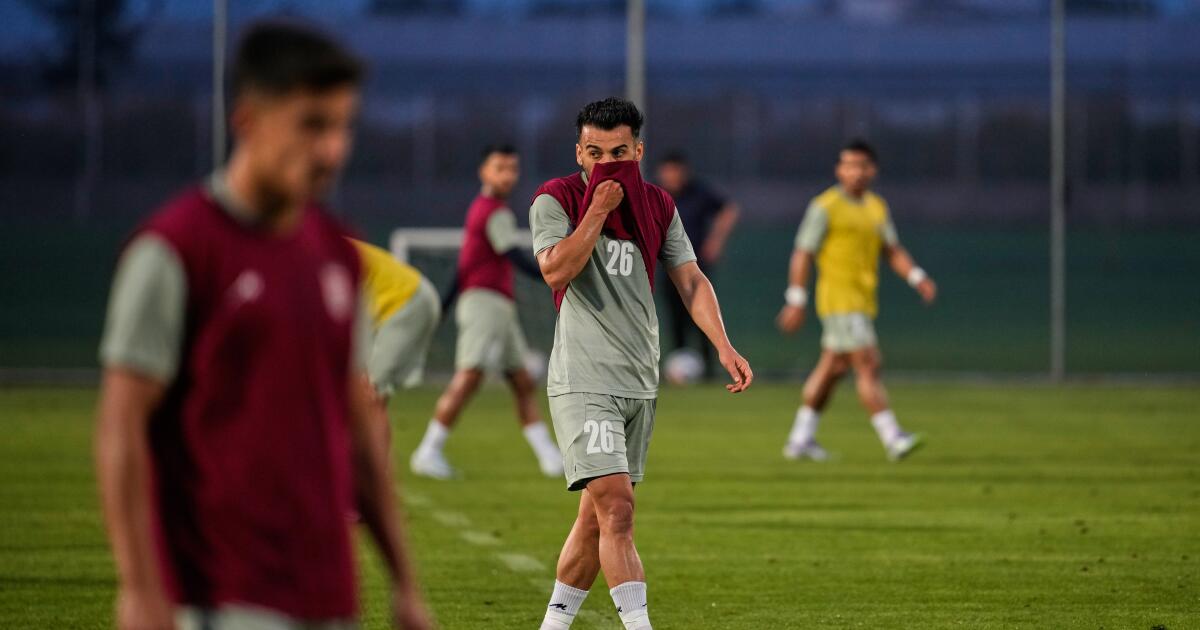
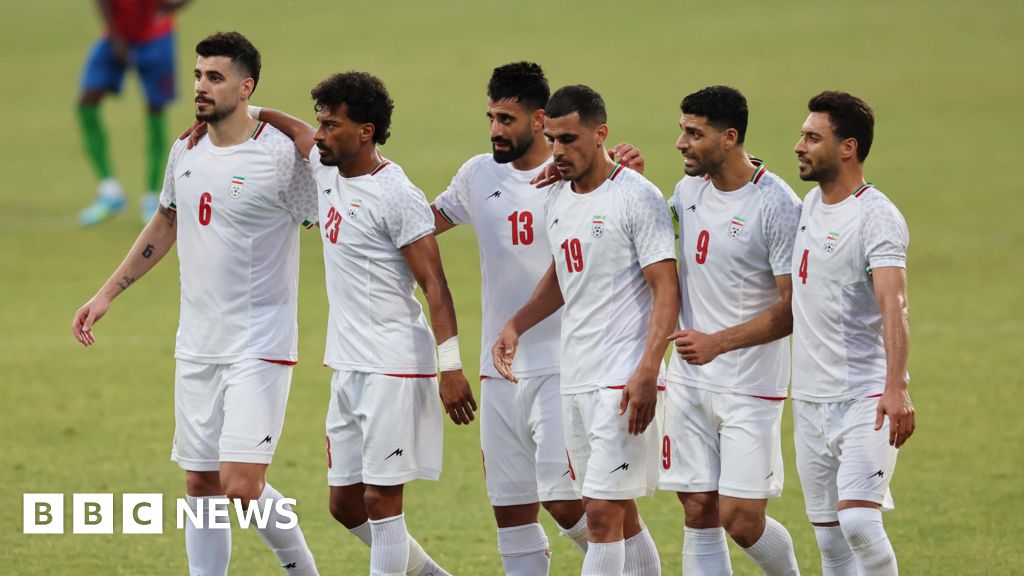
Iran’s national soccer team set off from Turkey for their World Cup training base in Mexico on Saturday, with some members of their entourage reportedly still without U.S. visas, before three group matches in the United States later this month.
The Iranian Football Federation’s secretary-general, Hedayat Mombeini, and its vice president, Mehdi Mohammad Nabi, were among 14 staff and officials without U.S. visas before games in Los Angeles and Seattle, according to Iranian state television.
It was unclear whether the federation’s president, Mehdi Taj, had been issued a visa.
The team’s participation in the World Cup has been complicated by the Iran war. Problems with processing visas had earlier led Iran to move its training base from Tucson, Ariz., to Tijuana, Mexico, which is on the border with California.
The federation accused the U.S. of “vindictive behavior” in refusing visas for “key managerial and administrative members” of the team.
The decision had “effectively denied the Iranian national team the opportunity for a level playing field and a competition free from discrimination,” according to a statement on the federation’s website. It added that the federation would pursue the matter through world soccer authority FIFA.
The Iranian Embassy in Ankara, Turkey, meanwhile, responded to an earlier social media post from U.S. Ambassador Tom Barrack, in which he congratulated his embassy staff for processing the Iran team’s visas.
“You cannot whitewash conduct that violates FIFA regulations and breaches the United States’ host obligations merely by praising yourselves,” the Iranian post read. “This represents the worst possible form of politically biased interference in sport.”
One U.S. official earlier told the Associated Press that all players on the Iranian team were approved for visas, while a second official said visas had been issued for players, coaches, trainers and some support staff. A third official suggested that some applicants affiliated with the team had been rejected for requesting visas “under false pretenses.”
The officials spoke on condition of anonymity because they weren’t authorized to discuss the visas publicly.
The squad has been preparing for the World Cup at a training camp in Antalya. The team said that it has already received visas from the Mexican Embassy in Ankara.
The players, dressed in blue blazers over white T-shirts, left the luxury Mardan Palace hotel in Antalya on Saturday afternoon. They boarded a private jet at the Mediterranean city’s airport and were due to fly directly to Mexico.
Iran plays its first two games in Inglewood against New Zealand on June 15, and Belgium six days later, then heads to Seattle to face Egypt on June 26. Iran and the U.S. could meet in the round of 32 on July 3 in Arlington, Texas, if both teams come second in their groups.
In March, U.S. President Donald Trump had discouraged Iran from participating in the tournament, saying he didn’t think it was “appropriate” and raising concerns over players’ “life and safety.” A day later, Iran’s national team pushed back, saying “no one can exclude” it from playing.
Iran finalized its team on Monday, including 17 home-based players whose clubs haven’t played since February because of the war. Star forward Sardar Azmoun was dropped in March, reportedly because of a social media post that angered Iranian authorities during the war.
Change in water bottle policy
FIFA announced that it will now allow fans to bring their own water bottles to some stadiums during the World Cup, adjusting a policy that had barred spectators from bringing refillable water bottles into the tournament’s 16 stadiums across North America, including some with limited or no shade from the sun.
FIFA in a social media post said fans will be permitted to bring one soft plastic 20-ounce, factory-sealed, disposable water bottle into any match taking place in the United States or Canada.
In a video released by FIFA, Chief Operating Officer Heimo Schirgi said fans will still not be permitted to bring in hard sided, reusable water bottles “due to safety and security reasons.”
Going green
As the tournament opens on Thursday, 13 of the 16 stadiums have earned LEED certification, the world’s most widely used green building rating system, the U.S. Green Building Council said. Ten have been certified since 2024 through the rigorous process to ensure buildings meet strict sustainability standards. The council expects at least two of the three remaining stadiums to achieve certification in the coming weeks.
Together, the LEED-certified stadiums have installed over 11,500 solar panels to generate clean electricity. Because of the changes made, they will save over 100 million gallons of potable water annually and eliminate more than 5 million single use plastics annually, according to information shared by the stadiums. Four venues are reusing, recycling or composting nearly all waste, preventing it from reaching a landfill.
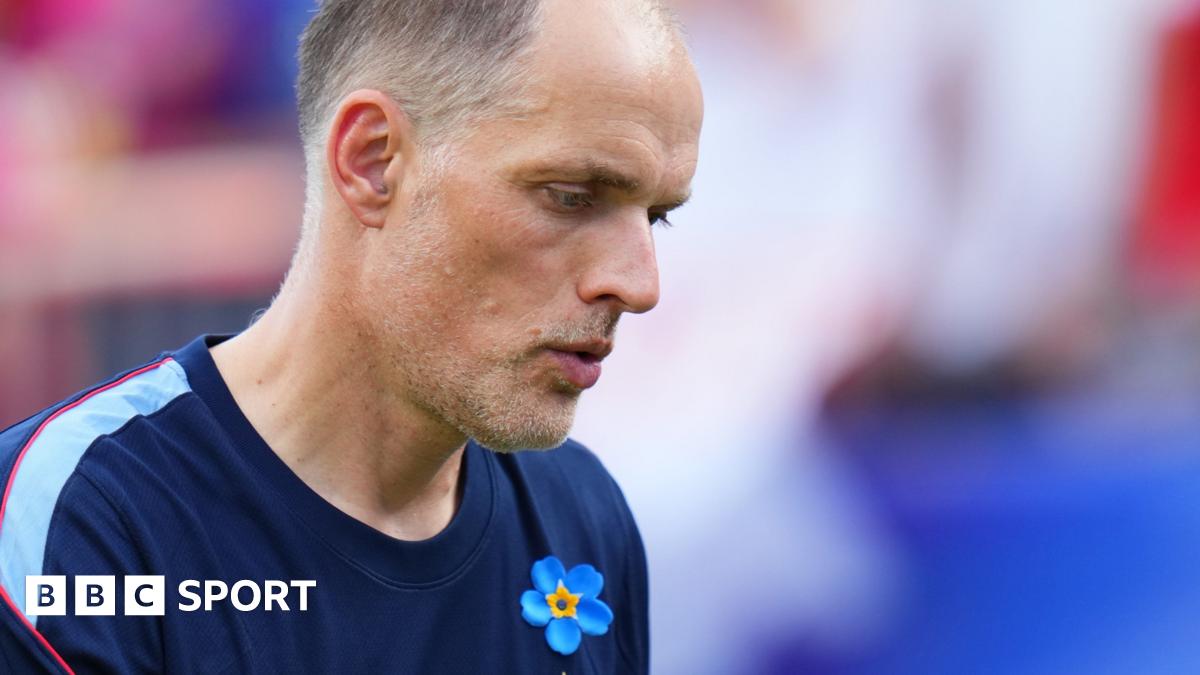
Tuchel has to take his own share of responsibility for this situation, having made some experimental selections leading up to these final preparations, including in the friendlies against Uruguay and Japan at Wembley in March.
Manchester City’s Phil Foden played up front against Japan. In the Uruguay game, Tuchel fielded Foden, Everton’s James Garner and Spurs striker Dominic Solanke. None of those made his World Cup squad.
Ivan Toney came on for the second half in Tampa after spending a year in the England wilderness, following a three-minute appearance in the friendly defeat against Senegal at the City Ground, Nottingham.
This, in effect, makes it even more important that Tuchel puts a line-up on the pitch against Costa Rica that is as close as possible to the one that will face Croatia. It will be an opportunity to find rhythm and momentum and build combinations before that tournament opener.
Tuchel did, at least, report no injuries from this first warm-up game, while he added: “The better the opponent gets, the better we will get.”
Kane’s goal came just before half-time, which heralded the mass changes, but Tuchel said: “I was happier with the second half. I thought we had more hunger and more desire. We played better but did not score.
“We didn’t play according to our plan in the first half. It slowed the game down, but it was better in the second half.
“We will acclimatise to the humidity and the sun while we are here. Tomorrow will be recovery day, then we have two days to prepare for Costa Rica. Then a chunk of players will get more minutes. The Arsenal players are in now, which is good because it gives us energy and quality, and then we have another one and a half days off.
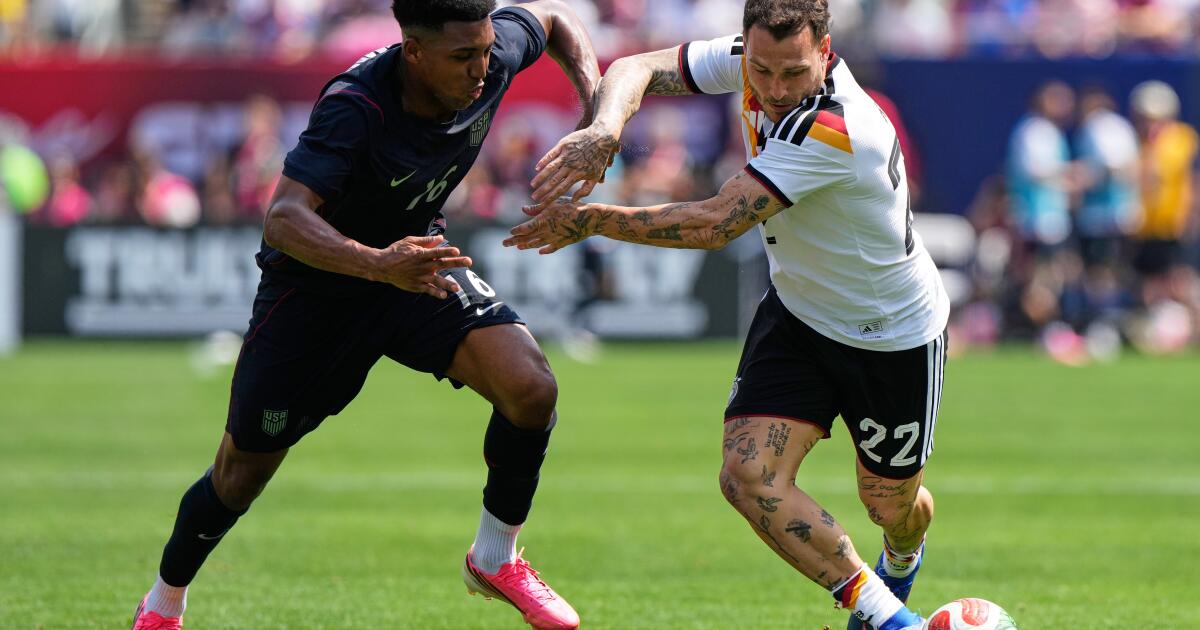
CHICAGO — Leroy Sané scored a tiebreaking goal in the 57th minute, giving Germany a 2-1 win over the United States in a friendly on Saturday and a nine-game winning streak heading into the World Cup.
Kai Havertz put the four-time champions in front with a header from a free kick in the second minute but Antonee Robinson tied the score in the 37th with a left-foot volley from the top of the arc following Christian Pulisic’s corner kick.
Sané scored off a short pass from Havertz, a diagonal shot between the legs of Miles Robinson that appeared to take a slight deflection off the defender and beat goalkeeper Matt Freese to the far post.
The 16th-ranked United States has lost nine straight games to European opponents dating to 2022.
Hosting the World Cup for the first time since 1994, the Americans open against Paraguay on Friday, then play Australia and Turkey. The U.S. hadn’t lost its last match heading into a World Cup since 2002.
No. 10 Germany starts against Curaçao on June 14 in a group that includes Ivory Coast and Ecuador.
The match drew a sellout crowd of 63,636 to Soldier Field, site of the 1994 World Cup opener. Chicago refused to bid to host 2026 World Cup matches, citing what it said was a lack of financial assurances by FIFA.
The U.S. played without top defender Chris Richards, sidelined since tearing a pair of left ankle ligaments on May 17.
Germany was missing 18-year-old midfielder Lennart Karl, ruled out for the World Cup after injuring a thigh in training. Oliver Baumann started in goal as Manuel Neuer rested while recovering from a calf muscle issue.
Freese started in goal for the 15th time in 18 matches.
Die Mannschaft went ahead after Tyler Adams’ foul just outside the penalty area. Joshua Kimmich’s free kick was headed in by Havertz at the top of the 6-yard box for his 22nd international goal,
Robinson scored his fifth international goal after Jonathan Tah’s headed clearance attempt on Pulisic’s corner kick went just outside the area. Robinson celebrated with a cartwheel and a backflip.
Saturday is the last day of Russian President Vladimir Putin’s St. Petersburt International Economic Forum. Ukraine struck military targets near the city overnight Friday. Photo by Anatoly Maltsev/EPA
June 6 (UPI) — A drone attack launched by Ukraine hit St. Petersburg, Russia, overnight as Russian President Vladimir Putin wraps up an economic forum there.
Ukrainian President Volodymyr Zelinsky had asked Putin to meet face to face and discuss peace talks, but Putin responded that there was no point.
“It is time to end this war. But Russia’s ruler wants to keep fighting,” Zelensky wrote on X early Saturday. “That is why Ukrainian sanctions against this aggression are working. Last night, our drones covered a distance of about 1,000 kilometers to the St. Petersburg region — to the enemy navy’s arsenals and a base in Kronstadt. Our long-range sanctions also reached about 500 kilometers into the Krasnodar region — and hit an oil depot.”
It is time to end this war. But Russia’s ruler wants to keep fighting. That is why Ukrainian sanctions against this aggression are working. Last night, our drones covered a distance of about 1,000 kilometers to the St. Petersburg region – to the enemy navy’s arsenals and a base… pic.twitter.com/IkdN8UE3QD— Volodymyr Zelenskyy / Володимир Зеленський (@ZelenskyyUa) June 6, 2026
Kronstadt is home to a naval academy and is the main base, repair and supply hub for the Russian navy in the Eastern Baltic.
Leningrad Governor Aleksandr Drozdenko said more than 140 drones were shot down in his region. St. Petersburg Governor Alexander Beglov told residents to stay indoors, CNN reported. He also said three people were injured.
Drozdenko said more than 600 people were evacuated from Bolshaya Izhora, a village on the Gulf of Finland near St. Petersburg, as efforts continued to put out a fire. The area is also home to a Russian naval arsenal, CNN reported.
St. Petersburg is Russia’s second-largest city, behind Moscow.
The New York Times reported that St. Petersburg’s main airport, Pulkovo, suspended operations for almost five hours, according to Rosaviatsia, the Russian aviation authority. Residents reported smoke in the sky and roaring noises and bangs, according to Fontanka, a local news website.
Ukrainian Foreign Minister Andrii Sybiha said on X Saturday that “Things will only get worse for Russia. Battlefield losses will continue to grow. Failures will get more humiliating. … “The international pressure will not ease. It will only get stronger. Including the use of frozen assets, travel bans and inevitable accountability for crimes,” Sybiha said.
Zelensky is scheduled to meet with leaders of France, Germany and Great Britain in London Sunday to discuss support for Ukraine and peace talks, Politico reported.
President Donald Trump discusses renovations to the Lincoln Reflecting Pool and makes an announcement on coal in the Oval Office at the White House on Thursday. Photo by Samuel Corum/UPI | License Photo
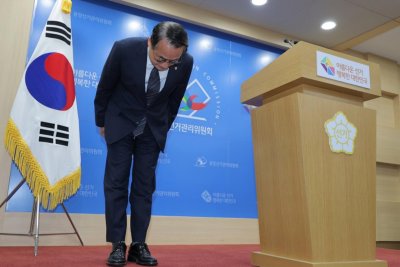
Heo Cheol-hoon, secretary general of the National Election Commission, issues a public apology after a shortage of ballot papers prompted the temporary suspension of voting in the local elections at some polling stations in southern Seoul, South Korea, 03 June 2026. South Koreans voted on 03 June to elect mayors, governors, local council members and regional education chiefs in nationwide local elections. Photo by YONHAP / EPA
June 5 (Asia Today) — South Korea’s election chief said Friday he will resign to take responsibility for ballot shortages that disrupted voting during the June 3 local elections.
Roh Tae-ak, chairman of the National Election Commission, made the announcement during a public apology at the commission’s headquarters in Gwacheon, Gyeonggi Province. NEC Secretary-General Huh Chul-hoon also offered to resign.
“The high public interest in local autonomy and the active expression of the people’s will through voting were damaged by the ballot shortage,” Roh said. “As chairman of the National Election Commission, I feel devastated and bear unlimited responsibility for the situation, which has damaged public trust in election management and led to distrust in the election process.”
The commission said ballot shortages occurred at 50 polling stations nationwide, including 14 in Seoul’s Songpa district. Voting was temporarily halted at 22 polling stations, the commission said. Outside reports also said the shortages caused delays and protests in parts of Seoul.
The commission said the shortages were linked to a decision to print ballots for at least 50% of eligible voters in some areas, reflecting internal discussions about reducing unused ballots as early voting rates have risen in recent elections.
Yoon Jae-soo, head of the commission’s election policy office, said the minimum number of ballots was set at 50% of eligible voters but could be adjusted depending on local conditions.
“In Songpa district, when the early voting rate of 23.3% was included, ballots equal to 73.3% of eligible voters were secured,” Yoon said. “But shortages occurred because there were differences among individual polling stations.”
The commission said it will create a fact-finding committee made up of outside experts to examine the cause of the shortages, identify problems in the response and prepare measures to prevent a recurrence.
Roh said the commission will cooperate fully with any process to determine responsibility, including a possible National Assembly investigation.
“We will sincerely take part in all procedures to confirm the commission’s responsibility for this incident and will not avoid responsibility depending on the results,” Roh said.
On Wednesday, voters at some polling stations in Seoul’s Gangnam, Gwangjin and Songpa districts had to wait because of ballot shortages. The disruption has drawn criticism from political parties, civic groups and universities over the commission’s election management.
Oh Min-seok, chairman of the Seoul Election Commission, also issued a public apology Friday.
“This was the commission’s fault, with no excuse,” Oh said. “We deeply feel responsibility for damaging public trust through poor election management that ran counter to common sense.”
A few hours after Lionel Messi and the Argentine World Cup team checked into their training base in Kansas City, a series of thunderstorms pounded the area, knocking out power, felling trees and bringing flood and tornado warnings.
Hardly ideal conditions for the world’s biggest soccer tournament. Yet that’s likely just the opening salvo of a disruptive weather system that could affect the 38-day competition, which kicks off next week with games in Mexico, Canada and the U.S.
“It’s pretty safe to say climate change is going to have a mark on this World Cup,” said Kaitlyn Trudeau, a senior research associate of climate science for Sacramento-based Climate Central. “With climate change we know it’s not just going to be hotter, but it’s also going to increase the humidity as well.”
And that could make this summer’s World Cup one of the last of its kind. Tournament soccer in June and July has been a tradition dating to the first World Cup in 1930, but since then global temperatures in June have warmed by 1.89 degrees, according to the U.S. National Oceanic and Atmospheric Administration. That may not sound like a lot, but it takes many days and nights of extreme heat to move the needle that much.
“It can be a very dangerous situation,” Trudeau said.
As a result, FIFA President Gianni Infantino has already begun discussions on moving the start of the tournament from June to March or October after 2030. In the meantime, early kickoffs, cooling breaks, air-conditioned stadiums and regular weather-related delays will necessarily become common features of the tournament, according to “Pitches in Peril,” a detailed report on the impact of climate change on global soccer, released in the run-up to the World Cup.
“Football’s all of a sudden starting to reckon with the new climate realities,” said Elliot Arthur-Worsop, founding director of Football For Future, a pioneering U.K. nonprofit and co-publisher of “Pitches in Peril.”
“Extreme weather events are becoming more unpredictable,” he said. “The players, the spectators and the officials, they’re all at risk here, especially when it comes to extreme heat. How can we future-proof the game?
“Adaptation looks like moving the entire tournament to another time of year to deal with the extreme weather. Short term it could be moving the kickoff times, it could be introducing more drink breaks, having more heat protocols and safety regulations.”
Some climatologists fear summer events like the World Cup and Olympic Games are just one heatwave away from a major weather-related tragedy. In fact, Arthur-Worsop said his group’s study found that this men’s World Cup, the first held in North America in 32 years, will likely be the last played here.
“By the time the cycle of awarding the hosting rights would possibly come back, our climate projections show that the tournament in its current form would be unplayable due to extreme weather events,” he said. “Not only heat, but other compounding threats such as extreme wind and flooding and wildfires.”
Trudeau worries that whatever adaptations are eventually adopted won’t keep pace with a rapidly warming planet.
“We are basically pushing ourselves to a limit,” she said. “I’m not saying we’re going to absolutely lose the World Cup. But we are making it so much harder to find time to safely enjoy these kinds of events.
“This is not a safe environment and we should not be putting people’s lives at risk just to watch a game.”
FIFA did move the 2022 World Cup, pushing the start of the tournament in Qatar from June to November. Even then the games had to be played in air-conditioned stadiums, though. Three of the 16 venues to be used this summer — in Atlanta, Houston and Arlington, Texas — are domed and climate-controlled.
But the next World Cup, to be held in 2030, will be played mostly in Spain, Portugal and Morocco, where June and July temperatures frequently top 95 degrees. And just one of the likely venues is climate-controlled.
As for this summer’s tournament, a 2025 study published in the International Journal of Biometeorology found that conditions in 14 of the 16 World Cup host cities are likely to exceed the extreme Wet Bulb Globe Temperature (WBGT) threshold, an advanced index used to measure how the human body experiences heat stress.
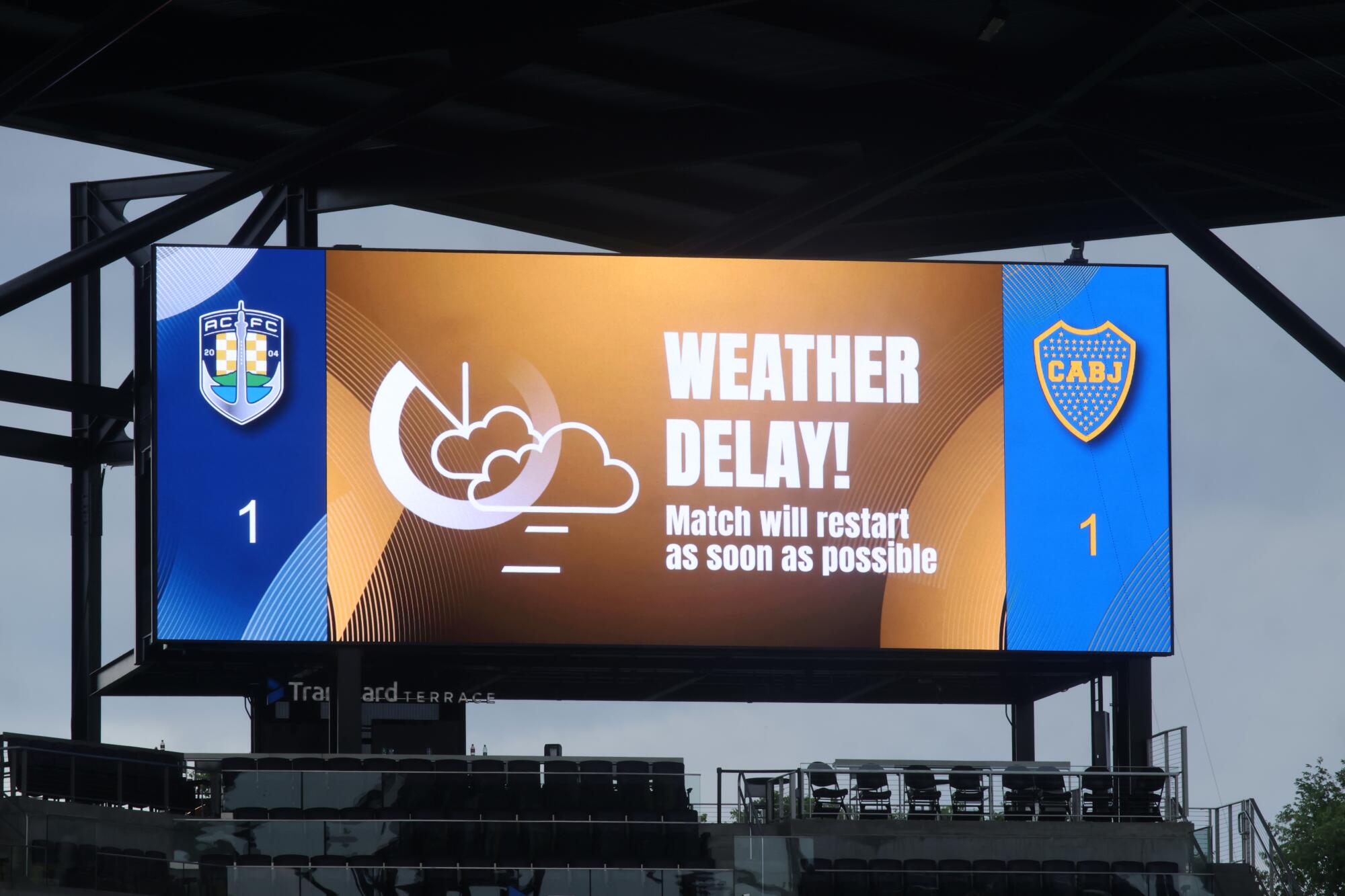
A weather delay interrupts a Club World Cup match between Auckland City FC and Boca Juniors in Nashville in June 2025.
(Alex Grimm / Getty Images)
But you don’t have to do complicated math to know it’s hot because there’s also the “feels like” index, which registers how your body feels the heat. That can be vastly different from the reading on a thermometer. In Miami, for example, where seven World Cup games will be played, humidity will make an air temperature of 90 degrees “feel like” 109 degrees.
Under those conditions, it becomes more difficult for the body to cool itself.
“We talk about temperatures all the time, but that is only one part of the equation. It’s not including the amount of heat that you might feel from humidity,” Trudeau said. “It’s so important because once it gets too humid, then our body’s main cooling mechanism, sweating, is no longer possible.
“These are the kinds of situations where you have to be really careful. Not just players, but also people who maybe work at the stadiums, people who are watching the matches. It can be a very dangerous situation.”
Playing games in the cooler evening hours could alleviate that but FIFA, in a nod to TV viewers in Europe, scheduled 40 of the tournament’s 104 games, including the majority of games in the knockout rounds, to kick off at 3 p.m. or earlier local time. And though mandatory three-minute hydration breaks midway through each half have been added, Trudeau questions their impact.
“That’s kind of silly to be like, ‘Oh, we’re going to give an extra water break. But we’re going to be doing it at the hottest time of the day,’” she said. “It kind of sends mixed messages, right? What is the main priority of FIFA here? Is it to get the most views and the most revenue and the most whatever? Or is it to actually protect these players?
“We should not be having these in the hottest parts of the world at the hottest times of day,” she continued. “It’s just common sense.”
Chelsea’s Benoit Badiashile puts water on his face before a Club World Cup match against Esperance de Tunis in Philadelphia in June 2025.
(Francois Nel / Getty Images)
FIFA defended the schedule, saying in a statement that climate-related risks are assessed as part of overall tournament planning and managed in close coordination with the host cities, stadium authorities and national agencies.
“Building on experience from recent tournaments, a tiered heat-mitigation model will apply,” the statement continued. “When forecasts indicate elevated temperatures, venues will activate additional cooling capacity, including shaded areas, misting systems, cooling buses and expanded water distribution. Work-rest cycles for staff and volunteers are adapted accordingly, and first-aid readiness is reinforced with clear triage and escalation pathways for suspected heat illness. These measures scale dynamically based on real-time conditions before and during each event.”
Last summer’s FIFA Club World Cup, a 63-game tournament played in the U.S. as a kind of dress rehearsal for this year’s event, gives an indication of the problems ahead. That tournament was plagued not just by high heat and humidity, but also by thunderstorms and lightning that paused or delayed a half-dozen matches in Orlando, Fla.; Nashville; Cincinnati; Charlotte, N.C.; and East Rutherford, N.J.
“The heat is incredible,” said Argentine midfielder Enzo Fernandez, who played in last summer’s tournament with Chelsea. “I got a bit dizzy during a play. I had to lie down on the ground because I was really dizzy.
“Playing in this temperature is very dangerous.”
But if health risks are the primary concern of summer sporting events on a warming planet, they aren’t the only ones. The weather also affects the quality of play, said Norwegian defender Julian Ryerson, who played for Borussia Dortmund in last summer’s club tournament.
“Football is different when you play in this humidity and heat,” he said. “It is really tough. You take some precautions. That’s the only way to go about it.”
As the planet continues to bake, there are also increasingly fewer ways of going about staging a World Cup. You can play it nontraditional times and in nontraditional places. You can play it indoors in air-conditioned stadiums.
Or you can not play it at all.
“We’re running out of options,” Trudeau said. “We have to understand that unless we are going to address human-caused climate change, you’re going to start losing these things that are culturally important to us or economically important.
“We cannot keep doing these things at the rate we’re doing them and the times that we’re doing them in the ways that we’re doing them while we also continue to warm the planet.”
Africa’s performance at World Cups peaked at Qatar 2022 when Morocco became the first side from the continent to reach the semifinal stage.
Even their quarterfinal appearance was noteworthy – the Atlas Lions were only the fourth African nation to get there.
Recommended Stories
list of 4 itemsend of list
Although Cameroon, Senegal and Ghana are the three other African teams to reach the quarterfinals, North Africa has dominated the continent’s success overall at the World Cup and at the Africa Cup of Nations.
Egypt are the record seven-time winners of AFCON, while three of the top five African qualifiers for World Cup finals are Morocco, Tunisia and Algeria.
Al Jazeera breaks down the chances of the sub-Saharan nations looking to outshine their neighbours from the north at the tournament which kicks off on June 11:
SENEGAL
World Cup Appearances: Four – 2002, 2018, 2022 and 2026 Best finish: Quarterfinals Overall record: P12 W5 D3 L4 F16 A17 FIFA ranking: 14 Prediction: Eliminated at quarterfinal stage
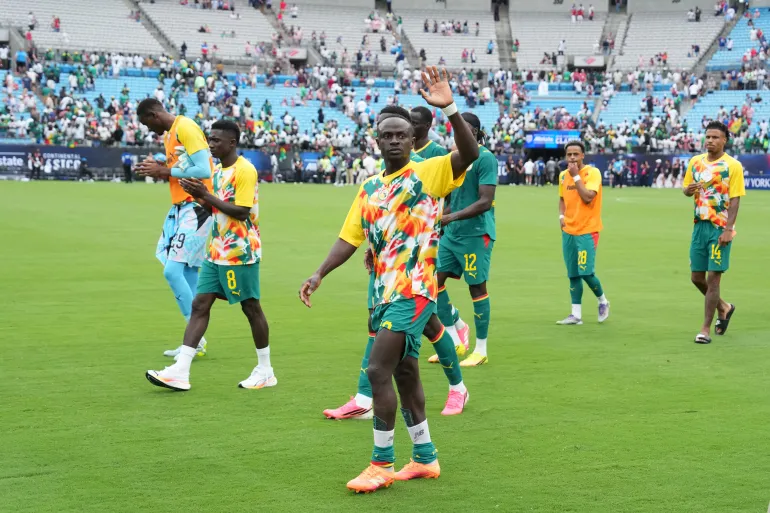
Senegal head to World Cup 2026 with a burning sense of injustice firing their campaign. The Lions of Teranga were stripped of the Africa Cup of Nations (AFCON) title by the Confederation of African Football (CAF), which decided the mid-game walk-off by the Senegalese players and staff voided January’s final – which was later awarded to Morocco, along with the trophy, as a 3-0 win.
In 2002, Senegal upset the odds and reached the quarter-finals in their World Cup debut at the tournament co-hosted by Japan and South Korea.
More than two decades later, expectations are running high – perhaps carrying the greatest expectation on all African teams, including Morocco.
The depth of the 26-man squad is seen as their greatest strength over continental neighbours, but their star power is also envied by rivals.
Sadio Mane remains the country’s greatest export. Although midfield kingpin Pape Gueye, goalkeeper Edouard Mendy and captain Kalidou Koulibaly would grace almost any side at the tournament.
All three are French-born and another shot at the two-time winners of the competition is in their sights.
A 1-0 win against then defending champions France at the 2002 edition announced Senegal as a rising footballing powerhouse. Their first Group I encounter this time around is against Didier Deschamps side in New York on June 16.
“It’s always a pleasure to play against France. It’s a country we know well,” said Senegal coach Pape Bouna Thiaw, who moved to France aged 17.
“If I lose even a second of my belief that I can win the World Cup with Senegal, I will step down,” he added.
Senegal’s group is completed by Iraq and Norway.
Sadio Mane remains the star name for Senegal [Bob Donnan/Reuters]
GHANA
World Cup Appearances: Five – 2006, 2010, 2014, 2022 and 2026 Best finish: Quarterfinals Overall record: P15 W5 D3 L7 F18 A23 FIFA ranking: 74 Prediction: Eliminated at quarterfinal stage
Ghana have only missed one World Cup since their 2006 debut.
Four years after their global bow they became the third African side to reach the quarterfinal stage at Germany 2010.
Their run-up to this tournament has not been smooth, with a late change of coach as veteran Portuguese Carlos Queiroz replaced Otto Addo following a run of poor results.
The German-born former Ghana international led his nation at Qatar 2022, but the failure to qualify for the last AFCON and comprehensive losses in their four high-profile games in November and March saw him fired in early April.
It will be a fifth successive World Cup for the 73-year-old Queiroz, whose past African experience has been with South Africa and Egypt, and who managed Real Madrid, and was Alex Ferguson’s right-hand man at Manchester United.
Group L, against Panama, England and Croatia, appears to be the ‘group of death’ in the opening stage of the competition, but with Manchester City’s Antoine Semenyo leading a strong attack, Ghana will fully expect to progress.
“I think that this country has a huge, enormous potential. This is a country of footballers,” Queiroz said.
The Black Stars will, however, be without the injured Tottenham forward Mohammed Kudus, who has become the team’s talisman and key factor in their last two successful qualifying campaigns.
Ghana have only missed one World Cup since their 2006 debut [Paul Childs/Reuters]
IVORY COAST
World Cup Appearances: Four – 2006, 2010, 2014 and 2026 Best finish: Group Stage Overall record: P9 W3 D1 L5 F13 A14 FIFA ranking: 34 Prediction: Eliminated at quarterfinal stage
The Ivory Coast return to the global stage after a 12-year absence – one that was hard-felt following the retirement of some of their greatest players in Yaya Toure and Didier Drogba.
It has been a long rebuild for the Ivorians, but they have won two AFCON titles since their last World Cup appearance.
Their youthful attack led by teenager attacker Yan Diomande, alongside Simon Adingra and Amad Diallo of Manchester United, will be key to their chances.
When hosting AFCON two years ago, Ivory Coast were nearly eliminated in the group stage, but they promoted Emerse Fae from assistant manager for their final game of the opening phase and went on to win the title.
“I believe Ivory Coast has the potential to achieve something exceptional – why not aim for the final?” Fae said ahead of the tournament, that will begin with matches against Curacao, Ecuador and former world champions Germany.
Manchester United’s Amad Diallo has become one of Ivory Coast’s stars [Jason Cairnduff/Reuters]
CAPE VERDE
World Cup Appearances: One – 2026 Best finish: NA Overall record: NA FIFA ranking: 69 Prediction: Eliminated at group stage
One of the debutants, Cape Verde – with a population of about 600,000 – is the third smallest nation to qualify in the tournament’s long history.
They only debuted at AFCON in 2013, but did go on to reach the quarterfinals – a feat repeated in 2023.
The task before them now – which will be led by their diaspora of players in the main – is daunting, with Uruguay, Saudi Arabia and European champions Spain, lying in wait in the group stage.
“We’ve always been aware of our talent but we haven’t always believed that it could take us much further than we had achieved up to that point,” said manager Bubista, named African Coach of the Year in 2025.
“Therefore, it took courage to face any opponent. The first step in our success was truly believing in our potential. In other words, we changed the players’ mindset.”
Cape Verde’s Benchimol celebrates scoring in a pre-World Cup friendly against Serbia [Rodrigo Antunes/Reuters]
SOUTH AFRICA
World Cup Appearances: Four – 1998, 2002, 2010 and 2026 Best finish: Group stage Overall record: P9 W2 D4 L3 F11 A16 FIFA ranking: 60 Prediction: Eliminated at round of 32 stage
After a burgeoning beginning to their return to the international fold, with qualification for the 1998 World Cup, South Africa’s fortunes have taken a downtown in the last 16 years.
A first appearance in the finals since 2010 feels long overdue for a nation hoping to reap the rewards of strong domestic growth as they head to North America.
South African club Mamelodi Sundowns are the newly crowned African Champions League winners and eight of their players are in Bafana Bafana’s squad. There are also eight players from Orlando Pirates – the domestic league champions, who pipped Sundowns to the title by a point.
“We can say that we have players of the best teams of the season. Those guys have much experience at a high level,” South Africa’s Belgian-born coach Hugo Broos said of his 26-man selection.
“I’m certainly happy that Sundowns won the Champions League, because I was afraid that if they should lose, I would get players who would be very disappointed. So now they all have that boost of confidence, and that helps a lot.”
South Africa are in the other so-called ‘group of death’ as they take on Czech Republic, South Korea and co-hosts Mexico, who they face in the opening game of the tournament
South Africa’s squad includes eight players who won this season’s African Champions League [Siphiwe Sibeko/Reuters]
DR CONGO
World Cup Appearances: Two – 1974 and 2026 Best finish: Group stage Overall record: P3 W0 D0 L3 F0 A14 FIFA ranking: 46 Prediction: Eliminated at quarterfinal stage
DRC’s only previous appearance was when it was still known as Zaire, competing at the 1974 finals in West Germany – the first African side from south of the Sahara to go to the World Cup.
As reigning continental champions, their 9-0 thumping by Yugoslavia did little to raise the flag for Africa at the time.
Much has changed since then for the continent and in its second-largest country. The Congolese players will arrive in North America with a FIFA ranking that outstrips three of the other five sub-Saharan qualifiers.
It did take two playoffs to reach this edition – the African legs saw the Congolese eliminate Cameroon and Nigeria, before edging Jamaica in extra time in their intercontinental playoff
Most of the squad are European-born, either in Belgium, France or Switzerland, plus the London-born Aaron Wan-Bissaka, previously called up by England but who missed out on a cap through injury.
“We are extremely proud because a whole generation hasn’t been able to see its national team in the World Cup but now they will see them there,” said their French coach, Sebastien Desabre.
Democratic Republic of Congo return to the World Cup after 52 years [Nicolas Economou/Reuters]
Protesters demonstrate in front of a polling station in Songpa District, Seoul, South Korea, 04 June 2026, to call for the suspension of ballot counting. A shortage of ballot papers forced an extension of voting at several polling stations in the area during the local elections held the previous day. Photo by YONHAP / EPA
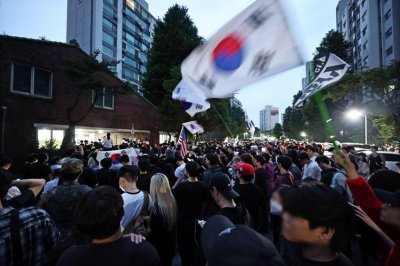
June 5 (Asia Today) — Protesters who had blocked a polling station in Seoul’s Songpa district for two nights and three days moved Friday to a vote-counting center, demanding a new election after ballot shortages disrupted voting in the June 3 local elections.
The ballot boxes from the No. 2 polling station in Jamsil 7-dong were transferred and counted after about 1,000 police officers were deployed. But protesters said they could not accept the result and effectively occupied the entrance area of the counting center, calling for a revote.
About 300 people, including citizens and conservative YouTubers, gathered near the entrance of the Olympic Park handball arena, according to an unofficial police estimate.
Even after the counting was completed, protesters chanted slogans including “revote” and “invalidate the vote.” Some protesters have alleged election fraud, but election authorities have attributed the disruption to a shortage of ballot papers during voting.
The atmosphere grew tense as access for election workers and arena employees was effectively blocked. Some arena employees who tried to leave were reportedly stopped by protesters and remained inside.
Police continued to guard the area around the arena after the vote count ended. Officials at the scene were considering sending election commission workers home first and removing vote-counting materials separately.
The protest followed a broader ballot shortage controversy in South Korea’s local elections. The National Election Commission said ballot shortages occurred at 50 polling stations nationwide and temporarily halted voting at 22 sites. The disruption drew public criticism and led the commission’s chairman, Roh Tae-ak, to announce his resignation Friday.
Earlier, protesters blocked the removal of ballot boxes from Jamsil 7-dong’s No. 2 polling station after a ballot shortage left voters waiting for hours. Police later escorted officials to retrieve the remaining ballot boxes, and the final count ended Friday afternoon.
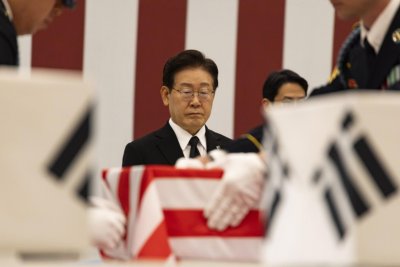
South Korea President Lee Jae Myung attends the ROK and the U.S. repatriation ceremony for Korean remains at Seoul Military Air Base in Seongnam, South Korea, 05 June 2026. The remains of ten South Koreans and the three U.S. soldiers killed in the Korean War were sent back to their homeland. Photo by JEON HEON-KYUN / EPA
June 5 (Asia Today) — South Korean President Lee Jae-myung said Friday that the mutual repatriation of Korean War remains by South Korea and the United States is “the most compelling evidence” of an alliance forged in blood.
Lee made the remarks at Seoul Air Base in Seongnam, where South Korea and the United States held a mutual repatriation ceremony for Korean War remains. It was the first time the ceremony was held in South Korea. Previous mutual repatriation ceremonies had been held in Hawaii.
“Today’s repatriation is a meaningful milestone that deepens and strengthens the South Korea-U.S. alliance, which was built on the blood and dedication of veterans,” Lee said.
“The effort to find not only one’s own warriors but also those of an ally and return them to their families is the most compelling evidence of an alliance forged in blood,” he said.
The ceremony returned the remains of 10 South Korean service members from Hawaii to South Korea. The remains of three U.S. service members were returned to the United States.
Lee said the repatriation was a promise by both countries to remember the heroes who devoted themselves to freedom and peace, calling it “the most noble tribute to their sacrifice.”
“More than 70 years ago, we were able to defend freedom and peace because of the noble sacrifice of heroes who gave their most precious lives to protect the freedom and peace of the Republic of Korea,” Lee said.
“But there are heroes who, long after the war ended, have still not returned to their hometowns,” he said. “Returning them fully is the historical duty of those of us who survived.”
Lee said trust built through battlefield promises has sustained the U.S.-South Korea alliance for decades.
“The trust that keeps promises made on the battlefield, even after decades have passed, is the strong root that has supported the South Korea-U.S. alliance,” Lee said. “With the firm South Korea-U.S. alliance as nourishment, the Republic of Korea is writing a new history of prosperity that amazes the world.”
Lee said the two allies should continue working together for peace and mutual prosperity.
“If South Korea and the United States join hands and move unwaveringly toward the future, complete peace will take root on this land and the flower of mutual prosperity will bloom,” Lee said. “We will continue to carry forward, with future generations, the noble history of solidarity for freedom and peace.”
Lleft-wing candidate Roberto Sanchez and right-wing candidate Keiko Fujimori pose during a presidential debate in Lima, Peru, last weekend. This was the only debate between Fujimori and Sanchez before the decisive election scheduled for Sunday. Photo by Paolo Aguilar/EPA
June 6 (UPI) — Peru will choose its next president Sunday in a runoff election between Keiko Fujimori, leader of the right-wing Popular Force party, and Roberto Sánchez, candidate of the leftist coalition Together for Peru.
Nearly 28 million Peruvians are eligible to vote for what will be the country’s ninth president in just 10 years, a figure that reflects Peru’s deep institutional crisis and political fragmentation.
Recent polls show Sánchez and Fujimori in a statistical tie, meaning the final outcome could depend on undecided voters and the share of blank ballots.
For many observers, the central question is not only who will win the presidency, but whether Peru can break the cycle of political instability that has defined the past decade.
Fujimori’s candidacy once again places Fujimorismo at the center of Peruvian politics. The daughter of former President Alberto Fujimori remains one of the country’s most influential and polarizing political figures. Sunday’s vote marks her fourth consecutive attempt to win the presidency in a runoff election.
Sánchez, meanwhile, is a far less familiar figure outside Peru. His campaign has evolved throughout the race and has sought to appeal to supporters of former President Pedro Castillo, who was removed from office in 2022 after attempting to dissolve Congress.
Fujimori maintains a strong advantage in Lima, while Sánchez dominates much of the country’s interior, particularly in the Andean regions.
The election is taking place amid growing public frustration with Peru’s political system.
Beyond the traditional divide between Fujimorismo and anti-Fujimorismo that has shaped much of Peru’s politics over the past two decades, several analysts argue that the country’s deeper problem is a broader crisis of political representation.
Luis Lira, a researcher at the International Affairs Observatory at Finis Terrae University in Chile, said Peru has become one of the clearest examples of a “democracy without parties,” where political organizations have lost their ability to channel voter demands and have been replaced by highly personalized leadership.
“The presence of two candidates viewed as strongmen demonstrates the deterioration of political parties,” Lira told UPI.
Raúl La Torre, a Peruvian academic and professor at the University of the Andes in Chile, offered a similar assessment.
According to La Torre, Peru enters the runoff burdened by a representation crisis that has deepened over the past decade. Political parties remain weak, Congress continues to suffer from low public trust and the gap between citizens and political elites continues to widen.
Carlos Escaffi, founder of consulting firm Relaxiona Internacional, said the Fujimorismo versus anti-Fujimorismo divide remains relevant, but is no longer sufficient to explain voting behavior.
Issues such as public security, informal employment, economic opportunity and growing rejection of the traditional political class now play a larger role in shaping voter preferences, he said.
“The demand for order, security and concrete solutions to everyday problems appears to be playing an increasingly important role in voters’ decisions,” Escaffi told UPI.
Analysts also point to Peru’s political structure as a factor behind its persistent instability.
Juan Jiménez, a former prime minister under President Ollanta Humala, said the country has long experienced a contentious relationship between the executive branch and Congress, marked by frequent confrontations and repeated efforts to remove presidents from office.
“In the last 10 years we have had eight presidents. On Sunday we will have the ninth,” Jiménez told UPI.
He attributed part of the crisis to the repeated use of constitutional mechanisms that allow Congress to remove presidents from office, as well as to the country’s fragmented political landscape.
Questions over whether the eventual winner will be widely accepted have become another source of concern.
Polls released in recent days suggest an extremely close race, increasing the likelihood of legal challenges or accusations from the losing side.
Jiménez said the country’s first challenge after Sunday’s vote will be ensuring that all political actors accept the result.
“It is highly foreseeable that there will be a conflict over the outcome,” he said, noting that narrow margins in previous elections have repeatedly fueled allegations of fraud.
The former prime minister also argued that problems during the first round undermined confidence in electoral authorities and could contribute to renewed disputes once the final results are announced.
Escaffi, however, urged caution regarding claims of fraud. He said there is no evidence to support allegations of a systematic effort to alter the popular vote.
“What we have seen is that the fraud narrative has become a political tool used by different sectors to mobilize their supporters or preemptively challenge the results,” he said.
Political analyst and commentator Jorge “Coco” Salazar expressed a similar view, saying either candidate could challenge the outcome if the margin is extremely narrow.
Salazar told UPI that the climate of mistrust generated during the first round has created conditions for electoral disputes to once again dominate the political debate.
Regardless of who wins, analysts agree the next president will face structural challenges that extend far beyond the campaign.
The most pressing task will be restoring governability in a country where political confrontation has become routine.
According to La Torre, that will require building minimum agreements with a fragmented Congress, strengthening weakened institutions and rebuilding public confidence.
Corruption and public security also rank among voters’ top concerns.
Lira said Peruvians increasingly demand greater transparency and accountability from the political class, while rising crime has become one of the country’s most pressing social issues.
Escaffi warned that Peru’s ability to maintain economic stability despite years of political turmoil should not be taken for granted.
Institutions such as the Central Reserve Bank of Peru and the country’s fiscal discipline have helped cushion the effects of repeated political crises, he said, but prolonged uncertainty could eventually affect investment, economic growth and job creation.
Several analysts also believe the restoration of a bicameral legislature could help counter the institutional drift behind the recent instability.
Jiménez said the return of the Senate may make it more difficult to carry out rapid presidential removals and could create greater opportunities for political deliberation.
Even so, few experts are optimistic about a quick resolution to Peru’s political troubles.
“The election offers an opportunity to begin a more stable period, but by itself it does not guarantee that outcome,” La Torre said.
For many observers, the question that will remain after Sunday’s vote is not simply who wins the presidency but whether Peru’s political system can regain the legitimacy and stability it has steadily lost over the past decade.
Previous World Cup appearances: 0 Player to watch: Mousa Tamari FIFA world ranking: 63
Jordan are appearing at the World Cup finals for the first time, with their Moroccan coach Jamal Sellami hoping that his players can emulate the heroics of The Atlas Lions four years ago.
Recommended Stories
list of 4 itemsend of list
“In big competitions, many teams can surprise. My country, Morocco, reached the semifinals in the last World Cup,” the Reuters news agency quoted him as saying during a training camp in Antalya, Turkiye, in late March.
“That gives us belief.”
While a run to the semifinals might be a little bit optimistic, Jordan are coming into the tournament on a good run of form.
The Middle East nation reached the final of the 2023 Asian Cup, losing to hosts Qatar, and also played Morocco in the final of the 2025 Arab Cup, agonisingly falling short in a 3-2 defeat after extra time.
Jordan also scored 32 goals in World Cup qualifying, marking their highest tally in a single qualification campaign. But eight of those goals were scored by Yazan Alnemat, who will miss this summer’s tournament due to injury.
Sellami takes Jordan into the big time
The Al-Nashama, or the “noble ones”, have developed into a significant force in Arab football since Sellami took over as coach in June 2024 and built on the work of his predecessor, compatriot Hussein Ammouta.
Sellami believes the team he has built can deliver a shock similar to Algeria beating Germany in 1982, Cameroon stunning reigning champions Argentina in 1990, and Senegal repeating the feat against holders France in 2002.
“These results open horizons of hope and ambition for the fans, so they can dream,” Sellami, who played for Morocco at the 1998 World Cup, told Arabic sports channel TFK.
“And we too have the right to dream and to strive to be a strong team and present ourselves well,” he added.
The 55-year-old former midfielder has built a well-structured, disciplined team that utilises their wealth of creative forward talent to hit opponents on the break with lightning-quick transitions.
Star striker misses out
While Jordan’s qualifying campaign gives them plenty of hope for this summer’s tournament, their team in North America will be missing a big part of what made them such a force in Asian qualifying.
Forward Yazan Alnemat contributed eight goals, but will miss the World Cup finals after suffering an ACL injury in the Arab Cup quarterfinals last December.
“Yazan is a player who cannot be replaced,” conceded Sellami. “But we will find a combination for the team that can still be dangerous to the opponent, and that also gives us balance in our defensive performance.”
Alnemat’s likely replacement, Ali Olwan, has recovered from an Achilles injury sufficiently to take his place in Sellami’s extended squad. He contributed nine goals in qualifying, highlighting Jordan’s depth in attacking options.
Mousa Tamari and Nizar al-Rashdan take part in a training session in preparation for the World Cup [Alaa Al Sukhni/Reuters]
‘Jordan’s Messi’ hopes to shine
Captain Mousa Tamari is one of Jordan’s biggest attacking threats and will be looking to torment defenders on the right wing.
The 28-year-old Rennes midfielder is the only Jordan player who competes in one of Europe’s top five leagues and has enjoyed a strong season in France, scoring seven goals and grabbing 11 assists in 36 appearances for the Ligue 1 outfit.
He’s also been a key player at international level, scoring 23 goals in 76 appearances for the Jordan national team.
If Jordan are to upset the odd’s at this summer’s World Cup, they will need to rely heavily on the man known as “Jordan’s Messi”.
How does Jordan’s group look?
Defending champions Argentina provide formidable opposition in Jordan’s final game in Group J, with the real Messi squaring up against his Jordanian counterpart.
Sellami’s side will face Austria in their opening match in San Francisco, with the European nation making their first appearance at the World Cup since 1998.
Jordan are the lowest-ranked team in their group, but perhaps their best opportunity of success will come against the second-lowest-ranked side, Algeria.
The African side recorded eight wins in World Cup qualifying and will look to Riyad Mahrez to provide goals and assists.
Jordan’s group stage match dates and kickoff times:
⚽ June 16: Austria v Jordan (San Francisco Bay Area, US), 9pm (04:00 GMT on June 17).
⚽ June 22: Jordan v Algeria (San Francisco Bay Area, US), 8pm (03:00 GMT on June 23).
⚽ June 27: Jordan v Argentina (Dallas, Texas, US), 9pm (02:00 GMT on June 28).
Al Jazeera’s prediction:
A fight for third in their group, but ultimately, qualification for the knockouts may be a stretch for Jordan.
Full squad
Goalkeepers: Yazeed Abulaila (Al-Hussein), Abdullah al-Fakhouri (Al-Wehdat), Noor Bani Attiah (Al-Faisaly).
Defenders: Abdallah Nasib (Al-Zawraa), Ehsan Haddad, Saed al-Rosan, Saleem Obaid (Al-Hussein), Yazan al-Arab (FC Seoul), Mohammad Abualnadi (Selangor), Husam Abu Dahab, Anas Banawi (Al-Faisaly), Mohannad Abu Taha (Al-Quwa Al-Jawiya), Mohammad Abu Hasheesh (Al-Karma).
Midfielders: Noor Al-Rawabdeh (Selangor), Nizar al-Rashdan (Qatar), Ibrahim Saadeh (Al-Karma), Rajaei Ayed, Mahmoud Al-Mardi (Al-Hussein), Amer Jamous (Al-Zawraa), Mohammad al-Dawoud (Al-Wehdat).
Forwards: Mousa Tamari (Rennes), Odeh al-Fakhouri (Pyramids), Mohammad Abu Zrayq (Raja Casablanca), Ali Azaizeh (Al-Shabab), Ibrahim Sabra (Lokomotiva Zagreb), Ali Olwan (Al-Sailiya).
Animals at Guadalajara Zoo in Mexico are making their own predictions for the 2026 FIFA World Cup. Elephants, gorillas, a puma and giraffes picked winners from a selection of upcoming matches, continuing a World Cup tradition made famous by Paul the Octopus, who correctly predicted 12 of 14 results at the 2010 tournament.