World

As world focuses on Iran, Israel ‘engineering starvation policy’ in Gaza | Gaza News

With the global attention fixated on the diplomatic efforts to end the war on Iran, Israel has systematically escalated its attacks on Gaza and choked off vital aid, plunging the besieged enclave into what economic experts are now calling an “engineered, compounded famine”.

The number of aid trucks entering Gaza has dropped drastically in violation of the October 2025 ceasefire with Hamas. Since then, the Government Media Office in Gaza has recorded 2,400 military violations by Israeli forces, resulting in the killing of more than 700 Palestinians.

Recommended Stories

list of 4 itemsend of list

On Tuesday, Israel’s military killed at least 11 Palestinians, including two children, in separate attacks across the war-torn Strip.

The intensity of these attacks spiked during peak regional tensions. Between February 28 and April 8, while Israel and the US were engaged in a bombing campaign against Iran, Israeli forces bombed Gaza on 36 out of those 40 days.

In the last five weeks alone, more than 100 people have been killed, including Al Jazeera journalist Mohammed Wishah. Israel has killed more than 72,336 people since launching the brutal military offensive on October 7, 2023.

Interactive_40Days_Gaza_US-ISRAEL-WAR-APRIL8_2026-FOOD_SECURITY

The ‘truck deception’

While Israel frequently claims it is allowing hundreds of aid trucks into Gaza, Palestinian officials and economic experts argue these figures are a deliberate mathematical deception.

According to the Government Media Office, only 41,714 aid and commercial trucks have entered Gaza over the past six months. This represents a mere 37 percent of the 110,400 trucks stipulated under the ceasefire agreement. The fuel situation is even more critical, with only 1,366 fuel trucks entering out of a promised 9,200 – an abysmal 14 percent compliance rate.

Recent daily logs highlight the severity of the bottleneck. On April 13, a total of only 102 aid trucks and 7 fuel trucks were allowed into the entire Strip, alongside 216 commercial trucks – a fraction of the more than 600 total trucks required daily under the “ceasefire” deal. By April 14, the numbers remained critically low with 122 aid trucks and 12 fuel trucks entering.

Crucially, Israeli authorities entirely shut down additional entry points like the Zikim and Kissufim crossings, which had processed dozens of commercial and aid trucks just a day prior, bottlenecking all limited traffic exclusively through Karem Abu Salem.

Mohammed Abu Jayyab, a Palestinian economic expert based in Gaza, told Al Jazeera that Israel utilises a “technical and commercial deception” to inflate these numbers.

“An Israeli truck carries up to 32 or 34 pallets… which are then unloaded into two or three smaller, dilapidated Palestinian trucks on the Gaza side,” Abu Jayyab explained. “Consequently, the UN and Israel count double or triple the actual number of Israeli trucks entering.” One pallet holds roughly 1 tonne of goods or food items.
Furthermore, Israel recently banned mixed-load shipments. If a merchant brings in 20 pallets of sugar, the remaining 12 pallet spaces on the truck must remain empty, yet it is still registered as a full commercial truck.

“The political agreement stipulated a ‘truck’ but did not specify quantities, weights, or the number of pallets,” Abu Jayyab noted, allowing Israel to weaponise logistics to restrict aid while appearing compliant.

Engineering starvation

This logistical strangulation is part of a broader strategy. Hassan Abu Riyala, undersecretary of the Ministry of National Economy in Gaza, stated in a meeting published on the ministry’s official Telegram channel that Israel is “engineering a policy of starvation”.

To ensure chaos in the local markets and sky-high prices, Israel has deliberately dismantled civil regulatory bodies. “The occupation targeted the majority of the crews that monitored prices, and assassinated the [former] undersecretary of the Ministry of Economy and five directors general during the war,” Abu Riyala said.
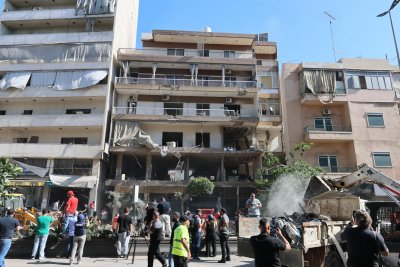
The results have been devastating, basic commodities have become scarce, and bread production has plummeted to 200 tonnes daily, far below the 450 tonnes required to feed the population.

“We manage this structural deficit under exceptional and coercive conditions,” Ismail Al-Thawabteh, director general of the Government Media Office, told Al Jazeera.

He described the ongoing reduction of supplies despite the truce as a “systematic restriction of basic supplies” that pushes the population towards dangerous levels of food insecurity. Fresh produce has skyrocketed, with 1kg (2.2lb) of tomatoes jumping from $1.50 to nearly $4 in a matter of weeks.

Moreover, the humanitarian catastrophe is being accelerated by the withdrawal of major aid groups. Al-Thawabteh noted that the scaling back or suspension of operations by key international institutions, most notably the World Food Programme (WFP), due to Israeli restrictions, represents a “highly dangerous development” that threatens the complete collapse of Gaza’s relief system.

“We issue an urgent appeal to the international community and the guarantors of the agreement to immediately pressure Israel to open the crossings… before reaching a point of no return and an imminent human explosion,” he said.

A ‘compounded famine’

The crisis has evolved beyond a simple lack of food; it is now a complete collapse of the Palestinian economy.

Abu Jayyab described the current situation as a “compounded famine”. With unemployment soaring to 80 percent and the destruction of more than 160,000 jobs across industrial, agricultural, and commercial sectors, the population has entirely lost its purchasing power.

“It has become illogical to link the entry of food supplies from the crossings to their availability to Palestinian citizens,” Abu Jayyab told Al Jazeera. Even when goods reach the market, between 70 to 80 percent of families simply cannot afford to buy them due to the total absence of income.

This extreme deprivation is forcing civilians into life-threatening alternatives. “The return of long queues for bakeries, and citizens resorting to burning plastic and waste in the absence of cooking gas, are dangerous field indicators of an unprecedented deterioration,” Al-Thawabteh warned, noting that government health facilities are currently struggling to treat respiratory and skin diseases resulting from this toxic pollution.

The medical blockade

Meanwhile, the stranglehold extends to Gaza’s most vulnerable patients. While the ceasefire agreement mandated the opening of the Rafah crossing for medical evacuations, Israel has kept the borders tightly restricted.

Over the past six months, only 2,703 people have been allowed to cross through Rafah out of an expected 36,800 – a compliance rate of just 7 percent. Consequently, only 8 percent of the severely wounded and chronically ill patients slated for urgent medical evacuation have been permitted to leave. According to the World Health Organization, roughly 18,000 people are still trapped in Gaza waiting for life-saving treatment abroad.

INTERACTIVE - Israel’s closure of the Rafah crossing - OCT 15, 2025 copy 2-1775738950
(Al Jazeera)

Source link

Trump says talks with Iran likely to restart in next 2 days in Pakistan

April 15 (UPI) — U.S. President Donald Trump said peace talks with Iran “could be happening in the next two days,” with American negotiators most likely to return to Islamabad where the first round of talks at the weekend ended without a breakthrough.

In an interview with the New York Post on Tuesday, Trump said talks between the sides were “happening, but, you know, a little bit slow,” saying a new round of direct negotiations would probably be hosted by a country in Europe.

However, around 30 minutes after the interview had concluded, Trump called back to tell the Post that it should keep its reporter covering the talks in Islamabad in place and not bring them home.

“You should stay there, really, because something could be happening over the next two days, and we’re more inclined to go there [Islamabad]. It’s more likely, you know why? Because the field marshal is doing a great job,” Trump said, referencing Pakistan’s Field Marshal Gen. Asim Munir who has a direct line of communication with the regime in Tehran and a strong relationship with Trump.

“He’s fantastic, and therefore it’s more likely that we go back there. Why should we go to some country that has nothing to do with it?” added Trump.

The Washington D.C.,-headquartered Institute for the Study of War also said a fresh round of negotiations was likely this week but said it believed Iran’s approach would be to try to buy time by spinning out the talks

“Iran likely aims to protract negotiations as long as possible in order to prepare for a potential resumption of conflict,” ISW said in a post on X.

The developments, which came as a fragile cease-fire that took effect April 7 entered its second week, followed earlier reports in which unnamed White House officials told CNBC, CNN and NBC News that in-person negotiations could restart before the truce expires on Tuesday.

Vice President JD Vance said round one of the talks in Islamabad, which ran for more than 20 hours, foundered on differences over Iran’s nuclear program — which the United States wants it to give up completely to ensure it can never develop a nuclear weapon — and control of the Strait of Hormuz.

Reports later emerged that more progress had been made than initially suggested, with the sides getting close to agreement on nuclear enrichment after Iran countered U.S. demands for a 20-year suspension with an offer to halt all enrichment for 5 years.

Trump told the Post he was unhappy with the thinking that a moratorium on enrichment, instead of terminating the program, would make the regime in Tehran more amenable to a lasting peace agreement by providing them a face-saving “success” to sell to the Iranian people.

“I’ve been saying they can’t have nuclear weapons. So I don’t like the 20 years. I don’t want them [Iran] to feel like they have a win.”

Experts concurred with Trump’s analysis, saying the only way to guarantee Iran would not be able to pursue a nuclear weapon in the future was to make sure the entire program was put beyond use, in a verifiable way, and that it needed to happen while Trump was still in office.

Under the Joint Comprehensive Plan of Action, a 2025 deal between Iran and the United States, Britain, France, Germany, Russia and China, enrichment by Tehran of its 300 Kg stockpile of uranium was capped at 3.67%, in exchange for sanctions relief.

However, that deal lapsed in October, although in practice it was long dead after Trump pulled the United States out of the agreement in May 2018, during his first term, with Iran subsequently proceeding to enrich an expanded 441 kg uranium stockpile to around 60%, not far short of weapons grade.

Speaker of the House Mike Johnson, R-La., presents the family of Benjamin Ferencz with his Congressional Gold Medal during the Holocaust Memorial Museum’s Days of Remembrance ceremony at the U.S. Capitol on Tuesday. The gold medal was presented posthumously to Ferencz, who served in the Army during World War II and prosecuted Nazi war criminals during the Nuremberg Trials. Photo by Bonnie Cash/UPI | License Photo

Source link

Top admirals of S. Korea, U.S., Japan discuss trilateral cooperation in Seoul

South Korean Chief of Naval Operations Adm. Kim Kyung-ryul (L) and U.S. Pacific Fleet Commander Adm. Stephen Koehler (R) hold talks in Seoul on Wednesday. The two were also set to meet with Japan’s top naval commander for trilateral talks on strengthening maritime cooperation. Photo courtesy of South Korea Navy

Top naval commanders of South Korea, the United States and Japan gathered in Seoul on Wednesday to hold a series of talks aimed at strengthening their trilateral maritime security cooperation, the South’s Navy said.

The gathering brought together Chief of Naval Operations Adm. Kim Kyung-ryul, U.S. Pacific Fleet Commander Adm. Stephen Koehler and Adm. Akira Saito, chief of staff of the Japan Maritime Self-Defense Force, for bilateral talks and a trilateral dinner meeting, according to the armed service.

The meetings came amid heightened tensions in the Middle East, raising speculation over whether their talks would address the ongoing U.S. blockade of Iranian ports.

U.S. President Donald Trump earlier called on South Korea, Japan and others to send warships to the Strait of Hormuz to help secure shipping lanes.

In the bilateral talks between Kim and Koehler held earlier in the day, both sides exchanged opinions on the robust South Korea-U.S. combined defense posture as well as cooperation in the area of naval maintenance, repair and operations, the Navy said.

Kim and Saito, meanwhile, held in-depth discussions on expanding personnel exchange and resuming joint maritime search and rescue exercises (SAREX) as discussed in a ministerial meeting between their defense chiefs earlier this year, it added.

In January, Defense Minister Ahn Gyu-back and his Japanese counterpart, Shinjiro Koizumi, met in Japan and agreed to resume joint SAREX drills for the first time in nine years as part of efforts to strengthen bilateral defense cooperation.

The top admirals of the three countries were set to attend a dinner meeting later Wednesday to likely discuss trilateral coordination measures to respond to and deter North Korea‘s advancing nuclear and missile threats.

Copyright (c) Yonhap News Agency prohibits its content from being redistributed or reprinted without consent, and forbids the content from being learned and used by artificial intelligence systems.

Source link

U.S. says blockade has ‘completely halted’ Iran’s maritime trade

The U.S Central Command said late Tuesday that its forces have halted all maritime traffic to and from Iran. File Photo by Ali Haider/EPA-EFE

April 15 (UPI) — The U.S. military’s maritime blockade of Iran has “completely halted” sea-based trade with the Middle Eastern country, U.S. Central Command said late Tuesday.

President Donald Trump announced the blockade on Sunday after negotiations to end the U.S.-Israeli war with Iran collapsed.

The blockade of 12 U.S. warships, more than 100 fighter and surveillance aircraft and more than 10,000 soldiers began at 10 a.m. EDT Monday, an effort to prohibit maritime traffic to and from all Iranian ports.

According to U.S. military officials, it covers the entire southern coastline of Iran, including ports on the Arabian Gulf and Gulf of Oman, between which lies the Strait of Hormuz.

“A blockade of Iranian ports has been fully implemented as U.S. forces maintain maritime superiority in the Middle East,” Adm. Brad Cooper, Central Command commander, said in a statement.

“In less than 36 hours since the blockade was implemented, U.S. forces have completely halted economic trade going into and out of Iran by sea.”

Central Command said earlier Tuesday that no ships had made it through during the blockade’s first 24 hours and that six vessels had complied with U.S. forces’ direction to return to an Iranian port on the Gulf of Oman.

“The blockade is being enforced impartially against vessels of all nations entering or departing Iranian ports and coastal areas,” Central Command said.

The blockade comes amid a two-week cease-fire between the United States and Iran that Trump announced on April 8. During the fragile truce negotiations on a permanent end to the war were to be conducted.

However, negotiations with Iran collapsed in Pakistan on Sunday, seemingly over disagreements on Iran’s nuclear program and control of the Strait of Hormuz.

Not long after the war began with the United States and Israel attacking Iran on Feb. 28, Iran sharply restricted vessel traffic to the Strait of Hormuz, an important trade route through which flows roughly 27% of the world’s maritime trade in crude oil and petroleum products as well as 20% of global liquefied natural gas trade, according to the U.S. Congressional Research Service.

Iran’s control of trade through the strait has caused gas prices to spike, threatening countries with energy crises.

The U.S. blockade appears aimed at financially squeezing Iran by cutting it off from maritime trade revenue.

According to Maid Maleki, senior fellow of the Foundation for Defense of Democracies, a nonpartisan Washington, D.C., research institute, the blockade could cost Iran about $435 million a day.

“The blockade makes continued resistance economically impossible,” he said in a statement.

Source link

Uzbek chess grandmaster Sindarov sets up world title match with Gukesh | Sport News

Javokhir Sindarov wins the Candidates Tournament with ⁠a round ⁠to spare and will face India’s Gukesh next.

Uzbek grandmaster Javokhir Sindarov has clinched victory in the chess Candidates Tournament with ⁠a round ⁠to spare, drawing with Dutchman Anish Giri to set up a World Championship match against India’s Gukesh Dommaraju.

The 20-year-old stormed ⁠through the event in Cyprus on Tuesday, winning six of his 13 games and losing none in a dominant performance never seen at the Candidates.

Recommended Stories

list of 3 itemsend of list

Sindarov moved to ⁠9.5 points, two clear of second-placed Giri on 7.5, after the Dutchman failed to convert a winning position against China’s Wei Yi in the previous round.

“It was the hardest week in my life. I even slept really bad the last ‌few days. I am very happy to finish this tournament with a win,” Sindarov said after his win.

The tournament had been seen as a possible last opportunity for the old guard to mount another challenge for the world title, but Americans Fabiano Caruana and Hikaru Nakamura never seriously threatened.

Gukesh won the title in 2024, defeating China’s Ding Liren in the 14th and ⁠final game of their match. Ding had himself become ⁠champion by beating Ian Nepomniachtchi after Magnus Carlsen, the five-times champion who remains world number one, relinquished the crown, citing a lack of motivation.

“I do not want to think a lot ⁠about the upcoming World Championship match right now. I know it will be a very hard match,” Sindarov said.

“Gukesh ⁠has an experience of playing at this level. ⁠But I have a very good team. I have a lot to work on, and I will work a lot for this and take my chances.”

While Sindarov’s breakthrough and the broader rise ‌of a younger generation are likely to prompt new speculation about a Carlsen comeback, the Norwegian has said he has no intention of returning to ‌the ‌classical World Championship cycle.

A precise date and a venue for the World Championship match have yet to be announced.

Source link

American YouTuber gets prison term for offensive behavior

American YouTuber Johnny Somali answers questions from reporters before attending his sentencing trial at the Seoul Western District Court in the capital on Wednesday. Photo by Yonhap

American YouTuber Johnny Somali, who sparked outrage in South Korea two years ago after kissing a statue symbolizing Korean victims of Japan’s wartime sexual slavery, was sentenced by a court Wednesday to six months in prison and remanded in custody.

Somali was indicted by South Korean authorities on multiple charges, including obstruction of business and violations of minor public order laws.

He is accused of uploading a video of himself kissing a “Statue of Peace” that commemorates the former sex slaves in Seoul and performing a lewd dance in front of it in October 2024. He also provoked public outrage by causing disturbances on buses, subways and an amusement park, vandalizing a convenience store in Seoul’s Mapo district and playing obscene videos in public.

The Seoul Western District Court sentenced Somali to six months in prison and 20 days of detention and barred him from employment at institutions related to children and adolescents for five years.

The court then ordered him to be taken into custody immediately.

Copyright (c) Yonhap News Agency prohibits its content from being redistributed or reprinted without consent, and forbids the content from being learned and used by artificial intelligence systems.

Source link

David Wilkie’s son chasing his iconic world record time from 1976 Montreal Olympics

Reaching his father’s time will be hugely challenging – some might say impossible.

“Most people who know swimming will be like, ‘he has no chance’,” Adam says. “But I want to try.”

But Adam says the 12 months ahead are about more than strokes, leg kicks, minutes and seconds.

Having not swam seriously since he was 18, he only got back into the sport after his father’s death to “feel connected to him” as he grieved.

Adam hopes to travel to some of the pools his father swam in, including in Sri Lanka – where David was born to Scottish parents, in Scotland itself, Miami and even Montreal.

He will also raise money for Sports Aid, who help support youngsters with the expense that come with chasing sporting dreams, and take advice from his dad’s former team-mates.

“Doing this challenge has allowed me to go back through his life,” Adam says.

“My dad retired at 22, long before I came along, so it’s a part of his life that I didn’t necessarily know that much about.

“I’m hoping I’ve got a lot of his swimming genes, so we’ll see as the year unfolds.

“I want this story to demonstrate how amazing swimmers are, how hard this sport is and how much effort, time and work these guys and girls put in to get to where they are.

“And I want to demonstrate how good my dad was.”

Source link

Over 2,000 join peace marathon honoring Korean religious leader

Pope Francis (3-R, 1936-2025) talks with Han
Yang-Won (2-L, 1924-2016), chairman of the Association of Korean Native
Religion, as he meets with South Korea’s religious leaders at Myeongdong
Cathedral in Seoul, South Korea. File. Photo by JUNG YEON-JE / EPA

April 14 (Asia Today) — More than 2,000 people took part in a marathon in southwestern South Korea to honor the legacy of Han Yang-won, a spiritual figure known for promoting coexistence and peace.

The third Haepyeong Marathon was held Saturday in Namwon, North Jeolla Province, the hometown of Han, who died in 2016. The event was organized by the Association for Coexistence and Peace and supported by the Ministry of Culture, Sports and Tourism.

The marathon commemorates Han’s lifelong efforts to promote interfaith harmony and shared national values. The event name comes from his pen name “Haepyeong,” reflecting his core philosophy of coexistence and peace.

Organizers said this year’s event also aimed to express solidarity with people affected by ongoing conflicts around the world and to call for an end to war.

Participants ran 5-kilometer and 10-kilometer courses, with ages ranging from 5 to 78, highlighting a cross-generational turnout.

“The message of coexistence and peace is more urgent than ever in a world marked by conflict,” said Kim Dong-gyu, secretary-general of the organizing group. “We hope this event can help inspire a future where people live together in peace.”

Han was a leader of a Korean indigenous religious tradition that incorporates elements of Confucianism, Buddhism and Taoism. He also founded a national council of Korean religions in 1985 and led it for more than three decades.

He was posthumously awarded one of South Korea’s highest civilian honors in 2017 in recognition of his contributions to religious harmony.

— Reported by Asia Today; translated by UPI

© Asia Today. Unauthorized reproduction or redistribution prohibited.

Original Korean report: https://www.asiatoday.co.kr/kn/view.php?key=20260414010004375

Source link

Circle targets South Korea to challenge Tether dominance

Comparison of stablecoin market share in South Korea shows Tether dominating domestic trading, while USD Coin leads in global on-chain payment volume. Data from Bank of Korea and CoinDesk. Graphic by Asia Today and translated by UPI

April 14 (Asia Today) — Circle is stepping up efforts to expand its stablecoin footprint in South Korea, aiming to challenge the dominance of Tether through a dual strategy focused on trading and payments.

Tether currently accounts for more than 80% of stablecoin transactions in South Korea and over 60% globally, according to industry data. Circle’s USD Coin, or USD Coin, holds a much smaller share in Korea, at around 10%.

Industry officials said Circle recently met with major South Korean exchanges, including Upbit, Bithumb and Coinone, to expand USDC trading and improve accessibility. The move is aimed at securing liquidity in one of the world’s largest cryptocurrency markets.

Circle CEO Jeremy Allaire visited South Korea this week and signed agreements with local exchanges and fintech firms to promote stablecoin adoption.

With Dunamu, the operator of Upbit, Circle is working on initiatives focused on regulatory compliance, transparency and user education. With Bithumb, the companies agreed to explore integration of multi-chain digital asset infrastructure and stablecoin technologies. Promotions such as fee discounts and airdrops are also being used to boost USDC trading on platforms like Coinone.

Beyond exchange trading, Circle is also expanding its payment infrastructure. The company is promoting its proprietary network to support real-world payments and cross-border transfers, including partnerships with South Korean fintech firm Hecto Financial.

Analysts say this reflects a broader strategy to compete with Tether not only in trading volume but also in real-world financial use cases.

USDC is backed by cash and U.S. Treasury assets and publishes regular disclosures, a structure that has made it attractive to financial institutions. It also operates across multiple blockchain networks, offering flexibility in transaction speed and fees.

Data suggests USDC has gained traction in payments and transfers. According to industry estimates, its on-chain transaction volume reached about $17 trillion last year, exceeding Tether’s roughly $12.9 trillion, indicating stronger usage in real-world transactions rather than exchange trading.

Experts say competition between the two stablecoins is shifting from market share to function.

“Stablecoin competition is no longer about issuance volume but about use cases,” said Gautam Chughani of CoinShares, adding that USDC is expanding rapidly in payments and institutional finance.

Analysts say Tether is likely to maintain its strength in trading liquidity, while USDC could gain ground through integration with the broader financial system.

Circle said it does not plan to issue a Korean won-pegged stablecoin directly, signaling instead that it may participate as a technology provider in a future bank-led consortium structure.

— Reported by Asia Today; translated by UPI

© Asia Today. Unauthorized reproduction or redistribution prohibited.

Original Korean report: https://www.asiatoday.co.kr/kn/view.php?key=20260415010004432

Source link