1 of 2 | A damaged building stands in the Dubai International Financial Center. The damage was caused by debris from the interception of an Iranian drone attack in Dubai, United Arab Emirates, Friday. Those in the UAE are being warned not to take photos or videos of damage or they could be charged under cybercrime laws. Photo by a stringer/EPA
March 13 (UPI) — Several people, including tourists and influencers, have been arrested in Dubai, United Arab Emirates, for possessing, sharing or commenting on digital content that shows attacks or damage from attacks by Iran in the country.
There have been 21 people arrested in the emirate, said advocacy organization Detained in Dubai.
“The charges sound extremely vague but serious on paper. In reality, the alleged conduct could be something as simple as sharing or commenting on a video that is already circulating online,” said Radha Stirling, CEO of Detained in Dubai and Due Process International.
“Under UAE cybercrime laws, the person who originally posts content can be charged, but so can anyone who reshapes, reposts or comments on it. One video can quickly lead to dozens of people facing criminal charges,” Stirling said.
Penalties can include up to two years in prison, fines ranging from about $5,500 to $55,000, and foreign nationals will face deportation.
“Foreigners need to understand that what may seem like normal social media behavior elsewhere can lead to arrest in the UAE,” Stirling said. “In some circumstances people can find themselves treated as national security suspects before the facts are even clarified.”
One 60-year-old British tourist has been charged under cybercrime laws for allegedly filming Iranian missiles over the city.
“We are in contact with the local authorities following the detention of a British man in the UAE,” the United Kingdom’s Foreign Office told CNN.
The UAE’s ambassador to the United Kingdom told British radio station LBC that the “United Arab Emirates is very safe.”
“The guidelines and regulations are there in the UAE to ensure people’s safety,” he said. He added that people filming could be hit by “falling debris.”
Stirling also said that Qatar has already charged more than 200 people under similar laws since the Iran war began.
The UAE defense ministry said on X Friday that 1,800 drones and missiles have been fired at the UAE since the war with Iran began.
Six people from the Emirates, Pakistan, Nepal and Bangladesh have been killed, and 141 people have suffered mild to moderate injuries.
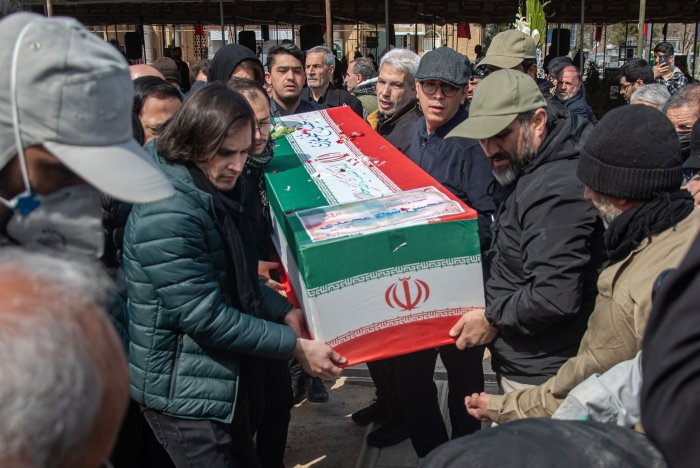
Iranians attend a funeral for a person killed in recent U.S.-Israel airstrikes at Behesht-e Zahra cemetery on the southern outskirts of Tehran in Iran on March 9, 2026. Photo by Hossein Esmaeili/UPI | License Photo
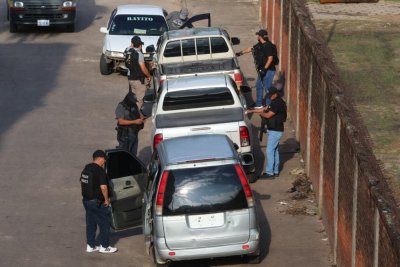
Members of the Bolivian armed forces conduct an operation in Santa Cruz, Bolivia, on Friday, during which alleged Uruguayan drug trafficker Sebastian Marset was captured. Three other people were reportedly apprehended and several weapons seized. Photo by Juan Carlos Torrejon/EPA
March 13 (UPI) — Uruguayan drug trafficker Sebastián Enrique Marset Cabrera, known as the “King of the South” and considered a priority fugitive for the U.S. Drug Enforcement Administration, was captured Friday in Bolivia and was being transferred to the United States, authorities said.
The arrest occurred during a raid early in the morning in Las Palmas, an upscale residential neighborhood in Santa Cruz de la Sierra, where Bolivian security forces began the operation about 2 a.m., according to regional media reports.
Bolivia’s Ministry of Government said Marset was to be transported from Viru Viru International Airport in Santa Cruz under a heavy police guard.
The minister of Paraguay’s National Anti-Drug Secretariat, Jalil Rachid, said his office received information from Bolivian authorities confirming the arrest.
“The operation began early in the morning. Around 2 a.m. The information I received is positive. He has already been secured,” Rachid said.
“ESTO ESTÁ CONFIRMADO, LAS AUTORIDADES DE BOLIVIA NOS CONFIRMARON QUE DETUVIERON A MARSET” |
➡El ministro de la Senad, Jalil Rachid mencionó que los organismos de Bolivia le confirmaron la captura de Marset y que continúan los procedimientos.
“He was one of the most wanted people worldwide, Rachid said. Many will be seeking his head. I am sure the American government is also interested in that because he used its financial system.”
Images circulated by regional media show Marset under the custody of U.S. agents.
PRIMERAS IMÁGENES DE SEBASTIÁN MARSET, ESPOSADO, ANTE LA DEA‼️
El narcotraficante uruguayo fue capturado en Santa Cruz de la Sierra, Bolivia.
Paraguay’s interior minister, Enrique Riera, said the capture could provide new information about the drug trafficker’s criminal structure in the region.
“More than one person will be worried right now if he tells everything he knows about past events and his connections in Paraguay” Riera said.
Paraguayan Sen. Eduardo Nakayama wrote on X that Marset’s capture was linked to renewed international cooperation.
“Marset’s capture is a key blow to organized crime and was not a coincidence. It coincides with the restoration of cooperation with the United States Drug Enforcement Administration under the government of Rodrigo Paz in Bolivia after 18 years of rupture (2008-2025), during which the country made no progress in the fight against drug trafficking, demonstrating the importance of shared intelligence,” Nakayama wrote.
Images shared by local media also show police escorting other handcuffed individuals while securing the perimeter of the raided residence.
La primera imagen de la detención de Sebastián Marset en Bolivia
La Policía de Bolivia logró la detención de Sebastián Marset, considerado el narcotraficante más buscado de la región, tras un megaoperativo en la madrugada de este viernes 13 de marzo en distintos puntos de… pic.twitter.com/PTBJ03GOuW— Diario La Tribuna Paraguay (@TribunaParaguay) March 13, 2026
“The information provided to us is that there are five Venezuelan citizens, four men and one woman, who would be part of the operational arm of the Uruguayan Sebastián Marset,” Bolivian journalist Jaime Herrera told ABC TV Paraguay.
Marset, 34, a Uruguayan national, has been identified by authorities in several countries as the leader of an international network involved in cocaine trafficking and money laundering that operated between Bolivia, Paraguay, Uruguay and Europe.
Investigations indicate his organization coordinated cocaine shipments departed from Bolivia, crossed Paraguay and were later sent to European ports.
Authorities link his network to seizures involving more than 16 tons of cocaine as part of the Paraguayan investigation known as Operation A Ultranza PY, considered the largest operation against organized crime in Paraguay’s history.
Marset’s first known links to drug trafficking date to 2013, when he was arrested in Uruguay after receiving a marijuana shipment connected to Paraguayan traffickers. He was convicted of drug trafficking and regained his freedom in 2018 after serving five years in prison.
After leaving prison, according to investigations, he expanded his criminal network across several countries in the region.
Paraguayan authorities have also linked him to contacts within the Insfrán clan, an organization associated with drug trafficking in Paraguay.
According to statements cited by Colombian authorities and judicial investigations, Marset was identified as the “determining figure” in the crime, meaning the person who allegedly ordered the assassination.
The international search for Marset intensified in May when the U.S. Sate Department offered a reward of up to $2 million for information leading to his capture.
The U.S. Department of Justice also filed money laundering charges, accusing him of using the U.S. financial system in his operations.
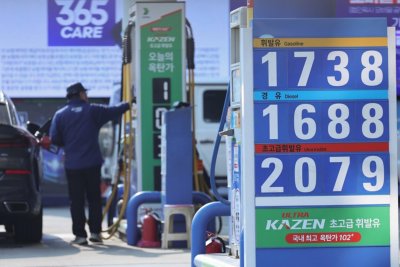
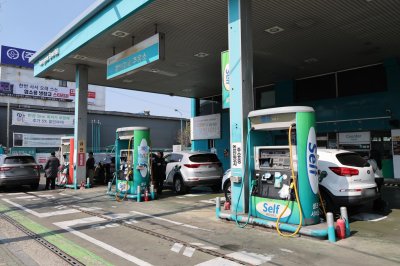
A signboard at a gas station in Seoul shows gasoline and diesel prices in Seoul, South Korea, File. Photo by YONHAP / EPA
March 12 (Asia Today) — South Korea will impose a temporary price cap on petroleum products starting Friday, setting the first ceiling for gasoline at 1,724 won ($1.29) per liter as the government moves to curb surging fuel prices.
The Ministry of Trade, Industry and Energy said Thursday the “petroleum product maximum price system” will take effect at midnight and apply to fuel prices supplied by refiners to gas stations and distributors.
The first price caps are set at 1,724 won ($1.29) per liter for gasoline, 1,713 won ($1.28) for automotive diesel and 1,320 won ($0.99) for kerosene.
The measure will remain in place for two weeks through March 26 and will be reviewed every two weeks based on fluctuations in global petroleum product prices.
The government said the caps are significantly lower than the average supply prices submitted by refiners on Tuesday. At that time gasoline averaged 1,833 won ($1.37) per liter, diesel 1,931 won ($1.45) and kerosene 1,728 won ($1.30).
Compared with those levels the new caps are lower by 109 won for gasoline, 218 won for diesel and 408 won for kerosene.
Officials said the policy aims to quickly slow the recent surge in oil prices and ease instability in the fuel market.
The price cap will apply only to wholesale supply prices set by refiners rather than the retail prices at individual gas stations. Officials expect pump prices to gradually decline as stations adjust prices once lower-cost fuel enters inventories.
Price changes typically appear two to three days after new supply prices take effect, depending on station inventories, the ministry said.
If refiners incur losses because of the price caps the government plans to compensate them through a post-settlement system. Refiners will submit loss estimates which will be verified through accounting reviews before quarterly compensation payments are made.
Minister of Trade, Industry and Energy Kim Jeong-gwan said the policy would allow limited price adjustments in line with international fuel price trends while preventing excessive increases that diverge from global markets.
If you’re looking for the most elegant way to wrap up our “little excursion” in Iran, it’s this: President Trump should follow what might politely be called the “declare victory and head for the airport” strategy.
You know the drill: Announce that we’ve set back Iran’s nuclear programs a decade, pounded their navy into submission, and turned the ayatollah into a fine mist. Mission accomplished! Thank you for flying the friendly skies, and please return your seat backs to their full upright and locked position.
Don’t get me wrong. This “cut and run” routine is less than ideal. Trump will have signaled to the world he (we) can’t endure any insurgent resistance, empowered the Islamic Revolutionary Guard Corps to run the country and likely angered Israel in the process.
But his domestic political base will believe he won, and fan service has always been his top political priority.
Besides, once you’ve entered a war without a coherent justification, clearly defined goals or a credible exit strategy, you’re lucky to get out at all. A salutary outcome no longer exists; that ship has already sailed.
Speaking of which, as I write this, we are drifting toward what feels like a point of no return. Mining the Strait of Hormuz, which Iran is now attempting to do, is the ultimate trump card.
Using mines to shut down this narrow shipping lane — which contributes about 20% of the world’s oil supply, not to mention natural gas and fertilizer — could result in a crippled global economy, mass casualties and a situation in which the president can no longer save face while cutting and running.
As retired U.S. Navy Adm. James Stavridis writes, “Iran has been planning a Strait of Hormuz closure operation for decades and probably has more than 5,000 mines; just one hit can severely damage a thin-skinned tanker.”
Yes, once laid, minefields can be cleared. But Stavridis predicts it would take “weeks, if not a month or two” to clear thousands of mines. He warns: “The global economy needs to be prepared for a month or two shutdown.” (Complicating matters is the fact that our dedicated minesweepers were recently decommissioned.)
The Iranians are not idiots. They watch American politics. They understand that Trump’s pressure point isn’t Tehran — it’s the S&P 500. A bad week on Wall Street makes him jumpier than a long-tailed cat in a room full of rocking chairs.
Trump, whatever else you say about him, is a transactional materialist who approaches geopolitics the way a real estate developer approaches zoning disputes: What’s the angle, where’s the leverage, and can everybody just settle already?
Unfortunately, the fellows running Iran are religious zealots who believe — deeply, sincerely and somewhat alarmingly — in something larger than quarterly economic indicators. Their strategic plan appears to consist of two options: survive (which they see as tantamount to victory), or die gloriously while insisting they meant to do that all along.
Which makes their current behavior grimly logical.
The Iranian regime, such as it is, doesn’t have much to lose. But they know exactly what Trump has to lose: His popularity and political legacy are now tied to the price of oil.
Releasing U.S. strategic oil reserves will help to some extent, but this is not a long-term solution. And Iran is betting that when the price at the pump for U.S. consumers starts looking like a luxury car payment, Trump will do what critics like to summarize as TACO — “Trump Always Chickens Out.”
Lots of American political observers agree. And it’s not just moderates or RINOs who are teasing this.
Referring to the U.S. military, former Speaker of the House Newt Gingrich told Larry Kudlow on Fox Business: “They have to keep the Strait of Hormuz open. I don’t care what it costs.”
“If they can’t keep it open,” Gingrich continued, “this war will, in fact, be an American defeat before very long, because the entire world, including the American people, will react to the price of oil if the strait stays closed very long.”
Perhaps the U.S. military can pull off a delicate trick: keep our “armada” in the region, keep the Strait of Hormuz open, clear any mines that are laid and prevent some unlucky tanker from being hit by a mine — or, for that matter, by a drone or missile fired from the Iranian coast. That final risk is why some military analysts believe reopening the strait would require a ground operation.
Imagine that the U.S. manages to thread these needles. Then what?
Total and complete surrender? Regime change? Boots on the ground?
Absent a swift exit (like, tomorrow), we’re left with the two classic options of power politics: a delayed and more ignominious retreat or increased escalation.
And, historically speaking, American presidents are more likely to double down — with tragic results.
In this photo taken Wednesday, police stand in front of a promotional video in central Seoul for the upcoming BTS live performance in Gwanghwamun Square. Photo by Yonhap
Police vowed Friday to detain any suspects behind possible terror threats targeting K-pop juggernaut BTS‘ comeback concert set to draw hundreds of thousands to downtown Seoul next week.
The group is scheduled to perform before some 22,000 fans in Gwanghwamun Square on March 21, with police estimating as many as 260,000 people to gather around the area that day.
The Seoul Metropolitan Police Agency said it would deploy police commandos to inspect the site, noting it could not rule out the possibility of terror in connection with the current conflict in the Middle East.
“If police resources are wasted or the event is disrupted due to public threats, such as bomb threats, (we) will pursue and apprehend (the suspects) to the end under the principle of investigation under detention,” it said.
Police plan to set up metal detectors at the venue’s entrances as well as barricades to prevent possible accidents or acts of terror, such as a vehicle-ramming attack.
They also asked concertgoers to minimize personal items as security checks will be strengthened.
Copyright (c) Yonhap News Agency prohibits its content from being redistributed or reprinted without consent, and forbids the content from being learned and used by artificial intelligence systems.
Here’s a hot take: South by Southwest is a Latin music festival.
When the De Los team headed to Austin, Texas, in 2024 to cover the event for the first time, approximately 60 acts that fell under the expansive Latin music genre umbrella had been invited to perform. Two years later, that number has more than doubled, with more than 150 Latin music acts featured at the iconic festival, now in its 40th year.
“Latin music has seen incredible growth at SXSW in recent years, reflecting its rise across the global music industry,” said Evelyn Gómez Rivera, associate programmer for Latin music. “2026 is shaping up to be our biggest year for the genre in over a decade, with several major labels showcasing their newest and most exciting Latin talent here.”
Ahead of the festival, which kicks off Thursday, the De Los team has assembled a list of acts that have caught our attention. And before you blow up our inboxes asking why the big acts (Fuerza Regida and Junior H are also slated to perform) weren’t included, keep in mind that what makes SXSW unique is that it’s a chance for attendees to see the next big thing before they blow up. In that spirit of discovery, our list is made up of acts you might not have heard of.
Big Soto
“Terminé siendo rapero cuando quería ser doctor,” Gustavo Rafael Guerrero Soto, better known as Big Soto, confesses in his pandemic-era collaborative session with Argentine mega-producer Bizarrap. It’s safe to say that he made the right career move. The 29-year-old from Venezuela (he now lives in Mexico) is signed to Rimas Entertainment and has been at the forefront of the Latin trap movement. — Fidel Martinez
Mariangela
Mexican-born singer Mariangela started off as a tender pop darling when she first uploaded covers to her YouTube channel in 2019, drawing inspiration from indie-pop singers like Carla Morrison and Mazzy Star’s Hope Sandoval before releasing her alt-pop debut album “Sensible” under Sony Music Latin in 2024. Now the Texas-based artist is taking her musical stylings in a new direction, drawing from her Monterrey roots with the release of her latest “Cuando Una Mujer,” a cumbia norteña about fierce female empowerment. — Andrea Flores
Esty
First-generation Dominican American singer Esty doesn’t like to be boxed in. From one track to the next, she’ll shift from a mix of dembow and alternative rock to bachata and pop, as seen in her recent single “V3n3n0,” from her upcoming album, “Domi Star.” — Cat Cardenas
Marilina Bertoldi
De Los contributor Ernesto Lechner is 100% responsible for this entry — he included the avant-garde alt rocker from Buenos Aires in his 2025 list of indie artists who deserved to win a Latin Grammy, calling her “the resident hurricane of Argentine rock, blessed with a corrosive sense of the absurd, a knack for pop-punk melodies, and attitude to spare.” How could you not want to see that? — FM
Ruido Selecto
Hailing from Medellín, Colombia, Ruido Selecto drives forward the Caribbean rhythms of cumbia, salsa, electronic dub and Afro-diasporic styles that have been traditionally transmitted through Picós, hand-painted sound systems popular throughout the country’s coast. His hybrid mixes also include elements of sonideros, most audible in tracks like “Lo Que Esconde.” I’m fascinated by his attention to detail in his project “Los 14 Cañonazos Bailables,” where he created experimental and contemporary tropical mixes using archives from Discos Fuentes, a Cartagena record label largely responsible for disseminating 1960s Caribbean sound across the coast of Colombia. — AF
Delilah
The Mexican American singer got her start in mariachi, eventually learning piano, guitar, violin and vihuela. At just 17 years old, her impressive vocals and ability to mix traditional and contemporary Mexican music have already gotten the attention of artists like Becky G and Iván Cornejo. — CC
Danny Felix
Among the biggest feathers in Danny Felix’s hat is being the producer behind the “Soy el Diablo (Remix),” a Natanael Cano track that also doubled as Bad Bunny’s first venture into the world of música mexicana. The Phoenix-based multihyphenate (in addition to producing, he is also a multiinstrumentalist and singer) has played a major role in shaping the current sound of corridos tumbados and will be repping the subgenre in Austin. — FM
60 Juno
Originating from Merced, Calif., this Central Valley post-punk band radiates a hazy, dreamlike sound, so much that one of their most popular tracks is titled “zzz.” While 60 Juno initially began as a solo project led by Jericho Tejeda in his bedroom during the pandemic, it has now expanded to include three additional members from Whittier, Calif. There’s a bit of everything in this band, mellowed surf-rock wading into punk territory that can be heard in songs like the upbeat “Enjoy the Sunset” and their most popular, hypnotic track to date, “J Song.” — AF
RIA
Before she stepped into the spotlight, Ria was writing songs for other artists. Now, she’s combining her knack for emotional lyricism with her soulful voice, recently opening for Tito Double P in Mexico, and breaking out with her recent single, “Pagana.” — CC
Sebaxxss
Sebaxxss is the on-tour DJ for Feid, the pop reggaeton singer and fellow Colombian. I’m interested to see how his set translates into a smaller, more intimate venue. — FM
Diles que no me maten
Diles que no me maten is an experimental, psychedelic rock band from Mexico City named after the famous short story by Mexican author Juan Rulfo about a man who pleads for his life after being captured for killing his neighbor decades earlier. If listeners didn’t know any better, they would think this band started in the late 1980s during the rise of homegrown rock, with its untouched vocals in songs like “Outro.” Tracks like “El Circo” sound like a gentle birth, while “(Radio Sonora Edit)” presents itself as a ghostly acoustic jazz ballad. — AF
Eydrey
Since competing on Netflix’s Latin music competition show, “La Firma,” in 2023, Eydrey has landed a record deal and released a steady stream of R&B, Mexican and reggaeton-infused tracks. Her borderland upbringing in El Paso has also shaped her Spanglish lyrics. — CC
Lena Dardelet
Hailing from Cabarete, Dominican Republic — the same beach resort town is home to the Bachata Academy, the only bachata school in the world — Lena Dardelet fuses pop with various Caribbean genres, including— yep, you guessed it — bachata. — FM
Mosmo
Signed with Rimas Entertainment, Hermosillo singer Mosmo is bringing his own crooning element to the corrido world. The rising singer first came into the spotlight in 2022 on Netflix’s “La Firma,” a competition looking to find the next Latin urban music star. Mosmo’s raw, drawled vocals can be heard in the romantic bélico “Modo B” and the agonizing “Terapia” that implores a past lover for their return. Mosmo also incorporates elements of trap and reggaeton in songs like “Dimensiones,” as well as pop in the bilingual track “Siempre Tú.” — AF
Selines
Inspired by artists like Natalia Lafourcade, singer-songwriter Selines’ guitar-based songs draw on the traditions of boleros, classical music and jazz, bringing a warm nostalgia and romance to her sound. — CC
Duplantis, widely known by his nickname ‘Mondo’, has already won every major gold available to him, and became the first man in 68 years to retain the Olympic pole vault title at Paris 2024.
The US-born Swede, who chose to represent his mother’s homeland, has not lost a major final since the World Athletics Championship in Doha in 2019, where as a teenager he missed out to American Sam Kendricks on countback.
World record talk has largely replaced any discussion of the destination of men’s pole vault gold medals since he took the record off Lavillenie in February 2020.
How has he done it? A potent combination of lightning runway speed, technical precision in the take-off, explosive power and the bravery to embrace it as he travels far beyond the average height of a giraffe (5.5m).
It is his sprinting prowess in particular that his rivals pinpoint as a defining factor, with the higher approach speed generating greater kinetic energy and creating the foundation for greater heights.
That is something he has enhanced through specially-developed sprinting spikes which he wears for his world record attempts, which feature an unusual hooked spike in the forefoot.
His incremental centimetre-by-centimetre approach to improving the world record is by no means revolutionary; since Sergey Bubka became the first person to clear six metres 40 years ago, the record has been nudged no more than two centimetres higher at a time.
It helped that Duplantis grew up with a pole vault pit in the back garden of his childhood home in Louisiana, with his father a former elite competitor in the discipline.
The record-breaking dominance he has gone on to achieve has transcended the sport and established Duplantis – coached by his parents Greg and Helena – as the sport’s biggest star.
The International Criminal Court in The Hague, the Netherlands, has cleared the United States of crimes against humanity against Venezuela for sanctions. File Photo by Robin Utrecht/EPA
March 12 (UPI) — The International Criminal Court Office of the Prosecutor announced Thursday that the United States did not commit crimes against humanity with its sanctions against Venezuela.
The investigation, called Venezuela II by the court, was referred to the court by Venezuela’s government in 2020, alleging that sanctions against the country had caused suffering and hardship.
The referral from now-deposed President Nicolas Maduro alleges the suffering of Venezuelans from “the application of unlawful coercive measures adopted unilaterally by the government of the United States of America against Venezuela, at least since the year 2014.”
Venezuela alleged that “murder, extermination, deportation, persecution and other inhumane acts constituting crimes against humanity” were committed, the OTP said.
The ICC prosecutor determined that the “evidential requirements of causation and intent are not met.”
The evidence “must provide a reasonable basis to believe that sanctions by the United States of America led to murder, displacement or other alleged crimes,” the OTP said.
The decision is unrelated to the January 2026 events in Venezuela, the prosecutor noted.
In January, the United States invaded Venezuela, arrested Maduro and his wife and took them to Manhattan, where they await trial on drug trafficking charges.
The ICC prosecutor said it is still investigating “Venezuela I,” a case that doesn’t involve the United States.
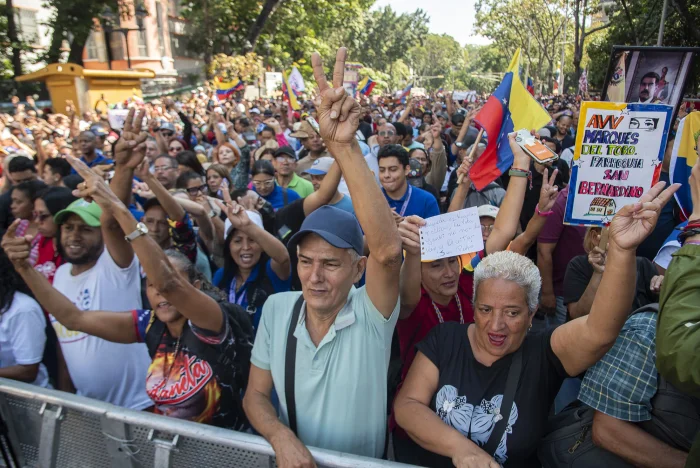
Supporters of ousted Venezuela’s President Nicolas Maduro carry his portrait during a rally outside the National Assembly in Caracas, Venezuela, on January 5, 2026. Photo by Jonathan Lanza/UPI | License Photo
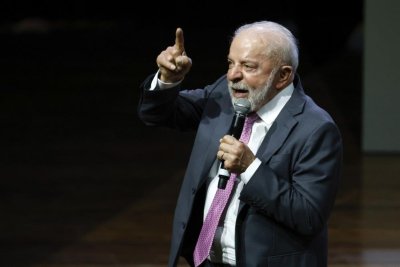
Brazilian President Luiz Inácio Lula da Silva (pictured) and right-wing Sen. Flávio Bolsonaro are each polling 41% in a potential runoff election. Photo by Sebastiao Moreira/EPA
March 12 (UPI) — Brazilian President Luiz Inácio Lula da Silva and right-wing Sen. Flávio Bolsonaro are tied for the first time for a potential runoff after the Oct. 4 presidential election, according to a poll released Wednesday. A runoff would be Oct. 25.
The survey found each candidate with 41% support in a hypothetical second round.
Bolsonaro, a member of the Liberal Party and son of former President Jair Bolsonaro, leads among voters who identify as independent, a shift that could give him an edge.
Among independents, Bolsonaro gained 6 percentage points and would lead Lula 32% to 27% in a runoff scenario. Another 36% said they would not vote and 5% were undecided.
The gap between the two candidates has narrowed steadily, from 10 points in December to seven in January, five in February and zero in March, according to the survey conducted by polling firm Quaest and commissioned by Genial Investimentos.
Similar trends have appeared in other recent polls. A Datafolha survey published Saturday showed Lula with 46% support compared with 43% for Bolsonaro.
Quaest tested first- and second-round scenarios with eight potential candidates. In first-round simulations, Lula leads in two scenarios and is statistically tied with Bolsonaro in five others. Lula’s support ranges between 36% and 39%, while Bolsonaro’s support ranges between 30% and 35%.
Felipe Nunes, Quaest’s director, said Bolsonaro’s gradual rise began after his father publicly named him as a potential candidate in December.
“Flávio has managed to consolidate Bolsonaro’s electorate. He has grown among right-wing voters and improved his performance among independent voters,” Nunes said, according to news website O Globo.
The poll also showed worsening public assessments of the government and the economy.
Both Lula and Bolsonaro face high rejection rates, with 56% of respondents saying they would not vote for Lula and 55% saying the same about Bolsonaro.
“The shift over time is striking. In December, Lula had much greater potential and lower rejection. Now, both have similar levels,” Nunes said.
The survey found 48% of Brazilians believe the economy has worsened over the past 12 months, while 24% say it has improved. In February, negative perceptions stood at 43%.
March 12 (UPI) — Police divers in Australia’s Greater Sunshine Coast region on Thursday recovered the bodies of two missing Chinese backpackers after they were found dead inside their SUV vehicle beneath floodwaters.
The 26-year-old man and 23-year-old woman were found near Kilkivan, 100 miles northwest of Brisbane, after a major search operation by police and the State Emergency Service using helicopters and drones when the pair failed to arrive at their destination.
“Dive squad officers from the state dive unit arrived and retrieved two deceased persons from a car that had been washed off the road at Kilkivan. The formal identification process is still underway but it is believed that the two, as reported, are a 26-year-old male and a 23-year-old female who are international tourists,” said Queensland Police Minister Dan Purdie.
Purdie said their families had been notified and authorities were working with the Chinese Consulate in Brisbane.
Bundaberg Police Chief Inspector Grantley Marcus said the pair were driving from Brisbane to Mundubbera, where they were due to begin jobs picking fruit.
“They didn’t arrive and a friend of theirs from Australia contacted police on Tuesday and reported them as missing.”
Marcus said the families of the deceased were en route to Australia and pledged police would do everything they could to assist them when they arrived.
The couple was named by 7News as Yuchen Guo, 23, from Shandong Province in eastern China, and Qingwei Qiu, 26, from Fujian Province in the southeast of the country.
Extreme rainfall has seen large areas of Queensland hit with severe flooding in recent days, with some river levels still rising. Parts of the state recorded their highest three-day rainfall totals Sunday through Tuesday.
Glen Hartwig, mayor of nearby Gympie, said the deaths of the pair were “an absolute tragedy” and called for more to be done to make tourists aware of the danger from flooding.
“These people have come to Australia to see our beautiful country and tragically they’ve ended up losing their lives. We warn people about biosecurity when they come into the country, but I also think we need to warn them about the dangers of floodwaters,” he said.
“We’re very grateful that they chose to come and see our country and we’re so sorry for their loss and the pain that [family members] are now feeling,” added Hartwig.
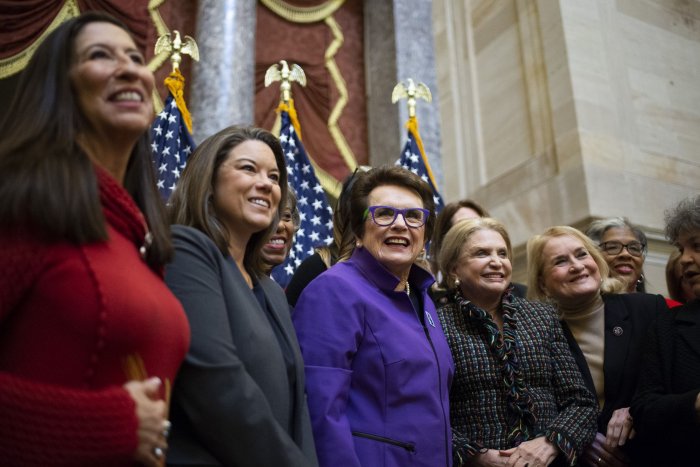
Founder of the Women’s Tennis Association and tennis great Billie Jean King (C) smiles with representatives after speaking during an annual Women’s History Month event in celebration of the 50th anniversary of Title IX in Statuary Hall at the U.S .Capitol in Washington on March 9, 2022. Women’s History Month is celebrated every March. Photo by Bonnie Cash/UPI | License Photo
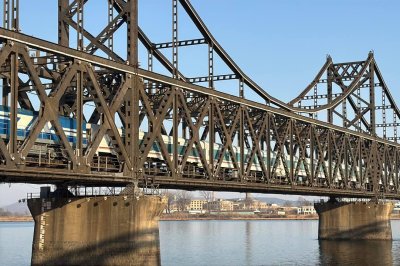
A passenger train linking North Korea and China crosses the Amnok River bridge, also known as the Yalu River bridge, on the border between two countries on Thursday. Photo by Yonhap
North Korea and China resumed an international passenger train service linking their capitals Thursday for the first time in six years, with a train spotted crossing the border bridge between the two countries.
A nine-car train traveling from Pyongyang to Beijing was seen by Yonhap News Agency passing over the Amnok River bridge, also known as the Yalu River bridge, connecting North Korea’s Sinuiju and China’s Dandong, at around 4:23 p.m.
Some train cars had closed curtains, while passengers were visible in others.
According to China’s Xinhua News Agency, a five-car passenger train departed from the Chinese border city of Dandong at 10 a.m. and was scheduled to arrive in Pyongyang at 6:07 p.m.
The Dandong-Pyongyang passenger line will operate daily in both directions, Xinhua said, quoting a Chinese official as saying the service will serve as a “dynamic link strengthening the friendship between these two nations.”
Also on Thursday, North Korea and China were set to resume a rail route connecting their capitals, Pyongyang and Beijing.
The resumption marks the first cross-border passenger train service between the two countries since operations were suspended in 2020 following the outbreak of the COVID-19 pandemic.
Last year, North Korea resumed direct flight and train services between Pyongyang and Moscow, Russia’s capital.
The reopening of the North Korea-China rail services comes as the two countries appear to be aligning more closely as they seek to repair relations frayed by Pyongyang’s military cooperation with Russia, amid speculation that the United States may seek to reengage Pyongyang for talks.
Copyright (c) Yonhap News Agency prohibits its content from being redistributed or reprinted without consent, and forbids the content from being learned and used by artificial intelligence systems.
In this image released Thursday by state media, North Korean leader Kim Jong Un’s daughter Kim Ju Ae fires a pistol during an inspection of a munitions factory with her father. Photo by KCNA/EPA
SEOUL, March 12 (UPI) — North Korean leader Kim Jong Un inspected a munitions factory that produces light arms, state-run media reported Thursday, where he test-fired newly developed pistols alongside his daughter Ju Ae.
Kim visited the factory on Wednesday accompanied by officials from the ruling Workers’ Party, according to the official Korean Central News Agency. The report did not specify the location of the facility.
During the visit, Kim stopped at the factory’s shooting range to test-fire a pistol that he said was “superior in its structural performance, rate of hits, concentration fire and combat utility,” KCNA reported.
Kim “expressed satisfaction over the development of a really excellent pistol,” the report said.
The handgun was approved for production at a meeting of the party’s Central Military Commission last month, according to KCNA. The factory operates under North Korea’s Second Economy Commission, which oversees the country’s weapons production and defense industry.
While Ju Ae was not mentioned in the KCNA report, photographs released by state media showed her accompanying her father during the inspection. The pair wore matching leather jackets and fired pistols at the factory’s indoor range alongside senior officials.
Ju Ae, believed to have been born around 2013, has appeared alongside her father at public events with increasing frequency, including missile launches, military demonstrations and major political gatherings.
South Korea’s National Intelligence Service said last month that Ju Ae appears close to being designated as Kim’s successor.
The factory visit comes in the wake of last month’s Workers’ Party congress, where Kim outlined defense priorities for the next five years. While Pyongyang continues to prioritize the expansion of its nuclear arsenal, the North Korean leader has also emphasized strengthening conventional weapons production.
During the congress, Kim presented newly developed sniper rifles to senior officials and military commanders, with state media releasing images of Ju Ae inspecting and firing one of the weapons.
During Wednesday’s visit, Kim stressed the importance of factories producing pistols and other light arms to strengthen “the combat efficiency of the army, public security forces and militia forces,” KCNA said.
He also announced plans to convene a meeting of the party’s Central Military Commission next month to review plans for modernizing munitions factories and allocating funds to upgrade three key defense production facilities.
The inspection comes as the United States and South Korea conduct their annual Freedom Shield joint military exercise, which Pyongyang routinely condemns as a rehearsal for invasion. Earlier this week, Kim Yo Jong, the powerful sister of the North Korean leader, warned the drills could bring “unimaginably terrible consequences.”
A graphic illustrates survey results showing how South Korean high school students use artificial intelligence for studying. Graphic by Asia Today and translated by UPI
March 11 (Asia Today) — Nearly half of South Korean high school students are using artificial intelligence to help them study, a survey showed, as the government moves to expand AI education in public schools.
According to a survey conducted by education company Jinaksa of 3,525 high school students nationwide, 47.7% said they use AI for studying at least once a week.
The most common usage frequency was once or twice per week at 25.2%. Another 14.4% said they use AI three times or more each week, while 8.1% reported using it almost daily.
Meanwhile, 22.7% said they never use AI for studying, and 29.6% said they use it only once or twice a month.
Students most frequently used AI to ask for explanations of unfamiliar concepts, accounting for 49.7% of responses. Other common uses included help solving problems at 29.0%, summarizing notes or reading passages at 27.9% and requesting feedback on answers at 17.4%.
The findings suggest students are not using AI simply to find correct answers but increasingly treat it as a question-based learning tool that explains concepts and helps guide problem-solving.
Education officials are also expanding artificial intelligence education in public schools.
The Ministry of Education said it has designated 1,141 elementary, middle and high schools nationwide as “AI focus schools” in cooperation with 17 regional education offices.
These schools will integrate AI-related lessons across subjects and expand interdisciplinary programs that combine artificial intelligence with existing curricula. Schools will also strengthen ethics education to encourage responsible use of AI and provide activities such as AI clubs and hands-on learning programs.
The ministry plans to gradually expand the program to 1,500 schools by 2027 and 2,000 schools by 2028.
Woo Yeon-cheol, director of the admissions strategy research institute at Jinaksa, said students are increasingly using AI as a form of “digital tutoring.”
“Students are not simply using AI to complete assignments,” Woo said. “They are using it to ask questions about concepts they do not understand and to check the direction of problem solving.”
He added that the ability to ask questions anytime and receive immediate explanations is helping AI become a new learning support tool.
Woo also noted that even as the government moves to expand AI-based education in schools, students have already been adapting quickly to AI-driven learning environments outside the classroom.
Iran’s sports minister said his nation will not participate in this summer’s World Cup following the attacks on the country by the U.S., one of the tournament’s hosts.
The U.S. bombing campaign against Iran, which began two weeks ago, has triggered a region-wide conflict and killed more than 1,300 Iranians including Ayatollah Ali Khamenei, the country’s supreme leader, according to Iran’s U.N. ambassador Amir Saeid Iravani.
“Considering that this corrupt regime has assassinated our leader, under no circumstances can we participate in the World Cup,” sports minister Ahmad Donyamali said on state television Wednesday.
“Our players do not have security, and fundamentally the conditions for participation do not exist.”
Donyamali’s statement came just hours after FIFA president Gianni Infantino said he had received assurances from President Trump that Iran would be allowed to participate in the tournament, which will be played in the U.S., Mexico and Canada.
“President Trump reiterated that the Iranian team is, of course, welcome to compete in the tournament in the United States,” Infantino wrote in an Instagram post. “We need an event like the FIFA World Cup to bring people together now more than ever, and I sincerely thank the President of the United States for his support.”
Last year President Trump signed an executive order suspending visa issurance to nationals of 19 countries, including Iran, although the State Department can make exceptions for “participants in certain major sporting events” such as the World Cup.
Iran, which has played in the last three World Cups, earned its place in this summer’s tournament by dominating its group in the Asian confederation tournament. However it did not send a representation to a World Cup planning summit last week in Atlanta.
Iran was drawn into Group G for the World Cup and is scheduled to begin play June 15 against New Zealand at SoFi Stadium in Inglewood. Iran’s second group-stage game, against Belgium, is also scheduled for SoFi Stadium before the team finishes the first stage of the tournament against Egypt in Seattle.
According to The Athletic, no country has withdrawn from a World Cup after qualifying since the 1950 tournament in Brazil, when India, Scotland, France and Turkey pulled out, mostly over costs and logistical issues.
Donyamali did not say whether he has begun the formal process or withdrawing Iran from the World Cup but FIFA could be facing a time crunch if it had to replace Iran in the 48-team field. Article 6.7 of FIFA’s 2026 World Cup regulations states: ‘If any Participating Member Association withdraws and/or is excluded from the FIFA World Cup 26, FIFA shall decide on the matter at its sole discretion and take whatever action is deemed necessary. FIFA may decide to replace the Participating Member Association in question with another association.”
The most likely replacement scenario would have Iraq, the top non-qualifier from the Asian confederation, taking Iran’s place. Iraq is scheduled to play the winner of a Suriname-Bolivia playoff in Mexico later this month for a final World Cup berth but with airspace over the Middle East closed because of the war, the Iraqis are unsure how they will get to Mexico. Giving them Iran’s berth would solve that problem but it would create another; who would replace Iraq in the playoff against the Suriname-Bolivia winner? Based on the Asian qualifying tournament, the UAE would be the most likely candidate but it, too, would face travel concerns in getting to Mexico.
FIFA could leave those playoffs untouched and give Iran’s spot to Italy, which is ranked 13th in the world but must win a four-team UEFA playoff later this month to qualify for the World Cup. Basically FIFA can do whatever it wants.
FIFA regulations say that any team that withdraws from the tournament “no later than 30 days before the first match” will be fined and could face other “disciplinary sanctions” including expulsion from subsequent FIFA competitions. This summer’s World Cup kicked off June 11 in Mexico City and Toronto. The U.S. opener is scheduled for June 12 in Inglewood.
Earlier this week six members of Iran’s delegation to the Women’s Asian Cup were granted humanitarian visas and allowed to remain in Australia rather than return to Iran where they feared persecution for not singing the national anthem during the tournament.
March 11 (UPI) — The British Cabinet Office has released files from its investigation into former ambassador to the United States Peter Mandelson on Wednesday as it digs into his ties to deceased sex trafficker Jeffrey Epstein.
The first batch of documents revealed that Mandelson may have been briefed on classified information before being given security clearance when he was appointed as ambassador. They also show that he requested a large government payout when he was terminated last year.
Mandelson was arrested and then released last month in London over suspicion of misconduct in public office. The allegation stems from emails released in the Epstein files in which Mandelson appears to be sharing market-sensitive confidential information with Epstein.
Documents released by the Cabinet Office share some details after his appointment as ambassador in December 2024. Within days of his being appointed, the Foreign, Commonwealth and Development Office offered to brief Mandelson on highly classified information while he was still being vetted.
Emails about the briefing were shared Dec. 23, 2024, about three days after the announcement of Mandelson’s appointment. It was not until Jan. 30, 2025, that Mandelson received an email confirming that he had cleared the vetting process.
It was in this email that he received a formal offer of employment.
When Mandelson was terminated from his position in September, he requested to be paid the full amount on his contract — more than 500,000 euros or $578,625. Instead, he was paid 75,000 euros or $86,793.75 to terminate the contract.
“As the documents show regarding his severance payment, Peter Mandelson initially requested a sum that was substantially larger than the final payment, not just two or even three times, but more than six times the final amount,” said Darren Jones, chief secretary to the prime minister at the Cabinet office.
“Despite the fact that he was withdrawn from Washington because he had lost the confidence of the prime minister, the government obviously found that to be inappropriate and unacceptable.”
Attacks on multiple commercial ships in the waters around Iran on Wednesday increased global energy concerns, pushed nations to unleash strategic oil reserves and sparked fresh critiques of the Trump administration’s readiness for a war it started.
As Trump administration and U.S. military officials continued to claim increasing success and advantage in the conflict — and authorities downplayed a reported threat of drone attacks on California — leaders around the world scrambled to respond to the latest attacks and the International Energy Agency’s call for the largest ever release of strategic oil reserves by its members to help stem energy price spikes.
President Trump also faced renewed questions about a deadly strike on an Iranian elementary school at the start of the war, after the New York Times reported Wednesday that a military investigation had determined the U.S. was responsible.
“I don’t know about it,” Trump said when asked about the report.
In an address Wednesday morning, IEA Executive Director Fatih Birol said energy shipments through the Strait of Hormuz had “all but stopped” amid the conflict, driving massive global competition for oil and gas in wealthier countries and fuel rationing in poorer nations.
He said the IEA’s 32 member nations have brought a “sense of urgency and solidarity” to recent discussions on the matter, and had unanimously agreed to “launch the largest ever release of emergency oil stocks in our agency’s history,” making 400 million barrels of oil available.
However, he said the most needed change is the “resumption of traffic through the Strait of Hormuz.”
A vendor pumps petrol from Iranian fuel oil tankers for resale near the Bashmakh border crossing between Iraq and Iran.
(Ozan Kose / AFP/Getty Images)
Several countries, including Germany, Austria and Japan, had already confirmed their plans to release reserves.
The White House did not immediately respond to a request for comment on any U.S. plans to release its strategic reserves, or how much would be released. The U.S. is an IEA member.
Trump told reporters Wednesday that the U.S. has hit Iran “harder than virtually any country in history has been hit,” including by wiping out its naval fleet and eliminating other vessels capable of laying mines, and that he believes oil companies should resume shipments through the strait despite the recent attacks.
U.S. Interior Secretary Doug Burgum backed the idea of releasing oil reserves in a Fox News interview.
“Certainly these are the kinds of moments that these reserves are used for, because what we have here is not a shortage of energy in the world; we’ve got a transit problem, which is temporary,” Burgum said. “When you have a temporary transit problem that we’re resolving militarily and diplomatically — which we can resolve and will resolve — this is the perfect time to think about releasing some of those, to take some pressure off of the global price.”
Burgum said that while Iran is “holding the entire world hostage economically by threatening to close the strait,” Trump has made the consequences of such actions “very clear,” and “there’s a lot of options between ourselves and our allies in the region, including our Arab friends in the region, to make sure that those straits keep open and that energy keeps flowing for the global economy.”
The IEA did not provide details as to the release of the 400 million barrels, part of a broader reserve of some 1.2 billion barrels held by its members. It said the reserves “will be made available to the market over a time frame that is appropriate to the national circumstances of each Member country and will be supplemented by additional emergency measures by some countries.”
The agency said an average of 20 million barrels of crude oil and oil products transited the strait per day in 2025, and that options for bypassing the strait are “limited.”
While some tankers believed linked to Iran were still getting through the Strait of Hormuz, which under normal circumstances carries about 20% of the world’s oil and natural gas, Iranian officials threatened attacks on other vessels — saying they would not allow “even a single liter of oil” tied to the U.S., Israel or their allies through the channel, which connects to the Persian Gulf.
Trump has repeatedly claimed that the U.S. and its powerful Navy would support commercial vessels and ensure the strait remains open to oil shipments, but that has not been the case.
Tankers wait off the Mediterranean coast of southern France on Wednesday.
(Thibaud Moritz / AFP/Getty Images)
The United Kingdom Maritime Trade Operations center, run by the British military, reported at least three ships struck in the region Wednesday — including ships off the United Arab Emirates and a cargo ship that was struck by a projectile in the strait just north of Oman, setting it ablaze.
The Trump administration and the U.S. military, meanwhile, have been pushing out messaging about wiping out Iran’s ability to plant mines in the strait — posting dramatic videos of major strikes on tiny boats on small docks.
Adm. Brad Cooper, the leader of U.S. Central Command, said in a video posted to X on Wednesday morning that “in short, U.S. forces continue delivering devastating combat power against the Iranian regime.”
“I’ve said this before, but it bears repeating: U.S. combat power is building, Iranian combat power is declining,” he said.
The U.S. has struck more than 60 Iranian ships, and just “took out the last of four Soleimani-class warships,” he said. “That’s an entire class of Iranian ships now out of the fight.”
Cooper said Iranian ballistic missile and drone attacks have “dropped drastically” since the start of the war, though “it’s worth pointing out that Iranian forces continue to target innocent civilians in gulf countries, while hiding behind their own people as they launch attacks from highly populated cities in Iran.”
He also addressed the attacks on commercial shipping in the region directly, saying that “for years, the Iranian regime has threatened commercial shipping and U.S. forces in international waters,” and that the U.S. military’s “mission is to end their ability to project power and harass shipping in the Strait of Hormuz.”
Other U.S. leaders called the U.S. war plan — and specifically its approach to protecting the Strait of Hormuz — into question.
In a series of posts to X late Tuesday, which he said followed a two-hour classified briefing on the war, Sen. Chris Murphy (D-Conn.) slammed the administration’s plans as “incoherent and incomplete.”
Murphy wrote that the administration’s goals for the war seemed to be focused primarily on “destroying lots of missiles and boats and drone factories,” and without a clear plan for what to do when Iran — still led by “a hardline regime” — begins rebuilding that infrastructure, other than to continue bombing them. “Which is, of course, endless war,” he wrote.
Murphy also specifically criticized the administration’s plan for the Strait of Hormuz — which he said simply doesn’t exist.
“And on the Strait of Hormuz, they had NO PLAN,” he wrote. “I can’t go into more detail about how Iran gums up the Strait, but suffice it [to] say, right now, they don’t know how to get it safely back open. Which is unforgiveable, because this part of the disaster was 100% foreseeable.”
Ships in the strait remained under threat of various forms of attack Wednesday, as did much of the region as the war raged on.
There was an attack on a U.S. Embassy operations center at Baghdad’s airport, which officials attributed to a drone launched by Iranian proxies based in Iraq. No casualties were reported.
Lebanon’s Health Ministry reported the death toll there — from fighting between Israel and Iranian-backed Hezbollah fighters — had risen to 634 since last week, including 91 children. Another 1,500 people had been wounded, the ministry said.
Iranian authorities have said U.S. and Israeli attacks have killed 1,255 people since Feb. 28. That includes many Iranian leaders, including then-Supreme Leader Ayatollah Ali Khamenei. U.S. officials have said Iranian attacks in the region have killed seven U.S. service members, with another 140 wounded.
CBS News reported Wednesday that dozens of those injuries were sustained by service members in the March 1 Iranian drone attack on a tactical operations center in Kuwait — which is also where six of the seven deaths occurred.
The outlet reported that the attack was more severe than the Trump administration has revealed, with more than 30 military members still in hospitals Tuesday with a range of battle injuries including “brain trauma, shrapnel wounds and burns.”
Threats extended beyond the Middle East, too — including to California, where law enforcement agencies were warned by federal authorities that Iran “allegedly aspired to conduct a surprise attack” on California using drones launched from a vessel off the U.S. coast.
However, sources told The Times that advisory was cautionary and not backed by credible intelligence.
Times staff writer Gavin J. Quinton, in Washington, D.C., contributed to this report.
The executive director of the International Energy Agency Fatih Birol said he is glad to see IEA’s 32 member countries unanimously agree to release 400 million barrels of oil from its emergency stockpile.. File Photo by Ole Berg-Rusten/EPA-EFE
March 11 (UPI) — The International Energy Agency agreed to take emergency action and release 400 million barrels of oil into the market, the coalition announced Wednesday.
The 32 members of the IEA unanimously agreed to tap into their emergency reserves in response to the strain on the oil market from the war in Iran.
“The oil market challenges we are facing are unprecedented in scale, therefore I am very glad that IEA member countries have responded with an emergency collective action of unprecedented size,” Fatih Birol, IEA executive director, said in a statement.
“Oil markets are global so the response to major disruptions needs to be global too. Energy security is the founding mandate of the IEA, and I am pleased that IEA members are showing strong solidarity in taking decisive action together.”
The IEA said oil will be released to the market “over a timeframe that is appropriate to the national circumstances of each member country.”
The release of emergency reserves is the sixth in the coalition’s history since being founded in 1974.
Japanese Prime Minister Sanae Takaichi said Wednesday that Japan plans to begin releasing oil from its stockpile possibly next week. Japan is an IEA member.
Oil prices soared after the United States and Israel launched military operations against Iran. Iran has threatened vessels traveling through the Strait of Hormuz, a critical route in the oil trade, in response.
About 25% of the world’s seaborne oil is transported through the Strait of Hormuz.
The IEA has an emergency stockpile of more than 1.2 billion barrels of oil, There are 600 million additional barrels obligated by member governments.
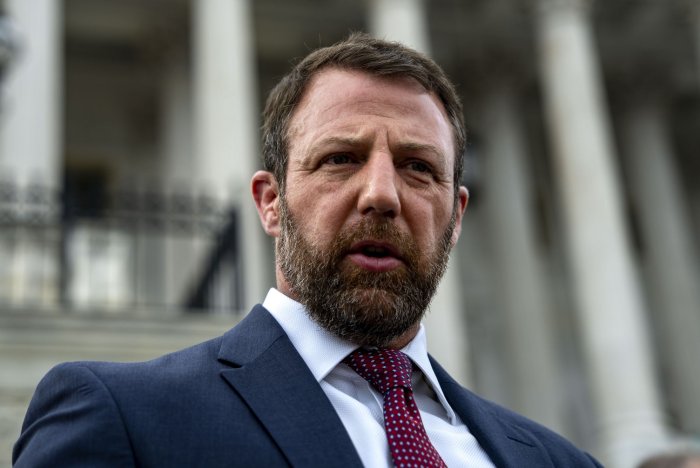
Sen. Markwayne Mullin, R-Okla., speaks to the press outside the U.S. Capitol on Thursday. Earlier today, President Donald Trump announced Mullin would replace Kristi Noem as Secretary of the Department of Homeland Security. Photo by Bonnie Cash/UPI | License Photo
Police in western Switzerland are investigating the deaths of six people killed in a fire that gutted a bus in the town of Kerzers, near Bern. Photo courtesy Fribourg Cantonal Police/EPA
March 11 (UPI) — At least six people were confirmed killed and several were injured after a fire tore through a bus in a town in western Switzerland.
At least three people were taken to a hospital after the incident, which took place at around 6.25 p.m. on Tuesday in Kerzers, around 12 miles west of Bern, police said.
An investigation into the cause was underway, including looking into reports the blaze was started by a passenger dousing himself in gasoline and setting himself on fire, although police and authorities in the canton of Fribourg said they did not believe it was an attack or terrorism.
“At the moment, no element highlights” a terrorist act, Fribourg Police communications head Martial Pugin told Swiss breakfast radio on Wednesday.
Pugin’s comments were echoed by Fribourg State Security and Justice Councillor Romain Collaud who also ruled out a technical fault with the bus, which was operated by PostBus Switzerland.
“It was a diesel bus, not an electric one. A bus catching fire like that surprises everyone. We’re still somewhat in shock. I think it’s important to reassure the public. The public is safe. The investigations and inquiries are ongoing,” Collaud said.
However, he warned that the process of identifying those killed could take several days.
PostAuto, of which PostBus is a subsidiary, said in a social media post that it was deeply saddened by the incident, saying it was a “terrible tragedy,” and vowing to do everything possible to aid in the police investigation.
“All the employees of PostAuto and the post office are shocked and affected like I am,” said CEO Stefan Regli.
“On behalf of the Board of Directors and the entire group management, I express our deep condolences to all of them. Our thoughts are with the victims and their families. The Fribourg Cantonal Police, under the direction of the Fribourg prosecutor, is responsible for the investigation of the fire. PostAuto is in close contact with the authorities and is doing everything in its power to solve this terrible incident.”
Swiss President Guy Parmelin said it pained and upset him that fire had claimed the lives of yet more people in Switzerland.
“It distresses and saddens me that once again people in Switzerland have lost their lives in a severe fire. The circumstances are being investigated. To the relatives of the deceased from Kerzers, I extend my condolences. And I think of the injured and the rescue workers,” he wrote on X.
Tuesday’s incident comes less than six weeks after 41 people were killed in a blaze that broke out in the early hours of New Year’s Day at a bar in the Swiss ski resort town of Crans Montana.
Founder of the Women’s Tennis Association and tennis great Billie Jean King (C) smiles with representatives after speaking during an annual Women’s History Month event in celebration of the 50th anniversary of Title IX in Statuary Hall at the U.S .Capitol in Washington on March 9, 2022. Women’s History Month is celebrated every March. Photo by Bonnie Cash/UPI | License Photo
North Korean leader Kim Jong Un (R) oversaw the test-fire of strategic cruise missiles from the naval destroyer Choe Hyon, state-run media reported Wednesday. In the photo, Kim watches the launch via video feed with his daughter Kim Ju Ae. Photo by KCNA/EPA
SEOUL, March 11 (UPI) — North Korean leader Kim Jong Un oversaw the test-firing of strategic cruise missiles from a naval destroyer, state media reported Wednesday, as the United States and South Korea began a large-scale joint military exercise this week.
The North’s Choe Hyon destroyer launched the missiles at island targets in the Yellow Sea on Tuesday, the official Korean Central News Agency said, with Kim watching via a video feed. The missiles flew for roughly two hours and fifty minutes before striking their targets, KCNA said.
Pyongyang described the weapons as “strategic,” a term it typically uses for systems capable of carrying nuclear warheads.
The launches came days after North Korea conducted a similar cruise missile test from the destroyer ahead of its commissioning.
The test also coincided with the start of the allies’ annual Freedom Shield exercise on Monday, an 11-day program of command-post simulations and field training drills.
North Korea has long condemned the joint exercises as rehearsals for invasion. On Tuesday, Kim Yo Jong, the powerful sister of Kim Jong Un, warned that the drills could destabilize the region and lead to “unimaginably terrible consequences.”
After observing the launch, Kim praised the “superiority of the destroyer’s integrated combat system,” according to KCNA.
“The components of our war deterrent are now being included in the very sophisticated operational system … and the country’s nuclear forces have made a switch to the phase of multifaceted operation,” Kim said.
Images released by state media showed Kim watching the test alongside his daughter Ju Ae, who has appeared frequently with her father at major events. South Korea’s spy agency said last month that Ju Ae, believed to have been born in 2013, appears close to being designated as Kim’s successor.
Pyongyang launched the Choe Hyon, its first 5,000-ton destroyer, last April as Kim called for strengthening the country’s naval capabilities. North Korean reports say the vessel carries a range of weapons, including nuclear-capable cruise missiles and tactical ballistic missiles.
Photos released by state media show the ship’s missile and radar systems resembling those found on Russian vessels, prompting speculation Pyongyang may have received technical assistance from Moscow.
North Korea has deployed troops, artillery and weapons to support Russia’s war in Ukraine and is believed to be receiving financial support and advanced military technology in return.
A second destroyer, the Kang Kon, suffered an accident during its launch ceremony last year that left it listing on its side before it was repaired and relaunched in June.
Kim has ordered another 5,000-ton destroyer completed by Oct. 10, the anniversary of the founding of the ruling Workers’ Party of Korea.
Frustrated players say they were left in the dark for days over their travel while England flew out within two days.
Published On 11 Mar 202611 Mar 2026
Share
Cricket’s governing body has rejected suggestions of unequal treatment after the West Indies and South Africa squads were stranded in India for more than a week following their exit from the T20 World Cup, while England flew out in less than two days.
The International Cricket Council (ICC) has been accused of giving preferential treatment to one team over the other two amid the travel chaos resulting from airspace closures and rerouted flights because of the war in the Middle East.
Recommended Stories
list of 3 itemsend of list
However, the ICC said on Wednesday it “rejects any suggestion that these decisions have been driven by anything other than safety, feasibility and welfare”.
“We understand that players, coaches, support staff and their families who have completed their ICC Men’s T20 World Cup 2026 campaigns are anxious to return home,” it said in a statement.
Cricket West Indies said on Tuesday its squad had waited nine days for a charter flight that was “repeatedly delayed”, calling the uncertainty “increasingly distressing”.
West Indies players were leaving India on commercial flights in batches 10 days after their scheduled departure, which led to frustrated players airing their thoughts in social media posts.
The ICC said nine West Indies players and staff members were already travelling to the Caribbean, with the remaining 16 booked on flights departing India within 24 hours.
Indian media reported that a charter flight for the West Indies and South Africa Twenty20 World Cup teams scheduled to fly to Johannesburg before continuing on to Antigua was cancelled earlier on Tuesday.
Meanwhile, South Africa, who have been stranded in India since March 4, will begin to fly home on Wednesday, with the entire contingent departing in the next 36 hours, the ICC said.
England flew home less than two days after being beaten in the semifinals, prompting criticism of the ICC from the South African and West Indian camps.
Darren Sammy, head coach of West Indies, began venting his frustration on social media on the fifth day since his team’s exit from the T20 World Cup.
“I just wanna go home,” he wrote on X, followed by another tweet requesting an update after being left in the dark for five days.
Three days after South Africa were knocked out, in the first semifinal, their players Quinton De Kock and David Miller said the team had heard nothing from the ICC regarding their departure while England, who were eliminated a day later in the second semifinal had already left.
“England are leaving before us somehow?! Strange how different teams have more pull than others,” De Kock wrote in an Instagram story.
Miller, commenting on a post announcing England’s departure, said: “It doesn’t take the ICC long to organise England charter. WI have been waiting for 7 days for a charter and SA coming on 4 days now. And yet we still wait.”
The ICC said the criticism was “incorrect” and that there was no comparison between arrangements for South Africa and the West Indies and those made for England, “which arose from separate circumstances, routing options and different travel conditions”.
“Throughout this period, the ICC’s overriding priority has been the safety and welfare of everyone affected,” the sport’s global governing body said.
“We will not move people until we are satisfied that the travel solution in place is safe, and that commitment will not change.”
HOUSTON — Kyle Teel, Sam Antonacci and Jac Caglianone homered as Italy built a big lead and held on to stun the United States 8-6 Tuesday night in the World Baseball Classic.
The U.S. is done with pool play at Houston’s Daikin Park and needs the Italians to beat Mexico Wednesday night to be guaranteed a spot in the quarterfinals. If Mexico beats Italy, the three teams will be knotted at 3-1 and the winners will be determined by a tiebreaker, with the team that allowed the most runs eliminated.
Italy starter Michael Lorenzen allowed two hits in 4 2/3 scoreless innings to keep the Americans off balance.
Pete Crow-Armstrong homered twice and drove in four runs, and Gunnar Henderson added a solo shot for the U.S., but the rally came up short when Greg Weissert struck out Aaron Judge with a runner on to end it.
Crow-Armstrong’s second homer, a shot to the second deck in right field, cut the lead to 8-6 with one out in the ninth. Bobby Witt Jr. singled and Henderson struck out before Judge whiffed to start the Italian celebration.
The U.S. was down by 8-1 with two out in the seventh when Crow-Armstrong hit a majestic three-run homer to right field.
Kyle Schwarber and Will Smith hit back-to-back singles with two out in the eighth before Roman Anthony’s RBI single on a line drive to left field. But Ron Marinaccio retired pinch-hitter Bryce Harper on a fly ball to end the inning.
Teel’s home run to the Crawford boxes in left field gave Italy an early lead with two out in the third. McLean then plunked Caglianone before Antonacci’s homer to the bullpen in right-center made it 3-0.
Caglianone’s two-run shot off Ryan Yarbrough pushed the lead to 5-0 with no outs in the fourth.
The Italians added a run on an error, another on a sacrifice fly and a third on a wild pitch by Brad Keller to push the lead to 8-0 in a sloppy sixth by the U.S.
The U.S. finally got on the board with Henderson’s homer in the sixth.
South Korea is in discussions with the IEA over the agency’s proposal to release strategic oil reserves, Seoul officials said Wednesday. This photo, taken Mar. 10, shows a gas station in Seoul. Photo by Yonhap
The South Korean government is “closely involved” in discussions with the International Energy Agency (IEA) over the agency’s reported proposal to release strategic oil reserves to help stabilize soaring oil prices, Seoul officials said Wednesday.
Officials at the Ministry of Trade, Industry and Resources confirmed Seoul’s participation in the reported IEA discussions to Yonhap News Agency, following media reports saying that the IEA has proposed the largest-ever release of oil reserves to its 32 member countries, including South Korea.
According to the report by the Wall Street Journal, IEA members are expected to soon decide on the proposal in an extraordinary meeting.
“South Korea is closely involved in discussions over a coordinated release of strategic oil reserves by the IEA,” a ministry official said.
The country currently holds around 1.9 billion barrels of oil reserves, which is enough to last more than 200 days.
“We have yet to decide how much oil will be released from our reserves with the IEA’s decision,” a ministry official said.
The Seoul government has released its strategic oil reserves on five occasions since 1990, all through international coordination.
The occasions included the 1991 Gulf War, the 2011 Libya crisis and the outbreak of the Russia-Ukraine War in 2022.
Copyright (c) Yonhap News Agency prohibits its content from being redistributed or reprinted without consent, and forbids the content from being learned and used by artificial intelligence systems.