



workers

Swedish workers trial ‘friendship hour’ to combat loneliness

Maddy SavageBusiness reporter, Kalmar, Sweden

BBC Pharmacy worker Yasmine LindbergBBC

Pharmacy worker Yasmine Lindberg admits that she had been struggling with loneliness

Staff at a major Swedish pharmacy chain are being given paid time off to spend with friends, as Sweden’s government calls on businesses to help play a role in tackling loneliness.

Yasmine Lindberg, 45, is one of 11 participants taking part in the pilot “friendcare” scheme for the pharmacy group Apotek Hjärtat.

She works shifts at the company’s outlet at a retail park in Kalmar, a small seaside city in southern Sweden.

“I’m really tired when I go home. I don’t have time or energy to meet my friends,” she explains, before restocking a shelf of paracetamol.

Yasmine spends a lot of her free time with her teenage children who live with her every other week. But she admits feeling “quite lonely” since separating from her partner four years ago, which led to fewer social invitations with couples in their network.

Now, thanks to the Apotek Hjärtat pilot scheme, which started in April, she’s granted 15 minutes a week, or an hour a month during working hours to focus on strengthening her friendships or making new connections.

She can use this allotted friendcare time to chat on the phone, make plans over text, or meet up with someone in person.

“I wanted to make it better for myself… like, kick myself in the back to do stuff,” says Yasmine.

“I feel happier. You can’t live through the internet like most people do these days.”

Like all participants in the pilot project, she has been given 1,000 kronor ($100; £80) by Apotek Hjärtat to help pay for friendship-based activities during the year-long trial.

The volunteers have also received online training in how to recognise and tackle loneliness, which the pharmacy chain has made available for all its 4,000 employees across Sweden.

Monica Magnusson, Apotek Hjärtat’s CEO, says the inspiration for the company’s friendcare project comes partly from a previous collaboration with the mental health charity Mind. She says that helped demonstrate how short meaningful conversations between pharmacists and customers could help the latter group feel less isolated.

The company wanted to test if providing a short amount of ring-fenced friendship time for its employees could also impact their wellbeing.

Volunteers could also sign up if they weren’t lonely, but wanted to spend more time with isolated people in their network.

“We try and see what the effects are from having the opportunity to spend a bit of time every week on safeguarding your relationships,” explains Ms Magnusson.

The project’s title, friendcare or “vänvård” in Swedish is also a wordplay on “friskvård”, a benefit already offered by many Swedish businesses, who give employees a tax-free annual wellness allowance to spend on fitness activities or massages. Some Swedish companies also offer staff a weekly wellness hour called “friskvårdstimme”.

“This is a reflection on that, but targeting loneliness and relationships instead,” explains Ms Magnusson.

Monica Magnusson, boss of Swedish pharmacy chain Apotek Hjärtat, smiles at the camera

Monica Magnusson says it seems the scheme is having a positive impact on participants

Apotek Hjärtat’s project comes as Sweden’s right-wing coalition government is putting the spotlight on loneliness. In July, Sweden’s Public Health Agency released Sweden’s first national strategy aimed at minimising loneliness, commissioned by the government.

A core part of the strategy is increased collaboration between the business community, municipalities, researchers and civil society. Health Minister Jakob Forssmed has described loneliness as major public health concern, citing global research linking the problem to an increased risk of illnesses including coronary heart disease and strokes, and a greater likelihood of early mortality.

Businesses should be worried about it, he suggests, since their employees and customers are at risk, and public finances are impacted by healthcare and sick leave costs linked to loneliness.

“We need to… have a greater awareness about this, that this is something that really affects health, and affects [the] economy as well,” says Forssmed.

A national loneliness epidemic? Research for the EU suggests around 14% of Sweden’s population report feeling lonely some or all of the time, slightly higher than the EU average.

A separate study for the state’s number-crunching agency Statistics Sweden in 2024 found that 8% of adults in Sweden don’t have a single close friend.

Daniel Ek, a Swedish psychologist and co-author of The Power of Friendship, a handbook on how to develop deeper relationships, argues that in Sweden the country’s cold, dark winters can discourage people from socialising, alongside cultural factors.

“The Swedish mentality is like – you shouldn’t disturb others. We value personal space a lot, and we have a hard time breaking the ice,” he says. Sweden’s housing may also play a role, Ek suggests.

More than 40% of homes are occupied by just one person, and a July’s report by Sweden’s Public Health Agency indicated there are higher levels of loneliness amongst this group.

Yasmine Lindberg spending a friendship hour with her friend Helena Jansson

Yasmine Lindberg has been given a bit more time to connect with friends

At Apotek Hjärtat’s headquarters in Stockholm, Ms Magnusson says it is too soon to decide whether the friendcare project is rolled out more widely, but the results of self-assessment surveys so far indicate higher levels of life satisfaction amongst participants on the friendcare scheme, compared to before it started.

Forssmed, the Health Minister, is monitoring the pharmacy chain’s efforts.

“I think this is very interesting and I’m following what they’re doing,” he says. “[But] I’m not going to give you any promises that the government is going to scale this up or give a tax deduction or something like that.”

Apotek Hjärtat is also part of a business network called ‘Together against involuntary loneliness’, initiated by Forssmed in 2023.

It includes around 20 major Nordic brands, such as Ikea, Strawberry, a hospitality chain, and HSB, Sweden’s biggest federation of cooperative housing, who meet to share their experiences and strategies for tackling loneliness.

Ms Magnusson says there has already been “a lot of interest” in the friendcare project from the other businesses in the network. Representatives from the other firms have even participated in the pharmacy chain’s online loneliness training.

“It’s quite a different approach to working together,” says Ms Magnusson, “collaborating as companies in an area where you just let competition go, and instead try and figure out ‘how can we tackle this common obstacle that we have?’.”

AFP via Getty Images Swedish Health Minister Jakob ForssmedAFP via Getty Images

Swedish Health Minister Jakob Forssmed says he is keeping a close eye on the scheme

Earlier this month, a separate project launched in Piteå in northern Sweden, with 20 businesses offering wellness grants for employees to attend group cultural experiences, such as concerts and plays, in an effort to boost wellbeing and improve social inclusion.

Mr Ek, the psychologist, agrees these sorts of initiatives can have a positive impact in helping “lower the threshold” to increased social interaction, which in turn, can pave the way for deeper friendships and reduced levels of loneliness.

But he is calling for more research and reflection on some of the potential structural issues that may also be impacting loneliness in the Nordic nation.

“What is happening in society that makes us have to have those lower thresholds for meeting and connecting? I think that’s an important thing to look at,” he says. Mr Ek points to Sweden’s high unemployment rate (8.7%), rising income inequality, and young Swedes spending more time on digital devices than the average across the 27-member countries of the Organisation for Economic Co-operation and Development.

“Income differences matter. Availability to events and places matter. How we build cities matters,” says Mr Ek. “So those structures are important to look at to work out the plan for the future.”

Source link

Stunned office workers discover colleague is former child star with role in huge festive film

A GROUP of office workers were left shocked when they learned their colleague is a former child star, and had a role in an iconic festive film.

The actor now keeps a low profile working as a Logistics Manager for the upcoming 2026 Commonwealth Games, which will take place in Glasgow. But do you recognise him?

Office workers had the highlight of their week when they realised their colleague is a former child starCredit: tiktok@commonwealthsport
Joe Lane was left mortified when his co-workers realised he was in the Nativity! movie back in 2009Credit: tiktok@commonwealthsport
Joe portrayed Edward, one of the key characters in the hit film NativityCredit: Lionsgate

Joe Lane appeared in 2009 hit Nativity!, which featured Martin Freeman, Jason Watkins and Ashley Jensen.

He portrayed schoolboy Edward in the film, which is centred around a heartbroken primary school teacher’s journey to make his class’s nativity play reach Hollywood, and win his ex-girlfriend back in the process.

In a TikTok shared by Joe’s colleagues, the former actor was left red-faced when they figured out his famous past.

The clip showed Joe, dressed in a Christmas jumper and a festive headband, as he is shaken by his colleagues.

soap slip

Emmerdale in huge blunder as Corriedale trailer ‘leaks’ character left for dead


NAME ROW

Simon Cowell’s December 10 facing new legal battle from Brit rock band

It then cuts to clips of him in the movie, before his colleagues recreate a hilarious moment by his character Edward.

Joe’s starring moment in the film saw him take to the microphone during the final Nativity performance and impersonate fart sounds with his armpit.

The former child star had his head in his hands when his co-workers cornered him at his desk and re-enacted the funny moment in the TikTok video.

“When you find out your colleague was in the nativity films,” read the video, with the caption adding: “The most exciting office development this week”.

The film was cast by producers holding open calls for local kids in Coventry, with the aim to use non-professional actors for an authentic feel.

After appearing in the first movie, Joe appears to have steered away from continuing an acting career.

He went on to become a semi-professional rugby player, before moving into logistics for sporting events.

Coventry-born Joe is now living in Glasgow after spending time in Australia and London.

It appears he has been keen to keep his famous past under wraps in the workplace.

One TikTok user commented on the video to reveal that they had previously worked with Joe, and had no clue of the connection.

“I worked with Joe at Coventry Rfc and unless I was out of the loop he kept this very well hidden!” they said.

Another commenter joked “So he didn’t become shrek??”, referencing the scene in Nativity! where character Mr. Poppy told Edward, “You could be Shrek”.

Joe as Edward, centre, in the Christmas smashCredit: Lionsgate
Joe was less than impressed when his colleagues reenacted his famous screen momentCredit: tiktok@commonwealthsport

A number of the children who appeared in Nativity! returned to their normal lives following the movie, and despite its massive success, have gone into regular jobs.

Cadi Mullane, who played Crystal – one of the main children in the film – previously detailed what filming was like in a TikTok video.

She said: “I was part of an agency called Stagecoach, they were looking for kids who were really chatty, who could dance a little bit and sing a little bit. Apparently that was me.

“There was about seven auditions. But I’m from Wales so I had to keep travelling up to London which was a bit annoying, but it was OK because I really wanted to be in a film.

“They looked at how well we could sing and how well we got on with the other kids, cause that was important, obviously.”

Cadi went on to recall how the movie filmed throughout the summer, with no scripts for the children.

She said: “It was filmed in Coventry but obviously I’m not from Coventry so we all stayed in a hotel together. It was like The Suite Life Of Zach and Cody, honestly.

“There was no scripts. Everything was improvised, except from some bits. We basically just spoke loads of rubbish, and then we were asked to say it again on camera.”

The film is centred around a Coventry school’s nativity show and their feat to take it to HollywoodCredit: Alamy
The film was fronted by award winning actor Martin FreemanCredit: Alamy
A number of local children took part in the film, with producers hiring non-professionals for an “authentic feel”Credit: Alamy

Source link

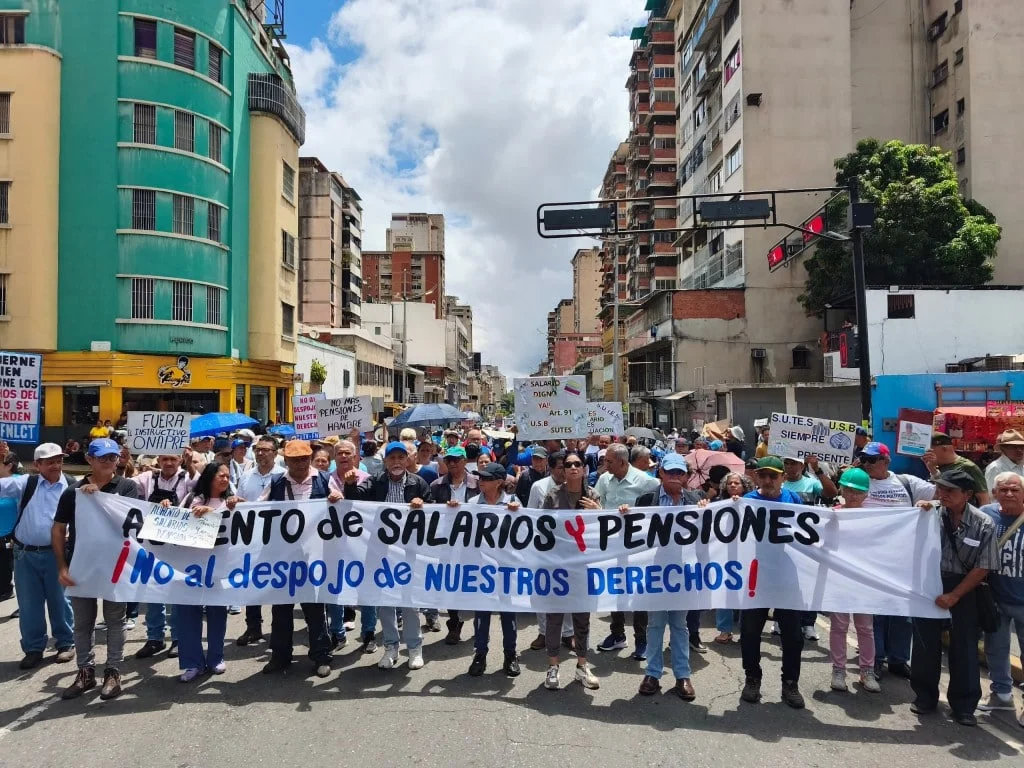
Public Workers Targeted for Social Security

The idea of requiring new state and local workers to participate in the federal Social Security program, a provision of the new House budget offer, is likely to ignite strong opposition in California, Rep. Bobbi Fiedler (R-Northridge) said Tuesday.

Only a third of the state’s 1.5 million public employees are covered by Social Security and those who are see their pensions reduced by up to $133 a month, according to state figures provided to Fiedler.

Public employees in California already are pressing a legal challenge to a federal law saying they cannot pull out of the system.

The idea of including newly hired state and local workers in Social Security is drawing increasing support on Capitol Hill as Congress looks for new ways to cut the deficit. Already endorsed in the Senate by Majority Leader Bob Dole (R-Kan.), it would reduce the deficit by $200 million next year.

Source link

Gaza’s tech workers code from rubble as Israel’s war destroys digital life | Israel-Palestine conflict News

In a territory where 81 percent of buildings lie damaged or destroyed, a small community of young Palestinians is fighting to preserve what remains of Gaza’s digital world.

Coders, repair technicians and freelance workers are labouring under impossible conditions to keep the besieged enclave connected to the outside world.

Recommended Stories

list of 3 itemsend of list

Against all odds, Gaza’s youths continue to adapt. They work offline, code in notebooks, store solar power whenever the sun is out, and wait for rare moments of connectivity to send their work to clients around the world.

In a war that has taken nearly everything, digital skills have become a form of survival – and resilience.

Many now also rely on online work to make a living. But even that fragile lifeline is now hanging by a thread after more than two years of Israel’s genocidal war.

Gaza coders
Palestinians work on laptops and mobile devices in Gaza despite widespread destruction of telecommunications infrastructure [Al Jazeera]

According to the Palestinian Central Bureau of Statistics, Israeli forces have “deliberately and systematically destroyed” the telecommunications infrastructure.

“We just always look for another way to get connected, always find another way,” said Shaima Abu Al Atta, a coder working from a displacement camp. “This is what actually gave us purpose because if we didn’t do this, we would just die surviving and not doing anything. We would die internally.”

Before the war erupted in October 2023, Gaza had a modest but vibrant tech scene. Innovation hubs hosted coding bootcamps, and hundreds of freelancers worked remotely for international clients. Much of that ecosystem now lies in ruins.

Shareef Naim, an engineer who led a technology hub, described what was lost. His building housed more than 12 programmers with contracts for companies outside Gaza, he said. “The team was very active,” Naim told Al Jazeera.

Today, the structure is destroyed, though some team members are still trying to work from tents and emergency shelters.

Gaza coders
Technicians in Gaza work to repair telecommunications equipment amid severe shortages of spare parts and electricity [Al Jazeera]

Computer technician A’aed Shamaly says, “The main challenge is electricity. Today, electricity is not available all the time, and if it is available, it is unstable,  and there will be a lot of cuts. Prices are also high.”

Electricity, when available at all, is unstable and prohibitively expensive, $12 per kilowatt compared with $1.50 for 10 kilowatts before the war, he said. “There are no spare parts,” he added, so technicians must scavenge components from broken equipment pulled from bombed buildings.

The scale of destruction is staggering. According to the United Nations Satellite Centre (UNOSAT), approximately 198,273 structures across Gaza have been damaged, with 123,464 completely destroyed. The telecommunications sector has been particularly hard hit.

Data from the Palestinian Central Bureau of Statistics reveals that 64 percent of mobile phone towers were out of service as of early April 2025. In Rafah, coverage has collapsed to just 27 percent, down from near-universal access before the war.

During the war, connectivity watchdog NetBlocks documented repeated disruptions, including what it called a “near-total telecoms blackout” in January 2024 that lasted for days.

Israel has long restricted Gaza to outdated 2G mobile technology while allowing 4G in the occupied West Bank.

The telecommunications sector’s value has cratered from $13m in 2023 to just $1.5m in 2024, an 89 percent collapse. Estimated losses exceed half a billion dollars, while reconstruction is projected to cost at least $90m.

Gaza coders
Palestinians struggle to maintain internet connectivity in Gaza, where most telecommunications infrastructure has been destroyed [Al Jazeera]

The consequences ripple across Gaza’s economy and society.

Remote work was a crucial income source in a territory where unemployment exceeded 79 percent even before October 2023. Now, erratic internet access has pushed many freelancers into joblessness just as Israeli-induced famine has sent food prices soaring.

The telecommunications collapse has also paralysed the banking system, preventing money transfers and leaving families unable to access cash. Healthcare has been disrupted, with the World Health Organization documenting deaths caused by the inability to contact emergency services in time.

Even during the fragile ceasefire that took effect in October 2025, Israel has blocked essential repair equipment from entering Gaza. The restrictions form part of what analysts describe as a deliberate strategy to maintain control over Palestinian digital infrastructure and suppress the flow of information to the outside world.

The future remains deeply uncertain, as efforts to push a fragile ceasefire forward appear to stall and Israel threatens the possibility of returning to full-scale war.

Source link

North Korea increasingly uses Kim’s Workers’ Party title, report says

Russia’s President Vladimir Putin (center R) and North Korea’s leader Kim Jong Un (center L) leave after their meeting in Beijing, China, on Wednesday, September 3, 2025. File Photo by Kremlin Press Office/UPI | License Photo

Dec. 18 (Asia Today) — North Korean media increasingly refer to Kim Jong Un as general secretary of the ruling Workers’ Party rather than chairman of the State Affairs Commission, a shift a South Korean government-affiliated research report said reflects a further consolidation of party-centered rule.

The National Institute for Strategic Studies said in a report released Thursday that the 8th Central Committee, which has functioned as North Korea’s main decision-making body over the past five years, has reinforced a governance model centered on the Workers’ Party as the country prepares for its 9th Party Congress, expected in early 2026.

Senior research fellow Kim In-tae wrote that the committee’s efforts to regularize and institutionalize party leadership organs resemble Kim Il Sung-era governance from the 1960s through the 1980s. He said the policy decision-making structure shows a more pronounced concentration of the “single-leader system,” according to the report.

Kim said the increased use of the Workers’ Party title suggests the regime has further strengthened party-centered state management.

The report said the 8th Central Committee, launched in 2021, held 13 plenary meetings at an average interval of about 4.6 months, more than double the number held under the 7th Central Committee, which convened six plenary meetings.

It also said the volume of agenda items submitted for discussion rose sharply, from 14 items during the 7th term to 68 items during the 8th term.

The report contrasted Kim Jong Il’s “military-first” approach under the National Defense Commission during the economic crisis known as the “Arduous March” in the 1990s and 2000s with Kim Jong Un’s return to a Workers’ Party-centered governance structure, which it said has been further refined.

On the second five-year plan for national economic development expected to be presented at the next party congress, the report projected it would be framed as a stage of “qualitative development” aimed at advancing what it called “comprehensive socialist development” across the economy.

The report said the period leading up to a party congress, typically held every five years, is a crucial political season in North Korea’s system. It said Kim is likely to use the congress to reinforce his leadership structure while pursuing economic development goals, nuclear-centered military capabilities and international standing.

– Reported by Asia Today; translated by UPI

© Asia Today. Unauthorized reproduction or redistribution prohibited.

Source link