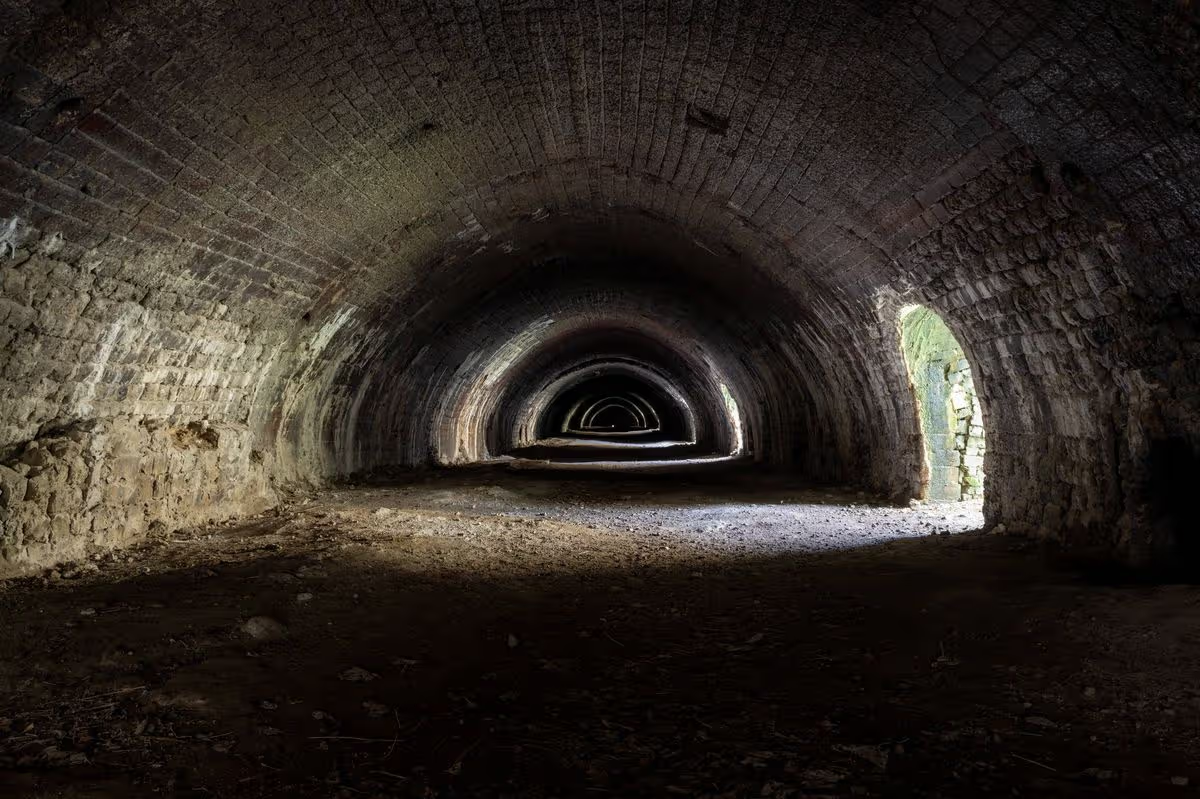
The Hoffman Kiln near Settle in the Yorkshire Dales is a moss-covered derelict kiln hidden in woodlands, though the site is currently undergoing development with limited access

The site was left abandoned for years (Image: Alexander W Helin via Getty Images)
For those looking for an extraordinary walking adventure, this trail delivers something truly unique and proves ideal for youngsters who relish uncovering secret treasures along the way.
Nestled within the forests on the outskirts of Settle in Yorkshire lies Hoffman Kiln, an abandoned kiln that once served as an insulated furnace for burning raw materials.
Today, it resembles an subterranean grotto constructed from brickwork and blanketed in moss, lending the location an unsettling verdant atmosphere.
Its past remains somewhat enigmatic to locals, though additional points of interest dot the vicinity, designated as part of the ‘Craven Limeworks trail’.
The kiln formed part of what was previously an industrial complex, where Yorkshire workers toiled in appalling conditions before nature eventually reclaimed the site, leaving it abandoned.
Save on the best holiday cottages in Yorkshire

Famous for its dramatic landscapes, historic cities, hearty food, and rich cultural heritage Yorkshire is just waiting to be explored. Sykes Cottages has a large number of properties to choose from with prices from £31 per night.
Historical background
The nineteenth century witnessed the establishment of the railway route connecting Settle to Carlisle, which subsequently generated fresh industrial prospects for the region.
The railway regularly transported coal inbound to process the limestone extracted from the scar, then carried away the completed product.
Enormous quantities of stone were once processed here, yet now it lies concealed. The kiln was previously operated by labourers whose responsibility involved shovelling burnt lime onto wagons positioned mere feet away in the sidings.
Describing the harsh working conditions, Senior Historic Environment Officer Miles Johnson explained: “It’s quite pleasant space to be in now but whilst it was in use it was probably absolutely grim. Lime is really nasty, caustic stuff to work with.
“The lime burners who worked in here had to cover every inch of their body with rags and clothing to try to keep the lime dust out. When lime dust meets moisture or water it reacts and generates a lot of heat.
“So if you’ve got lime dust on your body, and you’re shovelling and starting to sweat, then you’d start to blister and burn quite quickly.”
Exploration today
Proposals to develop the land housing the kiln have been under consideration for some time. Back in 2021, it emerged that Craven District Council’s planning application had received approval, with the site now earmarked for commercial development.
Prior to construction commencing, one visitor wrote on TripAdvisor: “Really loved my visit. I was amazed by how big the site is, considering it isn’t promoted very well. There is lots to explore, and the information boards are very helpful.
“The car park for the site is also quite large, so there is plenty of room. It felt quite exciting to be exploring the vast Hoffmann kiln by torchlight, and I was very pleased to see that it hadn’t been littered or abused.”
Yet more recently, visitors have suggested that the feeling of discovering a secret, unspoilt location has vanished, with construction work now progressing at full pace. A later review states: “These unusual kilns are well worth a visit.
“However, as other reviewers have mentioned, at the moment the area is a building site. There is access to the Hoffman kiln, but you need to cross the building site and walk along beside the railway.”
To find the kiln, you can use the postcode BD24 9NU, where you’ll find it just off the main road between Langcliffe and Stainforth.