womens

LA28 releases men’s and women’s soccer schedule for 2028 Olympic Games

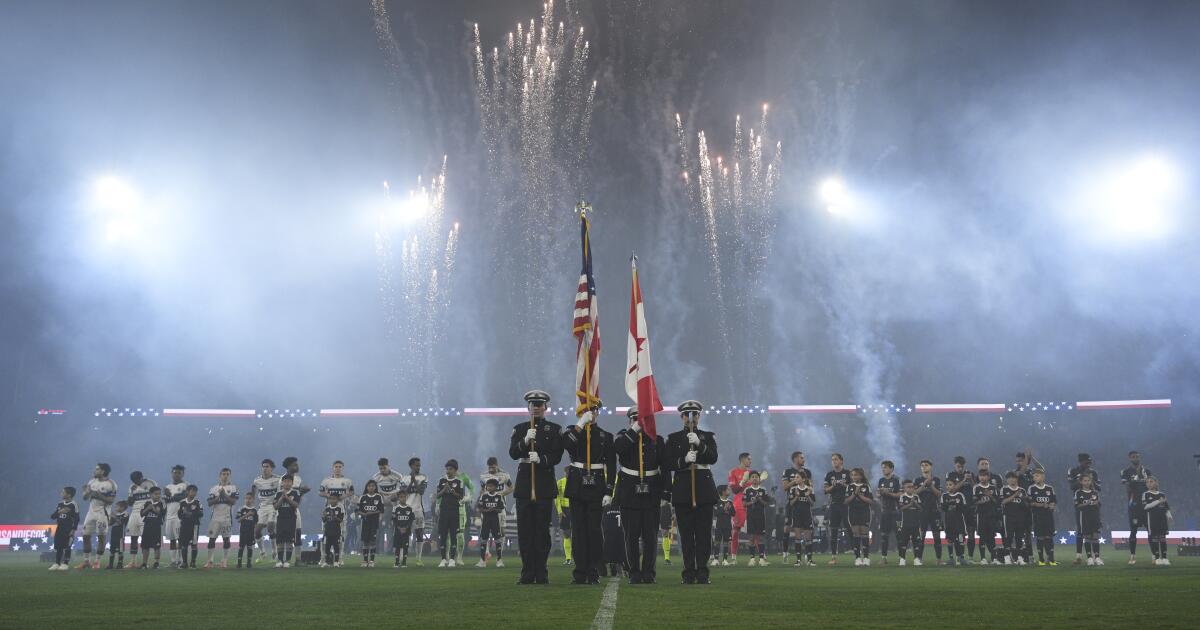
LA28 revealed the schedule Monday for an extended Olympic soccer tournament that will begin four days before the opening ceremony.

The soccer competition begins July 10 with four men’s group stage games across New York, Columbus, Nashville and St. Louis. The women’s tournament begins July 11 with games in all six of the preliminary round sites, including San José and San Diego.

The soccer competition, which will feature 12 women’s teams and eight men’s teams for the first time, has the longest competition window of any sport in Olympic history because the International Olympic Committee Executive Board wanted to give each team two extra rest days throughout the tournament.

Each team will have two days of rest between group stage games and three days between the final group game and the quaterfinal rounds. The men will begin their knockout round games on July 20 while the women start quarterfinal play on July 21, including one women’s quarterfinal match at the Rose Bowl.

The iconic stadium in Pasadena will host only five matches for the Olympics, including a men’s and women’s semifinal July 24 and the men’s gold medal match on July 28 and the women’s on July 29.

San Diego’s SnapDragon Stadium will have the most matches of any site with 11. In addition to three days of women’s group stage games, the home of San Diego State football, San Diego FC and San Diego Wave FC will host a women’s quarterfinal July 21, men’s and women’s semifinals July 24 and both bronze medal matches.

With the coast-to-coast soccer tournament shaping up, LA28 announced additional ticket opportunities for the competition, allowing fans interested in attending soccer matches to buy up to 12 soccer tickets in addition to the current 12-ticket maximum for all other Olympic events. The 12-ticket maximum for Olympic events includes the opening and closing ceremonies on July 14 and 30, respectively, which each have a four-ticket limit.

Ticket registration for the first ticket drop ends Wednesday at 11:59 p.m. PDT with the first tickets going on sale to locals in Southern California and Oklahoma beginning April 2. The first general ticket drop begins April 9. Fans who are randomly selected to participate in the first ticket drop will be notified via email between March 31 and April 7 with information and their assigned timeslot to purchase tickets.

More than 5 million fans have already registered for Olympic tickets, LA28 said, with Paralympic tickets going on sale in 2027. The organizing committee expects 14 million tickets to be available for the Games, which could eclipse the total ticket sales record set by Paris in 2024.

Source link

UCLA was snubbed by women’s NCAA tournament selection committee

Welcome to UCLA Unlocked, our weekly newsletter featuring all things Bruins athletics. To sign up to get this newsletter delivered every Monday to your inbox, click here.

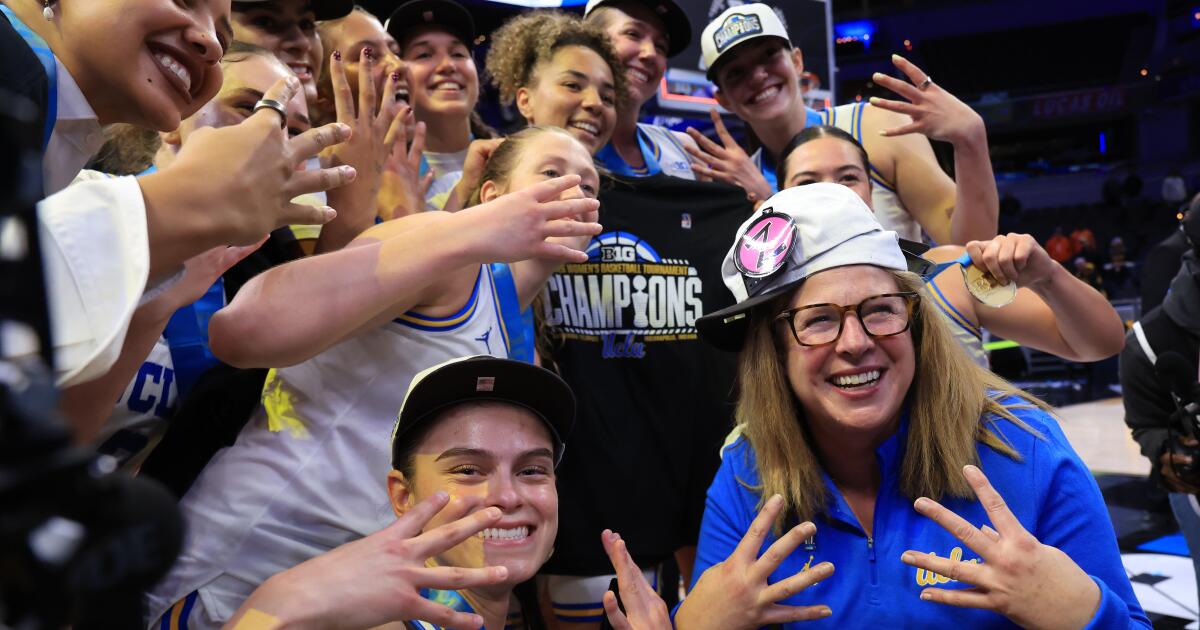
UCLA coach Cori Close has said all the right things all season, hammering the importance of winning each day and making the most of every practice.

After watching her team struggle during the Final Four last season, she also urged the Bruins to remember the joy of their journey together was far more important than the final tournament results.

She continued to run the John Wooden playbook on Selection Sunday, brushing away the suggestion that UCLA was snubbed by the NCAA tournament selection committee.

Sign up for UCLA Unlocked

A weekly newsletter offering big game takeaways, recruiting buzz and everything you need to know about UCLA sports.

By continuing, you agree to our Terms of Service and our Privacy Policy.

“Everybody else can talk about whatever they want,” Close said. “We’re going to talk about what that takes, and we are completely committed to just being really focused on us and our journey and keeping the main thing, the main thing.”

While she rightly is focusing on her team, there is no denying UCLA got a bad draw.

Not only were the Bruins denied the No. 1 overall seed despite playing a much tougher schedule than overall No. 1 seed UConn, the Bruins will have to fight through the toughest regional to reach the Final Four in Phoenix.

LSU was the highest rated No. 2 seed and Duke was the highest rated No. 3 seed. Both were assigned to the same regional as UCLA. No. 5 Ole Miss, led by Ohio State transfer and dynamic SEC newcomer of the year Cotie McMahon, is another potent team slotted in the Bruins’ side of the bracket.

“The Sacramento region with UCLA, they absolutely have the toughest region when you look at the LSU-Duke matchup — the No. 1 two seed, the No. 1 three seed,” former Notre Dame coach Muffet McGraw said on ESPN. “I don’t know how they ended up with the same bracket as UCLA as the No. 2 overall. … I’m perplexed.”

McGraw has been doing the work Close arguably couldn’t for weeks without coming across as whining. The retired coach questioned the NCAA tournament selection’s committee previous rankings that slotted UCLA behind UConn.

On March 2, McGraw posted on X, “Does anyone else think UCLA deserved the overall [No. 1] seed? Undefeated regular season Big Ten champs, beat 11 ranked teams, six of which are currently in the committee’s top 16. They have 14 Quad 1 wins, more than anyone in the country, and their only loss was to another [No. 1] seed. And what about SEC champ South Carolina as the [No. 2] overall?

“UConn is certainly good enough to win the national championship, but UCLA and South Carolina have had as much success against a much tougher schedule.”

UConn fans were quick to point out McGraw’s losing record against Huskies coach Geno Auriemma and their bad blood, but the former Notre Dame coach was armed with notable stats that are supposed to be the basis for the selection committee’s bracket.

McGraw made her case before No. 2 UCLA (31-1) beat No. 9 Iowa (26-6) by 51 points in the Big Ten tournament championship game.

It wasn’t enough to help the selection committee ignore the score that seemed to matter the most — a 85-51 UCLA loss to UConn in last season’s Final Four.

“We watched a lot of UConn, we watched a lot of UCLA,” NCAA tournament committee chair Amanda Braun said on ESPN. “The way we watched UConn win throughout the year from beginning to the end, UCLA did a lot of winning too, but ultimately we gave UConn the edge.”

The Bruins have said every team is tough in the NCAA tournament and they must simply focus on being their best each day. Surviving a challenging regional will only make their success sweeter.

And UCLA can take solace that at least one team had a worse draw than it did on Sunday. Crosstown rival USC was awarded a No. 9 seed and will play No. 8 seed Clemson in Columbia, S.C., a short commute for the Tigers’ fans. If the Trojans survive, they most likely will face No. 1 seed South Carolina on the Gamecocks’ notoriously hostile home court.

Survey says

We asked, “How far will the UCLA women advance in the NCAA tournament?”

After 460 votes, the results:

They win it all: 80.8%
They lose in the title game: 14.6%
Just like last year, they lose in the Final Four: 3.5%
A surprising elimination in the Sweet 16: 0.9%
A shocking upset in the first or second round: 0.2%
They lose in the Elite Eight: No votes

Survey time

How far will the UCLA men advance in the tournament?

They lose in the first round
They lose in the second round
They lose in the Sweet 16
They lose in the Elite Eight
They lose in the Final Four
They lose in the title game
They win it all

Click here to vote in our survey

In case you missed it

‘We know what it takes to get there.’ No. 1 UCLA ready to begin NCAA title chase

UCLA men’s basketball earns No. 7 seed, to face No. 10 UCF in Philadelphia

NCAA men’s and women’s basketball tournament brackets: A look at every matchup

How Gabriela Jaquez became a breakout shooting star for No. 2 UCLA

UCLA star Jordan Chiles helps Bruins win her final home meet, knocking out rival Utah

UCLA falls to Purdue in Big Ten semifinal without injured Tyler Bilodeau

UCLA stuns Michigan State to advance to Big Ten tournament semifinals

Donovan Dent achieves Big Ten tourney history in UCLA win over Rutgers

UCLA won a Big Ten tournament title with a group of ‘Pac-12 Avengers’

Have something Bruin?

Do you have a comment or something you’d like to see in a future UCLA newsletter? Email newsletters editor Houston Mitchell at houston.mitchell@latimes.com. To get this newsletter in your inbox, click here.

Source link

Captain of Iran’s women’s team withdraws Australia asylum bid: State media | Football News

The captain of the Iranian women’s football team has withdrawn her bid for asylum in Australia, Iran’s state media says, making her the fifth member of the delegation to change her mind after her team’s participation in the Asian Cup.

Zahra Ghanbari will fly from Malaysia and travel to Iran within the next few hours, the IRNA news agency said on Sunday.

Three players and one backroom staff member had already withdrawn their bids for asylum and travelled to Malaysia from Australia, where the team participated in the AFC Women’s Asian Cup.

Australia’s Home Affairs Minister Tony Burke said his country had offered asylum to all players and support staff members prior to their departure over fears they might be punished upon their return home after the team refused to sing Iran’s national anthem at the tournament.

Iranian state broadcaster IRIB reported on Saturday that the three had “given up on their asylum application in Australia and are currently heading to Malaysia”, posting a picture of the women allegedly boarding a plane.

The news was confirmed by Burke a few hours later.

“Overnight, three members of the Iranian women’s football team made the decision to join the rest of the team on their journey back to Iran,” Burke said.

“After telling Australian officials they had made this decision, the players were given repeated chances to talk about their options.”

Five players took up the offer and signed immigration papers last week, with one more player and a member of staff joining them a day later. It leaves two Iranian players in Australia, where they have been promised asylum and an opportunity to settle.

Iran played their three group games of the Asian Cup at the Gold Coast Stadium in Queensland on March 2, 5 and 8, after the United States and Israel launched their war on Iran on February 28.

The initial attacks killed Iran’s Supreme Leader Ayatollah Ali Khamenei and other leaders.

Overall, an estimated 1,444 Iranians have been killed since the war began, including more than 170 people, mostly schoolgirls, who were inside a primary school in the city of Minab.

After refusing to sing the Iranian national anthem at their first match, players on the Iranian women’s football team were branded “traitors” by an IRIB presenter.

When Iran played their second game of the tournament against Australia three days later, not only did the players sing the national anthem, but they also saluted it, prompting fears that they may have been forced to change their stance after receiving backlash in Iranian media.

While neither the players nor the team management explained why they refrained from singing before the first match, fans and rights activists speculated that it may have been an act of defiance against the Iranian government.

On the day of the team’s departure from Australia, Burke announced his government had offered all players and staff members the chance to stay back in the country.

On Tuesday, Burke told reporters that five Iranian players had decided to seek asylum in Australia and would be assisted by the government.

“They are welcome to stay in Australia, they are safe here, and they should feel at home here,” he said.

A day later, Burke confirmed that an additional player and a member of the team’s support staff had received humanitarian visas in the hours before their departure.

However, one player, who previously chose to stay behind, changed her mind and decided to return to Iran.

The player, who was later identified as Mohadese Zolfigol, changed her decision on the advice of her teammates, Burke told the Parliament of Australia.

“She had been advised by her teammates and encouraged to contact the Iranian embassy,” he said.

The players who managed to escape with the help of Iranian rights activists were taken away by Australian police officials to a safe house, where they met immigration officials and signed the paperwork.

“Our understanding is that every single member of the squad was interviewed independently by the Australian Federal Police,” Beau Busch, the Asia/Oceania president of players’ welfare body FIFPRO told Al Jazeera last week.

“[The players] were made aware of their rights and the support available to them. They certainly weren’t rushed through that process.”

Source link

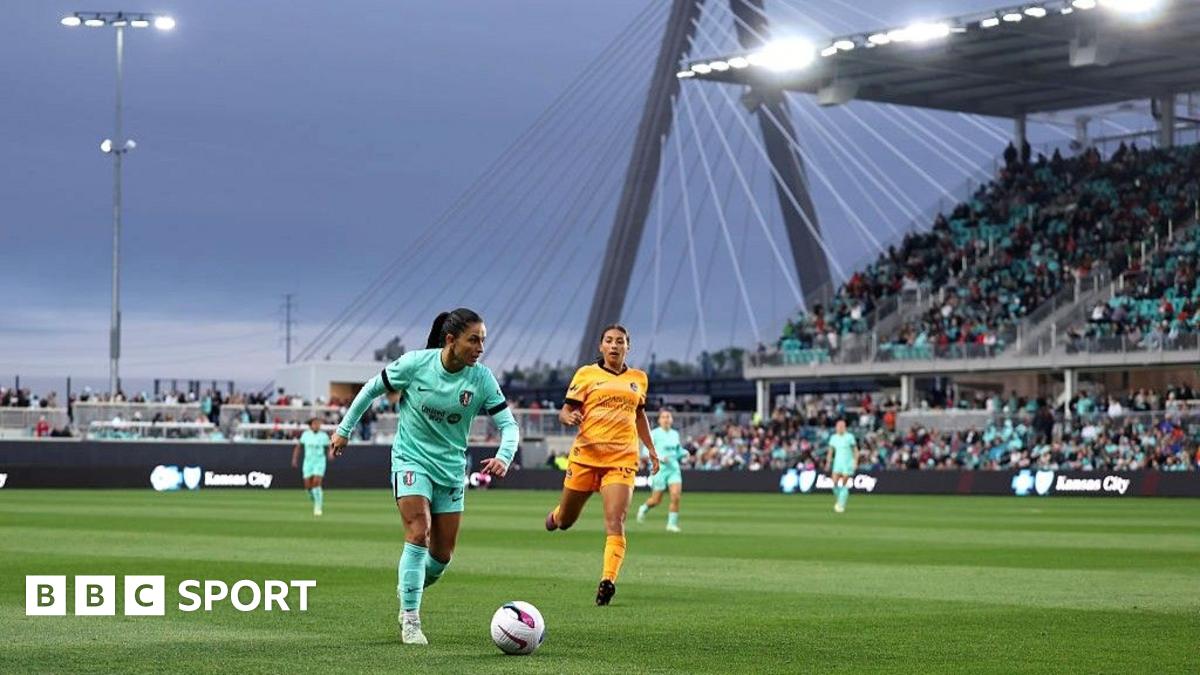
NWSL: Why US soccer franchises have bespoke women’s football stadiums, and will WSL teams follow suit?

Like with WSL clubs, most US teams share another franchise’s premises, be it a men’s team’s ground or a venue usually reserved for other sports, such as NFL stadium Lumen Field for Seattle Reign.

Kansas City buck this trend, and Denver Summit president Jen Millet believes it makes financial sense to follow suit.

“A big part of a sustainable business model is controlling revenue streams,” Millet says. “Women have been tenants and missed out on those things – food, beverage, parking, rentals, retail.

“It’s massively important to operate your own stadium.”

Having their own venue has also enhanced KC Current’s marketing strategy – something Kirsten Ross, president of official supporters’ club The Blue Crew, says has greatly raised the team’s profile.

“[The club] do a really good job of ramping up when the team is playing,” she says.

“Previously, people had no idea FC Kansas City existed. Now you can’t walk anywhere without knowing there’s a game for KC Current.”

Chris Long argues a bespoke stadium brings the best out of players – after all, Kansas City dominated the 2025 regular season and won the NWSL Shield by 21 points, even if they lost in the play-offs.

“It’s the feeling of belonging,” he says. “If you’re a tenant, the schedule isn’t based on you… you put your stuff in the locker room but have to take it out because it’s temporary.”

Jemison adds: “You feel like a visitor in your own home. We didn’t want that.”

Source link

Chelsea vs Man Utd: Will it finally be Manchester United’s day in Women’s League Cup final?

Chelsea’s dominant record over United extends to the WSL, where they have never lost in 12 meetings, winning 10 of them.

But the gap has been closing.

This season, Chelsea needed an extra-time winner to knock United out of the FA Cup in their fifth-round tie and were held to a 1-1 draw in their WSL meeting in October.

It has been a turbulent time for the Londoners as they have fallen nine points behind WSL leaders Manchester City. Manager Sonia Bompastor has come under pressure and off-field issues – including the departure of much-loved head of women’s football Paul Green – have sparked debate and concern.

Suddenly, the ‘mentality monsters’ appear vulnerable – but can United take advantage?

“I don’t want to use this moment of vulnerability to do anything other than pretend we’re playing them at their best. Prepare for their best, and you can beat Chelsea,” Skinner said.

“We all know they’re an incredible team. Nobody’s denying that. But if we can get to our best levels in any game, I genuinely believe we can beat any team.

“Whatever form Chelsea are in, I’m going to challenge my team to be ready and focused on winning that game of football.

“Chelsea will do that. They’re not bothered about Manchester United, so we won’t be worried about them.”

Despite United’s strong campaign so far, some fans remain unconvinced.

This is the fourth successive season in which they have reached a domestic cup final, but they are yet to mount a genuine WSL title challenge and have lifted just one major trophy, the 2024 FA Cup, in their eight-year professional existence.

So can the club achieve more? Is Skinner getting the best out of his squad? Should United’s ambitions be more than just reaching finals?

“When you reach a certain level of experience in finals, you don’t want to not be experiencing them year-in, year-out. We also know that [in] the league, the teams behind the top four are investing more than enough to make it an open league,” said Skinner.

“The top-tier teams still spend the most and London City Lionesses are not far behind. We have to set our own markers at Manchester United. Whether you love it, or hate it – we’ve just got to compete. Sometimes we have to find different ways to do it.

“I’m not going to say my job isn’t to get us into cup finals and try to win them every year. All I’d ask is that if there’s a season where that doesn’t happen, you look at the context.

“If you’re not doing a good job [as a manager], then we all know what happens. You don’t have it any more and we move on.”

Source link

Australia grants asylum to 5 members of Iranian women’s soccer team

Five players who defected from the Iranian women’s soccer team after the team’s final match in the Asian Women’s Cup in Australia were granted asylum Tuesday.

Police assisted the women in leaving their hotel and placed them in a safe house. There, they met with Australian home affairs minister Tony Burke and their humanitarian visas were processed.

At least seven players left the hotel, according to Raha Pourbakhsh, a journalist for Iran International TV. Families of at least three of the five players granted asylum had been threatened, Pourbakhsh told CNN. At least two other players who left the hotel haven’t been located.

According to an X post by Reza Pahlavi, son of the deposed Shah of Iran, the players who “successfully sought refuge in Australia” are Fatemeh Pasandideh, Zahra Ghanbari, Zahra Sarbali, Atefeh Ramazanzadeh, and Mona Hamoudi.

Pahlavi warned in a separate post that the women would face “dire consequences” if they return to Iran.

“I don’t want to begin to imagine how difficult that decision is for each of the individual women, but certainly last night it was joy, it was relief,” Burke said.

Burke said the asylum offer was extended to all 26 players and the coaching staff, but the team left Australia for Iran on Tuesday, Ten Network News reported. It was unclear whether anyone besides the seven players who had left the team hotel had defected.

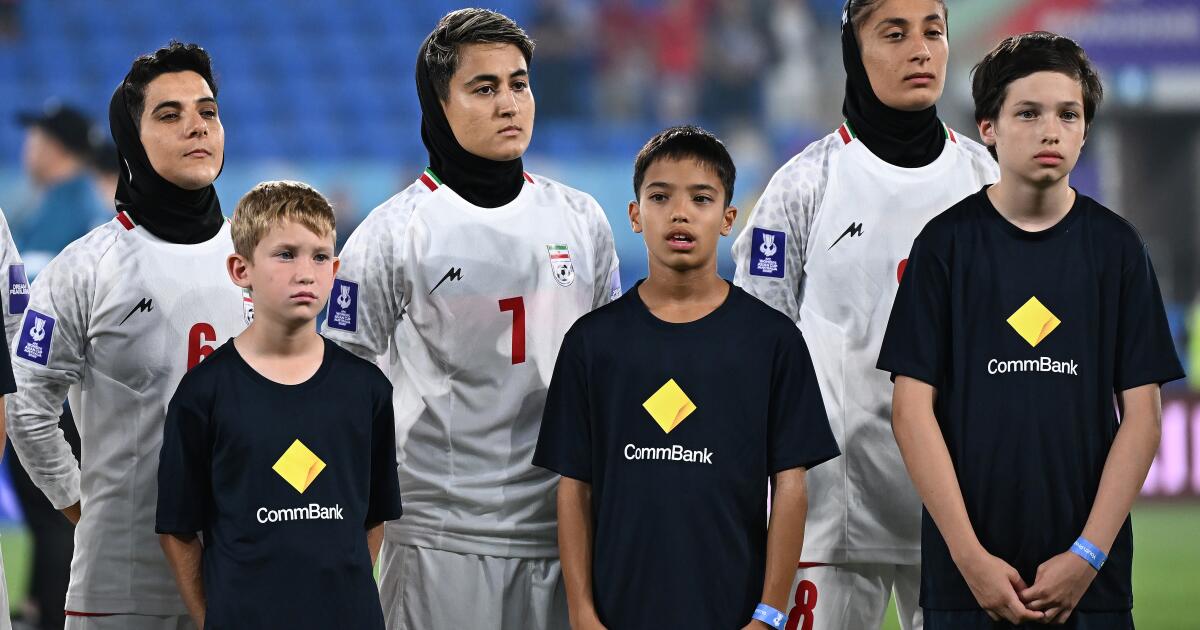
The team remained silent during the Iranian national anthem before their first Asian Cup match a week ago, which was interpreted as a protest against the regime. They saluted and quietly mouthed words to the anthem before a match against Australia after pushback from the Iranian government and accusations of treason.

Australia assisted the women, who apparently fear persecution at home. Following the United States-Israeli strikes on Iran and retaliation in the Middle East, Iranian state television labeled the soccer team “wartime traitors” and alluded to repercussions upon their return to the country.

Protesters converged near the bus transporting the team after its final match Sunday night, shouting “save our girls” and carrying the Iranian Lion flag used before the 1979 Islamic Revolution. Today, the flag is a symbol of resistance against the current regime.

Iran is now under the rule of Mojtaba Khamenei, a new hardline supreme leader. Khamenei is the son of Ayatollah Ali Khamenei, the 86-year-old leader who was killed on the first day of U.S. and Israeli attacks.

President Trump, in a statement Monday on Truth Social, said the United States would grant the Iranian players asylum if Australia did not. Trump posted a second time, saying he had spoken to Australian Prime Minister Anthony Albanese and that five players had “already been taken care of” and that “the rest are on their way.”

However, Iranian first Vice President Mohammad Reza Aref objected to the involvement of Trump and Australia, saying: “Iran welcomes its children with open arms and the government guarantees their security. No one has the right to interfere in the family affairs of the Iranian nation and play the role of a nanny who is kinder than a mother.”

Australian Foreign Minister Penny Wong told ABC that her country sides with the men and women of Iran.

“For Australians to see [Iranian players] in Australia and the Matildas swapping jerseys with them was, I think, a very evocative moment,” Wong said. “We know this regime has brutally oppressed many Iranian women and we stand in solidarity with the men and women of Iran, particularly Iranian women and girls.”


Source link

Protesters block Iran’s women’s football team bus en route to airport | Newsfeed

NewsFeed

Protesters blocked a bus carrying Iran’s women’s football team outside a hotel in Australia after five players slipped away to seek asylum duing the Women’s Asian Cup. They say the remaining players could face danger if forced to return to Iran after staying silent during the national anthem.

Source link

Women’s football team to be welcomed home with open arms, Iran says | Football News

The Iranian women’s footballers returning to the country after their Asian Cup campaign in Australia will be welcomed home “with open arms”, Iran’s Ministry of Foreign Affairs has said.

Ministry spokesperson Esmaeil Baghaei urged the players to “come home” on Tuesday, hours after five members of Iran’s squad sought asylum in Australia following their team’s exit from the tournament.

Recommended Stories

list of 3 itemsend of list

“To Iran’s women’s football team: don’t worry – Iran awaits you with open arms,” Baghaei wrote on X.

His post came shortly after the office of Iran’s general prosecutor said the remaining members of the team were invited back to the country “with peace and confidence”.

“These loved ones are invited to return to their homeland with peace and confidence, and in addition to addressing the concerns of their families,” the general prosecutor’s office was quoted as saying by Iran’s Tasnim news agency.

Australia’s decision to provide visas to five players came amid uncertainty and concerns for the team’s safety following their decision to stand in silence during Iran’s anthem before their first match of the tournament on March 3.

The players sang and saluted the anthem in their remaining two matches, on Thursday and Sunday, prompting fears that they could face punishment upon their return home.

Australian Minister for Home Affairs Tony Burke told a news conference on Monday that he had informed the five members “that they are welcome to stay in Australia, that they are safe here, and they should feel at home here”.

He added that he had also offered the other team members the chance to stay in Australia.

The Department of Home Affairs named the five team members as captain Zahra Ghanbari, midfielders Fatemeh Pasandideh, Zahra Sarbali Alishah, Mona Hamoudi, and defender Atefeh Ramezanizadeh.

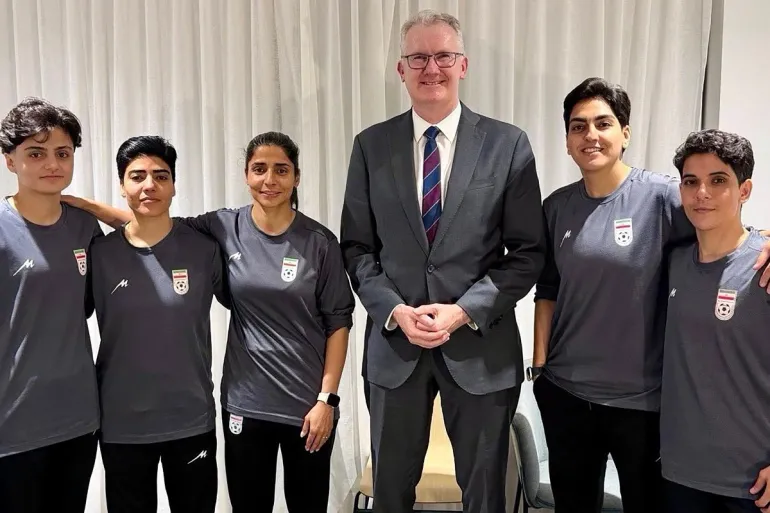
An undated and unplaced photo released by Australia's Department of Home Affairs shows Home Affairs minister Tony Burke (3/R) with five Iranian women football players who applied for asylum after competing in the Women's Asia Cup tournament being played in Australia. Australia has granted asylum to some of Iran's visiting women's football team over fears they faced persecution at home for not singing the national anthem before a match, Home Affairs Minister Tony Burke said on Tuesday. (Photo by HANDOUT / AUSTRALIAN DEPARTMENT OF HOME AFFAIRS / AFP) / ----EDITORS NOTE ----RESTRICTED TO EDITORIAL USE MANDATORY CREDIT " AFP PHOTO / DEPARTMENT OF HOME AFFAIRS" NO MARKETING NO ADVERTISING CAMPAIGNS - DISTRIBUTED AS A SERVICE TO CLIENTS
An undated and unplaced photo released by Australia’s Department of Home Affairs shows Home Affairs Minister Tony Burke, third left, with five Iranian women football players who applied for asylum [Handout/Australian Department of Home Affairs via AFP]

The players’ decision to stand in silence during Iran’s anthem before their match against South Korea was labelled as the “pinnacle of dishonour” by a commentator on Iran’s IRIB state broadcaster.

The announcement to grant the players visas came after United States President Donald Trump, who is currently waging war on Iran alongside ally Israel, said he had spoken to Australian Prime Minister Anthony Albanese about the “delicate situation” faced by the team, and that Albanese was “on it!”

Iran’s Baghaei dismissed Trump’s statement, questioning the US president’s claims of “saving” the players after new footage of a February 28 attack on an Iranian elementary girls’ school in Minab, which killed 165 students, suggested that the site of the school was likely hit by a Tomahawk missile – a weapon used by the US that Israel and Iran do not possess.

The US had previously accused Iran of the attack.

“They slaughtered more than 165 innocent Iranian schoolgirls in a double-tap Tomahawk attack in the city of Minab, and now they want to take our athletes hostage in the name of ‘saving’ them?” Baghaei said.

Following the Australian government’s decision to grant humanitarian visas to five Iranian players, they were moved to an undisclosed location under police protection, Australian officials were quoted as saying by the Reuters news agency.

Iranian media quoted Farideh Shojaei, vice president for women’s affairs at the Iranian Football Federation, as saying the team had left the hotel through the back door with the police.

“We have contacted the embassy, the football federation, the ‌Foreign Ministry and anywhere possible to see what will happen,” she said.

“We have even spoken with the families of these five players.”

Some of the Iranian players left their hotel in the northeastern city of Gold Coast on Tuesday afternoon on a bus that was surrounded by members of the diaspora protesting against the Iranian government. They flew to Sydney airport on Tuesday evening before being transferred to the international terminal.

It was not clear how many players arrived at the airport or where they were going.

Members of the Iranian community in Australia block the path of a departing bus transporting members of the Iranian Women’s Asia Cup football team to the airport, outside the Royal Pines Resort on the Gold Coast on March 10, 2026. Five players from Iran's visiting women's football team claimed asylum in Australia on March 10, seeking protection after they were branded "traitors" at home for refusing to sing the national anthem. (Photo by Patrick HAMILTON / AFP)
Members of the Iranian community in Australia block the path of a departing bus transporting Iran’s squad to the airport on the Gold Coast [Patrick Hamilton/AFP]

Trump initially posted on social media that Australia was “making a terrible humanitarian mistake” by allowing the team to be sent back home, apparently unaware that Australia had been in secret talks with the women for several days.

Trump said members of the team would “likely be killed” if forced to return to Iran. “The US will take them if you won’t,” he added.

In a later post, Trump said he had spoken to Albanese and that the Australian leader was “doing a very good job having to ⁠do with this rather delicate situation”.

The Iranian general prosecutor’s office said “some members of our country’s women’s football team have, unintentionally and emotionally provoked by the enemy’s conspiracy and mischief, behaved in a way that has caused the delusional excitement of the criminal leaders of the imposed American-Zionist war.”

The US and Israel attacks on Iran have killed 1,255 people in the country and left 1,200 injured after 11 days.

Tehran has responded by launching waves of missiles and drones at Israel and towards several military bases in the Middle East where US forces operate.

Source link

Marches for International Women’s Day denounce war, abuse and oppression | Women’s Rights News

Marches on 115th anniversary of IWD place focus on issues like US-Israeli war on Iran and Donald Trump’s links with sex offender Jeffrey Epstein.

Thousands of demonstrators have taken to the streets around the world to mark International Women’s Day, taking a stand on a number of issues including the US-Israeli war on Iran and gender-based violence.

In Spain, where the government drew the ire of the United States for refusing to allow it to use Spain’s military bases for strikes against Iran, thousands of women took to the streets of major cities to call for an end to the war.

Recommended Stories

list of 3 itemsend of list

“It is within our power to stop the war, to stop the barbarity, and to win rights,” said Yolanda Diaz, Spain’s second deputy prime minister. “We proclaim ourselves in defence of peace, in defence of the Iranian people, in defence of Iranian women.”

On the first day of the joint US-Israeli war on Iran, strikes on a primary school in the city of Minab killed 165 girls, most between the ages of seven and 12, during class hours – the deadliest single attack on civilians so far.

A man holds a banner mocking US President Donald Trump, Israeli Prime Minister Benjamin Netanyahu and Russia's President Vladimir Putin
A banner mocks US President Donald Trump, Israeli Prime Minister Benjamin Netanyahu and Russian President Vladimir Putin at an International Women’s Day rally in Madrid, Spain on March 8, 2026 [Thomas Coex/AFP]

In France, where more than 150 demonstrations were held, 73-year-old rape survivor Gisele Pelicot led a march calling for an end to sexual violence, telling a crowd in Paris, “We won’t give up”.

Pelicot became a global symbol in the fight against sexual violence after she waived her right to anonymity during the 2024 trial of her ex-husband and dozens of strangers who raped her while she was unconscious.

Across the Atlantic, activists gathered at Zorro Ranch in the US town of Albuquerque, New Mexico, where the late convicted sex offender Jeffrey Epstein is alleged to have sexually abused and trafficked underage girls and young women.

“The years-long cover-up and protection of Jeffrey Epstein’s allies and co-conspirators exposed a culture of impunity that tells survivors their pain is negotiable when powerful men are involved,” said Rachel O’Leary Carmona, executive director of Women’s March.

In New York, protesters gathered outside Trump Tower for a “Believe Survivors” demonstration after this week’s publication of FBI documents by the US Justice Department describing interviews with a woman who alleged President Donald Trump sexually assaulted her when she was a minor.

People protest outside Trump Tower
People protest outside Trump Tower during a ‘Believe Survivors’ demonstration against US President Donald Trump and the late convicted sex offender Jeffrey Epstein on International Women’s Day in New York City, on March 8, 2026 [Angelina Katsanis/Reuters]

In Puyo, an Amazonian town in Ecuador, members of various Indigenous groups gathered to raise their voices about the degradation of the environment, and oil and gas expansion. “We want to live in a healthy environment and in harmony with the forest, so we are asking for respect and that public policies for nature are put in place,” said Ruth Penafiel, 59, from the Kichwa community in the northern Amazon.

In Brazil, Sunday’s marches channeled outrage over the alleged gang rape of a 17-year-old girl in Rio de Janeiro’s Copacabana neighbourhood in January. The case gained national attention this week when four suspects handed themselves over to authorities.

International Women's Day
A woman with tape reading ‘living is my right’ over her mouth takes part in a march marking International Women’s Day on Copacabana beach in Rio de Janeiro, on March 8, 2026 [Silvia Izquierdo/AP]

In Pakistan’s capital, Islamabad, police briefly detained several women’s rights activists attempting to hold a rally in defiance of a government ban on public gatherings imposed amid a surge in militant violence in the country. Aurat March, a network of women’s rights activists, condemned the crackdown, saying participants had been peacefully exercising their right to protest.

Women’s rights activists shouted slogans during a protest in Istanbul, Turkiye. In China and Russia, vendors sold flowers wrapped in pink. And in Phnom Penh, Cambodia, local workers lifted fists and umbrellas as they celebrated.

International Women’s Day, officially recognised by the United Nations in 1977, marks its 115th anniversary this year.

Source link

Women’s World Cup qualifying: Mared Griffiths shines as Wales get a glimpse of future

Safia Middleton-Patel, Mia Ross, Mared Griffiths and Carrie Jones – who is still only 22 – were the four players drafted into the side in Llanelli this weekend, with Olivia Clark, Gemma Evans, Angharad James and Ffion Morgan making way.

While goalkeeper Middleton-Patel and Ross – who was deployed as one of three centre-backs – were part of a defensive unit who did not have that much work to do, Jones impressed in a central midfield role.

But it was Griffiths, the Manchester United youngster who is currently on loan at Sunderland, who took most of the plaudits.

“She’s got it all,” Wilkinson said after Montenegro were hammered 6-1 in Llanelli.

“And she’s far from the finished product, which is very exciting for all Welsh people I’d imagine.”

Griffiths, sporting the number 10 shirt which was worn so often by Fishlock, scored Wales’ third goal, which was handed to her on a plate following an error by Montenegro keeper Ajsa Kala.

But there was nothing gift-wrapped about Griffiths’ second of the afternoon, which was Wales’ only goal during a second half in which Montenegro sat deep and defended with much more conviction than they had in the first period.

Fed by Jones, Griffiths had the composure to round the onrushing Kala before stroking the ball home with her left foot.

Source link

Redefining Empowerment: A Critical Look at Microcredit and Women’s Economic Agency

Introduction

In 1974, Muhammad Yunus began experimenting with an initiative to give small loans to impoverished rural women to foster a sense of empowerment through entrepreneurial start-ups – an initiative that was institutionalised through the famous Grameen Bank. In just a couple of years, this initiative had snowballed into the United Nations declaring 2005 the International Year of Microcredit, with Yunus winning the Nobel Peace Prize for economic development.

In an age of international globalisation and neoliberal theories, microcredit seemed to be the solution to the ills of the developing world. Economists, development theorists, and journalists began to discuss the multiple success stories from the Grameen Bank and the vast impact small loans were having on people.

But a much darker reality came to take place. Although Yunus said that credit is a human right, he failed to address the fact that debt follows. Stories like Razia’s became far too frequent.

The Feminisation of Debt: Razia’s Story

Razia had taken out an initial microcredit loan of around $50 from Grameen Bank to put food on the table and pay for her children’s education; to her, this money was a lifeline to meet her family’s immediate needs. She was offered an interest rate of 20%, which she did not initially realise due to her limited fiscal literacy, and she could not pay.

Loan sharks targeted her family with violent threats when they were unable to meet payment deadlines; she had to sell her heirloom jewellery, her belongings, and eventually her home to make the payment – and even now, she continues to face threats from the loan sharks.

Razia’s story is not uncommon and illustrates how a linear model of microcredit has led to the feminisation of debt: women took out these loans to cover basic needs and fulfil their societal roles as caretakers, only to be uniquely burdened and targeted because they were unable to meet deadlines. This led women to be prone to economic vulnerability, social shame due to the procurement of debt, and violence from debt collectors.

Questioning the Efficacy of Microfinance

In addition to Razia’s story, the reality of the Grameen Bank’s efficacy is also up for debate. More and more economists became wary of the narrative that microfinance helps start income-generating enterprises, and recognised that this led many to feed their families or afford education. Another fundamental assumption was that microfinance would empower the poor, especially women, through microenterprises, given their financial bargaining power within the community. The neoliberal social policies used to model microenterprises for poor rural women to sell their labour or to ‘sub-contract’ their services were broadly not adopted, and forced women into disempowering roles in the informal sector.

Dr. Lamia Karim conducted research on the particular claims on gender empowerment by microcredit programmes and ended up creating a ‘local economy of shame’; repayment of these loans was tied to a woman’s standing and honour within the community, and these norms created environments of disempowerment, subjugation, and stress to repay the loans.

Theoretical Frameworks: From WID to GAD

Yunus’s microcredit initiative followed the theoretical prescriptions of Women in Development (WID), which sought to address gender-based economic disparities and integrate women into existing economic systems. The Grameen Bank was able to meet these goals; however, the linear model of empowerment used and the integration of women within the neoliberal economic market failed to meet the overall goals of empowerment.

As organisations, advocates, and economists saw the initial model struggling to meet the holistic goals of empowerment, they integrated theoretical prescriptions from Gender and Development (GAD), which sought to confront the root causes of gender inequality and to meet both the practical and strategic needs of women. This empowers women not only to meet economic goals to ensure survival, but also to develop collective action skills to confront power structures that lead to their subjugation.

Proshika: A New Model for Empowerment

Proshika was formed in 1979 under the WID model and focused on targeting rural communities, but realigned its goals with a GAD model in 2009. Their mission statement was revised to reflect the integration of collective-action training into their microcredit initiatives. As an organisation, they planned to “develop their capacity, so they can claim their due rights from the government” and “ensure life security” – a revolutionary shift within the broader conversation about microcredit.

Proshika had a model very similar to the Grameen Bank microcredit programmes; however, they added organisational spaces for women to meet and discuss community issues, embedding collective action within the programme. When a woman signed up for a loan, she was connected with other women in her community and asked to discuss pressing issues. Proshika organised a total of 42,809 groups; these various groups looked into important societal issues, such as the prevention of child marriage, the prevention of violence against women, and the abolition of dowry practices.

These trainings connected women with existing government systems and taught them how to access the judicial system, enabling them to pursue institutional avenues of change.

Building Social Capital and Political Agency

These spaces within the community allow women to build social credit, serving as places where information flows and as essential spaces for building trust and relationships. They increase social awareness, social interaction outside of one’s family unit, and increase domestic power and civic participation.

Dr Paromita Sanyal studies the role of microfinance agencies in Bangladesh, and credits NGOs such as Proshika for building both vertical and horizontal lines of social credit. Vertical social credit enables women to build essential connections within their own communities, and horizontal social credit allows them to connect with NGOs, politicians, and governing bodies. This axis of power builds political agency within communities and empowers women to challenge restrictive gender norms.

Proshika operates in 8,784 villages, 1,639 unions, 266 sub-districts, 42 districts, and 7 divisions within Bangladesh – they have organised 33,982 female groups across the nation. Through their collective action programmes, they were able to see a statistically significant decrease in child marriages, dowries, and gender-based violence within rural villages.

Towards True Empowerment

Proshika’s microfinance initiative not only enabled income-generating activities in rural villages but also empowered women to make a difference in their communities. Proshika’s success story should serve as a model for reforming existing microfinance institutions and incorporating collective action mechanisms into programmes.

Unlike the Grameen Bank, which focused solely on women’s practical needs, Proshika made an effort to address women’s and community members’ strategic needs. This led to statistically significant decreases in domestic violence and child marriages, as well as increased awareness of government systems and the justice system as a whole, with civic engagement opening accessible avenues for change.

Dr. Andrea Cornwall’s critical feminist analysis of women’s empowerment suggests that true empowerment is about changing asymmetrical power relations and requires building critical consciousness to help people recognise fundamental inequalities. Empowerment is relational and involves the interplay between personal and political to create a process, rather than focusing on an outcome.

Unlike the Grameen Bank, Proshika focused more on the various aspects of empowerment, without adopting a linear view of tangible results. This led to successful grassroots movements that brought attention to women’s structural needs and raised awareness of women’s value to community spaces.

Empowerment comes from changing power relations within the community, and Proshika met both women’s practical and strategic needs. It is essential to address the extreme poverty that women face, but also to build avenues for them to challenge the institutions they participate in.
Source link