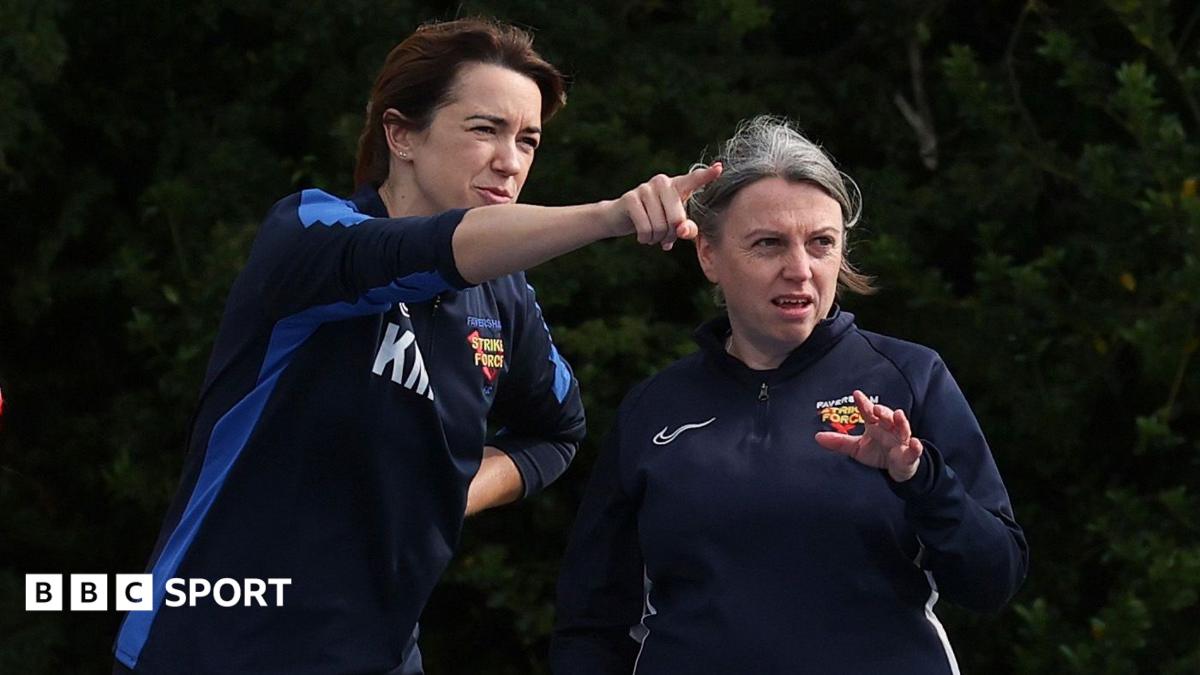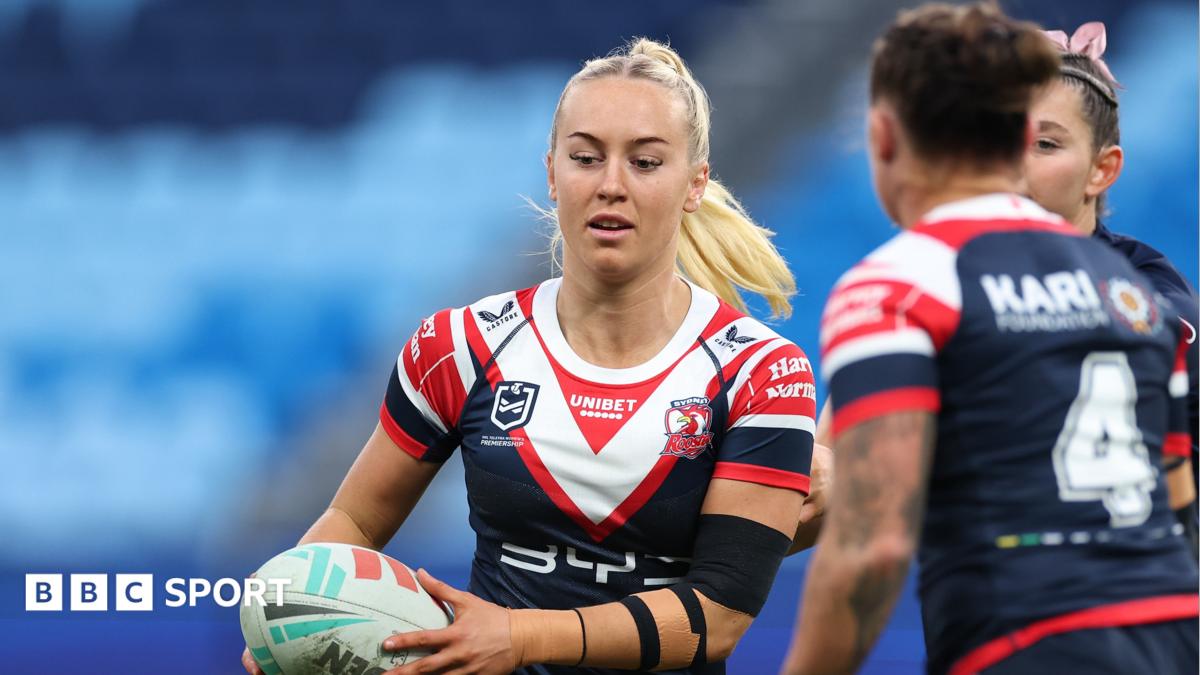
England fly-half Zoe Harrison nailed a late long-range penalty as Saracens snatched a 36-33 win over Bristol Bears at StoneX Stadium.
The victors raced into a 26-12 lead at half-time through tries by Millie Whizz, New Zealand’s Ruahei Demant and England prop Sarah Bern, who crossed twice.
Despite two scores by hooker May Campbell and one by Olivia Apps to retake the lead, Bristol then levelled the game after Keira Bevan converted her own try.
The victory meant Saracens kept up the pressure on Premiership Rugby Women’s league leaders Gloucester-Hartpury, while Bristol remain second from bottom.
Exeter Chiefs defeated Loughborough Lightning 26-5 at Sandy Park in Sunday’s other PWR fixture.
Francesca Granzotto, Amy Rule and Hope Rogers all scored first-half tries for the Chiefs, with Ireland’s Dorothy Wall grabbing the vital bonus-point try in the final play.
The result moved Exeter into third place above Harlequins, who lost to Gloucester-Hartpury on Saturday.
MILAN — The U.S. won its group and will advance to the quarterfinals of the Milan-Cortina Winter Games as the top seed after routing Canada 5-0 on Tuesday at the Milano Santagiulia Ice Hockey Arena.
Two of the goals came Hannah Bilka with Carolina Harvey, Kirsten Simms and Laila Edwards scoring one apiece.
The win was the seventh in a row for the U.S. over Canada, dating to last April’s world championships. And the Americans dominated from the start, taking its earliest lead of the tournament on Harvey’s goal 3:45 into the first period.
The score came following a faceoff, with Haley Winn working the puck to the high slot for Harvey, who fired a neat wrister by Canadian goalie Ann-Renee Desbiens for her second goal in Olympic competition and her second in as many nights.
Abbey Murphy set up the next one, sending a behind-the-back pass from the end boards to the front of the goal for a wide-open Bilka, who made it 2-0 with a right-handed finish with less than three minutes left in the first period.
The U.S. made it 3-0 on a disputed goal 81 seconds into the second period with the referees, after a long review, ruling that Simms had pushed the puck through a mass of bodies in the crease and across the goal line. Canadian coach Troy Ryan challenged the goal but lost, earning a bench minor for delay of game.
The next U.S. goal was indisputable with Bilka blasting a short one-timer by Desbiens seven minutes before the second intermission. Abbey got her third assist and Harvey her second on the play. With eight minutes left, Edwards closed out the scoring from the high slot — almost the exact same place from where Harvey got the opening goal — driving Desbiens from the game with Ryan bringing on Emerance Maschmeyer to close things out.
The U.S. has scored exactly five goals in each of its four games, scoring in all 12 periods it has played in the Olympic tournament.
Aerin Frankel turned away 20 shots in goal, posting the third shutout in as many games for the U.S., which ran it scoreless streak to 151 minutes.
Canada was playng without its captain, Marie Phillip-Poulin, who left Monday’s win over Czechia after taking a heavy hit along the boards from Kristyna Kaltounkova that left her unable to put weight on her right leg.
The three-time Olympic gold medalist and four-time world champion was listed as day-to-day.
Co-sporting directors Laurence Stewart and Paul Winstanley have become increasingly involved with the decision-making on the women’s side, and have already taken steps to shape the future of the club.
Last week, Chelsea manager Sonia Bompastor signed a new contract keeping her at the club until 2030.
That came days after she voiced her frustration at their recruitment in the summer transfer window, highlighting injuries and a lack of squad depth as one of the reasons Chelsea have fallen nine points adrift of WSL leaders Manchester City.
Some fans had expressed concern over Bompastor’s tactics, despite the Frenchwoman leading Chelsea to an unbeaten domestic treble in her debut season in charge, but the timing of her contract extension was a strong statement from the club.
However, Green’s departure comes as a shock given he has been a stalwart of the club’s structure for more than a decade, and hugely successful in his position.
It will lead to further questions about Chelsea’s direction and whether there is disharmony within the club.
For the second straight Winter Olympics, Mathilde Gremaud bests Eileen Gu in the women’s blue ribband freeski event.
Published On 9 Feb 20269 Feb 2026
Share
Switzerland’s Mathilde Gremaud has retained her Olympic title in the slopestyle freestyle skiing competition at the Milano Cortina 2026 Winter Games in a gripping race in the Italian Alpine town of Livigno.
China’s Eileen Gu, who had been hoping to convert her Beijing 2022 silver medal into gold this time, came in second on Monday after tumbling at the start of her last run.
Recommended Stories
list of 4 itemsend of list
Canada’s Megan Oldham, 24, took the bottom step of the podium despite a big crash on her second run.
Earning herself a day-late birthday present, Gremaud skied well above the already very high bar set by Gu on her first run with three spectacular runs of her own, wearing the Swiss flag like a cape as she came down the last time, having already ensured herself the gold medal.
Gremaud competes in the women’s slopestyle final [Kirill Kudryavtsev/AFP]
Gremaud rolls out new trick
On a crisp and sunny day in the high-altitude ski resort close to the Swiss border, Gremaud kicked off the final by performing – for the first time by a woman – an elite-level trick known as the nose butter double cork 1260.
In this trick, the skier presses the tips of the skis on the takeoff to start the spin and then performs a double cork 1260, two distinct off-axis, inverted flips combined with three-and-a-half full, horizontal rotations.
Known for her variety of tricks on the slope, the Swiss champion veered towards the very technical ones, followed by breathtaking acrobatic jumps during her second run, earning her the eventual highest score overall of 86.96, just pipping Gu’s first-run score of 86.58.
Despite the big crash on her second run, Oldham picked up in the third run, soaring through the rails and performing conservative yet still very acrobatic jumps at the end, winning her a score of 76.46.
At the end of the race and during the prize-giving ceremony, the crowd was painted in different hues of red as the flags of the three winning countries – Switzerland, China and Canada – all waved in the air to the beat of loud music and cheering. The medals were handed out by Britain’s Princess Anne, a former Olympic equestrian.
Gu won her second straight Olympic silver medal in the freestyle slopestyle event [Kirill Kudryavtsev/AFP]
High competition
Double Olympic champion Gu, 22, set the bar high on the first run with big tricks on the rails and stunning jumps, adding flair to all of her tricks and putting herself in first place early on.
After a poor second run when she stumbled on the rails at the beginning of the beautifully sculpted piste, Gu knew she would need something special on her final run to grab the title away from Gremaud. But she tumbled into the snow almost immediately, ending her hopes of reclaiming top spot in the competition.
American-born Gu, who represents her mother’s country of China at the Olympics, said last week that she had nothing left to prove after her two gold and one silver medal from Beijing.
She will be defending her big air and halfpipe titles later in the Games.
“I have mental fortitude, I am physically stronger, but I cannot undo what was done to me. Why do they do things like this and get away with it?” Aria John’s* voice cracked from the weight of her grief, the realisation that justice was not attainable, and the knowledge that her struggles were seen as disposable.
Aria’s first sexual experience was at 16, when she became involved with a 23-year-old. In Nigeria, sexual relations between a minor and an adult are regarded as statutory rape according to the Child’s Rights Act. Still, it would be many years before she could name what happened.
She first met him at a party. That night, he tried to make physical contact with her repeatedly without her consent. She found it uncomfortable, but did not understand the gravity of his actions at the time.
It was a case of sexual coercion, where someone is pressured or manipulated into a sexual activity against their freely given consent. Such experiences can take many forms, including violence, persistent insistence, verbal threats, and emotional manipulation, among others, which can manifest in the form of verbal sexual abuse, forceful penetration, threats of abandonment, withholding support, transactional sex, and other economic incentives. These acts violate fundamental human rights and can negatively impact an individual’s social, reproductive, mental, and economic well-being. Children and young women are the biggest victims of sexual coercion in Nigeria.
Two days later, the man invited Aria to his house, and she accepted. The visit culminated in rape; she was in pain throughout, and she asked him to stop, but he did not.
“Afterwards, he asked me if I was sure I was a virgin because I did not bleed,” she recalls.
During their time together, his friends also became her friends. When he started to push her away, it left her isolated, adding to the trauma she experienced as a result of the sexual abuse.
Halima Mason, a psychologist and sex and relationship therapist, describes coercion as a form of sexual violence that exists on a spectrum.
“It occurs when a person is pressured, manipulated, intimidated, or emotionally worn down into sexual activity they do not freely want. It often happens without physical force, which is part of why it is so frequently minimised or misunderstood. Many survivors describe agreeing to sex even when they did not want it, driven by fear of the consequences, exhaustion from ongoing pressure, or a sense that resistance was too costly or dangerous,” she explained.
A study in Ibadan, southwestern Nigeria, shows a prevalence rate of 59.1 per cent of sexual coercion against female school students. It also highlighted the high rates of paedophilia, especially affecting primary school students, leaving them vulnerable to both teachers and fellow students.
“When consent is shaped by fear, pressure, or obligation, genuine choice is absent,” Halima told HumAngle.
“Within long term relationships and marriages, sexual coercion can become especially entrenched. Cultural expectations around commitment, duty, and endurance often make refusal feel unacceptable. Pressure may be framed as normal relationship maintenance, compromise, or marital responsibility. Partners may imply that sex is owed, accuse the other person of withholding, or suggest infidelity or abandonment as consequences of refusal,” she added.
At the time, Aria said she did not consider “pursuing justice because even people who were raped with evidence are not believed”. “This is not my first experience,” she lamented. “How many men do I want to take revenge against? When things hurt you, you grow around your pain; it’s not crippling, but it’s still very painful. It hurts so much. If you speak out, they will call you an ashewo and say you must have wanted it.”
Aria started going to the gym and running to become physically stronger and avoid situations where people force her to do things she doesn’t want to do.
She expressed the belief that things might have been different for her if she had received sufficient love growing up, which would have discouraged her from seeking it elsewhere.
“If your daughters know love, they will not look for it in places where there isn’t any, because they know what love looks like. I still find myself in similar situations even when I know it’s illogical,” she told HumAngle.
Another experience started one evening during a conversation with her neighbour. He asked her out, and she turned him down. Aria also told him that she was celibate at the time, and if anything was to happen between them, it wouldn’t lead to sex. He became infuriated.
“He was furious, leaving me shocked, especially when he said it’s probably because I was sexually abused in the past, and that’s why I did not want to sleep with him. I never explicitly told him that,” she recounted.
This guilt-tripping is a tactic often used by predators to get the victim to lower their guard and give in, in an attempt to defend themselves or prove something. She said she saw through this manipulation and refused to give in to his tantrum.
Aria has suppressed her memories over the years because they feel suffocating, and her childhood experience with bullying led her to become obsessed with being perceived as strong, causing her to close off.
Get our in-depth, creative coverage of conflict and development delivered to you every weekend.
Subscribe now to our newsletter!
“I don’t let myself get vulnerable because people can hurt me, and I don’t have any defences,” she said.
Halima pointed out that life experiences also shape vulnerability, as children who grow up with emotional neglect, inconsistent caregiving, or conditional affection may develop patterns that influence how they understand love and safety.
“When care was unpredictable, some people learned to earn closeness through compliance and self-silencing. As adults, they may prioritise others’ needs over their own discomfort, struggle to recognise safe relationships, or tolerate pressure to please. These patterns do not cause coercion. Responsibility always lies with the person who chooses to exploit, pressure, or manipulate. Early relational wounds can, however, make it harder to recognise coercion early and to act on internal warning signals,” she explained.
This mirrors Aria’s experience as she explained how the experiences shaped her relationships: “I struggle to keep friends and get close to people, making me emotionally unavailable. I don’t have long-term relationships. Even when men treat me well, I just keep them at arm’s length,” she told HumAngle.
A social issue
The social manifestations of sexual coercion come in ways other than what Aria experienced. In addition to being the subject of gossip, some women experience pressure from society to succumb to romantic or sexual advances.
Oye Peter’s* story started in a place she considered a sanctuary. As a devout Anglican, she regularly attended church services. Even though she was in her early twenties, she knew exactly the kind of man she wanted to date, and Joseph* did not fit the picture. The people around her believed otherwise.
She met him during a Youth Convention in 2023. He first approached her through other youth leaders. She politely told them she was not interested in pursuing a relationship with him. Joseph was a respected youth leader, and there was a natural expectation of trust in him, which made it easier for him to gain access to her life.
“I was in my final year then, preparing for my project and everything. But they kept reaching out to me even after I graduated. Most times, I don’t even respond to his messages,” she said.
Oye had a good relationship with her church leaders, and they tried many times to convince her to give him a chance as he is ‘a good person’. His influence on their mutual acquaintances created subtle pressure and made his behaviour seem normal and acceptable. The age gap did not seem to raise any concern for them, even though she was only 23 and he was around 35.
During her National Youth Service in Onitsha, Anambra State, southeastern Nigeria, she was invited to a church programme in nearby Asaba, Delta State. She expected, due to past experience, that accommodation would be provided. However, when she arrived, she was told there was only one room available to share with Joseph. She was uncomfortable but confident that nothing could happen between them.
However, he started to make sexual advances towards her during the night, but she refused to give in.
“I felt bad, used, and manipulated. Later on, I reached out to one of the youth leaders to express my concern, and not long after, I discovered that the man was even married. I was so angry that some of the youth leaders who knew he was married were trying to use their influence to force me into a relationship with him,” she recounted.
They insisted they meant well and that he would take care of her if she agreed to be with him. When Oye pointed out his marriage, one of her diocesan youth leaders laughed and dismissed it as ‘something men do’, which made her feel invalidated and unsupported. They also blamed her for ‘not being respectful’ to him when she turned him down.
Even though Oye was grateful nothing happened between them, the manipulation tactics used and the lack of desire to hold him accountable for his actions caused her to withdraw from the youth activities because she no longer felt safe or respected.
“I wish people understood that discomfort is enough; if someone feels uneasy or pressured, that means that consent is not present. No one should assume they know what another person wants. I did not pursue formal justice; I blocked him and everyone associated with him. The dismissal I experienced the first time I spoke up discouraged me,” she lamented.
Halima, the psychologist, said that the impact of sexual coercion on survivors is deep and far-reaching, as many experience anxiety, depressed mood, shame, dissociation, trauma symptoms, and confusion about what happened, particularly when there was no overt violence.
“When coercion comes from a trusted partner, leader, or authority figure, it creates a specific kind of trauma rooted in betrayal, which can damage self-trust and make it difficult to rely on one’s own perceptions,” she explained.
Oye believes that the fear of judgment, victim-blaming, and the belief that some men cannot engage in this type of coercion keep many survivors worrying that they will not be believed. She believed that a fair hearing, genuine validation, and people taking her discomfort seriously would have helped her feel better.
“I later confided in a friend who is a psychologist. Her support was very helpful and validating,” she said.
Within the lines of matrimony
A Nigerian study of 12,626 women aged 15 to 24, from the six geopolitical zones, shows that spousal coercion is more common in the northern part of the country, with 54 per cent of respondents reporting physical or unwanted sexual coercion in their marriages, while non-spousal coercion is more prevalent in the south, with 74 per cent of respondents reporting experiences of coercion from people other than their partners.
Illustration: Akila Jibrin/HumAngle. Data source: African Journal of Reproductive Health
Halima says sociocultural and religious beliefs shape this form of violation, sometimes leading to laws that protect perpetrators.
“In Nigeria, these dynamics are intensified by strong social and religious narratives that prioritise marital stability and female submission. Many women are socialised to believe that endurance is part of being a good wife and that sexual access is a husband’s right.
“Religious texts and teachings are sometimes selectively interpreted or weaponised to justify coercion, with scripture used to reinforce submission rather than mutual respect and care. When women seek help from religious leaders, they may be counselled to endure or submit rather than being supported in setting boundaries or leaving harmful situations,” she explained.
Even in professional environments
Sexual coercion also happens in professional settings. Nafisa Isiaka’s* experience took place during a teaching job at a private Islamic school in North Central Nigeria in 2021.
“I could sense from the beginning that he probably wanted more than an employer-employee relationship,” she said of the man who interviewed her for the job.
“He kept saying things like, you are very pretty, you are so smart, and so on. I did not trust him, especially after he once tried to hug me without consent,” she recalled.
Nafisa is a Muslim woman who stays away from skinship with non-related men, so this was a major violation for her, but since she needed the job, she tried to put it behind her.
She felt uncomfortable with his stares, leading her to finally open up to her mother, holding back some parts because she knew her mother would encourage her to leave the job, and she couldn’t afford to at the time due to her financial situation and her desperation to leave her old job.
“I thought that since he wasn’t my direct employer, I should be fine, but he would text me outside of work hours, and come to my class during work hours. He talked to me in suggestive ways and probably about me as if we had a closer relationship than simply employer and employee. A colleague later confessed that she had honestly thought something was going on between us,” Nafisa recalled.
One time, he said they weren’t children and that she shouldn’t pretend not to know what he meant. Once, when she complained to a colleague, she simply said, “Yes, he can be like that sometimes.”
The man also implied that she was ‘prudish’ multiple times, and often came close to her and tried to touch her. He was very tall, and she believed he would close in to intimidate her. Over time, he started picking on her and often criticised the way she did her job. She sometimes talked back to him.
“I am not sure if it was the right thing to do at that time, but he irritated me so much. I would lean back when he leaned too close and make it obvious I was avoiding him. After the school break, I got wind of the fact that they were planning to sack me because they were carrying out a revamp, and they eventually did,” she recalled.
But that did not make him leave her alone. After she left, he continued trying to establish contact.
When the student feels unsafe
Sexual coercion in professional relationships happens in many layers, often leaving the victim carrying the weight of the damage in their lives. Murjanatu Habeeb’s* experiences were punctuated by her own questions, wondering if what happened to her was really as violating as it seemed.
Her experience, which began in 2024, was so subtle that it took her a long time to recognise it for what it was. The man was a lecturer at her university. As the class representative, she had her lecturers’ contact information, including his, to better manage her tasks of coordinating her classmates and obtaining appropriate information about schedule changes. She estimates that he was in his 30s.
Illustration: Akila Jibrin/HumAngle.
At the end of that session, the then 19-year-old, in need of guidance, reached out to him to ask for help with her curriculum vitae. That was when he started to make her uncomfortable.
“Initially, I pretended not to understand the hints he was dropping… It got to a point when he just started to get more direct.”
Due to a flood that happened in Maiduguri, northeastern Nigeria, where she was based at the time, she couldn’t resume school on time and had to go to her lecturers’ offices to explain her absence.
“I started getting help from him, but he started to ask me to meet him outside school. I declined and told him I was only in contact with him to establish a professional relationship, but he kept pushing. I even told him I was in a relationship,” Murjanatu recounted. He also made inappropriate compliments about her looks.
One day, in the middle of a conversation, she mentioned in passing the area where she lived. Days later, he sent her a message saying he was in her area and was probably ‘even close to her home’, she recalled.
“He said he thought we should greet and asked if I could come out. I naively went to meet him; he was in a car, and I refused to get in at first, but he managed to convince me to. While I was in the car, he kept insisting that we hold hands. I refused. Looking back now, I am so glad that I did not fall for it, but it felt very uncomfortable,” she says.
The power imbalance between them worsened the situation. After this encounter, he became hostile towards her. Once, during rehearsals for an event at school, Murjanatu took off her veil because of a headache from the tight plaiting of her hair. The lecturer, who was present at the rehearsal, became upset.
“He started to lecture me on the inappropriateness of opening my hair. He started attacking me over random things that did not have much to do with him. When I woke up the next day, I messaged him and expressed how I felt about the situation… I told him to be careful and wary of me,” she recounted. Murjanatu felt she could have set better boundaries earlier, but she did not take his advances seriously at first.
He stopped for a while, but in her third year, during her Student Industrial Work Experience Scheme (SIWES), where she did so well that she was recognised by the organisation she was attached to, he was one of the lecturers at her defence. He downgraded her. When she confronted him, he claimed her slides were inaccurate.
“That was the first time I felt like I was deprived of something I knew I deserved,” she said. “The second time was during our test in the last semester, when we asked him for an extra five minutes, which he granted. But before time was up, he came to my seat and demanded that I submit my paper, even though everyone else had received the same extension. He insisted that if he skipped my seat, he would not collect my paper. I gave up and submitted.”
The hostility persisted until she finally confided in her mother, who immediately suggested that she change her supervisor. She believes that her mother being an anti-gender-based violence advocate made it easier for her to understand her perspective.
“She said his reaction was unprofessional, and when I opened up to my therapist, she also insisted that I change him as a supervisor. I don’t know what to say to access any formal support, because he did not harm me physically, and I don’t know how to explain it,” she added.
She reported to the Head of Department (HOD) and said she wanted her supervisor changed, explaining the situation, but not giving too many details. He requested evidence, and she informed him that, although she used to keep a record of the chats, she had lost them after changing her phone. She added that a friend could corroborate her story. The HOD made her feel listened to, and she is currently following up on that, hoping the much-needed change comes through.
“I felt like if I did not get support from my mother, therapist, and partner, it would have destroyed me,” the now 21-year-old said.
Halima says that the benefits of trauma-informed sharing of the stories of victims help shift the focus from self-blame to accountability.
“While the impacts of sexual coercion are profound, healing is possible. With proper therapeutic support, safe relationships, and a community that believes and validates survivors’ experiences, many people are able to rebuild trust in themselves and others, reclaim their sense of agency, and experience intimacy that is genuinely mutual and free,” she said.
*Names marked with an asterisk are pseudonyms used to protect the identities of the sources.
Vonn knew the risk she was taking by competing on Sunday and had even hit back at a doctor on social media who claimed the injury was “not a fresh tear”.
She responded by saying her ACL is “100% torn” and had hoped to defy the odds by replicating the Olympic downhill gold medal she won in Vancouver in 2010.
Videos on social media had shown her training in the gym after she said she had no pain or swelling of the knee, while two smooth runs in the build-up to the race had given her, and her team and fans, confidence.
Four-time British Olympian Chemmy Alcott was emotional on BBC coverage and said she “never believed” it would end in this way.
“What we saw [is] that the top of the piste is really hard for a fit athlete. It is brutal, think about her family, her team and herself.
“We have to be realistic – the risk was really high, the risk she takes when she falls will double that. Her body will not be able to take that.”
Alcott added that the long delay would also mean the snow on the piste would begin to melt in the midday sun, and therefore it would be unlikely that anyone would beat Johnson’s time of one minute 36.10 seconds.
MILAN — The U.S. women’s hockey team came into the Milan-Cortina Winter Games ranked No. 1 in the world. And two games into group play, it’s shown that ranking might be something of an understatement.
With Saturday’s 5-0 victory over No. 3 Finland, the unbeaten Americans have outscored their two opponents 10-1 and outshot them 91-25. The goals Saturday came from Alex Carpenter, Taylor Heise, Megan Keller, Hilary Knight and Abbey Murphy. Keller and Laila Edwards each had two assists.
In goal, Aerin Frankel faced just 11 shots in posting the first shutout of the Olympic tournament.
Just as in its opening win over No. 4 Czechia, the U.S. eased its way into the game before going ahead to stay late in the first period on a power-play goal from Carpenter. The score came seven seconds after Finland’s Susanna Tapani was sent off for hooking.
The Americans doubled the advantage 2½ minutes into the second period at the end of a beautiful passing sequence that saw Britta Curl feed Murphy, whose cross-crease pass found Heise on the doorstep for the easy goal.
Sixty-six seconds later Keller’s unassisted goal made it 3-0 and the rout was on.
Next came a power-play goal from Knight, her 14th in Olympic play, equaling Natalie Darwitz and Katie King for the most in team history. Murphy closed out the scoring, banging in a rebound at the right post with less than five minutes to play.
With 10 goals, the U.S. is tied with Sweden for most in the tournament while the Americans’ goal differential of plus-nine is the best. It was the 11th straight Olympic win for the U.S. over Finland, the bronze medalist four years ago.
MILAN — Laila Edwards finally got out from under the spotlight and onto the ice for the U.S. women’s hockey team Thursday. It was a simple act, but one that made history.
Yet for Edwards, it was just another day at the office.
“It didn’t feel different at all,” she said. “It’s still hockey at the end of the day. Even though it’s the highest level, it’s still hockey.”
With her first shift in Thursday’s 5-1 win over Czechia, on the first day of hockey at the Milan-Cortina Winter Games, Edwards became the first Black woman to play for the U.S. national team in an Olympic tournament. On a team full of record-breakers, it was a significant milestone, one that has become a storyline for the world’s top-ranked team.
“Cameras constantly in her face. She does a good job of whatever she needs to do,” said teammate Tessa Janecke, who had two second-period assists. “It’s very inspiring for us as her teammates, but as well as the next generation.”
And that, of course, is the point.
“Representation matters,” Edwards said. “There’s been a lot of young kids or parents of young kids who have reached out or I’ve run into that say, ‘You know, my daughter plays sports because of you. And she feels seen and represented,’ and that’s just really motivating.”
Just 22, Edwards is already accustomed to breaking barriers and being the youngest this or the first that.
In 2023, she became the first Black player on the women’s senior national team in any competition; a year later, she became, at 20, the youngest player to win the MVP award in the World Championship.
But if doing that has been easy, talking about it has taken some work.
“I could not do interviews or not talk about it, but then the story doesn’t get out there,” she said. “And maybe a little girl doesn’t see me, who looks like her. So I think that’s what’s more important.”
On Thursday, playing before Vice President JD Vance, Secretary of State Marco Rubio and a packed house at the Milano Rho Ice Hockey Arena, Edwards marked her Olympic debut by helping put the Americans ahead to stay, feeding Megan Keller in the high slot for a slap shot that Alex Carpenter redirected in a first-period power-play goal.
Second-period goals from Joy Dunne and Hayley Scamurra — both on assists from Janecke — and third-period goals from Scamurra and Hilary Knight, sandwiched around one from Czechia’s Barbora Jurickova, accounted for the final score in a game in which the top-ranked Americans outshot the fourth-ranked Czechs 42-14.
Still, the night belonged to Edwards, a player Knight calls “the future of the sport.” But she’s doing pretty well in the present too, having already won two national championships with Wisconsin and two world championship medals with Team USA.
Edwards started skating shortly after she learned to walk, then switched to hockey before starting kindergarten, when her father Robert, who played the game as a child, enrolled her and three siblings in a youth hockey program. By 8, she was so advanced she was playing with boys’ teams and for high school she left her native Cleveland Heights, Ohio, for the elite girls’ hockey program at Bishop Kearney High School in Rochester, N.Y.
Although she was a high-scoring forward in high school and college — she led the nation with 35 goals as a junior at Wisconsin — she’s proven versatile enough to play on the blue line in the Olympics. That’s a little like playing a running back at right guard.
“I couldn’t even imagine that,” forward Abbey Murphy said of Edwards, who skated a team-high 25 shifts Thursday. “She took it and she just kind of ate it up and she made defenseman look easy. She’s magic on the blue line.”
At 6-foot-1 and 185 pounds — making her the biggest and most physical player on the U.S. team — Edwards was well-suited for the move.
“She’s so dynamic, so athletic, you could put her in goal and she would perform,” said Caroline Harvey, a teammate in high school, college and now with the national team. “She’s just adjusted so well. It’s seamless. It doesn’t even seem like she’s switched positions.”
Edwards hasn’t made her journey to the Olympics alone, however, a fact she acknowledged after Thursday’s game. Although her father is responsible for her start in hockey, it looked like he wouldn’t be able to travel to Milan to see his daughter make history. So Edwards’ parents started a crowdfunding campaign to pay for flights and accommodations.
Jason and Travis Kelce, brothers and former Super Bowl players who also grew up in Cleveland Heights, learned of the campaign and quickly kicked in $10,000, allowing 14 members of Edwards’ family to come to Italy — where their cheers were audible every time her name was announced.
“They show support,” Edwards said. “And they’re really cool guys.”
After her Olympic debut Thursday, there are a lot of little girls who can say the same about Edwards.
UCLA coach Cori Close constantly reminds her players to ignore every mention of a streak and any hint that they have arrived.
The Bruins are hoping to extend one streak and avenge another this season, but the only way Close and her players believe they can accomplish that is ignoring all of it.
No. 2 UCLA was in complete control during an 88-65 win over No. 8 Iowa Sunday, extending its winning streak to 15 games. As we reach February and inch closer to March, is this veteran UCLA team with tremendous depth ready to avenge its streak of losing to the eventual national champion during three consecutive seasons?
Hawkeyes coach Jan Jensen suggested yes, she just lost to the best team in the country.
“We played Connecticut, ranked No. 1, and we’ve now played UCLA,” Jensen said during her postgame interview on Hawkeye Radio Network. “There’s no question in my mind who No. 1 is. I haven’t played three and four, but I wouldn’t argue against UCLA. They just have so many weapons and they’re so efficient.”
Sign up for UCLA Unlocked
A weekly newsletter offering big game takeaways, recruiting buzz and everything you need to know about UCLA sports.
Close joked she expected Jensen’s endorsement, but knocked the suggestion the Bruins are ready to play for a national championship.
“We’re not yet,” Close said with no hesitation. “We’re not. I think that one of the things that last year taught me as a leader is that you can never feel like you’ve arrived at your standard. The team that starts reading what the outside world is saying about them or starts settling into a comfort zone, they’re the ones that lose their momentum and lose their edge.
“I think that the edge is a really good place because it’s where your talent is not the factor. It’s when you’re forced to develop the discipline and the skill that it takes to really be successful. And I want our team to live on that edge every day.”
During seemingly every media interview this season, her experienced players have echoed that message.
UCLA assistant coach Tasha Brown was the latest to inspire the team, drawing on her experience during a safari. Her group saw friendly lions during the day, but they were warned they had to leave by dusk because that’s when the lions began to hunt.
The Bruins agreed they could be friendly before and after games, but during games, they must hunt.
“The target is not on our backs, we have a target on other people,” said Angela Dugalic, who led the Bruins with 22 points off the bench against Iowa on Sunday. “… We’re not taking anybody or any team, any game for granted. I don’t care where you’re ranked, or who you are, at the end of the day, you’re our opponent and that’s it.”
Speaking of streaks
John Wooden in 1972.
(Associated Press)
The UCLA women’s basketball team’s 15-game winning streak stirs memories of the most iconic winning streak in Bruins history.
It began with a UCLA men’s basketball victory over UC Santa Barbara on Jan. 23, 1971. And it continued for an NCAA-record 88 remarkable games. Notre Dame rallied from a 17-point deficit to earn a 71-70 win over UCLA to end the streak on Jan. 19, 1974.
“It’s the continuation thing that makes you proud,” UCLA coach John Wooden said. “It’s not something one team could do all by itself.”
The Times revisited the Bruins’ streak in great detail in 2010. Read more here.
Google him?
Bob Chesney, center, with athletic director Martin Jarmond, left, and Chancellor Julio Frenk during his introduction in December.
(Marcio Jose Sanchez / Associated Press)
New UCLA football coach Bob Chesney spent the last week running some of the same motivational plays that vaulted Indiana coach Curt Cignetti to a national title.
Like Cignetti, Chesney won big at James Madison before earning a head coaching job at a Big Ten school nobody expected to contend for a conference title, much less a national championship.
Cignetti famously stated: “I win. Google me” during a new introducing him as the Hoosiers’ new head football coach. He followed it up by setting championship expectations at a school that held the record for most losses in NCAA history.
During a Wooden Athletic Fund fundraiser last week, Chesney told donors: “When we as a staff talk to these recruits, we want UCLA to be considered the greatest place in the world to play football. Period. That’s it. The greatest place in the world to play football. Which means the greatest place in the world to then watch a football game. And it’s the greatest place in the world to be connected with the players and the coaches and the community within it. It really does take a village, and there’s never been a time in the history of sports you that you can affect that team. Let’s go be great and make this the greatest place in the world to play football.”
Chesney followed it up by firing up a broader audience during a UCLA men’s basketball game at Pauley Pavilion on Saturday.
“It’s an honor to be here. I’d like to introduce you to our staff, the best staff in the world. … I’ve been here about a month now. Looking around, there’s nothing average that I see about UCLA. There is nothing average. And I did not come here to be average. This is the team of the future. That future starts now. Go Bruins.”
Perfect again
Jordan Chiles competes in floor exercise on her way to a perfect score.
“I think I’m understanding my body,” Chiles said. “… I’ve been sick for the past two days. Obviously last week our team was pretty down and I was the last one to get it. And so I think what really helps me get to this point is really my teammates. Understanding that no matter where I’m at, no matter the circumstance, we all have each other’s back.”
No. 3 UCLA women’s water polo (6-0) won the Tritan Invitational, defeating No. 2 USC (8-1) Sunday at the Canyonview Aquatic Center at UC San Diego.
The Bruins have defeated five teams ranked in the top 10 and improved to 57-42 in the series against the Trojans.
Senior Taylor Smith led UCLA with a game-high five goals and added an assist. Senior Bia Mantellato and freshman Katherine O’Dea finished with two goals apiece. Mantellato drew a penalty, an exclusion and tallied a steal in the win. O’Dea drew an exclusion and recorded two assists for a total of four points in her first matchup against the Trojans. Junior Lauren Steele earned 13 saves and one steal while surrendering nine goals.
Survey time
Aside from football and basketball, what is your favorite UCLA sport? You can select up to three
Do you have a comment or something you’d like to see in a future UCLA newsletter? Email newsletters editor Houston Mitchell at houston.mitchell@latimes.com. To get this newsletter in your inbox, click here.
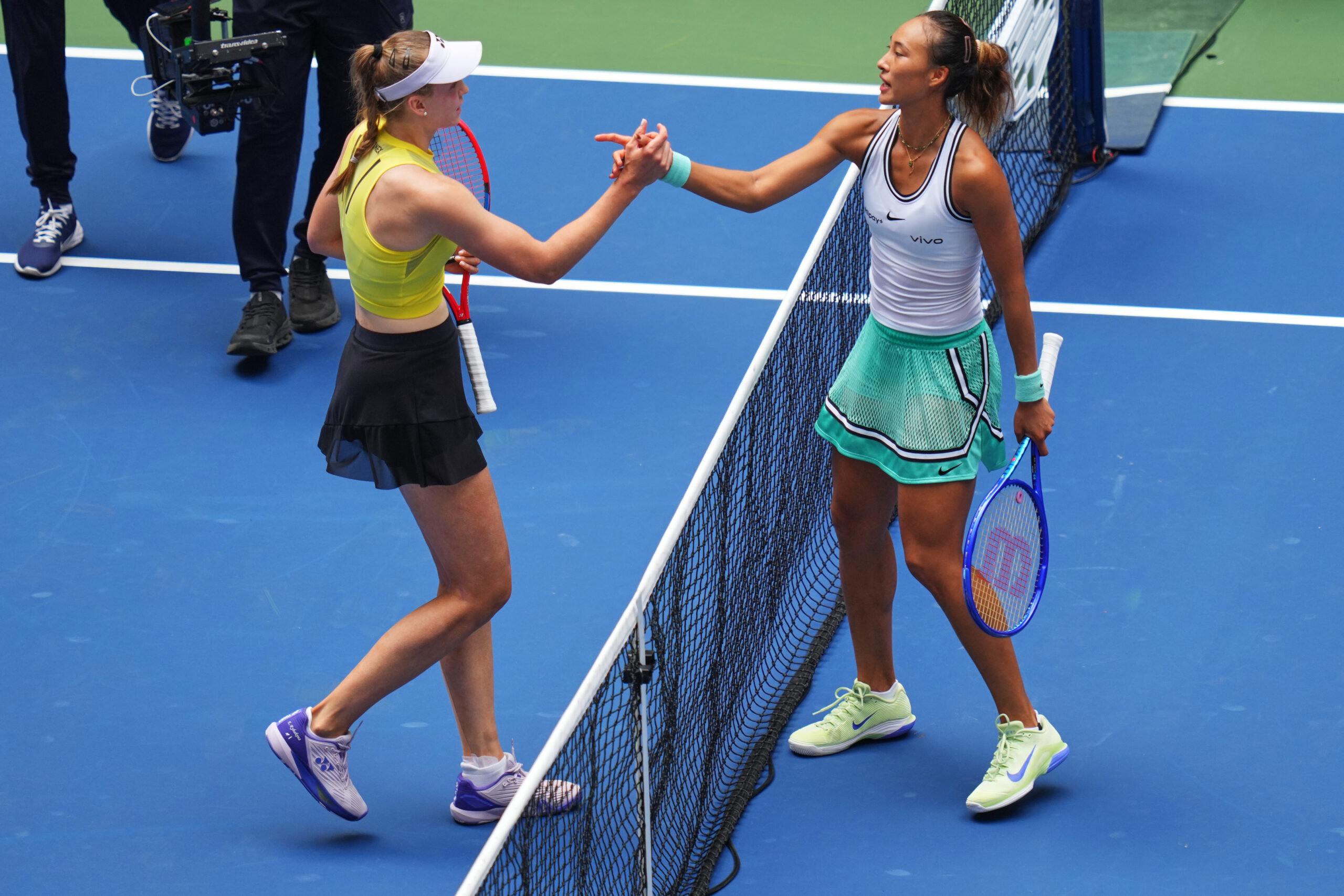
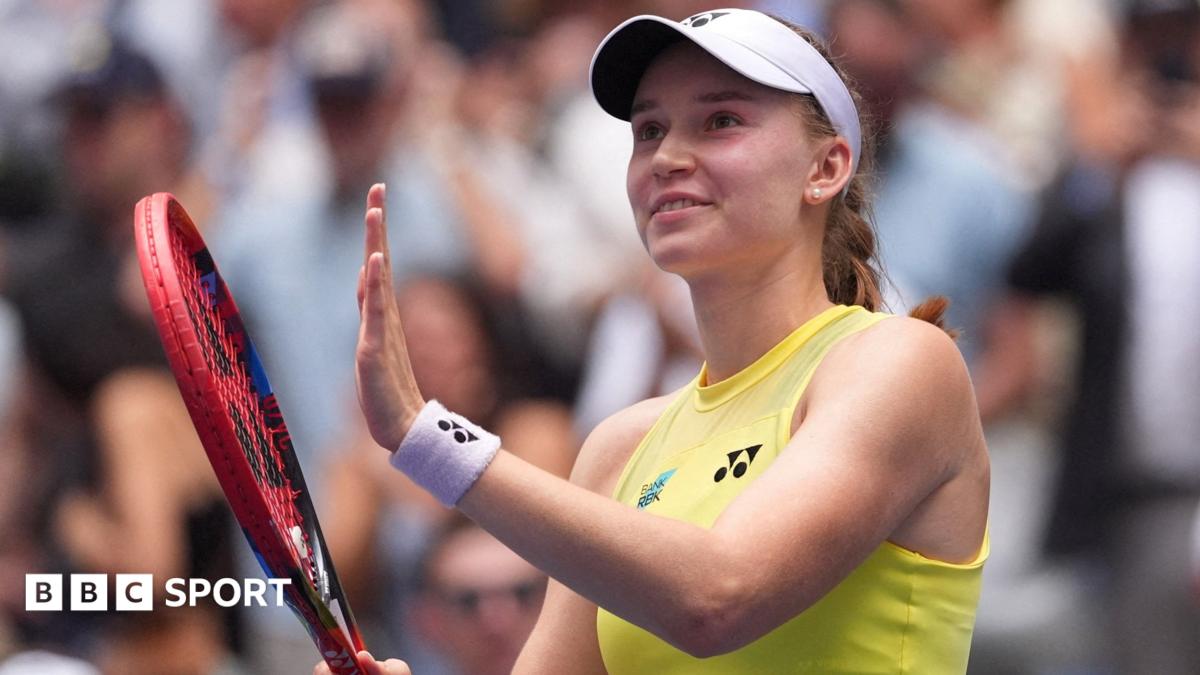
In a meeting between two of the biggest hitters on the women’s tour, Rybakina neutralised Sabalenka’s trademark power with clean ball-striking and clutch serving, before digging deep in the deciding set.
Sabalenka has spent 75 weeks at the top of the rankings and remains the dominant player in the women’s game – particularly on hard courts, with this her seventh consecutive major final on the surface.
But Rybakina has emerged as the Belarusian’s kryptonite after winning seven of their past nine hard court encounters.
Having appeared on course for an impressive comeback win, Sabalenka sat with her towel over her head as she contemplated that yet another final had slipped from her grasp.
Rybakina, meanwhile, was able to celebrate a hugely impressive run to the title, having also overpowered world number two Iga Swiatek and sixth seed Jessica Pegula on her way to the final.
She has now won her past 10 matches against fellow top-10 players and is the first player to claim the title by defeating three top-10 players in each round from the quarter-finals onwards since Naomi Osaka in 2019.
Rybakina is undoubtedly the form player on the WTA Tour, boasting more wins than anyone else since the end of Wimbledon last year (38) and losing just once in her past 21 matches.