wolf

Here’s what we know about Everything Is Terrible’s new Meow Wolf L.A. installation

When Meow Wolf’s Los Angeles location opens later this year, one of its biggest residents will be a 20-foot-tall, 1,000-pound amoeba-like creature named WoWoW.

Created by the L.A.-based multimedia collective Everything Is Terrible, WoWoW is alternately described as a “cosmic entity” and a “cartoony, root vegetable floating alien god.” The multi-eyed organism will serve as the centerpiece of “the N.E.S.T.,” an EIT-designed section of Meow Wolf’s new 26,000-square-foot immersive exhibition space.

A pyschedelic sculpture.

In-progress detail of Everything Is Terrible’s WoWoW sculpture for the forthcoming Meow Wolf Los Angeles, shown with multi-color eye lighting.

(Photo by Allyson Lupovich / Meow Wolf)

That acronym has yet to be explained, and is cloaked in Meow Wolf’s intentionally mysterious messaging about its latest incarnation, which is set in an old Cinemark movie theater in West L.A. and will tackle the ephemeral joys and hardships of Hollywood’s dream factory. The L.A. location will be the Santa Fe, N.M.-based immersive art and entertainment company’s fifth outpost after Denver, Las Vegas, Houston and the Dallas suburbs.

The L.A. space boasts 45 local collaborating artists including Gabriela Ruiz, David Altmejd and more. Each is building their own unique installation featuring a variety of sculptures, dioramas and new media.

Everything Is Terrible is one of Meow Wolf’s most prolific partners, creating a variety of psychedelic characters for various installations over the years. The collective dreamed up the N.E.S.T. about two years ago as a way of paying tribute to maximalist roadside attractions like Wisconsin’s House on the Rock or New Mexico’s Tinkertown Museum. It also tells the story of the Noothies, a made-up community of former below-the-line film workers who stumbled upon a god — and a hidden truth about the nature of reality.

The installation presents a paradox by being a Hollywood idea that is completely un-Hollywood. It may wink at the industry’s unseen heroes, but who can afford to make art for art’s sake in the entertainment industry anymore? That seeming contradiction makes it a very Everything Is Terrible idea.

Founded nearly 20 years ago by a group of friends who met at Ohio University, Everything Is Terrible was launched as a found-footage website that created wild and singular art pieces using thrifted VHS tapes. It found viral success with videos about cat massage, and a dancing dinosaur who warns kids about the dangers of pedophilia, as well as its lauded quest to amass as many VHS copies of “Jerry Maguireas humanly possible. (The group has about 45,000 at the moment, all stuffed in boxes and waiting to be unleashed on the world — perhaps as a pyramid in the desert or maybe featured in some sort of coffee table book.)

“I think our outlook on life has become, ‘look at the worlds that these people created,’” says EIT co-founder Dimitri Simakis. “No one asked them to do this. Someone just wanted to do a kids puppet show in some garage in North Carolina and now they’ve created a simulacra.”

That’s also what the collective is doing with its Meow Wolf exhibit, adds Nic Maier, another EIT member. “It’s what we’ve done for the last 20 years, really. We’re just a bunch of kooks who got together to obsessively make things in celebration of life and in appreciation of each other’s time.”

The marriage of Everything Is Terrible and Meow Wolf is a match made in heaven. The groups first met in 2009, bonded by a shared commitment to interactive art experiences that twist reality using an ornate handmade aesthetic.

A few years later, Maier was hired to work on what would become Meow Wolf’s first large-scale installation, Santa Fe’s “House of Eternal Return.” As he spent hours sculpting large, foam trees for the group, he says he fell in love.

A fantastical, psychedelic take on a forest at Meow Wolf's Santa Fe, N.M., exhibit.

A mystical, neon-colored forest in Meow Wolf’s Santa Fe, N.M., exhibition, “The House of Eternal Return.”

(Meow Wolf)

“We always joke that ever since then, EIT has been a barnacle on the side of the Meow Wolf ship, just hanging on but also occasionally hopping in to contribute,” Maier says.

When Meow Wolf announced it was opening two new spaces, in Las Vegas and Denver, it called on EIT for ideas. Simakis and Maier threw out a few pitches for Denver and one landed: a McDonald’s-like retro freak-out known as Pizza Pals Play Zone, which went on to become one of the attraction’s most talked about, photographed and beloved spaces.

“Pizza Pals Play Zone is super character dense,” says Han Sayles, Meow Wolf’s director of artist collaboration. “It’s just one of those spaces that feels like Meow Wolf. There’s hundreds of different pieces of media framed all around, featuring all of these different characters they created. They even made a bible … that had the narrative backstory of every single character and every deliverable they wanted for that room.”

An immersive art installation.

Pizza Pals Playzone, created by Everything Is Terrible, at Meow Wolf’s Convergence Station in Denver.

(Jess Gallo / Meow Wolf)

When Meow Wolf’s Los Angeles project became a possibility, Sayles says Everything Is Terrible was one of the first groups she pitched as a potential contributor. EIT ended up being offered a custom project, in which the group used Meow Wolf’s extensive production facilities and resources to create their vision for the space, weighing in on everything from the shape of their room to the merch it might inspire in the Meow Wolf gift shop.

“We had a super trusting relationship with them,” Sayles says. “We recruited them as partners and negotiated a deal without knowing what they were going to put in the room. Both Nic and Dimitri have such a beautiful, strong sense of the exact genre of whimsy that we go for and they always deliver super deeply, so we knew it would be amazing.”

Sayles says she also thought the group’s experience of Los Angeles would lend itself well to the overall theme of the venue. Shakti Howeth, a creative director at Meow Wolf, agrees, saying that while Meow Wolf attractions are typically pretty otherworldly, they’re always built around an overarching story.

Meow Wolf's "Omega Mart" starts with a twisted take on a grocery store, complete with fake produts.

At Meow Wolf’s “Omega Mart,” in Las Vegas, guests first enter a satiric take on a grocery store, where portals lead to otherworldly art exhibitions.

(Christopher DeVargas / Meow Wolf)

The N.E.S.T., Howeth teases, will relate to some of the L.A. attraction’s character groups and themes, as well as its overall story. How audiences first encounter WoWoW and the N.E.S.T. will depend on which door they use to enter the room. From there, the points of visual interest will compound upon each other.

“We’re just incorporating all the things we love,” says Maier, noting that includes roadside attractions, folk art and anything “outsider.”

“It involves everything from the importance of dirt and worms to video games to experimental film to worker uprisings to entering literal other dimensions where you can meet what might be God, all within a [553]-square-foot space,” Simakis adds. “There have been times when we’ve been in the N.E.S.T. and thought we crammed in too much … but then you realize it has to be like that, because we’re trying to tell the whole story of the universe in just that room.”

For example, Maier spent much of the last two years building 45 beautifully weird costumes for the attraction, only two of which will be physically in the N.E.S.T. The other 43, he explains, are there for “world-building” and to make the story feel lived in. Everything in the space will have been created by Everything Is Terrible and Meow Wolf, including what seems like real found footage.

Simakis calls the group’s vision for the space “unrelenting joy mixed with benevolent chaos,” as well as “a beautiful folk art museum that’s also a space rave.” He likens what the group is doing to “building a puzzle out of thousands of other puzzles, gluing it together to make a new thing.”

“It’s like we’re making a movie that’s not a movie,” Simakis adds. “It’s a video game. It’s a living space. It’s all of these things, but you get to walk around in it.”

If that’s confusing, it’s because it’s meant to be — at least a little. How each visitor absorbs or receives the space will be entirely up to them. And while that could be a bit terrifying for some artists, to pour everything into a piece only to have the public possibly misinterpret or even ignore it, Maier and Simakis say they’re open to whatever comes.

“Millions of people are going to potentially walk through our space, so it has to be really special,” Simakis says. “We’ve also thought about all the different ways people could enjoy it, whether they’re a baby or a stoner or someone who’s just really into immersive entertainment or escape rooms. Even if you just go to take selfies, great. We’re pro-that. But also, if you want to keep going back or you want to spend hours there, I promise we’ve made it worth your while.”

Meow Wolf L.A. opens later this year. You can catch both Meow Wolf and Everything Is Terrible in the Los Angeles County Museum of Art’s Art Parade on June 20, marching in some of Maier’s 45 costumes from the N.E.S.T.

Source link

California could launch a wildlife coexistence program amid anger over mama bear’s death

A month after a public uproar over a mama bear being euthanized after swiping at a resident in Monrovia, state lawmakers are considering mandating the use of nonlethal ways to help allow wildlife and humans to coexist.

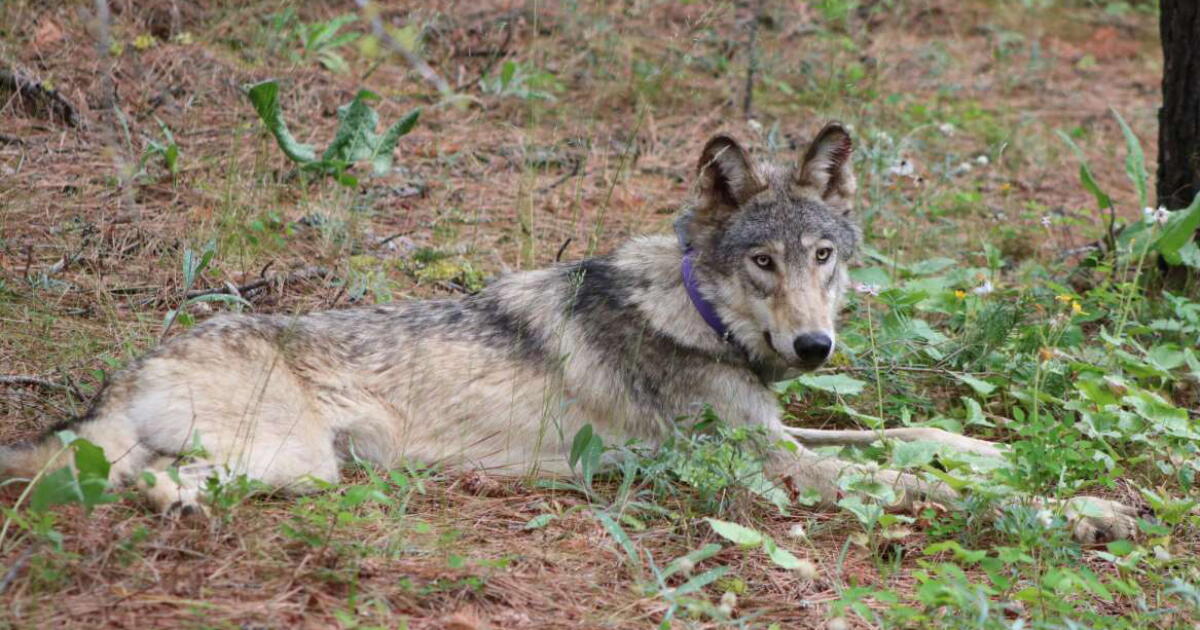
Sen. Catherine Blakespear (D-Encinitas) said she believes the bear’s death, and the state’s decision to kill four wolves last year that were preying on cattle, raised public concern.

“That made everybody realize we have to do better here,” she told The Times on Thursday. “We need to recognize the importance of seeing ourselves, humans, as part of a larger ecosystem that includes animals and plants and our world and trying to protect it.”

Senate Bill 1135, introduced by Blakespear, would direct the California Department of Fish and Wildlife to create the Wildlife Coexistence Program, which would provide public education, offer technical assistance and maintain a statewide incident reporting system. It would help communities deploy nonlethal devices to deter predators, like barriers or noise and light machines.

At a legislative hearing on Tuesday, Blakespear told the Senate Committee on Natural Resources and Water that a three-year state initiative offering similar services was seeing positive results — until it was discontinued two years ago after funding ran dry. She said it was time to implement a permanent program.

“Human population growth, habitat loss and the growth of industry across California inevitably leads to interaction between humans and wildlife,” Blakespear told legislators. “No two animal species are the same and each has unique behavior patterns and territories. SB 1135 recognizes these differences and gives communities the tools to prevent conflict and respond when it occurs.”

The bill would also rename a state program that reimburses ranchers who lose livestock to wolves, calling it the Wolf-Livestock Coexistence and Compensation Program. It would require ranchers seeking compensation to show they were using nonlethal deterrents approved by the department.

Sen. Shannon Grove (R-Bakersfield) stressed that life in rural areas is different than living in a city. She said some families and cattle ranchers have a genuine fear of predators.

“When these baby calves drop on the ground and then two wolves start ripping them apart, it’s not the prettiest thing you’ve ever witnessed,” said Grove, who abstained from voting on the measure. “These wolves are not puppies.”

More than 30 organizations are supporting the legislation, including the National Wildlife Federation, Defenders of Wildlife, California State Assn. of Counties, Animal Legal Defense Fund and Citizens for Los Angeles Wildlife.

The California Farm Bureau and the California Cattlemen’s Assn. are in opposition due to concerns over funding.

Last month, Blakespear sent a letter to the chair of the Senate Committee on Budget and Fiscal Review requesting $48.8 million to implement the legislation, with $25 million earmarked for addressing wolf encounters. Half of the money for wolf conflicts would go toward deterrents; the remainder would compensate ranchers for their losses.

Kirk Wilbur, vice president of government affairs cattlemen’s association, said the organization is concerned about that division of funding — especially if funding is reduced.

Wilbur told legislators Tuesday that the organization supports some aspects of the bill and was having productive conversations with Blakespear to address their concerns.

The bill ultimately passed the committee with a 5-to-1 vote and now heads to the Senate Committee on Appropriations.

Human wildlife conflicts have made headlines in California recently, with a bear refusing to leave a basement for weeks in Altadena and a mama bear dubbed Blondie crossing paths last month with a woman walking her dog in Monrovia.

Blondie swiped the woman’s leg, and was subsequently euthanized by the California Department of Fish and Wildlife. Her two cubs were sent to the San Diego Humane Society’s Ramona Wildlife Center. The bear’s death upset many in the community, as thousands had signed a petition calling for other solutions, like relocation.

Deadly wildlife attacks on humans, however, are rare in California.

There have been six reported human fatalities from mountain lions since 1890, according to the state Fish and Wildlife Department. The agency recorded one human fatality from a coyote in 1981 and another fatality from a black bear in 2023. The department has no recorded human fatalities from gray wolves.

Source link

Wolf Pack Modular Mini Cruise Missiles Pitched For Apache, Black Hawk

L3Harris is pushing its modular Wolf Pack family of “launched effects vehicles” for the U.S. Army, including to equip its H-60 Black Hawk series and AH-64 Apache helicopters, with an eye on the specific demands of a future conflict in the Pacific. The family of vehicles includes the Red Wolf, configured for long-range precision strikes against targets on land or at sea, and the Green Wolf fitted with an electronic warfare payload. Overall, these are part of a wider drive toward fielding modular, relatively cheap, and small systems that increasingly blur the line between uncrewed aerial systems, especially longer-range kamikaze drones, and cruise missiles, as well as decoys.

Readers can refer to our previous coverage of the Wolf Pack family, and it is also worth noting that the company is under contract with the U.S. Marine Corps to deliver the related PASM, the Precision Attack Strike Munition.

At the Army Aviation Association of America’s Army Aviation Warfighting Summit in Nashville, Tennessee, this week, TWZ caught up with Brad Reeves, the director of strategy and requirements for the Agile Development Group at L3Harris, to talk about the company’s vision for the Wolf family with the Army.

L3Harris has formally rolled out its modular Wolf family of "launched effects vehicles," which includes the Red Wolf, configured for long-range precision strikes against targets on land or at sea, and the Green Wolf fitted with an electronic warfare payload.
A rendering of the Red Wolf launched effects vehicle. L3Harris L3Harris

TWZ: What is the primary driver behind the Wolf family, and how is it relevant to the Army’s rotary-wing fleets?

Brad Reeves: The Department of War has a heavy emphasis on the Pacific and a conflict over there. Mass is an issue. We have a lot of exquisite weapons today, but the numbers are not maybe as high as we might hope for a conflict over there. So, they’re trying to solve that problem. Affordable mass has kind of become the buzzword, which basically means, “hey, how do we get capability that we can buy in quantity without breaking the bank?” And so, with that, the Department of War, actually Secretary Hegseth, issued a memo on April 30 of last year. And one of the things he called out specifically was launched effects, the urgency to get that fielded beginning this year. So, that’s a high-emphasis item for those guys.

A U.S. Army UH-60M Black Hawk. U.S. Air Force photo

Launched effects are really meant to be an affordable mass solution for the Army. But the real story behind this is what we call our Wolf Pack family of systems, and our offering and the capability it brings. And the story here is it’s very capable, but it’s what it does for the Army and for Army aviation. So it’s transforming Army aviation, and it’s addressing platforms that lack some relevancy today in the fight. Black Hawks, Apaches, etc, have a very short-range capability, relatively speaking, when you’re talking about the Pacific, and you have the tyranny of distance and anti-access/area-denial threats. It’s a much harder challenge than what we’ve dealt with in the decades since those aircraft were first invented.

Now we’re basically bringing relevancy to those platforms. We’re transforming from a weapons-effectiveness range and lethality range of single-digit kilometers, maybe up to a dozen kilometers, and we’re now extending that to hundreds of kilometers. We’re taking what before was a single-mission aircraft that’s supporting the Army; it’s doing close combat attack missions for Army soldiers on the ground, and is basically specific to that single service. And we’re now expanding that, and we’re giving that platform a joint or coalition viability in a Pacific flight. And so, the relevance now has increased. We’re taking what was before, a single-domain, fully land-based capability. We’re turning it into multi-domain, so now surface, meaning maritime, and land. And then we’re taking the target sets, which were traditionally tanks, maybe threats that we get from ground forces, etc. Again, we’re expanding that so it can be maritime threats and ground threats. It’s kind of a revolution in the way that the Army is going to fight and what they’re going to contribute to the joint coalition force. The Army desperately needs this capability.

A U.S. Army AH-64D Apache fires a Hellfire missile during training. The basic Hellfire has an operational range of anywhere between four and just under seven miles (seven to 11 kilometers). U.S. Army photo by Spc. Dean John Kd De Dios

TWZ: And what are the differences between the Wolf Pack family members?

Brad Reeves: Our launched effects offering, we call it the Wolf Pack family of systems. Today, we have two high-level mission capability variants. We have the Red Wolf, which is the kinetic variant, so a cruise missile. We have the Green Wolf, which has a purely (non-kinetic) electronic warfare payload. So now you’re also doing suppression of enemy air defenses. These types of missions, the DILR mission — detect, ID, locate, report — and/or electronic attack to suppress this threat.

Wolf Pack is designed to have multiple variants, so one aircraft, let’s say an Apache in this instance, you could launch multiple variants, Green and Red. You have a Green Wolf that goes out ahead and is searching and building the EMBM, the electromagnetic battle management. Through some software we call DISCO, which is AI-driven software, it’s building the landscape where the threats are, whether on the surface or on the land.

The wait is over.

Introducing Red Wolf ᵀᴹ and Green Wolf ᵀᴹ, the first vehicles in our expanding pack of launched effects systems. pic.twitter.com/d4oG7fgeE4

— L3Harris (@L3HarrisTech) July 17, 2025

TWZ: How does PASM, the Precision Attack Strike Munition, differ from these?

Brad Reeves: It comes out of our Wolf Pack family. It’s a unique variant designed for the U.S. Marine Corps AH-1Z Viper, and we’re delivering early operational capability. They did a long-range precision fire, LRPF, last September, and that was somewhat of a graduation event. Now we’re basically starting to work with production at our plant in Virginia.

In February 2025, NAVAIR released this image of a Red Wolf-toting AH-1Z, at which time the munitions were identified only as “a new Long Range Precision Fire (LRPF) capability.” U.S. Navy

TWZ: So these are basically loitering munitions?

Brad Reeves: We don’t consider it a loitering munition, but technically, by definition, yes, what it’s doing is it’s flying a pattern. It’s very smart: it goes out, starts detecting threats, then it will set up a pattern to make sure that a) it’s survivable itself, so it doesn’t fly over a threat and get shot down. But b), it will maximize the search pattern, and then it will deconflict with the others in the pack, so that you can, if you have a large area, you can have one, one will say, “hey, I’m going to go do maybe a zigzag pattern over here looking for threats. You go do a zigzag pattern and then report those back.” Once they find the threats, they’ve got options. Either the aircraft can just avoid the threats because they know where they are, or if they need to go through them, then you can either use electronic attack to jam them, or you can send a signal to one of the kinetic variants. Then the kinetic variant does the destruction of enemy air defenses mission.

That’s kind of why we call it the Wolf Pack: working together collaboratively in a pack to perform a mission that’s assigned by the pilot, and they do that autonomously. They have been ground-launched. They have been air-launched from both manned and unmanned platforms, and they can be launched from rotary-wing or fixed-wing. Since we’re here with the Army, the target is Black Hawks and Apaches very specifically.

In the past, L3Harris has also highlighted the potential benefits of pairing its Red Wolf miniature cruise missile with the U.S. Air Force’s OA-1K Skyraider II. L3Harris

TWZ: Would you say that the Wolf Pack is oriented generally towards the SEAD/DEAD mission?

Brad Reeves: It is much broader. But certainly one of the main applications is SEAD/DEAD. With the EW variant, that’s really applicable when you’re doing SEAD/DEAD, or you’re just looking for platform survivability, meaning you’re going towards a mission, but you want to maybe send something out ahead. These fly at high subsonic speeds. They’re going out ahead when launched from a helicopter. They’re scouting out the area, giving them the picture, and allowing them to either avoid, suppress, or defeat threats that may be in their way.

A graphic depicting a notional ground mission scenario involving the employment of Red Wolf and Green Wolf launched effects vehicles. L3Harris

TWZ: Presumably, the cost point of these means the numbers can be fairly scalable, depending on the requirement?

Brad Reeves: Absolutely, it depends on the mission set. One of the advantages is that, while it is an affordable mass munition, it also comes with significant capability. There are some, what I would call differentiators, that put this capability at the high end of the affordable mass, meaning it’s very inexpensive compared to traditional legacy weapons that the forces are using today. We usually say it’s about five times cheaper than what these aircraft would be using today. There are BAAs, broad area announcements, something the U.S. government will release to industry, asking for different capabilities. Right now, when they’re asking for this type of capability, they’re usually targeting somewhere between $300,000 to $500,000 for that market, per round, and we’re certainly in that sweet spot.

TWZ: Aside from the small turbine engine that they share, how modular are the Wolf Pack vehicles themselves?

Brad Reeves: Some people call it a truck, but for some reason, that offends me. But you’ve got the platform, and we’ve designed it modularly with what’s called WOSA, weapon open systems architecture. And so you can interchange the payload. You can take the platform, you can put a warhead in it, and it becomes kinetic. You can take the warhead out, you can put an EW payload in it. I’m oversimplifying a little bit because with the kinetic variant, there are sensors and other stuff. So you probably wouldn’t physically take a kinetic one and swap out the warhead for an EW payload.

Side-by-side renderings of the Red Wolf and Green Wolf, showing them to be functionally identical, at least externally. L3Harris

TWZ: When it comes to Green Wolf, which has no warhead, is this designed to be expendable or recoverable?

Brad Reeves: We have both. We have a recoverable variant. It depends on what the customer wants. In some instances, they want recoverability. And with recoverability, you lose a little bit of range. So in some instances, it’s going to be on a one-way mission; they just want maximum range. Basically, the parachute equipment we use to recover it takes up a little bit of space that otherwise would be fuel tank space.

The Deceptor small-form-factor software-defined radio frequency (RF) electronic warfare (EW) payload from L3Harris. In its promotional material, the company has indicated that this is a potential payload for the Green Wolf. L3Harris

TWZ: How do these vehicles navigate?

Brad Reeves: It has the standard inertial navigation and GPS. It has those capabilities inside of it, and then the seeker effectively is used purely for in-game targeting.

TWZ: To what degree would you be able to surge production to meet urgent demands?

Brad Reeves: We gave our manufacturing team the problem and said, “Hey, multiple customers are asking for as many as a thousand per year. We expect this to really blow up. How do we know how big a plant to build? How do we know what we can do?” And so they actually designed a modular, scalable production plan. In theory, you can scale up to as many as you want. But right now, what we’re doing is we’re scaling towards a thousand a year, which is the current path, and then if the demand signal spikes, we have the ability to scale above that.

The beauty of this vehicle is that there’s a lot as a significant amount of commonality, which does allow us to scale, and also gives us economies of scale, price, etc.

Meet the “Wolf Pack” thumbnail

Meet the “Wolf Pack”


TWZ: Where are you now with testing?

Brad Reeves: We’ve flown over 50 times in test events with the military. So we’ve done multiple services. We’ve done formal testing with those services. It’s been launched twice off the AH-1Z. We’ve launched off fixed-wing UAS, but this gets a little sensitive with the customers, as to what those platforms are. And we’ve done ground launch.

TWZ: Do you have a pathway toward testing on the Black Hawk and Apache?

Brad Reeves: I am very passionate about making sure this gets fielded to U.S. Army soldiers, specifically the Apache and the Black Hawk. Right now, we’ve obviously got Epic Fury. But if something lights off in the Pacific, this just pales in comparison. If I were young enough to be flying in that fight, I would want more capability. And so I am a little bit of a zealot. The U.S. Army, I know, has to have this capability, and I believe they want it. It’s going to be a game-changer for them, and it’s going to be important to the joint force and coalition forces. It is a significant transformational capability.

Jamie Hunter contributed to this story.

Contact the author: thomas@thewarzone.com

Thomas is a defense writer and editor with over 20 years of experience covering military aerospace topics and conflicts. He’s written a number of books, edited many more, and has contributed to many of the world’s leading aviation publications. Before joining The War Zone in 2020, he was the editor of AirForces Monthly.


Source link