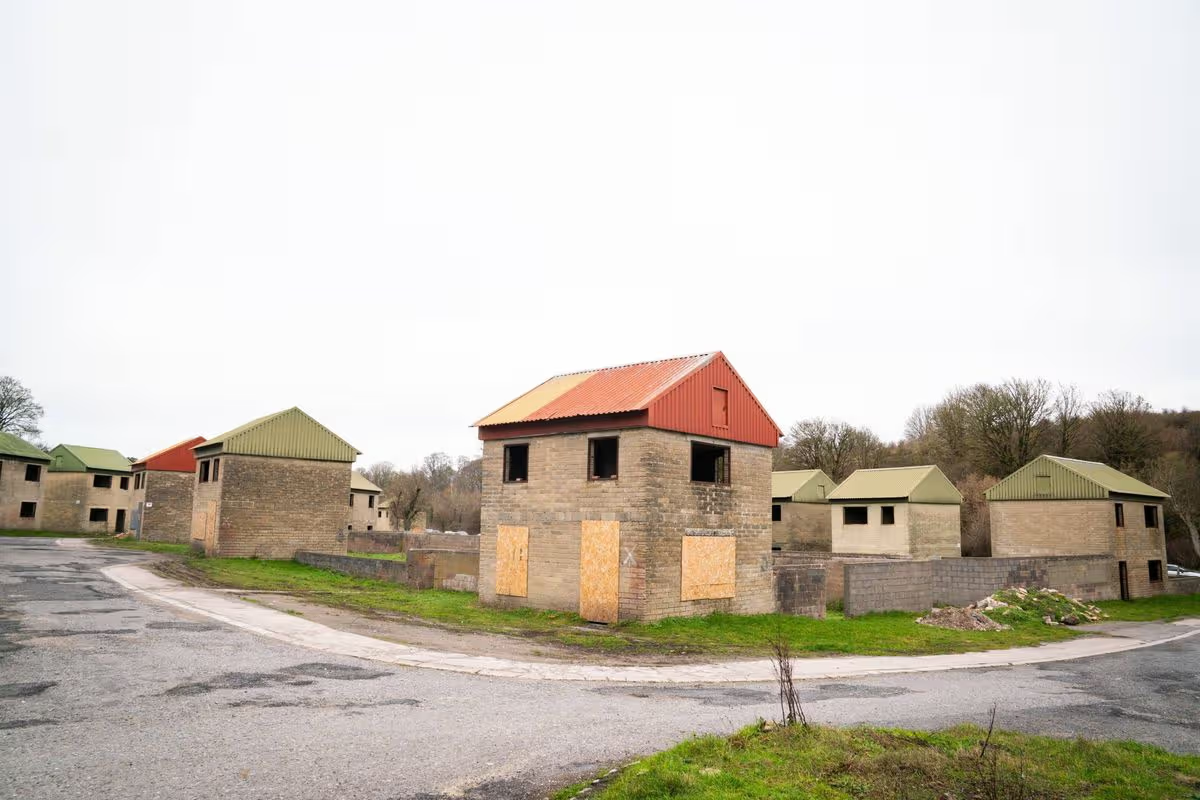
Forgotten village in Wiltshire was evacuated in 1943 for US troops to train ahead of World War II, and residents were never allowed to return home

It sits within the British Army’s training area(Image: William Dax / SWNS)
Just a stone’s throw from the ancient monument of Stonehenge, and roughly an hour from Bath, lies a hidden village frozen in time.
The abandoned village of Imber in Wiltshire stands devoid of inhabitants, its buildings crumbling into decay. This once-bustling parish on Salisbury Plain now remains eerily silent, cut off from civilisation and accessible to visitors for only a handful of days each year.
Similar to several other communities nationwide, Imber’s residents were forcibly removed from their properties in 1943 as war loomed. They received just 47 days’ warning before their village was requisitioned to provide training facilities for American forces preparing for the Second World War.
Locals are believed to have assumed they would reclaim their homes following the conflict’s conclusion, but permission to return was never granted. Salisbury Plain subsequently evolved into Britain’s most extensive military training facility, now spanning more than 94,000 acres.
History
Whilst evidence suggests a modest community existed at Imber from as far back as 967 AD, with documentation indicating habitation in the Domesday Book of 1086, the village housed over 150 inhabitants when evacuation occurred.
Best Cotswolds holiday cottage deals

The Cotswolds is famous for its rolling hills, honey-coloured villages and quintessential English charm. Sykes Cottages has a wide range of places to stay, starting from £38 per night.
During the 14th century, its population peaked at approximately 250 residents, declining to roughly 152 by the 1940s, and following the conflict, the village mourned 28 of its men who had been in service.
A correspondence sent to a resident, providing brief notice of evacuation, read: “Arising out of the decision that increased training facilities are to be made available in the Imber area, I regret to inform you that it is necessary to evacuate the major part of the Department’s Imber Estate, including your dwelling.”
Despite protests from villagers, their efforts proved unsuccessful, and authorities determined even years after the conflict that the terrain remained invaluable for military purposes and too hazardous for civilian habitation.
Initially, however, many people were prepared to leave, viewing it as their patriotic responsibility and wanting to support those serving on the battlefield.
Numerous structures within the settlement sustained damage from explosions during and following the conflict, as well as from military exercises, and subsequently deteriorated further due to exposure to the elements. Even had former inhabitants been permitted to return, the properties would have been uninhabitable.
Battle for the village
In 1961, following years of separation and discontent, over 2,000 individuals gathered to campaign for the villagers’ return. This triggered a public inquiry, though it ultimately ruled in support of Imber’s ongoing military utilisation.
It wasn’t until the 1970s that certain evidence finally emerged, resulting in an agreement permitting villagers to return, but by that point it was considerably too late.
It was subsequently determined that the church could be preserved and would welcome worshippers on the Saturday nearest to St Giles’ Day each year for residents and locals to gather. This tradition continues to this day.
Present Day
Whilst the remainder of the parish has fallen into decline, neglected and forgotten, St Giles’ church in Imber stands preserved as it always has been, safeguarded by the Diocese of Salisbury.
The church achieved Grade I listed status in 1987 and remains a meaningful site for those wishing to commemorate the village and its formerly thriving community.
Annually around St Giles’ Day, a service takes place which draws former inhabitants alongside soldiers who trained in the village and other members of the public. A further service occurs on the Saturday preceding Christmas, a custom established in 2009.
The Ministry of Defence must permit public entry to the village on these occasions, which are now restricted to merely three times annually. Honouring the village’s heritage, ImberVillage.co.uk commemorates the lives of former inhabitants and enables their stories and recollections to be preserved.