widen

Drone Strike On Egyptian Port On Mediterranean Stokes Concerns Iran Conflict Will Widen (Updated)

Egyptian officials have now confirmed that the port facility of Damietta was hit by a drone strike yesterday, the first public acknowledgment that the country has come under fire during this conflict. Though Cairo did not say who launched the attack, it raises the specter of another part of the region being brought into fighting that is largely centered on the flow of energy supplies.

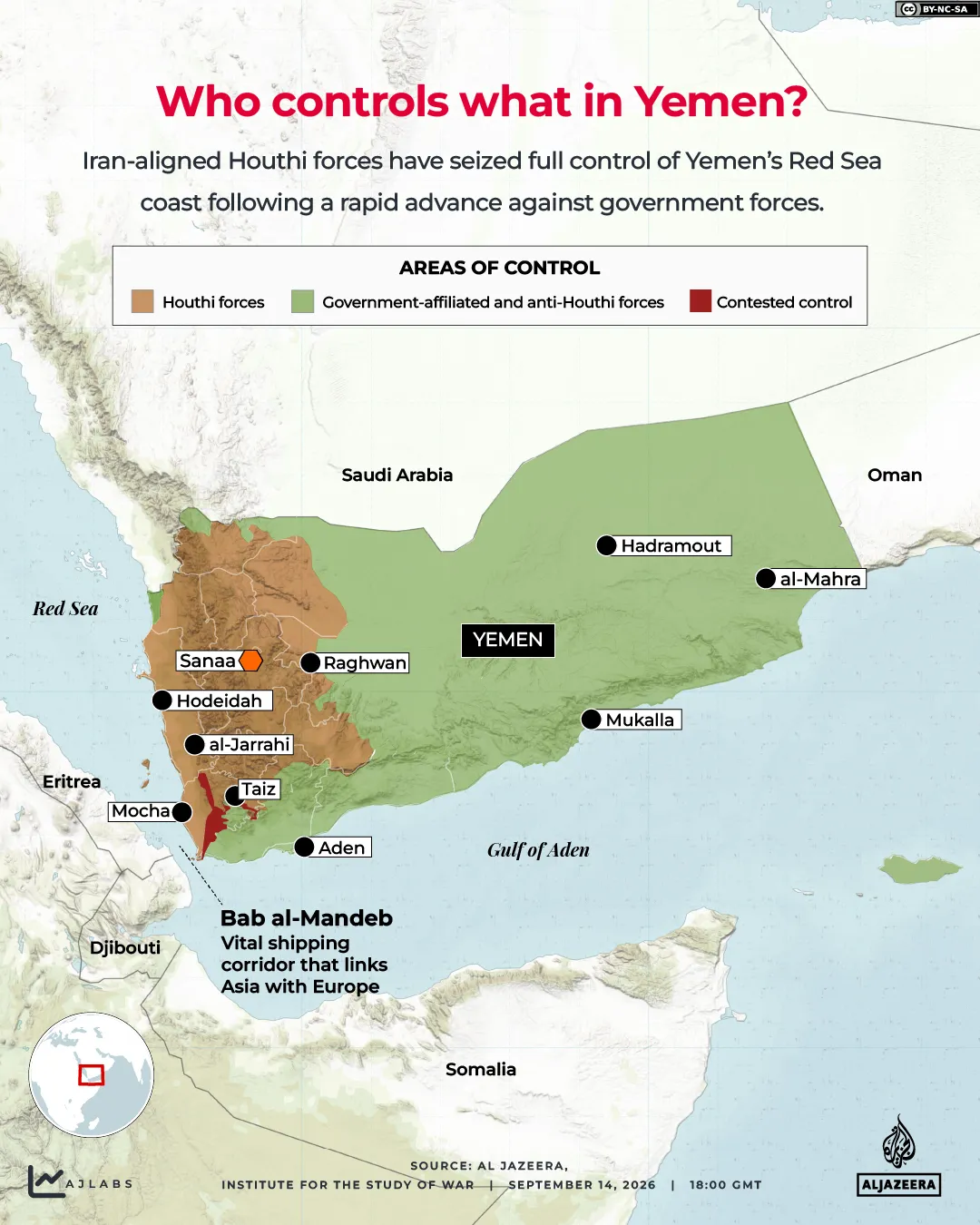
The attack came as the Houthis began to consider imposing tolls on shipping through the Bab al-Mandeb Strait, where they have already established a blockade on Saudi shipping and attacked its vessels and energy infrastructure. Meanwhile, Iran continues to lob missiles and drones across the region as tit-for-tat strikes have resumed after a short pause.

“Following the successful containment of the fire, the relevant authorities conducted initial investigations into the incident, which indicated that a drone was responsible,” the Egyptian cabinet said in a statement on Thursday, according to state-funded Middle East News Agency. The cabinet added that “no party has claimed responsibility for the attack.”

“The competent authorities are continuing their investigations to determine the full circumstances surrounding the incident and to take the necessary measures to safeguard Egypt’s interests and national security,” the official government outlet added.

As we reported yesterday, the Ambrey maritime security firm said two vessels were struck by drones at Damietta. One of the ships was a U.S.-owned and operated, Marshall Islands-flagged liquefied natural gas (LNG) floating storage facility and the other was a Greek-owned and operated, Bermuda-flagged LNG tanker, Ambrey stated.

A maritime security specialist told us that the U.S.-owned and operated, Marshall Islands-flagged floating gas storage facility was the Energos Winter while the other ship was the Gaslog Salem.

While there has been no official claim or attribution, U.S. President Donald Trump hinted that it was an Iranian attack.

Asked during a press conference whether Iran was behind the drone attack on the Egyptian port, Trump said “it’s a little more of the same, but it’s going to be straightening out, it’s going to be straightening out. But in the meantime, we are going to be hitting them very hard, because it is our turn to hit ’em. They know it’s coming, they are asking us not to do it.”

The New York Times later reported that two Iranians, who asked not to be named to discuss security matters, “said the explosion was a drone attack designed to show that global shipping and energy supplies could be more deeply disrupted if Iran chose to escalate. The individuals did not say whether Iran or an Iran-allied militia in the region had launched the attack, or from where.”

The Iranians are not the only ones targeting energy facilities in the region. Several of their proxies have as well. It is part of a larger effort to impose cost on the U.S. and its allies.

The Saudis claim their oil infrastructure has been attacked by Iranian-backed militias in Iraq in addition to actions by the Houthis in Yemen. That in part prompted a joint U.S.-Saudi strike on militia targets across that country. It was the first publicly confirmed instance where U.S. and Saudi forces worked in concert.

The Iranian-backed Houthis, who, as we noted above, are striking Saudi oil infrastructure, on Thursday denied involvement in this incident.

“There is no truth to the rumors about Yemen targeting a ship in the port of Damietta in the Arab Republic of Egypt,” the group stated on Telegram. “The Yemeni position is clear, declared, and explicit, and it only targets the Saudi regime for its unjust blockade and ongoing aggression against the Yemeni people.”

U.S. Central Command, which oversees American military operations in the Middle East, deferred questions about the incident to Egypt.

Regardless of who attacked Damietta, expanding the conflict to Egypt’s Mediterranean ports marks a significant potential escalation. The region’s two main sea arteries for energy shipments are already being choked off. The Iranians have largely closed down the Strait of Hormuz and there is an ongoing U.S. blockade on Iranian ports. The Houthis, as previously noted, have halted Saudi transits through the BAM, which has had a cascading effect on other nations not wanting to risk attack.

As the Iranian threats to the Strait of Hormuz increased, the kingdom diverted millions of barrels of oil per day through pipelines to its Yanbu port on the Red Sea in an effort to minimize the energy shortages due to the hostilities in the Persian Gulf. 

That workaround served its purpose until the Houthi blockade, at which point Saudi Arabia began boosting shipments through the Suez Canal. Exports via that route “rose 106% for the week of the embargo announcement to 1.06 million barrels per day, up from the week starting July 13, according to Kpler data,” The National News recently noted.

The port of Damietta, where yesterday’s attack took place, is 33 miles west of Port Said, which is at the northern entrance to the Suez Canal. Closure of the canal, or even a significant drop in traffic through it, would add to the pressures on the global economy already reeling from what is taking place in the Strait of Hormuz and the BAM.

The Egyptian port of Damietta, struck by drones, is about 33 miles west of the entrance to the Suez Canal. (Google Earth)

In a post on X, the Windward maritime intelligence firm called the attack on Damietta “a third front, separate from the Gulf and Red Sea.”

“The strike is assessed as separate from the Houthi Saudi-blockade campaign. Iranian state television had named Damietta as a retaliation target two days earlier, citing Ukraine’s strike on an Iranian vessel in the Caspian Sea, pointing toward an Iranian-directed operation rather than a Houthi one,” Windward explained in a related analysis.

Operation Aspides, the European-led task force created to provide security to shipping in the Red Sea region, told us it is monitoring reports that the Houthis are considering placing a toll on transits through the BAM, similar to what Iran has tried to impose in the Strait of Hormuz.

“At this moment, there has been no official statement from the Houthis confirming such a measure,” a spokesman told us Thursday morning. “We continue to monitor developments closely and are going to implement our mandate within our means and capabilities.”

On Thursday, Aspides posted an image of one of its member warships, the Italian frigate Bergamini, escorting merchant vessels in the Red Sea region.

Meanwhile, Iran is continuing to lash out across the region.

Kuwaiti officials said one person was killed in an Iranian barrage today.

“The sinful Iranian aggression targeted a building belonging to one of the Chinese companies in the north of the country, resulting in the death of one worker and causing serious material damage to the building,” the Kuwait Defense Ministry (MoD) stated on X. “The Armed Forces affirm that they will continue carrying out their tasks and duties with high efficiency, and taking all necessary measures to protect national sovereignty and preserve its security and stability, in coordination with the competent authorities, in a way that safeguards the safety of citizens and residents.”

The Jordanian military said it foiled an Iranian attempt to target the kingdom with five missiles. There were no casualties, officials said.

The Islamic Revolutionary Guard Corps (IRGC) claimed missiles made it through and that three F-35 Joint Strike Fighters were destroyed and three more damaged at Muwaffaq Salti Air Base (MSAB) in Jordan. The IRGC said it was in response to deaths caused by yesterday’s attacks by CENTCOM. However, the IRGC frequently fabricates claims or greatly exaggerates them and we cannot independently confirm this one.

As we have pointed out in the past, the base has been frequently targeted by Iranian missiles and drones. Three U.S. Army soldiers were killed in a strike there on July 17.

We reached out to CENTCOM for comment, which a short while later put out a statement on X denying the IRGC claim.

Regardless of the claims, the constant Iranian bombardment is beginning to stir unrest in Jordan, where public dissent is banned.

“Hundreds of Jordanian political, legal and other figures signed an open letter last week calling for the withdrawal of U.S. forces from Jordan,” The New York Times reported. “People who signed the letter said they were driven by a sense of national responsibility and concern that the troop presence endangered Jordanian sovereignty.”

“We maintain that their presence exposes Jordan to security, political, and economic risks that serve no national interest and increases the likelihood of our country being dragged into a regional conflict to which it is not a party,” the letter said.

As this conflict drags on, CENTCOM commander Adm. Brad Cooper, “has prepared an option for a punishing air campaign against Iran that could take up to two weeks,” The Wall Street Journal reported, citing people familiar with the matter.

“Now, as Trump moves to strike back after Iran’s surprise missile attack Tuesday, the president will decide how far to go,” the newspaper noted. “He could greenlight Cooper’s option of 10 to 14 days of intensive airstrikes intended to cripple Iran’s missile capability despite warnings that the U.S. is running low on air-defensive munitions. Or, he could opt for a more limited military strike in the hopes diplomacy could be pursued.”

Iran, working to rearm as the fighting continues, is expected to receive “a first shipment out of up to 400 Chinese-made shoulder-fired air-defense missile launchers,” Reuters reported, citing three sources familiar with the deal.

“The purchase, valued at $60-70 million, is one of Tehran’s largest-known efforts to strengthen its short-range air defenses since the outbreak ‌of its war with the U.S. and Israel, which exposed gaps in Iran’s ability to protect military sites and strategic infrastructure,” the outlet noted.

That’s it for now. We’ll update this when there is more information to share.

UPDATE: 4:58 PM EDT –

Iranian Foreign Minister Abbas Araghchi addressed the drone strike on Damietta. In a post on X, he hinted at Israeli involvement but did not explicitly deny that Iran carried it out.

“Egypt is considered a friend and important partner in the region, and its security constitutes an utmost priority for us,” Araghchi stated. “We must all remain vigilant toward Israeli schemes and ‘false flag’ operations that aim to undermine regional peace. The threat is clear, shared, and fears Muslim solidarity.”

Contact the author: howard@twz.com

Howard is a Senior Staff Writer for TWZ. He writes frequently about conflict, focusing heavily on the Middle East and Ukraine, and interviews with military and intelligence officials and industry leaders from around the globe. He lives near Tampa, Florida, home of U.S. Central Command, U.S. Special Operations Command.


Source link

Houthi Blockade On Saudi Red Sea Oil Transits Threatens To Widen War, Strangle Energy Supply (Updated)

As renewed hostilities between Iran and the U.S. and its allies enter a 10th day, the Houthi rebels of Yemen say they are imposing an embargo on Saudi oil shipments passing through the Bab el-Mandeb (BAM) Strait. The move threatens to add further pressure on oil exports from the Middle East, already drastically affected by the Iranian closure of the Strait of Hormuz and the resumption of the U.S. blockade on Iranian ports. Saudi Arabia has diverted millions of barrels of oil per day through pipelines to its Yanbu port on the Red Sea in an effort to minimize the energy shortages due to the hostilities in the Persian Gulf. This also raises the specter of the U.S. having to get as involved as it did during the previous Houthi campaign against shipping that ended last September, which could pull resources away from Iranian-focused operations.

Meanwhile, President Donald Trump renewed threats against Iran over the recent deaths of U.S. troops while reports have emerged that he is considering widening the conflict. However, the massive expenditure of air defense munitions that has already taken place is a major consideration. In addition, there are growing concerns about the extent of the damage to U.S. bases in the region and the uptick in casualties.

On Monday, Kuwait said it came under Iranian fire again.

“Kuwaiti air defenses are currently engaging hostile missile and drone attacks following the heinous Iranian aggression,” the Kuwaiti Defense Ministry stated on X. “The General Staff of the Army notes that any sounds of explosions heard are a result of air defense systems intercepting hostile attacks. Everyone is urged to adhere to the security and safety instructions issued by the relevant authorities.”

Hours earlier, Bahrain said it too had come under a new wave of Iranian attacks.

“The General Command of the Bahrain Defense Force (BDF) announces that Iran is continuing its systematic hostility approach through its sinister attacks targeting civilians in the Kingdom of Bahrain,” BDF posted on X. “The General Command clarifies that, with strong will and high combat readiness, the air defense systems attacked, intercepted and destroyed a number of treacherous Iranian air strikes today, Monday, July 20, 2026.”

The extent of the damage in either Kuwait or Bahrain is unclear at the moment. These most recent attacks came after U.S. Central Command on Sunday night said it wrapped up a ninth straight day of strikes on Iranian assets, targeting “military command centers, air defense and coastal surveillance sites, maritime capabilities, missile and drone launch sites, and communications networks to further diminish Iran’s ability to attack commercial vessels and civilian mariners transiting the Strait of Hormuz,” the command stated on X.

Amid this kinetic activity, as we noted earlier in this story, the Iranian-backed Houthis say they will no longer permit Saudi Arabian ships passage through from the Red Sea into the Bab el-Mandeb Strait.

“The Yemeni Armed Forces declare a maritime embargo against the criminal Saudi enemy, based on the equation of an ‘eye for an eye,’ effective immediately upon the issuance of this statement,” the Houthis stated on Monday, according to the official Houthi SABA media outlet. The move follows increased tensions between the Houthis and Saudi Arabia as well as a request by Iran “to stand ready to close the Red Sea oil route if the United States strikes Iranian power infrastructure,” Reuters reported last week. “The idea has been discussed within the Islamic Republic’s leadership, and the message has been conveyed to Iran’s Houthi allies.”

Houthi forces on Monday reportedly began issuing warnings on open maritime frequencies near Yemen that the BAM is closed to Saudi shipping and its vessels are subject to attack.

A Houthi shut down of the Bab el-Mandeb (BAM) Strait, a narrow stretch of water between Yemen and Djibouti, would choke off the flow of oil exports from Saudi Arabia, exacerbating the above-mentioned impingement on the flow of oil from the closed Strait of Hormuz. 

Having both straits closed at once is something of a ‘sum of all fears’ scenario for the global energy marketplace.

“The full closure of the BAM would cut global oil supply by 7% as it would leave most Saudi oil exports unable to leave the region,” Reuters noted on Monday. “The disruption would ​add to the massive cut to global oil flows from the war in the Gulf, which has already reduced shipments by 10% of global supply.”

You can read more about the effects of both straits being closed at once in our story about that here.

The Bab el-Mandeb Strait is a strategic chokepoint where the Houthis declared they have imposed an embargo on Saudi shipping. (Google Earth) The Bab al-Mandab Strait between Yemen and Djibouti has become a dangerous chokepoint of Houthi attacks. (Google Earth image)

Beyond affecting the flow of oil, a Houthi blockade on the BAM threatens to open a new front in this conflict.

The Houthis carried out a campaign against shipping in November 2023 in solidarity with Palestinians over the latest war between Israel and Gaza. However, while it was ostensibly aimed at only Israeli connected ships, numerous commercial vessels with no clear Israeli ties were attacked as were several U.S. and allied warships. The campaign stretched into the summer of 2025, forcing some vessels to avoid the Suez Canal for a far longer route around Africa, boosting shipping costs by nearly $200 billion at the time.

The Houthi attacks also forced the U.S. and allies to deploy many warships, including the Eisenhower and Truman Carrier Strike Groups (CSG) to both defend against Houthi attacks and strike targets in Yemen. These operations resulted in a large expenditure of air defense and strike munitions.

You can see video of some of those encounters below.

WATCH: CENTCOM releases footage as US HAMMERS Iran thumbnail

WATCH: CENTCOM releases footage as US HAMMERS Iran


The possibility exists that a new wave of Houthi attacks — especially if non-Saudi ships are targeted — could drag in U.S. forces already in heavy use in the Persian Gulf region battling the Iranians. This sets up a major showdown as Saudi oil is a lifeline to Asian supplies hobbled by conflict in the Persian Gulf. We reached out to CENTCOM for comment and will update this story with any pertinent details shared.

Earlier on Monday, the head of the European-led task force providing maritime security in the Red Sea region told us the Houthis remain a threat to navigation despite not having attacked any merchant vessels since September 2025.

“The security situation in the Bab el-Mandeb remains fragile and is highly sensitive to regional escalation,” Rear Admiral Vasileios Gryparis, Commander of EUNAVFOR ASPIDES, told TWZ. “On the rhetorical level, the Houthis’ leadership reiterated several times their alignment with the broader Axis of Resistance.”

Gryparis’s comments, in response to a query from last week about Iran’s outreach to the Houthis, came before the Yemeni group’s embargo declaration. 

“From an operational standpoint, we assess that the Houthis pose a threat and are capable of rapidly escalating,” the ASPIDES commander told us. “We maintain a frequent presence at sea, monitor the situation, and adjust our actions when needed. In the event of a resumption of Houthi attacks on merchant vessels, which remains a possibility, we are present and ready to implement our mandate, within our means and capabilities. ASPIDES remains ready, within its defensive mandate, to adapt to evolving operational requirements.”

A French destroyer operating under EUNAVFOR ASPIDES provided support to a commercial vessel transiting the Red Sea region. (ASPIDES)

Being drawn into defending against a new Houthi campaign on shipping in the Red Sea region would exacerbate the strain on U.S. forces already under tremendous pressure from Iran. In addition to defending against ongoing barrages, the U.S. has committed about 20 U.S. warships, along with hundreds of aircraft dispersed across various bases, vessels, and forward arming and refueling points in the Middle East, to maintaining the newly reimposed blockade on Iranian ports. Moving these assets to another prologned shooting match in the Red Sea would degrade those capabilities and the ability to support a war effort should it fully erupt. It’s a capacity issue.

Expanding the fight against Iran is already in discussion by the Trump administration.

“The U.S. is planning for a wider war,” a U.S. official familiar with internal administration discussions told The Washington Post.

But the official cautioned that “the expansion of U.S. operations will be limited by dwindling stockpiles of air defense and long-range munitions and constraints on the ability to surge more troops and aircraft into the area because of battle damage,” the newspaper continued.

“We do not have enough to safely sustain operations, and I don’t think the White House is aware of that,” the Post said the official added.

While we cannot independently confirm this latest Post report about internal administration debates, we have frequently highlighted concerns over U.S. stocks of these munitions and the difficulty in replacing them.

All this comes as there are increasing signs of damage at U.S. facilities in the Middle East from Iranian barrages. Though largely spared in the initial phases of Epic Fury due to robust air defenses, the airfield at Muwaffaq Salti Air Base in Jordan has taken the brunt of recent attacks, while several other installations have been hit as well.

Muwaffaq Salti, as we have frequently reported, has come under attack numerous times. In March, CNN obtained imagery from Planet Labs showing an AN/TPY-2 radar damaged, or even possibly destroyed, following an Iranian attack there.

The air base has long been a major regional hub for U.S. operations, and is being very actively utilized in the current conflict. It hosts the greatest concentration of U.S. tactical aircraft in the region, and thus is an extremely important target, where, as we pointed out, even one ballistic missile landing on an apron could destroy multiple prized aircraft and take the lives of U.S. service members or cause injuries.

Satellite imagery has emerged on social media purporting to show the extent of the damage at MSAB. The following shows what is claimed to be before and after views of strikes on aircraft hangars and containerized housing units. The imagery is provided by Iran and, because U.S. satellite firms do not collect over American facilities, we cannot independently confirm what is being depicted.

Beyond damage, the number of troops killed and injured in Iranian attacks is rising. On Monday, the Pentagon identified two soldiers killed in action.

“1st Lt. Tyler James Feehan, 25, of Ewa Beach, Hawaii, was killed in action on July 18, 2026, and Pvt. Isabella Gonzales, 19, of Carrollton, Texas, was killed in action on July 17, 2026, during an enemy attack on July 17, 2026, at Muwaffaq Salti Air Base, Jordan,” the Pentagon said in a statement. “The incident is under investigation.”

Both soldiers worked for air defense units. Feehan was assigned to 2nd Battalion, 55th Air Defense Artillery Regiment, 32nd Army Air Missile Defense Command, Fort Bragg, North Carolina. Gonzales was assigned to 1st Battalion, 57th Air Defense Artillery Regiment, 52nd Air Defense Artillery Brigade, 10th Army Air Missile Defense Command, Ansbach, Germany.

Today’s identifications came after CENTCOM on Saturday reported that two U.S. service members in Jordan were killed in action on July 17. Additionally, the command said one service member was currently missing, but later said unidentified remains were found. 

CENTCOM also reported on Sunday that “a U.S. service member in northern Iraq was killed in action July 18 during a controlled detonation of unexploded ordnance from a downed Iranian one-way attack drone. A second service member was wounded and continues to receive medical treatment for a minor injury.”

We have asked CENTCOM and the Army to confirm that Feehan was the soldier killed in Iraq during the controlled detonation or if he was killed in another incident.

It should be noted that in announcing the identities of Feehan and Gonzales, the Pentagon said they died in support of Operation Inherent Resolve (OIR), which is the fight against ISIS in Iraq and Syria. We asked the Pentagon for clarity and they deferred us to CENTCOM, which has yet to respond.

Pentagon

Meanwhile, The New York Times accused the Pentagon of hiding the number of injured troops.

“In the week leading up to the Iranian attack on Friday that killed two U.S. soldiers and left one service member missing in Jordan, Iran carried out three other strikes against U.S. forces in the country,” the paper explained. “Those attacks injured dozens of U.S. service members and damaged several helicopters, according to several U.S. officials, who spoke on the condition of anonymity to discuss operational matters. But the Pentagon did not disclose the earlier strikes, nor the casualties and damage they inflicted.”

The episode “is the latest example during the Iran conflict of the tension between what the Pentagon says is the need for operational security and the government’s obligation to inform the public about the conduct of the war,” the Times proffered.

The Pentagon pushed back on that claim, rejecting it as “baseless and malicious.”

Still, despite the increasing violence, both the U.S. and Iran have suggested that further diplomacy to end the fighting is possible. This is even as both sides declared the ceasefire over and Iranians last week said they would no longer negotiate a Memorandum of Understanding on a possible peace deal.

“You can’t have an MOU that’s alive if they’re violating the terms,” U.S. Secretary of State Marco Rubio told reporters. “The U.S. always remains open to a diplomatic solution. We’ve tried multiple times with Iran and we’ll continue to try… but their behavior is what we’re responding to — and their behavior is they’re launching missiles and drones against ships.”

“Proposals were put forward by the mediators, we were informed of them, and we received them,” Iran’s Foreign Ministry spokesman Esmail Baghaei said during a press conference. “However, let me not go into details right now. The gist of the matter is that the diplomatic mission has been actively working these days, and some ideas from a number of mediators have reached us—yes, this is confirmed.”

Still, Trump threatened to continue striking Iran should more U.S. forces be killed.

“Every time Iran kills an American Soldier they will pay for that killing many times over!” the president proclaimed on Truth Social. “This directive has been passed on to Secretary of War, Pete Hegseth, Chairman of the Joint Chiefs of Staff, Daniel Caine, and every Leader in the Military.”

There are no new peace talks scheduled and it remains unclear if they will be. Meanwhile, the new Houthi blockade could deeply complicate an already highly-precarious situation in the Middle East.

UPDATE: 4:50 PM EDT –

CENTCOM announced the start of the 10th consecutive day of strikes on Iranian targets.

“Today at 4 p.m. ET, U.S. forces began a new round of strikes against Iran at the Commander in Chief’s direction,” the command stated on X. “The strikes are designed to further degrade Iranian military capabilities used to attack commercial shipping in the Strait of Hormuz.”

UPDATE: 9:59 PM EDT-

CENTCOM said it concluded the strikes at 9 PM ET.

“U.S. forces struck Iranian military command centers, maritime capabilities, missile and drone launch sites, and air defense systems to degrade Iran’s ability to continue attacking commercial vessels flowing through the Strait of Hormuz,” the command stated on X. “Commercial vessel transits through the vital international maritime corridor continue. Since early May, CENTCOM forces have helped facilitate the transit of approximately 900 commercial vessels and 450 million barrels of crude oil.”

Contact the author: howard@twz.com

Howard is a Senior Staff Writer for TWZ. He writes frequently about conflict, focusing heavily on the Middle East and Ukraine, and interviews with military and intelligence officials and industry leaders from around the globe. He lives near Tampa, Florida, home of U.S. Central Command, U.S. Special Operations Command.


Source link

U.S. hits Iranian targets for 2nd night as fears of escalation widen

The United States on Sunday carried out a second night of airstrikes against Iranian targets as their dispute over transit rights in the Strait of Hormuz threatened to escalate beyond the region. U.S. Navy file photo by Mass Communication Specialist Seaman Zoe Simpson

July 12 (UPI) — The U.S. military said late Sunday ithad completed a new wave of attacks against Iran, as world leaders raised fears that a fragile cease-fire would collapse and the conflict could widen beyond the region.

The Sunday attack was the second consecutive night that the United States had attacked Iran and was the fourth round in a week, prompting retaliatory strikes from Tehran against regional U.S. military assets following each operation, as the two sides battle over the vital Strait of Hormuz shipping route.

U.S. Central Command said its forces had completed the wave of strikes, claiming to have hit dozens of targets with precision munitions with the intent to “degrade Iran’s ability to continue attacking international shipping flowing through the Strait of Hormuz.”

Iranian air-defense systems, coastal radar sites, missile and drone capabilities and small boats were among the targets attacked by U.S. fighter jets, naval assets and aerial and sea drones on Sunday, CENTCOM said.

“The Strait of Hormuz is a vital maritime corridor for global trade,” CENTCOM said in a statement.

“Iran does not control it.”

The announcement of the operation’s conclusion came hours after CENTCOM said it had begun and after the U.S. military refuted Iran’s claims that it had closed the vital waterway in response to what it characterized as violations of the 25-day-old U.S.-Iran memorandum of understanding that established the shaky cease-fire.

“The Strait of Hormuz is open to all vessels seeking to lawfully transit the international waterway,” CENTCOM declared. “U.S. forces are positioned and prepared to ensure that freedom of navigation remains available despite unwarranted Iranian aggression, harassment, threats, and arbitrary declarations. Iran does not control the strait.

“Traffic is flowing.”

Late Sunday, Iranian media reported explosions near Sirik and west of Bandar Abbas in the country’s south during the second night of U.S. strikes, which came shortly after Iran’s Islamic Revolutionary Guard Corps targeted what it called American military assets in Qatar, Oman, Bahrain, Kuwait, Jordan and the United Arab Emirates.

As CENTCOM announced the completion of its strikes, state-run Islamic Republic of Iran Broadcasting reported that Iran’s Islamic Revolutionary Guard Corps was targeting U.S. bases in Jordan.

Those attacks drew condemnation from the Gulf states and warnings from world leaders that events were spiraling quickly.

Pakistan’s foreign ministry said it is “following with deep concern the recent incidents that are further escalating the regional tensions.”

Islamabad, which mediated the memorandum of understanding, “reiterates its strong support for the sovereignty and territorial integrity of all brotherly countries in the region, and urges all sides to exercise restraint, take immediate steps towards de-escalation, and uphold respective commitments under the [MOU].”

U.N. Secretary-General António Guterres on Sunday similarly expressed “deep concerns” over what he called a “serious escalation & renewed military confrontations in the Gulf, including the Iranian attacks on ships in the Strait of Hormuz, the attacks by the U.S. on Iran, and the attacks by Iran on targets in the neighboring countries.

“These attacks must all stop,” he said, warning that “a return to full-scale hostilities would have catastrophic consequences — for the peoples of the region, for international peace & security & for the global economy.

“I urge Iran & the U.S. to urgently resume negotiations & to address outstanding issues through diplomacy,” Guterres said.

The fighting comes as the two sides were negotiating the implementation of the MOU, with the Strait of Hormuz appearing to be a sticking point.

The United States resumed striking Iran on Wednesday after Iran attacked three commercial ships in the vital chokepoint. The Trump administration is seeking to regain freedom of navigation through the strait, while Iran seeks to maintain control over ships transiting it.

A missile identified as “Khorramshahr-4” was on display during a public rally in Tehran’s Enghelab Square on April 21, 2026. Photo by Behnam Tofighi/UPI | License Photo

Source link