
whitehouse

Paul Whitehouse hopes heart stents ‘aren’t going to be the cause of my demise’

Paul Whitehouse joked his three heart stents would outlast him as he discussed his health with Bob Mortimer on Mortimer & Whitehouse: Gone Fishing.

Comedian Paul Whitehouse opened up about the “very difficult” changes he has had to make to his health.

Welsh actor Paul Whitehouse shared his hope that his heart stents would not be the cause of his death during a candid conversation with Bob Mortimer on Mortimer & Whitehouse: Gone Fishing. The comedian, who had three stents fitted in 2015, said: “I think they are going to outlast me.

“Like I bought a sofa recently that’s probably going to outlast me, Bob. And I like to think my stents aren’t going to be the cause of my demise, you know?” His remarks came after Bob suggested that, although the stents needed no upkeep, they might eventually need replacing.

Paul’s heart disease was discovered following life-saving bowel surgery and the conversation surrounding his health featured in the third episode of the BBC programme’s first series, which saw Paul introduce Bob to fly-fishing for wild rainbow trout in Derbyshire. The pair spoke about their diets, before attention turned to Paul’s stents.

Asked how the stents worked, Paul offered a characteristically humorous explanation: “Some sort of very high-tech, futuristic kind of steel sleeve. They put it in, blow it up, leave it. Get on with it. Let this man carry on delighting millions.” Bob was also keen to know what adjustments Paul had been asked to make after his treatment.

“What had to change, obviously, is diet,” Paul admitted. “But it’s very difficult to resist a mini chocolate doughnut, for example, isn’t it?” Both comedians have experienced serious heart problems, and their shared health struggles inspired the fishing series, which is currently being repeated on BBC Two.

Bob had an emergency triple heart bypass in October 2015 after learning that 95% of his arteries were blocked. The pair’s daily health routines also featured in the episode. At the start, Bob played solemn music on his laptop while Paul listed all of his medication as he took it.

Away from the series, Whitehouse has been open about his stents and how he feels “lucky to be alive” after the operation. He told Saga Magazine: “In many ways I was lucky. When I had the heart stents, the guy who did it said, ‘Well I didn’t put them in for you to go and sit by the fire, so get up and go out’.

“I took him at his word, so I do a lot of exercise to keep myself ticking over.” In a Radio Times interview back in 2015, the star was asked whether he reflected on his own mortality, to which he replied: “Well, I should probably die. Although, there is a school of thought that thinks I will live forever.

“I mean obviously there are things in the world that make me very anxious but I don’t worry about illness. I don’t particularly worry about that. I worry much more about mental illness than physical illness. Again I wouldn’t say I lie awake at night worrying about what mental illness I might be afflicted with in future.”

Also previously speaking to GQ Magazine, the comedian said he was keen to be an advocate for heart health awareness, sharing: “It is because it is a heart attack decade. If you don’t get a scare in your fifties, you’re lucky. Because you either have a heart attack and die or you have problems that flag up serious issues.

“As your doctor, Chris Young put it: angina is the heart consultant’s friend because it is a warning sign at least. If you don’t get that, you could get a heart attack, which could be fatal, or you might be one of these people like Glenn Hoddle who think of themselves as fit, but actually get to 60 and discover they have a heart problem.”

The episode of Mortimer & Whitehouse: Gone Fishing airs tonight on BBC Two at 10pm
Source link

Kennedy Center put off planned repairs despite known structural issues, former employees allege

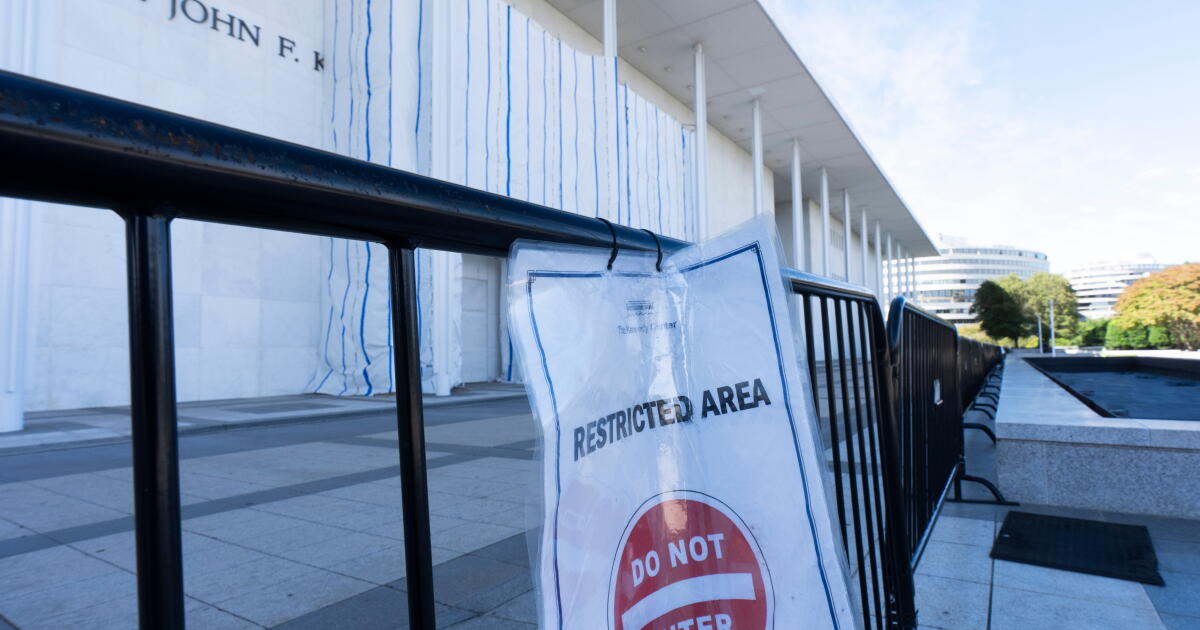
Kennedy Center officials were long aware of serious structural issues that they cited as new problems after the abrupt decision to close the performing arts venue this month, a group of former employees allege in a letter to Congress.

The center’s executive director and chief operating officer, Matt Floca, did not treat the roofing issues as priorities and in April halted a funded plan to address them, according to the letter Thursday signed by David Seide, a lawyer representing the anonymous whistleblowers.

Floca denied their allegations, saying recent investigations of the leaks exposed new hazards at the building.

In a September court declaration, Floca noted there were “acute risks to public safety” when the aging building temporarily closed its doors after an inspection of a deteriorating roof terrace canopy and a partial ceiling collapse. The former employees, however, claim those “acute” issues were known previously by Floca, who joined the Kennedy Center as vice president of facilities in 2024.

“More than one year ago, Mr. Floca had requested and received the needed funds to remediate the New Problems he references,” Seide wrote, citing President Trump’s tax cut and spending bill that he signed in the summer of 2025. “Yet six months ago – with the funds in hand – he stopped the remediation process from moving forward.” In the legislation, Congress earmarked $257 million for the Kennedy Center.

The letter, first reported by The New York Times, is the latest in a series of tensions over an iconic Potomac River waterfront building that has become a focus of the Republican president in his remaking of the nation’s capital in his second term. Trump has installed his own leadership to the center’s governing board and had his name placed on the building before a judge ruled the new lettering was illegally added and ordered it removed.

The Trump-aligned board voted earlier this month to close the center indefinitely for repairs hours after U.S. District Judge Christopher Cooper blocked its plans to return Trump’s name to the building.

Cooper has told the center that it must give 30 days’ notice before making any major physical changes to the building, including demolishing it, as Trump has threatened. The Kennedy Center leadership also must file a status report no later than Friday on the temporary closure and emergency repairs.

Asked for a response to the whistleblowers’ claims, a Kennedy Center spokesperson sent a written statement from Floca, who said the safety of patrons, artists and staff is his priority.

“The Kennedy Center has known for years that the roof overhang leaked,” he wrote. “What we did not know until this summer was how far the damage had spread inside it.”

Floca added that rather than halting design plans in April as the whistleblowers alleged, he had reassigned the work to a more comprehensive plan because the contractor’s quote for the initial plans were nearly three times the expected cost.

“That was a change in the approach to procuring and delivering the work, not a determination that the work was unnecessary,” Floca wrote.

Rhode Island Sen. Sheldon Whitehouse, the top Democrat on the Senate Committee on Environment and Public Works, wrote Floca on Thursday after receiving the whistleblower letter. Whitehouse said the documents showed Kennedy Center leadership had “hoarded” congressionally appropriated funding for repairs “while blaming previous leadership for the state of repairs.”

“My initial investigation into misconduct at the Center focused on cronyism and corruption, with documents demonstrating considerable excessive and self-serving spending under President Trump’s chairmanship,” Whitehouse said. “The documents that I attach today seem to reveal deeper financial mismanagement.”

A spokesperson for the committee’s Republican majority did not immediately reply to a request for comment Saturday.

Swenson writes for the Associated Press.

Source link