Whitehead

The best Colson Whitehead books to read (and where to start)

Reading List

If you buy books linked on our site, The Times may earn a commission from Bookshop.org, whose fees support independent bookstores.

This month, “Cool Machine,” a riff on 1980s New York in the form of a tightly plotted crime novel, arrives from Colson Whitehead. It concludes his Harlem trilogy, they say. If you’d told readers two decades ago that Whitehead would become a bestselling crime novelist, they might have thought you were kidding. He started out writing innovative novels with such intellectual and stylistic punch that the MacArthur Foundation gave him a fellowship in 2002.

His written output is fun, fearless and fantastic. Where to start? Here’s a cheat sheet.

Colson Whitehead triptych 1

For N.Y. lovers

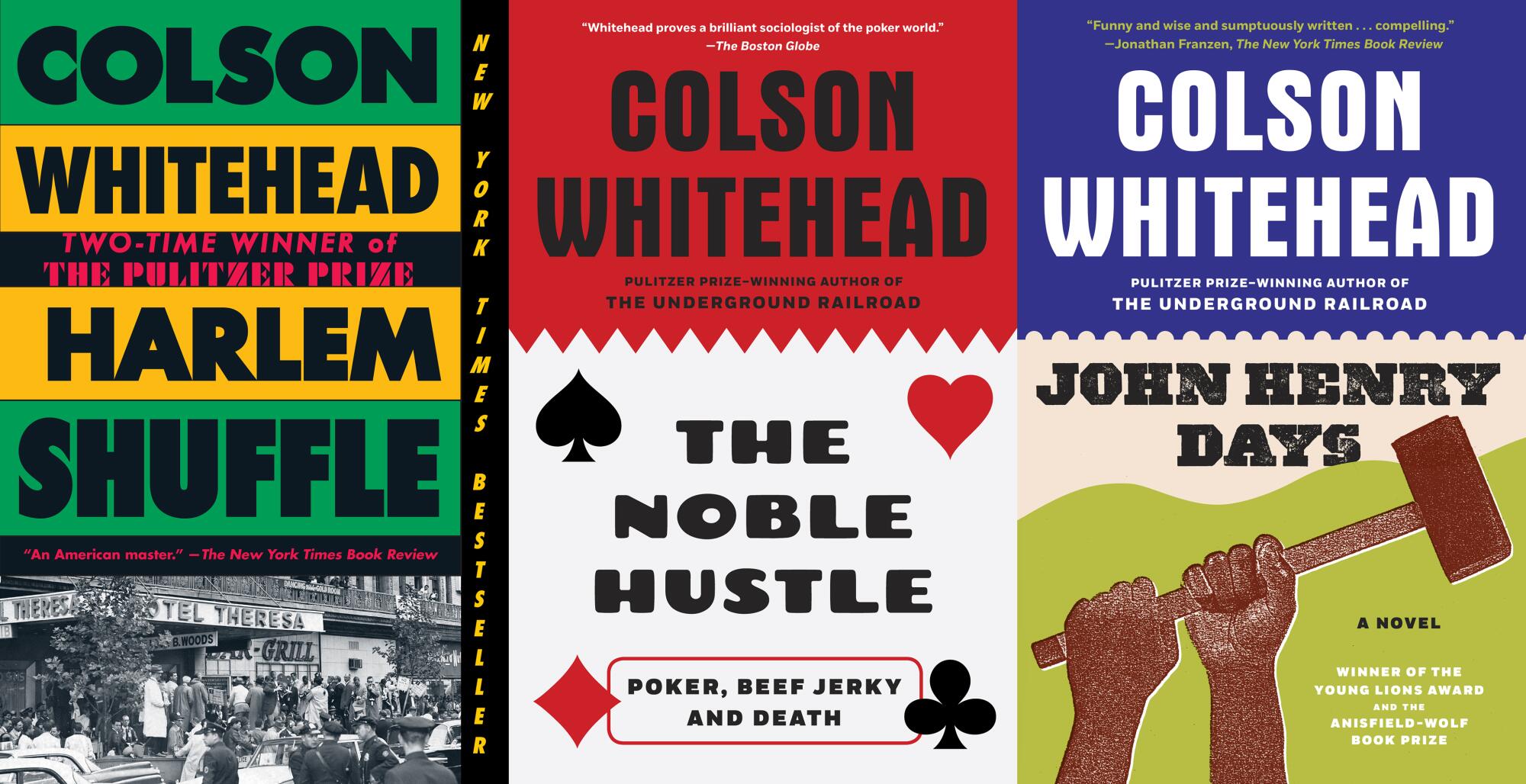
With “Harlem Shuffle,” Whitehead begins his crime trilogy in the 1960s in a furniture store with stylish midcentury stock whose owner, Ray Carney, is trying not to be a fence. Love the evocation of Harlem as a place with a cool interconnected community. Worry about that cousin who’s always trouble. The follow-up, “Crook Manifesto,” is set in the 1970s. All of New York City is at a nadir; Ray is on the straight and narrow, but needs an influx of cash (for Jackson Five tickets for his daughter). Then comes “Cool Machine,” secrets to be revealed when it hit shelves this week . And as a bonus, his essay collection “The Colossus of New York,” which is vivid, episodic and yet still a story: “Talking about New York is talking about the world.”

To break your heart

The novel “The Underground Railroad” comes from an imagined misunderstanding, logical for anyone who grew up riding subways: that the path to freedom for enslaved people that we call The Underground Railroad was in fact underground. In Whitehead’s hands, that imagining takes us through both time and place while making visceral the horrors of enslavement. The book won the National Book Award and the Pulitzer Prize and was adapted by Barry Jenkins into a limited series.

In a rare feat, Whitehead won the Pulitzer Prize a second time for his novel “The Nickel Boys,” another work of historical fiction dealing with the devastating effects of American racism. Based on the true story of a reform school where Black boys went missing, the novel pairs the stories of two teens, one a troublemaker and the other caught up by mistake. Barack Obama called it “a necessary read.” Cleverly structured, it seemed difficult to adapt, but director RaMell Ross made it into a brilliant film.

Colson Whitehead triptych 2

To blow your mind

In Whitehead’s debut novel, the not-realistic “The Intuitionist,” a Black female elevator inspector faces powerful forces aligned against her. Inflected with Thomas Pynchon-like wordplay and situations, it’s both ambitious and funny. So is “John Henry Days,” mixing narrative forms while telling the story of a Black journalist around the year 2000 going to every press junket he can, unmaking the myth of John Henry all the while. And “Apex Hides the Hurt” is a comic novel about the conflicts that arise in a small town when they hire a name consultant for a possible rebranding.

To eat your mind

Just around the time they started staggering onto TV, Colson Whitehead published a zombie novel. “Zone One” is a smart take on the shuffling hordes and pandemic survivors who try to take Manhattan back.

Colson Whitehead triptych 3

To beat the odds

Whitehead, an enthusiastic amateur poker player, wrote the nonfiction book “The Noble Hustle” about his entry into the World Series of Poker in Las Vegas. It was a luxurious time in media, circa 2011, when ESPN’s Grantland paid his $10,000 entry fee and said he could keep his winnings. The book, expanded from what he wrote for them, includes his training, pending divorce, joking asides and playing for high stakes.

To take to the beach

“Sag Harbor,” set in the mostly Black, affluent beach community in the Hamptons, is the closest Whitehead has come to writing a coming-of-age story. Taking place during the summer of 1985, Benji and his teenage friends banter about culture and get their first taste of freedom.
Source link

10 books to read in July: New releases from Colson Whitehead and more

Reading List

10 books for your July reading list

If you buy books linked on our site, The Times may earn a commission from Bookshop.org, whose fees support independent bookstores.

New reads abound for your vacation tote throughout the weeks of July, with fiction picks featuring a Carnival cruise casualty, a highly entertaining jewel heist at the Waldorf-Astoria, and a Soviet-era madcap adventure. In nonfiction, authors consider how we define wild places, how we pigeonhole the aging, and how languages live or die. Happy reading!

FICTION:

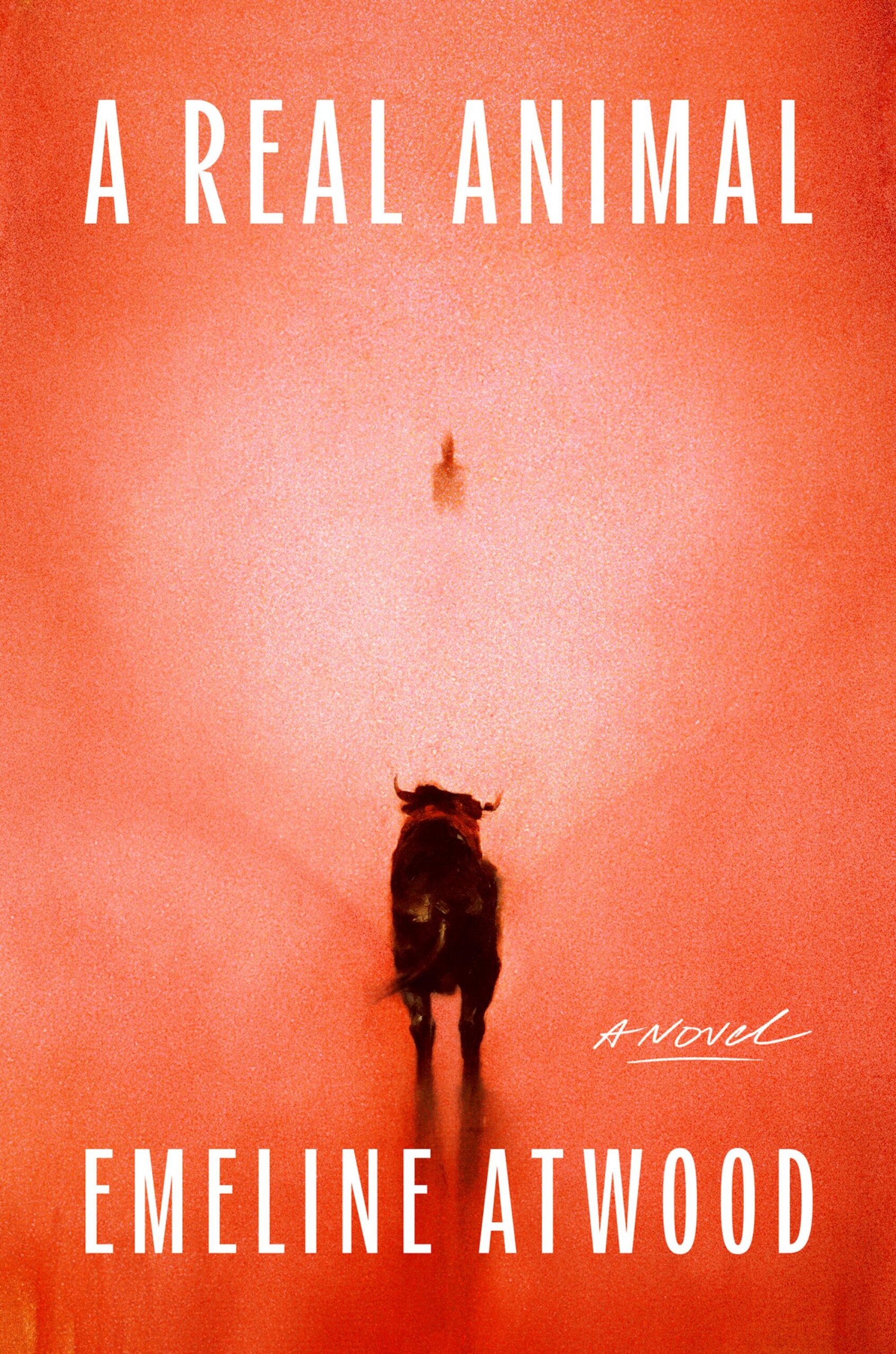
A REAL ANIMAL by Emeline Atwood

A Real Animal: A Novel
By Emeline Atwood
Catapult: 368 pp., $29
(July 7)
After surviving a sexual assault, narrator Lucy stalks her college campus as a leopard. Don’t spend too much time worrying about whether this transformation is real, or not; Lucy’s knowledge of her fierceness is the point, a fierceness she employs as she struggles to negotiate her independence from parents who wish she’d come home to recover and men who offer up their desires and ignore hers. It’s an astonishing debut with a compelling voice.

MAN OVERBOARD! by Kathleen Rooney

Man Overboard!: A Novel
By Kathleen Rooney
Gallery Books: 208 pp., $27
(July 7)
Readers expecting something akin to Rooney’s wondrous previous novel, “Lillian Boxfish Takes a Walk,” should remember that that book followed “Cher Ami “ and “Major Whittlesey,” a story about a pigeon and a World War I Army officer. In other words, Rooney doesn’t repeat herself, and in “Man Overboard!” she’s concocted a hilarious adventure tale of a man floating in the Gulf of Mexico, adrift with himself, his thoughts, and a few sea creatures.

ASTRONAUT! by Oana Aristides

Astronaut!: A Novel
By Oana Aristides
W. W. Norton: 272 pp., $28
(July 14)
Imagine a dystopia set neither in the future nor in fantasy; that’s the 1989 Romania 7-year-old Lia inhabits, its adults living in fear of Communist dictator Nicolae Ceauşescu, its infrastructure strained by deprivation, and its reality so scrambled that calling an explorer an “astronaut” instead of “cosmonaut” risks punishment. When Lia sets out to buy her mother a birthday gift, she sets in motion a series of weirdly probable yet totally weird events.

CITY OF WIDOWS by Nadia Hashimi

City of Widows: A Novel
By Nadia Hashimi
William Morrow: 432 pp., $32
(July 28)
During the two decades of American occupation, Afghanistan experienced a sort of peace, one in which women could be educated, work as professionals, and even serve in the military. When the U.S. left in 2020, those same women found themselves — regardless of their individual status — subject to Taliban restrictions that deny differences in gender, desire and ambition. Hashimi (Sparks Like Stars”) shows how desperate and daring the women become.

COOL MACHINE by Colson Whitehead

Cool Machine: A Novel
By Colson Whitehead
Doubleday: 368 pp., $30
(July 21)
First “Harlem Shuffle,” then “Crook Manifesto,” and now, “Cool Machine,” the highly anticipated “Harlem Trilogy” conclusion from the two-time Pulitzer Prize-winning Whitehead. The inimitable Ray Carney, who started out as a minor criminal, is now Sterling Furniture’s “Northeast Regional Dealer of the Month,” a respected businessman. It’s the mid-1980s, and when Ray’s beloved wife Elizabeth gets turned down for a small-business loan, he takes matters into his own hands, in his own former ways.

NONFICTION:

HOW TO KILL A LANGUAGE by Sophia Smith Galer

How to Kill a Language: Power, Resistance, and the Race to Save Our Words
By Sophia Smith Galer
Crown: 304 pp., $33
(July 7)
Smith Galer’s nonna spoke an Italian she called “dialet”; her mother spoke “dialet” and English; Smith Galer herself speaks only English. What do we lose, the author asks, when a language dies? The answers she found are powerful, like an enzyme to treat HIV that was found in a tree that was discovered because a researcher spoke Samoan. Unsurprisingly, she also found that language death often corresponds to ecological and cultural devastation.

THE EARTH SAID REMEMBER ME by Jason Dove Mark

The Earth Said Remember Me: How to Revive Our Memories and Restore Our Planet
By Jason Dove Mark
W. W. Norton: 224 pp., $25
(July 14)
Perhaps art will be the thing that preserves the environment, even if humans can’t save it. “Go outside. Bear witness. Make a record. Pass it on,” writes Mark in this eloquent, impassioned plea for us all to remain involved in environmental action. The more we appreciate the natural world, the more we’ll want to care for it, share it with others, and help future generations understand how some changes are natural and not all are inevitable.

AGING OUT by Lucy Schiller

Aging Out: An Exploration of Caregiving, Community, and How Americans Grow Old
By Lucy Schiller
Flatiron Books: 272 pp., $30
(July 14)
Services for the elderly range from luxury assisted-living facilities to special digital devices meant to bypass phone scams, but as Schiller explains, these things not only commodify a natural life passage — they separate older people from their natural communities. The author was inspired to investigate our country’s aging population when she cared for a grandmother who died from COVID; the book weaves the personal with the political in a meaningful way.

DAD, LOVE, ME: A Memoir by Matthew Quick

(Avid Reader Press/Simon & Schust)

Dad, Love, Me: A Memoir
By Matthew Quick
Avid Reader Press: 320 pp., $30
(July 21)
Novelist Quick (“The Silver Linings Playbook”) turns to memoir in recounting his contentious relationship with his father, whom he’s losing to dementia. While the author has had big highs (like the movie adaptation of “Playbook”), he’s also experienced deep lows, including alcoholism and severe creative block. Somehow, through recovery (which he credits to Jungian therapy), he affords both his imperfect, ailing parent and himself grace.

THE SAVAGE LANDSCAPE by Cal Fly

The Savage Landscape: How We Made the Wilderness
By Cal Flyn
Viking: 448 pp., $35
(July 28)
In “Downton Abbey”, the Dowager Duchess of Grantham starchily asked “What is a ‘weekend?’” In this book, journalist Cal Flyn asks — more affably, but with equal intensity — “What is a wilderness?” Her answer: Depends on your perspective. In other words, nearly every place on Earth teems with life. It’s only humans who have attached words like “wild” and “unexplored” to regions where they feel uncertain, afraid, and even awed.

Patrick is a freelance critic and author of the memoir “Life B.”

Source link