white house

Column: Tucker Carlson’s reversal on Trump is a familiar script

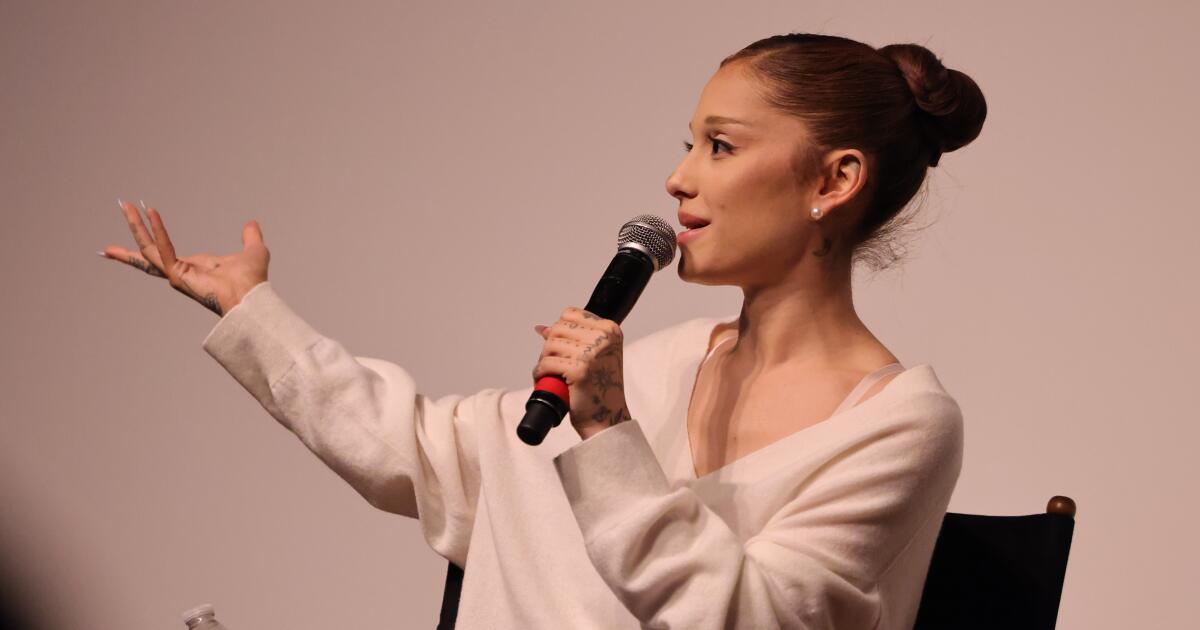
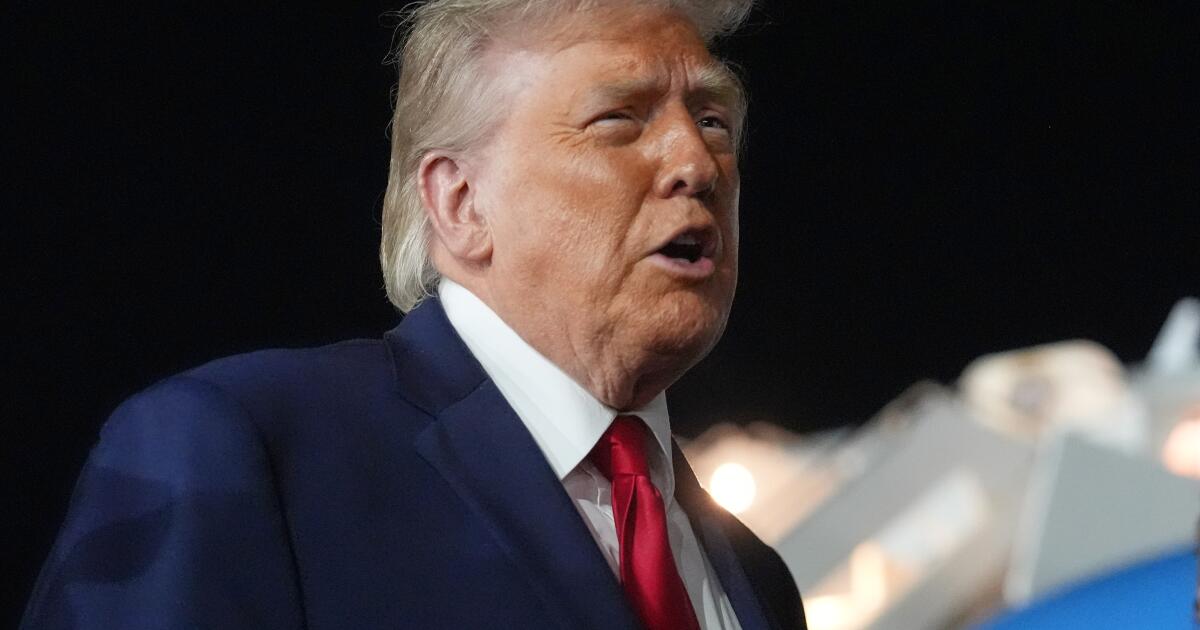
This week Tucker Carlson apologized for unintentionally “misleading” voters into supporting President Trump’s return to the White House. The apology came days after the president called Carlson dumb and overrated on social media. We’ve seen this plot before: It’s a different name but the same story.

Recall the president’s first term was closely shadowed by high-profile breakups from loyalists who disagreed with him on matters of substance. For example, the split with his first Defense secretary, James Mattis, began in 2017 when Mattis, a man who spent more than four decades in uniform, defended the importance of NATO. His successor, Mark Esper, found himself at odds with the president for refusing to use the military on citizens. On his way out the door, Esper told the country that if his replacement was “a real ‘yes man’ … then God help us.”

Some of the highlights from Trump’s second term include squabbles with his biggest donor, Elon Musk, who was upset the president wasn’t lowering the national debt enough; with former congresswoman Marjorie Taylor Greene because millions of Americans faced losing health insurance; and with Rep. Thomas Massie for having the audacity to seek justice for the victims of Jeffrey Epstein’s child sex-trafficking operation.

Now it appears it’s Carlson’s turn. He, like Pope Leo XIV and many of our allies and nearly 70% of Americans, disapproves of the president’s handling of the war in Iran. On a recent episode of the Carlson podcast, the former Fox News host invited his brother Buckley, himself a former Trump speechwriter, on the show to discuss their buyer’s remorse.

Everyone has that line they won’t cross for the president.

Omarosa Manigault Newman left reality TV to advise Trump. She followed him to the White House, found out there was a lot of racism over in MAGA land, and ended up back on reality TV. For Mattis, it was abandoning our allies. For Esper, it was shooting protesters.

For Carlson, it’s Iran. Candidate Trump campaigned on ending endless wars. This week, Trump said there’s no timeline for when the war he started with Iran will end.

“I do think it’s like a moment to wrestle with our own consciences,” Carlson told his brother. “We’ll be tormented by it for a long time. I will be. And I want to say I’m sorry for misleading people.”

Now before Tucker’s apology, Buckley defended his initial support of Trump’s candidacy in 2015 — despite “all of his obvious foibles and his disgusting elements of his personality” — in part because “he built things.” Buckley also said that after the election of President Obama, white Americans in Washington were subjugated by a version of Jim Crow in education and society, and that progressives “would look blank or angry” whenever he asked what Obama was doing to strengthen the nation.

In other words, being red in the face over Trump did not turn the Tucker boys blue. In fact, the episode ended with the two calling the left a bunch of “lunatics,” even after listing the ways the Trump administration was holding back release of the Epstein files and hurting the country.

“Demonic influences concentrate on those who have power. Beware of power,” Tucker warned listeners halfway through the show before his brother chimed in: “And those who seek power.”

Of course, Trump’s ascension to the White House wasn’t solely based on the contributions of media folks. The president entered 2015 having been a public figure for more than 30 years. He’s had the luxury of criticizing elected officials and legislation on camera without the burden of governing for much of that time. When he entered the political arena, he didn’t have a record to defend. He likes being quotable, not being held accountable. That’s why it’s doubtful he would have been elected a second time if not for the support from unscrupulous podcasters masquerading as political journalists such as Joe Rogan, Theo Von and Andrew Schulz, who less than a year ago said everything Trump “campaigned on, I believed he wanted to do. And now he’s doing the exact opposite thing.… I voted for none of this.”

As if “this” had not been clearly spelled out in the pages of Project 2025 for all to see before deciding whether to vote for Trump and that agenda.

Schulz, the comedian and podcaster, might not have read that outline, but Tucker Carlson probably did. That’s why his apology to listeners — like the mea culpas from the discarded loyalists of the past — ultimately won’t mean anything to mainstream Republicans or MAGA. Those who identify with the latter listen only to Trump. As for the former — they have always known that people like Carlson don’t regret supporting Trump. They regret falling out of favor.

YouTube: @LZGrandersonShow

Source link

Trump maintains blockade as Iran’s factions struggle to unite

Iranian forces attacked three commercial vessels in the Strait of Hormuz on Wednesday, stoking an already tense standoff in the Persian Gulf as a U.S. naval blockade strains Tehran’s economy and pressures its divided leadership to return to peace talks.

The Islamic Revolutionary Guard Corps, or IRGC, claimed responsibility for the attack, saying it seized two ships and damaged a third after the vessels “ignored repeated warnings.” British maritime monitors confirmed the incidents, describing one cargo ship left disabled in the water and another that took heavy damage to its bridge.

“Disrupting order and safety in the Strait of Hormuz is considered a red line for Iran,” the Iranian Navy Command said in a statement.

Hours before, President Trump confirmed he would maintain the naval blockade in the gulf, but agreed to give Iranian leaders additional time to agree on a new peace proposal, he wrote in a Truth Social post.

“Based on the fact that the Government of Iran is seriously fractured, not unexpectedly so and, upon the request of Field Marshal Asim Munir, and Prime Minister Shehbaz Sharif, of Pakistan, we have been asked to hold our Attack on the Country of Iran until such time as their leaders and representatives can come up with a unified proposal,” Trump wrote Tuesday.

More than a dozen American warships have prevented exports from leaving Iranian ports since peace talks in Islamabad failed earlier this month. The tactic has greatly constrained Iranian oil exports — about 90% of which flow through the Strait of Hormuz — contributing to rising inflationary pressure.

The restrictions could wipe out roughly $435 million in daily economic activity, according to Miad Maleki, a senior fellow at the Foundation for Defense of Democracies. Oil exports, Tehran’s primary revenue source, have halted. At the same time, Iran has been unable to import food or industrial goods. As a result, the blockade is expected to empty Iran’s war coffers and sharply accelerate inflationary effects on its people.

Trump is betting that the strategy will force Iran’s fractured negotiating team — which appears to be split between parliamentary moderates and hard-liners within the Revolutionary Guard — to agree on a “unified” peace proposal.

Karoline Leavitt, the White House press secretary, said Wednesday the president extended the ceasefire agreement to allow Iran to get their “act together,” and emphasized that Trump has not given Iran a “firm deadline” to respond yet.

“President Trump will ultimately dictate the timeline and he will do so when he feels it is in the best interest of the United States and the American people,” Leavitt told reporters.

Though she declined to specify who the administration is negotiating with in Iran, Leavitt said the president was “generously offering a bit of flexibility” to the regime so that they can come up with a unified response.

“This is a battle between the pragmatists and the hard-liners in Iran right now,” Leavitt told reporters at the White House.

That division was visible earlier this week when plans for a second round of talks in Islamabad collapsed after Iranian officials failed to confirm participation and instead introduced new preconditions under pressure from hard-line factions.

Iranian Parliament Speaker Bagher Ghalibaf initially signaled a willingness to attend talks, but was overshadowed by Islamic Revolutionary Guard Corps commander Maj. Gen. Ahmad Vahidi, who insisted that the United States lift its blockade before discussions could begin. A report by the Institute for the Study of War said Vahidi sought to derail negotiations rather than secure meaningful economic relief.

“One challenge with the ongoing negotiations is the divided nature of Iran’s negotiating team,” the report said, adding that “[Trump’s] reference to a ‘unified’ proposal appears to imply that previous proposals were not unified in some way.”

And while hard-liners continue attempts to derail diplomacy with continued demands and attacks in the strait, moderates in Iran continue to push for peace.

This week, prominent Sunni cleric Moulana Abdol Hamid called a “fair agreement” the only viable path forward and warned that those who seek to block negotiations would bear responsibility for the “homeland’s devastation.”

Benjamin Radd, a political scientist at UCLA who studies Iran, said the dispute is a sign of a larger power struggle for control of Tehran’s government.

“There are clear divisions within the leadership,” Radd said in an interview. “Right now, it’s the IRGC faction that has all the power. They have the guns, they have the weapons. What they don’t have is the diplomatic connections and experience dealing with the United States.”

Radd pointed to the economic toll of the U.S. blockade as a key driver of tension inside Iran.

“They’re facing a huge domestic crisis,” he said. “They’re not able to replenish their own needs. Nothing can get in or out of the country. They can’t make any money.”

The consequences of the U.S. strategy could push the more moderate Iranian leaders to strike a deal on nuclear enrichment or a reopening of the strait in exchange for the United States lifting the blockade, Radd said.

“That would start rebuilding some sort of trust,” Radd said. “And then we’re seeing the IRGC is basically steadfast, refusing to do any of this.”

With renewed Israeli attacks in Lebanon killing at least three people Wednesday, despite a 10-day ceasefire agreement, Iranian leaders are preparing for the possibility that talks with the United States will fail altogether.

“Iran has prepared for a new phase of fighting,” the IRGC-affiliated Tasnim News Agency reported this week, citing military redeployments and updated target lists.

Meanwhile, Iranian Judiciary Chief Gholam Hossein Mohseni Ejei warned that renewed U.S. or Israeli strikes were likely. Iran Foreign Ministry spokesman Esmaeil Baghaei made a similar statement in a news briefing Wednesday. He announced the country’s armed forces were “on high alert” and ready to defend against any threat, while being open to Pakistan’s mediation efforts.

He did not confirm if the government was participating in a second round of negotiations.

“Diplomacy is a tool for ensuring national interests and security,” he said, “and we will take the necessary steps whenever we conclude that the necessary and logical grounds exist to use this tool to achieve national interests.”

Until then, it appears both Washington and Tehran will continue brinkmanship in the strait.

On Wednesday morning, the IRGC released a statement confirming it seized the two cargo ships and identified them as the MSC Francesca and the Epaminondas. It claimed the MSC Francesca was linked to Israel and accused both of “jeopardizing maritime security by operating without necessary permits and tampering with navigation systems.”

A third ship, the Euphoria, which sails under the Panamanian flag and is owned by a company based in the United Arab Emirates, was fired upon early Wednesday while heading east out of the Strait of Hormuz, according to Vanguard, a maritime intelligence firm.

The Euphoria later resumed sailing toward the Gulf of Oman, according to Lloyd’s List.

In Lebanon, Amal Khalil became the fourth journalist killed by Israeli fire since hostilities with the Lebanese Shiite militant group Hezbollah intensified on March 2.

Khalil’s body was reported to have been found under the rubble of a house where she and freelance photographer Zeinab Faraj were sheltering, according to their colleagues.

Khalil and Faran were in the southern Lebanese town of Al-Tayri, covering developments there when an Israeli attack targeted the vehicle in front of them, killing its occupants.

The two journalists then sheltered in a house but were hit by Israeli fire once more, according to a statement from the Lebanese Health Ministry.

When Red Cross crews scrambled to the area to rescue the trapped journalists, they were targeted with a sound bomb and machine-gun fire.

The Israeli military said it was not preventing rescue teams from reaching the area and that the incident was under review. It acknowledged targeting a vehicle it said had come out of a structure used by Hezbollah and was heading toward Israeli troops.

The Red Cross reached the house by the early evening local time, and rescued Faraj, who is reported to be in stable condition after undergoing surgery for a head wound, according to her colleagues.

Times staff writers Ana Ceballos in Washington and Nabih Bulos in Beirut contributed to this report.

Source link

Labor Secretary Lori Chavez-DeRemer is leaving Trump’s Cabinet after abuse of power allegations

Labor Secretary Lori Chavez-DeRemer is out of President Trump’s Cabinet, the White House said Monday, after multiple allegations of abusing her position’s power, including having an affair with a subordinate and drinking alcohol on the job.

Chavez-DeRemer is the third Trump Cabinet member to leave her post after Trump fired his embattled Homeland Security Secretary Kristi Noem in March and ousted Atty. Gen. Pam Bondi earlier this month.

Unlike other recent Cabinet departures, Chavez-DeRemer’s exit was announced by a White House aide, not by the president on his social media account.

“Labor Secretary Lori Chavez-DeRemer will be leaving the Administration to take a position in the private sector,” White House communications director Steven Cheung said on the social media site X. “She has done a phenomenal job in her role by protecting American workers, enacting fair labor practices, and helping Americans gain additional skills to improve their lives.”

He said Keith Sonderling, the current deputy labor secretary, would become acting labor secretary in her place. The news outlet NOTUS was the first to report Chavez-DeRemer’s resignation.

Labor chief, family members faced multiple allegations

Chavez-DeRamer’s departure follows reports that began surfacing in January that she was under a series of investigations.

A New York Times report last Wednesday revealed that the Labor Department’s inspector general was reviewing material showing Chavez-DeRemer and her top aides and family members routinely sent personal messages and requests to young staff members.

Chavez-DeRemer’s husband and father exchanged text messages with young female staff members, according to the newspaper. Some of the staffers were instructed by the secretary and her former deputy chief of staff to “pay attention” to her family, people familiar with the investigation told the Times.

Those messages were uncovered as part of a broader investigation of Chavez-DeRamer’s leadership that began after the New York Post reported in January that a complaint filed with the Labor Department’s inspector general accused Chavez-DeRemer of a relationship with the subordinate.

She also faced allegations that she drank alcohol on the job, and that she tasked aides to plan official trips for primarily personal reasons.

Both the White House and the Labor Department initially said the reports of wrongdoing were baseless. But the official denials became less full-throated as more allegations emerged — and when Chavez-DeRemer might be out of a job became something of an open question in Washington.

At least four Labor Department officials have already been forced from their jobs as the investigation progressed, including Chavez-DeRemer’s former chief of staff and deputy chief of staff, as well as a member of her security detail, with whom she was accused of having the affair, the New York Times reported.

She enjoyed union support — rare for a Republican

Confirmed to Trump’s Cabinet in a 67-32 vote in March 2025, Chavez-DeRemer is a former House GOP lawmaker who had represented a swing district in Oregon. She enjoyed unusual support from unions as a Republican but lost reelection in November 2024.

In her single term in Congress, Chavez-DeRemer backed legislation that would make it easier to unionize on a federal level, as well as a separate bill aimed at protecting Social Security benefits for public-sector employees.

Some prominent labor unions, including the International Brotherhood of Teamsters, backed Chavez-DeRemer, who is a daughter of a Teamster, for Labor secretary. Trump’s decision to pick her was viewed by some political observers as a way to appeal to voters who are members of or affiliated with labor organizations.

But other powerful labor leaders were skeptical when she was tapped for the job, unconvinced that Chavez-DeRemer would pursue a union-friendly agenda as a part of the incoming GOP administration. In her Senate confirmation hearing, some senators questioned whether she would be able to uphold that reputation in an administration that fired thousands of federal employees.

She was a key figure in Trump’s deregulatory push

Aside from reports of wrongdoing in recent months, Chavez-DeRemer had been one of Trump’s more lower-profile Cabinet picks but took key steps to advance the administration’s deregulatory agenda during her tenure.

For instance, the Labor Department last year moved to rewrite or repeal more than 60 workplace regulations it saw as obsolete. The rollbacks included minimum wage requirements for home healthcare workers and people with disabilities, and rules governing exposure to harmful substances and safety procedures at mines. The effort drew condemnation from union leaders and workplace safety experts.

The proposed changes also included eliminating a requirement that employers provide adequate lighting for construction sites and seat belts for agriculture workers in most employer-provided transportation.

During Chavez-DeRemer’s tenure, the Trump administration canceled millions of dollars in international grants that a Labor Department division administered to combat child labor and slave labor around the world, ending their work that had helped reduce the number of child laborers worldwide by 78 million over the last two decades.

The Labor Department has a broad mandate as it relates to the U.S. workforce, including reporting the U.S. unemployment rate, regulating workplace health and safety standards, investigating minimum wage, child labor and overtime pay disputes, and applying laws on union organizing and unlawful terminations.

Kim writes for the Associated Press. AP writers Cathy Bussewitz in New York and Will Weissert in Washington contributed to this report.
Source link

In 1960, fears over papal sway. In 2026, a president attacks a pope

It was hard to miss President Trump’s very public spat with Pope Leo XIV this week.

The split was the first time in modern memory that an American president has so openly badmouthed a sitting pontiff, or, for that matter, distributed an image depicting himself as Jesus Christ. Critics cried “blasphemy!” even as supporters continued to stand behind the man whose presidency, some argue, was God sent.

Students of American history will recall an earlier incident that pitted papal and presidential authority against each other. The concern: that a president would align himself too closely to the church, or even take orders from the pope.

That anxiety seeped into the 1960 presidential campaign of John F. Kennedy, whose eventual victory would make him the first Catholic president.

Back then, Kennedy was constantly fending off accusations from Protestant ecclesiastic types who were wary that his nomination meant the pontiff, John XXIII, was already packing his bags for a move into the White House.

A black-and-white photo of a man in dark suit and tie seated next to a man in ornate religious vestments and a white skullcap

President John F. Kennedy meets with Pope Paul VI at the Vatican in July 1963, one month after Paul succeeded John XXIII as pontiff.

(Bettmann Archive / Getty Images)

The issue was so pronounced that 150 clergymen and laypeople formed Citizens for Religious Freedom, which in a pamphlet warned, “It is inconceivable to us that a Roman Catholic President would not be under extreme pressure by the hierarchy of his church to accede to its policies and demands.”

One particularly loud voice among the ministers was the Rev. Norman Vincent Peale, a popular and influential pastor and author. Peale was especially disturbed by Kennedy’s prospects.

“Our American culture is at stake,” he said at a meeting of the ministers. “I don’t say it won’t survive, but it won’t be what it was.”

The group asked Kennedy to “drop by Houston” to make clear his views on faith and government. He agreed, making a televised speech at the Rice Hotel, where he famously spelled out his firm opinions on the separation of church and state.

“I am not the Catholic candidate for president,” Kennedy told the group. “I am the Democratic Party’s nominee for president who happens to be Catholic.”

Time magazine reflected on the address some years later, concluding that the speech had gone so well for Kennedy “that many felt the dramatic moment was an important part of his victory.”

Since then, modern presidents have occasionally found themselves at odds with the Vatican. Typically Republican presidents would hear from the pope about foreign wars, while Democratic presidents were derided over abortion policies.

But such disagreements tended to be handled with the decorous language of diplomacy.

A man in a dark suit presents a medal on a ribbon to a man in white skullcap and religious robes, seated in an armchair

President George W. Bush presents Pope John Paul II with the Presidential Medal of Freedom in Rome on June 4 , 2004. The pope reminded Bush of the Vatican’s opposition to the war in Iraq. Bush praised him as a “devoted servant of God.”

(Eric Vandeville/Gamma-Rapho via Getty Images)

Then came Trump, who is now being accused of openly mocking the Catholic faith and the 1st Amendment. He called Leo weak on crime and foreign policy, among other things. A self-described nondenominational Christian who says his favorite book is the Bible, Trump’s hasn’t shied from bashing the pontiff, nor has he hesitated to blur the line separating church and state.

Where Kennedy argued for an absolute separation, Trump has advanced a model of religious resurgence, promising “pews will be fuller, younger and more faithful than they have been in years.” Through initiatives including the “America Prays” program launched last year, the White House has sought to bring “bring back God” by inviting millions of Americans to prayer sessions. The webpage for the program focuses features only Christian Scripture.

“From the earliest days of the republic, faith in God has been the ultimate source of the nation’s strength,” Trump said at a National Prayer Breakfast in February.

A man in a dark suit, hands clasped on a desk, is surrounded by other people standing near windows with gold curtains

President Trump, then-Vice President Mike Pence and faith leaders say a prayer during the signing of a proclamation in the Oval Office on Sept. 1, 2017. .

(Alex Wong / Getty Images)

In the United States, the Catholic Church historically has “loved the 1st Amendment” and its guarantee of religious liberty and, as a result, largely kept some distance from government, according to Tom Reese, a Jesuit priest and religious commentator. After its failures attempting to influence monarchs and politicians in Europe, the Catholic Church “didn’t want the government interfering with them and knew that it wasn’t their right to interfere with the government,” Reese said.

Kennedy loved the 1st Amendment too. He put it above his own religious beliefs, and said as much on his way to the White House.

“I would not look with favor upon a president working to subvert the 1st Amendment’s guarantees of religious liberty,” he said. “Nor would our system of checks and balances permit him to do so.”

A man with glasses, in red vestments, holds out his hands in prayer in a room with ornate blue and yellow mosaic walls

Pope Leo XIV meets with members of the community in Algiers at the Basilica of Our Lady of Africa on April 13, 2026.

(Vatican Pool via Getty Images)

Source link