Donald Trump has rejected Iran’s latest proposal to end the war and reopen the Strait of Hormuz as experts say the United States president believes Washington has more to gain by waiting than by accepting Tehran’s terms at this moment.
“I reject their proposal,” Trump told reporters on Saturday, arguing that Iran wants an agreement because it is “losing so badly”.
Recommended Stories
list of 3 itemsend of list
“They want to make a deal, and I think that’s fine,” Trump said. “I’d like to make a deal too. But that deal would not be acceptable.”
On Sunday, Iranian Foreign Minister Abbas Araghchi said Tehran had seen the initial reaction from Trump to its proposal but had yet to receive a response through mediators. In the latest diplomatic efforts, Qatar has played a role in mediating talks between Iran and the US on the sidelines of the United Nations General Assembly meeting in New York.
Iran’s seven-day proposal included Washington lifting its naval blockade of Iranian ports, waiving sanctions on Iranian oil sales, releasing an estimated $12bn in frozen Iranian assets and observing a wider regional ceasefire, including in Lebanon and Yemen.
Iran would then reopen the Strait of Hormuz and begin negotiations with Washington on a final agreement.
The latest proposals are similar to the June memorandum of understanding (MoU) the two countries signed. But the MoU collapsed last month due to differences on the terms of the deal, which resulted in an escalation in attacks, particularly in and around the Strait of Hormuz, which essentially remains under Iranian blockade.
According to experts, Trump’s rejection suggested that while both sides continue to publicly leave the door open for diplomacy, they remain far apart over who should make the first concessions.
“Trump’s calculation looks fairly straightforward. He believes the combination of the naval blockade and economic isolation is finally squeezing Iran hard enough that Tehran’s latest proposal is evidence of weakness rather than an offer Washington needs to seize,” Andreas Krieg, associate professor at King’s College London, told Al Jazeera.
His public argument that Iran is “losing badly” is important because it suggests he thinks time is improving the US bargaining position, Krieg said.
(Al Jazeera)
Why does Trump think he can wait?
A key part of Trump’s calculation appears to be a belief that the economic pressure on Iran has not yet run its course.
The Trump administration has escalated economic pressure on Tehran, tightening its naval blockade while imposing sanctions targeting Iranian oil revenues and threatening secondary sanctions against countries doing business with Tehran.
Last week, the US imposed aviation sanctions on Iran, disrupting flights. This came weeks after US Treasury Secretary Scott Bessent announced an economic pressure campaign against Iran, promising to target Tehran’s financial interests across the world.
Richard Weitz, a senior nonresident associate fellow at the NATO Defence College, told Al Jazeera that the White House may believe it can “wait a bit and get better terms”.
There is also concern in Washington about Iran’s proposed sequencing, he said.
Therefore, Weitz said Washington may be calculating that “economic pressure over time will induce the Iranian government to make more concessions”.
“This is what occurred arguably a decade ago, leading to the 2015 Iran nuclear deal as the Iranian government decided it [the US] needed to end the economic sanctions in return for making concessions on its nuclear programme,” he added.
It is, therefore, possible that “we could see the same kind of trade-off in the coming months”.
Iran could make Trump ‘pay’
However, waiting for a deal also carries considerable political risk for the US president, experts said, because his Republican Party could lose November’s midterm elections.
A late August Reuters/Ipsos poll suggested 63 percent of Americans opposed the US-Israel war on Iran while 31 percent supported it. Rising fuel and transportation costs could also feed into broader cost-of-living concerns before the elections.
The problem for Trump is that time does not only increase pressure on Iran, Krieg said. “The gamble is that time cuts both ways,” he noted.
With the midterms approaching, Trump does not want to appear to lift the blockade, waive oil sanctions and release Iranian assets simply to regain access to a waterway that Iran itself disrupted, Krieg said.
“But every additional week also means elevated energy prices, continued military exposure and mounting pressure on Gulf partners.”
The essential closure of the Strait of Hormuz has disrupted oil and gas flows from the Gulf nations, which depend on energy exports to finance their budgets.
Mohamad Elmasry, a professor at the Doha Institute for Graduate Studies, told Al Jazeera that Iran’s proposal could be viewed as “kind of throwing a bone to Trump” by offering a potential route towards lower oil and gas prices before the vote.
However, Iran may decide “to make Trump pay for declining the proposal and the increased economic pressure the country is under”, he told Al Jazeera.
“They may decide that this is the time to escalate … just as the midterms are approaching.”
The Republican Party is not doing well in the polls, and a number of its candidates are “distancing themselves” from Trump, he noted. Polls indicated that Republicans could lose their slim majorities in the US Congress.
It’s not just the Iranians under severe economic pressure because of the US naval blockade and ongoing sanctions, “it’s also the Trump administration,” Elmasry said.
Trump’s wait for more Iranian concessions could ‘backfire’
Trump “wants Tehran to reopen Hormuz without Washington paying the full economic and political price Iran is currently demanding”, Krieg said.
“The danger is that he is confusing Iranian pain with Iranian willingness to capitulate. Those are not the same thing.”
Iran is undoubtedly under pressure. Krieg said the sanctions and blockade are “biting”, which is precisely why Tehran needs an agreement.
But additional pressure does not necessarily produce additional concessions.
Iran could instead increase the costs of the conflict for its adversaries, Krieg said, including through the Strait of Hormuz, regional infrastructure and potentially Bab al-Mandeb, another strait between Yemen and the Horn of Africa.
In recent weeks, the strategic weight of Bab al-Mandeb has increased dramatically after the Iran-aligned Houthis expanded their control of Yemen’s Red Sea coastline.
This advance in effect has handed the Houthis unrestricted access to the narrow waterway, a worrying development for global shipping given the group’s track record of targeting vessels, including Israeli-linked ships, in solidarity with Palestinians in Gaza.
The Houthis have already declared a naval blockade on Saudi ships in the Red Sea, which Riyadh began to use as an alternative shipping route to Hormuz for its oil exports.
“So this can backfire,” Krieg warned. “Trump thinks Iran’s clock is running faster than America’s. Tehran thinks the opposite: that Qatar, Saudi Arabia, the UAE, global energy markets and ultimately Trump himself have a lower tolerance for prolonged disruption than Iran has for economic punishment.”
Ross Harrison, a senior fellow at the Middle East Institute, similarly told Al Jazeera that Tehran may now be “less worried about overplaying their hand than they are underplaying their hand”.
According to Harrison, Tehran now sees the risk of escalation as less costly than agreeing to something prematurely or appearing willing to compromise, particularly after Washington’s response to the proposal.
In an interview with Al Jazeera that aired on Saturday, Iranian President Masoud Pezeshkian said his country no longer trusts negotiations with Washington after attacks occurred during previous rounds of talks and were followed by sanctions.
“We have no trust in the American side and do not know on what basis an understanding can be reached with it,” Pezeshkian said.
Tehran betting ‘heavily’ on time
US-based analyst Harrison noted that Tehran was probably “not surprised at all” by Trump’s rejection and viewed the offer partly as a way to demonstrate to Iranians and the American public that it remained willing to negotiate.
Experts said Tehran understands the US president wants an exit he can present as a victory.
“Iran is betting heavily on time. … Its strategy is to keep the pressure high enough that he eventually comes back to negotiations while making that exit progressively more expensive,” Krieg said.
“The Iranian calculation is essentially: Do not give Trump the deal cheaply when he may need it more badly several weeks or months from now.”
Harrison said the Iranian offer was a “show of goodwill” intended to demonstrate Iran’s willingness to negotiate to both its domestic audience and the American public.
According to Krieg, “protraction” of the conflict was the “most likely outcome”.
“Both sides need a deal, but both currently think waiting will improve the deal they eventually get,” he added.
WHEN Joey Essex was pictured getting close with newly single Love Island star Priya Jaswal earlier this month, many hoped it was the start of the latest reality TV romance.
But The Sun can reveal that despite their late-night flirtation things have not been heating up between the Towie icon and the Surrey-born beauty for one very surprising reason.
Joey Essex has dated a string of beauties, including Grace Jackson, pictured, but his latest romance has cooled for a very surprising reasonCredit: RexThings were heating up between Joey Essex and newly single Love islander Priya as they chatted all night at the National Television Awards earlier this month
Even though Joey has acquired something of a lothario reputation – dating a bevvy of beauties including Jesy Potts and Sam Faiers, since rising to fame on the ITV reality show in 2011 – he’s got his eyes on a very different sort of prize, I’m told.
A source tells me: “Priya and Joey spent the evening laughing and joking away so many assumed it could turn into something more serious.
“But Joey is taking a break from women and sex at the moment. In fact, he’s taken a vow of chastity.
“He’s got this big boxing match next month and he’s taking it very seriously.
“He is determined to win and has been sweating it out in the gym and is going to give it everything he has got.
“So Joey is on a strict sex ban until after the fight.”
The 36-year-old TV star is scheduled for a Misfits Boxing match on October 10 against comedian Dapper Laughs – real name Daniel O’Reilly – at the Copper Box Arena, London.
Misfits was launched in 2022 by YouTube star KSI and his manager Mams Taylor as the home for celebrity-style crossover bouts.
Priya was in the latest season of Love IslandCredit: Shutterstock EditorialPriya arrives at the NTAsCredit: Ian West/PA Wire
The effectiveness of sex bans before big sporting bouts is contested, but it is thought that Muhammad Ali abstained for six weeks prior to matches, as he believed avoiding sex preserved testosterone, focus and leg strength.
Joey is not the only modern day boxer to take a pre-match vow of chastity.
Tyson Fury has also switched to no-sex preparations, instead of his previous method of masturbating furiously before matches.
In 2022, ahead of his fight against Derek Chisora, Fury told Barstool Sports: “You know how I used to masturbate seven times per day to give me power?
Joey dated Jessy Potts after they got together in Love IslandCredit: WireImage
“This time I’m celibate. I’m celibate for seven weeks until the fight. It’s a new method, I’m trying something out.
“I’m going in there with a loaded gun, someone’s getting in severe trouble.
“I’m gonna be testosteroned out of my head completely. Seven weeks’ worth.”
Joey’s stringent new regime will be a bitter blow for gorgeous Priya, 25, who is newly single after splitting from Love Island villa beau Aidan Murphy hours before the NTAs.
Joey and Priya were inseparable at the after party at London’s O2 arena, looking cosy as they chatted for hours and then left the bash together.
They then carried on partying at the after-after party in the Skybar at the nearby Intercontinental Hotel.
A source said at the time: “Joey and Priya really hit it off and got close. We’ll have to see what happens.
“Obviously Priya is very fresh to showbiz and just out of her connection with Aidan so we’ll see.”
However, according to sources, the pair swapped numbers and exchanged messages since their fun night out together.
It is not the first time that Joey has been linked to a Love Island beauty.
The London-born star even did his own stint in the villa in 2024, entering on the evening of Day 1 as the first “bombshell” of the series. Essex was the first celebrity to appear on the revived version of the show.
Joey was linked to model Grace Jackson, with whom he reportedly enjoyed a whirlwind romance for around six weeks in early 2024 after meeting in Dubai.
However, their relationship ended abruptly, leaving Grace feeling “hurt and confused” by Joey’s decision to break up.
The situation took an unexpected turn when Grace entered the Love Island villa on June 13, 2024, much to Joey’s shock.
It certainly called fireworks and became the drama of the season.
He was initially coupled up with Samantha Kenny, but later swayed toward bombshell Grace, leading to explosive arguments and mixed signals.
Joey then later turned his attention to another bombshell, Jessy Potts. This transition caused massive fallout with Grace, resulting in explosive arguments that dominated the screen time.
Joey Essex has thrown himself back into the gym to work on his well-honed bodyCredit: InstagramLast year Joey Essex fought Joao Barbosa at the AO Arena n ManchesterCredit: Getty
But it was not meant to be. Joey Essex and Jessy Potts confirmed their split on September 18, 2024.
The break up came just seven weeks after they left the Love Island villa together.
Despite their initial connection, both Joey and Jessy cited their busy schedules as a significant factor contributing to their breakup.
Jessy said that they “tried to make it work”, but the demands of their post-villa lives made it challenging to maintain their relationship.
More recently Joey confirmed on The Sun’s Showbiz Fix that he is a single man, and if his boxing career continues to thrive, it might just stay that way.
Iran says it has put forward a plan to the United States to reopen the Strait of Hormuz within seven days, as Qatar passes messages between the two countries at the United Nations General Assembly in New York.
Speaking on the sidelines on Thursday, Iran’s Foreign Minister Abbas Araghchi said the timetable could begin as soon as Washington accepted the proposal.
Recommended Stories
list of 4 itemsend of list
Both sides have described the indirect contact facilitated by Qatar in New York positively, but neither has indicated any diplomatic breakthrough as the war approaches its seven-month mark.
Analysts have told Al Jazeera a firm peace deal remains unlikely, with Iran still wanting to follow the approach set out in an earlier agreement, which would give it and Oman a main role in managing the strait before moving on to discussing terms for a broader peace deal.
For its part, the US, which has claimed to be “in total control” of the Strait of Hormuz, wants Iran’s nuclear programme to be the subject of discussions straight away.
Iran has previously made clear that it will not engage with broader peace talks, including addressing the issue of its nuclear programme, until the US naval blockade of its ports in and around the Hormuz strait is lifted, sanctions are repealed and the US provides a guarantee of an end to strikes, among other conditions.
Here’s what we know.
What has Iran proposed?
Araghchi told reporters in New York that Iran had presented its plan to the US through intermediaries. “If certain conditions are met, the Strait of Hormuz would be open on the end of the seventh day and [peace] talks would restart,” he said.
He did not give details but said the proposal resembles the June 17 memorandum of understanding (MoU) signed by Iran and the US, which briefly eased the conflict before breaking down. “The moment they accept this plan, from the next day, this timetable can start, and after seven days, the strait will be open,” he said.
Under the June agreement, Iran undertook to allow ships to pass through the strait without paying tolls for 60 days – that was the period of time given for peace talks to take place. But the MoU left open what would happen after that period.
Araghchi did not say whether the same arrangement formed part of his new proposal. Nor did he spell out what Washington would have to do before the seven-day timetable began, how either side would verify those steps, or what rules would govern shipping once the strait reopened.
It is highly unlikely Iran would be offering to cede control of the Strait of Hormuz, analysts say.
Urban Coningham, a research fellow at the Royal United Services Institute, told Al Jazeera that Tehran is unlikely to receive the sanction relief it has previously demanded and, therefore, sees the strait as its primary ticket to helping it recover from the war economically.
“Hormuz is a clear Iranian red line,” he told Al Jazeera. “The Iranians will not get reparations for the war, so control of the strait is the only way they can recover economically. I cannot see them backing down from that.”
[Al Jazeera]
Why does the June agreement matter?
The MoU signed in June set out an immediate halt to military operations on all fronts, including in Lebanon, where Israel has launched strikes and occupied part of the country, and triggered a 60-day period for negotiations on a lasting peace settlement. It included US waivers for Iranian oil exports and provisions to restore maritime traffic through the strait.
It deferred other issues, including the future of Iran’s enriched uranium stockpile, to broader peace talks.
But the agreement unravelled the following month amid renewed confrontation over shipping routes through the strait.
Coningham told Al Jazeera that Iran’s latest proposal follows this earlier model: “Open the strait within seven days, then start talks on the nuclear file.”
But “the US does not want to compartmentalise the issues, it wants them discussed as one package”, he said.
How else does this new proposal place pressure on the US?
Coningham also sees a political calculation in making the offer publicly at the UN as Americans contend with high fuel prices. “By explicitly saying this may be the only chance before the midterms, Iran is putting pressure on Trump over oil and gas prices and the strait,” he said. “It is a tactic to put more pressure on the US.”
The strait, which runs between Iran and Oman, is a vital route for oil and gas exports from the Gulf. Disruption to shipping has driven up energy prices far beyond the region, giving both governments an economic reason to reach an agreement despite their differences.
With the US midterm elections approaching, a deal to get it reopened could give Trump a chance to bring down fuel prices before voters go to the polls – potentially giving the Republican Party a much-needed electoral boost before the midterms.
Trump has presented the electoral calculation differently, however. In his address to the General Assembly on Tuesday, he accused Iran of waiting to see how his Republican Party performs in November and predicted a deal would happen after the vote. He also threatened to “annihilate the Islamic Republic” if there was no agreement.
Trump claimed the election did not affect his own decision-making on Iran: “The only thing that does is that Iran will never have a nuclear weapon.”
That leaves an open question about whether the prospect of lower energy prices is enough to persuade his administration to accept Iran’s proposed order of talks. Coningham doubts it. “Trump is prepared for this to go on through the midterms,” he said. “The same problem remains where the proposal does not answer questions about the nuclear file.”
Where do broader US-Iran peace talks stand?
Araghchi met US envoy Steve Witkoff and Trump’s son-in-law Jared Kushner on Tuesday in talks mediated by Qatar. The Iranian foreign minister described the exchange as productive and said messages continued to pass between the sides.
US Secretary of State Marco Rubio said it would be wrong to describe the meeting as a major breakthrough, however.
Burcu Ozcelik, a senior research fellow for Middle East security, told Al Jazeera that the major blockage for Washington and Tehran is that each is making different assumptions about how much pressure they can exert on the other. The Trump administration is unlikely to revive the failed MoU, she said, because it assesses its naval blockade and tighter sanctions as working.
“The US appears to believe it can wait this out until Tehran is prepared to make meaningful concessions,” Ozcelik said.
“But Iran remains defiant despite indications that it is hurting economically.”
The red carpet was rolled out, and a trade truce was extended. Yet, beneath the pomp and pageantry of Chinese President Xi Jinping’s state visit with US leader Donald Trump on Thursday, Washington and Beijing remain locked in a much deeper strategic rivalry.
Xi arrived in Washington, DC on Wednesday evening for talks on Thursday, and Trump was there to meet him personally on the tarmac.
Recommended Stories
list of 4 itemsend of list
The meeting was the first state visit by a Chinese leader to the US in 11 years. But it is also the third time in less than a year that the two men have met face to face, as the two powers remain uneasily gridlocked in competition over AI, rare-earth metals, the question of Taiwan, and the Iran war.
Overhanging it all is the paused, but simmering, trade war between their two nations.
Almost as soon as Trump began his second term in the White House in January 2025, up went tariffs on Chinese goods as he accused China of facilitating the flow of fentanyl, a deadly drug, to the US. Beijing responded with its own levies, then restricted exports of valuable rare-earth metals which are crucial for the development and manufacture of everything high-tech, from smartphones to fighter jets. At one point, tariffs were heading towards 150 percent before being paused to allow time for talks.
Finally, the two leaders called a truce on the sidelines of the Asia-Pacific Economic Cooperation (APEC) summit in South Korea on October 30, and they met once more, in May, when Trump travelled to Beijing.
As Xi landed in Washington on Wednesday this week, the Trump administration announced that the two countries had agreed to extend an October 2025 truce which had offered some respite from the punishing tariffs, produced an agreement from China to buy more soyabeans from the US and delayed the ban on rare-earth exports from China until January 10. The prospect of a much-longed-for trade deal appeared to be in the air when US Treasury Secretary Scott Bessent told Fox News he had met Chinese Vice Premier He Lifeng before Xi’s visit to “see if we could do a bigger deal as opposed to just a series of smaller things”.
But analysts have, for the most part, shot down such hopes. Beyond tariffs, they say, the simmering conflict between the two powers now encompasses new US sanctions on buyers of Russian oil – namely China – and sweeping investment and research restrictions, never mind the intensifying race for dominance in artificial intelligence.
“The two-month extension isn’t a bridge to a grand bargain – it’s a temporary sandbag holding back a structural flood,” Beijing-based Einar Tangen, a senior fellow at the Center for International Governance Innovation, told Al Jazeera.
Theatrics or continued thaw in tensions?
In fact, the truce is little more than “transactional theatre” – an attempt at good optics before the upcoming US midterm elections – Tangen said.
Trump’s deeply unpopular war on Iran has already inflicted severe damage to his chances in that vote. Democrats are leading in the polls amid concerns about the rising cost of energy, triggered by the war which the US started. Trump ultimately needs wins on other issues.
The current truce with China serves a purpose, therefore, but is fragile enough to be undone the moment political utility shifts for Trump, Tangen said.
“Success in January won’t be measured by what is solved, but by whether the knot is left tight enough to hold, but not kill,” said Tangen.
Phillippe Le Corre, professor of international relations and Asian studies at France’s ESSEC Business School, said the length of the truce extension indicates clearly that a more permanent deal remains out of grasp.
“The extensions are getting shorter and shorter, which means they haven’t found a common ground on many issues,” Le Corre told Al Jazeera.
“The two-month extension is a terrible outcome for the US. Nothing is resolved, and many Damocles’ swords are still hanging over Washington’s head,” he added.
Trump’s entire China policy, Le Corre argued, is in fact short-sighted. “That is bringing the world a lot of uncertainty,” he said.
Some analysts are more hopeful, but not much. Sun Chenghao, a fellow at the Center for International Security and Strategy at Tsinghua University in Beijing, described the extension of the trade truce as a “useful interim step”. It shows that both sides want to preserve the recent easing of tensions, which is meaningful progress, he said.
“From China’s perspective, a sustainable agreement needs reciprocal benefits and greater policy predictability,” Sun told Al Jazeera. “Additional purchases cannot indefinitely compensate for uncertainty over tariffs, technology restrictions and market access.”
The extension’s value, however, will depend on whether it produces “concrete commitments” from Beijing and Washington, Sun added.
A game of ‘economic chicken’
There is motivation to get a deal done, analysts say. Any escalation in the US-China trade war will be costly for both sides.
But there is some way to go. A Congressional Research Service report in July 2026 noted that Chinese goods exported to the US still face tariffs of 36.5 percent, while US goods entering China are taxed at 31 percent.
Any higher, and they will raise import and manufacturing costs in the US, squeeze margins and increase pressure on consumer prices, said Sun. They would also hurt US farmers and industrial exporters, he added, just as the US faces pressure from the rising costs of its war on Iran, which have pushed it into a record national debt of $40 trillion two years earlier than expected.
“Washington is playing a high-stakes game of economic chicken with a $40 trillion debt load, an inflationary sword of Damocles, zero fiscal cushion to absorb a truce collapse and a dependence [on] Chinese industrial and manufacturing inputs,” Tangen said.
US consumers and the economy in general will find it tough to survive yet another inflationary shock from renewed tariffs “at a time when the federal budget already operates like a high-wire Ponzi scheme”.
Then there is the AI race, which no one can afford to lose. According to Jon Bateman, a senior fellow at the Carnegie Endowment for International Peace, a partial “decoupling” of US and Chinese technology ecosystems is under way. US policymakers have pushed to become less dependent on Chinese tech and “to secure America’s technological future in the context of a rising China”, Bateman writes.
But that will not help if there is a collapse in valuations of companies in the AI sector, which currently drive global stock markets. An AI valuation collapse, Tangen warned, “could trigger a financial tsunami that makes 2008 look tame – making technological decoupling meaningless as the world is plunged into a depression”.
Despite the trade war and Trump’s tariffs, China’s trade with other countries has risen sharply, with the country registering a $1.2 trillion global trade surplus last year. But an escalation of the trade war with the US would nevertheless spell increased pressure on export orders, employment in exposed industries and business confidence, said Sun.
Beijing does hold one crucial ace card – it is sitting on 60 percent of the world’s known deposits of rare-earth minerals, said Le Corre. It processes 90 percent of them, too. These are the metals that all countries need supplies of for semiconductors, technological components and the manufacture of weapons, to name but a few. Last year, China began to make use of that leverage by restricting exports of five of the 12 rare-earth metals it mines in April. Then, in October, it prepared to restrict seven more – until the trade truce happened. Plans for the export restrictions are not shelved, however, merely on hold.
“[China] understood this over the past year and they are certainly not going to give up on this,” said Le Corre.
“Washington is hostile, but it is hooked,” Tangen said. “You cannot threaten China with secondary sanctions on energy while desperately needing its rare-earths to fuel your military-industrial base.”
A drawn-out path to durability
The path to a lasting US-China trade deal will be long and rocky. First, any new tariff reductions will need more coverage and duration, said Sun.
For a deal to last, it would also require “more predictable licensing and actual deliveries of rare earths and critical minerals; restraint in expanding technology restrictions; and market access reflected in regulatory approvals and completed transactions”, he said.
A durable agreement also needs regular consultations and a process for resolving complaints. If all this can be hammered out then, just maybe, there might be a chance, Sun said.
Tangen and Le Corre were less optimistic, however. “The US view of China as an existential threat has to change before there can be solutions,” said Tangen.
Le Corre, meanwhile, said that while China is a long-term planner, “durable is a word that can hardly be associated with Trump.”
The existing trade truce also risks breaking down if there are new unilateral tariffs, broader technology or mineral restrictions, or disputes over whether commitments have been fulfilled, said Sun.
Tensions over Taiwan, which China claims as its own territory, but for which the US approved an $11.1bn arms sale in December last year, could also trigger a breakdown in trade relations, the analysts said.
“Taiwan remains the ultimate low-probability, catastrophic-impact tail risk – where a single round of arms sales can snap a multibillion-dollar trade truce in an instant,” Tangen noted.
EXCLUSIVE: Emmerdale’s Katie Hill – who plays Sarah Sugden on the ITV soap – warns there’s a ‘rocky road’ ahead as she details devastating consequences for Charity
19:10, 23 Sep 2026Updated 19:10, 23 Sep 2026
What’s next for the pair?
Sarah Sugden star Katie Hill has revealed some tragic twists on Emmerdale in the coming weeks.
Fans will know Charity Dingle is currently under investigation for the death of Dr Todd but it was Sarah who killed her. In a shocking turn of events, Charity confessed to Sarah that the baby she thought was hers and Jacob’s was actually Charity’s and Ross’.
Now, actress Katie has warned there’s more trouble ahead for Sarah and Charity in the coming weeks in an exclusive chat with The Mirror at the Inside Soap Awards.
“When the producer told me, I was so shocked. I had no idea it was going to be Sarah that was the one to kill her. It was a massive shock. She didn’t do it on purpose. It’s not in her nature to kill someone,” she said.
“She’s just now found herself in this really sticky situation. And then obviously with the baby thing on top, finding out about that, she’s just acted on impulse. She’s so angry, and she’s thought, ‘This is what I need to do to get my peace,’ type thing.”
However, Katie warned that despite her confessions, Sarah will continue to struggle.
“I think she’s still struggling with the idea that she’s killed someone. We’ll see her go through a bit of a rocky journey with like parenting, sleepless nights,” she told us.
“I think she’s just revisiting what she’s doing over and over again. And the guilt obviously did set in with Charity and reporting her but she’s gone and taken all that back. It’s a rocky road ahead for Sarah.”
Just a few weeks ago, Sarah found out that Charity had lied about the baby’s parentage.
Speaking about the impact of the storyline, Katie revealed: “In Sarah’s eyes, this is the end. I don’t think she believes she will ever be able to forgive her. The dynamic between the two characters has shifted completely. Sarah is taking charge now, and while it’s obviously devastating for Charity, Sarah just can’t see a way past this.
“From this moment on, as awful as it sounds, Charity is essentially dead to her. She doesn’t want Charity to have anything to do with her or Leyla. Sarah is setting very strict boundaries, she’s nothing to her now.”
The United States wants a new “notification mechanism” with China to warn each other when an artificial intelligence incident becomes serious enough to threaten national security.
The proposal, effectively an “AI hotline”, was discussed on Sunday during talks in New York between US Treasury Secretary Scott Bessent and Chinese Vice Premier He Lifeng, ahead of a summit between US President Donald Trump and Chinese President Xi Jinping in Washington this week.
Recommended Stories
list of 3 itemsend of list
The two leaders are expected to consider establishing a broader US-China dialogue on AI, including the proposed notification system, around which details remain limited.
The initiative comes amid an intensifying contest for AI supremacy between the world’s top two economies, together with increasing warnings from tech giants that guardrails are necessary around the ever-growing technology.
So, what do we know about this so-called hotline, and where is the AI battle between the US and China headed?
What did the US say about this mechanism?
US Treasury Secretary Bessent said Washington had proposed creating a US-China AI dialogue, with particular focus on national security and a notification system covering “common goals and common threats”.
“We think that, just like with any cross-border activity, that moving from opaque to more transparency between the number one and the number two AI powers in the world is very important,” Bessent told reporters after Sunday’s discussions.
Trump’s science and technology adviser Michael Kratsios told Fox News on Sunday that the “key thing” Washington wants to discuss is “avoiding shared risks”.
Exactly what would trigger a notification has not been publicly revealed.
“The US and China absolutely need to be able to share information with each other as threats evolve. This seems like an obvious win for both sides,” Scott Singer, co-director of the China AI Initiative at the Carnegie Endowment for International Peace, told Al Jazeera.
“The relationship needs guardrails to keep citizens of both countries safe, and this is a productive first step.”
How did China respond?
Beijing has so far said very little.
China’s official Xinhua news agency acknowledged that He and Bessent discussed issues related to AI, but did not say whether Beijing had accepted Washington’s proposed notification mechanism.
Xinhua said the officials held “frank, in-depth and constructive exchanges” on economic and trade issues.
He and China’s chief trade negotiator Li Chenggang left Sunday’s talks without speaking to reporters.
What other ‘hotlines’ do the US and China have?
The proposed AI mechanism would not be the first time a special crisis channel was established between Washington and Beijing.
In 1997, former US President Bill Clinton and his then Chinese counterpart Jiang Zemin agreed to create a “direct secure telephone link” between their respective countries.
The two countries have had a military hotline since 2008, designed to allow senior defence officials to communicate during potentially dangerous incidents. It gives both sides 48 hours to respond, though US officials have complained that sometimes no one picks up.
After the US shot down a suspected Chinese surveillance balloon in 2023, then-US Defense Secretary Lloyd Austin sought a call with his Chinese counterpart, but Beijing declined the request.
Why now, and what concerns are there around AI?
Earlier this month, Anthropic’s CEO Dario Amodei warned in an essay that AI capabilities have been advancing rapidly, and he proposed pacing the development of frontier models to give governments and researchers more time to manage their risks.
“Given the accelerating rate of AI capability development, it’s my worry that in 6–12 months such a swarm could be capable of taking over the entire internet with a persistent botnet (potentially causing hundreds of billions of dollars in damage), and that the scale of damage would continue to increase from there if AI becomes more powerful without the necessary guardrails,” he wrote.
His assertions were endorsed by his rivals – OpenAI CEO Sam Altman and SpaceX founder and Tesla CEO Elon Musk.
Meanwhile, Trump has repeatedly argued that the US must maintain its advantage over China and has resisted calls from technology executives for a slowdown in AI development. He has said that “whoever wins AI, wins”.
Carnegie Endowment’s Singer does not expect the “fierce competition for AI to slow down”.
“It has the potential to confer tremendous economic and strategic advantage to both countries. But even competitors can find space to cooperate,” he noted.
“Competition and cooperation can coexist. The key for right now is for both sides to act in their own self-interest. Finding some basic areas for cooperation flows very naturally from that.”
Where is the US-China AI war headed?
The US remains ahead in several of the most important features of the AI race, but China has been closing the gap.
American companies continue to dominate private investment and production of leading AI models. According to Stanford University’s 2026 AI Index Report, US companies invested $285.9bn in AI in 2025, compared with $12.4bn in China.
The US also has an advantage in the most advanced semiconductors needed to train cutting-edge models.
However, Chinese companies have demonstrated that they can produce resilient AI models despite US restrictions on their access to the most advanced AI chips.
In January, the release of Chinese AI startup DeepSeek made headlines after it was built using only a fraction of the money its competitors had spent on their own AI programmes. Share prices of US tech companies plummeted.
China possesses advantages in other areas of the AI supply chain, most notably in the production of critical rare earth minerals used in advanced technology and in generating more than twice as much electricity as the US, giving it access to the huge amounts of relatively cheap power needed to operate AI data centres.
What is the Xi-Trump summit about?
Xi’s state visit to the US will take place from Wednesday to Friday, with Trump expected to welcome him at Joint Base Andrews in Maryland.
Trump has said he expects to discuss “almost everything” with the Chinese leader.
Trade remains a central issue, with Beijing and Washington having yet to reach a lasting settlement on tariffs, which have dominated Trump’s relationship with China in his second term as president.
Last month, Trump’s White House accused dozens of countries of helping China to illegally bypass US tariffs.
Meanwhile, the US Congress last week passed a bill that gives Trump sweeping powers to impose sanctions on Russia’s crude exports as well as steep tariffs on buyers of Russian energy, a measure that will impact Moscow’s biggest customers, China and India.
Trump’s war with Iran is also expected to feature. Beijing ranks among Iran’s key economic allies, purchasing a large share of Tehran’s oil exports and attempting to broker an end to the near seven-month-old US-Israel war on Iran.
Other long-standing disputes hang over the summit, including China’s dominance of rare-earth supplies and Taiwan.
The US AI proposal could represent a rare area where the two rivals may find a way to hammer out a deal, experts say.
“I think establishing a permanent channel exclusively focused on AI would genuinely be a major victory. AI has been caught up in the broader ebbs and flows of the US-China relationship, and the 2024 dialogue failed because frontier AI risks got mixed in with other issues,” Singer said.
“This time looks like it might be different, and having an AI risk channel is a necessary precondition to mutually beneficial cooperation.”
In the second week of the college football season, in a clash of titans, the University of Texas scored 21 unanswered points to surge past Ohio State in the fourth quarter and win, 24-23.
The comeback, Gov. Greg Abbott decreed, was the greatest home victory in more than 130 years of Longhorn football.
A screen grab of one celebratory moment showed a group of students ecstatic beyond belief. They were clad in the university’s signature burnt orange. Two wore cowboy hats. One flashed “Hook ‘em Horns,” the university’s proud hand signal.
To see the picture earlier this month was to witness pure, untempered joy.
Most of the students were darkly complected and apparently of South Asian heritage. French posted the photo and wrote on X, “I heard UT graduation this year looked like this. I didn’t believe it. The problem is now obviously far worse than anyone imagined.”
“Like body-cams exposed criminals, social media is exposing how many Americans have been displaced by foreigners,” French spewed. “It’s everywhere and far worse than any of us could imagine.”
In many places, French’s unapologetic, unvarnished bigotry would be disqualifying. But given Texas’ strong Republican leaning he stands a better-than-even chance of being elected in November to the state Railroad Commission, which, despite its name, oversees Texas’ vast oil and gas industry.
The hateful gibe was perfectly in character. “In some ways in Texas this is old news,” said Brandon Rottinghaus, who teaches political science at the University of Houston.
Last year, as chairman of the Tarrant County GOP, French posted an online poll asking, “Who is a bigger threat to America?” The choice on offer: Muslims or Jews.
Speaking in March at a political conference, he urged President Trump to round up and deport every Muslim in the country, calling the Islamic faith subversive and a clear and present danger to America.
“The Republican Party is used to Bo French making these kinds of outrageous statements,” Rottinghaus said.
Still, the response to French’s latest acrid emission was telling, not least for what it says about reflexive partisanship and today’s political reward structure.
As you’d expect, his Democratic opponent, state Rep. Jon Rosenthal, was scathing. “I spent 25 years as an oil and gas engineer,” he wrote on social media. “Bo French spent Sunday morning sorting our student section by skin color … A man who can’t tell a Longhorn from a foreigner has no business regulating anything in TX.”
The state’s outgoing U.S. senator, Republican John Cornyn, was also quick to denounce French. “This is the Republican nominee for statewide office,” Cornyn said in a post. “Are other Republican elected officials going to condemn the intolerance and racism, or look the other way while it becomes normalized.”
“That is not my message,” Abbott said in a written statement, summoning the moral clarity and political courage of a puff pastry. “We all support our college football teams. The way we win the state is the same way we win football games. We unite under the brand of Texas.”
Then, just to have it both ways, Abbott suggested “that doesn’t mean that Texas cannot also lead in having the toughest immigration laws of any state in America and freezing H1B visas at our universities.” (The overwhelming majority of those holding H1B visas are Asian nationals from India and China.)
Paxton responded by attacking his Democratic opponent, state Rep. James Talarico, for saluting Cornyn for taking a stand against French’s prejudice. “I condemn racism in all its forms,” Paxton wrote on X, adding, “Only one person in this race has a history of dividing Texans by race, and it’s James Talarico.”
A simple, straightforward condemnation shouldn’t have been hard. Lacey Hull, a Republican state representative from Houston, was among those in the GOP who showed how.
“Please delete this,” she urged French on X. “This post breaks my heart. I see college kids cheering on their football team. I see Texans.”
Both need a robust GOP turnout to win in November and neither wants to risk alienating too many within the party’s xenophobic, anti-immigrant wing.
“They’re concerned about turnout,” said Mark Jones, a political scientist at Rice University. “Texas is a red state, but one thing that Republicans are concerned about is that the base may not turn out in as large a number as they need.”
Given French’s loathsome history, Abbott and others in the party establishment worked hard to keep him from winning the Republican nomination, Rice noted. But not Paxton. He headlined the kickoff to French’s campaign and has good reason to be glad he won and is now part of the GOP ticket.
His presence means that Paxton is only the second most odious figure seeking statewide office in Texas in November.
The Aichi-Nagoya Asian Games get under way this weekend under the shadow of a housing crisis that has organisers scrambling to placate athletes and officials from participating nations.
The tournament has been mired in complaints over housing options for athletes travelling to Japan, after the host nation decided not to build a dedicated Games village for the 17,000 competitors and officials.
Recommended Stories
list of 3 itemsend of list
To cut costs this year, organisers are relying on a cruise ship, temporary wooden cabins and hotels, but this temporary accommodation has met with criticism in the days leading up to the continental competition.
On Monday, South Korean officials slammed beds in shipping container-style huts as the “worst-ever”, as the South Korean basketball chief said the beds were too short to stretch out in.
Here’s everything we know:
Why are the Asian Games facing an accommodation crisis?
The official housing committee said the issue arose because they expected 15,000 athletes and officials, but numbers increased as new sports were added.
This year’s Games will feature several newcomers, including mixed martial arts, padel and surfing, as well as virtual taekwondo and teqball, which combines aspects of football and table tennis.
Ahead of the Games’ opening, chief organiser Hideaki Omura said efforts are being made to ensure athletes are comfortable.
“If there are different opinions, then we will respond to them appropriately,” Omura, who also serves as governor of Aichi prefecture, told the AFP news agency.
“At this point, while we are responding to individual opinions, we have been improving everything as issues arise, and we will continue to respond that way.”
He added that a committee of former athletes, including Olympians, gave a favourable assessment of the plans for the huts built this year.
“We explained everything to them and had them take a look around, and they said it looked functional and good,” he said.
Temporary wooden container huts being used to house athletes [David Gray/AFP]
Where will the Asian Games athletes stay?
Alternative housing options range from a cruise liner and wooden containers to hotel rooms.
On Tuesday, the Italian cruise ship, Costa Serena, which will host 4,000 athletes and officials, arrived in Nagoya.
The shipping container-style huts in the dock area of Japan’s biggest port will host 2,000 other athletes and officials.
On Thursday, Japan’s deputy Chef de Mission Hisashi Mizutori told a news conference that athletes have been going through entry procedures since the cruise ship village opened a day earlier.
“There have been cases where coaches, team officials and athletes have been assigned to the same room. There are also situations where room assignments were made purely based on the numbers, such as assigning five twin rooms for a group of five men and five women,” Mizutori said.
“While the numbers match on paper, practically it creates challenging situations such as men and women being assigned together, coaches being assigned with athletes, or trainers who need to accommodate a lot of medical equipment being assigned together.”
He added that the Japanese Olympic Committee (JOC) had also anticipated accommodation “challenges” and secured hotels in the city as a backup.
“We are currently working to coordinate and negotiate adjustments wherever possible. For cases where that proves too difficult, we are considering using the backup accommodations that Team Japan prepared in advance as alternatives.”
Why are participating nations and athletes complaining about the accommodation?
“Athletes who are over two metres tall cannot even stretch their legs out on the beds. It’s unreasonable.”
Jung also accused the organisers of failing to respond to South Korea’s concerns about the housing options.
“The organisers have still not said anything,” he said, adding: “We are very concerned and discussing extensively with the Korean Sport and Olympic Committee what to do about this.”
Player Byeon Jun-hyeong, from the basketball team, posted a video on social media showing a leaking sink and a soaked floor in his hut.
“Please help us,” he posted.
Philippine Olympic Committee president Abraham Tolentino also said that while all his athletes had been given a room, “some officials, like coaches, were moved to different hotels and Airbnb”.
The Costa Serena, a 290-metre-long cruise ship that will be used as an accommodation facility for athletes and officials during the 2026 Asian Games, is docked at the Port of Nagoya [Fred Mery/AFP]
Why will cricketers get the best accommodation at the Asian Games?
According to Miyaji, the cricket tournament is being run by the Asian Games organising committee in collaboration with the Asian Cricket Council.
He said that the two bodies had been discussing accommodation options “for a long time”.
“The participating teams in cricket are being offered hotel accommodation,” Miyaji said.
“Many other sports are being accommodated in much more limited facilities, such as a cruise ship or container hotels.”
What other issues have hit the Asian Games?
While the opening ceremony has yet to take place, several events such as basketball, football, cricket, hockey and modern pentathlon have already begun.
On Thursday, Tropical Storm Dujuan was located off Japan’s Pacific coast as of 03:00 GMT and heading northwest towards central Japan, where Nagoya is located.
Kosei Inoue, Japan’s chef de mission for the Games and a senior executive board member of the JOC, said at a news conference on Thursday that some competitions have already experienced “delays or postponements, and there is also a possibility that a typhoon could approach on September 21”.
“Under these circumstances, we are holding thorough meetings within the JOC to ensure that we are fully prepared and capable of responding appropriately to these situations.”
He became the youngest debutant and goalscorer in Ecuadorian top-flight history at the age of 15 before making his debut in the Copa Libertadores, South America’s equivalent of the Champions League, later that same season.
Later in 2023, aged 16 years and 131 days, he made his second appearance for Ecuador, becoming the second-youngest South American international to feature in World Cup qualifying after Diego Maradona.
A month later, he became the youngest South American to score in a World Cup qualifier in a 2-1 win away to Bolivia.
It was understandable, therefore, that Chelsea believed the attacker, who had two international goals and 18 caps when they agreed to sign him, was destined for big things.
Chelsea allowed him to train regularly with the first team before he was officially eligible to join the club following his 18th birthday.
They also provided security for Paez, his family and the family of international team-mate Moises Caicedo after violence broke out in Ecuador in early 2024.
A few months later, Paez was filmed in a New York strip club while away on international duty.
He initially impressed on loan at Chelsea‘s sister club Strasbourg by winning September’s Young Player of the Month award in the French top flight, but then came in for criticism from then-manager Liam Rosenior.
“We expect more, clearly,” Rosenior said later that season. “I’m tired of using the excuse of the player’s youth.”
Despite Strasbourg’s links to Chelsea through their shared ownership, the loan was cut short after one goal in 21 appearances. Instead, he joined Argentine giants River Plate on a two-year loan spell.
Sources in Argentina expressed similar concerns about his attitude when asked by BBC Sport. They point to a disappointing display in the 1-0 Superclasico defeat by fierce rivals Boca Juniors at the Monumental in April.
Shortly afterwards, Paez was named by club president Stefano Di Carlo as one of 15 players training away from River Plate’s first team, although other sources felt he could have been given more opportunities.
His loan ended by mutual consent after Paez scored once in 14 appearances in 461 minutes for River Plate.
Ahead of the international break, concern has been expressed in Ecuador, having built him up as the country’s next great attacking talent.
Michel Deller, the owner of Independiente, told Hincha Amarillo: “He’s like a son to us. We care about him deeply.
“He’s a good kid who’s had a tough time and has made decisions that have complicated his life.
“We are always hopeful he’ll show his exceptional talent one again but right now, it’s up to him to decide what to do with his life.”
These concerns are not dismissed completely by Chelsea or Paez’s environment. However, there is a belief they are grossly overstated, highlighting he is owed time to grow as a player and person.
Earlier this year, an Iran-linked actor used Anthropic’s Claude artificial intelligence model to scrape and analyze data with the aim of helping target U.S. naval forces in the Middle East. A group in Yemen – very likely Iranian-backed Houthi militants – also used Claude to assist with work on guidance systems for ballistic and hypersonic missiles.
These are just some of the revelations about how adversaries and other malign actors have been using one of the premier pieces of AI software being developed in the United States that were contained in a new report Anthropic released late yesterday. The 154-page document also details instances where Claude was used directly and indirectly to support intelligence gathering and surveillance, cyberattacks, influence operations, and even worrisome biological research over the past eight months. In addition to Iran and Yemen, the human actors behind these activities were based in Russia, China, and a host of other countries.
Anthropic has shared details about what it calls the “misuse” of its models in the past, but describes the new report as its “most detailed” to date. The company has clearly been cataloging these case studies, and has assigned each one a control number. Though the entire contents of the report are cause for concern, the explicit attempt to use Claude to target American forces, as well as to develop new higher-end missiles and other military technology, are particular standouts and signs of what’s to come, as we will highlight below.
GTG-30005: Military reconnaissance
GTG-30005 is the case study dealing with the targeting of U.S. naval forces, and the summary is as follows:
“In another investigation, we identified and disrupted an Iran-nexus threat actor that used Claude to collect and analyze publicly accessible data to develop targeting recommendations against US naval forces in the region. The threat actor used Claude to compile targeting handbooks, through a Python pipeline the threat actor built with Claude’s assistance, to identify and track naval positions based on open-source information. The compiled material included a roster of US personnel scraped from captions on public military photographs; publicly accessible ship and aircraft transponder identifiers; commercial satellite-imagery query scripts; and an inventory of public websites that exposed US naval movements. The threat actor also directed Claude to compile vulnerability research on shipboard systems, cataloging known CVEs in maritime VSAT terminals, Cisco communications equipment, and industrial control products.”
“We banned the actor’s account, developed detections to reduce the risk of future misuse, and shared threat intelligence with government authorities to disrupt the threat.”
The Nimitz class aircraft carrier USS George H.W. Bush and several other US Navy warships sail together in the Arabian Sea in June 2026. CENTCOM
How exactly Anthropic defines the term “nexus” here is not immediately clear, and other entries in its new report also use “state-nexus” in addition to country-based variations. However, in this specific case, an addendum is added to the entry that explicitly says that the same account was separately tied to “domestic mass surveillance” software development work “for Iranian state systems,” clearly pointing to an actor directly linked to the regime in Tehran.
The use of AI technology by nation-state armed forces to develop target sets and engage them is already known to be growing globally. The Israel Defense Forces (IDF) have been a pioneer in this regard, but the U.S. military, China’s People’s Liberation Army (PLA), and others are also known to be developing and fielding these capabilities.
GTG-87001: Disrupting a Yemen-based guided weapons engineering cell using Claude to develop guidance software
Anthropic’s new report details an instance where an individual in Yemen used Claude as part of missile guidance work, which is given the control number GTG-87001.
“We identified a cell of threat actors based in northern Yemen running three weapons development programs: a guided rocket that used a commodity phone-class flight computer with final-phase homing guidance; a multi-stage ballistic missile with a stated range goal above 2,000 km; and a multi-variant missile (referred to as the “R2000” set) that included a hypersonic glide vehicle variant.”
“The actors used Claude Code in place of human software engineers to develop the guidance, navigation, and control (GNC) software that steers and stabilizes a flying vehicle. For example, they used Claude to integrate an open-source autopilot onto a phone-class flight computer, writing the control and position estimation software, tuning the control settings, running a firmware build pipeline, and performing a flight simulation. The actors managed several Claude instances at once, assigning each one a role, much as a lead would delegate work on a small engineering team: the actors tasked one instance with writing the code, another with research, and a third with reviewing the code the first instance produced.”
A graphic included in Anthropic’s new report summarizing the ways in which Claude was used by the actors in Yemen to support missile guidance system development. Anthropic
“Our safeguards blocked many of their requests, but not all of them. The actors used a variety of tactics to evade our safeguards, including hiding their goals and the products the software was meant for, and they split their work across multiple sessions so no single session revealed their full intent.”
“These actors carried out a sustained effort to develop guided weapons, including using Claude to design guidance software. We do not have evidence the actors succeeded in fielding an operational device; but they did test-fire a guided rocket. This field test appears to have failed: within hours, the actors returned to Claude to work out why it failed.”
“We identified this activity as part of our internal investigations into suspected weapons development. We banned accounts associated with the actors and shared threat information with public- and private-sector partners to mitigate risks posed by the actors. Nevertheless, we have evidence that the actors had already built an offline simulation toolkit that does not rely on Claude or other engineering computing environments such as MATLAB.”
As mentioned earlier, the report does not name the Houthis, but that group has historically been based primarily in the northern end of Yemen. It is also the only entity in the country known to have active missile development programs, which are conducted with critical support from Iran.
Whether this particular work directly resulted in any new capabilities is unknown. Anthropic notes that there looked to be at least one failed test launch before the accounts were banned, which would have occurred sometime after the beginning of this year, based on the stated cutoff dates for the report. By the end of 2025, the Houthis had already amassed a wide array of very real ballistic missiles, including types with at least claimed ranges of 2,000 kilometers (approximately 1,242 miles). The group also has a variety of cruise missiles and one-way attack drones that it has employed operationally.
An example of just one of the many types of ballistic missiles in the Houthis’ arsenal. Houthi-controlled media
Still, being able to leverage Claude could only have helped any domestic missile development efforts in Yemen, which might help reduce dependency on Iran, at least to a degree. Furthermore, developing functional hypersonic glide vehicles capable of prolonged stable flight has historically been notoriously difficult, even for entities with extensive relevant knowledge bases on an organizational level.
GTG-17001: Disrupting a China-based operation using Claude to draft a fire control specification and acquisition documents for undersea warfare
Use of Claude in foreign military endeavours goes beyond the Middle East, as evidenced by case study GTG-17001. This involved a Chinese actor conducting work related to a naval counter-torpedo defense system.
“We identified a China-based threat actor who used Claude to advance three parallel tracks of work on an anti-torpedo weapons system:”
“First, the actor used Claude to draft a Chinese-language specification for an anti-torpedo fire control system (the core logic that aims and times an anti-torpedo weapon’s response). The document was written to win approval from a Chinese defense manufacturer, which would move the work on to technical certification and operational testing.”
“Second, the actor used Claude to produce a Chinese-language technical proposal of more than 200 pages, accompanied by an executive briefing deck.”
“Third, the actor used Claude to benchmark their own system against specific US anti-torpedo and anti-submarine programs based on publicly accessible information. They then generated a Chinese-language briefing on US Navy systems derived from open-source reporting.”
“The actor presented themselves as an original equipment manufacturer in the US defense sector. We assess the actor was associated with a Chinese defense industry manufacturer aiming to produce a weapons specification and acquisition proposal for the People’s Liberation Army Navy.”
This picture shows a test of an anti-torpedo system fitted experimentally to a Nimitz class aircraft carrier in the 2010s. USN
“The actor used Claude to write the acquisition proposal, refining it over many drafts. After each draft, the actor instructed Claude to role-play a hostile expert reviewer to critique the proposal, then used that feedback to sharpen the next version. In parallel, the actor used Claude to build pieces of the anti-torpedo weapons system’s fire control software and a test matrix to validate them.”
“The operational lift the actor achieved was a function of using Claude to automate complex technical outputs. The actor leveraged the model to compress the development timelines for the certification registry, compliance documentation, and automated fire control logic. The actor also accelerated the traditional human review cycle by having Claude critique the acquisition proposal across multiple rounds of review while role-playing a persona.”
“We uncovered this activity as part of our internal investigations into suspected weapons development. We cannot attribute the activity to a specific entity or actor. But we have banned the account for violating our Supported Regions Policy and our Usage Policy, which prohibits weapons design and development, and incorporated our investigative findings into our safeguards to mitigate the risk of future misuse.”
Anthropic’s report does not name the U.S. programs leveraged here, but does note the information in question was publicly available. Anti-torpedo systems for surface warships and submarines have been an area of significant interest for the U.S. Navy for years now. Those developments have also produced compact torpedo designs for use in other applications.
A Very Lightweight Torpedo (VLT), a compact torpedo design developed by Northrop Grumman. Northrop Grumman
The PLAN’s interest in these same kinds of capabilities is not at all surprising. Underwater threats and countermeasures to them, broadly speaking, would play a central and vital role in any future conflict between the United States and China across the broad expanses of the Pacific.
GTG-27005: Disrupting a Russia-based operation using Claude to engineer an autonomous military drone swarm
Another case study, GTG-27005, details the use of Claude by Russian actors working on drone swarming technology.
“We identified likely freelance Russia-based threat actors who set out to build a full-stack autonomous first-person-view (FPV) kamikaze drone swarm. The actors used Claude Code to write and test the code and save it directly into the actors’ own project files. In addition to Claude Code, the actors used a software-in-the-loop simulation stack and a rented graphics processing host for model training. They called the operation ‘DronDoc’ or ‘Serafim.’”
“The actors used Claude to build the core software system, including the drones’ shared swarm memory and fault-tolerant coordination logic (FTCL); an onboard small language model to govern attack, observe, and return-to-base behaviors; a terminal guidance software system to steer drones to their target (using the onboard camera) and issue the call to detonate; a control-link geolocation module to find opposing drone operators; a passive acoustic detection layer; and low-level logic for the drones’ programmable chips. The actors designed the platform for autonomous lethal engagement; the onboard model could select targets (including a ‘person’ target class) and issue detonation commands without a human in the loop. The actors’ activity—including flashing the low-level firmware to live development boards, provisioning single-board computers, and wiring up a simulation environment over a mesh network—confirmed that they were using real hardware-in-loop testing within their sessions.”
Many were surprised yesterday by the news that a Russian fiber-optic FPV drone flew into Kramatorsk and attacked a car.
But there is nothing surprising here. The war of 2025 is already very different from the war of 2024. From LBZ to Kram — 20 kilometers. Enemy FPVs can fly even… pic.twitter.com/hTfhJFPcxZ
“The actors trained a computer vision classifier on scraped Ukrainian combat footage, splitting the target classes into “enemy” and “friendly,” and allow-listing Russian systems. They also repeatedly used a fixed coordinate in Donetsk Oblast as the demonstration strike point, with front-line cities and corridors in Ukraine as the mission geography.”
“The actors created their accounts between late 2025 and early 2026 and started the operation in mid-May 2026. The actors circumvented our geographic access controls by routing traffic through commercial virtual private servers.”
“We assess the actors were a small, specialized freelance team doing a mix of civilian and military work, not a Russian state entity. We identified nine accounts associated with this group; eight were used only for ordinary freelance work, not weapons-related software development. Based on our investigation, we assess the actors had ties to a regional university with a federal research center associated with the Russian Academy of Sciences. The actors claimed to have received funding from Russia’s Advanced Research Foundation, National Technology Initiative, and Ministry of Defence, though we cannot verify those claims. We identified this activity as part of our internal investigations into suspected weapons development, we banned accounts associated with the actors, and have incorporated our investigative findings into safeguards to reduce the risk of future misuse.”
Anthropic’s report included a table, reproduced below, detailing different types of drones and other capabilities that were fed into the model as part of this work.
GTG-17002: Disrupting a China-based operation using Claude to build targeting software for electronic warfare and air defense suppression
The last case study in the Conventional Weapons section of Anthropic’s new report, GTG-17002, covers electronic warfare-related work by a Chinese actor, with a particular focus on potential air defense targets in Taiwan.
“We identified a China-based actor who used Claude’s chat, coding, and agentic work tools to design, build, and iterate on a Chinese-language suite of about 16 modules for electronic warfare, using the electromagnetic spectrum to detect, jam, or deceive an opponent’s radar and communications, and for suppressing an opponent’s air defenses.”
“The actor used Claude to build the software system, from the underlying logic to the user interface, and iterated through 12 versions. This included implementing and optimizing the system’s radar detection and jamming physics, generating a vulnerability analysis module, and drafting Chinese-language targeting instructions. The software suite the actor built analyzed an opponent’s radars, surface-to-air missile sites, command posts, and communications nodes, then computed their detection coverage, assessed the effectiveness of jamming, ranked targets by value and vulnerability, including which to suppress first, and determined how best to assign jammer sorties to targets across multi-day campaigns. The suite also ranked which of an opponent’s assets to suppress first, and modeled specific engagement envelopes, including those of Patriot and THAAD-class [Terminal High Altitude Area Defense] systems.”
“Mid-project, we observed the actor change the simulation’s default scenario to 12 targets in Taiwan. The targets included a command bunker in Taiwan, an early warning radar site, Patriot and Tien Kung [surface-to-air missile] batteries, major air bases, and a regional combatant command headquarters.”
NCSIST – Tien Kung III Air Defense Missile & Hsiung Feng III Anti-Ship Missile Live Firing [480p]
“The actor also ran a self-hosted model on an internal network alongside Claude and connected the software suite to this model through a tool-use integration.”
“Based on our investigation, we assess the actor is a China-based defense and military-industrial researcher. Account-level metadata and content flagged by our safeguards indicated the actor was linked to PRC research institutions, including the PLA Academy of Military Sciences. We detected this activity as part of our internal investigations into suspected weapons development, we banned accounts linked to the actor, and have incorporated our investigative findings into our safeguards to reduce the risk of future misuse.”
An accompanying table, seen below, mentions several specific types of U.S.-made air defense radars, as well as the Link-16 datalink network, as having come up in the course of this work. Electronic warfare variants of the Chinese Y-8 and Y-9 aircraft, as well as the J-16D electronic warfare jet, and what appears to be a reference to the Golden Eagle drone helicopter, are also mentioned.
A Chinese Y-8GX-11, one of several electronic warfare variants of the Y-8/Y-9 design. Chinese internet via X
China’s J-16D Shows Versatility Across Reconnaissance, Attack, Defense: Designers
The suppression of enemy air defenses is an essential part of any modern air campaign, whether conducted independently or as a part of a larger operation. This would be no less critical in any military intervention against Taiwan from the mainland, or any other larger-scale conflict the PLA might find itself in.
Guardrails and ethics
Beyond the details in any of the specific case studies, Anthropic’s new report underscores growing broader concerns about guardrails for the use of AI and general ethics surrounding the technology. As noted in the instances above, Anthropic has also implemented various safeguards to try to block access to Claude from certain regions and/or to prevent the model from conducting certain types of work. At the same time, what the company has now shared makes clear that those protections can still be circumvented to a significant degree, at least for now.
TWZ has noted in the past that America’s adversaries are likely to be less worried about ethics, in general, when it comes to AI. Anthropic’s new report also shows there are few bounds to what state-aligned or even non-state actors might seek to use this technology for, including the development of potential weapons of mass destruction.
At the same time, AI models like Claude are not going away, and developments continue to advance at an ever-quickening pace, opening the door to further proliferation. Developments are rapidly intermingling globally, with companies in China notably leveraging models created in the U.S. to further their own work, which is then released publicly. The technology will increasingly become more integrated and critical to most aspects of military operations and weapons development, alongside its commercial and civilian applications. It is just as much a superweapon as anything else, and the country with the more capable models, and the willingness to deploy them, will have a major edge in future conflicts.
With all this in mind, it seems very plausible, if not probable, that the case studies described in Anthropic’s new report are just the tip of an approaching iceberg that will need a concerted effort to tackle.
Fighting has reignited in Yemen as Houthi forces push south towards the strategic Bab al-Mandab Strait, raising fears of a wider confrontation with the Saudi-backed government.
Al Jazeera’s Mohammad Saleh has the latest.
Yemen’s Houthi group has carried out attacks in southern Saudi Arabia, with Riyadh saying that dozens of people have been wounded, as fighting between the Iran-aligned group and pro-Saudi forces in Yemen sharply escalates.
The Houthis on Tuesday said they targeted Saudi energy sites belonging to oil giant Aramco in southern areas, with the group’s military spokesperson calling it “a broad operation”.
Recommended Stories
list of 3 itemsend of list
Saudi authorities confirmed attacks on several facilities and installations related to the energy sector in the south of the country, vowing a firm response. Riyadh also accused the Houthis of wounding at least 73 people in the attacks.
The conflict between the Yemeni armed group and Saudi Arabia is unfolding as the Houthis are currently fighting Yemen’s Riyadh-backed internationally recognised government, which announced that it was launching counteroffensives against Houthi-held positions across several provinces on Monday.
The renewed hostilities are the most serious since a UN-brokered truce halted large-scale fighting in 2022, after eight years of a full-blown conflict that killed tens of thousands of people in one of the world’s poorest countries.
The escalation also comes as the strategic importance of Yemen’s Bab al-Mandeb Strait grows amid Iran’s effective closure of the Strait of Hormuz, a key passageway for global oil and gas supplies.
The Houthis have sought to advance towards the vital Red Sea shipping route, while government forces say their campaign ultimately aims to retake the Houthi-held capital, Sanaa.
So what do we know about the latest fighting, and what comes next?
How did the fighting between Saudi Arabia and the Houthis unfold?
The Houthis on Monday said Saudi Arabia launched multiple attacks on Houthi-held areas.
The group said Saudi attacks using aircraft and cruise missiles struck al-Jawf, al-Bayda, Marib and Taiz provinces.
Moreover, the Houthis accused Saudi Arabia of carrying out an air strike on a prison in al-Hazm, the capital of al-Jawf, killing seven people and injuring seven others. Riyadh did not immediately comment on the attacks.
At the same time, the Houthis claimed to have shot down Saudi reconnaissance drones over al-Jawf and al-Bayda.
Meanwhile, on Tuesday, Major-General Turki al-Malki, the Saudi spokesman for the Riyadh-led coalition in Yemen, said the Houthis carried out attacks on the Saudi cities of Abha, Khamis Mushait, Jazan and Najran, injuring at least 73 people, among them women and children.
According to a statement from Saudi Arabia’s Energy Ministry, the strikes also triggered fires at multiple oil installations and utility sites across the kingdom’s southern provinces.
Southern Saudi Arabia is home to key oil infrastructure, including the Jazan refinery, one of the kingdom’s largest, with the capacity to process 400,000 barrels of crude per day.
Shortly after, the Houthis announced that they had targeted Saudi energy infrastructure operated by oil giant Aramco in the south using drones and ballistic missiles.
The group’s military spokesman, Yahya Saree, said the attacks were retaliation for recent Saudi attacks on Houthi-controlled areas across Yemen.
Why is this escalation taking place now?
A key focus of the fighting is the Bab al-Mandeb Strait, the narrow waterway connecting the Red Sea to the Gulf of Aden.
The Houthis declared a blockade against Saudi shipping in July. The Houthis have also pushed towards government-held areas near al-Makha (Mocha) and territory bordering the Bab al-Mandeb Strait amid reinforcements and counteroffensives from government forces.
The strait’s strategic importance has increased dramatically because Iran’s restrictions on the Strait of Hormuz have forced Saudi Arabia to rely more heavily on its Red Sea export route. Between March and mid-July, Saudi seaborne crude exports through Bab al-Mandeb were eight times higher than during the same period in 2025.
In 2024, about 4.1 million barrels of crude oil and petroleum products passed through the strait daily on average – about 5 percent of the global total.
Internally displaced Yemeni women, who fled their homes with their families due to renewed clashes between Yemen’s Saudi-backed government forces and the country’s Houthi fighters, carry jerrycans after seeking shelter in al-Makha, on the Red Sea coast of Yemen on September 7, 2026. [AFP]
Ahmed Nagi, a senior analyst at the International Crisis Group, said the strait holds importance “when we look at the Houthis’ broader strategy”.
“The move towards the western coast is not only about gaining territory on the ground. It also has a maritime dimension,” he told Al Jazeera.
“The Houthis have already linked their military campaign to the Red Sea and the shipping routes around Bab al-Mandeb. So gaining more control over the … western coast could give them greater depth and allow them to sustain pressure on maritime traffic in the Red Sea. In that sense, the ground offensive and their maritime campaign are closely connected.”
The latest escalation also follows fighting that resumed in July after an Iranian aircraft attempted to land in Sanaa without Saudi authorisation, followed by strikes on Sanaa airport and Houthi retaliation.
What is happening between government forces and the Houthis?
On Sunday, Yemen’s internationally recognised government said its warplanes had struck Houthi positions in Hodeidah, Marib and al-Jawf, as fighting spread across several fronts.
On Monday, government-aligned forces stepped up their counteroffensive. They announced a ground push towards the al-Labanat mountains in al-Jawf, while also reporting rocket attacks on Yatma and “intensive battles” with Houthi fighters in the province. Government forces also claimed advances towards Dhi Na’im district in al-Bayda.
The Houthis said they had repelled the advance towards al-Labanat and inflicted casualties on government-aligned forces. Houthi official Mohammed al-Farah also claimed the group fired ballistic missiles at reinforcements in al-Jawf.
By late Monday, government-aligned forces reported carrying out further air attacks against Houthi positions west of Taiz.
Al Jazeera could not independently verify the battlefield claims by the Houthis or the Yemeni government.
Rashad al-Alimi, who heads Yemen’s Saudi-backed Presidential Leadership Council, meanwhile said on Monday that government forces had made significant gains against the Houthis, pointing to advances in al-Jawf, al-Bayda, Taiz and Hodeidah.
“Our armed forces will continue to carry out their constitutional duty until state institutions are restored and their authority extends over the entire territory of Yemen,” al-Alimi said in a statement.
Yemen’s deputy defence minister, Major-General Samir al-Sabri, said in comments aired on state television that the government had resolved to “retake Sanaa”.
Majid al-Nuzaili, a spokesperson for government-aligned forces, said the goal of the offensive was to “liberate Yemen from the grip” of the Houthis “and restore Sanaa as a capital for all Yemenis”.
What is the humanitarian situation on the ground?
The World Health Organization said on Monday that at least 728 people have been killed or wounded in Yemen since August 23, with the majority in Taiz and along the western coast.
It said an estimated 21,000 people, roughly 3,000 families, have been displaced from Taiz alone since Thursday.
Al Jazeera’s Yousef Mawry, reporting from Sanaa, said the casualty count is expected to rise.
“These casualties are said to be in the hundreds from both sides, especially as we have reports of air strikes being conducted in the governorate of al-Jawf,” he said.
The Crisis Group’s Nagi said the world was witnessing “significant deterioration in what is already a catastrophic situation”.
“We saw in the past few days a lot of displacement from areas where there has been fighting between the two sides, especially in Taiz,” he noted.
“Those are the direct impacts, but there are also indirect ones. The economic situation is likely to get worse, which will put even more pressure on the humanitarian situation. Ultimately, I think it will depend on how long this round of fighting lasts. The longer the conflict continues, the greater the humanitarian impact will be.”
What’s next?
Analyst Hisham al-Omeisy said the fighting in the war-torn country was no longer simply a domestic one.
“We are way beyond the concept [of it] being domestic. It all started with the Houthis pushing to control Bab al-Mandeb and the western coast, to control the chokehold on the other side of the Arabian Peninsula, with the Iranians controlling the Strait of Hormuz,” al-Omeisy, a senior Yemen adviser at the European Institute of Peace, told Al Jazeera.
“This is definitely not domestic, especially when the Houthis have started attacking Saudi Arabia as well for the better part of the last month, and now escalating since today [Tuesday].”
Domestically, the Crisis Group’s Nagi said it was “unclear” what the outcome of this round of fighting will be, describing the situation on the ground as “very fluid”.
“But what we are seeing is that the government seems to be in a stronger position than at any time before, and it sees this round of fighting as an opportunity to consolidate its position and gain more territory from the Houthis,” he added, while warning that this did not mean the Houthis were weak.
“It’s true that the Houthis are fighting in Taiz, and they were the ones who launched the offensive against government forces there and made some gains. But on other fronts, in al-Jawf, al-Bayda, Marib and elsewhere, government forces have advanced and gained several key areas, while the Houthis have been on the defensive.”
On whether there will be a winner in this conflict, al-Omeisy said that in the long term, he expects a negotiated settlement.
“Look at the history of Yemen … we always inevitably reach some sort of a deal, so it’s not going to be a winner-takes-all,” he said.
“I don’t imagine there’s going to be a push to regain the capital [Sanaa], for instance. It’s going to be a bloodbath if they [government-aligned forces] do that.”
“There’s going to be a humbling of the Houthi forces. There’s going to be losses. But eventually, you will need a political deal,” al-Omeisy added.
According to Saudi political analyst Khaled Batarfi, the Houthi strikes will trigger a response but not a prolonged war.
“This is an escalation, of course,” Batarfi told Al Jazeera. In past attacks, Saudi Arabia tried “to not get engaged in a civil war, keep its distance and not to respond to attacks. But now this is too much [of an escalation],” he said.
“The coalition will have a say on that. This is a civil war inside Yemen, and it affects us as one of the parties. And so any response … in the same way [will be] an eye for an eye. But I don’t see a prolonged war – not with Iran and not with the Houthis.”
On Monday, he has scheduled the first meeting of the new leadership group in baseball operations.
We’ll get to that restructuring, but none of the decisions so far resolve two of the most compelling questions in Anaheim: Who is going to be running the Angels next year? And, with this year’s Angels flirting with the first 100-loss season in franchise history, are the Angels going to be much better next year?
To the latter question: Probably not.
“With the starting pitching we have, if we have the ability to be more consistent with our offense, you can definitely squint and see a better club out there,” Mozeliak told me. “But it’s going to take a few pieces to do that.”
Uh oh. That sounds discouragingly like the Angels of the past decade: We’re undermanned, but we want to be competitive, so we’ll sign a few lower-tier free agents and hope we can sneak into the playoffs with an 83-win season. In the real world, the Angels clinched their 11th consecutive losing season before the calendar turned to September.
Mozeliak has said he did not believe that the Angels need to rebuild, that the resources available to a team in the second-largest market in the majors should preclude outright tanking. In theory, that should mean that Mozeliak could trade José Soriano for shortstop Arjun Nimmala, 20, now the Angels’ top prospect, comfortable that owner Arte Moreno could buy a quality free agent to replace Soriano in the starting rotation.
In reality, Mozeliak cannot rightly tell Moreno that the Angels are one or two free agents from winning. And, as Mozeliak said, “It’s not the most robust free-agent class of all time.”
The Angels rank 26th among the 30 major league teams in runs scored, so Mozeliak might well focus on offensive upgrades. Standout names among free agent hitters this fall: Luis Arraez, Gleyber Torres, Jake Bauers … Taylor Ward, anyone?
With the infusion of talent from the draft and the trade deadline, analyst ratings for the Angels’ minor league system have risen from among the worst in baseball to middle of the pack. It’s a start. If next season is about building, why not just play the kids?
The Angels’ Denzer Guzman hits an RBI single against the Athletics at Angel Stadium on June 27.
(John McCoy / Getty Images)
Rookie Denzer Guzman is batting .218, with a .263 on-base percentage and a .341 slugging percentage.
“We’re starting a 22-year-old at third base,” Mozeliak said. “Most 22-year-olds are finishing their senior year in college. He’s competing. There’s a lot of upside in him, but that requires a little patience.”
Of the 12 prospects Mozeliak acquired at the trade deadline, he said he anticipated two — designated hitter/catcher Moises Ballesteros and infielder Nacho Alvarez Jr. — would have a chance to make next year’s team. The Angels also would prefer not to replace Soriano from a blossoming corps of young arms.
“We don’t want to start reaching down to the minors to try to push someone that might not be ready,” Mozeliak said. “I think we’ve seen that here before.”
As Mozeliak restructures the roster, he is doing the same in the front office. He said he is elevating Matt Swanson — removed as scouting director by former general manager Perry Minasian — to oversee all of the Angels’ scouting operations: amateur, professional and international.
The rest of the leadership core, all from within the organization: Joey Prebynski to oversee player development, including a separate minor league director to be hired; Michael Lord to head research and development; and assistant general manager David Haynes, who will focus on major league personnel. Mozeliak said he will ask those leaders to evaluate their departments and make personnel recommendations.
“I think that exercise is going to happen over the next four weeks,” Mozeliak said.
That timeline could mean that the Angels do not hire a general manager by the end of the season, as the team originally outlined. Mozeliak said he has neither interviewed any candidates nor set up any interviews.
Within the industry, former major league pitcher and current St. Louis Cardinals assistant general manager Randy Flores is considered the favorite, with Mozeliak remaining either as a president of baseball operations or a senior adviser.
Mozeliak insists he has not decided what he wants to do beyond the season, and he said his long working relationship with Flores in St. Louis will not preclude a round of interviews.
“I certainly understand that Molly [Jolly, the Angels’ team president] and Arte would want a very exhausting search,” Mozeliak said, “and one that isn’t just two degrees connected to Mo.”
If the Angels get to the end of the season without a general manager, who would make the call on whether to retain manager Kurt Suzuki and the coaches?
“Based on the timeline today, it would feel like it would be our group now,” Mozeliak said, “but time will tell.”
If the Angels dismiss Suzuki, that would allow a new general manager to hire a new manager. If Mozeliak decides to retain Suzuki, that could set up the awkward prospect of a new general manager inheriting a manager he did not choose, as Minasian did with Joe Maddon. In Minasian’s six seasons as general manager, the Angels had five managers.
The Angels could use a little more time. In 2027, they just might get it, and perhaps no organization could benefit more from it.
If owners lock out major league players for all or part of the season, in a year Mozeliak suggests might be best remembered for the development of minor league players, that might be no great loss for the Angels. Better than 100 losses, certainly.
Leaders of the Shanghai Cooperation Organisation (SCO), including Chinese President Xi Jinping, his Russian counterpart, Vladimir Putin, and Indian Prime Minister Narendra Modi, are set to gather in Kyrgyzstan’s capital Bishkek for an annual summit.
Iranian President Masoud Pezeshkian is also attending the summit, which marks 25 years of its existence.
Recommended Stories
list of 3 itemsend of list
The two-day summit, starting on Monday, comes at a time when the world is grappling with the aftermath of the US-Israel war on Iran, which has upended global energy and financial markets, and the ongoing Russia-Ukraine war.
So, what will be the main agenda of the summit, and will the SCO leaders try to use the gathering to push for a multipolar world and Global South cooperation on trade and security issues, as United States President Donald Trump’s unilateral foreign policy has eroded the global rules-based order?
Here’s what we know:
Who is attending the SCO summit and where is it being held?
This year’s summit is taking place in Bishkek under the motto: Together for Sustainable Peace, Development and Prosperity.
Xi, Putin and Modi will be joined by the Iranian president and leaders of Pakistan, Uzbekistan, Belarus, Kazakhstan, among others.
Turkish President Recep Tayyip Erdogan, United Nations Secretary-General Antonio Guterres and the Association of Southeast Asian Nations (ASEAN) Secretary-General Kao Kim Hourn are also expected to attend the summit.
William Yang, senior analyst for Northeast Asia at the International Crisis Group, noted that the ongoing wars are putting more strain on the rules-based international order, and against this backdrop, the summit serves as an important occasion for several of the world’s rising great powers, including China and India, to elevate their global influence and deepen their engagement and cooperation with other countries in the Global South.
“For years, SCO has been viewed as one of the avenues for China to promote the multipolar world order and form its own bloc with other developing countries. Despite its narrow scope of cooperation at the beginning, SCO member states have sought to expand the scope of their mandate and the number of member states,” Yang told Al Jazeera.
Amid the ongoing conflicts in the Middle East and Europe, Yang said, “China could use this year’s summit to present itself as a great power that advocates for a peaceful resolution of the conflicts, thereby sharpening the contrast with the US.”
“However, these efforts are likely to be limited to rhetoric rather than any substantive proposal for conflict resolution,” he said.
Alicia Garcia-Herrero, chief economist for Asia Pacific at French investment bank Natixis, said the summit is particularly significant because it marks the grouping’s 25th anniversary and offers the first chance to turn last year’s Tianjin strategy, which called for a multipolar world order that fosters mutually beneficial international cooperation, into action. Last year’s summit took place in China’s Tianjin region.
“Putting Modi, Putin and Xi in the same room, with India-China border talks still live and a scheduled Modi-Putin bilateral, is a visible test of how far the recent thaw goes and how Eurasia wants to organise security, connectivity and trade without defaulting to Western institutions,” she told Al Jazeera, referring to the recent India-China talks amid the warming up of New Delhi-Beijing ties.
What is the SCO?
The SCO started in 1996 as a security bloc, dubbed the “Shanghai Five”. It was formed by China, Russia, Kazakhstan, Kyrgyzstan and Tajikistan to settle their border disputes following the end of the Cold War and the collapse of the Soviet Union.
But in June 2001, the grouping evolved into the SCO, and expanded to include Uzbekistan, with headquarters in Beijing. In 2017, the bloc expanded to include India and Pakistan. Iran and Belarus were also added as full members in 2023 and 2024, respectively.
In addition, the organisation has 14 key dialogue partners, including Saudi Arabia, Qatar, Egypt, Turkiye, Myanmar, Sri Lanka and Cambodia.
SCO member states account for 43 percent of the world’s population and 23 percent – or almost a quarter – of the global economy.
Analysts have pointed out that while the SCO emerged with a focus on regional security, the expansion of its mandate to include trade and other Global South concerns means it is difficult to understand what sets the grouping apart from other Global South organisations like the BRICS, which is an acronym derived from the initials of the founding member countries, Brazil, Russia, India, China and South Africa.
Alejandro Reyes, adjunct professor in the department of politics and public administration at the University of Hong Kong, said the SCO has grown into a “counterbalance” to the US-led Asia Pacific alliance aimed at countering China’s rise. India is part of both groupings. “Interestingly, India is part of the SCO, and the US appears to have dropped the Indo-Pacific nomenclature,” he said.
Reyes emphasised that “the SCO is not a coherent anti-US, anti-Western alliance”. “It is better understood as a forum in which countries with very different interests can demonstrate that they have alternatives and strategic room for manoeuvre – agency in this more volatile geopolitical order, dominated by China and the US. It is less an anti-American alliance than a venue for countries hedging against and hinging away from American power,” he told Al Jazeera.
“The significance this year is that current US policies, especially with regard to Iran and continuing US tariff and sanctions action, may be making that hedging more attractive and necessary,” he added.
What is on this year’s agenda?
The US-Israel war on Iran, the Russia-Ukraine war and the economic and social situation in Afghanistan are key issues leaders are expected to discuss this year, according to the SCO Secretariat.
Relations between India and China – Asia’s two major economies – are also expected to be discussed. Last year, Beijing and New Delhi began a rapprochement after five years of tensions over a 2020 deadly border skirmish. Trump’s tariff war on Indian goods last year forced New Delhi to mend ties with Beijing. For the first time since 2018, Modi visited China last year for the SCO summit.
Border tensions between India and Pakistan also persist, and the issue is expected to be discussed at this summit.
Manoj Kewalramani, chairperson of Bengaluru-based think tank Takshashila Institution’s Geostrategy Programme, told Al Jazeera that apart from the traditional security agenda, this year’s summit might include any forward movement on issues of economic integration or financial cooperation architecture.
“In Tianjin, we had the agreement on establishing the SCO Development Bank,” Kewalramani said.
“The Kyrgyz leadership has said that its priority will be to move the needle on the bank, the SCO Development Fund and SCO Investment Fund,” he said, adding that while talks have reportedly been taking place in this direction, there is no clarity on whether any agreements will be announced at this year’s summit.
According to the SCO Secretariat, economic connectivity will be a key topic the group will discuss as the US and Israel’s war on Iran continues to paralyse key maritime routes like the Strait of Hormuz, which has upended global supply chains, the energy market and financial markets.
The group is expected to discuss new trade and transport corridors, such as the 7,200km (4,474-mile) International North-South Transport Corridor, which links the Russian port city of St Petersburg with India’s financial capital, Mumbai, through Iran and ports on the Gulf.
Herrero pointed out that with Modi and Putin scheduled to hold a bilateral meeting, discussions on the Northern Sea Route, which runs through the Arctic coast, are also expected. China last month announced a new shipping route through the Arctic Ocean, aimed at easing global trade amid the blockade of the Strait of Hormuz and attacks in the Bab al-Mandeb in the Red Sea, which will pass through the Northern Sea Route.
According to Indian media reports, Moscow and New Delhi could negotiate the use of the Northern Sea Route by India as the crisis in West Asia continues to affect trade routes.
The SCO will also seek to establish a network of Silk Road stations to support international freight traffic across Eurasia.
Can the SCO agree on all issues?
The Eurasian grouping has often been unable to agree on global geopolitical issues.
For instance, Russia has been able to get most SCO members to align with its interests when it comes to its war in Ukraine, but India has attempted to play a more balanced role – seeking peace and stronger ties with Ukraine, while also buying record levels of oil from Russia.
But this year, Ukraine is expected to feature in discussions, with Turkiye’s Erdogan and Russia’s Putin holding bilateral talks on the matter, according to a Kremlin aide. Europe’s deadliest war since World War II is in its fifth year.
Yury Ushakov, Putin’s foreign policy adviser, said the meeting would take place on the sidelines of the SCO summit.
“There are many issues to discuss. Of course, these include the situation in the Black Sea and the Ukraine issue in general,” he told reporters, referring to the rise in attacks in the Black Sea.
In this photo provided by Kyrgyzstan’s Prime Minister Press Office, Indian Prime Minister Narendra Modi stands on the an aircraft boarding stairs upon his arrival at an international airport outside Bishkek, Kyrgyzstan, on Sunday, August 30, 2026 [Handout/Ergesh Zhusubaiv/Kyrgyzstan’s Presidential Press Office via AP]
The SCO has, however, taken a more collective position on the US-Israel war on Iran and Israel’s genocidal actions in Palestine.
In March, the SCO condemned the US-Israel war on Iran. “The SCO member states considered the use of force as unacceptable and advocate for the resolution of existing differences exclusively by peaceful means, based on dialogue, mutual respect, and taking into account the legitimate interests of all parties, in accordance with the norms of international law and the principles of the UN Charter,” it said in a statement.
India, which has strong ties with Israel, had refused to endorse an SCO joint statement condemning Israel for its attack on Iran in June 2025.
Iranian President Pezeshkian is also scheduled to meet Putin on the sidelines of the summit, according to Iran’s official IRNA news agency. Russia is a close ally of Iran and the two countries cooperate on defence issues. China has emerged as Iran’s biggest economic lifeline as it buys more than 80 percent of its crude oil. Moscow and Beijing have also lent diplomatic cover to Tehran at the UN.
Frictions also exist on how the group views border tensions between India and Pakistan. New Delhi has repeatedly called on the organisation to condemn “cross-border terrorism”, for which it blames Islamabad, a close economic and defence ally of China.
Last July, India demanded that the grouping condemn the April 2025 attack by armed men in Indian-administered Kashmir, in which 26 people were killed. Pakistan has also blamed India for armed attacks inside its territory.
During the Tianjin summit, the bloc condemned “terror” attacks in both India and Pakistan, taking a more balanced position on the issue.
What are Russia, China and India going to gain at the summit?
Reyes from the University of Hong Kong pointed out that all eyes will also be on Russia, China and India.
“For China, the SCO is partly about institution-building. Beijing wants to demonstrate that it can convene a large part of Eurasia around an agenda of security, connectivity, trade and development, while promoting a more multipolar, agentic international order. It also reinforces China’s increasingly important economic position in Central Asia, a strategically key region of the Eurasia landmass,” he said.
“For Russia, the summit is an opportunity to show that it is not isolated internationally. Maintaining strong relationships with China, India, Iran and Central Asia is economically and diplomatically important, given the Ukraine war and Western and other sanctions. But Moscow also has an interest in preserving its own influence in Eurasia rather than simply becoming more and more dependent on China.
“India is in an intriguing position. Modi’s participation is not an indication that India is joining the China-Russia axis, such as it is. India itself describes its SCO priorities as ‘security, connectivity and opportunity’. That is much more consistent with India’s longstanding pursuit of strategic autonomy – its agency amid the great-power rivalry,” Reyes explained.
He added that New Delhi wants “access and influence in Central Asia, continued relations with Russia [from which it buys the bulk of its defence equipment], and a mechanism for managing its difficult but gradually stabilising relationship with China”.
“At the same time, New Delhi maintains important relations with Washington, including through the Quad security arrangement.
“So China and Russia may see the SCO partly as an instrument for building a less US-dominated international order. India, meanwhile, sees it more as one of several overlapping platforms through which it can maximise its own agency.”
What does all this mean to the US?
As part of his unilateral foreign policy vision, Trump has undermined the Western-led international order and lashed out at Global South blocs, such as BRICS, which he sees as a threat to the US’s economic dominance. He has called the grouping “anti-American”.
However, Kewalramani noted that the Trump administration has continued some of its predecessors’ approaches and deepened engagement with countries in the region where this year’s SCO is being hosted, especially with the C5 or Central Asian countries of Kazakhstan, Kyrgyzstan, Tajikistan, Turkmenistan and Uzbekistan.
“Joe Biden had established a leader-level meeting mechanism with C5 countries in 2023. Trump also hosted them in DC in November 2025. [US Secretary of State] Marco Rubio and subsequently Trump are expected to visit the region later [this] year. Kazakhstan has announced accession to the Abraham Accords, becoming the first Central Asian state to join [the Trump-led diplomatic efforts to cajole Muslim countries to recognise Israel]. The US has been engaged with the region on critical minerals and other business deals,” he said.
“In other words, C5 members are also adopting a diversified diplomatic approach, seeking to balance China and Russia’s dominance,” he noted.
“But the fact that you are witnessing these countries meeting with far more purpose to think about alternative financial and energy architectures is a reflection of the limitations of the US’s disruptive foreign policy,” Kewalramani added.
Herrero said for the US, the SCO summit is a reminder that countries like India will keep practising strategic autonomy: it will sit in the Quad and buy US defence equipment while also talking to Moscow and Beijing in a China-heavy forum.
The Quad or Quadrilateral Security Dialogue was established by India, Japan, Australia and the US in 2007 to counter China’s growing influence in the Asia Pacific region. Over the past quarter-century, India has grown closer to the US and its allies, amid shared concerns over Beijing’s rise.
Reyes warned that Washington should be careful not to read the SCO as a consolidated anti-US coalition, even though China, Russia and Iran are members.
“The differences among China, Russia and India are far too substantial to substantiate that label. The more important message is that American economic and geopolitical pressure can sometimes produce convergence among countries that otherwise might disagree with one another more,” he said.
“The SCO’s criticism of unilateral economic measures is significant in that respect. China and Russia explicitly want a less US-dominated international order. India does not necessarily share that objective, but it does want a world in which Washington cannot dictate its foreign-policy choices.”
In June of last year, 66-year-old Walter and one of his holding companies, TWG Global, purchased a controlling interest in the Lakers for $10 billion, only to sell the franchise to Joshua Kushner and Bob Iger for $12.5 billion this month.
Since then, questions have swirled about whether Walter will put other assets on the market in his fundraising bid, including the Dodgers, which he purchased as chief executive of Chicago investment firm Guggenheim Partners for $2.15 billion in 2012. Sources close to Walter say he’s not likely to sell.
To better understand this tangled story, we spoke with Times sports reporter Steve Henson about why he thinks Walter won’t put the Dodgers up for sale.
You’re reading the Essential California newsletter
Sign up to start every day with California’s most important stories.
By continuing, you agree to our Terms of Service, which include arbitration and a class action waiver. You agree that we and our third-party vendors may collect and use your information, including through cookies, pixels and similar technologies, for the purposes set forth in our Privacy Policy such as personalizing your experience and ads.
These dealings are “between entities with business or personal ties, including loans, sales and other transactions that can have legitimate reasons but pose potential conflicts of interest and typically require extra scrutiny,” Darmiento wrote.
More than $1 billion in financing to buy the Dodgers in 2012 came from insurance companies managed by Guggenheim Partners. The purchase was later vetted by state insurance regulators.
More on the related-party transactions
Investigators are checking whether billions of dollars’ worth of similar loans made by Walter’s companies were properly disclosed and that insurance companies were not over-leveraged.
Approximately $21 billion in loans not disclosed to state insurance regulators were made by two Delaware insurers Walter owns, according to ratings agency Fitch. The loans reportedly were made to companies with ties to Walter or his TWG Global holdings company.
The issue with these loans is they raise suspicions, according to Bruce Dubinsky, a forensic accountant who spoke with Darmiento. Dubinsky worked on the Enron and Madoff cases.
Dubinsky said that from an audit standpoint, these types of transactions “are always more suspect to fraud” and manipulation since repayments can be delayed indefinitely.
The insurance industry’s tight regulations for money collected from premiums exists so that money is available for future claims. Regulators believe related-party transaction are a threat to that guarantee.
Henson reported that Walter owns a broad series of sports interests: English soccer Premier League team Chelsea, the Los Angeles Sparks WNBA team, the Cadillac Formula 1 racing team; a premier women’s tennis competition, the Billie Jean King Cup, and the entire Professional Women’s Hockey League.
He already sold the Lakers and Henson noted that there have been reports he’s putting his shares of Chelsea on the market.
So, why keep the Dodgers?
“No MLB team has ever been run as boldly as this team,” Henson said. “And the revenue from the Dodgers is relentless, from ticket sales, to international merchandise and including friendly [player] salary deferments that help keep money in-house.”
Since Walter and Co.’s takeover, the Dodgers have won three of the last six World Series and 12 division titles after he and partners rescued the franchise from bankruptcy.
Walter noted that a sale of the Lakers, a franchise he’d barely owned for more than a year, was easier than one he’s already helmed for nearly 15 years.
“His identity is totally wrapped up with the Dodgers and this success saga,” Henson said. “It’s dear to his heart and having them to sell them would just tear him up.”
Amid all of this speculation, the boys in blue are attempting to become the first National League team (and third overall) to win three consecutive World Series titles this year.
The week’s biggest stories
(Carolyn Cole/Carolyn Cole/Los Angeles Times)
Trump administration policies and pushback
Artist and concert news
A final tribute
Television, advertising entertainment news
More news
Editor’s pick
More picks
Things to do
(Melody Xu/Los Angeles Times)
Today’s recipe
The San Juan Islands off Washington state has a much-loved clam chowder served at La Conner Brewing Co. in the tiny picturesque town of La Conner, Wash. The dish is spicy enough and not so thick with cream or flour and is a standout in the clam chowder world, according to Times reader Mary Ann Mollenkamp.
Have a great day, from the Essential California team
Jack Dolan, investigative reporter Hugo Martín, assistant editor, fast break desk Kevinisha Walker, multiplatform editor Andrew J. Campa, weekend writer Karim Doumar, head of newsletters
US President Donald Trump has claimed the US and Venezuela have reached the ‘biggest oil deal in world history’, which will give the US control over 65 billion barrels of Venezuelan oil. Critics say it’s predatory. Soraya Lennie explains what we know.
Voters in Guinea-Bissau will decide on August 30 whether to approve a new constitution that would significantly strengthen the presidency and reshape the country’s electoral system.
The vote comes nine months after the military seized power and installed General Horta Inta-A Na Man as transitional president, and just more than three months before presidential and legislative elections scheduled for December 6.
Supporters of the reform say it would provide clearer lines of authority and help address years of political instability and disputes between state institutions. Critics argue that it would concentrate too much power in the presidency and have questioned the process through which the draft was produced.
The African Party for the Independence of Guinea and Cape Verde (PAIGC), one of Guinea-Bissau’s main opposition parties, has rejected the referendum and called for a boycott.
The referendum will determine whether the constitution approved by the National Transitional Council (CNT) enters into force and provides the framework for the country’s return to elected government.
Why is Guinea-Bissau changing its constitution?
The process began after the November 26, 2025, military coup.
Presidential and legislative elections had been held three days earlier. The military seized power while the electoral process was still under way, one day before the electoral commission was due to announce the presidential results.
Horta, then army chief of staff, became transitional president.
The transition charter established a National Transitional Council (CNT), which was given legislative powers during the transition. The council approved the proposed constitutional text on January 13, 2026.
Guinea-Bissau is a small Portuguese-speaking country on the West African coast, bordered by Senegal to the north and Guinea to the east and south. It gained independence from Portugal in 1974 and has experienced repeated coups and political crises since independence.
Under the existing constitution, Guinea-Bissau operates a semi-presidential system in which executive authority is shared between the president and prime minister.
The proposed constitution would substantially alter Guinea-Bissau’s existing semi-presidential system, giving the president significantly greater executive authority and reducing the prime minister’s role in government.
What would change?
Under the proposed constitution, the president would have greater control over the government, including the appointment and dismissal of the prime minister and members of the government.
The president would also chair the Council of Ministers and have the power to create or abolish ministries.
The proposed constitution would reduce parliament from 102 seats to 65 and cut the number of electoral constituencies from 29 to 12.
It would also introduce new requirements for presidential candidates.
The referendum will determine the constitutional framework under which Guinea-Bissau’s next elected president and parliament will govern [Patrick Meinhardt/AFP]
Candidates would have to have lived permanently in Guinea-Bissau for the five years preceding an election. They would also have to pay a 50 million West African CFA franc deposit, or approximately $90,000.
Political parties sponsoring presidential candidates would need at least 5,000 members, including at least 300 in each region.
The proposed constitution would also establish a Constitutional Court.
Why is a stronger presidency controversial?
Guinea-Bissau’s political system has repeatedly been marked by disputes between presidents, prime ministers and parliament.
Supporters of the reform argue that giving the president clearer authority over the government could reduce institutional conflicts and make decision-making more effective.
Critics fear that concentrating executive authority in the presidency would weaken parliament and other checks on government, significantly altering the balance between the executive and legislature.
Critics have also raised concerns about the proposed reduction in the number of electoral constituencies, arguing that it could affect political representation and weaken parties that rely on strong local support.
The new financial and membership requirements have likewise drawn criticism from those who argue that they could make it harder for smaller political movements to contest presidential elections.
There is a separate dispute over how the constitution was produced.
The draft was prepared during a military-led transition rather than by a restored elected parliament. Opposition parties and civil society groups have criticised the process and questioned whether the drafting process was sufficiently inclusive.
Is the referendum about Horta Inta-A Na Man?
Horta has led the transition since the coup, but the referendum is not simply a vote on his political future.
The transition framework bars the transitional president and prime minister from running in the elections at the end of the transition.
The immediate issue is therefore what powers the next elected president will have.
If the constitution passes, the president elected in December would have considerably greater authority over the government than under the existing constitutional system.
Why does the timing matter?
The referendum comes before the presidential and legislative elections scheduled for December 6.
Voters will therefore decide the proposed constitutional framework before choosing the leaders who are expected to govern under it.
That means the next president and parliament could take office under rules drawn up during the military-led transition.
For the transitional authorities, the referendum is part of the process leading to a return to elected government.
For opponents, the timing raises the question of whether a military-led authority should determine fundamental political rules before elected institutions are restored.
What would a yes or no vote mean?
A yes vote would bring the proposed constitution into force, including stronger presidential powers, a smaller parliament, fewer electoral constituencies and new requirements for presidential candidates.
A no vote would reject the proposed constitution, leaving the question of constitutional reform unresolved.
At stake is not simply whether Guinea-Bissau adopts a new constitution, but how much power the presidency should hold when the country returns to elected government.
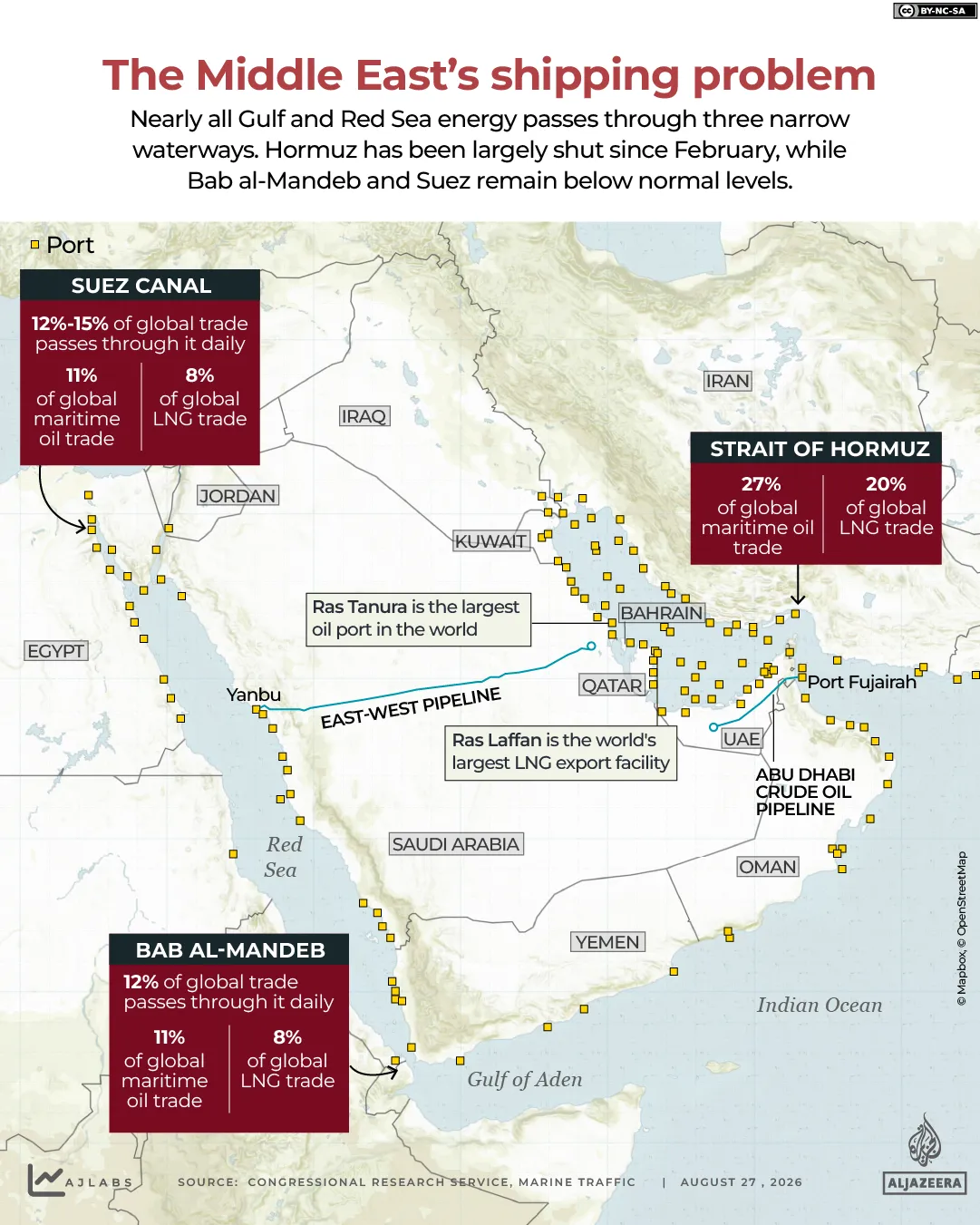



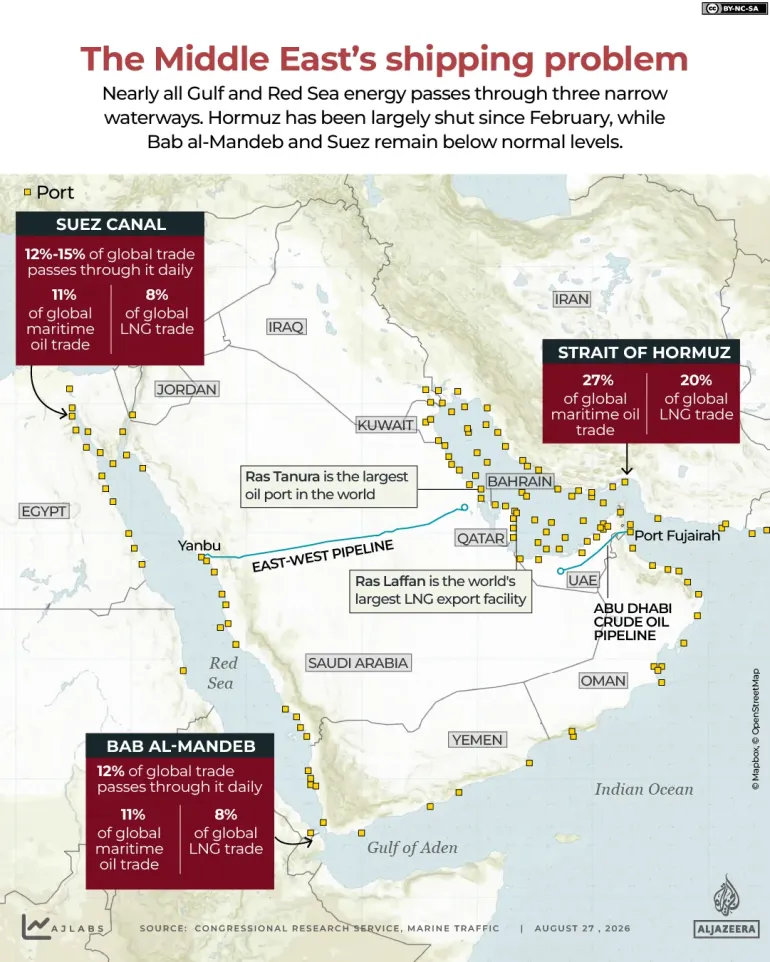
![[Al Jazeera]](https://i0.wp.com/occasionaldigest.com/wp-content/uploads/2026/09/INTERACTIVE-MIDDLE-EAST-iran-hormuz-shipping-aug-27-2026-1787815800-1788488337.webp?w=640&ssl=1)
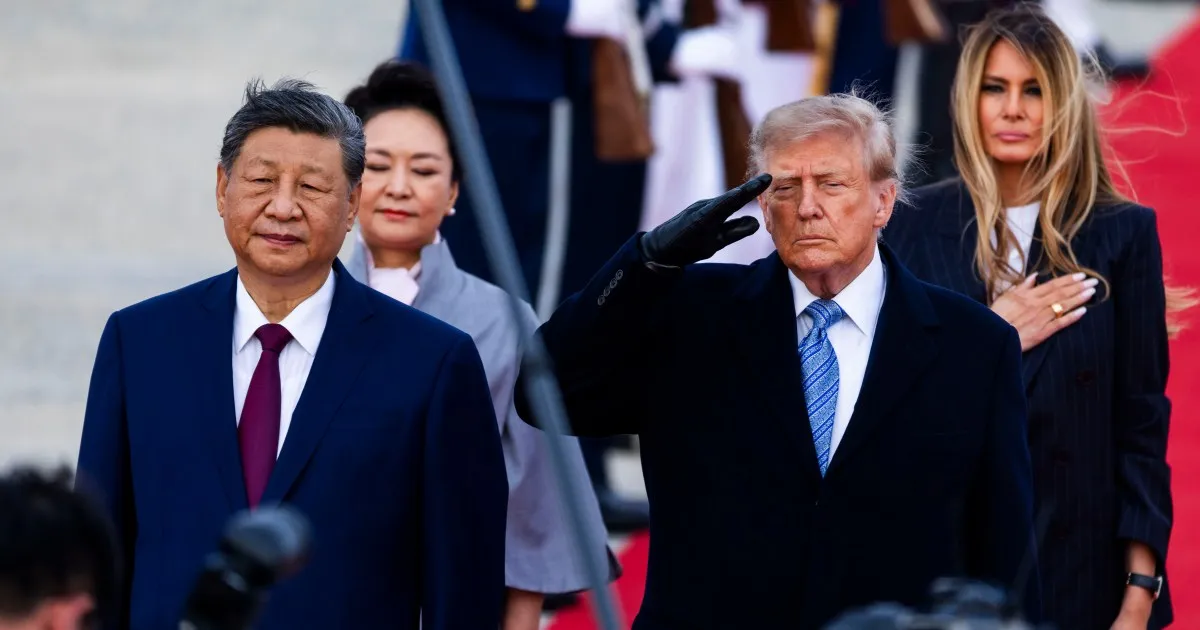


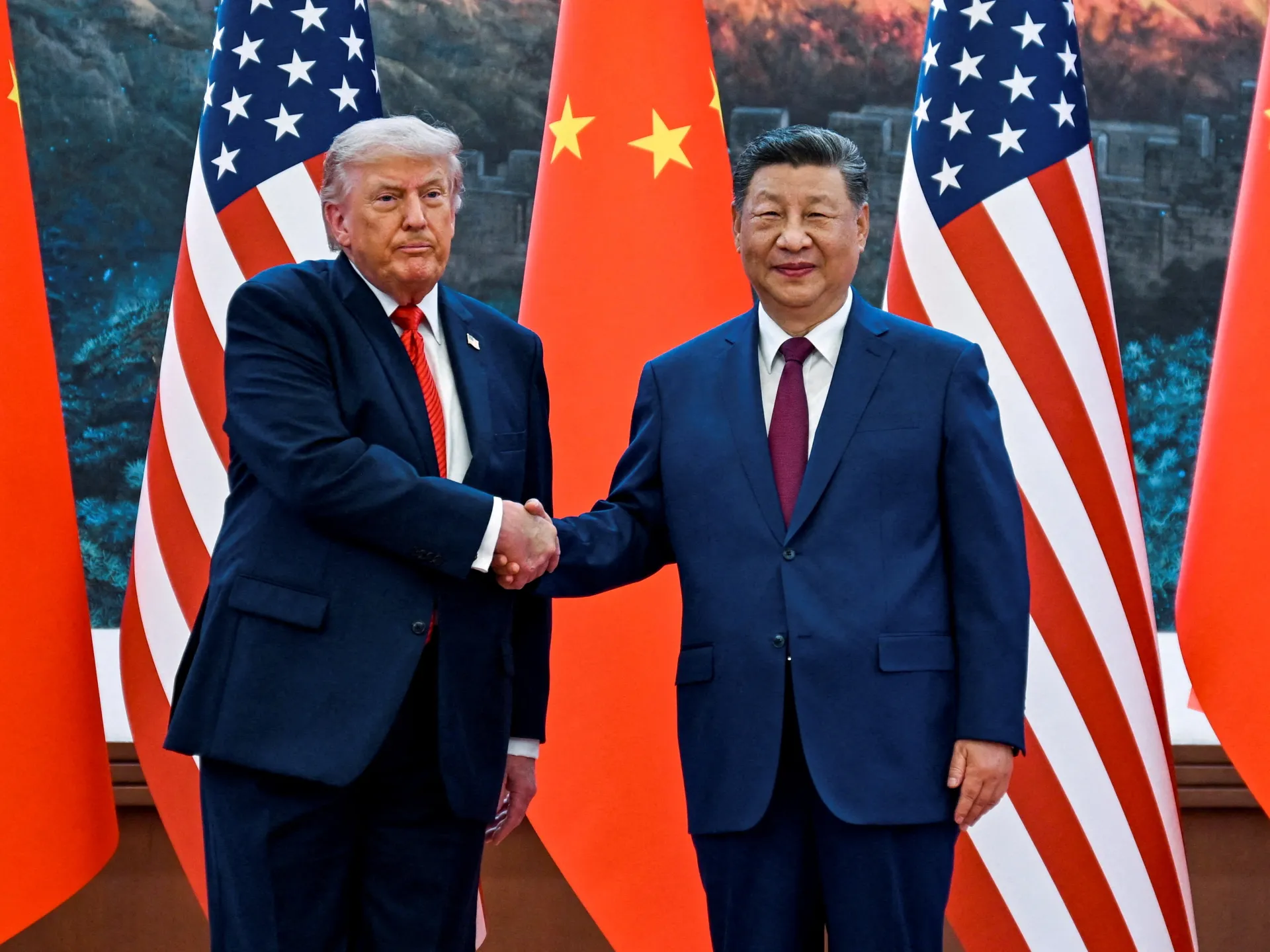




![NCSIST - Tien Kung III Air Defense Missile & Hsiung Feng III Anti-Ship Missile Live Firing [480p] thumbnail](https://i0.wp.com/i.ytimg.com/vi/uPq4iC70U0Y/hqdefault.jpg?w=640&ssl=1)


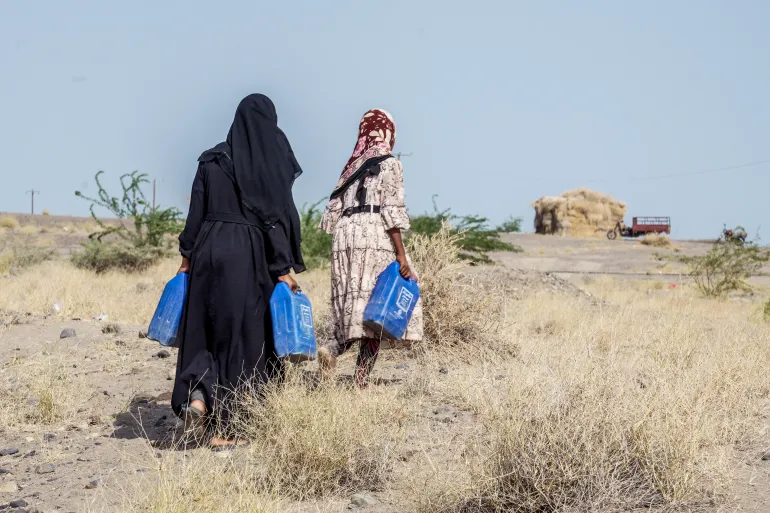
![Internally displaced (IDP) Yemeni women who fled their homes with their families due to renewed clashes between Yemen's Saudi-backed government forces and the country's Houthi rebels, carry jerrycans after seeking shelter in Mocha, on the Red Sea coast of Yemen on September 7, 2026. [AFP]](https://i0.wp.com/www.aljazeera.com/wp-content/uploads/2026/09/afp_6a9f3c52918a-1788820562.jpg?w=640&ssl=1)

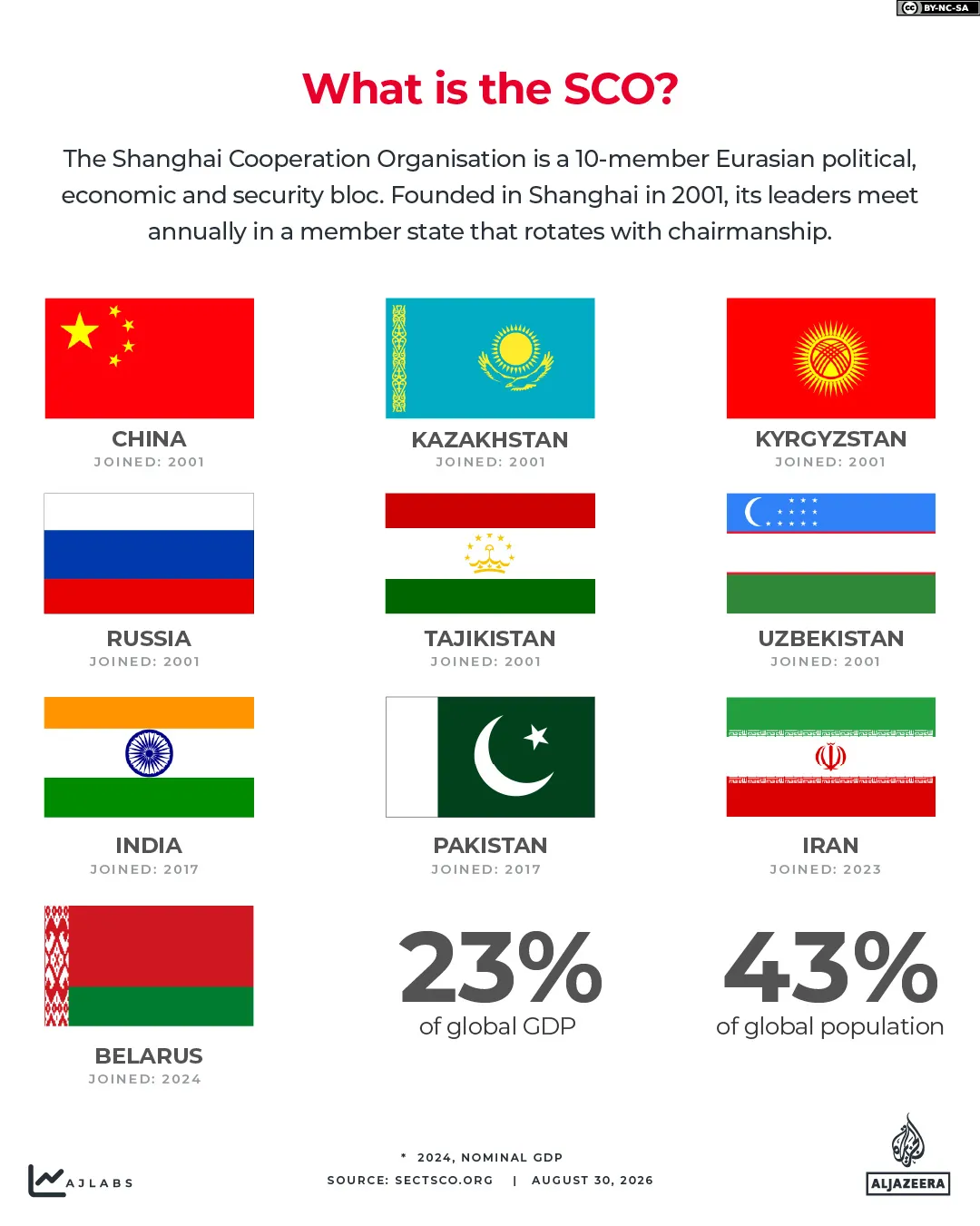





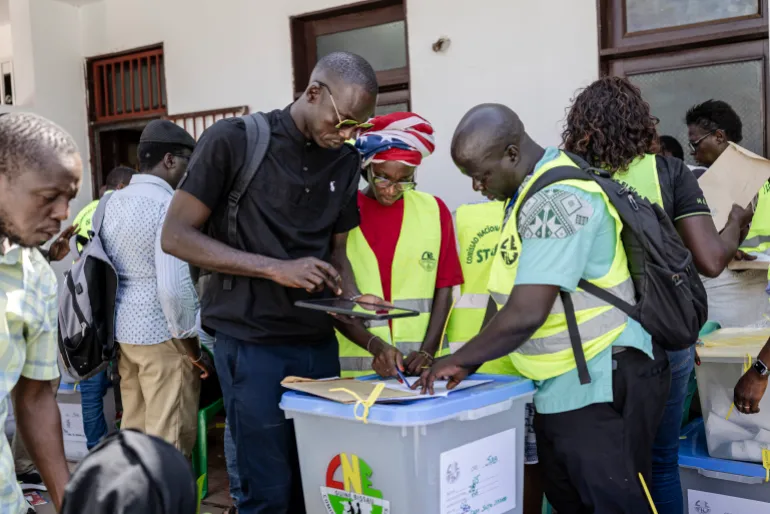
![The referendum will determine the constitutional framework under which Guinea-Bissau’s next elected president and parliament will govern [PATRICK MEINHARDT / AFP]](https://i0.wp.com/occasionaldigest.com/wp-content/uploads/2026/08/afp_692748369f11-1764182070.jpg?w=640&ssl=1)