wga

Paramount demands $1.9 billion from states, citing Warner deal delays

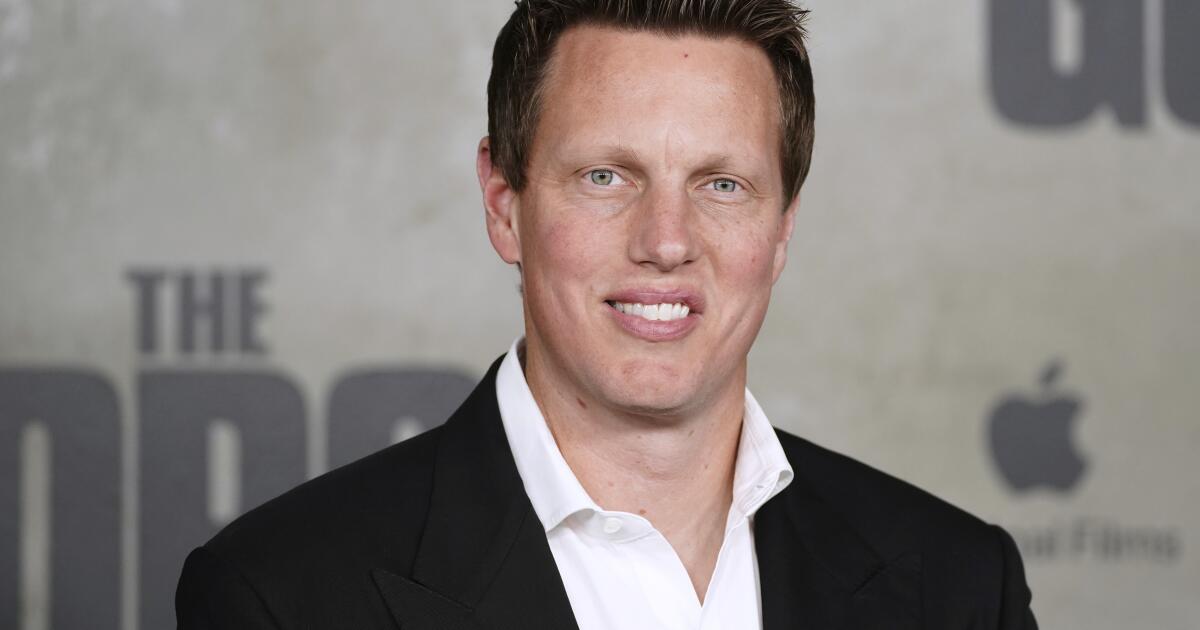
David Ellison’s Paramount Skydance has asked a judge to force California Atty. Gen. Rob Bonta and his coalition of 11 other states to prepare to set aside as much as $1.9 billion as the Warner Bros. Discovery merger challenge heads into overtime.

In Monday’s court filing, Paramount requested the plaintiff states, including New York, Colorado, Oregon and Nevada, as well as the Writers Guild of America, post a bond that would cover the “ticking fees” Paramount promised to pay Warner shareholders should the deal stretch beyond its anticipated September close.

Ellison was confident his proposed Warner takeover would sail through its regulatory clearances. President Trump’s Justice Department approved the merger in June, as have dozens of other countries.

The states would not be required to pay the full $1.9 billion upfront. Instead, they would have to come up with a portion of that amount by Sept. 30. Should the Democrat state attorneys general and WGA lose their lawsuits, they would ultimately have to pay the full amount.

Monday’s court filing highlights Ellison’s frustrations and the financial pressures that deal delays will bring the media company. The filing also continues Paramount’s full-court political pressure campaign to get Bonta and the other states to abandon their antitrust lawsuit.

Paramount did not expect such a spirited challenge from Bonta and the 11 other Democratic state attorneys general who banded together with the WGA to try to block the $111-billion merger of two historic Hollywood studios.

Paramount’s 23-page filing, signed by former high profiile federal prosecutor Danielle Sassoon, was intended to rattle the states.

Paramount is trying to create divisions among the plaintiff states by prompting them to question their resolve in fighting a protracted and potentially expensive legal battle, according to a person familiar with Paramount’s strategy who was not authorized to speak publicly.

Because WGA has separately sued to unravel the deal, Paramount has asked the judge to have the union post a bond to cover some of the costs, too.

In its motion, Paramount cited the Clayton Antitrust Act, which is the foundation for Bonta’s lawsuit. The law carries a provision to require plaintiffs to post a bond to cover the potential financial harms of halting a transaction.

The bond gives a defendant, in this case Paramount, a way to recover lost funds should they ultimately prevail in court.

U.S. District Judge Araceli Martínez-Olguín will be asked to rule on the request during a Wednesday court hearing.

“We have satisfied all closing conditions under our merger agreement, having received regulatory clearances from 68 jurisdictions,” Paramount said in a statement. “These two lawsuits are the only barrier to closing this transaction.”

Paramount is incurring considerable legal fees and deal-related costs.

The company cited a potential eight-month merger delay because Martínez-Olguín scheduled the trial for March 2. If the case goes to trial, it might not be decided until next May.

At issue are the “ticking fees” that Paramount in February agreed pay to Warner investors should the merger be delayed . Paramount agreed to pay $.25 a share for every quarter until the acquisition finalizes.

The fees add up to $7 million a day, or $650 million per quarter.

Paramount is facing a June 4 deadline to close the deal. That’s when Warner Bros. Discovery can demand a $7-billion break-up fee.

Paramount wants to get the deal done as soon as possible, and with the approval of Mexican regulators last week, only Bonta and the states’ lawsuit stands in their way.

Paramount also is cognizant of shifting winds in Washington should Democrats regain control of Congress in November, which could bring fresh scrutiny to the merger .

Ticking fees weren’t the only costs of the extended timeline.

“There will be no integration and no ramped-up investment in content, production, and creative talent by the combined company,” Paramount said . “Employees of both Paramount and WBD are also harmed by the uncertainties caused by the delay.”

Last week, the Directors Guild of America and the International Alliance of Theatrical Stage Employees — which represent a combined 200,000 union members — waded into the clash over the merger, which continues to carve deep divisions throughout the industry.

“We remain confident that plaintiffs’ case is without merit and will defend our pro-competitive transaction in court,” Paramount said. “We look forward to closing this transaction and delivering its benefits to consumers and entertainment industry workers in California, the United States and around the world.”
Source link

Hollywood unions split: DGA, IATSE seek settlement while WGA fights to block Paramount-Warner merger

Citing Hollywood’s already struggling production economy, two influential industry unions have jointly called on Paramount Skydance Chairman David Ellison and California Atty. Gen. Rob Bonta to settle their antitrust fight.

The Directors Guild of America and the International Alliance of Theatrical Stage Employees — which represent a combined 200,000 union members — are turning up the political pressure to try to resolve the clash over the Paramount-Warner Bros. merger, which has already carved deep divisions throughout the industry.

The DGA and IATSE’s unusual missive comes as Paramount has been trying to drum up support for the deal and while
development projects reportedly are being put on hold. Paramount executives and others have decried the delay in deciding whether the deal moves forward. Bonta and Paramount are now poised to slug it out in an Oakland courtroom next spring.

“Our collective members are concerned about their futures, and the future of the industry,” DGA Executive Director Russell Hollander and IATSE President Matthew D. Loeb wrote Thursday in their three-page letter to Ellison and Bonta.

“We are aware of productions that have been put on hold or canceled altogether, leading to further reductions in available work for our members and other industry workers,” the letter reads in part.

The effort adds heat to a growing campaign urging Bonta to bend in his fight to block the industry- reshaping deal that would combine the Warner Bros. and Paramount film and television studios, HBO, CBS, CNN, HGTV and Comedy Central.

Earlier this week, California’s Democratic gubernatorial nominee, Xavier Becerra, said he favored a settlement. Republican Steve Hilton has decried the antitrust lawsuit as being politically motivated.

Gov. Gavin Newsom, who leaves office next year, has stayed above the fray.

Paramount and Bonta’s office didn’t immediately comment.

The Writers Guild of America last month joined Bonta’s coalition of state attorneys general in filing lawsuits to upend the $111-billion transaction, saying the Paramount-Warner combination violates U.S. antitrust laws and would decimate the entertainment industry by erasing jobs and reducing pay.

At issue is the $81 billion in debt that Ellison would have to take on to pay Warner Bros. Discovery shareholders for the keys to the studios and HBO.

WGA leaders and others have warned that level of debt would choke the two historic studios, creating a more devastating sequel to 2019‘s combination of the Disney and Fox studios, and the 2022 takeover of Warner Bros. by Discovery.

The union leaders conceded they weren’t merger fans, and they stopped well short of asking Bonta to throw in the towel.

Instead, they listed nine conditions — including requiring Paramount to maintain its operations in Hollywood and a commitment to make film and television shows in the U.S. — as part of any settlement.

The unions want Ellison to make an enforceable commitment that Paramount and Warner Bros. studios each release 15 films into theaters a year. They also want a 45-day theatrical window so that cinema chains can continue their rebound.

Some of the DGA and IATSE terms may be difficult for Ellison to swallow. Already, Paramount is looking to shave expenses to come up with the $81 billion promised to Warner Bros. shareholders. Sources have said Ellison’s suggestion to move Paramount from its picturesque Hollywood campus is designed, in part, to attract financial incentives from another state, such as Tennessee, eager to help with a relocation.

Among the conditions, the DGA and IATSE asked that Paramount’s and Warner Bros.’ motion picture units be kept as “as separate studios, with each studio maintaining its own production, distribution, marketing and exhibition groups as distinct divisions.”

One of the goals of the merger is to shave costs by consolidating overlapping business divisions and back-office functions.

The union leaders also want Warner Bros. television studio to operate independent from the Paramount and CBS production arms. They called on HBO to remain a linear television channel and available on third-party platforms, including Amazon.

Loeb and Hollander’s requests are designed to keep production jobs in the U.S.

They asked Ellison to commit to producing films and TV shows in the U.S. “at no less than the average percentage produced in the United States during the last five years” excluding 2020, the pandemic year, and 2023, when two strikes idled production.

“Our goal, with respect to the proposed merger, has always been to achieve an outcome that ensures a vibrant, competitive marketplace for the production, distribution, and licensing of film and television programming that serves the interests of consumers and filmmakers alike,” Hollander and Loeb wrote.

“We believe that these conditions, if secured through a binding agreement, will largely serve this purpose,” the said.

Bonta previously has said his preference would be structural remedies — divesting key business units — rather than “behavioral” compromises that could evaporate soon after the merger closed.

Should the two sides fail to hash out a settlement with conditions, Loeb and Hollander asked Ellison and Bonta to seek an earlier trial date for the legal showdown.

A federal judge set a March 2 date — despite Paramount’s request to hold the proceedings in November.

Source link

WGA sues Paramount, claiming Warner Bros. acquisition would take away jobs

The Writers Guild of America sued Paramount on Tuesday, alleging that the company’s planned $111-billion acquisition of Warner Bros. Discovery violates federal antitrust law.
The union said that with fewer competitors, the merged Paramount-Warner Bros. Discovery business would be able to lower costs by reducing writers’ wages and work.

“Writers will be paid less and have fewer employment opportunities,” the WGA said in its lawsuit.

The move comes a day after California Atty. Gen. Rob Bonta led a coalition of 12 Democratic state attorneys general who filed a federal lawsuit to block Paramount Skydance’s $111-billion merger with Warner Bros. Discovery.

Bonta has separately asked a judge in San Francisco for a temporary restraining order to hold up the deal while his case is pending in court.

“We feel we have a very strong case,” Bonta said Tuesday during a town hall meeting. “This proposed merger will raise prices. It will lower quality. It will reduce output. It will hurt the American people, and it’ll hurt the the economy and competition.”

The writers guild’s missive creates a second line of attack against tech scion David Ellison’s industry-reshaping deal.

Ellison’s proposed merger has been moving closer to the finish line after securing approvals from the U.S. Justice Department and numerous other foreign governments. President Trump, an ally of Ellison’s billionaire father Larry Ellison, favors the deal.

David Ellison wants to close the deal by September to avoid a higher payout to Warner Bros. Discovery shareholders.

A Paramount spokeswoman said the company is reviewing the lawsuit.

The proposed merger has sparked fears in Hollywood that it would bring thousands of job losses — similar to past consolidations, including Walt Disney Co.’s 2019 takeover of Fox entertainment properties.

“The Writers Guild of America will not stand idly by as Paramount attempts to violate our country’s antitrust laws and deepen the contraction entertainment workers already feel,” said Writers Guild of America East President Tom Fontana in a statement. “This proposed combined entity would be the largest employer of writers, with tremendous power to suppress our wages, eliminate opportunities for emerging writers, cut jobs across the industry, and produce less programming, affecting the range of storytelling. This merger is not inevitable and we are fighting to stop it.”

Source link

DGA ratifies four-year contract with major studios

The Directors Guild of America on Thursday night said it approved a four-year contract with the major studios.

The new contract will boost studio contributions to DGA’s healthcare plan, increase minimum salaries and offer AI protections. The DGA declined to say how many voted in favor of the contract, but in a memo to members, union President Christopher Nolan and National Executive Director Russell Hollander said members “voted overwhelmingly” to ratify it.

“Throughout this process, our focus was clear: protect our members, strengthen the Guild, and address the challenges facing our industry during a period of profound change,” Nolan and Hollander wrote in a memo to members sent on Thursday. “… We have achieved critical wins that put the Guild in a position to further protect our members economic and creative rights now and into the future.”

The newly ratified contract provides some stability in Hollywood, about three years after a summer of strikes led by the Writers Guild of America and performers guild SAG-AFTRA. WGA approved a contract with major studios under the Alliance of Motion Picture and Television Producers in April and SAG-AFTRA members ratified their contract in June. All the contracts extend the terms to four years instead of three years, which studios had sought out.

The AMPTP in a statement thanked DGA, WGA and SAG-AFTRA “for their thoughtful and collaborative approach to negotiations.”

“Together, we reached agreements that deliver substantial gains for guild members while supporting greater stability across the entertainment business,” the AMPTP said. “We are encouraged by the trust built throughout this cycle and look forward to building on that momentum to advance opportunity and shared success across our industry.”

The new DGA contract starts on July 1 and runs through June 30, 2030. Key aspects of the agreement include requiring the studios to increase their contribution to DGA’s health plan by 24.4% over four years. In return, the DGA would support “modest” increases to the eligibility threshold and annual premiums.

The contract also increases minimum salaries on many jobs by 2.5% in the first year and up 3% for each of the following years in the agreement.

It also adds more rules around the use of AI technology, including requiring that directors oversee any footage created by artificial intelligence.

Source link

Director’s Guild reaches tentative deal with studios

The Director’s Guild of America has struck a tentative deal with the Alliance of Motion Picture and Television Producers, completing the negotiation cycle for Hollywood’s major unions.

SAG-AFTRA ratified its contract last week, the Writers Guild approved its deal back in April, and the DGA has similarly landed on a new contract, after nearly a month of negotiations. The latest deal with major film and TV studios was announced on Tuesday, but its terms have not yet been disclosed.

The Directors Guild, led by its president Christopher Nolan, reportedly entered negotiations in hopes of improving conditions to create new jobs, bulk up its health fund, and increase protections against generative AI.

“The tentative agreement will be presented to the DGA National Board for approval,” the DGA said in a statement. “Consistent with the Guild’s longstanding practice, terms of the agreement will not be released publicly until the National Board has completed its review.”

Negotiations started on May 11, and the current contract is set to expire on June 30. Once the DGA National Board approves the new contract, it will be sent to its members for a ratification vote. The union represents nearly 20,000 helmers, assistant directors, associate directors, unit production managers and stage managers.

The studios said they were pleased to have reached this latest tentative agreement with DGA.

“We appreciate the hard work and commitment of our guild partners in achieving a fair deal that helps advance a stable and successful entertainment industry,” AMPTP said in a statement.

The DGA’s tentative contract marks the last few steps of the current Hollywood union negotiation cycle. The previous one in 2023 was marked by the industry-stopping strikes from SAG-AFTRA and WGA, and the industry is still feeling the impact from them. But this year’s bargaining season was much quieter and uncontroversial. SAG-AFTRA and WGA will reconvene with the studios for bargaining in 2030, as they all signed four-year contracts.

Source link

WGA and SAG-AFTRA call out CBS and the recent firings at ’60 Minutes’

Both SAG-AFTRA and the Writers Guild East are condemning the recent firings at CBS’ “60 Minutes.”

Under the news network’s editor-in-chief Bari Weiss, on-air correspondents Scott Pelley, Cecilia Vega, Sharyn Alfonsi and the program’s executive producer, Tanya Simon, have all been ousted from the legacy newsmagazine. The two unions, which represent journalists, said the recent actions appear to compromise editorial independence.

WGA East president Tom Fontana wrote in a letter to members on Thursday that the changes at CBS News “are more than mere ideological interference with the news. They display a profound contempt for the journalism profession.”

He added, “it is clear that CBS brass is engaged in a near-constant level of editorial interference that would have previously been unthinkable.”

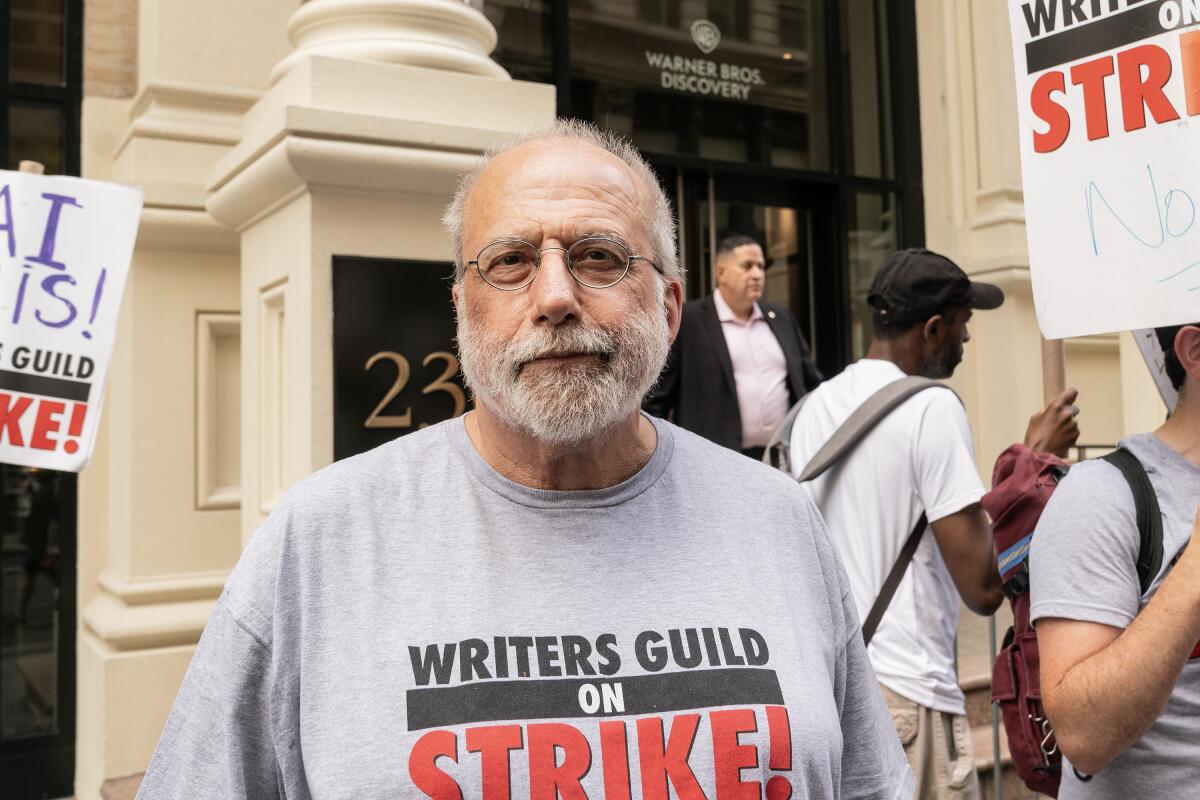
Tom Fontana joined WGA and SAG-AFTRA members on the picket line in the strike over contract negotiation.

Tom Fontana joined WGA and SAG-AFTRA members on the picket line in the strike over contract negotiation at Netflix and Warner Bros. Discovery offices on Aug. 15, 2023, in in New York City.

(Lev Radin / VIEWpress via Getty Images)

SAG-AFTRA similarly said in a statement Thursday that these “decisions can only be seen as part of a broader strategy to gut the crucial independent journalism that is so important to our democratic system.”

A spokesperson for CBS News said in a statement, “There is no political interference at CBS News, not from ownership, not from Bari Weiss. The only ‘interference’ is the normal back and forth between editor and correspondent that happens in every newsroom.”

Pelley, one of the program’s most high-profile correspondents, was fired on Tuesday after speaking out during a team meeting. He reportedly said Weiss “is murdering ‘60 Minutes.’ … She does not love this place. She was brought in to kill it, and she’s been doing exactly that.” He also questioned the newly hired executive producer, Nick Bilton, and his ability to run the show, citing his lack of TV news experience.

Pelley accused CBS News management of favoring the Trump administration by instructing him to put “falsehoods and bias into a politically sensitive story.”

“I’ve been told to include assertions that are unverified,” he said in a statement. “To date, in every case, I have ignored these instructions or refuse them.”

“60 Minutes” is now down four correspondents, following Anderson Cooper’s departure and the firings of Vega and Alfonsi. These are only the most recent controversial moves from Weiss, who’s set on remaking the institution long defined by tradition. She arrived at CBS News in October with no television experience, installed by Paramount Chief Executive David Ellison after he acquired her digital news outlet, the Free Press, with a mandate to change the network.

Since her hiring, there was a significant round of layoffs and CBS News Radio was shut down.

“I’m only interested in working in a newsroom that is built on trust and mutual respect,” Weiss said of Pelley’s firing during a meeting on Wednesday morning. “That foundation was broken on Monday, and despite our attempts to engage with Scott Pelley and to find a way back, unfortunately we weren’t able to do so, and so we had to part ways.”

The lack of reporters means “60 Minutes” will have to line up new talent quickly to fill the correspondent roles, as production of the 2026-27 season is already underway.

WGA’s Fontana added, “To our friends and colleagues at CBS News: We see you, and you are not alone. Thousands of your union brothers, sisters, and siblings have your backs.”

SAG-AFTRA also said the union is prepared to take “legal actions related to the company’s conduct over the last several weeks.”

Times staff writer Stephen Battaglio contributed to this report.

Source link