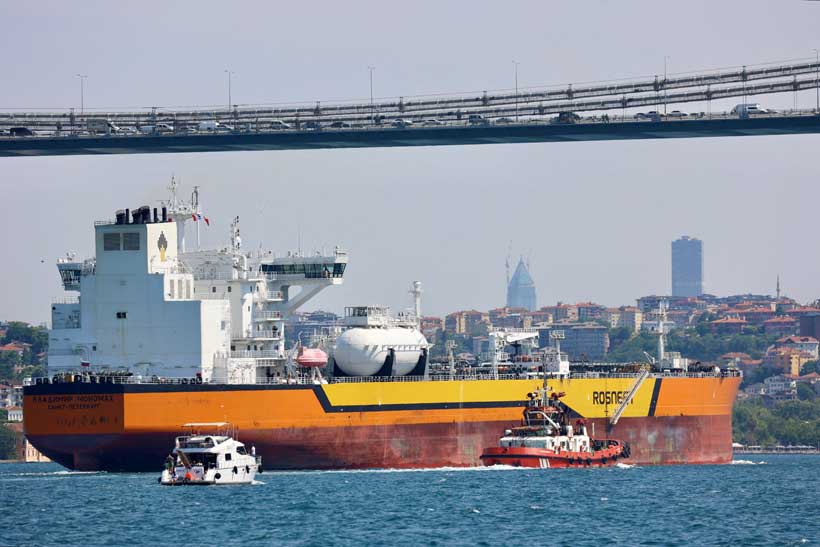
Syria Turns to Russian Oil Despite Westward Shift
Despite efforts to rebuild ties with Western nations, Syria remains heavily dependent on Russia for its oil supply. Since the fall of Bashar al Assad in late 2024, shipments from Russia have surged, making Moscow the primary supplier of crude to Syria.
This shift comes even as the new government in Damascus seeks closer alignment with Europe and the United States. The contradiction highlights the economic constraints facing a country still recovering from years of war and isolation.
Rising Dependence on Russian Oil
Russian oil exports to Syria have increased significantly, now covering a large portion of the country’s energy needs. Domestic production remains far below demand, leaving Syria reliant on imports to sustain basic economic activity.
Before 2025, Iran had been Syria’s main supplier, but that relationship ended following political changes in Damascus. Russia quickly stepped in, becoming the first to resume large scale shipments after the leadership transition.
Limited Alternatives and Structural Weakness
Syria’s options remain extremely limited. Years of conflict have weakened its economy, reduced purchasing power, and restricted access to global financial systems. Even after the easing of Western sanctions, integration into international markets remains slow and incomplete.
Efforts to secure alternative suppliers, including potential deals with regional partners such as Turkey, have so far failed. This leaves Russian supply networks as the most accessible and reliable option in the short term.
Sanctions Risk and Diplomatic Tension
Reliance on Russian oil poses significant risks for Syria’s foreign relations. Continued trade with Moscow could strain ties with Western governments and expose Syria to renewed sanctions, particularly if geopolitical tensions escalate.
The situation is further complicated by Russia’s ongoing military presence in Syria, including key naval and air bases. These assets give Moscow continued influence over the country’s strategic direction.
Opaque Supply Chains and Sanctioned Networks
Much of the oil trade is conducted through complex and opaque shipping networks. Tankers linked to sanctioned entities frequently deliver crude to Syrian ports, often using ship to ship transfers to obscure the origin of cargo.
These methods reflect both necessity and constraint. Syria’s exclusion from conventional shipping and financial systems has pushed it toward alternative networks that carry reputational and legal risks.
Supply Gap and Energy Reality
Syria’s domestic oil production remains a fraction of pre war levels, while demand continues to exceed supply. Russian shipments now fill a significant portion of this gap, alongside smaller volumes obtained through informal or regional channels.
This dependency underscores the difficulty of rebuilding an energy sector after prolonged conflict, particularly without strong international investment or infrastructure support.
Analysis
Syria’s reliance on Russian oil reveals the limits of political realignment when economic realities remain unchanged. While Damascus may seek closer ties with the West, its immediate survival depends on securing energy supplies, and Russia is currently the only actor able and willing to meet that need at scale.
For Moscow, the relationship offers continued leverage in Syria despite the fall of its former ally. Energy supply becomes a tool of influence, allowing Russia to maintain a strategic foothold even as political dynamics shift.
At the same time, the arrangement creates long term risks for Syria. Dependence on sanctioned networks could undermine efforts to rebuild credibility with international partners and attract investment. It also leaves the country vulnerable to external pressure, particularly if Western governments decide to enforce stricter controls on Russian energy flows.
Ultimately, Syria is caught between geopolitical ambition and economic necessity. Until it diversifies its energy sources and strengthens its economic foundations, its foreign policy choices will remain constrained by the basic need to keep fuel flowing.
With information from Reuters.