weighs

Trump says in his social media post he was a doctor, not Jesus. A Catholic school alum weighs in

The general consensus is that President Trump’s social media post of himself dressed in robes, after a busy weekend in which he blasted Pope Leo and attended a prizefight while an Iran peace plan fell apart, was an attempt to cast himself as a Jesus-like figure.

But Trump says we have it wrong.

“It’s supposed to be me as a doctor, making people better,” he said.

As a graduate of St. Peter Martyr grade school in the San Francisco East Bay area, and as someone who has seen a lot of doctors for various ailments, I feel uniquely qualified to weigh in.

In Catholic school, holy cards are a big deal. You’ve seen a couple hundred of them by the time you hit second or third grade, so you become familiar with the muted ethereal glow, the heavenly gaze and the look of piety. A standard feature is the halo, a clearly defined sphere that sits like a buttered bonnet on the head of the saint.

Let the record show that in his post on his very own Truth Social, which is not always truthful, Trump does not have a halo.

So in total fairness, it’s possible the president was not lying when he said he was supposed to be a doctor.

On the other hand, having seen a good number of cardiologists and surgeons and orthopedic specialists, I don’t recall any doctors who wore flowing robes while bathed in heavenly light, with a flock of eagles coming out of their ears and a team of Navy SEALs busting through the hospital ceiling.

And then there’s the fireball emanating from Trump’s right hand. All of which begs the question: If Trump thinks this is what a doctor looks like, what ailment is he being treated for, and shouldn’t the public be advised?

There’s also the question of creation — not of human life, but of the very existence of a social media post like this from the president of the United States in wartime. It was described as an AI-generated image, but who was at the computer?

Did the president sit down at the end of a long day and churn out an image of himself playing doctor, if not Jesus Christ? Or does he have a team of staffers who do this sort of thing, and if so, how could Elon Musk have missed them when he said the government was bloated and set out to fire half the federal workforce?

You’d at least hope the president would have the courage of his convictions. But as criticism of his post mounted, Trump deleted it Monday morning.

I think he should have stuck with the story — he was portraying himself a doctor because he’s a healer. The next day, he could have been in a New York Jets uniform and told us he’s a quarterback. Then he could have released an image of himself in the Artemis space capsule and told us he’s an astronaut, and he’s thinking of building a string of Trump hotels on the moon. Ask yourself this: Would anyone have been surprised?

A guy who only knows how to go for broke, and always doubles down when things go wrong, has to stick to his guns or the whole shtick unravels. I’d have respected Trump more if he had traipsed around the White House with a stethoscope for a week or two, or maybe performed brain surgery on Pete Hegseth, just to see what’s going on in there.

What’s going on in Trump’s head, if I might volunteer a bit of armchair psychoanalysis, is that failure triggers a sense of grandeur rather than humility.

Things are not going well at the moment, so he’s lashing out. The price of things was supposed to come down on Day One, but thanks to his upheaval of the world economy, prices went up, and now they’re soaring because he helped start a war that made no sense.

A war that has been criticized by Pope Leo, who has pointed out that while the Trump administration has ascribed a religious imperative to the assault on Iran, and Trump promised to blow the country all the way back to the “Stone Ages,” Jesus would probably not be on board.

Trump, who said last year that he wants to “try and get to heaven, if possible,” now realizes he’s not going to get an endorsement from the pontiff.

And so the man who once issued a national call to prayer, said the Bible was his favorite book, joked after the death of Pope Francis that he wanted to be the next pontiff, and has now issued his own holy card, has attacked Pope Leo for being too liberal as well as “weak on crime and terrible for foreign policy.” He has, in effect, anointed himself as holier than the pope himself.

Even staunch supporters of Trump have worked themselves into a lather over this. They’re lashing out at Trump, as if his criticism of the pope and depiction of himself as Jesus Christ are shocking.

My fellow Americans, certain words have been rendered meaningless in describing the current state of affairs. Among them are shocking, surreal, unbelievable, unprecedented and unexpected.

If indeed Trump thinks he’s Jesus, let his penance begin with 100 Our Fathers, 500 Hail Marys and 1,000 Acts of Contrition.

If indeed he thinks he’s a doctor:

Physician, heal thyself.

steve.lopez@latimes.com

Source link

Supreme Court weighs Trump’s bid to end birthright citizenship

The Supreme Court on Wednesday will hear President Trump’s claim that he has the power to revise the Constitution and to end birthright citizenship for babies born in this country to parents who were here unlawfully or temporarily.

Trump proposed this potentially far-reaching change in an executive order. It has been blocked by judges across the country and has never been in effect.

His lawyers contend they seek to correct a 160-year misunderstanding about the Constitution’s promise that “all persons born” in this country are deemed to be citizens.

The president’s executive order “restores the original meaning of the citizenship clause” and would deny “on a prospective basis only” citizenship to the “children of temporarily present aliens and illegal aliens,” Solicitor Gen. D. John Sauer wrote in his appeal.

But the first hurdle for Trump and his lawyers may concern the powers of the president.

In February, the court blocked Trump’s sweeping worldwide tariffs on the grounds the Constitution gave Congress, not the president, the power to impose import taxes.

By comparison, the president has even less power to set the rules for U.S. citizenship. The Constitution gives Congress the power to “establish a uniform rule of naturalization.”

After the Civil War, Congress adopted a civil rights act in 1866 that said “all persons born in the United States and not subject to any foreign power, including Indians not taxed, are hereby declared to be citizens of the United States … of every race and color.”

To make sure that rule stood over time, it was added to the Constitution in the 14th Amendment. Its opening line says: “All persons born or naturalized in the United States and subject to the jurisdiction thereof are citizens of the United States and of the State wherein they reside.”

In 1898, a conservative Supreme Court upheld that rule and affirmed the citizenship of Wong Kim Ark. He was born in San Francisco to Chinese parents who later returned to China.

“The 14th Amendment affirms the ancient and fundamental rule of citizenship by birth within the territory,” the court said. “In clear words and in manifest intent, [it] includes the children born, within the territory of the United States, of all other persons, of whatever race or color.”

In 1952, when Congress revised the immigration laws, it added the same provision without controversy. Lawmakers set multiple rules for deciding disputes over American parents who live abroad, but the first rule was simple and undisputed.

“The following shall be nationals and citizens of the United States at birth: a person born in the United States and subject to the jurisdiction thereof,” the law said.

Critics say Trump’s plan could replace a clear and simple rule with a confusing and complicated one. States would have to look into the history and legal status of a newborn’s parents to decide whether they met the new qualifications.

Until now, a valid birth certificate had been sufficient to establish a person’s U.S. citizenship.

Last week, Trump was urging Senate Republicans to pass a new election law that would require millions of Americans to present a birth certificate as proof of their citizenship if they register to vote or move to a new state.

“Proving citizenship to vote is a no brainer,” the White House said.

This week, however, Trump’s lawyers are urging the court to rule that their birth in this country is not proof of their citizenship.

There is a “logical inconsistency” here,” said Eliza Sweren-Becker, a voting rights expert at the Brennan Center.

In the legal battle now before the court, the key disputed phrase is “subject to the jurisdiction.” That has been understood to mean that people within the United States are subject to the laws here, except for foreign diplomats and, for a time, Native Americans who lived on tribal reservations.

But Sauer contends it excludes newborns who are “not completely subject to the United States’ political jurisdiction” because their parents are in this country unlawfully.

Lawyers for the American Civil Liberties Union called this a “radical rewriting” of the 14th Amendment, which says nothing about the parents of a newborn child.

If upheld, this order could apply to “tens of thousands of children born every month, “ they said, “devastating families around the country.” But worse yet, they said, the outcome “would cast a shadow over the citizenship of millions upon millions of Americans, going back generations.”

Some legal experts predict the court may rule narrowly and reject Trump’s executive order because it conflicts with federal immigration laws. Such a ruling would be a defeat for Trump, but it could allow Congress in the future to adopt new provisions, including a limit for expectant mothers who enter this country to give birth.

Source link

P.M. BRIEFING : Bentsen Weighs Capital Gains Cut

Sen. Lloyd Bentsen (D-Tex.), chairman of the Senate Finance Committee, is examining ways to reduce capital gains taxes, it was reported today.

Bentsen told the Wall Street Journal in a telephone interview that he intends to ask his tax-writing committee to devise a bill that would raise federal revenues about $8 billion in fiscal 1990, which begins Oct. 1.

Such an increase would extend several tax breaks that are about to expire, including the credit for research and development expenditures.

Bentsen said a capital gains tax cut “is one of those things we’ll have to take a look at” as part of the tax package.

Source link

US judge weighs Trump decision to bar Venezuelan funds for Maduro’s defence | Nicolas Maduro News

A United States judge has said that he will not dismiss the drug-trafficking and weapons possession charges brought against former Venezuelan President Nicolas Maduro and his wife Cilia Flores.

But in a Thursday court hearing, Judge Alvin Hellerstein questioned whether the US government has the right to bar Venezuela from funding Maduro’s legal expenses.

Recommended Stories

list of 3 itemsend of list

The hearing was the first for Maduro and his wife since a brief January arraignment, where they pleaded not guilty.

Maduro and Flores have sought to have the charges against them thrown out. Hellerstein declined to do so, but he pressed the prosecution on some of the issues Maduro’s legal team raised in its petition to dismiss the case.

Among them was a decision by the administration of US President Donald Trump to prevent the Venezuelan government from financing Maduro’s defence.

Federal prosecutors argued that national security reasons prevented the US from allowing such payments. They also pointed to ongoing sanctions against the Venezuelan government.

But Hellerstein pushed back against that argument, noting that Trump had eased sanctions against Venezuela since Maduro’s abduction on January 3. He also questioned how Maduro might pose a security threat while imprisoned in New York.

“The defendant is here. Flores is here. They present no further national security threat,” said Hellerstein. “I see no abiding interest of national security on the right to defend themselves.”

Hellerstein emphasised that, in the US, all criminal defendants have the right to a vigorous defence, as part of the Constitution’s Sixth Amendment.

“The right that’s implicated, paramount over other rights, is the right to constitutional counsel,” he said.

Maduro, who led Venezuela from 2013 to 2026, has been charged with four criminal counts, including narco-terrorism conspiracy, conspiracy to import cocaine, the possession of machine guns and the conspiracy to possess machine guns and other destructive devices.

He and his wife were taken into US custody on January 3, after Trump launched an attack on Venezuela.

The Trump administration has framed the military operation as a “law enforcement function”, but experts say it was widely considered illegal under international law, which protects local sovereignty.

Maduro has cited his status as the leader of a foreign country as part of his push to see the case dismissed.

When he last appeared in court, on January 5, he told the judge, “I’m still the president of my country.”

In a February hearing, his defence team sought to dismiss the charges on the basis that preventing Venezuela from paying his legal fees was “interfering with Mr Maduro’s ability to retain counsel and, therefore, his right under the Sixth Amendment to counsel of his choice”.

In an interview with the news agency AFP on Thursday, Maduro’s son, Venezuelan lawmaker Nicolas Maduro Guerra, said that he trusts the US legal system but believes that his father’s trial has been mishandled.

“This trial has vestiges of illegitimacy from the start, because of the capture, the kidnapping, of an elected president in a military operation,” Maduro Guerra said in Caracas.

Protests and counter-protests took place in front of the New York City courthouse on Thursday, with some condemning the US’s actions and others holding signs in support of the trial with slogans like, “Maduro rot in prison.”

Trump himself weighed in on the proceedings during a Thursday cabinet meeting, hinting that further charges could be brought against Maduro.

“He emptied his prisons in Venezuela, emptied his prisons into our country,” Trump said of Maduro, reiterating an unsubstantiated claim.

“And I hope that charge will be brought at some point. Because that was a big charge that hasn’t been brought yet. It should be brought.”

Trump has had an adversarial relationship with Maduro since his first term in office, when he issued a bounty for the Venezuelan leader’s arrest. He has frequently repeated baseless claims that Maduro intentionally sent immigrants and drugs to the US in a bid to destabilise the country.

Those claims have served as a pretext for Trump claiming emergency powers in realms such as immigration and national security. On Thursday, Trump emphasised that, while he expected a “fair trial”, he expected more legal action to be taken against Maduro.

“I would imagine there are other trials coming because they’ve really sued him just at a fraction of the kind of things that he’s done,” Trump said. “Other cases are going to be brought, as you probably know.”

Source link

S. Korea weighs co-sponsorship of U.N. North Korea rights resolution

Photo shows Foreign Ministry spokesperson Park Il speaking at a briefing in Seoul on March 12. Photo by Asia Today

March 24 (Asia Today) — South Korea is taking a cautious approach to whether it will join as a co-sponsor of an upcoming United Nations resolution on North Korean human rights, officials said Tuesday, citing a need to balance diplomacy with Pyongyang and international cooperation.

The resolution is expected to be adopted at the current session of the U.N. Human Rights Council later this week.

Foreign Ministry spokesperson Park Il said the government’s position remains that improving human rights in North Korea is important and that Seoul will continue to work with the international community. However, he said the decision on co-sponsorship is still under review.

“The issue is being considered comprehensively, taking into account the government’s efforts toward peaceful coexistence on the Korean Peninsula and the content of the resolution,” Park said at a regular briefing.

He added that the government’s cautious stance does not signal opposition, but reflects the complexity of factors involved, and that a decision will be made through consultations among relevant agencies.

A ministry official said there is a procedural window allowing countries to join as co-sponsors within two weeks after the resolution is adopted, giving Seoul time to assess its position.

The deliberations come amid strained inter-Korean relations and President Lee Jae-myung’s call to pursue even limited openings for dialogue with North Korea.

South Korea previously joined as a co-sponsor of a similar resolution at the U.N. General Assembly last November, easing concerns that the current administration might withdraw from such efforts.

Separately, the Unification Ministry has signaled a willingness to ease tensions. Unification Minister Chung Dong-young recently made conciliatory remarks, including urging North Korea not to miss opportunities for dialogue with the United States.

Civil society groups have urged the government to take a more active role. The International Federation for Human Rights and the Transitional Justice Working Group said in a joint letter to Lee that declining to co-sponsor the resolution would send a troubling signal domestically and internationally.

They warned that overlooking human rights concerns may create only a temporary easing of tensions, while leaving underlying instability unresolved and making lasting peace more difficult to achieve.

— Reported by Asia Today; translated by UPI

© Asia Today. Unauthorized reproduction or redistribution prohibited.

Original Korean report: https://www.asiatoday.co.kr/kn/view.php?key=20260324010007372

Source link

Divided Supreme Court weighs the right to seek asylum at the southern border

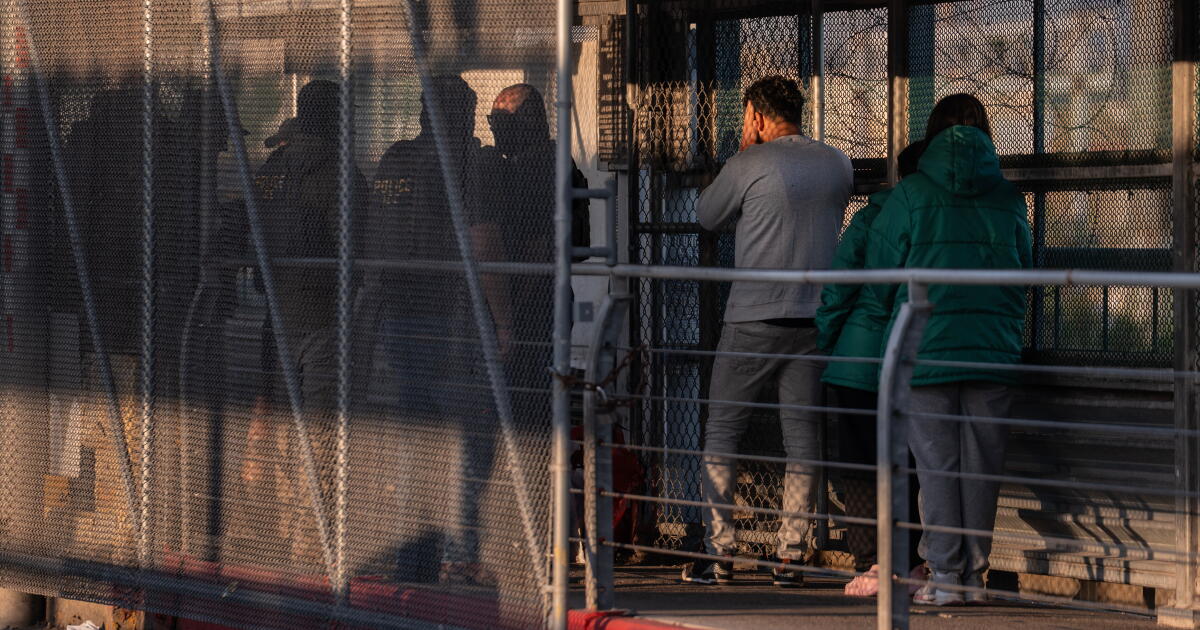
The Trump administration urged the Supreme Court on Tuesday to rule that it may block migrants from applying for asylum at ports of entry along the southern border.

The administration’s lawyers argued that the right to asylum, which arose in response to Nazi Germany and the Holocaust, does not extend to those who are stopped just short of a border post in California, Arizona or Texas.

They pointed to part of the immigration law that says a non-citizen who “arrives in the United States … may apply for asylum.”

“You can’t arrive in the United States while you’re still standing in Mexico. That should be the end of this case,” Vivek Suri, a Justice Department attorney, told the court.

Immigration rights advocates called this claim “perverse” and illogical. They said such a rule would encourage migrants to cross the border illegally rather than present themselves legally at a border post.

The justices sounded divided and a bit uncertain over how to proceed. But the conservative majority is nonetheless likely to uphold the administration’s broad power over immigration enforcement.

Several of the justices noted, however, the Trump administration is not currently enforcing a “remain in Mexico” policy.

Liberal Justices Sonia Sotomayor and Ketanji Brown Jackson questioned why the court would make a major decision on immigration and asylum with no immediate, practical impact.

The case posed a fundamental clash between the government’s need to manage surges at the border and the moral and historic right to offer asylum to those fleeing persecution.

In 1939, more than 900 Jewish refugees who were fleeing Nazi Germany aboard the MS St. Louis were turned away by Cuba and the United States. They were forced to return to Europe and more than 250 of them died in the Holocaust.

The worldwide moral reckoning spurred many nations, including the United States, to adopt new laws which offer protection to those fleeing persecution.

In the Refugee Act of 1980, Congress said that non-citizens either “physically present in the United States” or “at a land border or port of entry” may apply for asylum.

To be eligible for asylum, a non-citizen had to demonstrate a well-founded fear of persecution in their home country due to their race, religion, nationality, membership in a particular social group, or political opinion.

Only a small percentage of applicants win their asylum claims, and only after years of litigation.

But faced with overwhelming surge of migrants, the Obama administration in 2016 adopted a “metering” policy that required people to wait on the Mexican side of the border.

The Trump and Biden administrations maintained such policies for a time.

Immigrant rights advocates sued, contending the metering policy was illegal. They won before a federal judge in San Diego who ruled the migrants had a right to claim asylum.

In a 2-1 decision, the 9th Circuit Court of Appeals agreed in 2024.

“To ‘arrive’ means ‘to reach a destination,’” Judge Michelle Friedland wrote for the appeals court. “A person who presents herself to an official at the border has ‘arrived.’”

The Trump administration appealed.

Solicitor Gen. D. John Sauer said the “ordinary meaning of ‘arrives in’ refers to entering a specific place, not just coming close to it. An alien who is stopped in Mexico does not arrive in the United States.”

On Tuesday, the Justice Department attorney said the court should reverse the 9th Circuit and uphold the government’s broad power to block migrants approaching the border.

“I can’t predict the next border surge,” Suri said.

“For more than 45 years, Congress has guaranteed people arriving at our borders the right to seek asylum, consistent with our international treaty obligations,” said Kelsi Corkran, Supreme Court director of the Institute for Constitutional Advocacy and Protection, who argued the case. “Yet this administration believes that Congress gave it discretion to completely ignore those requirements, and turn back those who are seeking refuge from persecution at its whim.”

“The people turned away at our border are fleeing rape, torture, kidnapping, and death threats. You cannot tell families running for their lives to go back and wait in danger because their suffering is inconvenient,” said Nicole Elizabeth Ramos, border rights project directo at Al Otro Lado which was the plaintiff in the case. “We brought this case because the United States made a legal and moral commitment to protect people fleeing persecution.”

Source link