wednesday

Jeffries’ job grows more difficult in race for House and speaker’s gavel

House Democratic leader Hakeem Jeffries had warned Republicans they would come to regret the congressional redistricting fight, and when Democrats counterpunched last month with a redrawn Virginia map, he had made his point.

The net tally of seats gained and lost was essentially a wash.

“F— around and find out,” said Jeffries after the election victory.

But in a matter of days, the race for control of the House — and the speaker’s gavel — was dramatically reset by back-to-back court rulings that wiped out the Democratic gains in Virginia and now threaten to erode Black representation by Democrats in the Deep South.

The shifting political prospects have been a wake-up call for Democrats, who have been favored to win back the House this November, riding the wave of President Trump’s dipping approval ratings, and a test for Jeffries as the party faces an enlarging map of Republican-friendly seats.

The leader’s aligned outside group has spent some $60 million, much of it on Virginia alone, a hit to the Democrats’ resources as they confront Trump’s Republicans.

“It sort of crystallizes the election is now a contest between one side that has the money and the maps, and the other that has the voters and the candidates,” said Jesse Ferguson, a Democratic strategist and former deputy director of the House Democrats’ campaign arm.

Jeffries would make history as the first Black speaker of the House

Jeffries, who is in line to make history as America’s first Black speaker of the House, acknowledged the Democrats may need to flip twice as many Republican seats — a total gain of six rather than just three — to win the majority in the aftermath of the redistricting fights.

But he insisted that Democrats were on track to pick up seats, as they did in 2018 during Trump’s first term, because Republicans are relying on redistricting — rather than policy solutions — to win elections.

Trump Republicans “don’t give a damn” about Americans’ financial struggles, Jeffries said, paraphrasing the president’s own remarks.

During a closed-door meeting on Wednesday with House Democrats, Jeffries described the work ahead in almost existential terms for the country.

He said the court rulings against the Voting Rights Act and the Virginia measure were “disgusting.” And he warned his colleagues that Republicans would proceed with “diabolical intensity” in their campaigns to regain control of the House, which Democrats will not only have to match but “we have to exceed it with righteous intensity at all times.”

“Failure is not an option,” he told the Democrats, according to a person in the room granted anonymity to disclose the private remarks. “We have to win, and we are going to win.”

Path to power depends on a handful of House seats

Never easy, the race to the House majority was also not expected to be this complicated. Republicans hold a slim majority, among the most narrow in modern House history, and midterm elections tend to favor the party out of power, as a check on the White House.

But when Trump said last summer that Republicans were “entitled” to five more GOP seats from Texas, it sparked a redistricting crusade that led Jeffries to respond in kind.

Rather than take what they call the high road, Democrats said they decided to fight back, believing they could not fully count on the nation’s institutions — in this case, the courts — to provide a check on the GOP power play.

Jeffries flew to Austin to join the Texas Democrats fighting the redistricting plan in their state and stood with those same lawmakers in Chicago where they fled to deny statehouse Republicans a quorum. He joined the private meetings of California Democrats as they launched their counter attack, a voter initiative that put five more seats in the Democratic column. The Democrats picked up a seat in Utah.

And on it went.

“We had to very quickly make a decision, set a course and take a risk,” said Rep. Jared Huffman, D-Calif., recalling the closed-door talks last summer. “There was no guarantee this was going to work out.”

The Virginia measure became a turning point, Jeffries’ biggest swing yet, putting Democrats essentially at parity, if not a potential upper hand in the number of seats gained, and shifting Old Dominion more securely into the party’s column.

He rallied some 1,000 churchgoers in Richmond ahead of Election Day as voters headed to the polls.

House Speaker Mike Johnson on Wednesday called the Democratic play for Virginia a “crazy overreach” that was rightly rejected by the state’s high court.

“Fortunately, the plan failed spectacularly,” Johnson said.

Redistricting battles push into 2028

While Democrats said they expected the Supreme Court to gut the Voting Rights Act, the Virginia Supreme Court’s decision to toss last month’s election results blindsided many of them.

Jeffries joined a call with furious Virginia Democrats over the weekend who said they were more determined than ever to win the Republican seats outright, regardless of their loss over the map changes.

The overall tally after nearly a year of redistricting battles is still shifting as Republican legislatures in the South rush to redraw their maps in the aftermath of the ruling in the Voting Rights Act case, many of them preparing to eliminate districts held by some of the most senior Black lawmakers in Congress.

Rep. James Clyburn, the veteran Democratic legislator from South Carolina whose own seat is at risk, blamed the justices, not Jeffries, for the outcome in Virginia and elsewhere.

“What the hell, he can’t control the courts,” Clyburn said, vowing to run for reelection regardless of where his district is drawn. “Don’t put that on Jeffries. We won the vote.”

Jeffries acknowledged that this year’s maps are almost set, and pivoted to 2028 when he said Democrats will redouble their efforts to confront the GOP redistricting battle ahead of the next election.

“We know this unprecedented assault on Black political representation, the likes of which we have not seen since the Jim Crow era, the ghost of the Confederacy” will continue, he said. “The challenge that is in front of us is ensuring that there is a decisive and overwhelming response in advance of 2028.”

Mascaro writes for the Associated Press.

Source link

Republican resistance to Iran war grows in the Senate as Murkowski flips

Senate Republicans on Wednesday again blocked Democratic legislation that would halt President Trump’s war with Iran, but the number of GOP senators voting against the war grew.

Republican Sen. Lisa Murkowski of Alaska voted against the war for the first time since it began at the end of February. Two other Republicans, Sens. Susan Collins of Maine and Rand Paul of Kentucky, also voted against the war, as they had done previously.

The war powers legislation ultimately failed to advance 49-50, with Sen. John Fetterman of Pennsylvania the only Democrat to oppose it, yet the close tally reflected growing unease with Trump’s war. Several other Republican senators have signaled they want Congress to weigh in on the direction of the conflict.

“There will be a day — and it might be soon, I believe — where this Senate will say to the president, ‘Stop this war,’” Democratic Sen. Tim Kaine of Virginia, who has spearheaded his party’s tactic of forcing repeated votes on the war, said before the vote.

Even if it passes the Senate, a war powers resolution would have a slim chance of passing the House and would also certainly be vetoed by Trump. But Democrats say the votes are about building political pressure on the president either to withdraw from the conflict or seek congressional authorization to wage the war.

Trump officials downplay role for Congress

The White House, meanwhile, has asserted that it does not need congressional authorization for the war and has circumvented legal requirements to gain approval from Congress to continue the military campaign. It claims that it has “terminated” hostilities with Iran because the U.S. has entered a ceasefire.

That posture has created tension between the Republican-controlled Congress and the White House because presidents under the War Powers Resolution of 1973 are required to obtain authorization from Congress after 60 days of engaging in a conflict.

Defense Secretary Pete Hegseth told lawmakers this week that the U.S. could start attacking Iran again without the White House seeking congressional approval. He told Murkowski during a hearing on Tuesday that the Trump administration believes it has “all the authorities necessary.”

Murkowski voiced skepticism about that argument. She pointed to the troops and war ships deployed to the region, saying, “It doesn’t appear that hostilities have ended.”

GOP leaders back the war, but unease grows

Republican leadership has continued to back the war with Iran, arguing that the stalemate in the Strait of Hormuz that has blocked most commercial shipping puts more economic pressure on Iran than it does on the U.S.

“Iran’s economy is on life support. Its leadership is eliminated,” said Sen. John Barrasso, the No. 2 Republican in leadership, during a floor speech Wednesday.

He also argued that the Democratic effort on the war is all about undermining Trump. Forcing the issue just as he arrived in China for a summit would “pull out the rug from under him,” Barrasso said.

Still, Republicans are also growing uneasy about the high gas prices, especially as the November elections draw near.

Sen. Mike Rounds, a Republican from South Dakota, said Wednesday he’d prefer that the two branches of government work out the constitutional issues instead of a congressional war powers vote or a potential challenge in court.

The two sides should sit down together and say “we have shared constitutional responsibilities,” Rounds said.

Democrats plan to keep forcing weekly votes on war powers resolutions and are looking ahead to put limitations on Trump during the debate over annual legislation that authorizes and funds the military.

Sen. Jeff Merkley, an Oregon Democrat who sponsored Wednesday’s resolution, told reporters that he believes there is an “erosion of support, erosion of enthusiasm, an increase in skepticism” about the war from Republicans.

Groves writes for the Associated Press.

Source link

Expected closure of Everglades detention center is no accident, environmentalists say

Environmental groups say that the timing of the expected closure of an immigration detention center in the middle of the Florida Everglades, likely in the next month or two, is no accident because it will come as their lawsuit challenging its existence returns to a federal judge who had previously ordered it shut down.

A federal appellate court decided last month to keep open the detention center nicknamed “Alligator Alcatraz,” for the time being, blocking a lower court decision ordering it to wind down operations. But the case was sent back to the lower court judge who now gets jurisdiction over the lawsuit as the litigation over the facility’s fate continues.

“Knowing that the same district judge who previously enjoined the operation would soon reassume oversight — the defendants are now effectively waving the white flag,” said Paul Schwiep, an attorney for the environmental groups that had sued, saying the facility’s construction hadn’t undergone a required environmental review.

When asked about the future of the state-run facility and its costs on Wednesday, Florida Gov. Ron DeSantis said that he hadn’t gotten any “official word” that federal authorities are going to stop sending detainees to the center.

But vendors who supply and help run the facility have been told that the closure could be as soon as next month, according to reports Tuesday by the New York Times and CBS News Miami. The Florida Department of Emergency Management, which operates the detention center, didn’t respond to an emailed inquiry on Wednesday. The Republican governor’s press secretary, Molly Best, referred questions about the facility to the state emergency management agency.

“We didn’t build any permanent facilities down there because we knew it was going to be temporary,” DeSantis said Wednesday at a news conference in Titusville, Fla.

DeSantis’ administration opened the facility in July to support the immigration crackdown by the administration of President Trump, who visited the detention center last summer. An attorney for two detainees has accused guards of severely beating and pepper-spraying detainees. Other detainees have said worms turn up in the food, toilets don’t flush and mosquitoes and other insects are everywhere.

“This monument to cruelty, waste and environmental and tribal lands abuse should have never been built,” U.S. Rep. Debbie Wasserman Schultz, a Democrat from Florida, said Tuesday.

Friends of the Everglades and the Center for Biological Diversity sued state and federal officials a short time after the facility opened, claiming the remote airstrip site in the Everglades wasn’t given a proper environmental review required by federal law before it was converted into an immigration detention center. U.S. District Judge Kathleen Williams in Miami agreed and ordered in August that the facility must wind down operations within two months.

The appellate court blocked the order, saying the Florida-run facility wasn’t under federal control and didn’t need to comply with federal law requiring an environmental impact review.

But the appellate court made clear that once Florida got federal reimbursement for the facility, it would have to comply with the federal environmental law, Schwiep said.

DeSantis said Tuesday that the state expected to be reimbursed by the federal government for $608 million, which has already been approved by the Federal Emergency Management Agency.

“There’s no negotiations on that,” he said.

Schneider writes for the Associated Press.

Source link

Memphis residents claim harassment, arrest and abuse by Trump-ordered Memphis Safe Task Force

Four Memphis residents are suing U.S. and Tennessee officials, saying they have been harassed, arrested and physically mistreated for engaging in First Amendment protected activities by observing and recording law enforcement agents in their city.

A lawsuit filed Wednesday in federal court targets the Memphis Safe Task Force, comprising agents from 13 federal agencies that President Trump ordered to the city to fight crime alongside Tennessee State Troopers and the Tennessee National Guard.

Since late September, hundreds of federal, state and local law enforcement personnel tied to the task force have made traffic stops, served warrants and searched for fugitives in the majority Black city of about 610,000 people. The lawsuit says the task force has conducted over 120,000 traffic stops.

“In the professed name of crime control, Task Force agents have stopped, menaced, and arrested Memphians engaging in routine, day-to-day activities,” the lawsuit states. “In response, Memphians encountering Task Force agents in public, including Plaintiffs, have stopped to gather information about and record Task Force activities.”

Emails from the Associated Press to the U.S. Department of Justice and a spokesperson for the task force were not returned on Wednesday morning.

Federal officials including Defense Secretary Pete Hegseth, former Atty. Gen. Pam Bondi and White House Deputy Chief of Staff Stephen Miller, have visited Memphis to praise the task force. Miller in October predicted the surge in law enforcement would make the city “safer than any of you could ever possibly imagine” and that “businesses and investment are going to pour in, and Memphis will be richer than ever before.”

The task force is part of a larger effort by Trump to use National Guard troops and surge federal law enforcement in cities, particularly ones controlled by Democrats. Following troop deployments in the District of Columbia and Los Angeles, he referred to Portland, Ore., as “war-ravaged” and threatened apocalyptic force in Chicago. Speaking last year to U.S. military leaders in Virginia, Trump proposed using cities as training grounds for the armed forces.

The lawsuit accuses task force agents of systematically retaliating against the four plaintiffs and other members of the public engaged in similar observations. It claims the threats and harassment are the “direct result of federal policy” that views observing federal agents performing their duties in public as a threat of harm to those agents. The lawsuit also claims that federal and state officials have failed to train their agents not to retaliate against citizens engaged in First Amendment protected activities.

The lawsuit asks the court to declare that retaliation against the plaintiffs for observing and recording law enforcement activity is unconstitutional and to prohibit the agents from further retaliation. It also targets a Tennessee law that requires observers to stand at least 25 feet away from law enforcement officers, if they are warned to do so, or face arrest. The suit asks the court to declare unconstitutional the use of the “Halo Law” against defendants who are not interfering with agents or impeding their duties.

Loller writes for the Associated Press.

Source link

Hesperia High School wrestling coach arrested in child sex investigation

Sheriff’s deputies in San Bernardino County arrested a Hesperia wrestling coach Tuesday as part of a child sex investigation.

Gene Richard Griffith III, 36, a wrestling coach at Hesperia High School and resident of the city, faces a charge of lewd and lascivious acts with a child, the San Bernardino County Sheriff’s Department said in a statement.

Hesperia High School officials did not immediately respond to an email seeking comment Saturday.

Griffith was booked into the High Desert Detention Center in San Bernardino on Wednesday.

A representative for the San Bernardino County Sheriff did not immediately return a request for further information about the alleged incident or possible bail terms.

Detectives from the Sheriff’s Department’s Crimes Against Children unit said in a statement they believe there might be additional victims, and ask anyone with information to contact Detective Victoria Twardowski at 909-890-4904.

Source link

Angels GM says team is ‘very competitive’ but are fans fed up?

I walked around a street fair in Irvine over the weekend, checking out the crowd while waiting for my daughter’s dance team to perform. We were a few short miles from Angel Stadium, but you wouldn’t have known it: lots of people wearing Dodgers caps, someone wearing a Shohei Ohtani cap, someone else wearing an Ohtani jersey, someone else wearing a Clayton Kershaw jersey, a dog wearing a Dodgers bandana, and people repping the Padres, Giants, Athletics and Yankees.

After 25 minutes, someone walked by in an Angels cap.

If the passion wanes, apathy can set in. I wondered if that is where the Angels might find themselves now, with a slice of their fan base finding a more enjoyable way to spend its summers than watching one losing season after another, and with the shadow of baseball’s best team extending ever more securely into Orange County.

Something else happened over the weekend that made me wonder. On the heels of a winless road trip, and on the day before the Angels would claim the worst record in the major leagues, Angels general manager Perry Minasian said this to reporters: “Our best baseball is in front of us. There’s no doubt about that.”

No doubt?

Angels general manager Perry Minasian speaks to reporters in the dugout.

Angels general manager Perry Minasian declined to predict in the team would make the playoffs this season.

(Elsa Garrison / Getty Images)

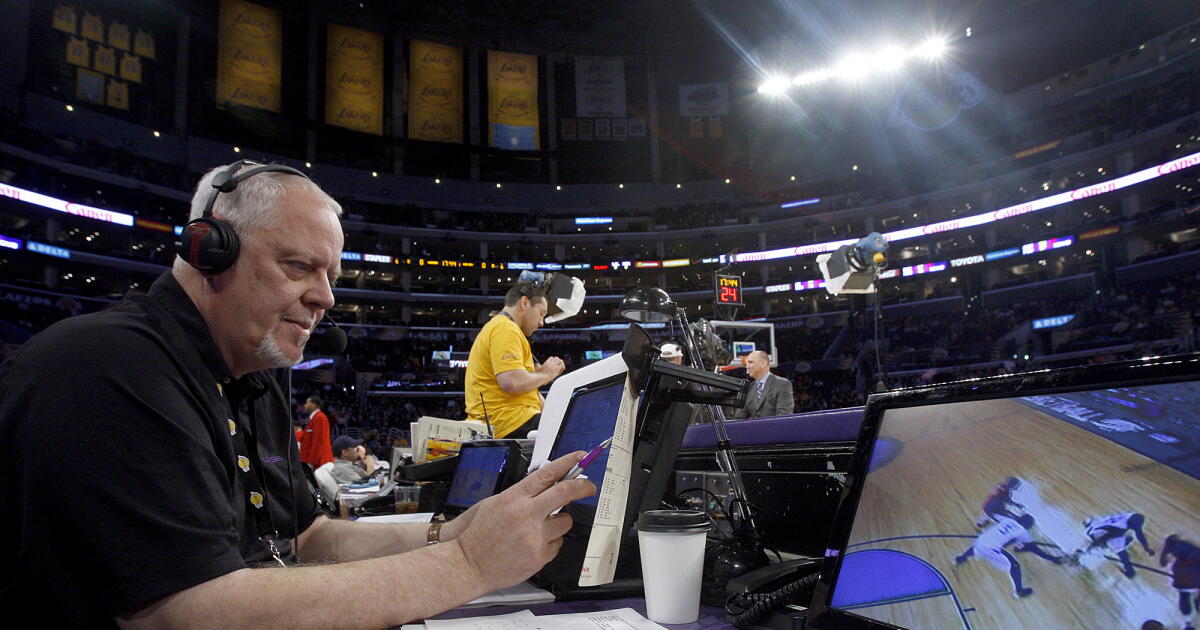
On the Angels’ broadcast the previous night, reporter Erica Weston presented play-by-play announcer Wayne Randazzo with a birthday gift: a figurine of Grogu, a character in the Star Wars family. Randazzo said he would keep Grogu in the broadcast booth, as a good luck charm for the Angels.

“We certainly could use one,” Randazzo said.

Minasian, the sixth-year general manager, has yet to deliver a team that finished better than 17 games out of first place. On Wednesday, I asked him to explain why he was so confident in saying he had “no doubt” the team’s best days were ahead.

“We’ve been very competitive,” Minasian said. “Our wins and losses aren’t where we want them to be, but we have lost a lot of one-run games, a lot of tough games.”

The Angels have lost six one-run games. So have the Yankees, the team with the best record in the American League.

The Angels’ run differential is minus-14. They are four games behind in the AL West, where the first-place Athletics have a .500 record and a minus-21 run differential. You never know.

So far, however, the Angels’ offense is all about the three true outcomes: They strike out the most of any major league team and rank among the top six in walks and home runs, but they do not rank among the top 10 in runs. Only five teams have given up more runs.

“Going to the bullpen has been a harbinger of danger for the Angels,” Randazzo told viewers. The Angels’ bullpen entered Wednesday with a 5.35 earned-run average, the highest in the AL.

Owner Arte Moreno cut payroll this year, amid the implosion of the FanDuel regional sports networks. Edwin Díaz was not walking through the bullpen door.

Arte Moreno, owner of the Los Angeles Angels, stands on the field before a baseball game

Angels owner Arte Moreno.

(Ashley Landis / Associated Press)

But the Dodgers find solid bullpen arms in ways beyond buying them: Evan Phillips was cast off by the Baltimore Orioles during a 110-loss season; Alex Vesia was acquired from the Miami Marlins after putting up an 18.69 ERA in his first five major league games.

“We’ve had guys like that,” Minasian said.

He cited Brock Burke, a waiver claim who gave the Angels two solid seasons in middle relief. Minasian traded him last winter for outfielder Josh Lowe, and any general manager would trade a middle reliever for a middle-of-the-order bat. To this point, Lowe has a .198 on-base percentage and a .287 slugging percentage.

Lowe is but a data point in illustrating this primary point: Minasian’s margin for error is smaller than it otherwise would have been if Moreno had not withdrawn from the market for top-tier free agents or had approved trading Ohtani for elite prospects that would have accelerated rebuilding. Smaller, but other teams do more with less.

“We’ve got to be able to develop our own players,” Minasian said.

On the day Minasian said he had “no doubt” better days were ahead for his team, the Angels, their triple-A affiliate and their double-A affiliate all were in last place.

Analysts perennially rank the Angels’ farm system among baseball’s worst. Minasian said he’ll put his faith in four homegrown starters: José Soriano, Reid Detmers, Jack Kochanowicz and Walbert Ureña. Their combined ERA so far: 2.99.

“When you look at good teams and sustainable winners, they build rotations, whether that’s through trades or free agency or your own,” Minasian said. “We’re doing it with our own. You can’t microwave that overnight.”

You can’t make fans wait forever for October either. Angels fans have heard enough about building a competitive team and needing patience.

They have not seen their team in a playoff game in 12 years. When are they going to see that?

Angels pitcher Walbert Ureña delivers against the New York Mets at Angel Stadium on May 1.

Angels pitcher Walbert Ureña delivers against the New York Mets at Angel Stadium on May 1.

(Luke Hales / Getty Images)

“I’m not in the prediction business,” said Minasian, whose contract expires after this season. “They’re going to see a team that plays hard every day. They’re going to see young, talented players day in and day out.”

That’s fine, but when are they going to see a winning team?

“The proof will be in the pudding,” he said. “It doesn’t matter what I say. I could say all these things. At the end of the day, we’re going to go play 162 games. We’ll see where we end up and who’s done what, and we’ll go from there.”

On Wednesday, the Angels won a series for the first time since April 12. They’re 3-2 with Grogu in the broadcast booth.

The schedule gets more challenging: a trip to Toronto and Cleveland, then back to the Big A to play the Dodgers. The same distant Angel Stadium seat available on the resale market for Wednesday’s game for $5 (fees included) is available for $103 for the opener of the Dodgers series.

Orange County loves a winner. There was a long line at that Irvine street fair to collect souvenirs from one booth — the one for the Anaheim Ducks.

Source link

‘Cálmate, Antonio’: The most fiery moments from the governor’s debate

The top candidates in California’s wide-open race for governor took the stage Wednesday night in a Los Angeles debate that began politely but quickly devolved into another raucous clash.

Former Biden Cabinet member Xavier Becerra and billionaire Tom Steyer, both Democratic frontrunners, were primary targets of the political attacks — Becerra for his record as U.S. Health and Human Services secretary and Steyer over his past investments, including in private prisons that housed immigrant detainees.

San José Mayor Matt Mahan started off the debate by lashing out at both Republicans and Democrats.

“We do not need the leadership that MAGA candidates on this stage are offering that’s divisive. We don’t need the leadership of a billionaire who’s now against everything he made his money in, or a career politician who has failed again and again to deliver results,” Mahan said, taking shots at conservative commentator Steve Hilton and Riverside County Sheriff Chad Bianco, Steyer and Becerra, respectively.

Mahan had good reason to go on the attack. The moderate Democrat has struggled to meet early expectations that he would emerge as a top-tier candidate.

The California Democratic Party’s latest poll, released Monday, showed Hilton and Becerra tied at 18%, and Bianco, a Republican, with 14%. Steyer received the backing of 12%, while support for the other top Democrats in the race — former Orange County Rep. Katie Porter, Mahan, former L.A. Mayor Antonio Villaraigosa and state Supt. of Public Instruction Tony Thurmond — were in the single digits. Thurmond did not meet the polling threshold to qualify for the televised debates this week.

Sanctuary state policy leads to kerfuffle

In a tense exchange on immigration and the state’s sanctuary laws, Porter said, “We ought to enforce our sanctuary laws everywhere so we don’t have crazy cowboys taking the law into their own hands.”

It was a shot at Bianco, who has criticized the law that blocks local law enforcement from assisting federal immigration agents.

“Tell that to the crazy mother who lost her child,” Bianco said, referring to a case in his county involving a 14-year-old who was hit and killed by a driver who he said had two prior DUI arrests and was in the country illegally.

“Sir, I don’t need any lectures from you about being a mother,” Porter, a single mother of three and the only woman on the debate stage, shot back.

“You might,” Bianco said, prompting a nasty look from Porter and groans and boos from the studio audience.

The one-hour clash followed another Wednesday evening debate, among candidates for Los Angeles mayor, part of a doubleheader hosted and broadcast by NBC4 and Telemundo 52 in Los Angeles. Both took place at the Skirball Cultural Center and were moderated by NBC4 News anchor Colleen Williams, chief political reporter Conan Nolan and Telemundo 52 News anchor Enrique Chiabra.

Republicans and Democrats divided on immigration

Democrats were in lockstep on most issues related to immigration, including opposing Immigration & Customs Enforcement raids and supporting the sanctuary law that prohibits police from coordinating with the federal agency.

Republicans said the controversial state law, which was approved in 2017 during President Trump’s first term, has hurt public safety.

“I have someone in my jail right now … he’s convicted of a felony, but the three prior convictions for DUI, he was released from jail,” Bianco said. “He was deported on two of them, [came] back into the country, and then he killed a 14-year-old boy with another DUI. So we have to wait until somebody dies before we deport criminals who are in our jail.”

Villaraigosa countered that the law allows for violent criminals to be deported and that thousands have been by state and local law enforcement agencies.

Hilton, a British national who became a U.S. citizen in 2021, declared himself “the candidate of the legal immigrant community” and said the governor’s job is to enforce laws, whether they agree with them or not.

All the Democrats said they would restore full Medi-Cal coverage for undocumented immigrants, which has been rolled back due to budget constraints, while Republicans said they would not.

Courting Latino voters

One of the many undercurrents of Wednesday’s debate was the ongoing tussle between Becerra and Villaraigosa. Both have been competing for California’s pivotal Latino vote, and the former Los Angeles mayor’s attacks have become increasingly aggressive as Becerra has ascended in the governor’s race.

At about 40% of the state’s population, Latinos are California’s largest ethnic group but also among the groups least likely to vote, casting just 21% of ballots in the 2022 primary election.

Mindy Romero, director of the Center for Inclusive Democracy at USC, said Becerra’s surge in momentum could boost Latino turnout, “but I don’t see any evidence right now that actually tells us that will happen. The thing about primaries, unfortunately, is that turnout is always low. Even in a competitive primary like this.”

On Wednesday, Villaraigosa launched a new digital ad highlighting a former member of the Biden administration questioning Becerra’s record as U.S. Health and Human Services secretary.

He highlighted the issue during Wednesday’s debate after the moderates asked the candidates how they would address homelessness in California.

“Mr. Becerra, are you proud that you pushed out 85,000 migrant children? They were, according to the New York Times, they were maimed, they were exploited,” Villaraigosa said. “Some were even killed. You said those are MAGA talking points, it’s a MAGA hoax. Tell that to the children who died.”

“So I’m not sure what that had to do with homelessness, but cálmate, Antonio, cálmate,” Becerra responded, urging his opponent to “calm down.” He accused Villaraigosa of parroting the unfounded attacks that Trump deployed against former Democratic Vice President Kamala Harris in the 2024 presidential election.

“We protected kids. We did not let them be abused,” Becerra said. “Stop lying.”

Speaking of homelessness

The Democrats and Republicans on stage were sharply divided on the best way to address California’s ongoing homelessness crisis.

People living on the streets are “pawns in the homeless industrial complex,” Bianco said, adding: “This is not and has never been about homes. This is about drug and alcohol addiction.”

Mahan, Villaraigosa and Becerra touted their records building housing and expanding mental health services, saying those will help reduce homelessness. They, along with Porter, also called for more oversight of state homelessness spending.

Hilton said the issue is one of the state’s biggest failures and blamed the Democrats — the party that has controlled state government for the past 16 years.

“Some of these Democrats are on this stage, they talk as if we’re in some parallel universe where Democrats haven’t been running this state for the last 16 years of one-party rule,” he said.

Democratic shift on nuclear plants, high-speed rail

A series of lightning-round questions highlighted some subtle shifts on traditional Democratic policies as candidates aim to make the state more affordable.

Democrats led the charge to decommission nuclear power plants in California over concerns of potential environmental and health catastrophes, but as the state struggles with energy affordability, all the Democrats (and both Republicans) said they would support further extending operations at the state’s only remaining nuclear plant, Diablo Canyon in San Luis Obispo County.

Most of the Democrats also said they support finishing a high-speed rail line from Bakersfield to Modesto, despite the massive cost overruns and delays, but said the project should be done cheaper and more efficiently. Hilton and Bianco want to scuttle the project.

And all Democrats except Steyer said they would vote against a proposed billionaire tax that will likely be on the November ballot mostly to backfill federal cuts to healthcare coverage. Although most of the Democratic candidates aside from Mahan say they support higher taxes on the wealthy, they have raised issues with the details of the proposal, including the fact that it is a one-time tax.

Source link

FBI searches Virginia Senate leader’s office as part of corruption probe, AP source says

The FBI searched the Virginia state Senate leader’s office on Wednesday as part of a corruption investigation, a person familiar with the matter said. Federal agents also were seen at the senator’s nearby cannabis business.

The search at Virginia Sen. L. Louise Lucas’s district office in Portsmouth comes after the Democrat helped lead the state’s recent redistricting effort.

The FBI said only that it was conducting a court-authorized search warrant in Portsmouth. The person who confirmed the FBI’s search was not authorized to discuss an ongoing investigation by name and spoke to the Associated Press on condition of anonymity.

Besides the search at Lucas’ office, agents in FBI T-shirts also went into the nearby Cannabis Outlet, which she opened in 2021. Several entrances to its cannabis store parking lot were blocked by unmarked vehicles with flashing blue lights.

Lucas — a prominent backer of legalizing marijuana — has said the store sells legal hemp and CBD products. It has drawn scrutiny from local media amid allegations that some products were mislabeled.

Virginia has legalized pot possession, but retail sales of recreational marijuana remain illegal in the state.

A message seeking comment was left Wednesday on a cellphone for Lucas, who has been a state senator for 34 years.

State House Speaker Don Scott said he was deeply concerned by the FBI search.

“Right now, there is far more theatrics and speculation than actual information available to the public,” Scott, a Democrat, said in a statement, adding that more facts were needed “before anyone rushes to political conclusions.”

Gov. Abigail Spanberger declined to comment. Some other Virginia Democrats were quick to note that the search comes as the FBI and Justice Department have opened a spate of politically charged investigations into perceived adversaries of President Trump.

The context “must be acknowledged,” U.S. Rep. Bobby Scott said in a social media post.

Last week, the Justice Department charged former FBI Director James Comey with making a threatening Instagram post against Trump, an accusation that Comey — who for nearly a decade has drawn the president’s ire — has denied. A separate mortgage fraud case, ultimately dismissed by a court, targeted Democratic New York Atty. Gen. Letitia James, who had brought a major civil fraud lawsuit against Trump and his business.

The FBI and Justice Department have also provoked concerns among Democrats about ongoing election-related investigations, including the seizure by agents of ballots and other information from Fulton County, Ga.

Lucas has been a vocal leader of Virginia’s redistricting effort, which voters approved last month. A sign urging people to “vote yes” to “stop the MAGA power grab” still hung Wednesday on a fence separating her office’s parking lot from the parking for the cannabis shop.

Amid a national, state-by-state partisan redistricting fight kicked off by Trump’s desire to aid his fellow Republicans, Virginia voters OK’d a Democrat-backed constitutional amendment authorizing new U.S. House districts. The plan could help the party win up to four additional seats.

“We are not going to let anyone tilt the system without a response,” Lucas said after the vote. Trump, meanwhile, denounced the results.

The state Supreme Court let the referendum proceed but has yet to rule whether the effort is legal. The court is considering an appeal of a lower-court judge’s ruling that the amendment is invalid because lawmakers violated procedural requirements.

Voting districts typically are redrawn once a decade, after each census. But Trump last year urged Texas Republicans to redraw House districts to give the GOP an edge in the midterms. California Democrats reciprocated, and redistricting efforts soon cascaded across states.

Lucas, 82, has been a figure in Virginia politics since the 1980s, when she became the first Black woman elected to a City Council seat in her native Portsmouth. She now is the first woman and first African American to serve as the body’s president pro tempore.

Earlier in life, she was the Norfolk Naval Shipyard’s first female shipfitter, according to her biography in the state library. The job entails making, installing and repairing sometimes enormous metal assemblies for vessels.

In recent years, she has been the chief executive of a Portsmouth business that runs residences, day programs and transportation for intellectually disabled adults.

Tucker, Breed and Peltz write for the Associated Press. AP writers Dylan Lovan in Louisville, Ky.; Jake Offenhartz in New York; and Claudia Lauder in Philadelphia contributed to this report.

Source link

City Council moves to limit traffic stops; LAPD policy not changing

The Los Angeles City Council on Wednesday voted in favor of new restrictions on so-called “pretextual” traffic stops, signaling a growing impatience with the Police Commission’s failure to rein in a controversial LAPD tactic that critics say enables racial discrimination.

The vote requests that the department’s all-civilian watchdog adopt new guidelines similar to San Francisco, which bars police officers from pulling people over for broken taillights and other minor equipment violations unless there is a safety threat.

“Board of Police Commissioners: Get this done; we’re watching, no excuses,” said Councilmember Imelda Padilla, who shared stories of her late father being stopped by police with no explanation. “This is what this generation wants.”

If the new policy were adopted, LAPD officers would be prohibited from stopping motorists, bicyclists or pedestrians for minor violations “except in cases where the violation poses a significant and imminent safety risk.”

The unanimous vote followed sometimes emotional testimony at a City Council meeting from Angelenos about how their lives had been shaken by discriminatory traffic stops and searches.

Several speakers pointed to a growing body of research showing that minor stops disproportionately affect Black and brown motorists and do little to combat violent crime while eroding public trust. In recent years, there have been several high-profile traffic stops that resulted in officers or drivers being killed.

The current LAPD policy, in place since 2022, requires officers to record themselves on their body-worn cameras stating the reasons for suspecting a more serious crime had occurred when making a stop for a minor infraction.

The measure passed Wednesday stops short of a categorical ban that some have sought, but was still met with cautious optimism by traffic safety reformers.

“It helps place the city of Los Angeles on a path of ending racial profiling by LAPD,” said Chauncee Smith, of Catalyst California, a group that advocates for racial justice.

Smith’s group recently released a report that said such stops have continued to disproportionately affect Black and Latino drivers.

Smith said the new policy advanced by the City Council represents “a more formal, explicit prohibition,” adding that he hopes the Police Commission will ultimately give officers even less discretion in deciding when to make stops.

In a brief statement after the vote, Mayor Karen Bass thanked Harris-Dawson for his “leadership and dedication in moving this updated policy forward.”

“I will work closely with the Police Commission and Chief [Jim] McDonnell to implement it and to provide officers with appropriate training,” Bass said.

Any changes to the policy will probably draw strong challenges from within the LAPD and the Los Angeles Police Protective League, the powerful union that represents the city’s rank-and-file officers.

McDonnell has publicly defended the stops as an essential law enforcement tool in the department’s fight against guns, gangs and drugs. He and some transportation safety advocates have argued that persistent traffic deaths — road fatalities have in recent years outpaced the number of homicides — indicate the city needs to crack down harder on reckless driving.

The proposed change comes against the backdrop of a broader effort by city leaders to wrest greater oversight of the LAPD from the Police Commission. A spokesperson for the civilian body said it would evaluate how to proceed.

“The Board intends to place this item on a forthcoming agenda to enable a full and transparent discussion of the Department’s pretextual stop policy, which will include the recommendations from the City Council,” the statement said.

McDonnell did not respond to a request for comment.

The vote was the latest move in a broader push to remove police officers from traffic enforcement. Some advocates have argued that more punitive approaches that prioritize arrests and traffic citations do little to keep city streets safe; instead, they argue the city should invest in unarmed civilian workers and speed bumps, roundabouts and other street modifications that could help curb unsafe driving.

Adrienna Wong, a senior attorney with the American Civil Liberties Union, said Wednesday’s vote showed city leaders taking action on an issue that was personal to them.

“I think what you saw today in council was the council members have lived experiences and are hearing from their constituents and are voting to represent their constituents in a way that the Police Commission has not,” she said.

Source link

No Triple Crown: Golden Tempo will not run in Preakness

There will be no Triple Crown winner in horse racing this year. There won’t even be an attempt.

Trainer Cherie DeVaux on Wednesday announced Golden Tempo, the horse that made her the first female trainer to win the Kentucky Derby, would skip the Preakness Stakes next week at its temporary home, Laurel Park in Laurel, Md.

Just hours after Golden Tempo returned to the racetrack at Keeneland for the first time since his victory Saturday at Churchill Downs, DeVaux posted a statement on X.

“After much thoughtful discussion as a team, we have decided that Golden Tempo will bypass the Preakness Stakes,” the statement read.

“We are incredibly appreciative of the excitement and support surrounding the possibility of a Triple Crown run. The enthusiasm from racing fans, our owners, and our entire team has meant more to us than we can properly express. Golden gave us the race of a lifetime in the Kentucky Derby, and we believe the best decision for him moving forward is to give him a little more time following such a tremendous effort. His health, happiness, and long-term future will always remain our top priority.”

The Preakness, set for May 16, is the second leg of the Triple Crown, followed June 6 by the Belmont Stakes, which for the third straight year will be contested in Saratoga, N.Y. Since 1978, the only horses to sweep all three races are American Pharoah in 2015 and Justify in 2018.

Golden Tempo is the second straight horse and third in the last five years not to run in the Preakness. Sovereignty, who did not participate last year, won the Belmont and later the Travers and was voted Horse of the Year.

Unlike in the past, trainers almost never run horses with just two or even three weeks’ rest. That has prompted talk that the Preakness — which has been run 14 days after the Derby since 1950 — and Belmont could be moved back to allow horses more time between races. Sports Business Journal reported last month that the Preakness was “set to make a historic shift to one week later,” though many trainers have said that won’t make a difference.

DeVaux was asked the day after the Derby if having the Preakness four weeks after the Derby would make her decision easier.

“I mean, it would make anyone’s decision easier, but that’s not the Triple Crown,” she said. “So, the Triple Crown is hard to win for a reason. And I appreciate the history of it.

“You know, the horses are definitely different. They’re not built the same. They’re not trained the same as back then, but current times have shown that it can be done with the right horse.”

There is no shortage of horses aiming for the Preakness, which is limited to 14 starters. One of those — and the likely favorite if he runs — is Crude Velocity, who won the Pat Day Mile on Saturday at Churchill Downs in just his third career start. But trainer Bob Baffert, who has won the Preakness a record eight times, has yet to decide whether he wants to run the horse in two weeks.

“I’m still on fence,” Baffert said Wednesday via text. “Tempted but I’m not leaning yet.”

The Daily Racing Form reported Ocelli, the maiden who finished third in the Derby, is now expected to run in the Preakness. Trainer Whit Beckman told the Form he had Ocelli jog Wednesday and “he looked better than great.”

Added Beckman: “You wouldn’t know this horse ran Saturday. He’s made of something different. Every indication he’s given me is to point to this race. … We’re having fun, the horse is having fun. If everybody’s having fun, why stop the fun?”

According to a news release from the Preakness, other horses under consideration who didn’t run in the Derby are Chip Honcho, Corona de Oro, Crupper, Express Kid, Great White, Iron Honor, Napoleon Solo, Pretty Boy Miah, Silent Tactic, Taj Mahal, Talkin, Talk to Me Jimmy and The Hell We Did.

The Racing Form reported jockey Jose Ortiz, who rode Golden Tempo to his Derby win, will ride Chip Honcho in the Preakness.

Source link

Lakers’ Jarred Vanderbilt day-to-day after dislocating right pinky finger

Though Jarred Vanderbilt suffered a gruesome dislocated right pinky injury during the Lakers’ loss in Game 1 against the Thunder on Tuesday, coach JJ Redick said his forward has been listed as day-to-day for the second-round series.

Vanderbilt, who is left-handed, was injured in the second quarter trying to block a dunk by Oklahoma City’s Chet Holmgren, but his hand hit the backboard. Vanderbilt immediately doubled over in pain, as the bone broke through the skin and had to be put back in place.

“They were able to put his finger back together and it’s splinted and he’s day-to-day,” Redick said Wednesday.

The Lakers and Thunder play Game 2 here Thursday night at Paycom Center.

Redick said it was a “reduction” for Vanderbilt, meaning it was a procedure to restore his dislocated finger.

Vanderbilt had his finger taped and had a splint on the finger after the game.

“Yeah. I mean, he’s obviously a tough-minded player and person,” Redick said. “It just, he had a full dislocation. So they just put the stuff back together. You know, he’ll be day-to-day.”

Redick was asked if it’ll be a pain tolerance issue for his defensive-minded forward.

“Certainly the pain is involved,” Redick said. “From my understanding, it’s basically making sure basically the tissue is healed enough. We’re obviously going to splint him, but making sure the tissue is healed enough to protect his skin barrier.”

Jaxson Hayes called Vanderbilt’s finger injury “disgusting” because the “whole bone was out of his skin.”

“Obviously, you never want to see one of your teammates go down,” Hayes said. “But, I mean, that was gross. That was really gross.”

Source link

How did Sheffield Wednesday avoid 15-point deduction?

Reaching an agreement with Chansiri was never going to be easy.

During the administration process, the Thai was offered a number of offers on his debt, which were either outright refused, ignored or not taken in good faith.

“The EFL had to take into account the intransigent soul shown by Mr Chansiri and his reluctance to engage with offers made by the bidder,” football finance expert Kieran Maguire told BBC Sport.

It was only last week that things fell into place.

Chansiri was made an offer which would see him receive payments, in effect, to about 25p in the pound.

But he would not receive a penny now – it would all be based upon the club’s future success.

“We’re probably talking about promotion first of all back to the Championship, and in due course to the Premier League. He could then get his 25%,” Maguire says.

The EFL said the offer must remain on the table for a short period of time to show it was credible and serious.

But there was one final act which might just sum up Chansiri’s tenure, as reported by the Sheffield Star, external.

A response to the offer had to be received by midday on Tuesday. Chansiri decided to accept, but replied too late – minutes after the deadline.

Chansiri – subject to any challenge – might now be left with nothing.

Having agreed to cancel Wednesday’s 15-point deduction, the EFL board made a few other stipulations.

Football creditors and HMRC had to be paid in full, while all other non-secured creditors – local businesses – had to get their 25p straight away.

Had the EFL been less flexible, those companies faced receiving a much lower return.

“The EFL probably took the view that as HMRC are being paid 100%, football creditors are being paid 100% and other unsecured creditors are being paid 25%, other stakeholders were being treated appropriately,” Maguire added.

“Therefore there was a clear case for having no penalty.”

Arise had to make a firm commitment to invest in the decaying stadium immediately.

In his speech on the pitch on Saturday, Storch promised there would be both running water, and hot water, in the toilets.

That might seem like a joke, but anyone who has attended Hillsborough in recent seasons would know it was anything but.

Arise did not hang about. An outstanding charge of about £7m owed on a loan Chansiri had taken out against Hillsborough was cleared on Wednesday.

Source link

Galaxy’s Edge was revolutionary. If only Disney would’ve let it soar

Not too long after Star Wars: Galaxy’s Edge opened at Disneyland in 2019, the land brought me to tears.

It was a summer weekend evening, and I was strolling the 14-acre area, mainly to people watch. I caught a commotion in the crowd out of the corner of my eye, and decided to follow the activity.

You’re reading Mr. Todd’s Wild Ride newsletter

Todd Martens’ newsletter delivers news and commentary on the past, present and future of theme parks, right from the theme park capital of the world — Southern California.

There, crouched along one of the walls of the fictional town of Black Spire Outpost, was an actor playing the role of Rey, the hero of the most recent trilogy of “Star Wars” films. Behind her was a crowd of more than a dozen, many of them young children. Rey turned to tell them to be quiet. They followed her as she shuffled along the walls, decoratively designed to look decades old and scarred with blaster fire and cracks.

They turned a bend and came upon two Stormtroopers, who jumped in surprise, and signaled that Rey was the person they were after. That’s when Rey held out her hand, palm up, to the troopers. She instructed those with her to do the same and to repeat after her. She and the crowd, now quickly growing, were collectively using the Force.

Parkgoers hold up their hands in front of two Stormtroopers.

The “Star Wars” character of Rey leads guests in using the Force at Disneyland in the summer of 2019.

(Todd Martens / Los Angeles Times)

The Stromtroopers turned, muttered that there was nothing to see here, and walked away. Rey faced her audience and begin hugging and shaking hands with those closest to her. This is when I welled up.

The promise of Galaxy’s Edge was tremendous. Audiences were invited to pretend, to become a hero or perhaps a rogue in a land designed to facilitate interactivity, and most importantly play. That a crowd was able to become a little silly, be a bit vulnerable and share a collective moment with a gaggle of strangers reinforced to me the importance of theme parks as communal spaces, ones that can get us out of our head, our struggles and our stressors.

As of last week, Galaxy’s Edge forever changed. I still love the land, and believe it one of the triumphs of Walt Disney Imagineering. But I mourn what it once was and never came to be.

A change in the Force

Actors as "Star Wars" personalities in a theme park land.

Leia and Han are now meeting with guests at Disneyland’s Star Wars: Galaxy’s Edge in an effort to infuse more classic characters into the land.

(Christian Thompson / Disneyland Resort)

Galaxy’s Edge has shifted its timeline. Out is Kylo Ren, and in is Darth Vader. Also new to Galaxy’s Edge are Han and Leia. Luke is there, too, returning after a limited run last year. The arrival of the so-called “classic” “Star Wars” characters will in fact breathe new life into Galaxy’s Edge. Already, they are pleasing crowds, as the Disneyland faithful last week cheered Vader’s entrance, heard now to a score of John Williams’ ominous “Imperial March.”

Rey still makes appearances, but when she does she is stationed near showcase attraction Star Wars: Rise of the Resistance. Ahsoka Tano, as well as the Mandalorian and Grogu, are among the other characters who will meet with guests in various spots throughout the area.

Galaxy’s Edge will now become what it was never built to be: a hodgepodge of “Star Wars” characters and nods to past works rather than undiscovered tales. While many saw the absence of the most recognizable “Star Wars” figures as a flaw, it was part of its intended design. For the land’s creators, it was a tradeoff they were willing to make, a bet guests would be active archetypal “Star Wars” tourists rather than spectative consumers. It was a grand theme park experiment.

“It was not an immediately intuitive decision,” Scott Trowbridge, the key Imagineer behind the land’s ideals, told me in 2022 when asked about the choice to set the land in the timeline of the most recent “Star Wars” films.

Said Trowbridge: “Luke’s story, or Leia’s story, that we saw 10, 20, 40 years ago, we know those stories. We love those stories. But there’s not room for us in that world. We wanted to make sure we were leaving room for you and your friends.”

When Galaxy’s Edge opened, we heard the roar of spaceships and musings of war. Traditional theme park trappings — character meet-and-greets, passive rides and musical scores — weren’t found. It was instead designed as an invitation, a new, unknown location filled with lesser-known characters like rebel spy Vi Moradi, meant to serve as a living playset for guests to create their own tales. I saw this happen, too. Once, when strolling the land with my former partner, she turned to me and lightly punched me in the arm, saying, “What’s a respectable guy like you doing with a scoundrel like me?” That was the moment I knew I would fall in love with her, and it was facilitated by Galaxy’s Edge.

A failed dream

A shot of a "Star Wars" spaceship in a theme park land.

The centerpiece of Star Wars: Galaxy’s Edge is the Millennium Falcon.

(Allen J. Schaben / Los Angeles Times)

If I’m being honest, I am aware that Galaxy’s Edge seldom lived up to this promise. Imagineers teased many characters — a bounty hunter, for instance, who would hang in the cantina — who never appeared. In order to play, we need people to play with, and this playland often felt empty. Droids, for instance, would show up, but often only for a limited time. Teased features, such as Bluetooth technology that would allow the land to track a guest’s reputation, courtesy of missions they completed in the Play Disney Parks mobile app, never reached their fruition. That game itself, which is still available, thus lacks any meaningful payoff.

Galaxy’s Edge was a theme park risk, asking how deeply guests would want to engage in physical spaces. But it came with challenges, namely that as these lands grow, the level of activity needed to maintain the illusion increases. A promised dinner theater was never built, and a stage for a special effects-laden stunt show has largely sat barren. Disney also relied not on actors but its retail staff — cast members, in park parlance — to do the heavy lifting when it came to performing.

I wrote in 2019 that Galaxy’s Edge may, in fact, be too ambitious for the Walt Disney Co. I’m bummed that I was right.

Many on social media are musing that Disney is now fixing Galaxy’s Edge. Let’s be clear, Galaxy’s Edge was never broken. It just needed Disney to be a better steward and to fully support the ambitions of its Imagineers.

Last week at Disneyland, when Darth Vader walked on a Galaxy’s Edge stage through a smattering of smoke, the crowd erupted as if at a sporting event. It was fun, and clearly something some fans had been craving.

So bring on Darth Vader and the rousing music of Williams, I reluctantly say. Disney should do what it does well, and that is to create memorable character experiences. Operationally, the park had abandoned the initial goals of Galaxy’s Edge long ago, and the presence of Han, Luke and Leia will excite guests and at last give attendees more characters to interact with. It will be a busy, bustling place, and that I do applaud.

The week in SoCal theme parks

Roger Rabbit's Car Toon Spin.

Changes have been reported at Roger Rabbit’s Car Toon Spin.

(Christian Thompson / Disneyland Resort)

  • You can now get a “Star Wars” ID card in Downtown Disney. Located inside the Star Wars Trading Post shop is a plastic ID-making machine (similar to the fake driver’s license one can get in the queue for Autopia) that will take your photo and allow you to pick a role in the “Star Wars” universe (bounty hunter, fighter pilot, etc.). It looks neat. I want one, even though I don’t know what I would do with it, but so far, lines have averaged 90 minutes to two hours or more.
  • Roger Rabbit’s Car Toon Spin has lost its spin. Disneyland removed the ability for guests to twist and turn their cars, an operational-driven-tweak, as the ride now allows for lap seating for younger guests and will allow for more to experience the attraction. While I can see how some may miss the spinning feature, I often tried to keep the car steady to soak up the environment, so my initial reaction leans positive, especially if it improves a family’s Disneyland day.
  • Celebrate the 25th anniversary of the first “Harry Potter” film in an all-encompassing environment. Inglewood’s Cosm isn’t a theme park, but its dome-like screen offers a theme park-like experience (think the golden days of Circle-Vision). Opening Thursday is a re-imagined “Harry Potter and the Sorcerer’s Stone” with newly added environmental effects. The core film remains untouched, but the screen surrounding you aims to come alive with enchanting movement.
  • Magic Bands will soon disappear from Disneyland shelves. Disney reporter Scott Gustin, a friend of Mr. Todd’s Wild Ride, recently noted that Disneyland will not be replenishing its stock of the Magic Band+ once it sells through the remaining inventory. Those who have them (hand raised) needn’t worry, according to Disneyland officials, as Magic Band+ functionality, including the game Batuu Bounty Hunters in Galaxy’s Edge, won’t cease. But Magic Band+ has limited use cases at Disneyland, and never quite caught on here in the same way the wristbands have at Walt Disney World.
  • Happy birthday to the Great American Revolution. Magic Mountain’s classic coaster turns 50 this week, having opened on May 8, 1976. As part of the anniversary festivities, the park has restored its original name of the Great American Revolution (it was recently operating as the New Revolution). The ride is known for being the first modern looping coaster with a tubular steel track, earning it landmark status from American Coaster Enthusiasts.

The best thing I ate at the parks

A plate of scallops.

A scallop appetizer at Carthay Circle. Go easy on me, I’m not a food photographer.

(Todd Martens / Los Angeles Times)

No churros or treats for me this week. I hadn’t had a chance yet to check out the spring menu at the lounge at Carthay Circle, Disney California Adventure’s fine dining restaurant, so I made my way there Friday afternoon. Carthay Circle is always a welcome respite, a calming, relaxing environment where the theme park day tends to slow down.

I was after the scallops appetizer. Now, priced at $16, I knew this wouldn’t be a large portion, but I was longing for something light and breezy and this plate of six small scallops in a sea shell delivered. Drizzled with macadamia nuts, the citrus-forward dish is designed to bring out contrasts in texture. Overall, it’s a little zesty, a little nutty, and as a seafood person I’m happy an affordable, delicate dish exists at the resort. If you’re really hungry, though, you’ll need a second item.

Ride report

A bearded man in sunglasses in front of a theme park ride.

Space Mountain has begun its yearly, temporary overlay as Hyperspace Mountain.

(Todd Martens / Los Angeles Times)

It’s “Star Wars” season at the Disneyland Resort, which means Space Mountain has been remade into Hyperspace Mountain. Now, generally speaking, this is my rule when it comes to ride overlays: The original is almost always better. That’s the case for Space Mountain as well, as the 1977 classic still thrills, its near pitch-blackness keeping you guessing while its uplifting score seems to capture the exhilaration and optimism of space flight.

But Hyperspace Mountain has its charms. The projections of lasers and X-wings look great in the darkness, and the sudden dips and turns work well for the dogfight atmosphere. The John Williams score brings the energy, and there’s the right amount of chaos and shifts in direction to make us feel as if we’re in a “Star Wars” battle. I’m just relieved, however, it doesn’t stick around too long, as the original is such a magnificent coaster.

Tell us your stories. Ask us your questions.

Have a theme park tale to share? Whether it was a good day or less-than-perfect day, I would love to hear about it. Have a question? A tip? A fun photo from the parks to share? Email me at todd.martens@latimes.com. I may feature your note in an upcoming newsletter.

Ride on,

Todd Martens

P.S.

Love Soarin’ Over California? Then I point you to this piece from former Times staffer Sammy Roth, an environmental reporter who also appreciates Disney theme parks. Here, Roth goes scene-by-scene, looking at how Soarin’ represents a snapshot in time and analyzing how its locations have been touched by climate change.

Source link

Louisiana congressional primaries are suspended as a result of Supreme Court ruling

Louisiana’s congressional primaries won’t be going forward as scheduled in May, as a result of a U.S. Supreme Court ruling that struck down a majority-Black congressional district, the state’s top elected officials said Thursday.

Gov. Jeff Landry and Atty. Gen. Liz Murrill, both Republicans, said in a joint statement that Wednesday’s high court ruling effectively prohibits the state from carrying out the primaries under the current districts. Early voting had been scheduled to begin Saturday in advance of the May 16 primary.

“The State is currently enjoined from carrying out congressional elections under the current map,” Landry and Murrill said in the statement posted to social media. “We are working together with the Legislature and the Secretary of State’s office to develop a path forward.”

That path is likely to lead to a new U.S. House map benefiting Republican candidates in Louisiana.

President Trump, in a series of social media posts Thursday, praised Landry for moving quickly to revise the state’s congressional districts and urged Republican Tennessee Gov. Bill Lee to do likewise in light of the Supreme Court’s decision.

While civil rights activists denounced the potential for diminished minority representation in Congress, top Republicans cited the Supreme Court’s decision as justification to spur an already intense national redistricting battle among states before the November elections.

“I think all states who have unconstitutional maps should look at that very carefully, and I think they should do it before the midterm,” House Speaker Mike Johnson told reporters in Washington.

Questions persist about election postponement

Louisiana’s election suspension was denounced by some Democrats and questioned by some legal experts.

“This is going to cause mass confusion among voters — Democrats, Republicans, white, Black, everybody,” said Louisiana state Sen. Royce Duplessis, a Democrat who represents the New Orleans area. “What they’re effectively doing is changing the rules of the game in the middle of the game. It’s rigging the system.”

Although Louisiana officials may legally be able to move the primary, it’s not accurate to assert that it was blocked by the Supreme Court’s decision, said Ruth Greenwood, director of the Election Law Clinic at Harvard Law School.

State Rep. Kyle Green, a former assistant state attorney general who is chair of the House Democratic caucus, also cast doubt on the legal justification for postponing the congressional primary.

“The Court’s decision does not halt the election process on its own,” Green said. “And any attempt to suspend or disrupt an ongoing election at this stage would raise serious constitutional concerns.”

Delaying an election is unusual but not unprecedented.

During the onset of the COVID-19 pandemic in 2020, several states pushed back elections because of health concerns. Democratic Gov. John Bel Edwards, who led Louisiana at the time, postponed Louisiana’s April 4 presidential primary three weeks before it was supposed to occur — then delayed it again until July 11.

Louisiana could join a national redistricting wave

Louisiana currently is represented in the U.S. House by four Republicans and two Democrats. A revised map could give Republicans a chance to pick up at least one more seat in the November midterms — adding to Republican gains elsewhere from redistricting.

Voting districts typically are redrawn once a decade, after each census. But Trump last year urged Texas Republicans to redraw House districts to give the GOP an edge in the midterms. California Democrats reciprocated, and redistricting efforts soon cascaded across states.

On Wednesday, Florida became the latest state to redraw its U.S. House districts, adopting a new map backed by Republican Gov. Ron DeSantis that could give the GOP a chance at winning several additional seats.

The Florida vote occurred just hours after the U.S. Supreme Court’s conservative majority issued a ruling that significantly weakened minority protections under the federal Voting Rights Act. The court said Louisiana officials had relied too heavily on race when drawing a congressional district that is represented by Democrat Cleo Fields.

Trump wants Tennessee to also take up redistricting in response to the court’s ruling. The president posted on social media that he had spoken with Lee, who he said would work hard for a new map that could help Republicans gain an additional seat. Democrats currently hold only one of the state’s nine House seats — a district centered in Memphis, which is majority-Black.

Tennessee House Speaker Cameron Sexton, a Republican, said he is in conversations with the White House and others while reviewing the court’s decision.

Louisiana has a history of redistricting challenges

After the 2020 census, Louisiana officials had drawn House voting district boundaries that maintained one Black-majority district and five mostly white districts, in a state with a population that is about one-third Black.

A federal judge later struck down the map for violating the Voting Rights Act. And the following year the Supreme Court found that Alabama had to create its own second majority-Black congressional district.

In response, Louisiana’s Legislature and governor adopted a new House map in 2024 that created a second Black-majority district. But that map also was subsequently challenged in court, leading to the most recent Supreme Court ruling.

After the ruling, Landry called U.S. House candidates on Wednesday and told them that primaries would probably be stalled, according to Misti Cordell, a Republican running in a crowded race to fill U.S. Rep. Julia Letlow’s vacated seat.

“It’s an inconvenience for a candidate for sure, but you know they want to do it right versus having to go through all this again,” Cordell said. She added that she appreciated the heads-up before she and other candidates began “spending their war chest” during the final weeks leading up to election day.

Republican state lawmakers are reviewing which pending bills could be used to alter primaries and reconfigure congressional maps, said Louisiana state Rep. Beau Beaullieu, chair of the House committee overseeing redistricting efforts.

Cline, Brook and Lieb write for the Associated Press. Brook reported from New Orleans and Lieb reported from Jefferson City, Mo. AP reporter Travis Loller contributed to this report from Nashville.

Source link

Civilians or Hezbollah: Who did Israel hit on Lebanon’s ‘Black Wednesday’? | Israel attacks Lebanon News

Beirut, Lebanon – On April 8, Ahmad Hamdi, 22, was sitting on his couch at home in Beirut’s Tallet el Khayat neighbourhood, hours after Israel had launched more than 100 attacks in under 10 minutes across Lebanon.

Then he heard the “indescribable sound” of a rocket. Ahmad jumped off the couch as the glass in his building shattered around him before more rockets hit.

Recommended Stories

list of 3 itemsend of list

Clouds of dust obscured the view from his apartment on the fourth floor. When they dispersed, he saw the building directly facing his had been reduced to a pile of rubble.

He looked back at the couch he had been sitting on. At some point between the second and fourth explosion, shards of shrapnel had hit the couch exactly where his chest had been when the first rocket struck.

“When you think of Tallet el Khayat, you feel it is safe and secure,” Ahmad told Al Jazeera. “No one would expect something like that would happen.”

Indiscriminate attacks

April 8 has become known in Lebanon as Black Wednesday. Israel’s attacks on that day killed at least 357 people across the country. Israel claimed it killed 250 Hezbollah operatives. The exact breakdown of civilians and combatants is still not known, but numerous sources looking into the day’s casualties told Al Jazeera that the attacks appeared to be indiscriminate at best and in some cases may have amounted to the direct targeting of civilians. United Nations experts have described Israel’s attacks on April 8 as “indiscriminate”.

“The method in which the attacks happened in the middle of the day with dozens of strikes all at one time without warning and when civilians were present shows recklessness in Israeli military conduct,” Ramzi Kaiss, Lebanon researcher at Human Rights Watch, told Al Jazeera.

On March 2, Israel intensified its war on Lebanon for the second time in under two years. Earlier that day, Hezbollah had responded to near-daily Israeli attacks on Lebanon for the first time since December 2024 in response to the United States and Israel’s assassination of Iran’s Ayatollah Ali Khamenei.

Israel also invaded southern Lebanon, where it has gone about systematically destroying towns and villages in what experts – and Israeli officials – said is an effort to create an uninhabitable “buffer zone” along its border.

“Part of [Israel’s] military strategy is to create a buffer zone and no man’s land,” Bassel Doueik, the Lebanon researcher for the Armed Conflict Location & Event Data (ACLED) conflict monitor, told Al Jazeera. “What Israel is doing in southern Lebanon is creating a multilayered buffer zone inside Lebanese territory and that is why they are demolishing houses in towns along the border.”

Israel has not stopped attacking Lebanon since October 2023 and has violated a November 2024 ceasefire more than 10,000 times, according to the UN. Most of its attacks have been in southern Lebanon and the Bekaa Valley in the east.

Doubts about Israel’s claims

Israel conducted 100 air strikes and dropped more than 160 bombs across Lebanon on April 8, according to ACLED.

Israel claimed the attacks targeted Hezbollah headquarters, command-and-control sites, military formations and assets of its air force unit and elite Radwan Force.

Hezbollah discontinued the practice of providing the circumstances of its fighters’ deaths in September 2024. The Lebanese group does conduct some public funerals for fighters killed during the battles in southern Lebanon, but it is difficult to ascertain the exact number of those killed, making it hard to prove or disprove Israel’s claims.

But groups investigating the April 8 attacks said the available information casts doubt on the Israeli narrative. Analysts with ACLED said they are still confirming casualties but early indications showed that only a few victims were known Hezbollah members.

“One hundred one women and children were killed on April 8,” Ghida Frangieh, a Lebanese lawyer and researcher with Legal Agenda, a Beirut-based nonprofit research and advocacy organisation, told Al Jazeera. “For this number of 250 to be correct, it means every man killed must have been a Hezbollah combatant. This is not true as we were able to document several civilian men killed during these attacks.”

Lebanese media reported on a number of those killed by Israel on April 8, including employees of local restaurants, teachers, a poet, journalists, Lebanese soldiers and a member of a Druze-majority political party.

In some cases, Israeli attacks wiped out several members of the same family. Seven members of the Nasreddine family were reportedly killed on April 8 in Hermel in northeastern Lebanon. And three generations of the displaced Hawi family, including three children, were killed in the Jnah neighbourhood bordering Beirut.

Israel ’emboldened to continue’ violations of international law

Even if Hezbollah targets were present at all of the sites struck during the April 8 attacks, researchers said the attacks should still be considered indiscriminate. And while there still may be a discrepancy over the exact numbers of Hezbollah members vs civilians killed, international humanitarian law places the burden of proof on the attacking army.

“International humanitarian law is clear: Armed forces must distinguish at all times between civilians and military objectives,” Reina Wehbi, Amnesty International’s Lebanon campaigner, told Al Jazeera. “Even when there is a legitimate military target and in order to avoid indiscriminate, disproportionate or other unlawful attacks, parties must respect the principle of precaution and do everything feasible to verify that targets are military objectives, to assess the proportionality of attacks and to halt attacks if it becomes apparent they are wrongly directed or disproportionate.”

Over the past two and a half years, Israel has regularly violated the laws of war in Lebanon and in Gaza by indiscriminately attacking civilians, targeting paramedics and journalists, and using white phosphorus. Still, experts said there is little chance Israel will be held accountable.

“For the Israeli military, there is no deterrence to committing violations in Lebanon,” Kaiss of Human Rights Watch said. “After the crimes of humanity against Gaza, countries could have immediately suspended arms sales, the transit of arms through airports, placed targeted sanctions on officials, and the US and others could have suspended arms sales, but none of that happened.”

Kaiss said Lebanon could also give jurisdiction to the International Criminal Court (ICC), of which it is not currently a member, to investigate and prosecute Israel’s crimes in Lebanon. The ICC has already issued arrest warrants for Israeli Prime Minister Benjamin Netanyahu and former Defence Minister Yoav Gallant on charges of war crimes and crimes against humanity in Gaza.

Attacks on Beirut have temporarily halted since US President Donald Trump announced a ceasefire in Lebanon on April 16. But the war rages on in southern Lebanon with Israel continuing to kill civilians, including rescue workers. Israel and Lebanon have started to engage in direct negotiations despite Hezbollah’s objections in what the Lebanese state hopes will bring an end to Israel’s attacks and occupation of southern Lebanon.

But on the ground, there has been little deterrence or accountability for Israel’s crimes against civilians.

“This hasn’t happened in the last two years, so the Israeli military on the ground feels emboldened to continue,” Kaiss said.

Source link

Skeptical Democrats confront Hegseth about Iran war for the first time since conflict started

Making his first appearance before Congress since the Trump administration went to war in Iran, Defense Secretary Pete Hegseth faced withering questioning from skeptical Democrats Wednesday over a costly conflict being waged without congressional approval.

The war has cost $25 billion so far, according to Pentagon numbers presented to the House Armed Services Committee during the contentious hearing, ostensibly focused on the administration’s 2027 military budget proposal, which would boost defense spending to a historic $1.5 trillion.

While Republicans focused on the details of military budgeting and voiced support for the operation, Democrats pivoted to the ballooning costs of the war, the huge drawdown of critical U.S. munitions and the bombing of a school that killed children. Some lawmakers also questioned President Trump’s dealings with allies and his shifting justification for the conflict.

Hegseth dismissed the criticism as political and rebuked lawmakers who pushed him for answers.

“The biggest challenge, the biggest adversary we face at this point are the reckless, feckless and defeatist words of congressional Democrats and some Republicans,” Hegseth said.

Democrats press about reasons for war

Wednesday’s hearing stretched nearly six hours as Democrats and some Republicans questioned Hegseth over the war and his ouster of several top military leaders.

In one tense exchange, Hegseth told Rep. Adam Smith (D-Wash.) that Iran’s nuclear facilities were obliterated in a 2025 attack by the U.S., prompting Smith to question the Trump administration’s reasoning for starting the Iran war less than a year later.

“We had to start this war, you just said 60 days ago, because the nuclear weapon was an imminent threat,” said Smith, the ranking Democrat on the committee. “Now you’re saying that it was completely obliterated?”

Hegseth responded by saying that Iran “had not given up their nuclear ambitions” and still had thousands of missiles.

Smith said the war “left us at exactly the same place we were before.”

Democrats accused Hegseth of misleading Americans about the reasons for the conflict and said rising gas prices are now threatening the pocketbooks of millions of people in the U.S.

“Secretary Hegseth, you have been lying to the American public about this war from day one and so has the president,” said Rep. John Garamendi of Walnut Grove, who called the war “a geopolitical calamity,” a “strategic blunder” and a ”self-inflicted wound to America.”

Hegseth blasted Garamendi’s remarks.

“Who are you cheering for here?” he asked the lawmaker. ”Your hatred for President Trump blinds you” to the success of the war.

Hegseth defends firings of officers

The Defense secretary faced intense questions from Rep. Chrissy Houlahan (D-Pa.) about his decision to oust the Army’s top uniformed officer, Gen. Randy George, one of several top military officers to be dismissed since Trump’s reelection.

Houlahan said George was deeply respected by both members of the military and Congress and asked why Hegseth fired him. Hegseth’s response that “new leadership” was needed failed to satisfy Houlahan.

“You have no way of explaining why you fired one of the most decorated and remarkable men —” Houlahan began before Hegseth interrupted her. “We needed new leadership,” he repeated.

The Pentagon announced this month that Navy Secretary John Phelan was stepping down. Hegseth previously removed Adm. Lisa Franchetti, the Navy’s top uniformed officer, and Gen. Jim Slife, the Air Force’s No. 2 leader, while Trump fired Gen. Charles “CQ” Brown Jr. as chairman of the Joint Chiefs of Staff.

Republican Rep. Don Bacon of Nebraska said that while Hegseth is empowered to make personnel changes, he shares what he called “bipartisan concern” about the firings.

“We had a huge bipartisan majority here that had confidence in the Army chief of staff and the secretary of the navy,” Bacon said. “And I would just point out it may be constitutionally right … but it doesn’t make it right or wise.”

Hegseth has said the changes are part of building a “warrior culture” at the Pentagon.

Republican Rep. Nancy Mace of South Carolina defended Hegseth’s personnel moves, saying he is “trying to innovate and trying to change the way we do business.”

“I’m glad that you’re firing people,” Mace said. “There are people there that are getting in your way. They need to go.”

Republicans back Trump on Iran

During the extended hearing, Hegseth detailed plans to increase pay for service members and upgrade munitions while also announcing that, as of Tuesday, the Pentagon had authorized $400 million in military aid for Ukraine in its fight against Russia.

But the debate and the questions were dominated by the war in Iran.

While a fragile ceasefire is now in place, the U.S. and Israel launched the war Feb. 28 without congressional oversight. House and Senate Democrats have failed to pass multiple war power resolutions that would have required Trump to halt the conflict until Congress authorizes further action.

Republicans say they back Trump’s wartime leadership, for now, citing Iran’s nuclear program, the potential for talks to resume and the high stakes of withdrawal. Still, GOP lawmakers are eager for the conflict to end, and some are eyeing future votes that could become an important test for the president if the war drags on.

Democrats questioned Hegseth over the war’s economic impact and rising gasoline costs, noting Trump’s promise to lower consumer costs. Hegseth responded by citing the threat posed by Iran.

“What is the cost of Iran having a nuclear weapon that they wield?” he said.

Republicans expressed support for Trump’s decision to strike Iran, including Mace, who in late March had expressed concerns about the justification for the war. “The longer this war continues, the faster it will lose the support of Congress and the American people,” she wrote in a social media post.

On Wednesday, Mace noted her past concerns but said she is “impressed with where we are today.” She told Hegseth: “Everything I have seen, you have surpassed all of my expectations.”

Iran’s closing of the Strait of Hormuz, a vital shipping corridor for the world’s oil, has sent fuel prices skyrocketing and posed problems for Republicans ahead of the midterm elections. The U.S. has imposed a naval blockade of Iranian shipping and three American aircraft carriers are in the Middle East for the first time in more than 20 years.

The countries appear locked in a stalemate. Trump told Axios on Wednesday that he is rejecting Iran’s proposal to reopen the Strait of Hormuz in exchange for lifting the U.S. blockade.

Finley, Groves, Klepper and Toropin write for the Associated Press.

Source link

Cole Tomas Allen case reveals Secret Service failures at D.C. gala

According to Acting Atty. Gen. Todd Blanche and other top administration officials, the U.S. Secret Service did a fine job protecting President Trump and Cabinet members from the gunman who breached the White House Correspondents’ Assn. dinner Saturday.

“That horrible act was stopped because of the courage and professionalism of law enforcement — the officers who responded without hesitation and did their jobs as they were trained to do,” Blanche said Monday.

However, according to a detailed accounting filed Wednesday by federal prosecutors in the criminal case against suspect Cole Tomas Allen, the performance of the nation’s preeminent protection agency was marred by inattentiveness and misfires and saved by “extraordinary good fortune” and the gunman falling to the ground.

“The defendant, armed with a 12-gauge shotgun, a .38 caliber pistol, two knives, four daggers, and enough ammunition to take dozens of lives, was apprehended by [Secret Service] officers mere feet away from the ballroom where his primary target was located, along with other members of the Cabinet,” prosecutors wrote Wednesday, in a filing arguing for Allen to be held in detention pending trial on one charge of trying to kill the president and two firearms charges.

Contradicting a prior claim by Blanche that officers had “promptly tackled and detained” Allen, prosecutors wrote that the 31-year-old tutor from Torrance simply “fell to the ground” after blowing past a team of agents just two open flights of stairs from the ballroom.

They wrote that one officer fired at Allen five times, but never hit him.

The same officer saw Allen fire his shotgun “in the direction of the stairs leading down to the ballroom,” prosecutors wrote, and officers later discovered “one spent cartridge in the barrel and eight unfired cartridges in the magazine tube.”

Prosecutors said nothing about the Secret Service officer who Blanche said was shot in his ballistic vest during the incident — adding to speculation that the officer may have been shot not by Allen, but by a fellow officer, or not at all.

Agency critiqued before

In all, the court filing brought further into focus a chaotic Secret Service response that appeared flawed from the start, including in a video Trump posted shortly after the incident in which agents appeared to be idling around an unobstructed entrance when Allen ran past them.

It added to concerns that law enforcement, security experts and members of Congress had raised about the performance of an agency that has been repeatedly called on to improve after previous attempts on Trump’s life. At a 2024 campaign rally in Butler, Pa., a gunman fired a bullet that grazed Trump’s ear, and that same year, another assailant prepared to shoot him from the unsecured perimeter of a Florida golf course.

Robert D’Amico, a former FBI deputy chief of operations for hostage rescue teams who is now a security consultant, said the security failures he saw in the Secret Service’s preparation for Saturday’s dinner — including its failure to set up basic barriers to prevent people from sprinting into the secured area — were stunning, especially given the past threats and the fact the nation is at war with Iran.

“It’s for a person like Trump, who’s had two assassination attempts before and is at war with Iran, which has terrorist training and proxies up, and you still don’t have the basics?” D’Amico said. “It’s unfathomable.”

Other concerns have been voiced by members of Congress, including Republicans.

The House Oversight Committee has requested a briefing from the Secret Service, and Sen. Josh Hawley (R-Mo.) has called for a hearing before the Senate Homeland Security and Governmental Affairs Committee, which also investigated the Butler incident.

In a letter urging the hearing, Hawley said the latest incident “raises questions about presidential security arrangements, potential resource needs, and the degree to which reforms previously proposed by Congress have been adopted.”

House Speaker Mike Johnson (R-La.) told Fox News that from “a layman’s perspective,” event security “looked a little lax in terms of getting into the building,” and that it “doesn’t sound like it was sufficient.”

Sean M. Curran, director of the Secret Service, has been on Capitol Hill in recent days briefing lawmakers.

He told CBS News that agents did a “great job,” but also that the incident remains under review. White House Press Secretary Karoline Leavitt has said that White House Chief of Staff Susie Wiles would be leading discussions on potential updates to Secret Service plans for securing the president.

Fear of graver threats

Blanche has argued that proof of the Secret Service’s effectiveness at the press gala was in the result: Allen was stopped, Trump and other officials were unharmed and no one was killed, despite Allen’s alleged intent.

However, the concerns being raised have to do with the vulnerabilities that were exposed as much as those that were exploited.

Because the dinner was not designated a major “national special security event” — such as a political convention — there were no trained counterassault agents on standby to prevent a breach or to take down a person with a weapon, officials have said.

Law enforcement experts said that was clearly a mistake given so many top officials — Trump, Johnson, Vice President JD Vance, Secretary of State Marco Rubio, Treasury Secretary Scott Bessent and Defense Secretary Pete Hegseth, among others — were in the room.

Such a gathering could have been targeted by foreign adversaries or others with far more experience, less regard for human life and much greater firepower than Allen, experts said.

“Most of my military friends are all saying the same thing,” said D’Amico, who is also a former infantry platoon commander in the U.S. Marines. “If you had had a team of three or four [gunmen], they would have gotten to [Trump].’”

In the initial criminal complaint against Allen, prosecutors included the text of an email Allen sent to family just as he was preparing to rush the security perimeter, in which he allegedly wrote that he had chosen to use buckshot in order to “minimize casualties” and prevent bystanders from being wounded by more powerful bullets penetrating walls.

He also allegedly wrote that he was willing to “go through most everyone” at the event to get to top administration officials, but that guests and hotel staff were “not targets at all.”

In Wednesday’s filing, prosecutors describe Allen’s actions as “premeditated, violent, and calculated to cause death,” and say he was “laden with weapons” as he breached security. But none of those weapons included assault-style rifles that can fire multiple bullets rapidly and have been used to kill civilians in mass shootings across the country for years.

The filing described Allen — a Caltech graduate and high school tutor — not as some trained tactical expert, but as an ideologue who spent part of his Amtrak journey from California to Washington waxing poetic about the landscape around him, describing Pennsylvania’s woods as “vast fairy lands filled with tiny trickling creeks in spring.”

Could have been worse

D’Amico said he and other Marines learned early on in Iraq that entrances to secured locations have to be designed in a “serpentine” fashion, forcing anyone approaching to move more slowly through the area and giving security officers more time to assess their intentions. And at an event the size of the correspondents’ dinner, with so many top officials gathered in a public hotel, you would want to make entrances “even more difficult.”

And yet no barriers seemed to be in place at the event, he said — something anyone trained more than Allen could have capitalized on.

“If they just had come through in a team of three or four who were coordinated and trained, there absolutely would have been penetration into the ballroom,” D’Amico said. “It would have been a gunfight.”

Allen himself questioned the security at the event, according to court records, allegedly writing that he had walked into the Washington Hilton with multiple weapons and no one considered “the possibility that I could be a threat.”

He wrote that if he “was an Iranian agent, instead of an American citizen,” he “could have brought a damn Ma Deuce in here and no one would have noticed” — referring to a powerful machine gun.

“It is fortunate he was only armed with what he had,” said Ed Obayashi, a California law enforcement expert on use of force.

Source link

Kevin Warsh is one step closer to top job at the Fed after Trump’s pick approved by Senate committee

The Senate Banking Committee voted on party lines Wednesday to approve Kevin Warsh as the next chair of the Federal Reserve to replace Jerome Powell, a longtime target of President Trump’s insults for not cutting borrowing costs as far as the president wanted.

The vote was 13-11, with all Republican senators voting in favor and Democrats opposed.

Warsh is a former top Fed official but has also been a sharp critic of the institution and Powell’s leadership. He has called the inflation spike to 9.1% in 2022 the central bank’s biggest policy mistake in four decades. A vote on his nomination probably won’t take place until next month, but he could be confirmed by the time Powell’s term as chair ends May 15.

The Senate Banking vote is the first of two key events surrounding the future of the Fed’s leadership. Also Wednesday, Powell is presiding over what will probably be his last meeting of the Fed’s interest rate-setting committee. At a news conference Wednesday afternoon, Powell may indicate whether he will remain as a member of the central bank’s board of governors after his term as chair ends.

It would be unusual for Powell to stay, but doing so would deprive the Trump administration of an opportunity to appoint a new member to the board. Powell may choose to stay if he sees it as necessary to protect the Fed’s independence, which has become part of his legacy as its leader.

Sen. Tim Scott, a South Carolina Republican and chair of the committee, said Warsh is “battle tested” and added that, “It is incredibly important that we break the bind of Bidenomics on households across this nation.”

Sen. Elizabeth Warren, a Democrat from Massachusetts, criticized the banking panel for voting on Warsh’s nomination. Doing so “will bring the president one step closer to completing his illegal attempt to seize control of the Fed and artificially juice the economy,” she said, citing Trump’s effort to fire Fed governor Lisa Cook and investigate Powell.

The Fed on Wednesday is widely expected to leave its key rate unchanged at about 3.6% for its third straight meeting, defying Trump’s calls for lower rates.

Warsh has called for “regime change” at the Fed and could alter many of its practices, including the economics models it focuses on, how it communicates with the public, and how large its bondholdings will be in the long run.

Those changes could affect financial markets, but otherwise won’t necessarily be visible to the general public. But Warsh has also advocated for additional interest rate cuts, which could potentially lower borrowing costs for mortgages, auto loans, and business loans. He will face barriers to implementing those cuts anytime soon, however, largely because the Iran war has caused a spike in gas prices, pushing inflation to a two-year high of 3.3%.

The Fed typically keeps rates elevated, or even raises them, to combat worsening inflation.

Most of the other 11 members of the Fed’s rate-setting committee have indicated they would prefer to wait and evaluate where inflation and the economy are headed before making any changes to rates. It could take time for Warsh to build up enough influence to push for rapid rate cuts. He will also replace Stephen Miran, a member of the Fed’s rate-setting committee who was appointed by Trump last September and is the most consistent advocate for rate reductions at the central bank.

Warsh also faces questions about his independence from the White House, a key issue that dogged him during a Senate Banking hearing last week. On Wednesday, Warren said, “Mr. Warsh is a Trump sock puppet who is so cowed by the president that he could not even say that Trump lost the 2020 election.”

Last December, Trump called for much lower interest rates in a social media post, and added that “anyone who does not agree with me will never be Fed chair!” And just last week he told Fox Business that he expects rates to head lower, “when Kevin gets in.”

Warsh denied at his hearing, however, that Trump had ever pressured him directly to cut rates.

Rugaber writes for the Associated Press.

Source link

Lakers’ Austin Reaves will again be a game-time decision Wednesday

Less than four weeks after suffering a Grade 2 left oblique muscle strain, Austin Reaves is closing in on a return with the Lakers in position to clinch a spot in the Western Conference semifinals.

Reaves will officially be a game-time decision before Wednesday’s potentially series-clinching Game 5 against the Houston Rockets at 7 p.m. at Crypto.com Arena. He was questionable for Games 3 and 4, warming up on the court before each game, but was ultimately ruled out.

The Lakers have a 3-1 lead in the best-of-seven series despite playing without Reaves and leading scorer Luka Doncic, who is out because of a Grad 2 left hamstring strain.

“JJ [Redick] specifically was like you have to be comfortable with your body and what you can do to go out there and help us be successful,” Reaves said of his coach in his first comments to reporters since suffering the injury on April 2. “And I want to get back out there as fast as I can. But like I said, I feel good and trending in the right direction and can’t wait to wake up tomorrow and attack another day.”

Reaves said he typically has a very high pain tolerance. Even though he finished the game against Oklahoma City on April 2, he wasn’t surprised the injury that left him grabbing at his left side repeatedly during the game turned out to be significant enough to sideline him for several weeks.

The game was especially painful for the Lakers, who also lost Doncic on the same night. Reaves’ regular-season ending injury news came a day after Doncic’s. The Lakers, then in third place in the Western Conference, came crashing down from a 15-2 record in March. They suddenly looked like sitting ducks in the playoff hunt.

At least only to those outside the locker room.

“Our confidence doesn’t waver as a team,” Reaves said. “Basically the message from that day forward was … that they were going to do everything as a team to give us an opportunity to come back and play. And they’ve done exactly what they said.”

The Lakers finished the regular season with three consecutive wins to hold onto home-court advantage as the fourth seed. They raced out to a 3-0 series lead against the Rockets, who staved off elimination with a blowout win in Game 4.

Doncic is progressing in his return, but still has not started playing one-on-one yet. Last weekend, he improved enough to incorporate movement into his on-court work instead of just standstill shooting.

Source link

Disney could learn a thing or two from Universal Studios’ Fan Fest Nights

Welcome to the first edition of Mr. Todd’s Wild Ride, a weekly newsletter all about theme parks.

Theme parks, I’ve long believed, are art. Here in Southern California, they are institutions.

You’re reading Mr. Todd’s Wild Ride newsletter

Todd Martens’ newsletter delivers news and commentary on the past, present and future of theme parks, right from the theme park capital of the world — Southern California.

And here at The Times, I have been writing about theme parks for more than a decade. As a journalist but also as a fan, even attempting to analyze my own love for these spaces and why I keep going back.

My entry to theme parks were trips to Florida’s Walt Disney World. These vacations were the highlight of my youth, helping a shy, awkward kid get out of his shell and discover a safe world of play. As I’ve gotten older, I’ve come to see parks as places that reflect our popular myths back to us, allowing us to live inside them and define a role for ourselves. I still insist on riding Pirates of the Caribbean each Disneyland visit, just as my father used to. It’s the second-greatest ride at the park, after all.

  • Share via

That’s not to say theme parks are perfect. They are crowded, they are expensive and increasingly they separate the haves and the have-nots. We’ll talk about some of that here, too, in addition to theme park history, theme park artistry, SoCal theme park news and how to maximize your day. Thank you for reading, and I hope you enjoy the ride.

Take on a character and quest at Universal Studios

I am standing in front of a makeshift cemetery. On the paths between gravestones are colored footprints, as if left by cartoon characters. These are the trails of a suspect. Purple imprints are what I’m seeking.

I am on the case, and the Scooby-Doo gang is here to help: Velma, Daphne, Fred, Shaggy and, of course, Scooby-Doo himself. Left in the thorny bushes of the graveyard is a clue. Once the latter is discovered, I am one step closer to solving the mystery, one that has unleashed a host of Universal’s classic movie monsters on the ol’ Europe section of the studio’s backlot.

A van and a theme park Scooby-Doo character.

A mash-up of Universal’s classic monsters and “Scooby-Doo!” characters is featured in a game-like experience at Fan Fest Nights.

(Christina House / Los Angeles Times)

Can I and a few hundred strangers restore order and save the day?

Universal’s Fan Fest Nights is in its second year, and after a mixed debut last spring, the after-hours, specially-ticketed event has hit its stride. The centerpiece of the fest, which runs on select nights through May 16 with tickets starting at $74, is a mash-up of “Scooby-Doo!” and Universal’s Monsters, a lengthy game-focused quest with escape room-worthy puzzles.

  • Share via

The experience, as well as those focused on the worlds of “Harry Potter,” “Dungeons & Dragons” and anime sensation “One Piece,” are hefty, limited-time installations that would be worthy of including in a theme park’s daily operations, as the best of them experiment with character interactions and role play.

While exploring these pop-up worlds, I couldn’t help but think about how stagnant Disney’s own specially-ticketed events have become. Fan Fest and Universal’s Halloween Horror Nights change yearly, yet Disneyland’s popular Oogie Boogie Bash has become repetitive and its other themed nights are too reliant on photo ops and traditional character meet-and-greets.

Taken as a whole, Fan Fest resets expectations for what an after-hours, theme park event should be.

Here there are photo ops and limited-run food, sure (and I highly recommend the graham cracker-like Scooby Snack cookies), but Universal’s live theatrical team has placed the emphasis on exploratory attractions. Actors abound, allowing guests to lean in and take on an active role.

A giant, bird-like puppet before guests at a theme park.

A “Harry Potter” experience at Fan Fest Nights is a walk through a fantastical forest looking for a magical creature.

(Christina House / Los Angeles Times)

In the Potter-focused “Forbidden Forest: Search for the Hippogriff,” we are amateur wizards on the prowl for a magical creature, in this case a majestic, oversized puppet. It reminded me of being a young Boy Scout and going on evening hikes into the woods with a guide regaling us with mysterious tales. In “Dungeons & Dragons: Secrets of Waterdeep,” a returning experience from last season, we are alternately adventurers and thieves.

And in the Scooby gang’s “The Case of the Phantom Director,” we are cast as extras in a film production. The Scooby Doo quest, the heart of the night, comes complete with a 14-page manual full of character bios, clues and missions. You’ll have to read, but it’s a bet that today’s guests are craving personal and interactive attractions that pull as much from immersive theater as they do classic theme parks. I applaud this sort of tinkering with the formula, even as I wonder how attendees will take to having to complete actual brain-teasers in a theme park. At least there is a payoff with a mini show (you do not need to complete the challenges to see the finale).

It took my friend and me more than an hour to solve the Scooby game, and, I confess, we didn’t complete one of the four mini-puzzles. While none of the head-scratchers individually are all that stressful, they are more complex than typical theme park fare and require guests to get out of a mindset of rushing from event to event. (Another friend of mine declared herself too “stupid” to complete the missions, but Scooby fans may simply enjoy living in the make-believe world and playing with the actors).

More of this kind of playful inventiveness, please. Magic isn’t always a fancy animatronic. Sometimes it’s just personalization.

A "One Piece"-inspired stunt show is a popular offering at Universal's Fan Fest Nights.

A “One Piece”-inspired stunt show is a popular offering at Universal’s Fan Fest Nights.

(Christina House / Los Angeles Times)

The week in SoCal theme parks

  • Star Wars: Galaxy’s Edge will roll out some major changes on Wednesday. Out with Kylo Ren and in with Darth Vader (and Luke, Han and Leia). I’ll have more on this next week.
  • It’s your last chance to meet a Wall-E and Eve robotic figure at the Pixar Place Hotel. Wednesday is the final day currently on the schedule. This has been a popular meet and greet at the Disneyland Resort, so give yourself at least an hour, maybe more, to stand in line if it’s a priority for you.
  • Looking for a Disneyland deal? If you can get there midweek, single-day, single-park tickets can be had for $104 on Wednesday and Thursday. The friendlier price is also available next week, on May 5-6.
  • Universal Fan Fest Nights returns Friday through Sunday and while I clearly had a positive experience, if you’re considering going, be prepared for lines. The “Harry Potter” walk-through was a two-hour wait most of the evening. Queue up early, too, for the crowd-pleasing “One Piece” stunt show, as there were only three performances on opening night.
  • Disneyland has announced a host of new food options coming to the park this week, including blueberry cobbler doughnuts at Lamplight Lounge and a Philly cheesesteak at Pym Test Kitchen.
  • Facial recognition is now being used widely at Disneyland entrance gates. Disney isn’t the first theme park or major SoCal venue to utilize such technology, but Times news writer Hannah Fry spoke to guests about its implementation and delved into the ethical concerns surrounding it.

The best thing I ate at the parks

Two graham cracker cookies and two colorful boxes of cookies with a cartoon dog.

Universal Studios’ Scooby Snacks cookies are a delightful treat.

(Todd Martens / Los Angeles Times)

I mention this above, but as part of Fan Fest, Universal Studios has released a box of “Scooby Snacks.” They come in bundles of four, packaged in cute purple and green Girl Scout-inspired boxes. They are a delight, and only about $10. The honey & cinnamon dog tags also make a fine coffee accompaniment with breakfast as these are slightly oversize, graham cracker-style cookies. The only negative is you’ll need a Fan Fest ticket to snare them.

Ride report

Guests head to a tram tour at Universal Studios Hollywood.

There was recently a tweak to Universal Studios’ tram tour.

(Genaro Molina / Los Angeles Times)

The past couple weeks I’ve spent a significant amount of time at Universal Studios, partly in prep for Fan Fest and the arrival of the Fast & Furious coaster this summer, but I also wanted to take in its studio tram tour (officially designed as the World Famous Studio Tour). Aside from being a historic attraction, there was recently a change to its “King Kong” section. Namely, 3-D glasses are no longer required. As someone prone to motion sickness, this is a welcome change and I’m pleased to report it looks spiffy. Now if we could just do something about that stomach-churning “The Simpsons” ride.

Tell us your stories. Ask us your questions.

Have a theme park tale to share? Whether it was a good day or less-than-perfect day, I would love to hear about it. Have a question? A tip? A fun photo from the parks to share? Email me at todd.martens@latimes.com. I may feature your note in an upcoming newsletter.

Ride on,

Todd Martens

P.S.

I often work remotely from theme parks — find me on my laptop at Flo’s V8 Cafe at Disney California Adventure, near the Calico Saloon at Knott’s or out in back of the Three Broomsticks at Universal Studios. But even when I’m in a normal office, I still like to write with a bit of theme park optimism. So I turn to music.

My favorite bands (Wilco, the Clash, Sleater-Kinney) will distract, so lately I’ve been seeking instrumental fare. And Disneyland Paris has just released a gem of a work soundtrack. It re-imagined its second park as Disney Adventure World, and while I’m confused as to why my editor didn’t send me to Paris to review it (nudge, nudge), I’ve been consoling myself with the “Adventure Way Symphonic Suite” from the London Symphony Orchestra and French composer Philippe Rombi. It’s calming, a bit majestic, and reminds me of early days music at Florida’s Epcot. That is, it’s music that aims to conjure wonder.


Source link

Prep talk: Spring high school championship schedules set

The postseason has already begin, with playoffs and spring high school championships filling much of May.

Baseball

Southern Section Division 1 final will be held at Cal State Fullerton on Friday, May 29; others May 30 at Epicenter stadium in Rancho Cucamonga

City Section Open Division and Division I finals will be held at Dodger Stadium on Saturday, May 23.

Softball

Southern Section finals May 28-30 at Barber Park in Irvine.

City Section finals May 29-30 at site TBA.

Track and field

Southern Section finals are Saturday, May 16, at Moorpark High, with the Masters Meet on May 23.

City Section finals are Thursday, May 21, at Birmingham.

Boys’ volleyball

Southern Section finals are May 14-16 at Cerritos College.

City Section finals are Friday, May 15, at Venice and Saturday, May 16, at Birmingham

Girls’ beach volleyball

Southern Section finals are May 2 at Long Beach City College

City Section team final are May 1 at Santa Monica Beach

Lacrosse

Southern Section finals are May 15-16 at Fred Kelly Stadium in Orange.

City Section finals are Thursday, April 30, at Palisades

Swimming

Southern Section finals are May 5-9 at Mt. San Antonio College

City Section finals are Friday, May 8, at East L.A. College

Boys’ golf

Southern Section individual final is Thursday, May 21; team finals are May 18-19.

City Section finals are Wednesday, May 20, at Wilson/Harding.

Boys’ tennis

Southern Section finals are Friday, May 15, at University of Redlands Claremont Club

City Section finals are April 29, May 6-7 at Balboa Park

Stunt Cheer

Southern Section finals are Saturday, May 2, at Brea Olinda.

City Section finals are Friday, May 1, at Venice

This is a daily look at the positive happenings in high school sports. To submit any news, please email eric.sondheimer@latimes.com.

Source link