During home meets, the moment the UCLA women’s gymnastics team transitions to the mat for floor exercise, the crowd is hyped. The arena announcer further pumps up the audience. During each Bruin’s routine, their teammates are locked in on the edge of the mat cheering while mimicking key moves.
“The floor really is a show,” UCLA coach Janelle McDonald said. “It’s a performance. [Gymnasts] can use their own personality out there to perform for the crowd, put their own stamp on it, so to speak, more so than other events.”
Each routine displays the identity of each performer. Each jump, performed with personality, draws the crowd in. Anytime the gymnastics are dialed in and made to look easy, the crowd can focus on the performance. It is an incredible event to finish a meet at home, McDonald said.
“The team’s been putting in a lot of work because we know that that can be a really strong event for us and so it was great to see it all come together last weekend,” she said.
UCLA earned a 49.700 on the floor during its meet against Washington this past week, the highest team total in the event during the NCAA gymnastics season.
“I just think the energy that we all bring in our floor routines and how different they are really stands out for UCLA gymnastics,” Tiana Sumanesekera said. “Yes, the best show in L.A., and I think we really bring that to the table.
Sumanasekera earned a season-best of 9.925 on her routine during the meet against Washington. She attributes the team’s success to assistant coach BJ Das’ choreography.
“We’re so good at captivating the audience in the sense that we bring our own style throughout our routines,” she said. “I think every single one of our routines, BJ did an incredible and phenomenal job of individualizing them.”
UCLA competes at Minnesota on Saturday at a sold out arena.
“It really is just a show and that’s what we want to put on,” McDonald said.
Feb. 6 (UPI) — A group of prominent Nigerian religious and traditional leaders visited Washington, D.C. this week seeking understanding and support for addressing their country’s critical security situation as a result of ethnic and religious based violence.
The group comprised three Christian leaders, both Catholic and Protestant, and three Muslim imams, one of whom is also a traditional ruler in Zamfara state in northwestern Nigeria.
Last Wednesday they briefed international stakeholders on the current state of the security crisis in Nigeria and discussed interfaith action priorities with potential international partners.
Ambassador Sam Brownback, former U.S. Ambassador-at-Large for International Religious Freedom, and chairman of the 2026 International Religious Freedom Summit underscored the urgency of the situation. He told the working group, “If this moment is not wisely used, you could lose the country. I fear this is the road this is starting down without sustainable solutions. You don’t have a lot of time.”
The virtual disappearance of state sovereignty in certain rule areas where armed groups extort taxes, requisition harvests, and hijack local government was a central issue of concern. In addition, estimates of internally displaced people, or IDPs, as a result of armed conflict range from 3.5 to 8 million. Most IDPs are forced to live in hastily assembled refugee camps.
“This should not be possible in 2026,” said Cardinal John Onyaikan, one of the visiting faith leaders.
Nigeria’s fragile security situation had directly affected members of the visiting group. Alhaji Hassan Attihuru, the Emir of Bungudu, in Zamfara state, challenged the idea that kidnappings and killings were targeted on religious grounds. He himself had been kidnapped by members of his own Fulani people who were fellow Muslims.
Rev. John Hayab is a Baptist minister in Kaduna State, and the country Director of Global Peace Foundation Nigeria. Students at a school his church ran were kidnapped and held for ransom. His son was one of a small group that managed to escape into the nearby forest.
The group’s visit to America was a follow-up to the Abuja High-Level Interfaith Dialogue, convened by the Global Peace Foundation Nigeria last December. The meeting produced a blunt statement challenging the federal government to do more to combat the violence.
It also established a Joint Interfaith Advocacy Committee on Freedom of Religion and Belief that agreed to increase peace messaging to affected communities and track progress on reducing incidents of violence.
Attending the dialogue in D.C. from the American side were representatives of the U.S. Commission on International Religious Freedom, Global Impact, Religious Freedom Institute, Alliance Defending Freedom, the U.S. State Department, and American University.
Cardinal Onyaikan told those present, “Our problems are self-inflicted so we need our own solutions. But no nation is an island, so we also need support.”
The dialogue was co-sponsored by the Global Peace Foundation, Religious Freedom Institute, and Pepperdine University.
Summing up the meeting, Fr. Canice Enyiaka, Global Peace Foundation Director of African Peace Initiatives said, “Bringing the experience and insights of faith leaders here to Washington is very important because of the seriousness of the current crisis. Religious faith is a powerful force in Nigeria and I am grateful for all the organizations supporting religious freedom and human rights represented here.”
Yesterday, the Nigerian group met with Rep. Riley Moore (R-WV)who has been vocal about the violence suffered by Christians in Nigeria. He is said to be preparing a report on the security threats to Nigerian Christians for President Trump with options for how the U.S. government should respond.
The visiting group briefed him on the complexities of the situation and the role that interfaith cooperation at the leadership level can play in addressing it. Moore agreed to continue to receive their input after their return to Nigeria.
Seven months after the Washington peace accord between the Democratic Republic of Congo (DRC) and Rwanda, the implementation of its terms stands at 23.3 per cent. The accord was signed in June 2025 under the watch of the President Donald Trump administration.
In January 2026, the Barometer of Peace Agreements in Africa reported that, while diplomatic initiatives have advanced, essential security obligations remain unmet, making the core implementation of the peace deal unfulfilled. Released on Feb. 1, the BPAA report reveals that progress remains limited and unequal, and is losing its dynamism.
The report highlights several positive developments observed between Jan. 1 and Jan. 31, particularly in the institutional and diplomatic context. The African Union adopted a new mediation framework in Lome, and facilitators conducted tours in Kinshasa, Kigali, and Bujumbura. However, these efforts have not resulted in tangible progress.
The Doha process, designed to complement Washington’s framework, has stalled since November 2025, leaving six protocols unresolved and further complicating coordination between parallel peace efforts, according to the BPAA.
Another key observation of the report is that the AU’s new mediation structure, though innovative, suffers from unclear coordination and lacks a standard methodology, raising concerns about its ability to harmonise Washington and Doha processes effectively.
Angolan President João Lourenço engaged Congolese authorities, opposition, and civil society in consultations to revive dialogue. Meanwhile, the U.S. Congress held hearings on the state of the peace process, underscoring Washington’s sponsorship of the accord.
On the ground, however, the BPAA revealed that clashes between the Congolese army and the M23 rebels continued across North and South Kivu, undermining ceasefire commitments despite the group’s withdrawal from Uvira in line with international demands.
The think tank further observed that monitoring structures have weakened, with the Joint Security Coordination Mechanism and Joint Oversight Committee failing to meet in December and January, leaving violations and delays unaddressed.
Humanitarian access remains restricted, with displaced populations and civilians caught in escalating violence, underscoring the urgent need for both governments to prioritise civilian protection and relief.
“The global execution rates remain unchanged at 23.3% without evolution as compared to the level recorded in November and December 2025, and the intensification of fighting continues, exacerbating the already precarious conditions of the civilian population,” the report stated.
Despite the expedited Washington process, the situation on the ground remains troubling, with tensions between the two countries persisting. As the accord enters its eighth month, the gap between diplomatic promises and realities on the ground raises pressing questions about whether regional and international actors can salvage momentum before the agreement slips into irrelevance.
Seven months post the Washington peace accord between the DRC and Rwanda, implementation remains at 23.3%.
Although diplomatic efforts have advanced, security measures lag behind, leaving the peace process unfulfilled. The January 2026 BPAA report indicates that progress is uneven and lacks momentum.
There have been institutional advancements, like a new AU mediation framework and diplomatic outreach, but no significant progress. The Doha process has also stalled, complicating coordination between peace efforts. The AU’s new structure suffers from unclear coordination, impeding effective harmonization of peace efforts.
Efforts by Angola for dialogue revival and U.S. Congressional hearings emphasize the accord’s importance. However, fighting persists between the Congolese army and M23 rebels, violating ceasefire commitments. Monitoring structures have weakened, and humanitarian access is restricted, worsening the civilian situation.
Despite these diplomatic efforts, the unresolved issues and intensified conflicts emphasize the need for urgent action to prevent the peace accord from losing relevance. The situation remains tense, with questions about the efficacy of regional and international intervention to reinvigorate the peace process.
Passengers at Simon Bolivar International Airport in Maiquetia, La Guaira State, Venezuela. (AFP)
Caracas, January 30, 2026 (venezuelanalysis.com) – Venezuelan Acting President, Delcy Rodríguez, welcomed the “lifting of restrictions on the country’s commercial airspace”, which had been in place since last November, following talks with the US government.
Speaking at a rally on Thursday, Rodríguez said she received a phone call from US President Donald Trump and Secretary of State Marco Rubio to address the issue as part of a “working agenda” between the two countries that includes the resumption of diplomatic relations.
“Let all the airlines that need to come, come. Let all the investors that need to come, come”, Rodríguez said. She assumed office following the kidnapping of President Nicolás Maduro and his wife, Cilia Flores, amid the January 3 US attacks.
Earlier in the day, Trump ordered the reopening of “all Venezuelan airspace” to commercial flights, stating that US citizens would be able to travel safely and that Venezuelans wishing to return—either permanently or temporarily—would also be able to do so.
Trump ordered Secretary of Transportation Sean Duffy and other officials, including military commanders, to ensure the reopening was “immediate.”
Trump went on to describe the exchange with his Venezuelan counterpart as “highly positive,” emphasizing that “relations have been very solid and very good.” He further sought to reassure international travelers by stressing that they would be safe while in Venezuelan territory.
Following the announcements, the US Federal Aviation Administration confirmed that it had removed four Notices to Airmen (NOTAM) in the Caribbean region, including one related to Venezuela. “They were issued as a precautionary measure and are no longer necessary”, the agency argued.
Likewise on Thursday, American Airlines announced its intention to resume daily direct flights between the United States and Venezuela, becoming the first US airline to take such a step.
The company, which began operations in Venezuela in 1987, stated that the resumption of the route would be subject to approval by both US and Venezuelan authorities, as well as the corresponding security assessments.
American Airlines Chief Commercial Officer Nat Pieper said the company was eager to offer its customers the opportunity to reunite with family members and to generate new business and trade opportunities with the United States.
Direct flights between the two countries were suspended in 2019, the same year diplomatic relations between Washington and Caracas were severed after the US recognized Juan Guaidó as Venezuela’s interim president.
Last November, Trump declared that Venezuela’s airspace should be considered “completely closed.” A flurry of NOTAM warnings led international airlines to suspend their connections to the Caribbean country. Caracas withdrew licenses from several companies, including TAP, Iberia and Turkish Airlines.
On January 13, Panama’s Copa Airlines announced the resumption of flights to and from Caracas.
Embassy reopening in the works
Secretary of State Marco Rubio said on Wednesday during a Senate hearing that he expects the United States to reestablish a diplomatic presence in Venezuela in the near future. “We have a team there evaluating it, and I think we’ll be able to open a diplomatic presence soon,” he said.
Rubio argued that such a presence would allow Washington to “have real-time information and interact not only with government officials but also with members of civil society and the opposition.”
Laura Dogu has so far been appointed to lead the diplomatic mission from the Venezuela Affairs Unit in Bogotá, Colombia. According to CNN, the CIA is looking to establish a “foothold” in the South American country that may preced the formal arrival of US diplomats.
For her part, Rodríguez has defended her administration’s diplomatic engagement with the United States, while also urging Venezuelan political sectors to resolve their differences and internal conflicts without “orders from Washington.”
No. 5 UCLA women’s gymnastics (6-2, 2-0) hosted Washington (2-4, 1-1) at Pauley Pavilion on Friday night for a prime-time Big Ten matchup. The Bruins continued to demonstrate just how hungry they are for a national championship by flexing their deep roster in 198.150-195.825 win over the Huskies.
Jordan Chiles earned another perfect score on her floor routine, capping off a night that would give her another all-around individual title.
UCLA established its dominance from the beginning. During their rotation on the vault, they finished with a total score of 49.425. Tiana Sumanasekera set the tone with a 9.875 performance.
Madisyn Anyimi followed it by earning a 9.900, her best score on the event as a Bruin. Katelyn Rosen and Riley Jenkins both earned 9.850 marks. Anchoring the vault was Chiles who closed with a 9.950.
The Huskies posted a score of 49.325 on the uneven bars.
UCLA added to their lead on the uneven bars. Ciena Alipio was close to perfect with a routine that earned her a 9.950. Keeping up with her teammate, Sydney Barros followed with a 9.925.
Sumanasekera and Sullivan, both freshmen, scored 9.825 and 9.875, respectively. Chiles earned a 9.975, which brought up the team’s total to 98.975.
Washington earned a 48.925 on vault, falling behind UCLA by .750.
UCLA extended their lead on the balance beam, with Rosen and Barros opening the third rotation with 9.850 scores. Jordis Eichman took it up a notch with a 9.875 on her only event of the night.
Chiles earned a 9.950, extending her all-around lead. Alipio added another 9.950, maintaining a Bruins lead of 148.450-147.525 going into the final event.
During their anchor event, UCLA continued to shine with a 9.925 floor routine by Rosen. Both Alipio and Sumanasekera added to the lead with a 9.900 and a 9.925, respectively. Sullivan earned her best mark on the floor with a 9.950.
Chiles saved the best for last, earning a perfect score on her performance bringing the rotation total to 49.700. Chiles had perfect scores on floor and vault against Michigan State on Sunday.
When Melania Trump showed up on movie screens in 2001, it was a joke.
The former fashion model and her spouse, Donald Trump, then only a real estate mogul, played themselves in the Ben Stiller comedy “Zoolander,” about a dimwitted male supermodel. She silently looked on as her husband gushed at an awards show red carpet: “Without Derek Zoolander, male modeling would not be where it is today.”
The cameo offers a glimpse of the couple, who in 2017 would enter the White House as president and first lady. As they move past the first anniversary of their second stint in Washington, D.C., Melania has largely stayed away from the spotlight.
But this week the first lady is preparing for her close-up. She is center stage as star and executive producer in the documentary “Melania” hitting theaters Friday. Positioned as a companion to her best-selling memoir, “Melania” has been shadowed by controversy since its announcement several months ago. The project marks a comeback attempt by Hollywood filmmaker Brett Ratner, the director of the documentary, who was exiled from Hollywood in 2017 following charges of sexual misconduct by multiple women, including actor Olivia Munn. He continues to deny the accusations.
Amazon MGM Studios paid $40 million to license the project, and sources said it is spending around $35 million for marketing and promotion. Melania is skipping the traditional TV talk show circuit, opting for an appearance on Fox News, which featured an exclusive interview with her on Tuesday — her first since returning to the White House. The following day, she rang the opening bell at the New York Stock Exchange.
Trailers for the film have popped up on several networks including CNN, a frequent target of President Trump’s ire, and outdoor advertising has been installed in several major cities, including Los Angeles.
The project, which is slated to stream on Prime Video after a brief theatrical run, arrives as the president confronts sinking approval ratings and the most turbulent phase to date of his second term, which includes controversies over his handling of the economy, international relations, the demolition of the White House’s East Wing for a planned ballroom, and the long-delayed release of the Epstein files.
More pointedly, the lead-up to the official premiere, slated for Thursday at the Kennedy Center in Washington, has collided with an unexpected juggernaut: national outrage over the deadly shootings of two Minneapolis residents by federal officers carrying out his aggressive anti-immigration campaign.
The continuing protests over the deaths of Renee Good and Alex Pretti, as well as the backlash after Secretary of Homeland Security Kristi Noem and Deputy White House Chief of Staff Stephen Miller labeled them as domestic terrorists, has placed even more uncertainty over how “Melania” will fare with moviegoers.
Industry forecasters were divided on whether the film will be a hit or a bomb. Firms specializing in box office projections estimate the opening weekend will fall within the $5 million range.
“It’s very hard to predict whether people will show up, given the unique nature of the film and the marketplace,” said one veteran box office analyst who asked not to be identified.
On Wednesday, the film was pulled from theaters in South Africa, where it was slated to open on Friday, after the distributor announced it would no longer release the title, citing “recent developments,” according to a New York Times report.
Domestically, “Melania” is competing in a crowded movie weekend against the highly anticipated survival thriller “Send Help” from veteran filmmaker Sam Raimi (“Drag Me to Hell”), the horror film “Iron Lung” from popular YouTuber Markiplier (Mark Edward Fischbach), and “Shelter,” with action star Jason Statham.
President Trump kisses his wife, First Lady Melania Trump, during the presidential inauguration in 2025. The documentary will highlight the lead-up to the event.
(Julia Demaree Nikhinson / Associated Press)
Adding to the uncertainty on the film’s performance, the analyst said, is whether fans of Ratner, whose resume features several blockbusters including the “Rush Hour” trilogy, will show up for a documentary about the first lady. According to press notes, “Melania” follows the first lady in the 20 days leading up to the 2025 presidential inauguration as she orchestrates plans for the event and the family’s move back to the White House. The film’s trailer, released last month, does not offer much more insight.
During both of Trump’s terms in the White House, his wife has been described as mysterious and sphinx-like. Some Washington watchers have praised her for what they call her independence and individualism, while others say her accomplishments fall short of previous first ladies such as Michelle Obama, Hillary Clinton and Nancy Reagan.
Anita B. McBride, director of the First Ladies Initiative at American University, said that the position of first lady has been defined in distinct ways by every woman who has served in that capacity.
She said in an interview that the current first lady has exhibited a confident persona “that has never been defined by expectations. She now has the benefit of experience after operating during her first term in a very hostile environment. She is sure-footed with a staff that supports her, and she has made it clear that she is in control.”
The White House on Saturday hosted a VIP black-tie preview of “Melania,” with a guest list that included Amazon CEO Andy Jassy, former boxer Mike Tyson and Apple CEO Tim Cook, who this week criticized the shootings of Good and Pretti, calling for de-escalation in Minneapolis.
Rep. Alexandria Ocasio-Cortez of New York was among the politicians blasting the event, which took place hours after Pretti was killed.
“Today DHS assassinated a VA nurse in the street, [Atty. Gen.] Bondi is attempting to extort voter files, and half the country is bracing on the eve of a potentially crippling ice storm with FEMA gutted,” she wrote in a post on X. “So what is the President up to? Having a movie night at the White House. He’s unfit.”
In the interview on Fox News a few days later to promote the film, the first lady was asked about the controversy in Minneapolis.
“I’m against the violence, so please if you protest, protest in peace,” she said. “We need to unify in these times.”
Brazil’s President Lula criticises US actions in Venezuela, calling the capture of Maduro an unacceptable line against regional stability.
Published On 26 Jan 202626 Jan 2026
Share
Brazilian President Luiz Inacio Lula da Silva has held a phone call with his US counterpart Donald Trump and agreed to visit Washington soon, the Brazilian government said in a statement.
The two leaders on Monday discussed several issues during the 50-minute call, including the situation in Venezuela, Trump’s proposed “Board of Peace” for Gaza, and the fight against organised crime.
“Lula and Trump exchanged views on the situation in Venezuela, and the Brazilian president stressed the importance of preserving peace and stability in the region,” the statement said.
Regarding Venezuela, the Brazilian president stressed the importance of “preserving peace and stability in the region”, the statement said.
Lula has criticised the US abduction of Venezuelan President Nicolas Maduro, who was deposed earlier this month and taken to New York to face drug-trafficking charges. The Brazilian president had condemned the move as crossing “an unacceptable line”.
Lula emphasised to Trump on Monday the need to work for the welfare of the Venezuelan people.
The Brazilian government’s statement did not say whether Lula accepted Trump’s invitation to join the initiative.
Board of Peace
Lula also requested that Trump’s new proposal for a Board of Peace “be limited to the issue of Gaza and include a seat for Palestine”, as global powers worry the initiative launched last Thursday could assume a wider role and rival the United Nations.
Lula also urged the “comprehensive reform of the United Nations, including the expansion of the permanent members of the Security Council”.
On Friday, Lula, 80, accused Trump, 79, of trying to create “a new UN where only he is the owner”, with his proposed “Board of Peace” following the October 10 ceasefire in the Israel-Palestine war.
Although originally intended to oversee Gaza’s rebuilding, the board’s charter does not appear to limit its role to the Palestinian territory and seems to aim to rival the United Nations.
Traditional US allies, including France and Britain, have also expressed doubts.
‘Unacceptable line’
Lula and Trump have been in contact several times since their first official meeting in October, which ushered in improved ties after months of animosity between Washington and Brasilia.
As a result, Trump’s administration has exempted key Brazilian exports from 40 percent tariffs that had been imposed on Brazil, and lifted sanctions on a top Brazilian judge.
Earlier this month, Lula said the US attack on Venezuela to abduct President Maduro crossed “an unacceptable line”.
The presidency said the visit would take place after Lula’s trips to India and South Korea in February, and that a date would be set “soon”.
The veteran leftist Lula has held phone calls in recent days with Russian President Vladimir Putin and Chinese President Xi Jinping.
WASHINGTON — Eleanor Holmes Norton, the 18-term delegate for the District of Columbia in Congress and a veteran of the Civil Rights Movement, has filed paperwork to end her campaign for reelection, likely closing out a decades-long career in public service.
Norton, 88, has been the sole representative of the residents of the nation’s capital in Congress since 1991, but she faced increasing questions about her effectiveness after the Trump administration began its sweeping intervention into the city last year.
Mayor Muriel Bowser congratulated Norton on her retirement.
“For 35 years, Congresswoman Norton has been our Warrior on the Hill,” Bowser wrote on social media. “Her work embodies the unwavering resolve of a city that refuses to yield in its fight for equal representation.”
Norton’s campaign filed a termination report with the Federal Election Commission on Sunday. Her office has not released an official statement about the delegate’s intentions.
The filing was first reported by NOTUS.
Her retirement opens up a likely competitive primary to succeed her in an overwhelmingly Democratic city. Several local lawmakers had already announced their intentions to run in the Democratic primary.
An institution in Washington politics for decades, Norton is the oldest member in the House. She was a personal friend to civil rights icons such as Medgar Evers and a contemporary of other activists turned congressional stalwarts, including Rep. Jim Clyburn (D-S.C.) and the late Reps. John Conyers (D-Mich.) and John Lewis (D-Ga.).
But Norton has faced calls to step aside in recent months as residents and local lawmakers questioned her ability to effectively advocate for the city in Congress amid the Republican administration’s aggressive moves toward the city.
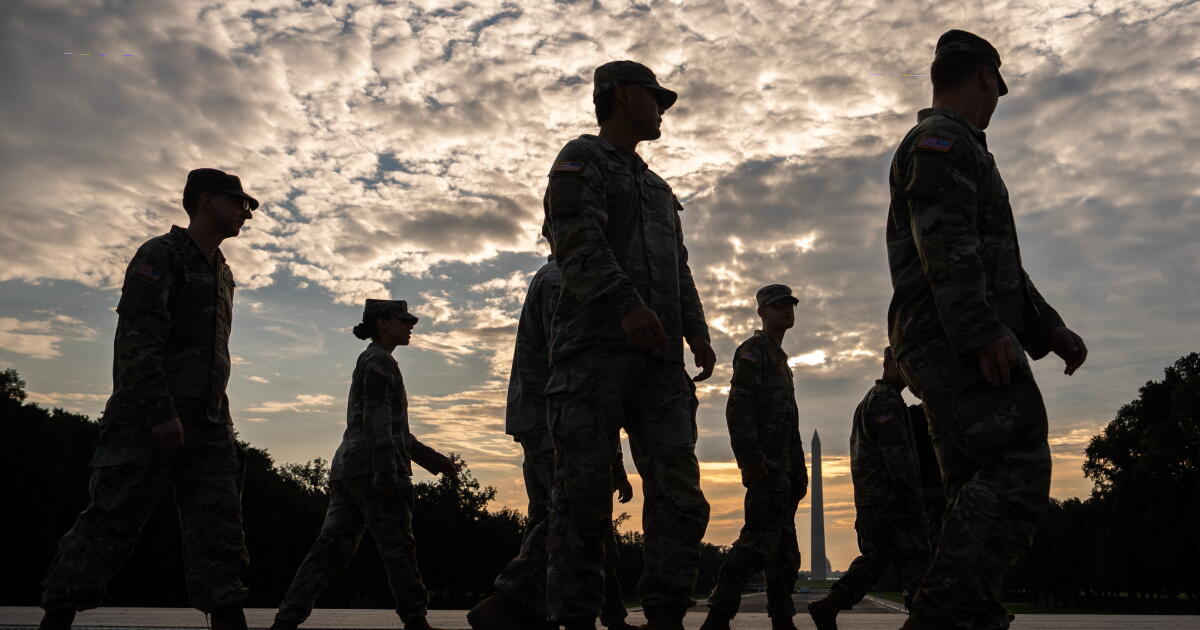
The White House federalized Washington’s police force, deployed National Guard troops from six states and the federal district across the capital’s streets and surged federal agents from the Department of Homeland Security into neighborhoods. The moves prompted outcry and protests from residents and a lawsuit from the district’s attorney general.
Norton’s retirement comes as a historically high number of lawmakers announce they will either seek another public office or retire from official duties altogether. More than 1 in 10 members of the House are not seeking reelection this year.
Norton’s staunch advocacy for her city
As the district’s delegate, Norton does not have a formal vote in the House. But she has found other ways to advocate for the city’s interests. Called the “Warrior on the Hill” by her supporters, Norton was a staunch advocate for D.C. statehood and for the labor rights of the federal workers who called Washington and its surrounding region home.
She also secured bipartisan wins for district residents. Norton was the driving force behind the passage of a law that provides up to $10,000 per year for students who attend public colleges outside the district. It also provides up to $2,500 per year for students who attend select private historically Black colleges and universities across the country and nonprofit colleges in the D.C. metropolitan area.
In the 1990s, Norton played a key role in ending the city’s financial crisis by brokering a deal to transfer billions of dollars in unfunded pension liabilities to the federal government in exchange for changes to the district’s budget. She twice played a leading role in House passage of a D.C. statehood bill.
Steeped in the civil rights movement
Norton was born and raised in Washington, and her life spans the arc of the district’s trials and triumphs. She was educated at Dunbar High School as part of the school’s last segregated class.
“Growing up black in Washington gave a special advantage. This whole community of blacks was very race conscious, very civil rights conscious,” she said in her 2003 biography, “Fire in My Soul.”
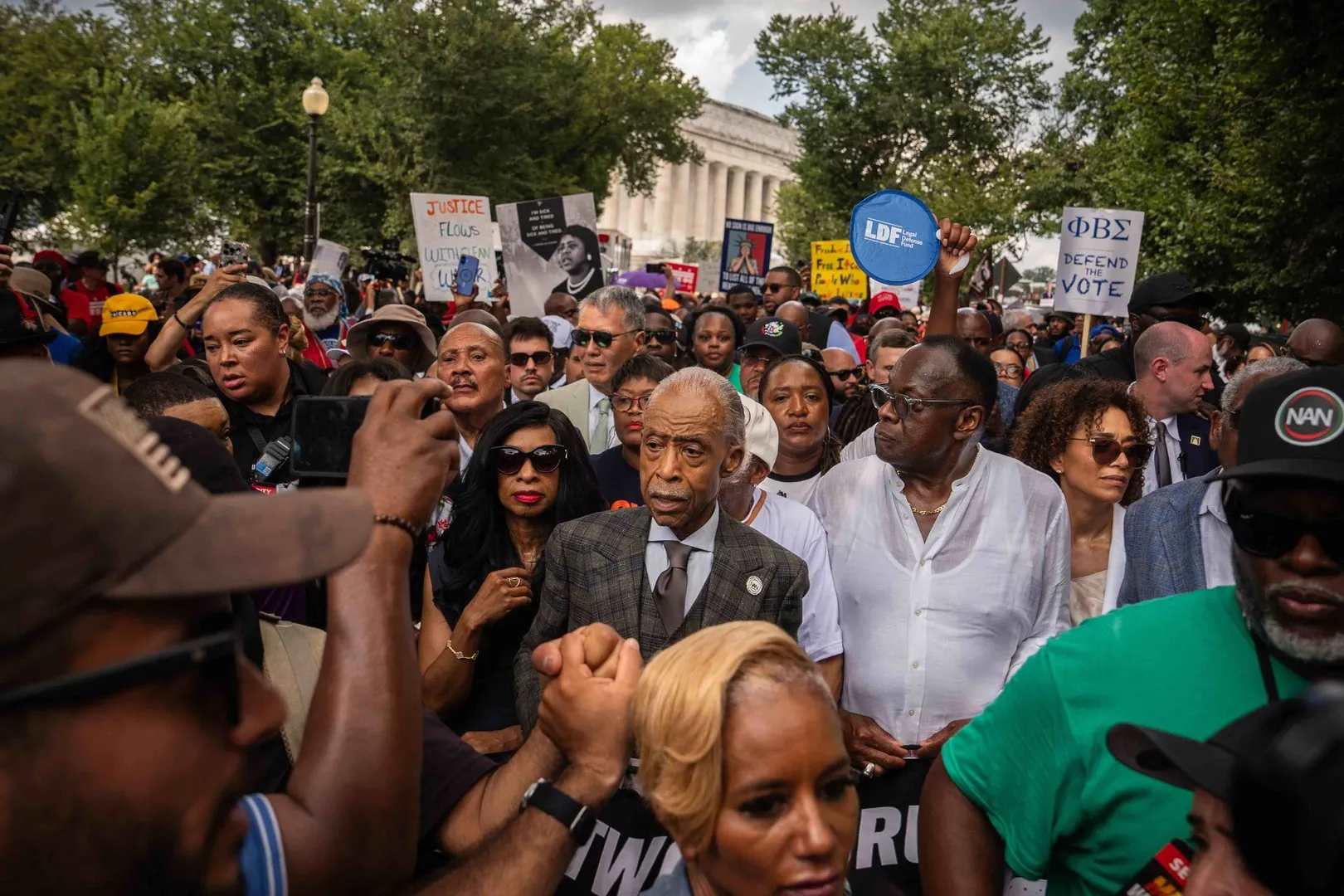
She attended Antioch College in Ohio and in 1963 split her time between Yale Law School and Mississippi, where she worked as an organizer during the Freedom Summer of the Civil Rights Movement.
One day that summer, Evers picked her up at the airport. He was assassinated that night.
Norton also helped organize and attended the 1963 March on Washington.
In an interview with the Associated Press in 2023, Norton said the march was still “the single most extraordinary experience of my lifetime.”
She went on to become the first woman to lead the Equal Employment Opportunity Commission, which helps enforce anti-discrimination laws in the workplace. She ran for office when her predecessor retired to run for Washington mayor.