warming

In a warming Arctic, U.S., China weigh rivalry against stewardship

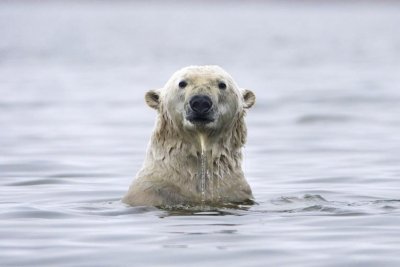
A polar bear swims in the water off a barrier island in the Arctic National Wildlife Refuge just outside the Inupiat village of Kaktovik, Alaska. File Photo by Jim Lo Scalzo/EPA

March 5 (UPI) — This year marks the 30th anniversary of the Arctic Council, once a hallmark of post-Cold War cooperation in the far north.

For decades, the Arctic Ocean remained at the margins of global power politics — a remote, ice-locked expanse governed largely through scientific collaboration and consensus-based frameworks.

That balance is now shifting. Rapid ice loss is opening seasonal sea lanes, exposing fragile ecosystems and drawing new commercial and strategic interest, even as the suspension of routine cooperation with Russia has strained the council’s role.

The Arctic is emerging as a maritime crossroads where environmental risk, economic ambition and intensifying geopolitical competition increasingly converge.

Established by the 1996 Ottawa Declaration, the Arctic Council — bringing together eight Arctic states from Canada, Denmark, Finland, Norway, Russia, Sweden the United States, Indigenous permanent participants and observers including China — remains the region’s central forum for coordinating science, environmental policy and cooperative governance. Despite mounting geopolitical strain, it continues to provide an institutional platform that could support future U.S.-China maritime cooperation in the Arctic.

Recent diplomacy suggests that even as tensions rise across trade, technology and security, cooperation is still possible when interests align.

The 2018 Agreement to Prevent Unregulated High Seas Fisheries in the Central Arctic Ocean, in force since 2021, offers a case in point. By imposing a 16-year moratorium on commercial fishing while joint scientific research assesses the ecosystem, the pact places precaution ahead of competition and provides a model for managing emerging Arctic risks.

The significance of the fisheries decision should not be understated. The agreement brought together Arctic coastal states and distant-water fishing powers, including Washington and Beijing, to manage a region where no fisheries regime previously existed.

In doing so, it transformed an ungoverned expanse of high seas into a shared space of stewardship — governed not by territorial claims, but by science, restraint and a shared recognition of ecological risk.

“The Arctic Council is a dedicated body creating a platform for collaboration built on consensus. It is far from perfect, but it has produced a number of highly influential assessments and created an international community devoted to cooperation and shared stewardship,” said Henry P. Huntington, arctic science director of the Ocean Conservancy.

Science diplomacy as a foundation

For the United States, the Arctic is a strategic frontier and an environmental priority, tied to maritime access, national defense, Indigenous livelihoods and ecological protection.

For China, it is an emerging arena of economic opportunity and global governance engagement. Beijing’s self-description as a “near-Arctic state,” combined with its investments in polar research, ice-capable vessels and Arctic shipping studies, reflects a broader ambition to participate in shaping the rules that will govern the region’s future.

International law scholar Michael Byers said China’s Arctic posture differs sharply from its behavior in the South China Sea. While Beijing has strategic interests in the region through its “Polar Silk Road,” it has no territorial claims in the Arctic and has largely operated within the existing legal framework.

In contrast to its role as a resident power in the South China Sea, Byers notes that China presents itself in the Arctic as a “near-Arctic state,” focused on resource access and emerging shipping routes — a presence that Arctic nations are watching more closely as its footprint grows.

Despite competing strategic interests, both countries share a clear objective: preventing a governance vacuum in the Arctic. The fisheries accord underscores that even amid rivalry, Washington and Moscow recognize the dangers of unregulated exploitation in fragile waters and the need for baseline rules. As such, the agreement serves not only as a conservation tool, but as a diplomatic signal that pragmatic cooperation in the Arctic remains possible.

At its center is a commitment to joint scientific research. Participating states will collaborate to monitor fish stocks, map Arctic ecosystems and assess climate impacts, generating the shared data needed to determine whether any future fishing can be conducted sustainably.

“The Arctic Council’s 30th anniversary finds its consensus-based structure severely tested. Western states suspended cooperation with Russia in 2022, effectively paralyzing what was once exemplary post-Cold War diplomacy,” said Pavel Devyatkin, a senior associate at the Arctic Institute. He said the council’s experience offers practical lessons for managing contested waters elsewhere, including the South China Sea.

Arctic marine science has long bridged geopolitical divides, including cooperation with China, showing how shared environmental risks can transcend political tension. As Devyatkin noted, the region offers a clear lesson: ecological disruption can outweigh traditional security concerns. When U.S.-Russia fisheries monitoring was suspended, key data gaps emerged just as warming waters pushed fish stocks northward — a cautionary signal for any contested maritime region facing climate-driven change.

China’s Arctic engagement is anchored in scientific diplomacy. Unlike more securitized theaters such as the South China Sea, Beijing has framed its Arctic role around cooperation, climate research and environmental stewardship. Its Yellow River Station in Svalbard has supported long-term research since 2004, while icebreakers such as Xue Long and Xue Long 2, along with polar-capable satellites, have expanded China’s research reach and technological presence in the region.

At the same time, Western policymakers remain cautious about the potential dual-use nature of these activities. Concerns focus on whether data gathered from satellites, seabed mapping or subsea systems could support military applications. U.S. and NATO officials have questioned how China might use its growing Arctic data capabilities.

The model reflects a broader principle of science diplomacy — one that has long shaped cooperation in contested maritime regions. Scientific collaboration provides a low-politics entry point for engagement, allowing rival states to build trust, exchange data and establish working relationships even when political tensions remain high.

“Marine science is an area that can promote international cooperation. That is true in many contexts, including in relation to the next International Polar Year collaborations currently being planned, that will include China,” claimed Evan T. Bloom, polar governance chair at the Ted Stevens Center for Arctic Security Studies.

Collaborative mapping of sensitive habitats could inform conservation planning and risk management. Even the design of Arctic marine protected areas, an issue gaining attention as part of global “30 by 30” conservation goals, could become a platform for coordinated policy development.

From fisheries to shipping and conservation

Shipping governance is emerging as the next test of whether U.S.-China scientific cooperation can translate into operational rules in the Arctic. As sea ice recedes, a transpolar route linking Asia, Europe and North America could reshape global trade, but the region remains poorly charted, remote and environmentally fragile, with high risks of accidents and long-term damage.

Analysts say a cooperative framework on Arctic shipping, covering safety standards, environmental protections, data sharing and emergency response, could reduce those risks. Joint monitoring of ice and vessel traffic, coordinated search-and-rescue protocols and agreed-upon environmental rules for polar operations would form the backbone of such an approach.

Marine conservation offers another pathway for cooperation. The precautionary logic underpinning the fisheries agreement aligns with broader global efforts to expand ocean protection and safeguard biodiversity.

The United States and China have expanded marine protected areas domestically and have endorsed international conservation targets. Extending that logic to the Arctic through coordinated conservation zones or networks of protected areas would reinforce ecological resilience while creating a stabilizing framework for governance.

Such initiatives also would resonate with a wider global trend: the recognition that environmental security and geopolitical stability are increasingly intertwined. As climate change accelerates, the management of shared ecosystems is becoming a central component of international relations. The Arctic, like the South China Sea or the Mediterranean, is emerging as a test case for how science-based stewardship can mitigate strategic rivalry.

The obstacles to deeper cooperation, however, remain substantial. The broader U.S.-China relationship is marked by strategic distrust, trade disputes and military competition. Arctic policy cannot be entirely insulated from tensions in other theaters, including the Indo-Pacific. Russia’s war in Ukraine has also disrupted Arctic diplomacy, limiting the functioning of multilateral bodies such as the Arctic Council and injecting new security concerns into the region.

Trust remains a central obstacle.

Washington remains wary of Beijing’s long-term strategic intentions in the Arctic, particularly the dual-use potential of infrastructure and emerging shipping routes.

Beijing casts itself as a legitimate stakeholder in global commons governance and is pressing for a greater role in shaping the rules of the evolving Arctic order.

At the same time, Russia’s continued isolation from Arctic Council processes since 2022 has pushed Moscow to seek new partners, further complicating the diplomatic landscape and slowing meaningful progress on joint conservation efforts for Arctic flora and fauna.

Against that backdrop, any expansion of cooperation will need to be incremental, transparent and anchored in verifiable scientific collaboration. The fisheries agreement provides a template: begin with a shared risk, rely on joint science, build institutional mechanisms and create habits of cooperation over time. That process is gradual, but it can be durable.

.
Source link

North America is losing birds fast. Experts blame agriculture, warming

Billions fewer birds are flying through North American skies than decades ago and their numbers are shrinking ever faster, mostly due to the combination of intensive agriculture and warming temperatures, a new study finds.

Nearly half of the 261 species studied showed losses important enough to be statistically significant, and more than half of those in decline have seen losses accelerate since 1987, according to a study published Thursday in the journal Science. The study is the first to look at trends in their decrease, where they are shrinking the most and what the declines are connected to, rather than total population.

“Not only are we losing birds, we are losing them faster and faster from year to year,” said study co-author Marta Jarzyna, an ecologist at Ohio State University. “Except for forest birds, almost every group is doing poorly. So we need to ask ourselves a question. How do we protect these groups of birds?”

The only consolation is that the birds that are shrinking in numbers the fastest are species — such as the European starling, American crow, grackle and house sparrow — that aren’t yet at risk of going extinct, said study lead author Francois Leroy, also an Ohio State ecologist.

“The thing is that species extinction, they start with a decline in abundance,” Leroy said, adding that “the decline is somehow maybe giving a preview of what it could lead to in terms of species extinction.”

Cornell University conservation scientist Kenneth Rosenberg, who wasn’t part of the study, said the species declining fastest in the new research “are often considered pests or ‘trash birds,’ but if our environment cannot support healthy populations of these extreme generalists and extremely adaptable species that are tolerant of humans, then that is a very strong indicator that the environment is also toxic to humans and all other life.”

A 2019 study by Rosenberg of the same bird species found North America had 3 billion fewer birds than in 1970, but didn’t look at changes in the rate of loss or causes.

Biggest bird losses in areas warming most

The biggest locations for acceleration of bird loss were in the Mid-Atlantic, the Midwest and California, the study found. And geography proved important when Leroy and Jarzyna looked for reasons why so many bird species are shrinking ever faster.

When it came to population declines — not the acceleration — the scientists noticed bigger losses farther south. When they did a deeper analysis, they statistically connected those losses to warmer temperatures from human-caused climate change.

“In regions where temperatures increase the most, we are seeing strongest declines in populations,” Jarzyna said. “On the other hand, the acceleration of those declines, that’s mostly driven by agricultural practices.”

Farmland issues speed up bird declines

The scientists found statistical correlations between accelerating decline and high fertilizer and pesticide use and the amount of cropland, Leroy said. He said they couldn’t say any of those caused the acceleration of losses, but it indicates agriculture in general is a factor.

“The stronger the agriculture, the faster we will lose birds,” Leroy said.

Jarzyna said there is a “strong interaction” between climate change and agriculture in their effect on bird populations.

“We found that agricultural intensification causes stronger accelerations of decline in regions where climate warmed the most,” Jarzyna said.

McGill University wildlife biologist David Bird, who wasn’t part of the study, said it was done well and that its conclusions made sense. With a growing human population, agriculture practices are intensified, more bird habitats are being converted to cropland, modern machinery often grind up nests and eggs, and single crop plantings offer less possibilities for birds to find food and nests, said Bird, the editor of “Birds of Canada.”

“The biggest impact of agricultural intensity though is our war on insects. Numerous recent studies have shown that insect populations in many places throughout the world, including the U.S., have crashed by well over 40 percent,” Bird said in an email. “Many of the birds in this new study showing population declines depend heavily on insects for food.”

Birds do a lot for humans

This study is both “alarming” and “sobering” because of the sheer numbers of losses and the patterns in those accelerating declines, said Richard Gregory, head of monitoring conservation science at University College London. He was not part of the research.

The paper shows that people need to change the way they live to reduce human-caused warming, reduce agricultural intensity, monoculture of crops and broad application of chemicals, said Cornell University ornithologist Andrew Farnsworth, who wasn’t part of the study.

“Here is why this study is especially important. Birds do a lot for humans,’’ McGill biologist Bird said in an email. ”They feed us, clothe us, eat pests, pollinate our plants and crops, and warn us about impending environmental disasters. With their songs, colors, and variety, birds enrich our lives … and recent studies show that their immediate presence actually increases our well-being and happiness and can even prolong our lives! To me, a world without birds is simply unfathomable.”

Borenstein writes for the Associated Press.

Source link

Battling a warming world and fierce competition, a local ski resort fights to survive

For the handful of skiers gliding across a sun-drenched ridge high in the San Gabriel Mountains, the wide expanse of the Inland Empire stretched to the Pacific Ocean nearly two vertical miles below.

Across sparkling water, the rugged spine of Catalina Island graced the horizon.

The view rivaled anything at the posh, world-renowned ski resorts of Lake Tahoe, but this was humble Mt. Baldy — the familiar local mountain that, for a few precious weeks each year, becomes a downhill skiing destination that holds its own with anything in the American West.

A sign inside Top of the Notch restaurant at Mt. Baldy reads, "Last Chair Down 4:45."

A sign inside Top of the Notch restaurant at Mt. Baldy.

Last week — after the 10,000-foot summit that looms above Los Angeles emerged from storm clouds blanketed in white — was one for the ages.

But in a rapidly warming world, and in an industry dominated by two huge and growing conglomerates that are crushing the competition, every run feels fleeting.

These days, managing a small ski business is like trying to keep a mom-and-pop general store afloat after Walmart comes to town.

By noon last Wednesday on Mt. Baldy — a little more than an hour’s drive from downtown L.A. — it was getting pretty hot, and the snow was melting fast.

  • Share via

For a skier racing between towering Jeffrey pines and plummeting through soft, slushy piles of forgiving snow, the hardest part was dodging exposed rocks and random tree limbs that appeared underfoot with alarming frequency.

The hardest part for the business is the fact that one of the conglomerates, Alterra Mountain Co., essentially surrounds Mt. Baldy.

Zac Chambers and his daughter Whitney, 6, of Upland, snowboard together at Mt. Baldy.

Zac Chambers and his daughter Whitney, 6, of Upland, snowboard together at Mt. Baldy.

It owns Big Bear Mountain Resort and Snow Summit in nearby San Bernardino County, and Mammoth Mountain, the closest big resort in California’s High Sierra.

Although a season pass at Mt. Baldy is a relative bargain at about $300, it’s good only when there’s snow.

For about $800, you can get an “Ikon Pass” from Alterra, which offers access to all of its resorts in California and dozens more across the country and around the globe, including South America, Europe and Asia.

All of which makes keeping the lights on and the chairlifts spinning at beloved, but beleaguered, local resorts an exhausting labor of love.

Last week, Robby Ellingson, president and general manager of Mt. Baldy Resort, drove two hours to a rival resort in Big Bear Lake to pick up spare parts for an old chairlift that had broken down. He thanked them with a few cases of beer.

He planned to grab some tools and install the parts himself, with the help of an electrician.

Michael Phelps, left, and Seven Foster, of Riverside, take the chairlift up to Mt. Baldy Resort.

Michael Phelps, left, and Seven Foster, of Riverside, take the chairlift up to Mt. Baldy Resort.

“I climb the lift towers, I drive snowcats, I do pretty much everything,” he said, chuckling at all of the hard, physical labor despite his executive title. “There’s a lot of things I do that none of the other dudes who hold my position would dream of — out of necessity.”

Another Mt. Baldy executive, Ellingson’s brother Tommy, turned up for an interview on the mountain in a camouflage hoodie, clutching an electric hand drill.

“Everybody’s like a Swiss army knife up here,” he quipped. “It’s awesome, it’s organic!”

It’s also very old-school.

While resorts like Mammoth invest millions in state-of-the-art chairlifts that whisk six people at a time up the mountain with astonishing speed, Mt. Baldy relies on slow, creaking two- and three-person lifts reminiscent of the 1980s.

A lot of the ski gear, ski fashion and the skiers themselves seemed proudly rooted in a bygone era too.

A skier carves down the mountain at Mt. Baldy.

A skier carves down the mountain at Mt. Baldy.

Chris Caron, a 65-year-old retiree who lives 20 minutes down the road, stood at the top of the experts chairlift with a beard as white as snow, a black plastic sun shield across his nose and a cold craft beer in hand.

“There’s big conglomerates trying to buy everybody up, and I don’t want that,” he said, shading himself beneath the bill of his Pliny the Elder ball cap. “That’s what I love about here. It’s not so commercialized.”

Caron said he snowboards at Baldy every chance he gets — 20 to 30 days in a good year.

“I grew up here. We used to ride our bicycles and hike these mountains,” he said. “It’s like home.”

Driving back from visiting family in Missouri recently, Caron stopped at Taos Ski Valley in New Mexico, a bucket list destination for people who don’t shy from pricey vacations. He couldn’t help himself, he said — they’d just had a big dump of fresh powder and it wasn’t too far out of his way. But it didn’t feel right.

“It’s pretty posh,” he said with a resigned shrug. “That’s just not me.”

Also enjoying the uncrowded slopes and gloriously short lift lines on Wednesday was Tommaso Ghio, 28, an aspiring filmmaker from Italy who spent much of the afternoon snowboarding shirtless and looking like an extra from a Visit California commercial.

Old skis adorn a light fixture at the Top of the Notch restaurant at Mt. Baldy.

Old skis adorn a light fixture at the Top of the Notch restaurant at Mt. Baldy.

He and his friends drove up through the desert where it was, “like 80 or 90 degrees, and then we just ended up on top of a mountain,” covered in snow, he said, grinning as if he had won the lottery. “You can’t get this anywhere else.”

But the balmy weather that made the afternoon feel so decadent, and otherworldly, also poses a serious threat to Baldy’s on-again, off-again ski season.

It started with a surprise early storm in November — one that had locals dreaming of a record-breaking year — followed by a bone-dry December.

Then at Christmas, an atmospheric river that dumped several feet of snow on Northern California resorts arrived at Mt. Baldy, which tops out at 8,600 feet, as “catastrophic” rain, Ellingson said.

Rain washes away existing snow and destroys the quality of anything left behind.

And since Christmas week crowds generate about 30% of annual revenue at many U.S. ski resorts, the storm soaked Mt. Baldy in more ways than one.

Things stayed grim until last week’s storm, which dropped more than 2 feet of snow at the base of the resort and up to 3 feet at the top.

People make the up and down trip from the chairlift at Mt. Baldy.

With limited snow at lower elevations, people make the up-and-down trip from the chairlift at Mt. Baldy.

It took some time to recover from damage done by the howling wind and make sure none of the enormous piles of snow on the upper reaches became life-threatening avalanches. When the resort finally opened, the skiing was as good as any in recent memory.

“I’ve lived in Mt. Baldy almost my entire life,” said Ellingson, who is 50, “and last Friday was one of my top five days ever.”

He’s hoping the storm delivered enough snow to stay open for at least a month, but the heat is not helping.

Ellingson’s family bought the Mt. Baldy Lodge, a restaurant in the village far below, in the late 1970s. They started running the ski hill, which they own a substantial share of, in 2013.

Increasingly fickle winters have forced the resort to branch out in an attempt to boost summer earnings and attract non-skiing customers: hosting moonlight hikes with live music in the restaurant at the base of the lifts, renting “glamping” tents on wooden platforms — with beds and locking doors — to tempt uneasy campers to sleep beneath the stars.

And in what Ellingson called a “swing for the fences” move, the resort recently bought a microbrewery in Upland. After serving beers at the restaurant for decades, it seemed like a natural next step.

Anything to avoid getting trapped in a “desk job,” Ellingson said, like his friends working as middle managers at the big, corporate resorts.

“I hate to throw shade,” he said, but do those guys ever go skiing?

Independence is priceless to Ellingson because, when you’re the boss and the snow is good, nobody can order you to stop throwing tricks in the terrain park and flying off jumps.

“I grew up during the X Games boom. That’s my identity,” he said. “I still get rad every single day.”

Source link