war power

Senate rejects resolution to limit hostilities in Iran

Senate Republicans blocked a war powers resolution Wednesday designed to withdraw U.S. forces from hostilities in Iran, as the Trump administration accelerates its military campaign in a conflict that has killed hundreds, including at least six American service members.

The motion failed in a vote of 47-53.

In addition to pulling out military resources from the Middle East, the measure — introduced by Sens. Chuck Schumer (D-N.Y.), Adam Schiff (D-Calif.) and Tim Kaine (D-Va.) — would have required Congress’ explicit approval before future engagement with Iran, a power granted to the legislative branch in the Constitution.

The House, where Republicans also hold an advantage, is scheduled to weigh in on a similar measure Thursday. Even if both Democratic-led measures were to succeed, President Trump was widely expected to veto the legislation.

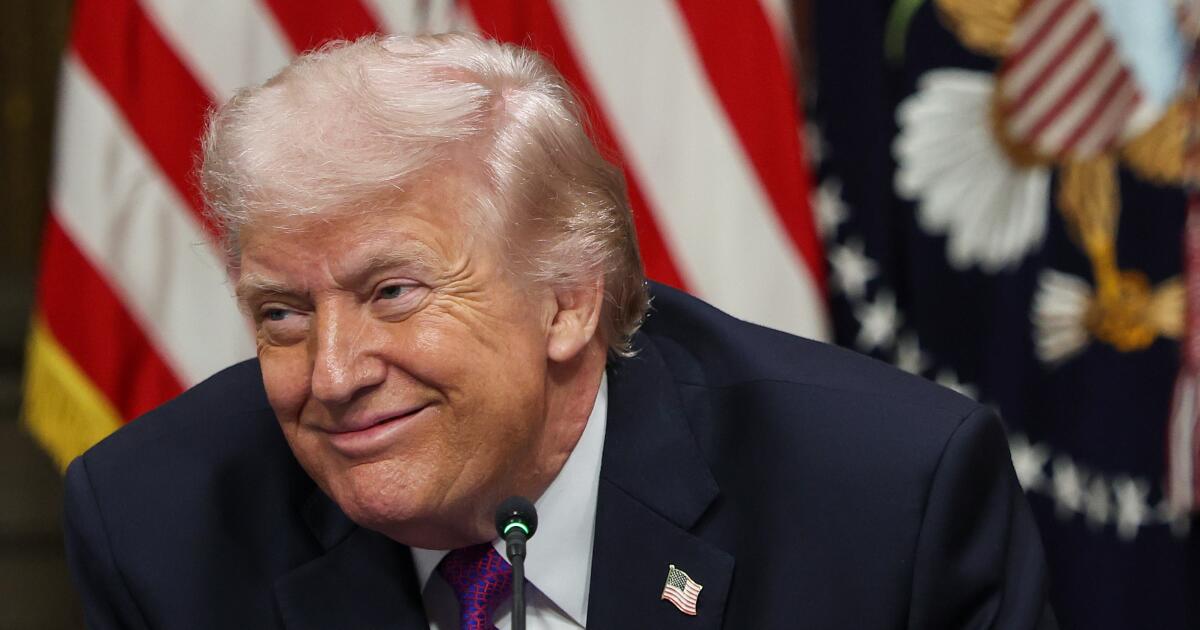
“We are doing very well on the war front, to put it mildly,” President Trump said at a White House event on Wednesday afternoon. The president, who has come under scrutiny for offering shifting explanations on the war’s endgame, said that if he was asked to scale the American military operation from one to 10, he would rate it a 15.

Democrats dispute that Trump possesses the authority to wage the ongoing operation in Iran without explicit congressional approval.

Acknowledging the measure was unlikely to succeed, they framed the vote as a strategy to force lawmakers to put their support for or opposition to the war on record.

“Today every senator — every single one — will pick a side,” Schumer said. “Do you stand with the American people who are exhausted with forever wars in the Middle East, or stand with Donald Trump and Pete Hegseth as they bumble us headfirst into another war?”

Senate Majority Leader John Thune (R-S.D.) and most of his Republican colleagues have maintained that the president carried out a “pre-emptive” and “defensive” strike in Iran, giving him full authority to continue unilateral military operations.

Republicans saw the vote as the “last roadblock” stopping Trump from carrying out his mission against the Islamic Republic.

“I think the president has the authority that he needs to conduct the activities and operations that are currently underway there. There are a lot of controversy and questions around the war powers act, but I think the president is acting in the best interest of the nation and our national security interests,” Thune said at a news conference.

Senators largely held to party loyalties, with the exception of Kentucky Republican Rand Paul, who broke ranks to support the measure, and Pennsylvania Democrat John Fetterman, who opposed it.

The vote comes as Defense Secretary Pete Hegseth said Wednesday that the war against Iran is “accelerating,” with American and Israeli forces expanding air operations into Iranian territory. He pointed to evidence released by U.S. Central Command of a submarine strike on an Iranian warship, and also lauded other strikes throughout the region as civilian casualties in Iran surpassed 1,000 on the fourth day of the conflict, according to rights groups.

“We’re going to continue to do well,” Trump said Wednesday. “We have the greatest military in the world by far and that was a tremendous threat to us for many years. Forty-seven years they’ve been killing our people and killing people all over the world, and we have great support.”

Republicans blocked a similar war powers vote in January after the president ordered U.S. special forces to capture and extradite Venezuelan President Nicolás Maduro in Caracas on drug trafficking charges.

GOP leaders argued that the outcome of that mission equated to a quick success in the Middle East, despite an uncertain timeline from the Department of Defense.

In the House, lawmakers will vote on a separate war powers effort Thursday. That bill is led by Rep. Ro Khanna (D-Calif.) and Rep. Thomas Massie (R-Ky.), the two lawmakers who authored the Epstein Files Transparency Act.

“Instead of sending billions overseas, we need to invest in jobs, healthcare, and education here,” Khanna said on X.

In addition to that proposal, moderate Democrats in the House have introduced a separate resolution that would give the administration a 30-day window to justify continued hostilities in the Middle East before requiring a formal declaration of war or authorization from Congress.
Source link

Democrats push for war powers vote over U.S. attack on Iran

Democrats are pushing for a vote next week on a resolution to curtail President Trump’s authority to conduct strikes in Iran, a move that would reassert Congress’ role in approving the use of military might.

The effort was already underway to force a vote on a war powers resolution, but it gained fresh momentum as the U.S. and Israel bombed Iran beginning early Saturday, an action that Trump referred to in a video shortly afterward as “war.” House Democratic leaders announced this week — before the strikes — that they would begin procedures to force a floor vote on a resolution for Iran.

The resolution directs Trump to terminate the use of armed forces against Iran, unless explicitly authorized by Congress. Presidents of both parties have skirted around war powers resolutions in the past.

Passage is uncertain in the Republican-controlled House and Senate, with GOP members of both chambers expressing initial support for the bombing of Iran. Senate Majority Leader John Thune (R-S.D.) praised the attacks Saturday and said to reporters that the administration “better well make it about getting new leadership and regime change.”

But the effort for a war powers vote has gained the support of at least two House Republicans, Thomas Massie of Kentucky and Warren Davidson of Ohio, making it possible for the measure to pass the House if enough Democrats support the measure and enough members show up for the final vote.

On the Senate side, Republican Rand Paul of Kentucky, who voted for an earlier war powers resolution, said he would “oppose another presidential war.”

House Democratic leader Hakeem Jeffries of New York said Iran “is a bad actor and must be aggressively confronted for its human rights violations, nuclear ambitions, support of terrorism and the threat it poses” to allies in the region.

“However, absent exigent circumstances, the Trump administration must seek authorization for the preemptive use of military force that constitutes an act of war,” Jeffries’ statement said.

Rep. Ro Khanna (D-Fremont), a California Democrat who is co-sponsoring the resolution with Massie, urged lawmakers to reconvene in Washington on Monday to vote, calling the strikes the launch of “an illegal regime change war in Iran with American lives at risk.”

Massie on social media described the attack as “acts of war unauthorized by Congress.”

The resolution faced initial opposition from staunch pro-Israel House Democrats Jared Moskowitz of Florida and Josh Gottheimer of New Jersey.

Senate Democratic leader Chuck Schumer of New York said the Senate should pass the resolution but didn’t outright oppose the strikes. He complained that the administration did not lay out its case to Congress or the public.

Trump would surely veto the resolution if passed, but substantial GOP votes for it could persuade him to limit the attacks on Iran. The Senate passed a procedural vote for a resolution against the strikes in January that culminated in the capture of Venezuelan leader Nicolas Maduro, after which the White House sent Secretary of State Marco Rubio to Capitol Hill to testify to members.

The U.S. Constitution gives Congress the power to declare war, but no president since Franklin D. Roosevelt in World War II has used that formal declaration, instead relying on less expansive authorization to deploy military force. Congress passed the War Powers Resolution in 1973 to slow the Vietnam War.

However, most presidents have sought some level of buy-in and approval from Congress, which approves the budget for the Pentagon.

“The Constitution is clear: The decision to take this nation to war rests with Congress, and launching large-scale military operations — particularly in the absence of an imminent threat to the United States — raises serious legal and constitutional concerns,” Sen. Mark Warner (D-Va.) said in a statement. “Congress must be fully briefed, and the administration must come forward with a clear legal justification.”

Other Senate Democrats, including Tim Kaine of Virginia and Andy Kim of New Jersey, have also urged their chamber to vote on a similar measure to put checks on Trump’s use of military force in Iran.

Rubio notified the so-called Gang of Eight — the top congressional leaders in the House and Senate and on the intelligence committees — of the strikes, the White House said.

Sen. Roger Wicker (R-Miss.), the chair of the Senate Armed Services Committee, defended the strikes as “pivotal and necessary.”

“The President has stated the operation’s goals clearly: thwart permanently the ayatollahs’ desire to create a nuclear weapon, degrade their ballistic missile force and their production capacity, and destroy their naval and terrorism capabilities,” Wicker said in a statement.

Sen. Chris Coons (D-Del.) noted in his statement: “This is not how a democracy goes to war.”

Wasson writes for Bloomberg.

Source link