War on Gaza

Arab News | UK will ‘no longer stand by’ as Israel kills Palestinian children in Gaza, minister says

DUBAI: Britain will “no longer stand by” while Israel kills Palestinian children in Gaza, First Secretary of State Louise Haigh said on Tuesday, pledging to increase pressure on Tel Aviv over the war and illegal settlement expansion in the occupied West Bank.

Speaking at the Trades Union Congress in Brighton, Haigh said Prime Minister Andy Burnham was right to acknowledge that Britain had been “too slow” in its response to the situation in Gaza and the West Bank.

“At a time when it has never been more important to remind the world who we are, we hesitated,” Haigh said.

“We will no longer stand by while innocent Palestinian families are torn apart, while innocent children are killed in Gaza, and while the hope of a two-state solution evaporates before our eyes,” she added.

Haigh said sanctions announced last week by Foreign Secretary Ed Miliband were intended to “change course,” adding that Britain was “purposefully targeting the illegal settlements” and increasing pressure on the Israeli government.

The measures include sanctions targeting individuals and companies linked to Israeli settlement expansion, as well as a ban on imports from settlements in the occupied West Bank.

“The Israeli people are not responsible for the actions of their government,” Haigh said. “We will stand against injustice. We will stand up for peace.”

She added that Britain would work with international partners to “speak with one voice” and help preserve the prospect of a two-state solution.


Source link

Arab News | Malaysia vows to block Israeli military shipments

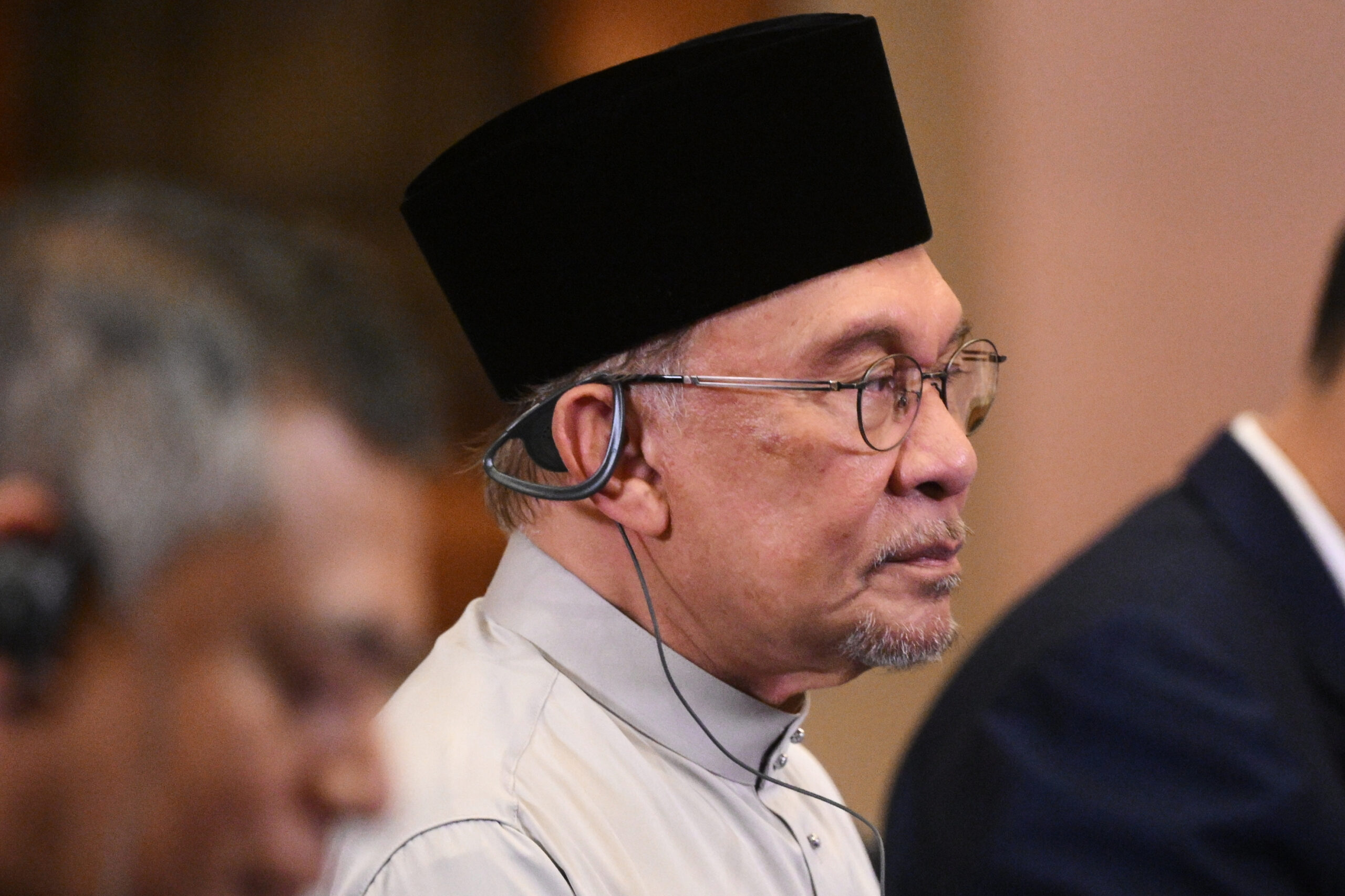
LONDON: Prime Minister Anwar Ibrahim vowed on Tuesday that shipments to Israel’s military would not be allowed to pass through Malaysia after cargo containers heading there were seized.

His comments came after Bloomberg reported that Malaysian authorities had halted all shipments heading to Israel from one of the country’s largest ports after three containers were stopped by authorities last month.

“We will not allow our country to be used as a conduit for any shipment that supports or contributes to Israel’s military capabilities and its atrocities against Palestinians and other innocent lives,” Ibrahim wrote on X.

“Any suspicious shipment will be subject to inspection and investigation in accordance with Malaysian law. Where a violation is established, decisive action will be taken.”

The three containers were stopped at Tanjung Pelepas Port on Aug. 19 and have been held ever since, the report said. 

They were destined for Israel’s Ashdod port and contained products from China.

Malaysia has no diplomatic or trade relations with Israel, but cargo is allowed to transit through the country’s ports from one country to another.

Bloomberg reported that the seizure could be a shift in Malaysia’s approach to handling Israel-bound cargo.

Malaysia is a major shipping hub, located along some of the world’s busiest maritime routes through Asia.

The Malaysian Border Control Agency said the matter remains under investigation.

The seizure came just two weeks after a container destined for Israeli military technology company Elbit Systems from the Philippines was also stopped in Malaysia.

Malaysia has been one of the most prominent international critics of Israel and, in particular, the war on Gaza.

At the BRICS Summit in New Delhi at the weekend, Ibrahim condemned what he described as Israel’s “settler terrorism” in the occupied West Bank.


Source link

Arab News | UN urges access for international investigators to Gaza after bodies found

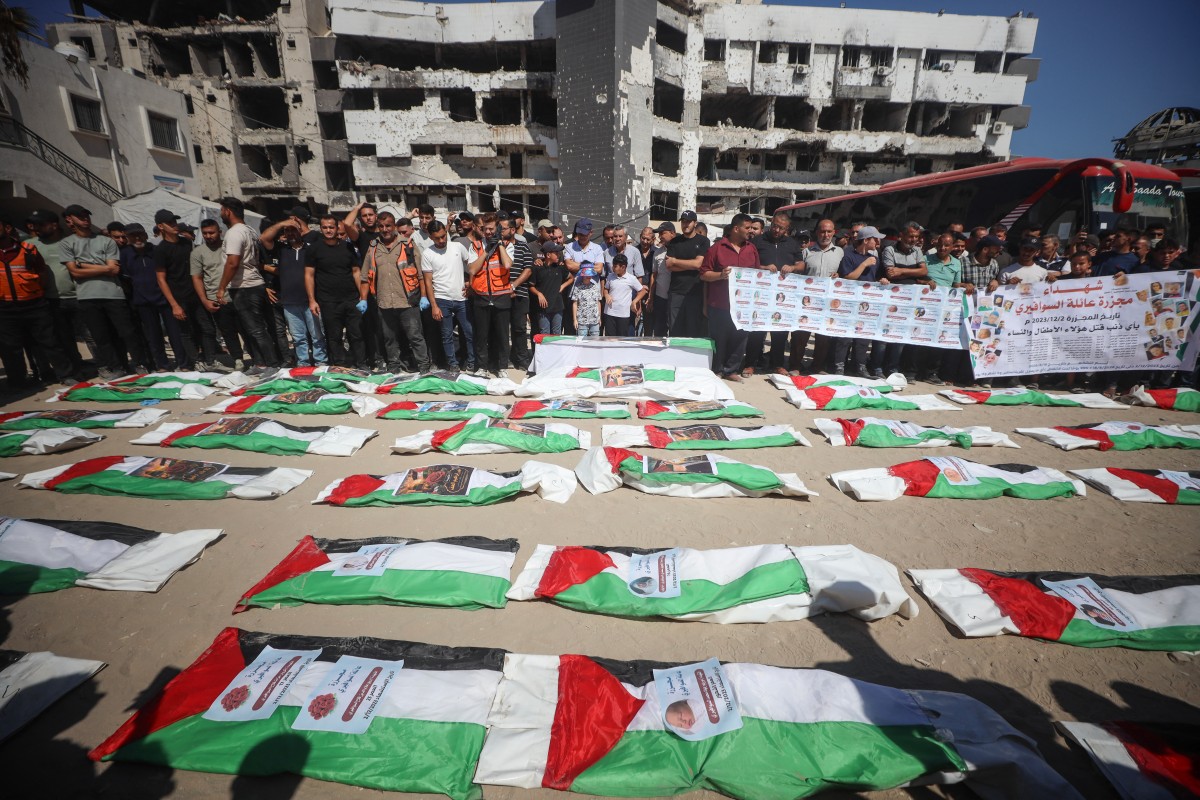
Geneva: The United Nations called Tuesday for international investigators to be granted to access to all of Gaza “to assist with evidence-gathering” as hundreds of bodies are pulled from the rubble.

“The discovery of extensive remains under the rubble in Gaza City resurfaces these concerns of war crimes and other atrocity crimes,” UN rights chief Volker Turk said in a statement.


Source link

Arab News | Universities slam Belgian refusal to evacuate Gaza students

BRUSSELS, Belgium: Belgium’s top universities condemned on Monday the government’s refusal to help 13 students from war-torn Gaza who received scholarships at Belgian universities reach the country.

Brussels set aside plans to evacuate the Palestinian students last week in a case that has split the coalition government.

The rectors of the European country’s top 10 universities expressed their “dismay” at the move in a letter, accusing the administration of using the students as “bargaining chips” in a “disgraceful political horse-trading.”

Centrist Foreign Minister Maxime Prevot has advocated in favor of evacuating the students but has faced opposition from the Flemish conservatives party of Prime Minister Bart De Wever, according to a government source.

Prevot said one member of the five-party coalition demanded concessions on migration, including the creation of deportation centers, in return for greenlighting the evacuations.

“They must not be treated as bargaining chips or as variables to be adjusted in political debates on migration,” the rectors wrote of the Gaza students.

“Their cases must be assessed for what they are: those of students and researchers who have been awarded scholarships on the basis of their academic merit and who have all expressed their intention to return to their home countries to contribute to their reconstruction.”

The students are among about 1,500 Palestinians in Gaza currently waiting to reach Belgium, having been granted the right to do so, mainly under family reunification rules, according to several NGOs.

Yet, evacuations from the Palestinian territory at war with Israel are proceeding at a trickle, with activists and now the universities accusing the government of deliberately slowing down the process.

“Discussions in recent weeks also show that the obstacles cited do not stem from insurmountable constraints but rather from a lack of political will,” the university chiefs wrote.

The case is not isolated, with Palestinian students hoping to study in Italy, Turkiye, the Netherlands, Germany also reporting delays in recent months.

Palestinian militant group Hamas launched an attack on Israel on October 7, 2023, which killed 1,221 people, according to official Israeli figures.

Israel’s offensive has since claimed at least 73,470 lives in Gaza, according to the Gaza health ministry, which operates under Hamas.


Source link

Arab News | Netanyahu threatens retaliation if Israel’s enemies attack

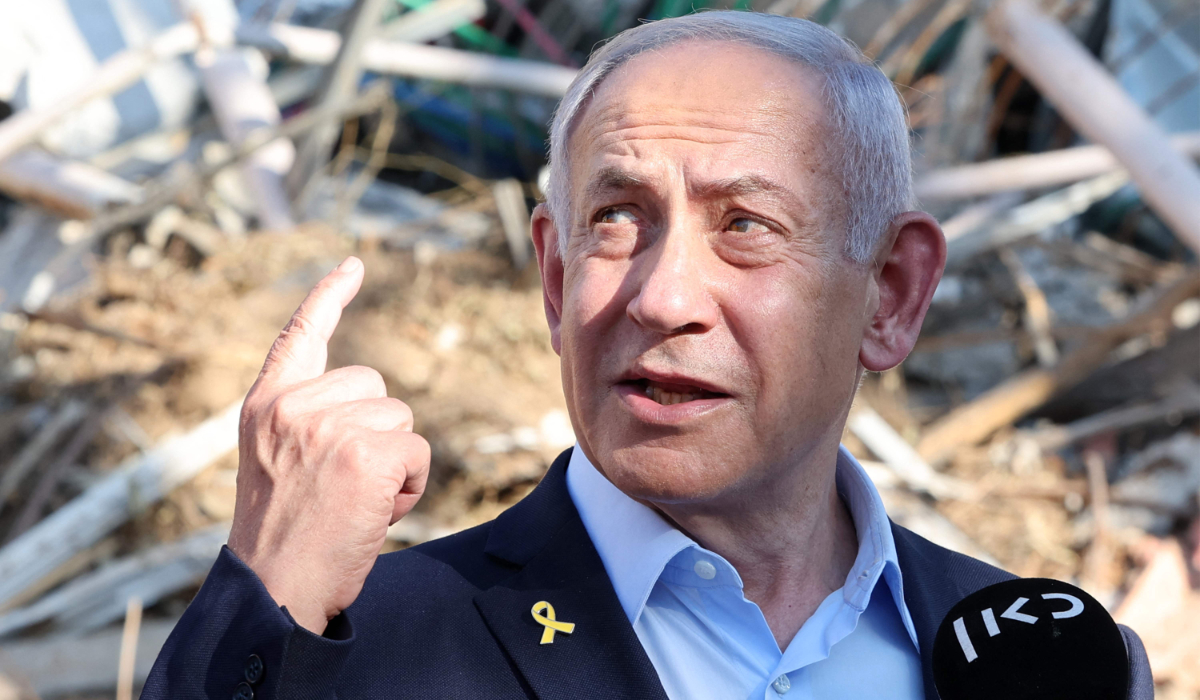
JERUSALEM: Prime Minister Benjamin Netanyahu warned on Monday of heavy reprisals on Israel’s enemies if they attacked, as he lauded the recent demolition of a Hezbollah tunnel network in southern Lebanon.

Netanyahu said Israel’s destruction of Hezbollah positions at the Beaufort and Ali Al-Taher ridges was a “massive victory” and vowed to “continue to destroy terrorist infrastructure.”

“I say to our enemies: If you haven’t learned the lesson by now, and you choose to attack us again, you will suffer even heavier blows. There is still work to complete,” Netanyahu added, according to a video published by his office.

On Thursday, Israel blew up what it described as a vast network of tunnels under the Ali Al-Taher ridge where Hezbollah kept a command center, living quarters and stocks of weapons with which to strike northern Israel and invading Israeli troops.

A huge fireball was seen in the area, with the US Geological Survey recording a tremor equivalent to a 4.1 magnitude earthquake.

The blast came a week after Israeli troops said they had seized the strategic highlands as they solidified control of a “security zone” in southern Lebanon.

Israel said the tunnel network was built over two decades with the help of Hezbollah’s patron Iran, whose clerical government has also backed Hamas in the Gaza Strip.

Israel and the United States attacked Iran in late February, sparking the Middle East war.

Hezbollah dragged Lebanon into the wider conflict when it fired rockets at Israel in solidarity with Iran.

Israel has struck south Lebanon during the war and its forces continue to occupy what it calls a “security zone” there.

The Ali Al-Taher ridge lies on the edge of Israel’s security zone just a few kilometers from the UNESCO-listed Beaufort castle, another strategic site that Israel captured in recent months.

Israel and Lebanon signed a US-sponsored framework agreement in late June that involves the disarmament of Hezbollah, a gradual withdrawal of Israeli forces from Lebanon’s south and the deployment of the Lebanese army to the region, starting in test areas known as “pilot zones.”


Source link

Arab News | Israel army rejects testimonies in film about AI-powered killing in Gaza

JERUSALEM: The Israeli military on Friday said it “categorically rejects” allegations made in a new documentary about Israel’s AI-powered mass killing of civilians in Gaza, which received a 25-minute ovation at its premiere in Venice the day before.

The Israeli-made film “NAZA” uses conversations with 24 different Israeli military or intelligence whistleblowers who spoke on condition that their identities be protected, with interviewees describing how they felt like they worked in a killing “factory” or a lethal video game.

The Israeli military criticized the use of anonymous testimonies in the film which it said “cannot be verified”, saying in a statement that it “makes unprecedented efforts to minimize harm to civilians” during its offensive in Gaza.


Source link

Arab News | Palestine’s UN envoy slams ‘most organized, methodic, broadcasted ethnic cleansing campaign in modern history’

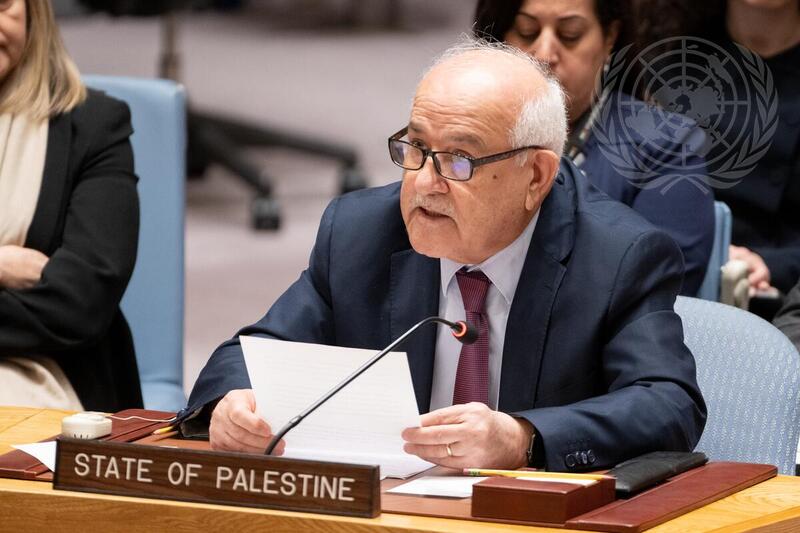
NEW YORK: Israel’s “decades-long ethnic cleansing” of the Palestinian people “has reached its height through the commission of genocide,” Palestine’s permanent observer to the UN told the Security Council on Tuesday.

Riyad Mansour cited a string of statements by senior Israeli officials that amount to open declarations of a plan to forcibly remove Palestinians from Gaza and the West Bank.

In a five-page letter to Security Council President Jerome Bonnafont, Mansour said Israeli officials “are proudly declaring their ethnic cleansing plan, enunciating their decades-long policy to remove the Palestinian people from their land, and rapidly and actively implementing their crimes on the ground.”

The letter, seen by Arab News, quotes Defense Minister Israel Katz telling an interviewer on Sept. 2 that “there’s no real solution for Gaza in the end without migration,” and that Israel is “organized and prepared to get them out — by sea, by air, by every way possible.”

Katz said “the plan hasn’t been cancelled; it’s being discussed all the time, even now, and I think there’s no other solution for everyone’s good.”

He added that “today, 70 percent of Gaza’s territory is a desert thanks to what the Israeli army has done; there are no longer any inhabitants or houses there,” and that Israeli forces have “reoccupied the refugee camps in the West Bank and expelled 40,000 Palestinians.”

Katz denied the existence of Jewish settler violence, saying: “There is no Jewish terror. I have cancelled that term. Terrorism is committed by those who act against the State of Israel.”

On Sept. 7, he said he and Prime Minister Benjamin Netanyahu had instructed the military “to prepare for the opening of a full-scale war” in the West Bank, including “the evacuation of residents from cities and villages … exactly as we did in the security zones in Gaza,” and announced plans for “targeted eliminations” of senior Palestinian Authority officials.

The letter cites Netanyahu filming himself at a military post in Gaza on Sept. 2 saying: “We are not withdrawing. We are staying on this line. We control 60 percent of the strip. And there is still more to come.”

The same day, it says, he visited a religious school in the city of Sderot and looked on as young settlers chanted: “And we will take vengeance, one eye for the two eyes of Palestine, may its name be erased.”

National Security Minister Itamar Ben-Gvir unveiled a plan on Sept. 3 called “Disengagement 710,” which he said would “encourage the voluntary migration of 1.86 million Gazans within seven years.”

He said 250,000 Palestinians would be removed from Gaza in the first year and a million within three years, adding: “It is possible. It is realistic. It is in our hands. It is within our ability.”

Ben-Gvir said a survey found that “76 percent of Israeli society support encouraging immigration from Gaza.”

The letter references a video generated by artificial intelligence that Ben-Gvir posted showing Palestinian detainees entering what it described as a slaughterhouse-style conveyor system, and a separate video of him telling women detainees: “The good conditions in the prisons are over … I’m glad we lowered these conditions to the bare minimum.”

The letter links this rhetoric to reports of Israeli soldiers marking Palestinian detainees with numbers on their bodies, including a case in which a man identified as Ahmad Al-Hathnawi was released with the number 44 written on his forehead. The Israeli military acknowledged the practise, saying “lessons have been learned.”

Finance Minister Bezalel Smotrich, who also holds a ministerial post within the Defense Ministry overseeing settlement policy, announced a new settlement near Bethlehem on Sept. 3 and said: “We want to bring a million settlers.”

He repeated the assertion that “there is no such thing as a Palestinian people,” and on Sept. 7 said the PA “should be brought down,” declaring that the Oslo Accords are “null and void anyways.”

Israel’s Chief Rabbi David Yosef told a crowd on Aug. 22 that Palestinians “are not a people” and “have no rights here.” The crowd responded: “Amen. May the Holy One, blessed be He, destroy all of Gaza.”

The letter documents the “infrastructure of ethnic cleansing” on the ground, saying Israeli forces demolished the village of Khirbet Al-Tabban in the past week, displacing more than 70 people and bringing to 47 the number of Palestinian communities erased since October 2023.

It says Israeli settlers and soldiers killed teenagers Omar Al-Nassan, 17, and Khalil Abu Alia, 16, in the village of Al-Mughayyir the same day Israel’s president told CNN that his country was making a “major effort” to curb settler violence.

Citing a UN report issued on Sept. 4, Mansour said Israeli forces “killed civilians, destroyed hundreds of homes … and went door to door forcing residents to leave” in the Jenin, Nur Shams and Tulkarm refugee camps, and displaced families “were told by Israeli officers there would be no more refugee camps and that they should all go to Jordan.” More than 40,000 Palestinians remain displaced from the camps, the letter says.

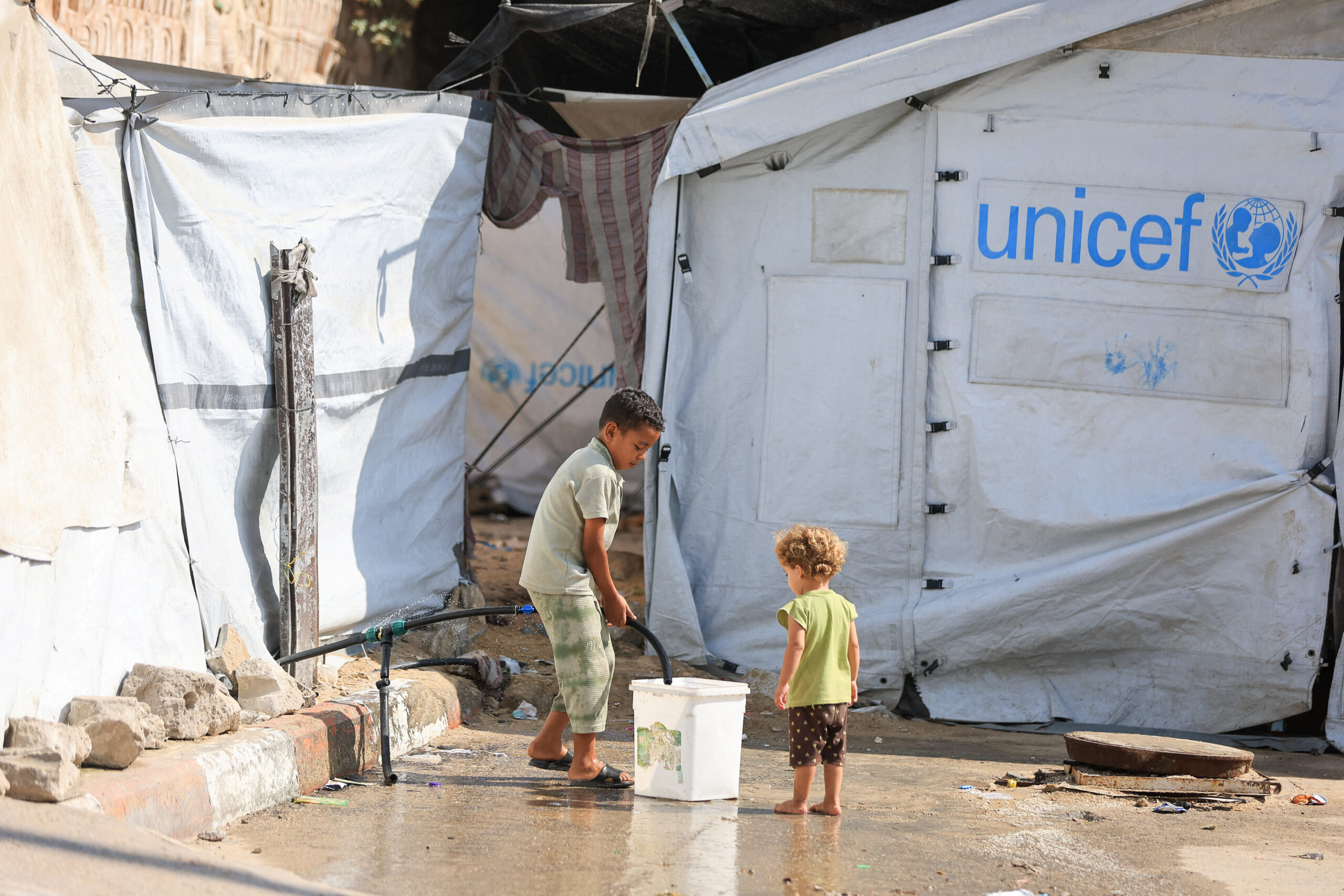
In Gaza, 2.3 million people, including a million children, remain confined to less than a third of the territory’s area, with 1.9 million displaced and two-thirds of households living in tents.

More than 30,000 tents are being held at border crossings against a need for 130,000 before winter, and roughly two-thirds of Gaza’s population face crisis-level food insecurity or worse.

More than 30 Palestinians were killed in Gaza between Aug. 28 and Sept. 7, including 8-year-old Wafaa Akila and her father.

They were killed as he drove her to school, bringing to more than 270 the number of children killed since the ceasefire was announced.

Mansour welcomed recent moves by Britain, France, Canada, Spain, the Netherlands, Ireland, Norway and Belgium to restrict settlement products and sanction those financing the settlement enterprise, as well as similar steps under consideration in Denmark, Finland, Iceland, Poland, Portugal and Sweden.

He called on the Security Council to go further, urging states to halt arms transfers, close diplomatic missions in Jerusalem, and impose travel bans and asset freezes.

“Action, not statements, will help the Palestinian people to survive Israel’s ethnic cleansing campaign,” Mansour wrote, calling it “the most organized, methodic, and broadcasted ethnic cleansing campaign in modern history.”

The letter is the 892nd that Palestine has sent to the Security Council on the situation since September 2000, according to the Palestinian mission to the UN.


Source link

Arab News | How an algae bloom exposes the fragile water link between Israel and Gaza

LONDON: The algae bloom that clogged intake pipes at Israel’s Mediterranean desalination plants in late August exposed the fragility of a water system that supplies not only Israel, but also Gaza.

Five of Israel’s six coastal desalination plants, which convert seawater into drinking water, shut down after microscopic algae clogged their intake systems, CNN reported on Sept. 4, citing Mekorot, Israel’s national water company.

The plants produce more than 80 percent of Israel’s drinking water, according to Israeli media.

Some privately owned plants have since resumed partial operations. But as of Sept. 3, only one was operating at full capacity. By Sept. 7, two plants remained closed and three others were operating at limited capacity for a ninth consecutive day, The Times of Israel reported.


Authorities responded by restricting water use, increasing withdrawals from reservoirs and the Sea of Galilee, and limiting supplies to agriculture, Haaretz reported.


Mekorot spokesperson Lior Gutman called the disruption unprecedented, according to CNN.

Scientists believe the bloom formed near Egypt’s Nile Delta before Mediterranean currents carried it north along Israel’s coast. The algae extended at least a dozen kilometers, said Edo Bar-Zeev, an associate professor of water research at Ben-Gurion University of the Negev. 

“This is the first time I saw something of this extent,” Bar-Zeev, who has tested coastal water for two decades, told CNN.

Environmental experts say untreated sewage from Gaza may be worsening the nutrient-rich conditions in which algae thrive. Gaza’s six wastewater treatment plants have been damaged or destroyed during the war, allowing untreated sewage to flow into the Mediterranean for months. 

Zalul Environmental Association, an Israeli nonprofit, said in a statement that satellite imagery suggested that pollution feeding the bloom came from both Gaza and the Nile Delta. 

But for Palestinians in Gaza, the crisis did not begin with an algae bloom, but with the destruction of water and sewage infrastructure during the war, compounded by Israeli restrictions on supplies and movement. 

Maysa Yousef, an artist and mother in central Gaza, said she first noticed green algae forming in bottles filled with Mekorot water, which is piped from Israel into Gaza through a network of transmission lines.

“Before Israel announced that the water had become contaminated, we already knew,” Yousef told Arab News. “Every morning, I filled the water bottles, then when I went to wash them in the evening, I found them all covered in algae.”

She said her husband initially dismissed her concern because the water came from Mekorot.

“I told my husband, ‘The water coming to us from Israel is contaminated. It is not clean,’” she said. “He said, ‘No, it is Mekorot water — it is desalinated and treated.’ I told him, ‘No, there is algae in it. Look inside the bottles.’”

Other Gaza residents have shared similar accounts on social media, reporting algae and small worms.

When Israel announced the desalination shutdowns in late August, Mekorot supplies to Gaza were cut off, Yousef said. For many families, the water had been one of the few comparatively safe sources available.

“Gaza relied on Mekorot water because it is close to drinking-water quality,” she said. “Some people drink it although it tastes awful.”

Her family used it for cooking and tea because safe drinking water was already scarce.

The World Health Organization said on Sept. 1 that microbiological contamination in Gaza water samples had risen from less than 6 percent in January to nearly 20 percent in August.

Since 2024, Gaza residents have faced severe water shortages. In many areas, people have reportedly resorted to makeshift latrines as sanitation systems failed.

Nearly 90 percent of Gaza’s water infrastructure, including desalination and wastewater treatment facilities, has been destroyed, according to UN agencies and media reports. Damaged sewage lines have also contaminated the aquifer on which many residents depend.

In February, the UN Office for the Coordination of Humanitarian Affairs said its partners reported that the Mekorot supply line was fully shut. The line had already been operating at reduced capacity because of two identified leaks, and repairs near a reservoir had not been completed.

Humanitarian groups have increased water trucking to affected neighborhoods, but access remains uneven. In Al-Mawasi, residents have complained that available water is visibly contaminated.

“If you put it in front of a donkey, it would refuse to drink it because it is so filthy and full of worms,” one local woman, whose name is being withheld at her request, said. “But we had no alternative. Otherwise, you die of thirst.” 

The WHO warned in early September that Gaza’s deteriorating water quality was raising the risk of disease outbreaks. Winter rains could further spread sewage and contaminated water through overcrowded displacement sites, the agency said.

Reinhilde Van de Weerdt, the WHO representative for the Occupied Territories, said microbiological contamination found in water samples had nearly tripled since the beginning of 2026.

Cases of acute watery diarrhea nearly doubled, from about 30,000 in March to more than 58,000 in August, she told a weekly briefing in Geneva. 

Yousef said her husband was among those who became ill after drinking contaminated water.

“About two weeks ago, my husband started having stomach pains,” she said. His condition worsened and he needed to go to the hospital. With no transportation available, the family walked to Al-Aqsa Martyrs Hospital in Deir Al-Balah. 

At the hospital, she said, care was being delivered in tents and essential services were scarce. After running tests, they discovered that he suffered from an inflammation of the stomach lining caused by consuming contaminated water. 

“Now he is forbidden from drinking water except imported bottled drinking water,” Yousef said. “No coffee, no soft drinks, and only limited vegetables and fruit, and so on.” 

Gaza’s health system has been devastated by the war, with hospitals and other medical facilities damaged or destroyed and restrictions limiting the entry of medicines, medical supplies and fuel.

For Gaza’s residents, the algae bloom was not an isolated environmental disruption but another sign of a broader collapse: a water system already battered by war, damaged infrastructure and the loss of basic public health protections.


Source link