voting

Trump casts Florida mail ballot as he pushes Congress to severely limit that voting option

President Trump has cast another mail ballot in Florida as he continues to publicly bash the voting method as a source of fraud and push Congress to curtail the practice.

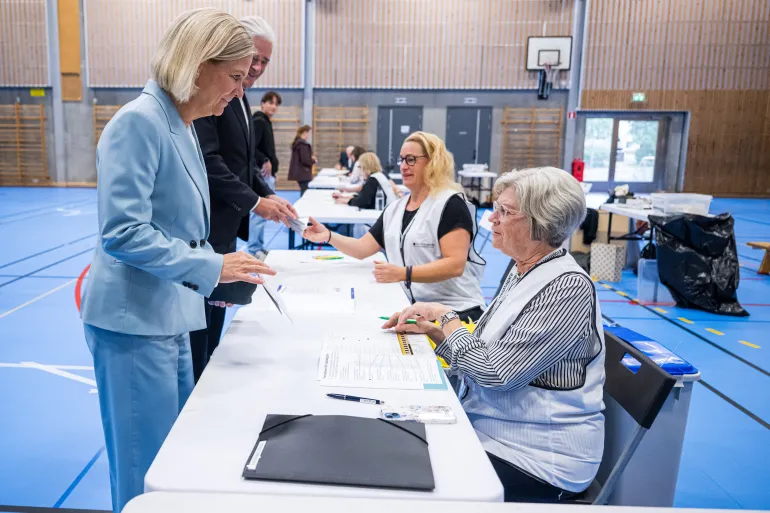
Palm Beach County voter records show the president voted by mail in a Tuesday special election for state legislative seats and that his ballot has been counted. Early in-person voting in the contest ran through Sunday, when Trump was still at his south Florida estate.

The White House said Tuesday that Trump’s ire is at states using universal mail-in voting, not individual instances of voters needing accommodations to vote by mail. A spokeswoman pushed back specifically at the idea that his voting practice contradicts his push for new federal voting rules.

“As President Trump has said, the SAVE America Act has commonsense exceptions for Americans to use mail-in ballots for illness, disability, military, or travel — but universal mail-in voting should not be allowed because it’s highly susceptible to fraud,” said White House spokeswoman Olivia Wales in a statement.

A report by the Brookings Institution published in 2025 found that cases of mail voting fraud occurred in only 0.000043% of total mail ballots cast, or about four cases out of every 10 million mail votes.

Wales added: “As everyone knows, the President is a resident of Palm Beach and participates in Florida elections, but he obviously primarily lives at the White House in Washington, D.C. This is a non-story.”

Nonetheless, Trump has in the last week called mail-in voting “cheating” and “corrupt as hell.” He is urging Congress to pass the SAVE Act. The sweeping bill would bar universal mail ballots and, as Wales noted, limit the options to a select few voters such as those with disabilities, military commitments or who are traveling on Election Day. The measure faces steep odds in the closely divided Senate even with the president’s pressure.

Trump has fixated on mail ballots since he began falsely claiming that his 2020 presidential election loss to Democrat Joe Biden was the result of fraud. Multiple U.S. courts and Trump’s own attorney general have found no evidence of fraud that affected the outcome, despite the COVID-19 pandemic increasing the share of the electorate that cast mail ballots that year.

“We’re the only country in the world that does it that way. Corrupt as hell,” Trump said last week at the White House when hosting Irish Prime Minister Micheál Martin.

Dozens of countries, including European democracies that are traditional U.S. allies, use some form of mail-in voting.

Trump said last week that the SAVE Act was the “biggest thing” pending in Washington, even as Congress and administration grapple with the Iran war and a partial shutdown of the Department of Homeland Security.

Last August, Trump used a White House meeting with Ukrainian President Volodymyr Zelensky to blast mail voting.

“We’re going to start with an executive order that’s being written right now by the best lawyers in the country to end mail-in ballots because they’re corrupt,” Trump said. “And it’s time that the Republicans get tough and stop it because the Democrats want it. It’s the only way they can get elected.”

The president, who changed his official personal residence and voter registration from New York to Florida during his first term, does not have a standing vote-by-mail request for all elections, according to the county records. That means he has to request a mail ballot for any individual election.

The ballot today includes Florida state House District 87 and Senate District 14.

Trump offered an endorsement late Monday in the House contest via his Truth Social platform.

“There is a very important Special Election tomorrow, Tuesday, March 24th, for Florida State House District 87 in beautiful Palm Beach County. … TO ALL GREAT PATRIOTS IN FLORIDA STATE HOUSE DISTRICT 87: GET OUT AND VOTE FOR JON MAPLES! Polls are open from 7:00 A.M. to 7:00 P.M.” Trump wrote, without mentioning that he had voted by mail or at all.

The Florida election comes one day after the Supreme Court heard oral arguments in a Mississippi case questioning whether states can count mail-in ballots that are postmarked by Election Day but not received until later. Trump has criticized those allowances in 14 states and the District of Columbia.

Barrow writes for the Associated Press.
Source link

Solutions to speed California vote count and make voting easy

Every two years, elite athletes compete in the Olympics, biennial plants — like carrots and onions — produce seeds and people across America look on with consternation and mounting impatience as California counts its election ballots.

The prolonged tally has become as much a part of electioneering in the Golden State as wall-to-wall advertising, high-flown promises and overstuffed mailboxes groaning beneath the weight of endless campaign fliers.

The tabulation — which can last weeks past election day — is the product, in large part, of a commendable objective: Encouraging as many people as possible to vote.

California, which mails a ballot to every eligible voter, ranks near the top of states in the ease of its elections. That’s something to be celebrated. Voting is a way to help steer the direction of our state and nation and invest, as an active participant, in its future.

Yay, participatory democracy!

Unfortunately, the lag time between election day and the final results has led to all sorts of wild, unfounded claims, peddled mainly by Republicans seeking to curry favor with the sore-losing President Trump by parroting his conspiratorial gabbling.

“They hold the elections open for weeks after election day,” House Speaker Mike Johnson said recently, falsely suggesting that chicanery cost the GOP three House seats in California in 2024. “It looks on its face to be fraudulent.”

That’s a lot of, um, hooey.

There is no rampant cheating or election fraud in California. Period. Full stop.

Still, those sorts of phony statements have deeply diminished faith in our elections and our increasingly rickety democracy.

So — what if it were possible to preserve California’s friendly voting system while, at the same time, speeding up the tabulation of its many millions of ballots?

Kim Alexander believes it’s possible to do both.

“We need to stop explaining why it’s taking so long and start figuring out how to [produce election results] in a more satisfying way,” she said. “There are a lot of things that we could do better and do differently. It just takes some creative thinking and some will.”

Simply put, “The longer it takes to count ballots, the more voter confidence erodes.”

Alexander, head of the nonpartisan California Voter Foundation, has spent more than three decades working to make the state’s elections more efficient, more transparent and more accountable.

Her interest in politics and election mechanics came about while growing up in Culver City, where her father served as a councilman and mayor.

As a 7-year-old, stationed in the garage, it was Alexander’s job to track the returns in her dad’s first campaign, toting up the numbers at an election night party while her mom, posted in the kitchen, called the city clerk for updates. Even at that young age, Alexander learned the importance of a fair and efficient tabulation process.

Over the years, she watched as her father’s political career was stymied by a Democratic gerrymander, which blocked any hopes he had of being elected to Congress or the Legislature as a moderate Republican. She saw firsthand the influence of money in politics. (Her father told her of turning away donations that came with strings attached.) That helped turn her into a political reformer.

After working as a legislative staffer and serving a stint at Common Cause, the good-government lobbying group, Alexander took over the California Voter Foundation in 1994.

As a political noncombatant, Alexander won’t say how it feels, and whether these days she’s more or less optimistic, watching as reckless attacks on our elections come from inside the White House. “I like to describe myself as a realist with high goals,” is all she’d allow.

There are good reasons why it takes California so long to count its ballots.

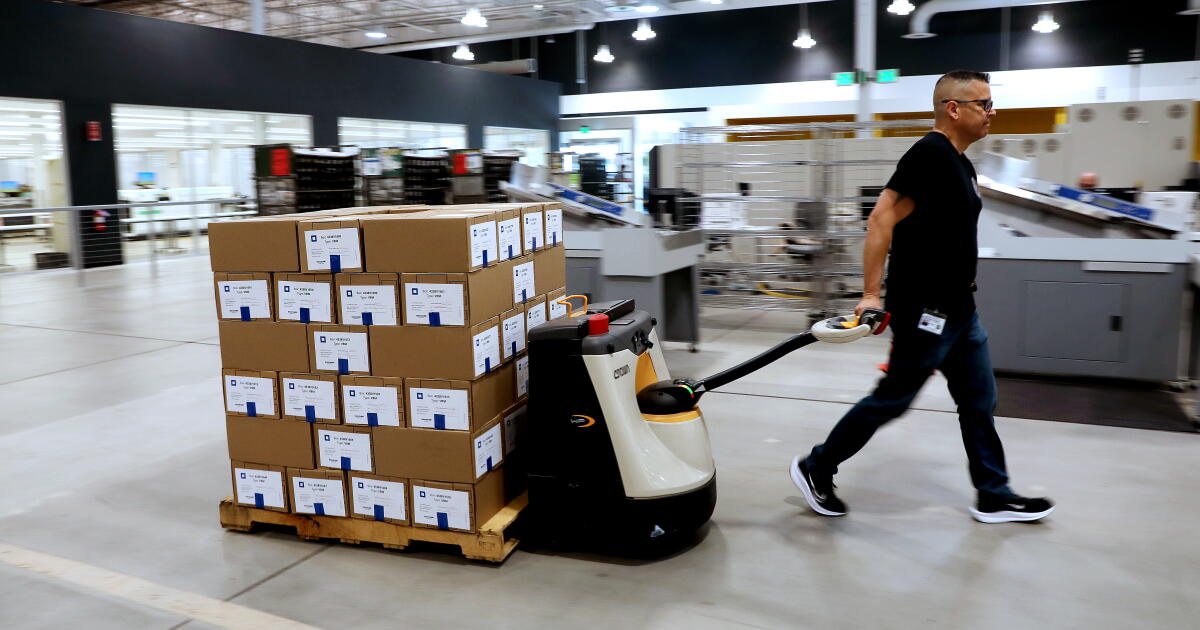
First off, there are a lot of them; more than 16 million residents voted in the last presidential election, more than the population of all but 10 states. Voting by mail has exploded in popularity and it takes longer to count those ballots, as many don’t arrive until after election day. Also, there are a number of safeguards to prevent fraud and ensure an accurate count. “We’re checking all the signatures,” Alexander said. “We’re making sure nobody votes twice.”

Simply explaining those facts can help build trust, she said. However, that won’t speed up the state’s vote counting. Here, Alexander suggested, are some things that can:

— Increase funding for California’s 58 counties to expand equipment, staff and the space needed to process ballots. In recent years, the state has been asking local election officials to do more and more without reimbursing their costs.

— Educate voters and encourage them to turn their ballots in earlier. Along those lines, a system called “sign, scan and go” allows voters to return their mail ballots in person at a designated polling place. A pilot program in Placer County found that that shaved three to four days off processing time. The system could be implemented statewide.

— Better manage California’s voter database, doing so from the top down in Sacramento, rather than having counties oversee their data and feed it into the system. That bottom-up approach creates delays and a lag time in processing ballots.

— Create “ballot swap” days to speed delivery of out-of-county ballots where they belong, also saving time. (Under California law, voters can return their ballot anywhere in the state, but it must be routed to their home county to be tabulated. That process can now take more than a week.)

The problem, apart from perennial budget pressures, is that interest in election mechanics — a technical and arcane subject if ever there was one — is episodic and fleeting. It’s like worrying about a leaky roof when the temperature is 95 degrees outside and the sun is blazing.

But even without voters clamoring to address California’s slow-poke vote count, lawmakers should act.

Gov. Gavin Newsom recently rose to defend the state’s “safe and secure elections” against one of Trump’s many unwarranted attacks. If he wants to burnish his credentials for a 2028 presidential run — which Newsom very much does — one way would be to speed up delivery of its election results.

That way the rest of the country won’t be asking again in November: What the heck’s with California?

Source link

Republicans launch a voting bill debate that could last days or even weeks

Republicans launched an unprecedented effort on Tuesday to hold the Senate floor and talk for days about a bill that they know won’t pass — an attempt to capture public attention on legislation requiring stricter voter registration rules as President Trump pressures Congress to act before November’s midterm elections.

The talkathon could last a week or longer, potentially through the weekend, as Senate Majority Leader John Thune (R-S.D.) tries to navigate Trump’s insistence on the issue and Democrats’ united opposition. Trump has urged Thune to scrap the legislative filibuster, which triggers a 60-vote threshold in the 100-member Senate, or find another workaround to pass the bill, but Thune has repeatedly said he doesn’t have the votes to do that.

Instead, Republicans intend to make a long, noisy show of support for the legislation, which would require Americans to prove they are U.S. citizens before they register to vote and to show identification at the polls, among other things. It’s a risky strategy, with no guarantee it will be enough for Trump, who has said he won’t sign other bills until the Safeguard American Voter Eligibility Act — also known as the SAVE America Act or the SAVE Act — is passed.

The floor debate is expected to eventually end with a failed vote. Republicans need 60 votes to advance the bill to a final vote, but they hold 53 seats, and all 45 Democrats and both independents, who caucus with the Democrats, oppose it.

The debate will “put Democrats on the record,” Thune said. He added that “how it ends remains to be seen.”

The Senate voted 51 to 48 Tuesday to begin the debate, with Alaska Sen. Lisa Murkowski the only Republican voting against moving forward on the bill.

In a social media post on Tuesday morning, Trump issued a warning to any Republican who doesn’t support the bill: “I WILL NEVER (EVER!) ENDORSE ANYONE WHO VOTES AGAINST ‘SAVE AMERICA!!!’”

Creating strict voter registration rules

Trump says, without evidence, that Democrats can only win in the midterms if they cheat and explicitly said Republicans need the SAVE America Act to win in November. The House passed the legislation earlier this year, but the Senate turned to other issues as it became evident that Republicans didn’t have the votes to pass it.

But Trump made clear he wasn’t satisfied and pushed the Senate to act. The Republican president has said he won’t sign other legislation, including a bipartisan housing bill backed by the White House, until the voting bill passes.

The bill contains a slew of provisions that Trump and his most loyal supporters have pushed as part of a broad effort to assert federal control over elections. It would require voters nationwide to provide proof of citizenship when they register and to show accepted voter identification when casting a ballot.

It would also create new penalties for election workers who register voters without proof of citizenship and require states to hand voter data over to the Department of Homeland Security so federal officials could screen for voters who are in the country illegally.

Trump also wants new provisions added to the bill, including a ban on most mail-in ballots.

“It’ll guarantee the midterms,” Trump said of the bill last week. “If you don’t get it, big trouble.”

Democratic opposition to the bill is firm

Democrats and many groups that champion voter access say there is little evidence of noncitizens voting and say the bill would disenfranchise millions of voters — including Republicans — by creating new burdens to prove citizenship.

It is already illegal to vote if you are not a U.S. citizen, but the bill would lay out strict new rules for paperwork that most people would have to present in person to register to vote. Opponents of the measure say those documents are not always readily available for many people and argue that it would kill voter registration efforts and unfairly penalize young people who are registering to vote for the first time, married women who change their last name and people who cannot travel to present their documents, among other groups.

While Republicans have focused on the bill’s new requirements to show identification when they show up to vote, Democrats say they are most concerned that the legislation would allow the federal government to take voters off the rolls.

Senate Minority Leader Chuck Schumer (D-N.Y.) said that Democrats are not opposed to voter identification but “this is about purging the voter rolls in a massive way, so you never even get the chance to show a voter ID when you showed up to vote.”

Expect a show on the Senate floor

Trump, backed by Republican Sen. Mike Lee of Utah, has pushed for a talking filibuster, which would force Democrats to talk for days or weeks to delay passage of the bill. But Thune and the larger GOP conference rejected that idea, arguing that it would end in failure after giving Democrats a stage and the opportunity to offer endless amendments, potentially adding their priorities to the bill.

Republicans are instead taking over the floor with their own speeches, proceeding under regular order but operating outside the normal time limits that are customary when debating legislation. Democrats are expected to answer with their own procedural hijinks, potentially forcing Republicans to come to the floor at all hours for votes, meaning they will need to stay close to the Senate for the duration.

Lee said last week that it’s unclear how it will all play out. He said he thinks Trump “understands that we need to put in an aggressive effort here.”

“And a lot of that,” he said, “is going to have to be determined in real time as we go about it.”

The extent of Trump’s satisfaction with the process, Lee said, “will depend on whether, in his view, we gave it everything we have.”

On Monday night, Lee was rallying voters in Trump’s base on X.

“Once we’re on this bill,” he wrote, “we must stay on it until it’s passed into law.”

Jalonick writes for the Associated Press. AP writer Lisa Mascaro contributed to this report.

Source link

Decades after Selma, organizers worry about fate of Voting Rights Act

Sixty-one years after state troopers attacked civil rights marchers on the Edmund Pettus Bridge in Selma, thousands gathered in the Alabama city this weekend amid new concerns about the future of the Voting Rights Act.

The March 7, 1965, violence that became known as “Bloody Sunday” shocked the nation and helped spur passage of the landmark legislation that dismantled barriers to voting for Black Americans in the Jim Crow South.

But this year’s anniversary celebrations — events ran all weekend, including a commemorative march across the bridge Sunday — come as the U.S. Supreme Court considers a case that could limit a provision of the Voting Rights Act that has helped ensure some congressional and local districts are drawn so minority voters have a chance to elect their candidate of choice.

“I’m concerned that all of the advances that we made for the last 61 years are going to be eradicated,” said Charles Mauldin, 78, one of the marchers who was beaten that day alongside civil rights icon John Lewis and others.

Justices are expected to rule soon on a Louisiana case regarding the role of race in drawing congressional districts. A ruling prohibiting or limiting that role could have sweeping consequences, potentially opening the door for Republican-controlled states to redistrict and roll back majority Black and Latino districts that tend to favor Democrats.

Democratic officeholders, civil rights leaders and others have descended on the Southern city to pay homage to the pivotal moment of the civil rights movement and to issue calls to action. Like the marchers 61 years ago, they must keep pressing forward, organizers said.

Former Alabama state Sen. Hank Sanders, who helped start the annual commemoration, said the 1965 events in Selma marked a turning point in the nation and helped push the United States closer to becoming a true democracy.

“The feeling is a profound fear that we will be taken back — a greater fear than at any time since 1965,” Sanders said.

U.S. Rep. Shomari Figures won election in 2024 to an Alabama district that was redrawn by the federal court. He said what happened in Selma and the subsequent passage of the Voting Rights Act were “monumental in shaping what America looks like and how America is represented in Congress.”

“I think coming to Selma is a refreshing reminder every single year that the progress that we got from the civil rights movement is not perpetual. It’s been under consistent attacks almost since we’ve gotten those rights,” said Figures, a Democrat.

In 1965, the Bloody Sunday marchers led by Lewis and Hosea Williams walked in pairs across the Selma bridge headed toward Montgomery. Mauldin, then 17, was part of the third pair behind Williams and Lewis.

At the apex of the bridge, they could see a sea of law enforcement officers, some on horseback, waiting for them. But they kept going. “Being fearful was not an option. And it wasn’t that we didn’t have fear, it’s that we chose courage over fear,” Mauldin recalled in a telephone interview.

“We were all hit. We were trampled. We were tear-gassed. And we were brutalized by the state of Alabama,” Mauldin said.

Source link