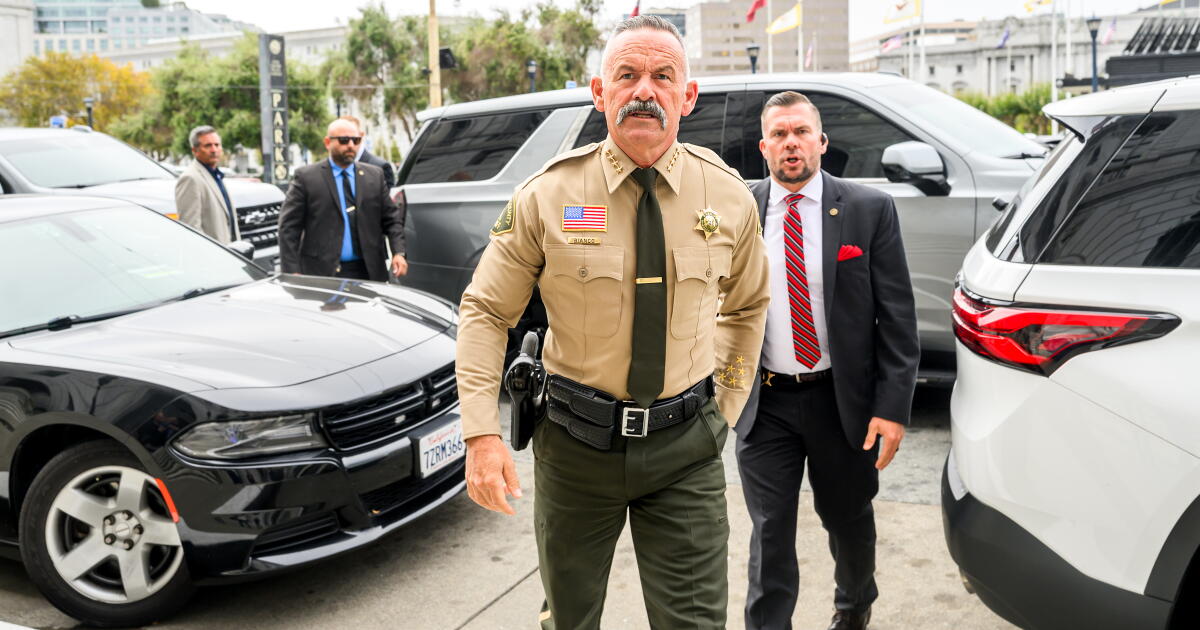
Ballot seizure by Riverside County sheriff was ‘unlawful,’ California Supreme Court rules
The California Supreme Court excoriated Riverside County Sheriff Chad Bianco over his seizure of hundreds of thousands of Proposition 50 ballots earlier this year, ordering the former gubernatorial candidate to immediately hand over all remaining material in a pair of scathing decisions on Thursday.
“We hold that the seizure of the ballots was unlawful,” wrote Chief Justice Patricia Guerrero. “While allegations of election improprieties are a very serious matter, our Elections Code contains numerous established mechanisms for investigating and proving misconduct that do not compromise the integrity of voted ballots — contrary to the means employed here.”
The ruling comes less than two weeks before Californians will start casting ballots in the race for governor and a handful of hotly contested congressional midterms — nationally watched elections that would be vulnerable to similar interference unless the court gave clear orders, advocates warned at oral arguments last month.
“It’s bound to be repeated again,” said Chad W. Dunn of the UCLA Voting Rights Project, which led the first of two election interference suits against Bianco, a popular MAGA personality and former Republican candidate for governor.
Bianco has long flirted with President Trump’s election fraud conspiracy movement. Though the ballot seizures in February were widely seen as a campaign stunt, the legal theory behind them — that local lawmen can commandeer voter materials from elections officials, and that sheriffs are unanswerable to officials who outrank them, including attorneys general — belongs to a larger “constitutional sheriffs” ideology.
California‘s seven Supreme Court justices appeared by turns perplexed by and incredulous of those theories during oral arguments last month.
“You are walking into a very dense thicket of very specific laws that govern elections in particular and I think it’s a very established cannon of interpretation that the specific trumps the general,” Justice Goodwin H. Liu said.
The ballot battle emerged from a Riverside County pilot program meant to boost voter confidence, a handwritten tally that ultimately fell about 46,000 votes short of the official count, sparking claims of fraud.
Riverside County Registrar of Voters Art Tinoco met with the county board of supervisors and the citizens’ group behind the claim and carefully explained how the discrepancy emerged. Yet, Bianco pursued warrants to seize more than 650,000 ballots, alleging they were evidence in an investigation of wide-ranging election fraud.
When he learned of the warrants, California Atty. Gen. Rob Bonta ordered Bianco to stand down. Instead, the sheriff accelerated his plans, dispatching armed deputies from Riverside County’s Special Investigations Bureau, Emergency Response Team and SWAT unit to sweep up the votes.
Later, Bianco directed his underlings to begin counting those ballots by hand — a potential felony under state law, which forbids anyone other than an election official from so much as touching a ballot container.
When Bonta again ordered him to stop, Bianco argued the attorney general had no authority to command him, later claiming in court that the law conferred only an “advise and consent” role.
In fact, California courts have spent more than a century delineating power between the state’s attorney general and local sheriffs and prosecutors. Voters took the matter a step further in 1934, endorsing a ballot initiative that clearly named the attorney general as California’s top law enforcement official, and put the state’s other lawmen beneath him.
In a footnote, justices also took a swipe at Bianco’s initial effort to have the case tossed for lack of standing — a move apparently undertaken on the legal advice of an elaborate artificial intelligence hallucination.
“In his preliminary briefing, Bianco challenged petitioners’ standing based on misquoted passages from, and an incorrect recitation of our holding in, Common Cause v. Board of Supervisors,” Guerrero wrote. “We disapprove of the improper use of artificial intelligence tools, which apparently contributed to the significant error that occurred here and remind counsel of attorneys’ professional duties of competence and candor to the court.”