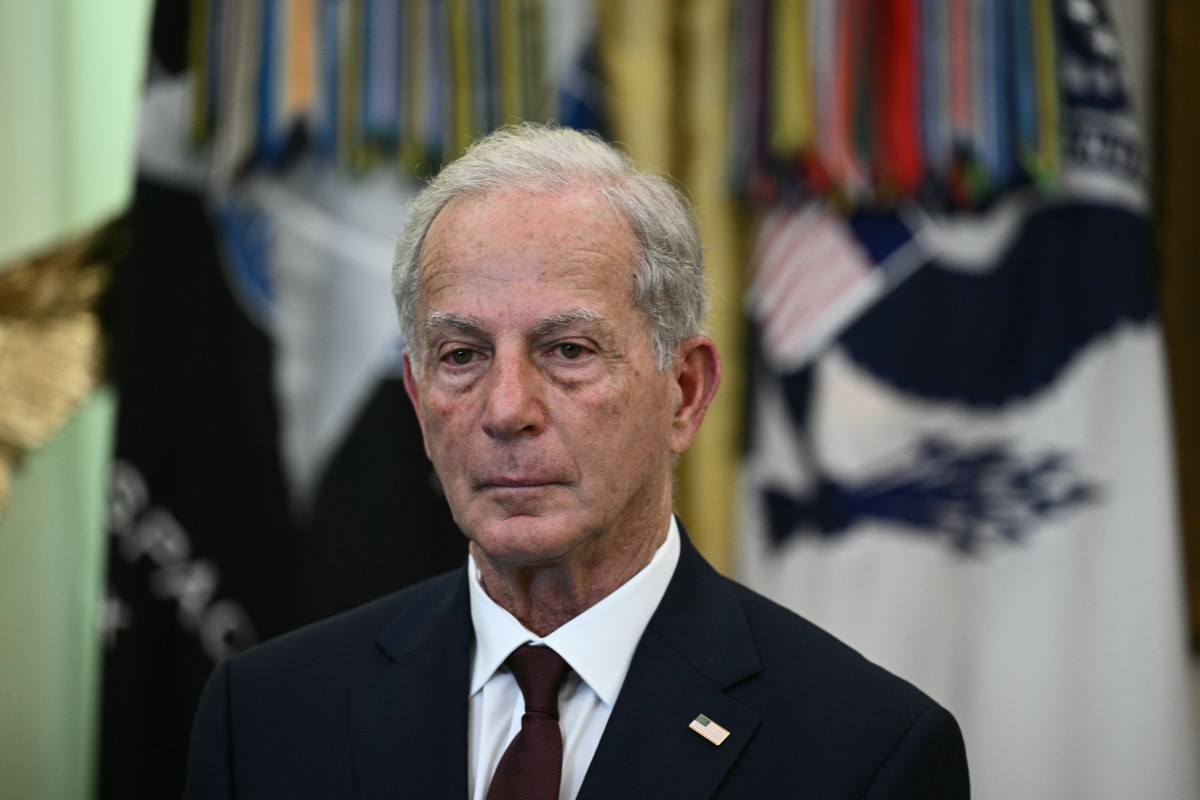
visits

House Democrats ask new ICE director to roll back policy on visits

Dozens of House Democrats are asking the new director of Immigration and Customs Enforcement to roll back a policy that they say hinders their ability to speak with detainees during oversight visits.

The new policy requires that lawmakers identify detainees by name at least two business days before a visit and provide a signed consent form from each detainee. It’s the latest point of conflict in an ongoing battle over when and how lawmakers can inspect immigration facilities.

In a letter Thursday to acting ICE Director David Venturella, Rep. Mike Levin (D-San Juan Capistrano) and 77 other members of Congress, including two dozen from California, argued that they need to conduct constant oversight of immigration facilities because of historic levels of reports regarding the mistreatment of detainees, deaths in custody and substandard facility conditions.

“This Administration has enabled a revolving door of arbitrary policies, directives, and guidance on member access to facilities or on communication with detainees designed to hinder any productive oversight,” they wrote.

The letter was written in response to the new policy, which was outlined in a memo last month.

In the letter, Levin and the other members wrote that detainees have a hard time accessing the visitation form because it is at times unavailable at a detention center’s law library. They said it limits their ability to speak broadly with detainees, particularly those from vulnerable populations, such as the elderly.

Detainees previously used a sign-up sheet to meet with members of Congress or just started talking to detainees they encountered during facility tours.

In the memo outlining ICE’s new policy, then-acting director Todd Lyons said the increased visits by members of Congress have become a burden and a time suck. Homeland Security didn’t immediately reply to a request for comment, but previously said that the policy doesn’t prevent lawmakers from speaking with detainees.

Levin said the increase in visits was necessary because the agency slashed staffing of its oversight offices. The letter notes that for next fiscal year, the president requested additional cuts to the Homeland Security Office of Inspector General.

“These actions, coupled with the constant changes to policies surrounding member access to facilities, reveal a clear attack on the levers that ensure government transparency at every level,” the members wrote.

Democratic House members sued the Trump administration last July after they were repeatedly denied access to immigrant detention facilities in California and across the country.

Homeland Security officials previously implemented a policy requiring lawmakers to give seven days’ notice before a visit, but that policy was temporarily blocked in federal court.

This week, lawyers said a Belizean man who helped organize hunger strikes at the Adelanto ICE Processing Center was moved to facilities out of state and scheduled to be deported after he spoke to three members of Congress about conditions at the detention center in San Bernardino County.

Source link

Zelensky visits Estonia for summit of Baltic states to boost support

Estonian Prime Minister Kristen Michal, left, welcomes Ukrainian President Volodymyr Zelensky at a summit in Tallinn, Estonia, Tuesday. Photo by Valda Kalnina/EPA

June 9 (UPI) — Ukrainian President Volodymyr Zelensky and First Lady Olena Zelenska traveled to Talinn, Estonia, Tuesday to take part in the Ukraine-Nordic-Baltic Eight summit and meet with other regional leaders.

Zelensky is boosting diplomatic efforts as he pushes for more support for Ukraine’s war against Russia.

The Ukrainian president met Tuesday with Finnish Prime Minister Petteri Orpo, Latvian Prime Minister Andris Kulbergs and Swedish Prime Minister Ulf Kristersson, his spokesperson Sherhii Nykyforov told the Kyiv Independent. The meetings covered issues like strengthening Ukraine’s air defense and advancing the Prioritized Ukraine Requirements List program, which allows NATO allies to finance buying of U.S. weapons.

Zelensky also met with Estonian President Alar Karis and thanked the country and others in the region for their continued support.

Zelensky also emphasized the need to coordinate positions ahead of upcoming summits this summer, including the European Union, G7 and NATO summits.

“June and July this year may determine a lot,” he told reporters at a press conference.

“For a cease-fire to take place, in my view, it would be better to have a meeting at the leadership level. Who? Certainly Ukraine, Russia and definitely Europe,” the Ukrainian state news service Ukrinform reported Zelensky said. “It would be desirable for the United States of America to be there as well. Why Europe? Because we are in Europe — that is the answer. Because this is our land, this is our continent, and we must be certain that life will be safe tomorrow, no matter what.”

He added that Ukraine has the political will to negotiate, but Russia hasn’t shown that.

“The 21st package of EU sanctions is necessary. And today we also discussed that the Baltic Sea and the North Sea must not be a free zone for the Russian shadow fleet. And all decisions that curtail the activity of Russian tankers are decisions that benefit not only Ukraine but all of Europe,” the Ukrainian president said.

Zelensky recently sent a letter to Russian President Vladimir Putin asking to meet face to face for peace talks, but Putin declined.

Troops in landing craft approach Omaha Beach on D-Day in Normandy, France, on June 6, 1944. D-Day was the largest seaborne invasion in history and turned the tide of World War II. Photo by UPI | License Photo

Source link