visas

Iran World Cup squad members apply for US, Canada visas in Turkiye | World Cup 2026 News

A number of players submitted visa applications in person at the US embassy in Ankara ahead of their training camp.

Iran’s football team have attended visa appointments in Turkiye ahead of the World Cup, with the whole squad applying for Canadian visas and some players also submitting applications for entry into the United States.

A number of players submitted applications in the Turkish capital Ankara on Thursday, an Iranian football federation official told Reuters news agency.

The whole squad attended appointments for Canadian visas, while some players who had not applied for American visas before the US and Israel attacked Iran in February also submitted their visa applications in person at the embassy.

Some foreign-based Iranian players joined the squad in Ankara before later travelling to the team’s training camp in Antalya on Turkiye’s Mediterranean coast, the official said.

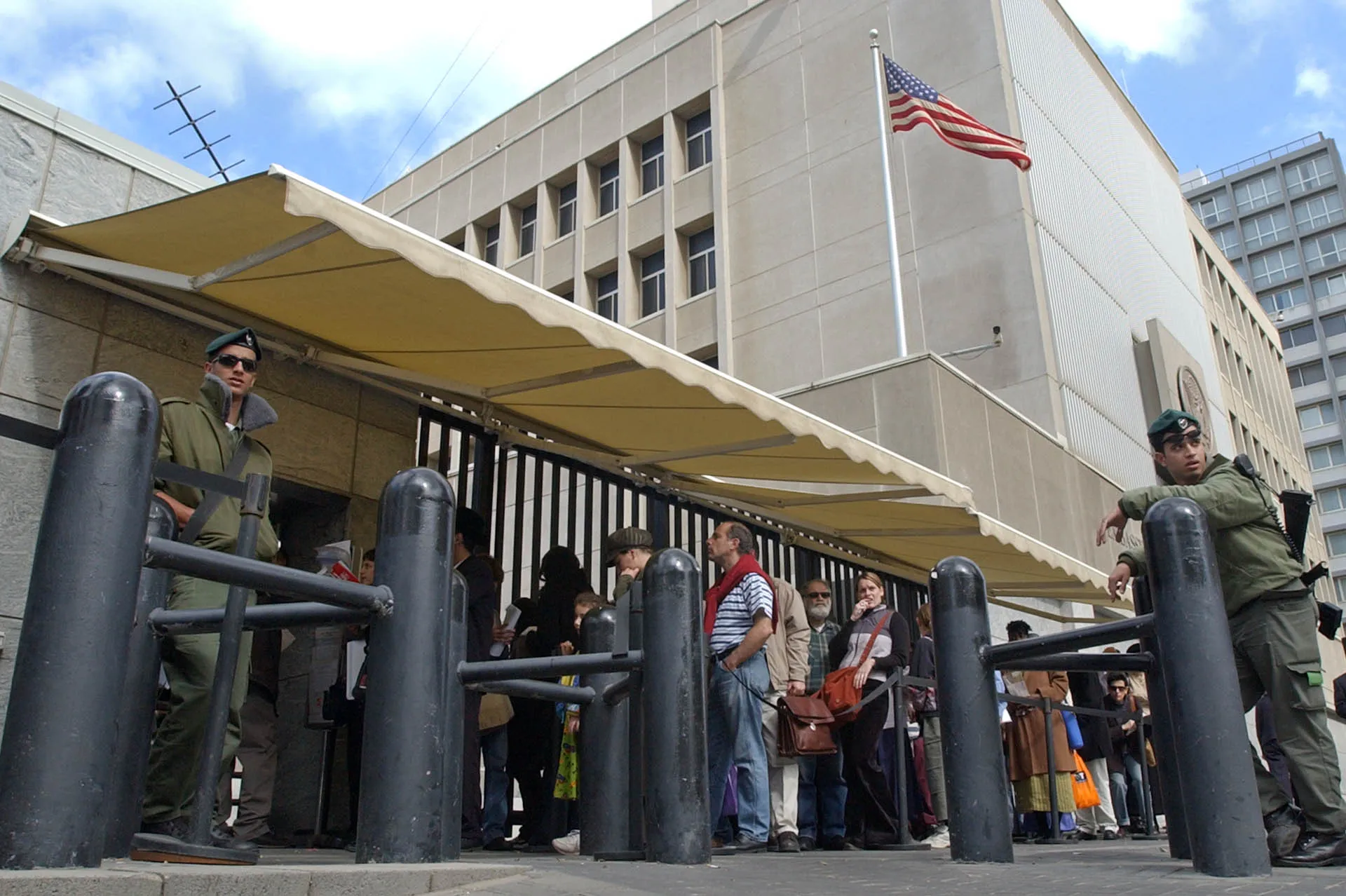
Iran's national football team players and members of their delegation leave the US Embassy in Ankara after submitting their visa applications ahead of the 2026 FIFA World Cup, on May 21, 2026. The Iranian football federation vice-president said on May 20, 2026 he was "very confident" in FIFA's protocols as the team prepare to play at the World Cup in the United States. The players are to stay several weeks before heading to the World Cup that is being co-hosted by the US, which began bombing Iran on February 28 alongside Israel, sparking a wider war in the Middle East. (Photo by Adem ALTAN / AFP)
The players and delegation members submitted US visa applications in the Turkish capital [Adem Altan/AFP]

The World Cup will ⁠⁠be cohosted by the US, Canada and Mexico, with Iran due to play all three of their group-stage matches on the US West Coast.

Iran are scheduled to face New Zealand on June 15 and Belgium on June 21 in Los Angeles before taking on Egypt in Seattle five days later. They would require access to Canada if they progress to the knockout rounds.

Iran is holding a pre-tournament camp in Turkiye following the suspension of the Iranian domestic league in March, leaving many players short of match fitness.

The team trained in Antalya earlier this week as coach Amir Ghalenoei attempted to prepare his squad after most domestic-based players went seven weeks without competitive football during the suspension of the Iranian league.

Iran qualified early for the expanded 48-team World Cup, but preparations have been overshadowed by uncertainty over travel and security arrangements following the US-Israeli war on Iran.

Iran’s football federation had previously said US visa applications for the team would be handled in Turkiye after discussions with FIFA.

Iran are due to play Gambia in a friendly on May 29 before Ghalenoei names his final 26-man World Cup squad by FIFA’s June 1 deadline.

Source link

U.S. restricts visas for 13 linked to fentanyl online pharmacy

May 13 (UPI) — The United States announced visa restrictions on 13 people linked to a U.S.-sanctioned, India-based online pharmacy that the Trump administration accuses of selling Americans hundreds of thousands of counterfeit prescription pills laced with fentanyl.

The people targeted by the State Department on Tuesday were identified as being “close business associates of KS International Traders and its owner.”

The U.S. Treasury sanctioned KS International and Mohammad Iqbal Shaikh, 34, in September. Shaikh was also among 19 people indicted in New York in the fall of 2024 on charges of selling counterfeit, fentanyl-laced pills to Americans over the Internet and via encrypted messaging platforms.

The targeting of KS International comes amid the Trump administration’s broader crackdown on drug smuggling. Among tactics employed was President Donald Trump‘s December 2025designation of illicit fentanyl and its core precursor chemicals as weapons of mass destruction.

In June, Secretary of State Marco Rubio announced a new policy to impose visa restrictions on drug traffickers, their family members and close personal and business associates.

State Department spokesperson Thomas Pigott said Tuesday that the barring of entry to the 13 individuals “underscores the United States’ and India’s enduring and shared commitment to dismantling illicit drug entities and disrupting trafficking networks that harm Americans.”

“Those complicit in poisoning Americans will be denied entry to the United States,” he said in a statement.

The Trump administration has increasingly used visa restrictions across several policy areas, from punishing Haitian government officials and members of criminal organizations accused of obstructing the nation’s fight against terrorist gangs to Nicaraguan citizens believed to be facilitating irregular immigration into the United States.

Source link

US State Department restricts visas for those who ‘support adversaries’ | Migration News

The State Department in the United States has announced it is restricting visas for “individuals from countries in our hemisphere who support our adversaries in undermining America’s interests in our region”.

Thursday’s statement underlined that 26 individuals had already seen their visas stripped as part of the policy.

Recommended Stories

list of 3 itemsend of list

The State Department’s stance comes as President Donald Trump seeks to expand US influence across the Western Hemisphere, as part of a platform he calls the “Donroe Doctrine”, a riff on the 19th-century Monroe Doctrine.

Since taking office for a second term, Trump has taken an aggressive stance towards stopping drug trafficking across the Americas, threatening economic penalties and military action for noncompliance.

He has also sought to check China’s growing sway over the region, as an increasing number of Latin American countries tighten their bonds with the Asian superpower.

The State Department explained that the expanded visa restrictions would penalise those who “knowingly direct, authorise, fund, or provide significant support to” US adversaries in the Western Hemisphere.

“Activities include but are not limited to: enabling adversarial powers to acquire or control key assets and strategic resources in our hemisphere; destabilising regional security efforts; undermining American economic interests; and conducting influence operations designed to undermine the sovereignty and stability of nations in our region,” the statement added.

The language was vague, never mentioning China or the campaign against drug-trafficking cartels.

But it continues a trend under the Trump administration to revoke visas from foreign critics and political opponents.

Last year, for instance, the administration sought to revoke visas for pro-Palestine protesters, claiming their presence could have foreign policy consequences for the US.

More recently, the administration has terminated the immigration visas for at least seven individuals with familial ties to the Iranian government or individuals connected to the 1979 Iranian revolution.

Revoking visas

The statement on Thursday did not identify the 26 individuals facing visa restrictions as part of the expanded policy.

But it cited the same authority under the Immigration and Nationality Act that the Trump administration has used to attempt to deport pro-Palestine student protesters last year.

Under the law, the entry of foreign nationals can be restricted when the secretary of state has reason to believe they pose “potentially serious adverse foreign policy consequences for the United States”.

While the administration has abandoned deportation efforts against some of the targeted individuals, at least two, Mahmoud Khalil and Badar Khan Suri, continue to face expulsion.

More recently, the administration has terminated the immigration visas for at least seven individuals with familial ties to the Iranian government or individuals connected to the 1979 Iranian revolution.

Already, some figures in Latin America have seen their visas revoked over political disagreements with the US.

In July, Brazilian officials involved in the prosecution of former right-wing President Jair Bolsonaro saw their US visas withdrawn. They included Brazilian Supreme Court Justice Alexandre de Moraes, a frequent target of right-wing ire.

Then, in September, the Trump administration stripped Colombian President Gustavo Petro of his visa after he made an appearance at the UN General Assembly that was critical of US policy.

The State Department, at the time, denounced Petro for “reckless and incendiary actions”. He was later invited to visit the White House in February, as part of a detente with Trump.

Visa restrictions have been part of Trump’s larger policy to exert pressure on foreign groups and limit immigration into the US.

Earlier this year, the administration enacted immigrant visa bans on dozens of countries, citing both national security and alleged stresses on social services.

Trump has also sought to take a more militaristic approach towards Latin American governments it deems as adversarial, referring to the whole of the Western Hemisphere as the US’s “neighbourhood”.

In January, the US launched an attack on Venezuela that culminated in the abduction and imprisonment of Venezuelan leader Nicolas Maduro, and it has also initiated an ongoing fuel blockade against Cuba.

Some of Trump’s actions in the region have been deadly. The Venezuela attack left dozens of Cubans and Venezuelans killed. And since September, the Trump administration has conducted at least 51 lethal strikes on alleged drug-smuggling boats in the eastern Pacific Ocean and Caribbean Sea.

The death toll in that campaign has reached at least 177 people. Rights groups have decried the attacks as extrajudicial killings.

But the Trump administration has labelled multiple drug cartels as “foreign terrorist organisations” and has argued they are seeking to destabilise the US through the drug trade.

Source link