Venezuelan Opposition

Is Venezuela Getting Ready for Post-Maduro Elections?

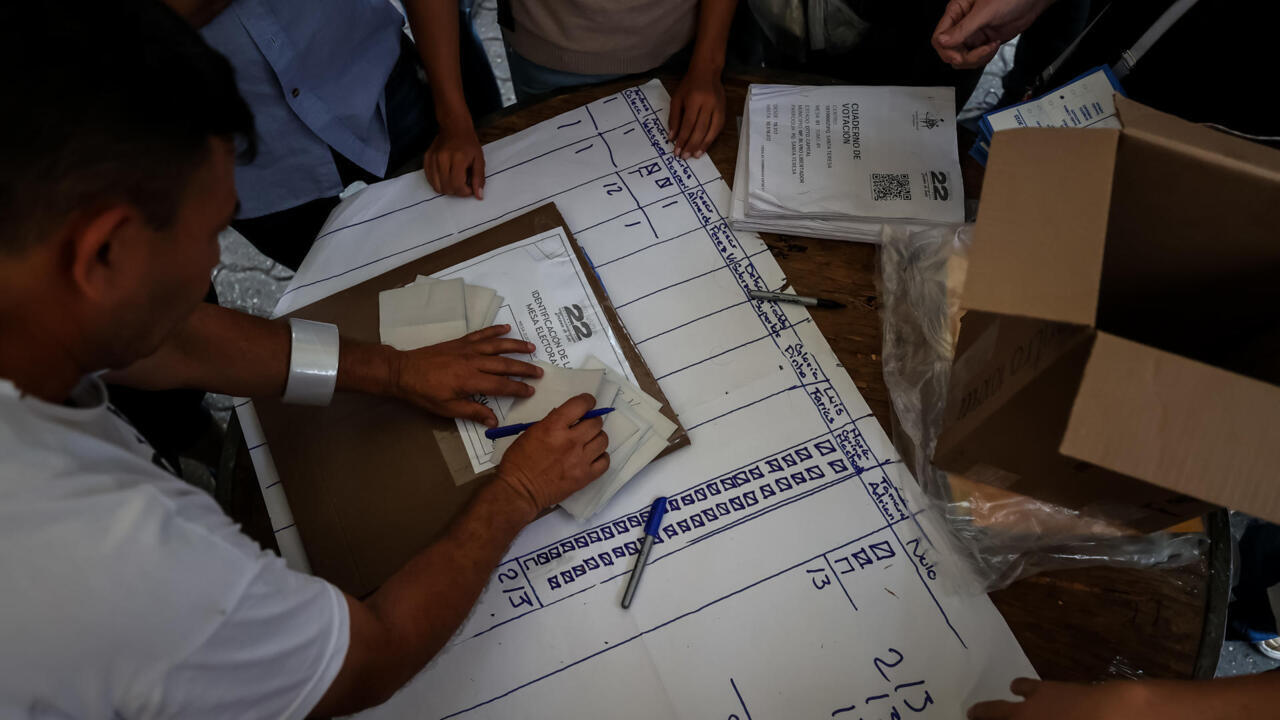
Even if we aren’t yet in a place where we can say that a democratic transition has begun, election talk is back, and with it, the activity of political parties, as many political prisoners are being released and some being granted full freedom. The old reflexes of electoral politics, that constitute the backbone of all political forces in Venezuela, are kindling again after the long, hard night of brutal repression that came with the steal of the July 2024 presidential election. The unsaid assumption is that Edmundo González Urrutia already did his historical role, and that fresh elections with a new CNE and a new TSJ must come to effectively start a democratic transition and put in place an essential component that has been missing for years, and is still missing after January 3: the people’s will.

A recent poll by Gold Glove Consulting, based on 1,000 in-person interviews on the ground, found that María Corina Machado would capture 67% of the vote against Delcy Rodríguez in a hypothetical head-to-head, although the latter’s tenure in office isn’t met with complete rejection by many respondents. The idea of that matchup remains a cherished possibility among Machado’s staunch supporters, who would love to see her being allowed to run in a presidential election against PSUV for the first time. But with the opposition leader still in Washington DC, and a domestic political ban still in place, others have emerged from the opposition dugout to stir up the yearning for change that the 2024 electoral campaign awakened.

People have seen how presidential pre-candidate Delsa Solórzano and Primero Justicia leader Juan Pablo Guanipa, visible members of Machado’s campaign entourage in 2024, have come back to give press conferences and even stir the pot, challenging the newly enacted amnesty law and demanding more releases (which initially earned Guanipa a few days in house arrest). In a new effort to embody a non-aligned or centrist lane, former presidential candidate Enrique Márquez showed up at the US Congress in a seemingly staged TV moment meant to let Trump boast about the success of his Venezuela operation. There has been speculation about whether Márquez was being considered as the White House’s favorite for a transition, and the Zuliano politician started to speak like a man with a mission, even if he got only a tiny fraction of the vote in 2024 (minor runners including Márquez, Antonio Ecarri, and the faux AD candidate Luis Eduardo el Burro Martínez together garnered 2%).

The most coherent voice in the Trump administration, Secretary Marco Rubio, said last week during a summit in St. Kitts and Nevis that “ultimately, in order for them [us Venezuelans] to take the next step to truly develop that country and to truly benefit from that country’s riches for the benefit of their people, they will need the legitimacy of fair, democratic elections.” Other US officials had mentioned that the US expects to see elections taking place in Venezuela around 2027. They know that a legitimate government—and Delcy Rodríguez’s local management is not one—would not only give more confidence to foreign investors, especially if such a government is not burdened with a history of expropriations as chavismo is. It would be free of sanctions and have access to multilateral organizations, financial aid, international arbitrage, commercial treaties, and diplomatic and commercial relations with everyone. Machado’s message last weekend, announcing plans to return to Venezuela in the coming weeks, revitalized electoral spirits in parts of the country and gave opposition parties fodder to build suspense on social media.

Could Vente be Venezuela’s largest movement? Potentially. Machado remains undisputed as the country’s dominant political leader.

As calls for the release of political prisoners evolve into a broader push for a true democratic transition, the country’s political heat map is beginning to warm up. Let’s examine how party movements are re-emerging: who the opposition is coalescing around, the numbers that might back each group, and which players are positioned to exert influence.

Vente Venezuela

Machado’s party was founded in 2012, and after a decade being a marginal group in the anti-Maduro coalition, it managed to exploit María Corina’s 2023-2024 electoral marathon by catching a wave of new recruits, which is not uncommon when a party with a suddenly popular leader takes the reins of the opposition. But this transformation is not just a product of public disaffection with the mainstream G4 parties (the interim government of Guaidó being the latest, crucial example). The Machado phenomenon and her connection with deprived Venezuelans produced the country’s most formidable electoral force since Hugo Chávez, and its performance in 2024 can put Vente among the strongest parties in the country. Except for a minor detail: the CNE has never allowed it to register as a political party—if elections were held in Venezuela tomorrow, its candidates would need to use the MUD slot to run (unless the likes of Capriles and Rosales also decided to support them).

Could Vente be Venezuela’s largest movement? Potentially. Machado remains undisputed as the country’s dominant political leader (with a 52% approval rating according to the Gold Glove Consulting survey) and her party saw significant growth two years ago. Of course, these organizations don’t disclose their actual membership numbers, and if they did so (even before an internal audience) they would almost certainly inflate the figures. Whatever the scale of the actual growth, Machado is faced with two realities. Number one: Vente’s human capital is unable to cover the country’s 30 thousand polling stations, and as in 2024, it would need help from other experienced parties and regional platforms to attempt a repeat of the 28J feat. And number two: Venezuelan politics is waking up from a calamitous hangover lasting from the last presidential vote to the US intervention on January 3rd, a period where Machado’s party bore the brunt of State terror.

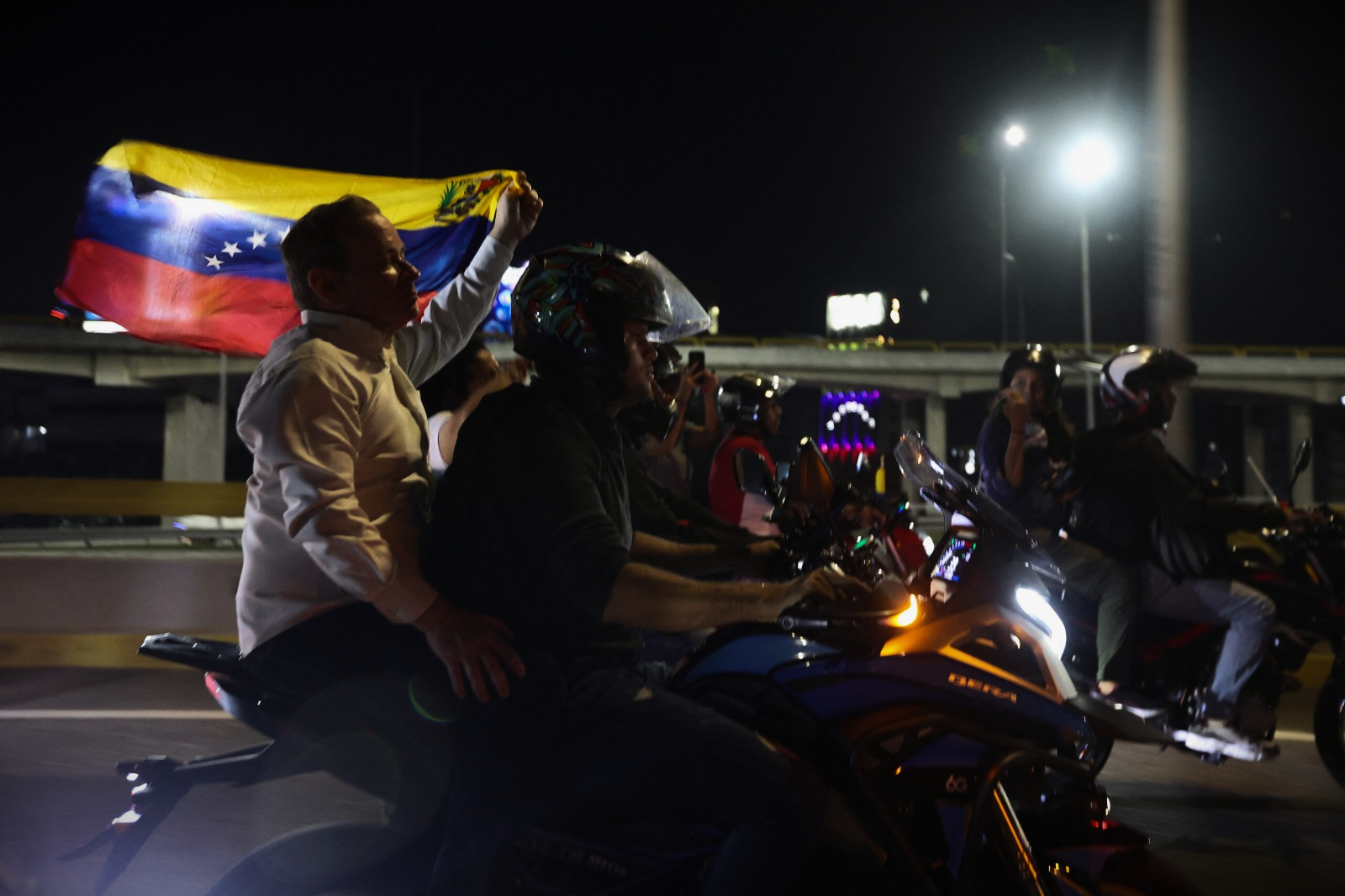
Around 150 members were arrested soon after the CNE declared Maduro the elected president, while Machado had to hide and her top aides were besieged in the Argentinean Embassy in Caracas. Since Delcy took power, however, Vente Venezuela and other parties have turned the release of political prisoners into a public celebration, which is both a challenge to the security apparatus still in place, and a recognition for much-needed activists (and their families) after months of despair, where it was natural for many of them to question whether being in politics was worth the risk. Reassured by the level of American surveillance on the interim post-Maduro management, Vente activists have started to meet again, and you can see how they are summoning small groups in places like Margarita municipality Antolin del Campo, Guama in Yaracuy or Monay in Trujillo. In Portuguesa, María Oropeza, the local leader who became famous when she broadcasted her detention in Acarigua, has openly spoken about how to rebuild a true democracy. In Mérida, they gathered an even larger crowd, while Machado summoned party supporters in the US for a meeting in Washington DC. She has insisted she is ready to lead a genuine transition, offering her own timeframe and reform goals to challenge other stakeholders in the current political process. On February 5, she told Politico that elections could be organized within nine to ten months, not with the existing electronic machines, but by shifting to a manual voting system that for over a decade she has claimed would make domestic elections more effective and transparent.

Acción Democrática, Primero Justicia & Voluntad Popular

Acción Democrática is a historical party in a permanent state of survival-through-maneuvering; the other two (Primero Justicia and Voluntrad Popular) were once led by charismatic young figures meant to be a new generation of politicians that would lead the country into a new era and failed because dictatorship. Today, they all seem to be placing their cadres at the service of a Machado-led democratic transition. Two days ago in Valencia, AD’s Henry Ramos Allup said in front of his national leadership board that the party would endorse Machado in a presidential election—“with a dedicated and generous campaign”—if that’s what it took to get rid of the Delcy Rodríguez regime. Party Vice President Édgar Zambrano didn’t look too happy and didn’t applaud, but Ramos Allup is the boss, one that knows very well that AD could again fall to irrelevance if Maria Corina gave him the Capriles treatment (bear in mind that Acción Democratica was the last mainstream party that decided to boycott the May 2025 regional vote, where Capriles and Un Nuevo Tiempo formed an ephemeral alliance that could not win a single governorship while Machado called for abstention, something she later labelled an outright victory).

It’s no wonder that Primero Justicia members are relieved to know they have a national leader that has the charisma to be a presidential contender at some point.

The other two parties were also hit hard during the post-election crackdown, with leaders from recent years like María Beatriz Martínez and Paola Bautista from PJ still in hiding or exiled, or Freddy Superlano as an emblematic victim of forced disappearance and abuse. But these organizations will benefit from having Juan Pablo Guanipa and now Superlano roaming the streets again. In the case of Guanipa, who María Corina considers a dear friend (not just an ally), he has the potential to be more than a supporting actor in a democratic transition. Many opposition supporters see him as a brave, honorable figure that never bent the knee before chavismo, with tons of energy to address crowds and journalists whenever he has a chance, even instants after setting foot outside El Helicoide for the first time in eight months.

The re-arrest episode a few weeks ago only showed he’s still a man eager to talk truth to power sin medias tintas, like demanding the release of all political prisoners and the return of fellow politicians in exile. It’s no wonder that PJ members are relieved to know they have a national leader that has the charisma to be a presidential contender at some point—somewhere Julio Borges couldn’t get to, and a position a now-ostracized Henrique Capriles couldn’t cement—but we’ll see where that leaves him as long as María Corina tries to land in Miraflores. Machado will require the organizational structures these leaders command once an electoral process begins to unfold. In turn, these leaders recognize that Machado represents their best chance to be part of (or at least influence) a democratic national government that would allow them to capitalize on decades of anti-chavista struggle and serve as core components of a new era’s party system.

Bancada Libertad: the Capriles-UNT faction

Capriles and Tomás Guanipa finally broke away from Primero Justicia last year, having negotiated with the regime to lift their individual political bans. This allowed them to run in the parliamentary elections and secure an official CNE slot for their fledgling platform, Unión y Cambio. The former PJ figures are not the loudest voices in the National Assembly presided over by Jorge Rodríguez; that role has been assumed by their Un Nuevo Tiempo partners—Stalin González, Nora Bracho, and Luis Florido—alongside occasional interjections from former presidential candidate Antonio Ecarri, whom Rodríguez silences from time to time.

In terms of numbers, none of these figures know their true vote count from 2025. While CNE Rector Carlos Quintero claimed they got 5% of the total (roughly 300,000 votes), they did not demand the physical tally sheets as the Edmundo González coalition had done in 2024 (which both Capriles and Stalin were part of). That silence has to do with the fact that Jorge Rodríguez granted them approximately ten more seats than a correct application of the seat-allocation method would have yielded, but that’s that.

Delcy fares better in terms of popularity than security chiefs like Cabello and Vladimir Padrino, or even Capriles.

Are Capriles et al a significant political force? Not in the slightest. Their relevance is derived from being the only non-chavista group currently permitted to participate in elections, opposite to Vente Venezuela and others. They serve as a useful ‘legitimate’ counterpart for Delcy Rodríguez when sanctioning laws or naming new public officials, like we just saw with the appointment of Larry Devoe as Chief Prosecutor and the passage of the amnesty law (the latter featured a poor simulation of a debate with the Libertad fraction, while the critical fine print was being negotiated exclusively among chavistas who control the National Assembly). María Corina Machado views this group as irrelevant to any effort to influence the Rodríguez siblings’ agenda. However, political calculus shifts when elections appear on the horizon. A pivotal reform to the Organic Law of Electoral Processes, now in preliminary stages, may be enough to set old political gears back in motion.

Delcy Rodríguez and the chavista amalgam

The unpopular Diosdado Cabello continues to represent the eternal revolution (even if his characteristic aggressiveness has toned down after the capture of his boss), taking part in PSUV events or attempting to lead a lacking PSUV youth. The Rodríguez tribe might be looking for an electoral rebrand that creates some distance between a discredited PSUV and the technocratic style they want to project.

They know that their status is being reassessed by an electorate that wants quick economic reforms and sees compliance with the United States as favorable. As both the Gold Glove Consulting poll and a February study from Latam Pulse show, Delcy fares better in terms of popularity than security chiefs like Cabello and Vladimir Padrino, or even Capriles. The obvious strategy for the Rodríguez siblings is to capitalize on their time in power by tethering their image to potential improvements in the economy and quality of life, pressing concerns that (they hope) would cushion demands for democratic elections. In other words, they would reasonably try to rule long enough for the public to associate them to a limited recovery, and not the horrors they were part of, eventually running in future elections under banners no longer synonymous with devastation. Delcy may have some of that infrastructure: eight years ago, she founded a progressive political party under the revolutionary umbrella, Movimiento Somos Venezuela, and the Héctor Rodríguez-led Movimiento Futuro (the Chávez-era golden boy, unrelated to Delcy and Jorge) waits in the wings to finally break through with a sanitized version of chavismo claiming to foster youth sports and cultural activities within the framework of the Communal State.

We might see old-school, Siberia-based chavistas like Miguel Rodríguez Torres joining this camp. Old supporters of the former interior minister and political prisoner (2018-2023) are already promoting him as a reasonable acquisition for the Delcy cabinet. And he seems to have a tailwind compared to folks like Cabello, who look condemned, with no place in the future. Tensions that became evident during the amnesty bill’s saga might be early signs: the alliance we have known as the Gran Polo Patriótico could split, sooner or later.


Source link

Wait a Second… Who’s Enrique Márquez?

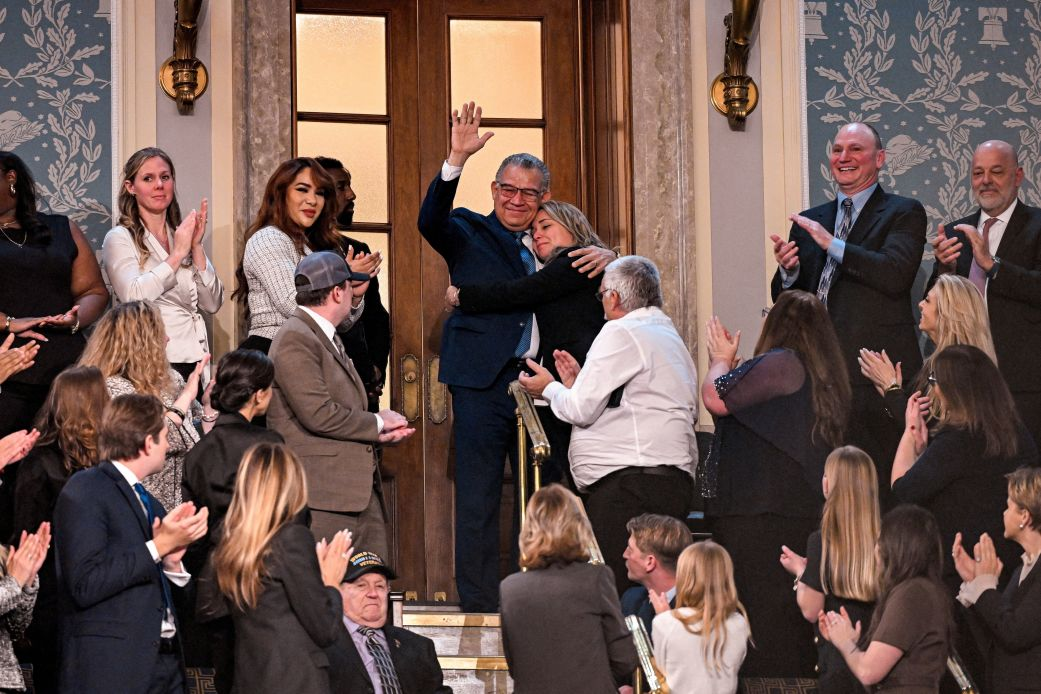
Donald J. Trump was approaching the end of the longest State of the Union address that has been unwrapped before the US Congress since 1964, when he pivoted toward what has happened around “our new friend Venezuela” since the capture of Nicolas Maduro and Cilia Flores on January 3. He talked about the millions of barrels en route to the US and celebrated how the collaboration with Delcy Rodriguez is helping to boost the economies of both countries, giving renewed hope for families who have suffered in Venezuela. And then, he said that, right there, among those seated in front of him, was Alejandra González, the niece of Venezuela politician Enrique Márquez, who had been jailed but was released after the Maduro extraction. Trump then announced, Oprah style, that her uncle was there. “Come down, Enrique!” Trump said, a door just behind González opened, and Márquez entered amid a round of standing applause to embrace his niece. 

A familiar scene from TV, from shows around the world during the last 60 years, Sábado Sensacional included. An emotional moment indeed, but for Venezuela watchers it sure was another plot twist in The Year of What the F: “What the F is Enrique Márquez doing there?”

Enrique Marquez (63, a native from Maracaibo) ran for the election as a rogue candidate supported by another party, Centrados en la Gente, that along with some other organizations got 2% of the vote in July 28, 2024. The Venezuelan Communist Party and REDES, the small political outfit of dissident chavista Juan Barreto, backed him.

Márquez was a victim of the unprecedented crackdown that followed the July 28, 2024 election in Venezuela, unleashed by the chavista regime—with Delcy Rodríguez as vice president—while Maduro blatantly stole the presidential contest that Edmundo González Urrutia won by a landslide.

On January 7, amidst the spike in forced disappearances that came before Maduro’s last presidential inauguration, security forces took Enrique Márquez and threw him in El Helicoide for a year, until January 2026.

But way before that, Márquez was a member of Un Nuevo Tiempo, the Zulia state-based party of Manuel Rosales and Omar Barboza. He was elected for the 2015 National Assembly, where the anti-Maduro coalition held a majority, and became the chamber’s vice president in the first year when Henry Ramos Allup grabbed the spotlight. He had entered institutional politics 15 years earlier, as a lawmaker for center-left party La Causa R in the first Chávez legislature (2000-2006). By 2010, when the opposition was returning to parliamentary politics to face the ruling PSUV, Márquez had joined Rosales and Barboza in UNT. In 2018, as the opposition boycotted that year’s presidential vote amid political bans and State repression on potential candidates, Enrique Márquez decided to back Henri Falcón, who ended up losing against Maduro. Márquez was sacked from his post in UNT as a result. In the years that followed, he held a lower profile as the opposition shifted toward Juan Guaidó’s interim presidency and international pressure as the strategy to remove Maduro from power.

He made a comeback in 2021, when the Guaidó movement was looking doomed and the Maduro regime was trying to regain a degree of recognition abroad. With a disjointed opposition at home after years where efforts were aimed at the international community, Guaidó critics in the Venezuelan opposition—namely Rosales and Henrique Capriles—decided it was time to move away from the interinato and return to electoral politics. Over at the chavista aisle, National Assembly president and Maduro strategist Jorge Rodríguez convinced the dictator that a new electoral board was necessary to get its opponents running for elections again—according to Rodríguez, this would make the regime look democratic. For that purpose, the National Electoral Council would need to be “more balanced” than the previous ones, and therefore include an additional opposition representative (the arrangement since the Chávez-Tibisay Lucena era was that the opposition could only have one out of five).

And voila. In May 2021, after weeks of negotiations between Rodríguez and the Capriles-Rosales camp, Enrique Márquez was appointed as CNE rector along with Roberto Picón, a software engineer that advised the opposition on electoral strategy throughout the 2010s, and who Maduro kept imprisoned for a year in 2017-2018.

With another three pro-Maduro CNE rectors, Márquez and Picón oversaw the December 2021 regional election that saw the opposition break with years of electoral boycott, an event that showcased chavismo’s growing weakness at the ballot box. The CNE still behaved like a puppet for Maduro, but Márquez and Picón managed to document many of the abuses and protest the decisions taken by Pedro Calzadilla, a history professor and friend of Maduro. 

In May 2023, with the Calzadilla-led CNE under pressure to organize a primary election for Maduro’s rivals in collaboration with a separate independent board, Maduro forced the resignation of his own appointees. Márquez and finally Picón had to quit on the following days too. In the second half of the year, María Corina won an independent primary election with overwhelming support, and Maduro set up the current electoral board embodied by Elvis Amoroso, the man who told the world Maduro won the 2024 elections without showing any proof.

When chavismo refused to allow María Corina Machado from competing in the election, the Unitary Platform faced the need of having someone else running on her behalf. Enrique Márquez was among the names discussed as the candidato tapa (Machado’s stand-in), though some people said Machado did not like him. The candidacy of González Urrutia, an obscure diplomat that was quite far from being a real politician, was finally accepted by CNE. The fraud of the century took place. But after the fraud, Márquez went to the Venezuelan Supreme Court (TSJ) and demanded that the CNE presented the voting tallies that proved that Maduro, as the CNE alleged, was the winner. The TSJ ignored Márquez, but his speech lambasting Amoroso’s CNE and Maduro’s trickery was aired by State television, whose producers were probably not expecting a moment like that. Especially considering that much of society and those who endorsed Machado and González Urrutia were under a state of terror outside.

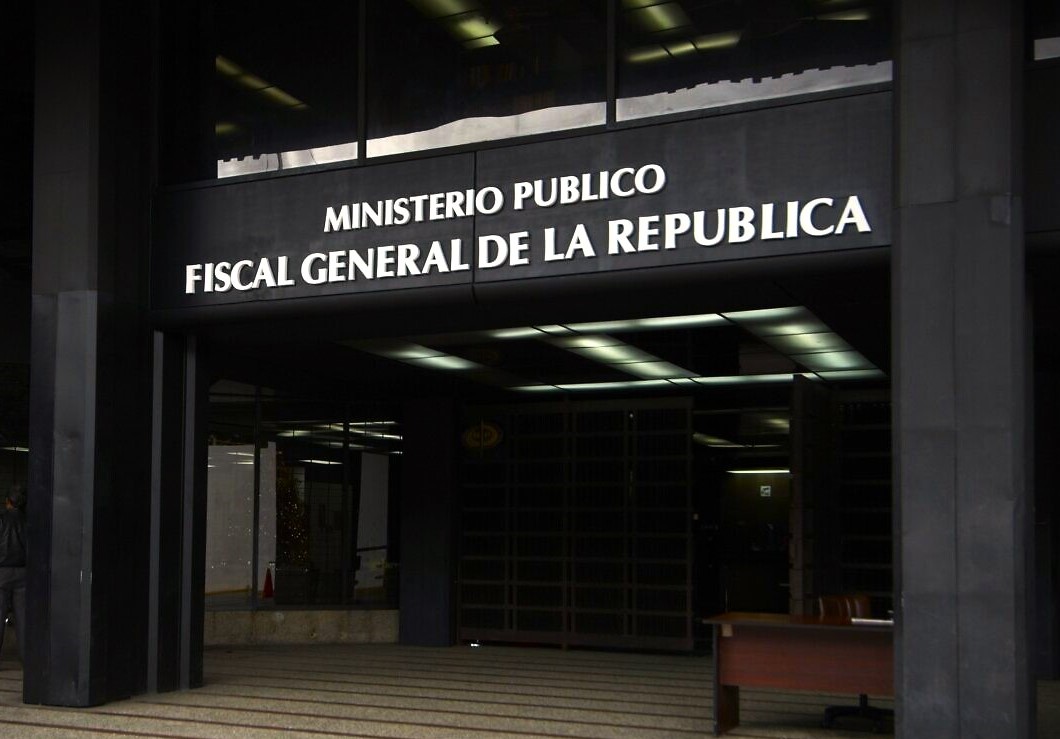
Soon after, while members of the Machado-led Comando con Venezuela were forced to hide and flee the country, Márquez announced he would dedicate his efforts to bringing together a movement in defense of the Venezuelan Constitution. Between August and December 2024, Márquez attempted to challenge Maduro using the regime’s own authoritarian institutions. For instance, he formally asked the TSJ to review its own ruling backing the CNE’s results. In November, Márquez and a number of moderate and leftwing figures (including Barreto and former presidential hopefuls Andrés Caleca and Falcón) called Chief Prosecutor Tarek William Saab for a meeting in the prosecutor general’s office, to press for the release of people arrested in the post-election crackdown, especially dozens of minors that were still imprisoned back then.

Another possibility is that the Trump administration is pitching Márquez as a reliable figure that could join Delcy’s local management.

All of this went ignored, of course, as the Maduro regime was capping off its transformation into a brutal police State dominated by Diosdado Cabello. In New Year’s Eve, days before he was captured, Enrique Márquez addressed the public with the following message:

On July 28, a social, democratic, civic, constitutional force materialized, one that we must sustain and strengthen. Failing to recognize what happened on July 28 will unfortunately have consequences that will bring more suffering to Venezuelans.

It is necessary to seek mechanisms that open the way to peaceful change, allowing us to achieve democratic coexistence and thus open the doors to the future for a country that is determined to change.

Let us defend our Constitution with perseverance, with civic and citizen strength.

That is my commitment to Venezuelans.

I wish you all the best in 2025. Happy New Year!

Enrique Márquez

On January 7, amidst the spike in forced disappearances that came before Maduro’s last presidential inauguration, security forces took Enrique Márquez and threw him in El Helicoide for a year, until January 2026.

Now, Trump is presenting Márquez as living proof of how many people are getting freedom in Venezuela thanks to him and the US military. This is in sync with Delcy Rodriguez’s attempt to sell herself as an open ruler, who announces that El Helicoide will be closed and that an insufficient amnesty law would heal the wounds of political polarization. However, hundreds of political prisoners remain in jail, and El Helicoide is just one gulag in an entire archipelago where crimes against humanity have been committed by the chavista regime. 

The surprising appearance of Enrique Márquez in Washington DC has sparked another interpretation. Is Donald Trump launching a campaign to sell Márquez as a transition leader, once he decides that Delcy Rodriguez has reached her expiration date?

Marquez is one of the people that has been discussed as a potential transition figure in Venezuela, given his personal prestige and ties with moderate sectors of opposition and chavismo that go back decades. 

In other words, on paper he has the profile to act like a hinge between a sector of the opposition that is not entirely loyal to Machado, and an old brand of chavismo that was marginalized by Nicolás Maduro. For example, Márquez is a founding member of the Grupo de Boston, an old parliamentary caucus set up during the 2000-2006 National Assembly composed of chavista and opposition lawmakers meant to interact and exchange views with US Congress representatives. And he has links to Francisco Arias Cárdenas, an Army general and close comrade of Chávez that briefly became his opponent before returning to the comandante’s coalition (Arias Cárdenas, once a presidential candidate and former Zulia governor, now has a seat in the National Assembly that just approved an amnesty law). Apart from this, Márquez has little name recognition within Venezuela. After having read this, you probably know more about him than most people in the country.

Another possibility is that the Trump administration is pitching Márquez as a reliable figure that could join Delcy’s local management. For instance, appointing him to lead the elections authority, after showing up as an honored guest in Trump’s State of the Union address, would go a long way to show that the US is in control and that elections, while not imminent, could be somewhat free and fair. 

Was Marquez just an actor in a Trump TV stunt? Perhaps, that should be our base scenario. But maybe he’s something else. Time will tell. Or Corporate.

Source link

How to Corner Delcy Rodríguez in Her Own Ring

In a previous article, we suggested that the opposition activate street mobilization to secure a safe seat at the negotiating table of the transition—where, for now, only Delcy Rodríguez and Trump seem to have a voice. The goal is not to derail the transition, but to make it impossible to move forward without guarantees that it will culminate in a genuinely democratic regime.

To avoid draining popular energy through a call for street demonstrations around a goal that may seem implausible, the opposition should focus on rebuilding trust within the broader social base through periodic, predictable, and sustained mobilizations. Once a week, for example, on a fixed day. Such a strategy would also serve to test how willing chavismo is to repress, using less combative slogans and instead pushing for modest concessions that the Rodríguez regime might already be prepared to grant.

A possible example of this type of demand was the call for the release of political prisoners loudly voiced by student movement activists, human rights groups and associations of relatives. Mobilizations have become recurrent over the past couple of weeks. The anticipated repression has not arrived, and scenes such as UCV student representatives directly confronting Delcy Rodríguez seem to signal a renewal of Venezuelan society’s defiant spirit. The unexpected announcement of an Amnesty Law and the closure of El Helicoide as a political prison are beginning to feel like hard-won gains for a sector of the country long accustomed to the sterility of its struggle.

These gains, however, have limits. The re-incarceration of Juan Pablo Guanipa as a disciplinary gesture toward the opposition’s leadership continues to reveal the regime’s sensitivities—but also its internal fractures (clashes between moderate and hardline factions) and openings for further struggle.

With the Hate Law still in force, NGOs outlawed, uncertainty over the final wording of the Amnesty Law, the persistence of state-terror structures and other detention centers, one cannot be certain that the current process of political liberalization will not suffer setbacks should the whims of the Executive shift. Even so, these remain victories that inspire other sectors. A group of workers demanding an update to the minimum wage managed to protest outside the Supreme Tribunal of Justice without facing repression.

The opposition must embrace a strategy less rooted in open confrontation and more in applying political aikido to the regime.

There is, however, a glaring absence: political parties and María Corina Machado, who, being abroad, has not managed to forge a genuine connection with these mobilizations. Without party-based political organization behind these demands, there is a risk of missing the opportunity to build a true movement capable of pressuring the government toward re-democratization.

What is lacking is the activation of leadership and a national organization capable of proposing a political program in which these demands can be recognized as interconnected. One where the strength of multiple social sectors affected by state neglect can reinforce one another.

For the opposition, the risk is not only being left behind when the ‘transition train’ departs, but also that the Rodríguez-led economic reforms—encouraged by US oil interests—could generate a new consumption and welfare boom that eventually dampens political protest. If the most skeptical sectors begin to believe that economic liberalization without political liberalization is an acceptable arrangement after decades of social decline, the space for democratic struggle could narrow significantly.

So how can this missing piece in the national political moment be recovered?

In search of political parties

For now, Machado’s return to Venezuela is unlikely without security guarantees. Nor do we believe her physical return is strictly necessary to produce an organized democratic movement. What matters is restoring grassroots organizational structures which, as the example of the Comanditos showed, are possible in our country. Especially when the cost of repression appears to be rising.

In this context, the opposition must embrace a strategy less rooted in open confrontation and more in applying political aikido to the regime. Aikido, as a martial art, centers on using your opponent’s force against them. Politically speaking, the opposition does not need to impose an alternative transition agenda on chavismo at this moment. Instead, it should take the agenda that Delcy and Jorge Rodríguez are proposing and deepen it. Where it sees a small crack open, it should place its foot in the gap until the door opens wide enough to pass through. And chavismo is already offering such an opportunity with the reorganization of the party system.

Jorge Rodríguez, as president of the National Assembly, announced that the PSUV would seek to reform the Electoral Code. A few days later, the National Electoral Council (CNE) announced the temporary suspension of the party registration and revalidation period. One hypothesis is that, in response to US demands for some degree of political liberalization, chavismo may facilitate the normalization of parties previously intervened by the judiciary and lift disqualifications barring political leaders from running for office.

Whether or not this proves true, opposition parties must seize this window of opportunity to reactivate their militant structures by convening neighborhood assemblies, open town halls, and even engaging in dialogue with communal councils to bring the legislative agenda proposed by chavismo itself into public debate.

By targeting the National Assembly as the focal point of mobilization, the opposition would not only pressure the regime but also force the hand of those lawmakers who call themselves opposition.

This requires political pedagogy from the opposition: demonstrating that this is not simply capitulation, but rather an acknowledgment that the transition to democracy is a gradual process that demands strategy, shrewdness, maturity—and, crucially, organization and active civic commitment as new pockets of freedom are won and the struggle progressively deepened. Such mobilization should aim to re-oxygenate party cadres and lend legitimacy to the proposals that might emerge during parliamentary debates over reform.

Naturally, tensions arise. The opposition deemed legitimate in the eyes of the public earned that status precisely by completely refusing to compete in the 2025 legislative elections, and therefore holds no seats in the Assembly. Conversely, opposition lawmakers that chavismo tolerates lack credibility among the broader opposition base. Yet this doesn’t need to be an obstacle for democratic forces, which can continue to pressure the Legislative branch from the outside. For instance, Machado’s leadership could call mobilizations on the days of parliamentary debate—not to oppose the discussions outright, but to demand that the people’s demands be heard in the reforms to come.

On the one hand, there is clearly no guarantee that all demands will be incorporated or that reforms proposed by the opposition-outside-the-Assembly will translate into effective legislation. But the return in militant energy and organizational capital for political parties may outweigh the legislative outcome itself, since that strengthened organization becomes the new foundation for future mobilizations.

On the other hand, by targeting the National Assembly as the focal point of mobilization, the opposition would not only pressure chavismo but also force the hand of those lawmakers who call themselves opposition yet face credibility issues. Politics is, after all, a game. The moral maximalism with which the legitimacy of opposition leaders is often judged can become an obstacle to recognizing that the Capriles Radonskis of the 2025 Assembly do not need to be wholehearted opposition figures.

One effect of January 3 was that Capriles himself—a detractor of Machado—praised her leadership position, likely driven by political calculation. Yet it is precisely these political interests that democratic forces can exploit. These positioning lines are openings the opposition can deepen, twisting not only the government’s arm but also that of these lawmakers, pressuring them to answer to the organized groups outside the Assembly. Establishing channels of communication with such lawmakers would not contaminate the democratic struggle if approached from a standpoint of strategic pragmatism.

So long as the means employed do not undermine the ultimate objective—the consolidation of a democracy grounded in memory, truth, and justice—the opposition would do well to weigh its alternatives with less moral timidity and greater political maturity.

Source link