Trump’s “Mega Deal” in Venezuela Could Deepen Risks for Investors
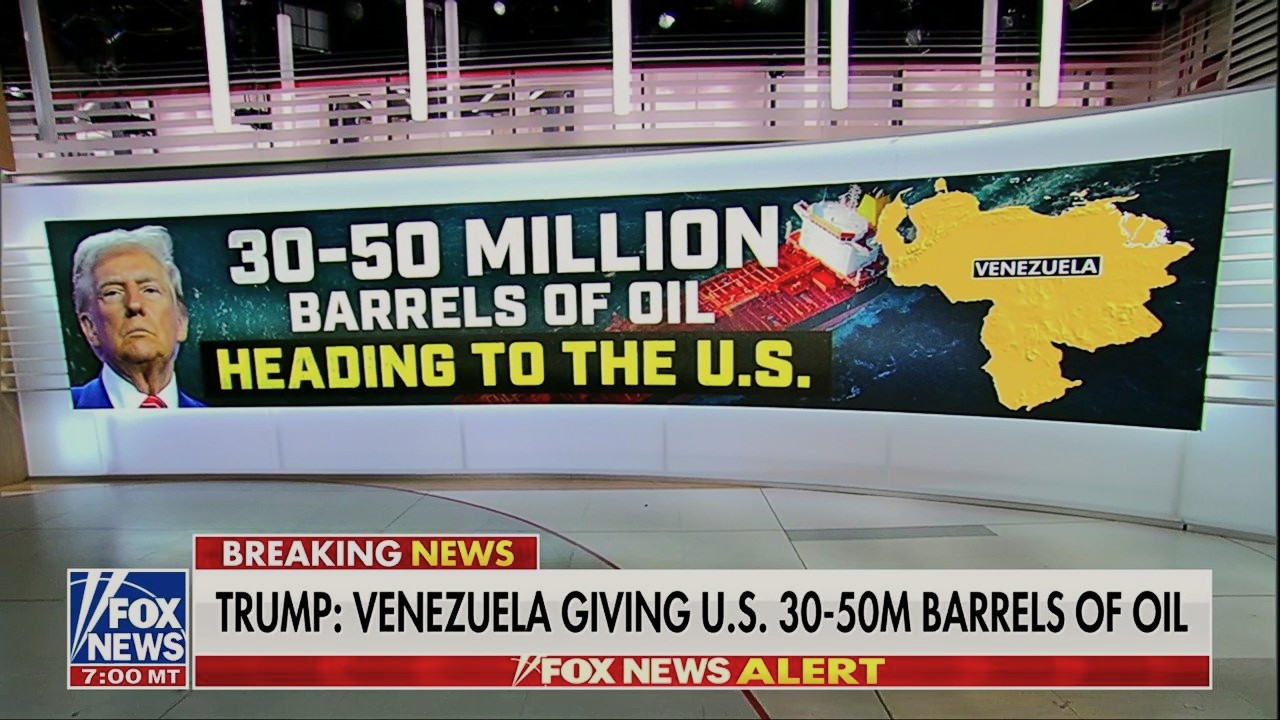
Late on Friday night, Donald Trump announced what he called “the biggest oil deal in world history.” Under the terms described publicly so far, the US would obtain a controlling interest in a new venture involving 17 Venezuelan oil fields containing more than 65 billion barrels of proven reserves, with an effective 55 percent share of production and preferential access to crude at cost. The Trump administration says the arrangement could mobilize around $100 billion in private investment and eventually generate more than $200 billion in Venezuelan tax revenues. Much about the deal, including its precise legal structure, remains unclear.
There is nothing inherently objectionable about American companies making money from Venezuelan oil. Venezuela desperately needs foreign capital, technology and markets. PDVSA cannot rebuild the industry on its own, and reconnecting Venezuela to the American energy system would be preferable to another generation of dependence on Russia, China or Iran.
The problem is not that Washington wants investment. The problem is that it seems determined to make that investment possible without first solving the political and institutional problem that made Venezuela uninvestable in the first place.
Recalculating
The original expectation after Nicolás Maduro’s removal seemed straightforward enough. American oil majors would pour tens of billions of dollars into the country and restore production. Nine days after Maduro was captured, Trump gathered oil executives at the White House and invited them back to Venezuela. ExxonMobil CEO Darren Woods responded with an inconvenient assessment: under the existing legal and commercial conditions, the country remained “uninvestable.” ConocoPhillips was interested but similarly cautious. Chevron, which never fully left, has continued expanding and is now preparing another significant restructuring of its Venezuelan operations. So far, the broad stampede of supermajors Washington appeared to expect has not come.
So Washington widened the search. Delcy Rodríguez traveled to India in June to court energy investment and deepen ties with Reliance and other Indian companies, in a trip conducted with remarkably explicit American encouragement. India had once again become a major buyer of Venezuelan crude, and Asian capital offered another potential source of the money Venezuela needed.
Under the conditions we have been apprised of so far, it is difficult to imagine a future democratic Venezuelan government simply accepting an arrangement of this magnitude as a fait accompli.
At the same time came operators with a different tolerance for Venezuelan risk. Hunt Overseas Oil and Crossover Energy signed preliminary agreements to develop projects in the Orinoco Belt. Smaller American firms have explored opportunities that Exxon and Conoco have so far declined to pursue. SLB, an oilfield-services company rather than a producer, has now been brought in to reconstruct and analyze PDVSA’s degraded reservoir data, the sort of basic technical infrastructure that should tell us something about how much of an oil industry still needs to be rebuilt.
And then there are the intermediaries. Bloomberg recently reported that Alejandro Betancourt, who rose spectacularly during the Chávez years, emerged as an important facilitator for Washington’s effort to bring smaller American companies into Venezuela. His usefulness is not difficult to understand. Companies entering a market where formal institutions remain weak need people who know the terrain, the networks, the officials and the informal rules through which business actually gets done.
Betancourt has denied past allegations of wrongdoing and has not been charged with a crime, but his return as an influential gatekeeper hardly advertises the arrival of a transparent, rules-based Venezuelan economy.
Now comes the ultimate recalculation. If investors are still reluctant to absorb Venezuelan political risk, the US government may absorb some of it itself.
Risk instead of certainty
That is what makes Friday’s announcement so revealing. Washington began the year with the proposition that political change would make Venezuela attractive to capital. Now, the Trump government appears increasingly willing to create more and more elaborate mechanisms to insulate investors from risk rather than address the conditions that make the country risky in the first place. At every stage, it has changed the investor, the financing, the intermediary or the allocation of risk. The one variable it has been remarkably reluctant to change is the Venezuelan government.
There is also the small matter of Venezuelan law.
The Constitution establishes that hydrocarbon deposits belong to the Republic and are inalienable. It also requires National Assembly approval for public-interest contracts involving foreign states, foreign official entities, or companies not domiciled in Venezuela. Delcy’s reform of the hydrocarbons law has undeniably widened the space for private operators, granting companies much greater control over production and commercialization. But nothing disclosed so far explains how an arrangement giving the US government a controlling economic position over 17 fields, reportedly with rights potentially stretching for a quarter of a century, has obtained the constitutional authorization necessary to bind Venezuela over anything resembling that period. Reuters itself notes that the legal and financial structure remains unclear and that the proposal faces constitutional questions.
Delcy’s strategy is to survive Trump himself, so that the next American administration treats her as the person guaranteeing oil production, investment contracts and political stability.
Perhaps those questions will eventually receive convincing answers. Perhaps the current National Assembly will be asked to provide whatever approvals the agreement requires. But under the conditions we have been apprised of so far, it is difficult to imagine a future democratic Venezuelan government simply accepting an arrangement of this magnitude as a fait accompli. At a minimum, it would have every reason to subject the contracts to comprehensive legal review and democratic ratification; significant portions could well have to be renegotiated.
That produces a remarkable contradiction. An agreement supposedly designed to provide investors with certainty may create its own enormous source of political risk.
A future government could inherit century-long commitments negotiated by an unelected predecessor whose authority it contests, with the US itself financially invested in preserving those commitments. Venezuela’s first genuinely democratic administration would then begin its life choosing between endorsing decisions it never authorized or entering an immediate dispute with Washington.
There is a perfectly respectable argument for what the Trump administration is attempting. Venezuela cannot place reconstruction on hold indefinitely while it builds pristine institutions. Oil infrastructure continues to deteriorate. Investment can create jobs, revenue, and constituencies interested in stability. Delcy controls the ministries, PDVSA, much of the security apparatus and the bureaucracy; somebody has to sign the contracts today. Connecting Venezuelan economic interests to American companies could itself help pull the country away from the geopolitical networks that sustained Maduro.
But that argument confuses the need to restart the economy with the need to give an interim government the power to determine its structure for generations.
Washington could have pursued investment while limiting the duration of interim arrangements, requiring future democratic ratification for the largest commitments, creating sunset clauses, tying concessions to institutional milestones or ensuring that Venezuela’s democratic forces had genuine ownership of the framework. Democratic legitimacy is not an obstacle to investment certainty. Properly understood, it is one of its foundations.
The US seems unwilling to own the fact that no amount of financial engineering, political brokerage or well-connected intermediaries can substitute for a democratic government.
Instead, the emerging arrangement gives Delcy Rodríguez an increasingly powerful incentive to make herself indispensable. The more American capital, energy security and political prestige become attached to agreements signed under her government, the more valuable continuity becomes. Delcy’s obvious strategy is no longer merely to survive the transition. It is to survive Trump himself, so that the next American administration treats her not as the temporary caretaker Washington inherited in January but as the person guaranteeing oil production, investment contracts and political stability.
Unreliable partners
There have been meaningful changes since Maduro’s removal. More than a thousand political prisoners have reportedly been released. The government and representatives of the opposition have reached an agreement to renew the Supreme Court. But if the objective on January 3 was a genuine democratic transition, it is increasingly difficult to argue that Venezuela has moved very far from square one. Delcy still governs without democratic legitimacy. Much of the chavista State remains intact. María Corina Machado remains outside the country and outside the US-backed negotiating mechanism. Even senators from both parties in Washington have begun pressing the administration for a clearer path toward elections.
If anyone in Washington believes that another legally dubious agreement negotiated with the cronies who continue to usurp the Venezuelan State—particularly through figures like Alejandro Betancourt, now being mentioned as a facilitator for oil investment—will inspire substantially more confidence than anything Washington has tried since that glorious January 3 night, then they have learned remarkably little about the problem they inherited. Washington took responsibility for managing Venezuela’s transition that night. Eight months later, it still seems unwilling to own the central fact that no amount of financial engineering, political brokerage or well-connected intermediaries can substitute for a Venezuelan government with democratic and legal legitimacy.
There is a broader cost to that refusal. Machado is not merely another Venezuelan politician Washington happens to dislike. She is one of Latin America’s most recognizable democratic figures, with an audience extending across the region’s Right, democratic center and beyond. The administration’s repeated willingness to sideline her while embracing Rodríguez is therefore being watched outside Venezuela too.
If billions begin flowing through institutions and business networks that have never been subjected to democratic accountability, Washington may discover that it has helped recapitalize the very system it intended to replace.
It is particularly telling to see rightwing figures such as Emmanuel Rincón, Orlando Avendaño and Hermann Tertsch—voices that have spent much of the past eight months looking for the glass-half-full interpretation of Washington’s most questionable decisions—struggling to interpret the latest developments as anything other than the US installing a friendlier face atop the chavista state.
That matters for American power. The Trump administration has never pretended that its diplomacy would be delicate. Allies understand pressure, bargaining and the occasional arm-twist. But there is a difference between being a demanding partner and being an unreliable one. Latin American political leaders who have aligned themselves with Washington against authoritarian movements would be perfectly rational to study Venezuela and conclude that the US remains an excellent partner for a business transaction while being considerably less dependable as the guarantor of a political project.
Oil production can rise without democracy. Private investment can coexist with authoritarianism. Venezuela can become much more capitalist without becoming substantially more free. If billions begin flowing through institutions and business networks that have never been subjected to democratic accountability, Washington may discover that it has helped recapitalize the very system it intended to replace.
Chavismo spent a quarter century destroying the institutional ecosystem in which long-term investment could survive. Changing an oil law does not rebuild it. Removing Maduro did not rebuild it. Finding more adventurous investors will not rebuild it either.
Democratic legitimacy is not the prize Venezuela receives at the end of a successful transition. It is part of the infrastructure required for the transition to succeed.