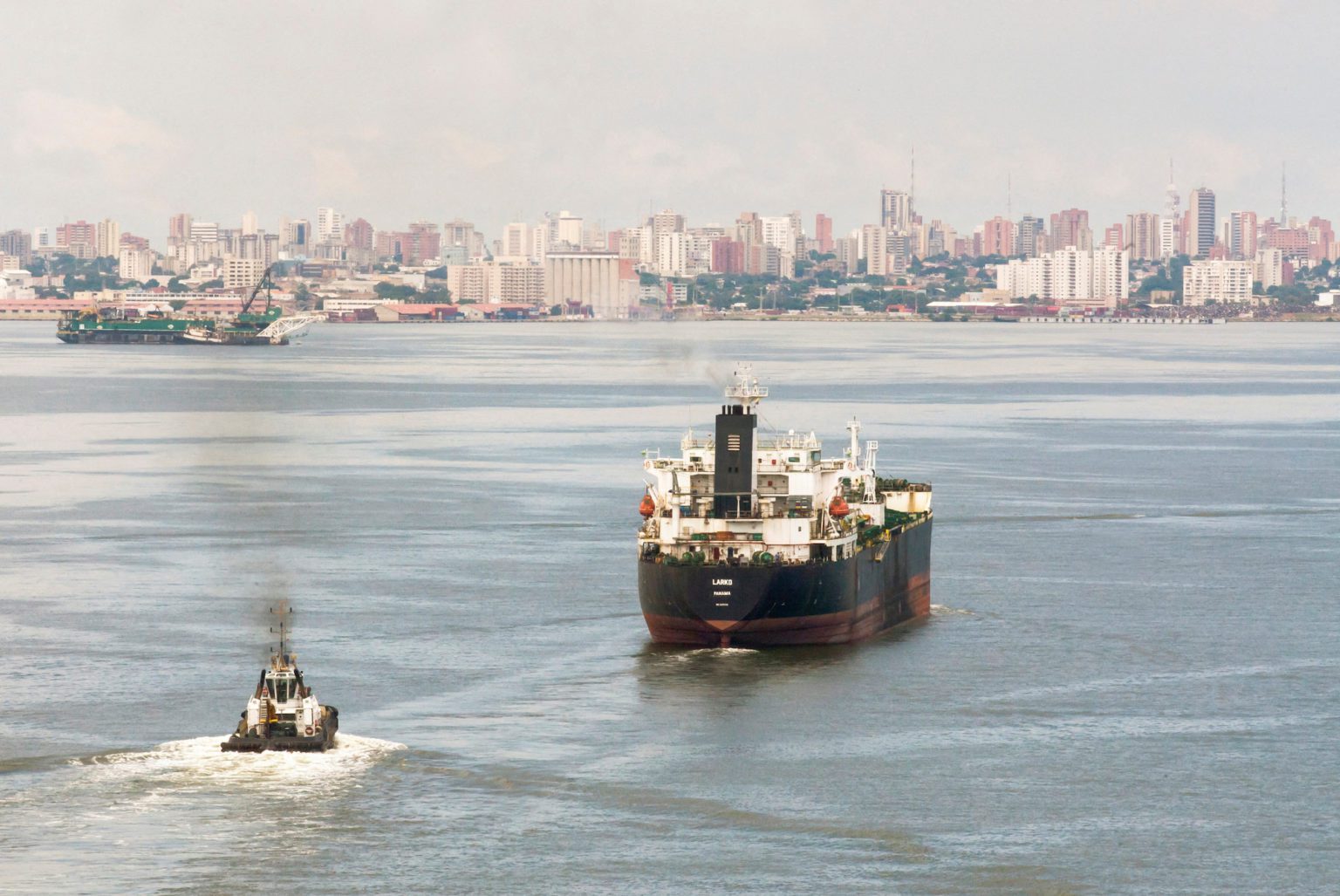
Venezuelan Oil

A Third Venezuelan Oil Nationalization? Not if the Citizen is the Owner

Recently, the United States reached a new historic milestone: it produced over 13.6 million barrels per day, a staggering feat for a country that many thought had peaked in 2008 when production bottomed out at 5 million bpd. This staggering increase was not achieved by a state giant, but by an ecosystem of thousands of independent operators driven by market-based incentives that, in Venezuela, might seem from another planet.

Meanwhile, Venezuela has traveled the opposite path: from a proud peak of 3.7 million bpd in 1970, it has collapsed to a stagnant output below 1 million bpd

In Texas, the landowner owns the oil; in Venezuela, it is the State—which claims, all the while, to represent us all.

The hundred-year war

Since the Los Barrosos II blowout in December 1922, our oil history has been defined by a relentless tug-of-war between private capital and the State over the capture of oil rent. This conflict is not unique to Venezuela, but as we enter this “third opening,” the question is unavoidable: how do we prevent a third nationalization?

Having done it twice before (1976 and 2006), Venezuela has established a precedent that alters risk assessment across all investment horizons. How can we guarantee investors that history won’t repeat itself? While often sold as a patriotic triumph, nationalization is a terminal breach of contract and a direct assault on property rights, deterring the very capital profiles that otherwise would be participating. International arbitration, legal reforms, and institutional frameworks are necessary, but they are not sufficient.

Government take and the global race

To put things in perspective: before the 2026 reform, the Venezuelan fiscal system was among the least competitive on the planet. Between royalties on gross income, income tax (ISLR), and “windfall profit” taxes, the State extracted a “Government Take” that often exceeded 80%, with marginal tax rates reaching up to 95% depending on price thresholds. In a scenario where the operator’s net margin was squeezed to a minimum, production became a game of survival and reinvestment became technically impossible.

While the January 2026 reform moves in the right direction, we aren’t just competing against our own past; we are competing against the world. Consider the current margins (Operator Share) in the region:

  • Canada (Alberta, Heavy Oil): Private 50%-55% | Government 45%-50%
  • Texas (Permian Basin): Private 45%-55% | Government 45%-55%
  • Colombia (New Reforms): Private ­40% | Government ­60%
  • Brazil (Pre-Salt): Private 39% | Government 61%
  • Guyana (2025 Model): Private 25%-35% | Government 65%-75%
  • Venezuela (2026 Law): Private 20%-35% | Government 65%-80%

Even with the recent reform, Venezuela is far from being a “bargain” for long-term investment.

The proposal: from State-partner to citizen-owner

To mitigate expropriation risk and attract long-term capital, I propose a model built on four foundational pillars:

  • Private Capital-Citizen Partnership: The State is removed from operations. Incentives are aligned directly between citizens—the ultimate owners of the subsoil—and those who risk the capital to extract it.
  • Zero Corporate Taxes (Tax Displacement): Eliminate corporate income tax, royalties, and all “shadow” taxes at the source. This slashes the operational break-even to technical average levels of $30 to $40 per barrel, turning “iron cemeteries” into profitable ventures even in low-price environments. This is not a tax holiday, but a redirection of the fiscal take: the operator delivers a major share of the value directly to the citizens, while the State sustains itself by taxing the total income of the citizenry and companies in the rest of the economy.
  • The Citizen Dividend (Oil-to-Cash): Instead of paying a traditional tax to a discretionary Treasury, the operator delivers 50% of its net profit—effectively a flat tax paid to the owners—directly into a sovereign trust (or similar non-state mechanism) managed by top-tier international banks. While 50% is a significant share, the absence of any other fiscal burden makes this model one of the most competitive in the region. This trust distributes periodical dividends to every Venezuelan citizen, including those abroad. The State then funds its operations by taxing these dividends as part of the citizens’ total income via personal income tax (ISLR) and other tax sources from a diversified economy. This ensures that the government’s budget depends on the collective prosperity of its people, not on political control over the oil.
  • The Citizen as “Guardian” and Auditor: This is the ultimate shield. In 1976 and 2006, the State nationalized because it was easy to seize control from a “multinational” and hand it to a bureaucracy. Under this scheme, any government attempting to expropriate would be taking directly from the pockets of 30 million owners. Transparency is embedded: citizens monitor production and distributions through real-time digital platforms, independent audits, and other decentralized oversight mechanisms. The citizen ceases to be a spectator and becomes the industry’s most powerful defender.

    Unlike the State, whose lust for oil rent is political and lacks immediate consequences for those in power, the citizen acts with the prudence of an owner—because they become one. Under this model, any attempt to “suffocate” the private partner translates immediately into a drop in personal dividends. Private ownership of the benefit is, in itself, the best guarantee of stability for capital.

    Application and reality

    Under this model, the direct net profit split for the oil industry would be: Private 50%, Citizens 50%, State 0%.

    This “State 0%” applies exclusively to the source to insulate the industry from political rent-seeking. It does not mean a zero-revenue State; the government continues to fund its functions, but through a transparent tax system (ISLR, VAT) derived from a citizen-owned economy.

    To illustrate, with oil at $100 and production at 3.5 million bpd, each citizen would have received $1,500 annually ($6,000 for a family of four). At a $60 base price, the dividend would be $640 per person. Today, with production stalled below one million barrels, a citizen would receive a mere $185. It is modest, but it represents the starting point of a virtuous cycle where the State only prospers if its citizens do first.

    Herein lies the virtue of the model: the alignment of interests. Under the current system, citizens watch from the sidelines as oil wealth vanishes into the state vortex. With this approach, each Venezuelan has a personal stake: the more their private partner thrives, the more they themselves benefit. Citizens move from passive critics to primary stakeholders in the nation’s industrial growth.

    Considerations for a new Venezuela

    Under other circumstances, I might not be a proponent of direct “cash” transfers. But given the alternatives, it is the “lesser evil”. The political class will likely claim this is neither feasible nor “patriotic.” For many politicians, the incentive is two-fold: the salivating prospect of managing an immense oil “booty,” and the recurring ideal of “doing good” with other people’s resources.

    Still in doubt? Look at our track record: despite having the world’s largest proven reserves and over 20 different administrations of every political stripe since 1922, the State captured and managed over $1.2 trillion in rent between 1920 and 2015. The result? A Guinness world record in squandered booms, the largest migration in the hemisphere without a formal war, and unprecedented institutional destruction.

    Isn’t it time to withdraw the State from oil? 

    This proposal would achieve:

    • Real competitiveness: By matching Texas and Alberta margins (50%+ for the private sector), we compensate for institutional risks with top-tier global profitability.
    • A limited State: The State ceases to be an inefficient businessman and becomes an arbiter: providing control, arbitration, and security. Its funding would come from taxing other economic activities, forcing it to foster general prosperity rather than living off the subsoil.
    • A path towards a dividend-producing nation: Why not extend this to all extractive activities (gas, gold, iron, rare earths)? Perhaps the gold of the Arco Minero would stop being a black hole and become a direct dividend, shielding resources from looting and opacity.

    The January 2026 reform is just a sigh in a prolonged agony. We cannot expect different results by doing the same thing. The “Hundred-Year War” over oil rent has left the State as a jailer rich in promises and a citizenry poor in realities.

    Avoiding a third nationalization requires moving the subsoil out of the political arena and into the sphere of economic freedom. The US does not dominate markets by government mandate, but through an ecosystem that rewards risk and efficiency. Venezuela can emulate this success, but only by breaking the State lock and allowing a fabric of investors to flourish in direct alliance with citizens.

    True sovereignty is not the State running the wells; it is Venezuelans themselves being the real owners of the benefits. Only through this pact of ownership can we hope that oil becomes, at last, an engine of development and not the tool of our own institutional destruction.

Source link

The Spirit of the Concessionary Model and the Future of Venezuelan Oil

Photograph by unknown author. “Trabajadores petroleros,” Fernando Irazábal Collection. Compiled by Archivo Fotografía Urbana.

On January 29, Venezuela experienced a legislative tectonic shift regarding the future of its hydrocarbon sector. The National Assembly approved a new petroleum law that effectively breaks with the post-1976 tradition of rigid state control, opening participation across the full value chain to private oil companies. 

This is not the first experiment with private participation since nationalization, but it is the clearest attempt since the 1990s Apertura to normalize it as the governing framework of the sector. The legislation, approved with striking speed and opacity, has elicited mixed reactions, ranging from denunciations of lost sovereignty and surrender to foreign interests to support for a first step that still requires major fixes. Despite these divergences, one thing is clear: the return of private companies to Venezuela’s oil sector inevitably revives parallels with the concessionary system under which the industry was born and flourished between 1914 and 1976, a mirror of what Venezuela’s energy sector could become in the twenty-first century.

The 1943 and 2026 hydrocarbons laws

The iconic 1943 bill enacted by President Isaías Medina Angarita (1941–1945) regulated Venezuela’s privately run oil industry until the 1976 nationalization. It became the institutional template of the concessionary era: a rules-and-taxes state overseeing a privately operated industry. Together with related legislation, it established the famous 50/50 profit-sharing arrangement with the state, later tightened by reforms. Yet within the 1943 framework, the rentier state largely confined itself to setting the rules and collecting taxes and rents, while private companies assumed the capital risks. There was no government monopoly over day-to-day operations.

In spirit, the 2026 law reintroduces comparable conditions for private capital. Petroleum companies can now either hold operational control in joint ventures with the state or carry out activities independently through government contracts. The 1943 and 2026 frameworks also embrace flexible royalty schemes that prioritize business viability over rigid tax burdens. Differences, of course, abound. To mention a few, the 2026 version concentrates discretionary power in the executive branch regarding royalties, opens the possibility of international arbitration outside the country, simplifies the tax burden into a 15% integrated hydrocarbons tax, and diminishes the National Assembly’s authority over oil business.

The Venezolanization pioneered by firms like the Creole Petroleum Corporation, Royal Dutch Shell, Mene Grande Oil Company, and many others also became an exercise in social integration.

Divergences aside, both pieces of legislation share the same underlying imperative: attracting capital and technology. The 1976 and 2001 hydrocarbons laws, by contrast, were designed precisely to limit private initiative. But investment alone will not do all the work. Human capital is also desperately needed to lead a reborn hydrocarbon sector, and here the concessions model offers valuable lessons.

The Venezolanization of the industry

An underappreciated dimension of that era was human capital development. Over decades, foreign firms trained Venezuelans across the corporate hierarchy—in technical, managerial, and executive roles—so that by the mid-1970s expatriates were a small fraction of the workforce and Venezuelans increasingly ran the day-to-day business. This created a pipeline of local talent able to inherit operational responsibility and manage the 1976 transition to state control with unusual continuity.

This history is not nostalgia for a bygone era, but a lesson worth highlighting. Venezuela’s oil collapse in this century is inseparable from the degradation of corporate culture and human capital, deepened by the politicization of the industry. It triggered a professional brain drain and the hollowing out of operational efficiency. Multinationals like Chevron, and others that may follow, should explicitly lean on a “Venezolanization 2.0” that engages local talent still in the country and encourages the return of a diaspora of Venezuelan managers and engineers now abroad. Insulating the sector from partisan hiring and purging is essential if these cadres are to operate with full competence.

The Venezolanization pioneered by firms like the Creole Petroleum Corporation, Royal Dutch Shell, Mene Grande Oil Company, and many others also became an exercise in social integration. Many American expatriates, like Creole’s CEO Arthur T. Proudfit, embraced the social milieu of the country that welcomed them, often learning the language and speaking it fluently; his daughter even married a local businessman. In exchange, Venezuelans trained abroad and working for these firms absorbed US professional values and traditions. This cultural exchange helped forge durable bonds between both countries and contributed to the successful presence of foreign capital in Venezuela. And these corporations did not stop at their payrolls. They understood that long-term success in the hydrocarbon sector extended beyond employees to the surrounding communities of the oil fields, and beyond.

Social license

Creole, Shell, and Mene Grande undertook significant investments in the country. In the oilfields, they negotiated lucrative labor contracts with unions. They also financed hospitals, university campuses, and other infrastructure projects. These firms even joined the state in ventures like the Venezuelan Basic Economy Corporation to fund agro-industrial projects aimed at diversifying the economy, while supporting rural communities through initiatives such as the American International Association. They left an indelible imprint on everyday life, from how Venezuelans shopped through market chains like CADA, to culture through documentaries, corporate magazines, and even TV news programs like Observador Creole.

More importantly, they built alliances with domestic capitalists like Eugenio Mendoza to address social problems. Creole and Venezuelan business leaders, for instance, institutionalized private-sector social action through organizations like the Dividendo Voluntario para la Comunidad (DVC), founded in 1964 to mobilize corporate contributions toward community projects. This nonprofit continues to exist today, fulfilling the original goal of social action bequeathed by American and Venezuelan businessmen more than sixty years ago. Creole also created the Creole Development Corporation, a financial arm designed to provide seed capital for local entrepreneurial activity. This was hardly a frictionless era, but it shows how legitimacy was treated as a condition of stability.

Contributions to health, schools, and infrastructure would also ease the state’s burden and allow it to focus on critical nation-building emergencies.

This largesse reached widely, but it was not mere corporate charity. To avoid jeopardizing their operations and invite nationalist backlash, companies engaged with surrounding communities and invested in their future. That is a lesson new capital arriving in Venezuela should pursue. There is even generational memory favorable to the presence of these firms in oil communities. 

Leveraging that legacy could open renewed opportunities for local professional growth while strengthening bonds between communities and multinationals. Contributions to health, schools, and infrastructure would also ease the state’s burden and allow it to focus on critical nation-building emergencies: democratizing institutions, reconstructing the economy, and addressing the public services and humanitarian needs the population faces.

A spiritual return to the concessions system?

The new hydrocarbons law pushes Venezuela’s oil industry in a new direction, and it functions as a first step in the right path. However, there is room for significant improvement. 

Moreover, key questions remain unanswered. For instance, what will be the fate of PDVSA? Any plan that fails to address the resurrection of its operational capabilities undermines the development of an efficient sector. Only the re-democratization of the country can properly confront the deeper failings reflected in the current legislation. Many industry experts have already proposed an alternative framework that would solve several of the bill’s core problems by establishing clear rules, transparency mechanisms, and a dedicated government agency entrusted with regulating the hydrocarbon sector.

The spirit of the concessionary model walks once more around Venezuela’s refineries, port terminals, and petroleum wells. It is too soon to tell whether foreign capital will return with the same excitement it brought more than a century ago, or whether the scale of investments and engagement with surrounding communities will match that of its predecessors. The sector can either become a platform for institutional rebuilding and professionalization, or another discretionary channel for rents and corruption. 

Democracy, check and balances, and clear rules can turn the 2026 hydrocarbons law (and its potential future modifications) into enduring principles for the remainder of the century. If so, the oil industry might unlock a new period of prosperity. Much remains to be done to materialize that future, but what is undeniable is that a new era begins.

Source link