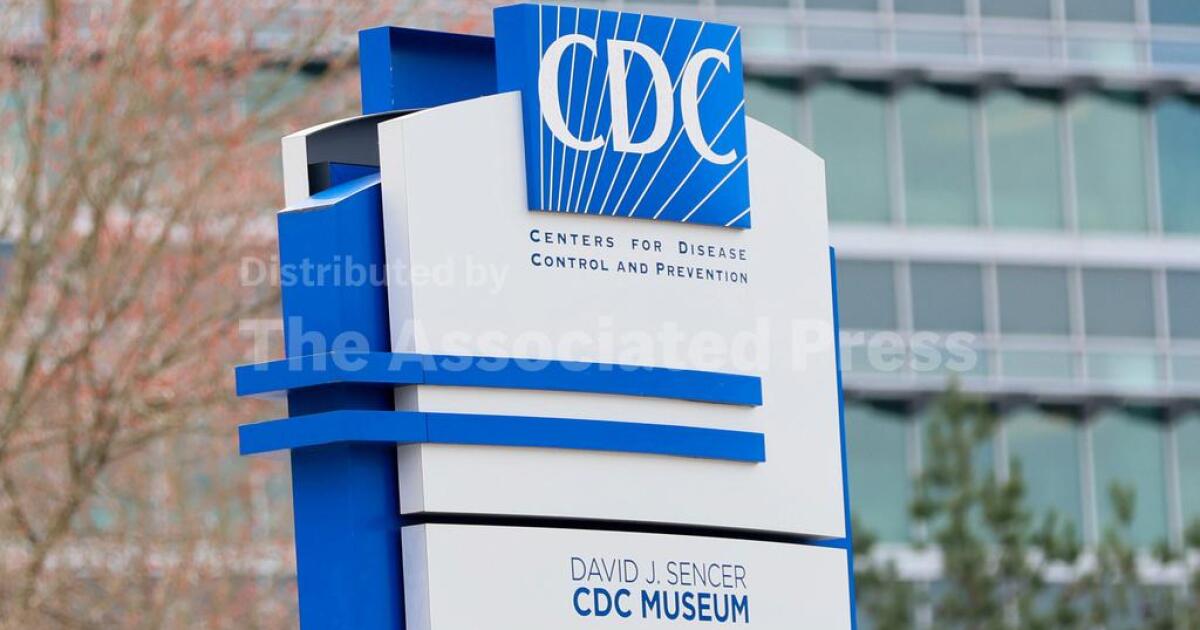
Trump nominates Erica Schwartz, former deputy surgeon general, to serve as CDC director
WASHINGTON — President Trump on Thursday nominated Erica Schwartz, a former deputy surgeon general, to be the next director of the Centers for Disease Control and Prevention.
In a social media post, Trump described Schwartz as “incredibly talented” and said, “She is a STAR!”
The Atlanta-based CDC, which is charged with protecting Americans from preventable health threats, has been in turmoil since Trump returned to office more than a year ago, with a succession of mostly temporary leaders.
The agency is overseen by Health Secretary Robert F. Kennedy Jr., who had promised not to change the nation’s vaccination schedule. But shortly after taking office, Kennedy said he was going to investigate the childhood vaccine schedule and went on to attempt a substantial rewrite of vaccine recommendations for kids. Some of those efforts were put on hold recently by a federal judge.
The administration’s first pick to run the CDC was former Florida congressman Dr. David Weldon, but his March 2025 Senate confirmation hearing was canceled an hour before it was to begin. Weldon said at the time that he’d been told not enough senators were willing to vote for him.
The White House then moved on to Susan Monarez, who had been serving as the CDC’s acting director. Monarez was confirmed by the Senate, but she was ousted in less than a month. Trump administration officials said she wasn’t aligned with their agenda so they terminated her.
Several key CDC scientific leaders resigned in protest, saying Monarez’s dismissal dashed their hopes that a CDC director would be able to guard against political meddling in the agency’s scientific research and health recommendations.
Since then, there’s been a revolving door in agency leadership, with the short-term role of acting director being passed from one Washington-based Health and Human Services official to another. National Institutes of Health Director Jay Bhattacharya has been overseeing the CDC the past several weeks.
During a House Appropriations Committee hearing Thursday, Kennedy said the new CDC team was “extraordinary.”
“I think this new team is really going to be able to revolutionize CDC and get it back on track,” he said.
Schwartz holds multiple academic credentials, including both medical and law degrees. Her career has largely been spent in military uniform, including in a leadership position at the U.S. Coast Guard where she oversaw the organization’s system of 41 clinics and 150 sick bays.
She later served as deputy surgeon general, where she helped lead uniformed medical and health professionals posted at the CDC and government health agencies that serve the general public.
Schwartz could not be reached for comment.
Trump also announced the appointment of Sean Slovenski, a former Walmart executive, as CDC deputy director and chief operating officer. Dr. Jennifer Shuford, Texas health commissioner, was named the CDC’s deputy director and chief medical officer. And Dr. Sara Brenner, a former Food and Drug Administration administrator, was designated as a senior counselor for public health to Kennedy.
In a social media post Thursday, Kennedy congratulated Schwartz and the other appointees and said he looks “forward to working together to restore trust, accountability, and scientific integrity” at the CDC.
But Aaron Siri, a lawyer and ally of Kennedy in attacking vaccines and pharmaceutical companies, criticized Schwartz’s selection. In a social media post, Siri lambasted Schwartz’s past promotion of vaccinations and said “she lacks the basic ethics and morals to lead the CDC.”
Schwartz’s nomination comes as Dr. Casey Means, Trump’s pick for another key health-related role, U.S. surgeon general, has had difficulty getting confirmed.
Means’ languishing nomination after appearing for a confirmation hearing in February reflects the skepticism that lawmakers of both parties have expressed toward the direction in which Kennedy has taken his department.
Stobbe writes for the Associated Press. AP writer Ali Swenson contributed to this report.