Route des Vacances: a gastronomic driving holiday from Paris to the Mediterranean | France holidays
‘We were five people in my parents’ 2CV; we would set out at 3am and by 10am, around about Lyon, my father would need a break. My mother would set up a deckchair for him under a tree by the side of the road and he would sleep before driving the rest of the way to Toulon.”
On a recent road trip through France, I met up with Thierry Doillon, a vintage car fanatic who helped restore a 1950s petrol station on the Route Nationale 7. I wanted to talk about the heyday of this iconic road (so famous that singer-songwriter Charles Trenet released a song about it in 1955) and why it’s enjoying a renaissance with holidaymakers.
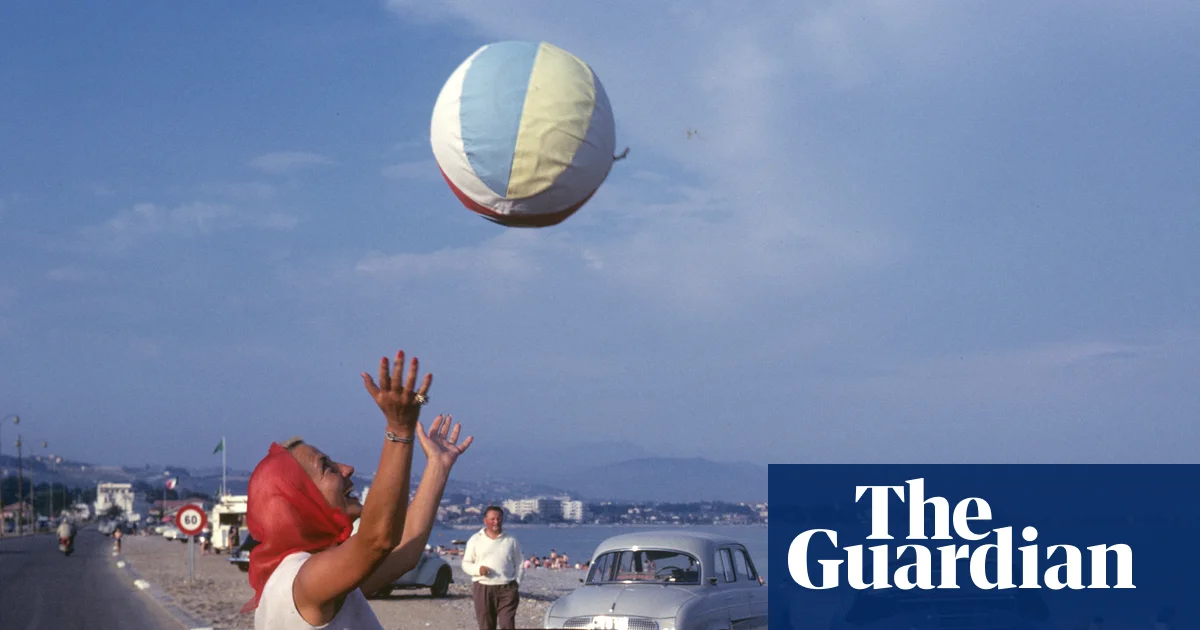
The RN7 stretches 996km (619 miles) from Paris to Menton on the Côte d’Azur, passing through Châteauneuf-du-Pape, Avignon, Lyon, Aix-en Provence, Fréjus and Nice. In summer 1936, the French government passed a law that mandated paid holiday, a move that kickstarted the exodus of northerners to the Med every August, and it became a true emblem of the French vacances. In the 50s and 60s, the route was awash with petrol stations, traffic jams, picnickers and roadside cafes.
Although the RN7 fell quieter when the Autoroute du Soleil (Motorway of the Sun) was completed in the early 1970s (the new toll road knocked a third off the journey time), it is now experiencing a resurgence thanks to the trend for slow tourism and discovering the road less travelled.
My road trip started on Paris’s Place d’Italie on a chilly September morning after an overnight stay at Hôtel Rosalie. Although my hired Citroën was capacious in comparison with Thierry’s 2CV of yesteryear, I could imagine the thrill he must have felt as a kid, embarking on an adventure that would take him to a land unrecognisable from the cold and grey of northern France, with the promise of warm sea, palm trees and glowing sunsets at its end.
Only a few kilometres from the centre of Paris, the roads started to widen and troops of Napoleonic plane trees lined up to guide this adventurer south. Historic highway it may be, but there’s a subtlety to the RN7 compared with the likes of America’s Route 66: instead of the shield-shaped “Historic Route” markers with “66” in large numbers, there are simple red-and-white bornes – round-topped concrete distance markers that dot every kilometre. There are faded ghost signs instead of screaming billboards, a mere whisper of the promise of parasols and pastis to come; Relais Routiers restaurants instead of roadkill cafes; and the soundtrack is Trenet’s 1955 whimsical hit (“L’amour joyeux est là qui fait risette, On est heureux Nationale 7”) rather than Chuck Berry or the Rolling Stones getting their kicks.
I imagine Thierry’s father despairing at my sluggishness, but nonetheless I made my first stop just 50km from Paris, in the village of Barbizon in the Fontainebleau forest. I stretched my legs in the shady wooded paths in the footsteps of the mid-18th-century artists who decamped here from the city to be inspired by nature.
Back on the road, I counted numerous art deco frontages of now-derelict mechanics along the route. “There were sometimes as many as 12 garages in a 6km stretch,” Thierry had told me. “Not just because the petrol tanks were so tiny back then, but because the cars broke down all the time!”
I drove through pretty riverside towns such as Charité-sur-Loire and Nevers and parked up at the Hôtel de Paris in Moulins, a charming town that’s intersected by the RN7. The historic hotel has played host to many French stars over the decades, from Coco Chanel to Edith Piaf, and was such a popular stopping point in the 50s that it used to have two daily lunch sittings – the first for those heading south from Paris, the second for those driving north from Lyon and the Riviera.
The next morning, I journeyed further back in time in La Pacaudière, a tiny village that bore witness to the importance of this north-to-south route centuries before it thronged with holidaymakers. Le Petit Louvre is a coaching inn in the village with a gargantuan, gleaming Burgundian roof that since the early 1500s has served variously as trading point, post office, prison and school, as well as hosting many passing bigwigs.
While residents in La Pacaudière are now free of traffic jams thanks to a bypass that avoids the village, those in the next village of Lapalisse hold a biennial traffic jam party called Embouteillage to celebrate the nostalgic bottlenecks of the 60s.
My next stop was Roanne, one of those French towns most Britons have never heard of that turns out to be a gastronomic gem, in this instance partly due to it being home to Michelin-starred chef Michel Troisgros. While he has a three-star gastronomic restaurant in the nearby village of Ouches, I stopped at little-sister restaurant Le Central, which is bang on the RN7 as it cuts through town in front of la gare.
The route’s history is intertwined with that of the Michelin Guide, which provided essential information and maps for millions of holidaymakers. Many legendary chefs and eateries are synonymous with the route – from Eugénie Brazier, the first woman to earn six Michelin stars, to Fernand Point with La Pyramide in Vienne, who achieved three Michelin stars in the 30s.
My lunch at Le Central started with a fish broth amuse bouche, continued with a hunk of white fish and confit peppers, and ended with a volcanic île flottante called Mont Fuji, all of which really kickstarted the gastronomic second half of my slow journey through France.
Not far after Roanne came the visual highlight of my trip: the Ozo petrol station which Thierry and his friends have restored to its former glory. He’d told me how the first guardian of the station had been a woman – AKA the godmother – who had lived in the tiny kiosk and been on hand 24/7 to help drivers at the pump.
Fully fuelled, my drive then took me to the Vallée de la Gastronomie, a stretch of central France that pulses with the heartbeat of artisans, chefs, producers and winemakers.
I met Pierre-Yves at Maison Mure in St Symphorien-de-Lay, an artisan boulanger, pâtissier and chocolatier who has created a cake that celebrates the Nationale 7, a light sponge sandwich in the shape of its road sign. I spent the night in a cottage at Domaine de Clairefontaine, a small hotel and bistronomic restaurant.
The next morning, I continued to Tain-l’Hermitage, visiting its Citè du Chocolat museum and hiking through the Hermitage vineyards that border the town. I stopped over at Maison Chabran in Pont-de-l’Isère, another good example of the many superlative family-run hotel-restaurants that dot the length of the RN7.
The culinary treats came one after the other as I made my way south, from roadside nougat in Montélimar to the historic rolling vineyards of Châteauneuf-du-Pape, France’s first wine appellation. My journey reached its gastronomic zenith with an overnighter at the Michelin-starred La Mère Germaine, perched in the heart of the wine village, before I trundled to the coast, the greenery of la vraie France now behind me and the dusty roads, rocky outcrops of the Luberon and big hitters such as Orange’s Théâtre Ancien, Avignon’s papal palace and Aix-en-Provence’s Cézanne celebration ahead.
From plane trees to palm trees, from big rivers to the Mediterranean, the route was now edged by melon vendors and seafood stalls, with seemingly infinite blue sea in front. I spent the last night of my road trip in Fréjus, a town that combines ancient history with modern-day Med sparkle, staying in l’Aréna hotel. In 1799, Napoleon slept here en route from Egypt to his coup d’état in Paris.
I like to take the road less travelled when I can in France, but this time I had taken the road much travelled, then barely travelled, and now more travelled again. My out-of-season journey down the Route des Vacances was a memorable mix of quiet roads, nostalgia, superlative food and wine, and a variety of landscapes.