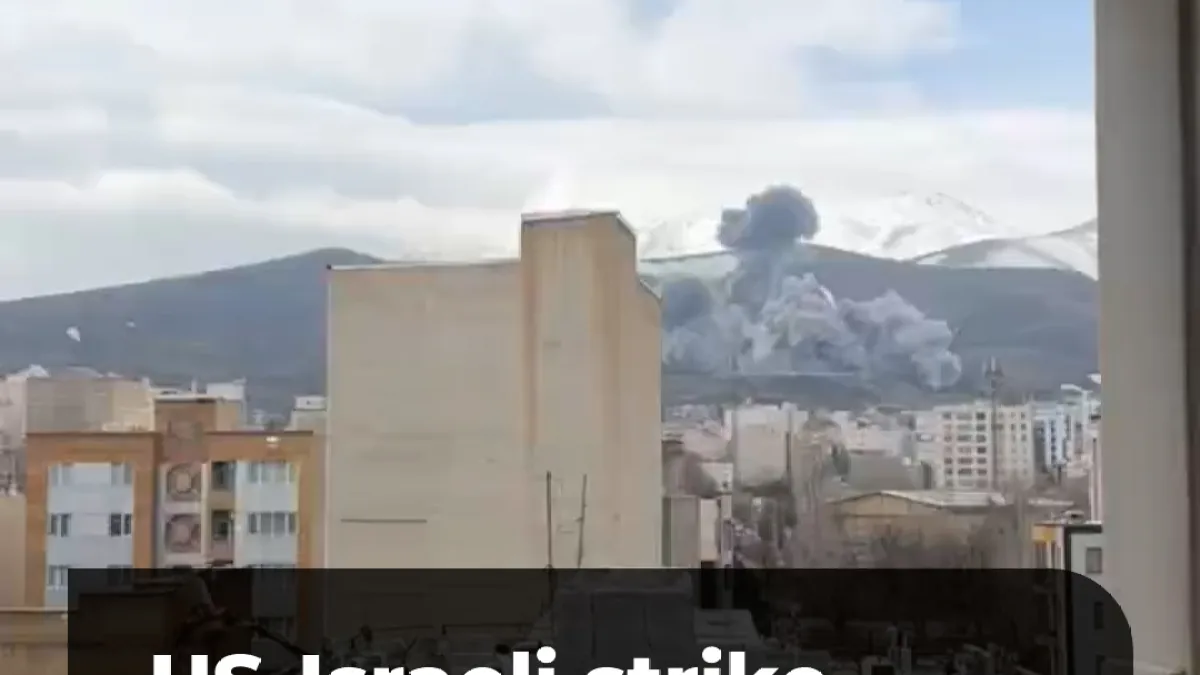
USIsraeli

Iran’s IRGC says spokesman Ali Mohammad Naini killed in US-Israeli attack | US-Israel war on Iran News

Israeli and US air attacks pound Iran as assassination campaign of country’s leadership continues.

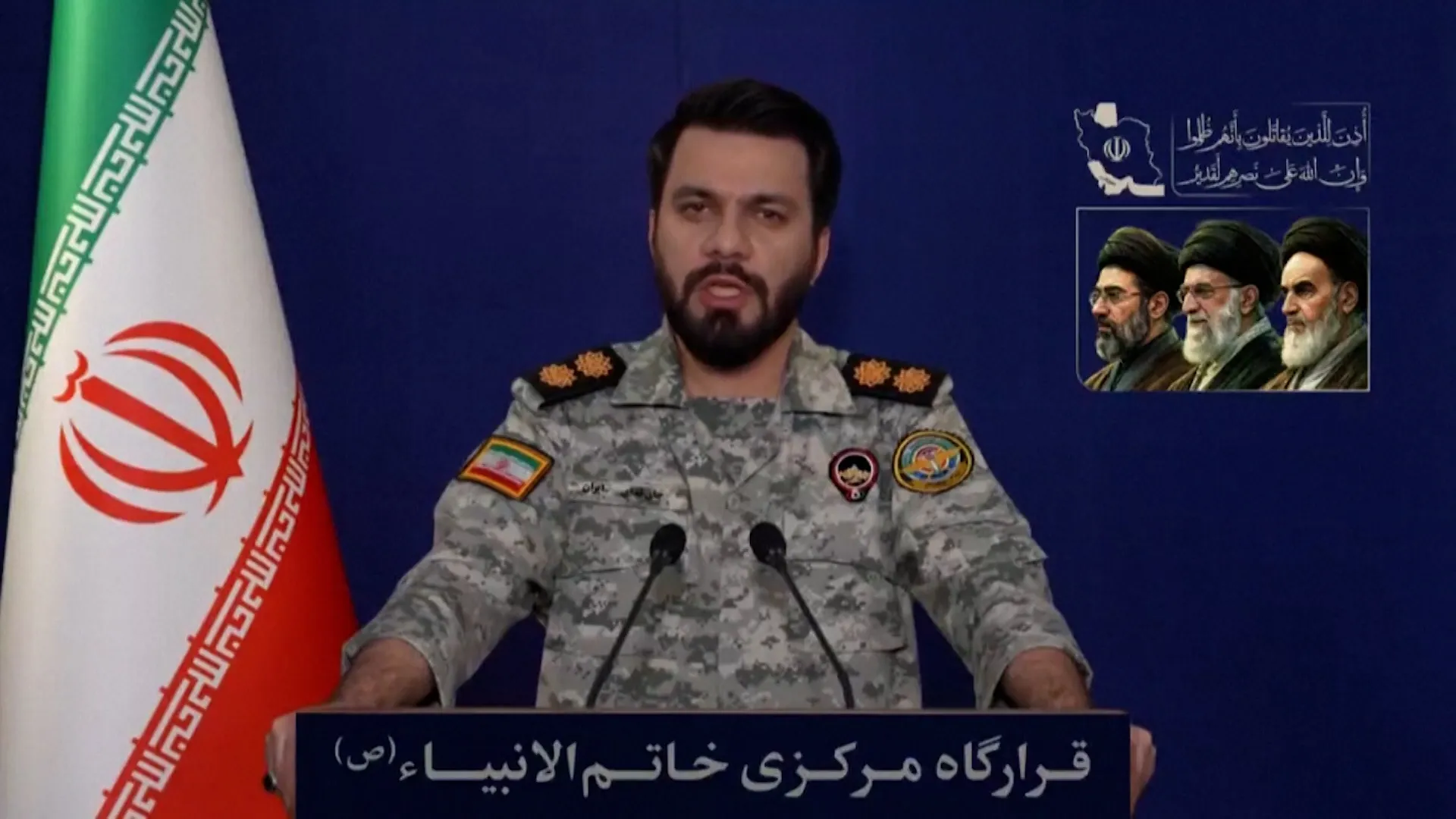
Iran’s Islamic Revolutionary Guard Corps spokesperson has been killed in overnight strikes carried out jointly by the United States and Israel, the IRGC reported, the latest in a mounting toll of senior officials assassinated since the war began.

Ali Mohammad Naini, a 68-year-old brigadier general who took up the IRGC spokesman role in 2024, “was martyred in the criminal cowardly terrorist attack by the American-Zionist side at dawn”, the IRGC said in a statement on Friday.

Recommended Stories

list of 3 itemsend of list

His death came just hours after he appeared on national television to insist that Iran retained full capacity to manufacture missiles, even under wartime conditions.

“Our missile industry deserves a perfect score … and there is no concern in this regard, because even under wartime conditions we continue missile production,” Naini was quoted by the Fars news agency as saying.

On Thursday, Israeli Prime Minister Benjamin Netanyahu said that “Iran no longer has the capacity to enrich uranium and manufacture ballistic missiles”.


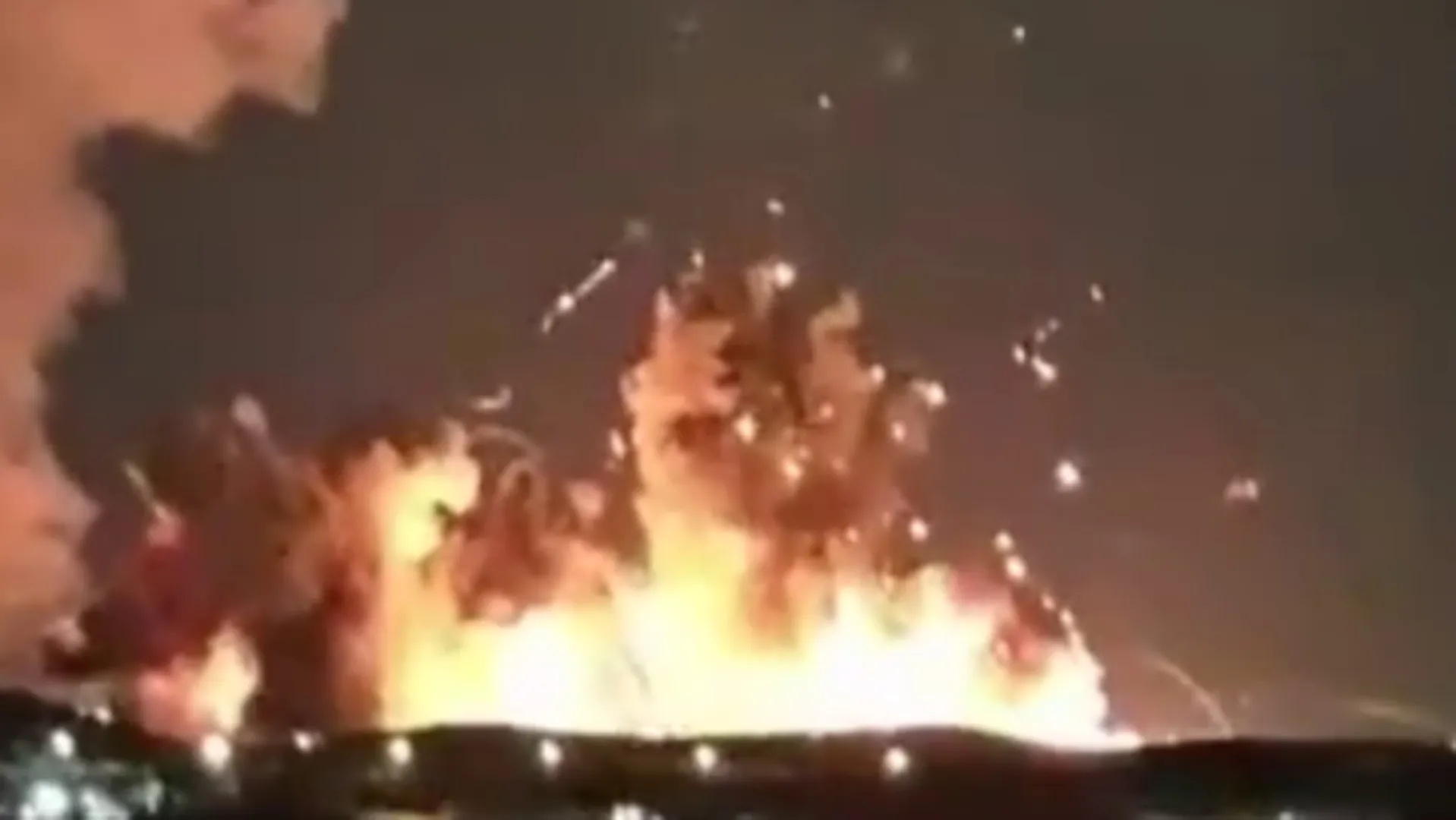
The Israeli army said on Friday that it was carrying out strikes across eastern Tehran, as the country marks the Persian New Year, Nowruz, which this year coincides with Eid al-Fitr.

Al Jazeera’s Mohamed Vall, reporting from Tehran, described the mood in the capital as “hushed”, with none of the customary festivities visible on the streets.

Naini’s killing is the latest in a string of high-profile assassinations that have gutted Iran’s establishment in under three weeks.

Supreme Leader Ayatollah Ali Khamenei was killed in the opening hours of the joint military campaign. He has since been replaced by his son, Mojtaba Khamenei.

Earlier this week, Ali Larijani, secretary of Iran’s Supreme National Security Council and one of the most influential figures in Iran’s establishment, was killed in a strike along with his son and several aides.

The head of the Basij paramilitary forces, Brigadier General Gholamreza Soleimani, and Intelligence Minister Esmail Khatib were also confirmed dead within the same 48-hour period.

US Defense Secretary Pete Hegseth made little effort to conceal Washington’s glee, saying on Thursday that “the last job anyone in the world wants right now” is a senior leadership role in the IRGC or Basij.

However, other US officials appeared to suggest that Washington and Israel’s aims in Israel were not aligned.

Director of National Intelligence Tulsi Gabbard told the House Intelligence Committee this week that US and Israeli objectives “are different”, adding that while Israel had been “focused on disabling the Iranian leadership,” Trump’s goals were to destroy Iran’s ballistic missile capabilities “and their navy”.

Israeli Prime Minister Netanyahu has cast the killings as a means of opening a path for Iranians to reclaim their country, saying on Wednesday the campaign against the country’s leadership “will not happen all at once” but that persistence would give Iranians “a chance to take their fate into their own hands”.

Foreign Minister Abbas Araghchi said the US and Israel had still failed to grasp that Iran’s political structure does not rest on any single person.

“The presence or absence of a single individual does not affect this structure,” he said.

Source link

US-Israeli strike kills 15 at Isfahan factory, Iranian media says | US-Israel war on Iran News

Iranian media report the deaths in central Iran as Tehran launches new missile salvoes at Israeli targets.

A missile strike on an industrial area of the central Iranian city of Isfahan has killed at least 15 people, with workers having been inside a factory at the time of the attack, Iranian media reports.

The strike hit a factory producing heating and cooling equipment on Saturday, a working day in Iran, according to the semi-official Fars news agency, which attributed the attack to US and Israeli forces.

Recommended Stories

list of 3 itemsend of list

It came on the 15th day of a conflict that Iran’s Ministry of Health says has now killed at least 1,444 people and wounded more than 18,500 since the US-Israeli attacks began on February 28.

Cities across Iran have been repeatedly targeted following the onset of hostilities.

On March 8, shelling damaged Russia’s consulate in Isfahan, injuring staff, with Moscow calling the strike a “blatant violation” of international conventions.


Iran’s Ministry of Culture said on Saturday that 56 museums and historic sites had been damaged, including Naqsh-e Jahan Square, a 17th-century centrepiece of Isfahan, and the UNESCO-listed Golestan Palace in Tehran.

UNESCO said it was “deeply concerned,” noting that four of Iran’s 29 World Heritage Sites had been affected.

Separately on Saturday, Iran’s army confirmed that Brigadier General Abdullah Jalali-Nasab had been killed in an Israeli attack, saying he was “martyred while defending the country”.

Earlier, US forces also struck Kharg Island, which handles roughly 90 percent of Iran’s crude exports, though a regional official said operations were continuing normally, and there were no casualties.

US President Donald Trump had previously threatened to target the island’s oil infrastructure if Tehran continued to disrupt the Strait of Hormuz.

Any prospect of negotiations appears remote. The Trump administration has rebuffed regional efforts to broker a ceasefire, with a senior White House official telling the Reuters news agency the president is focused on pressing ahead.

“He’s not interested in that right now, and we’re going to continue with the mission unabated,” the official said.

Iran has equally ruled out talks while the attacks continue, Reuters reported, citing an anonymous Iranian official.

Iranian Minister of Foreign Affairs Abbas Araghchi struck a defiant tone on Saturday, saying the US security framework in the region had “proven to be full of holes” and calling on neighbours to “expel foreign aggressors”.

Israeli Minister of Defence Israel Katz said the war was entering a “decisive phase”, which would “continue as long as necessary”.

Iran launched new missile salvoes at Israel on Saturday, with explosions heard over Jerusalem, according to reporters from the AFP news agency.

Six waves of missiles, some carrying cluster bomb warheads, struck wide areas of the country, the Israeli army said. In Eilat, a cluster munition impact injured three people, including a 12-year-old boy, according to The Times of Israel.

Source link

Aftermath of US-Israeli attacks on Tehran | US-Israel war on Iran News

Multiple explosions have been reported across Iran’s capital, Tehran, and other cities as United States-Israeli attacks and Iranian retaliation continue.

As the conflict saw its 13th day on Thursday, Iran’s representative to the United Nations, Amir Saeid Iravani, said at least 1,348 civilians have been killed.

The humanitarian toll continues to mount with more than 17,000 injured in Iran since the US and Israel launched their war on February 28. UNICEF described the situation as “catastrophic”, noting that more than 1,100 children have been reported injured or killed.

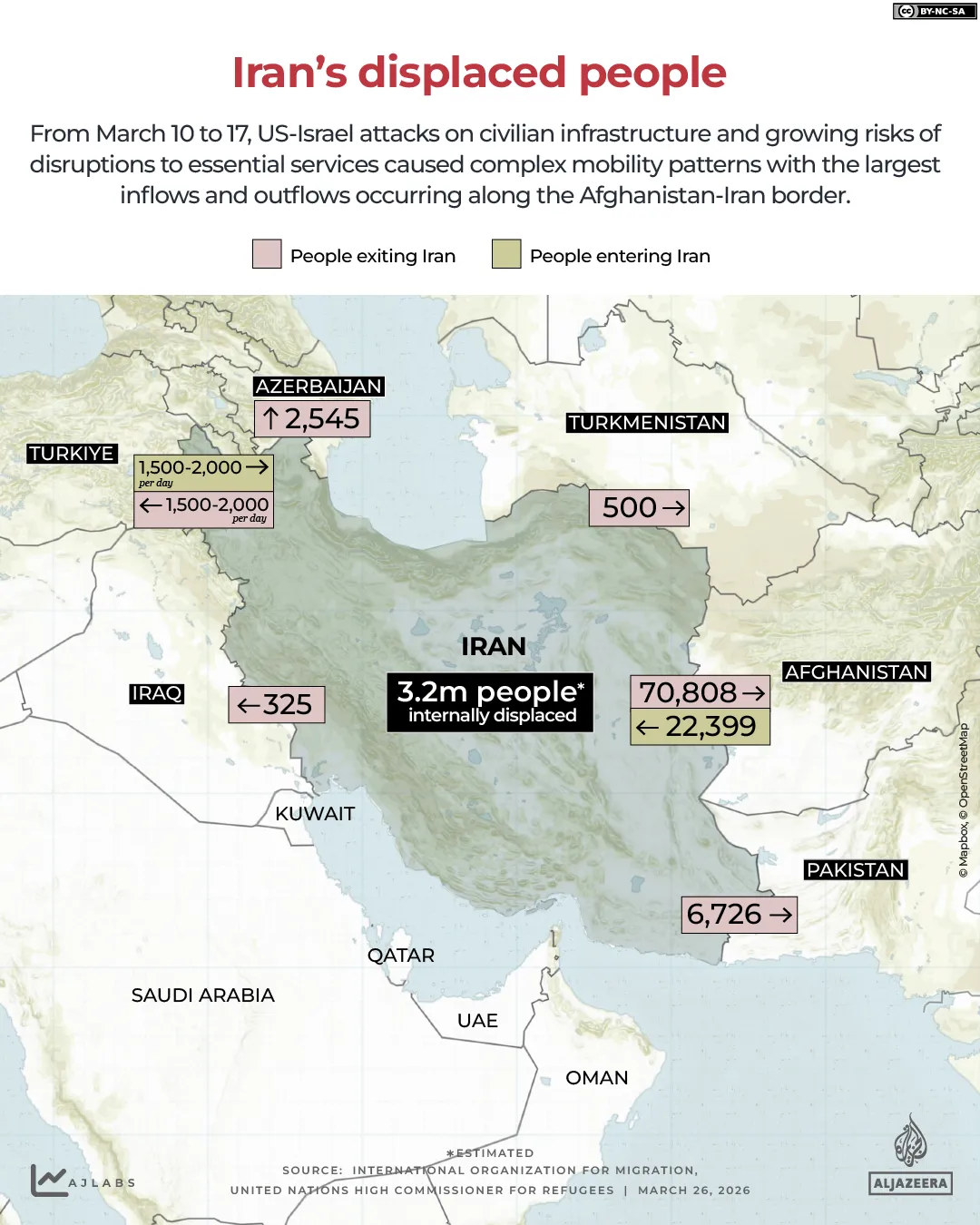
The Office of the UN High Commissioner for Refugees (UNHCR) estimated that up to 3.2 million people have been displaced within Iran since the conflict began. “This figure is likely to continue rising as hostilities persist, marking a worrying escalation in humanitarian needs,” UNHCR said in a statement.

Meanwhile, in Lebanon, Israeli attacks since March 2 have killed at least 687 people, including 98 children, according to Information Minister Paul Morcos.

Source link

Up to 3.2 million people displaced across Iran amid US-Israeli attacks: UN | US-Israel war on Iran News

United Nations refugee agency says forced displacement likely to increase as US and Israel continue deadly strikes across Iran.

More than three million people have been displaced in Iran since the United States and Israel launched a war against the country late last month, the United Nations says, as concerns mount over a worsening humanitarian crisis.

The UN High Commissioner for Refugees (UNHCR) said on Thursday that as many as 3.2 million people – representing between 600,000 and one million Iranian households – have been forcibly displaced since the war began on February 28.

Recommended Stories

list of 3 itemsend of list

“Most of them are reportedly fleeing from Tehran and other major urban areas towards the north of the country and rural areas to seek safety,” UNHCR official Ayaki Ito said in a statement.

“This figure is likely to continue rising as hostilities persist, marking a worrying escalation in humanitarian needs.”

The US and Israeli militaries have continued to bombard Iran despite mounting international condemnation and calls for de-escalation.

More than 1,300 people have been killed in US-Israeli attacks across the country to date, according to the latest figures from Iranian officials.

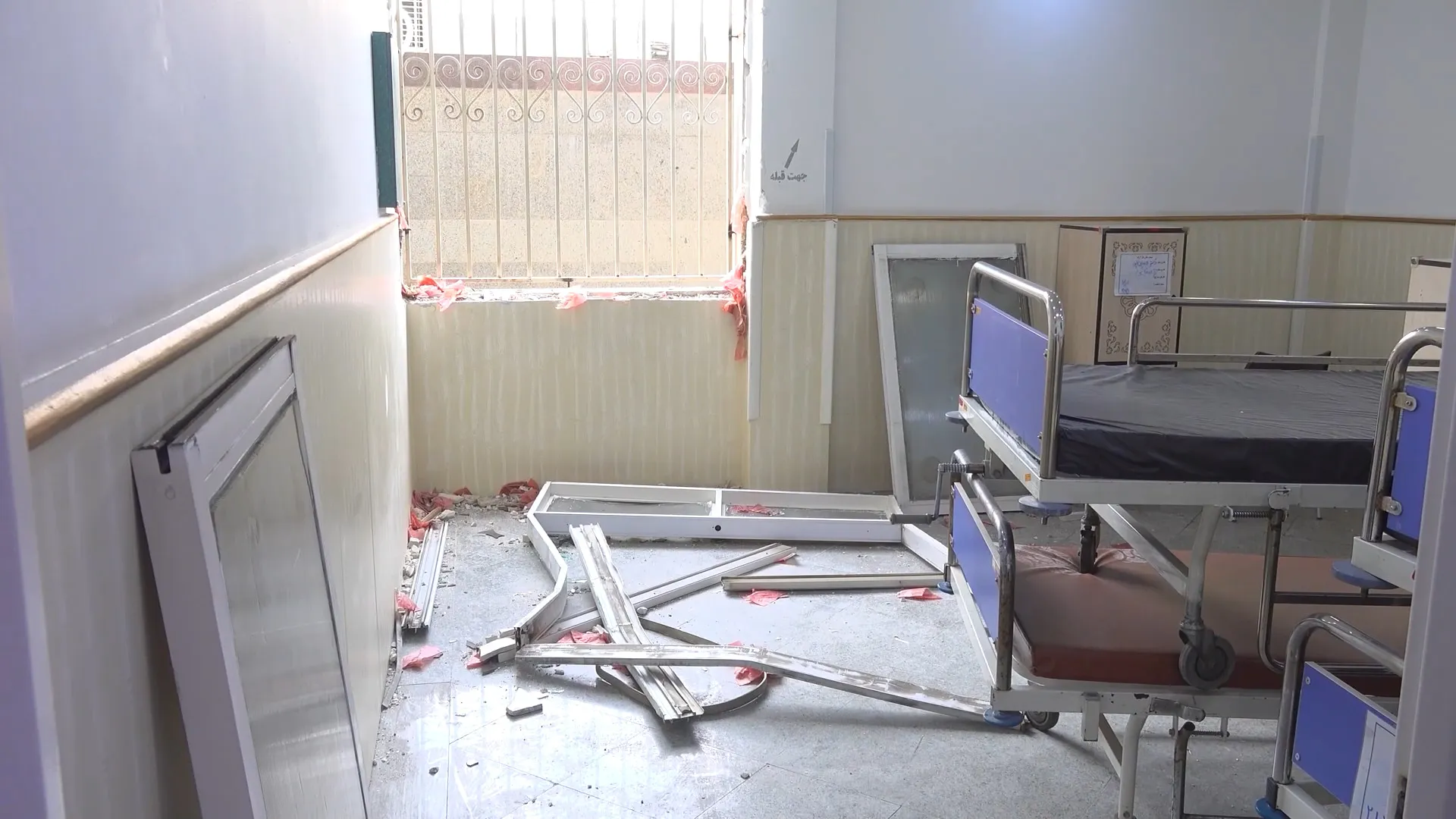
While the US and Israel have said they are targeting Iranian leaders as well as military and nuclear infrastructure, Iran says thousands of civilian sites, such as schools and hospitals, have been attacked.

Iran’s Deputy Health Minister Ali Jafarian told Al Jazeera on Thursday that medical teams have been responding to a growing number of casualties as strikes on urban areas have intensified in recent days.

“Most of these people are civilians,” Jafarian said, adding that more than 30 hospitals and health facilities have been damaged due to the attacks.

On Thursday, explosions were heard in several parts of the capital, Tehran, and other Iranian cities as the strikes continued.

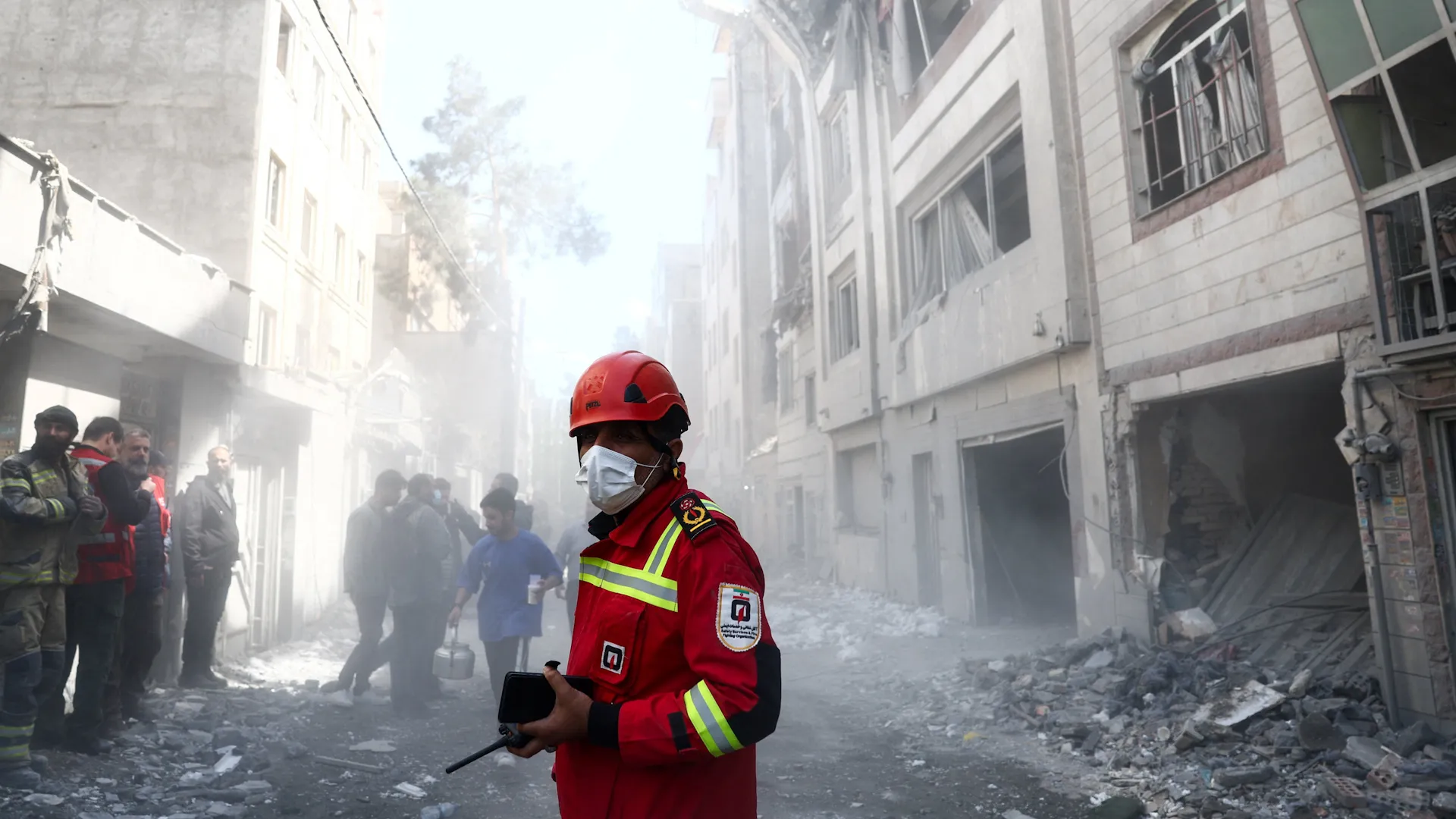
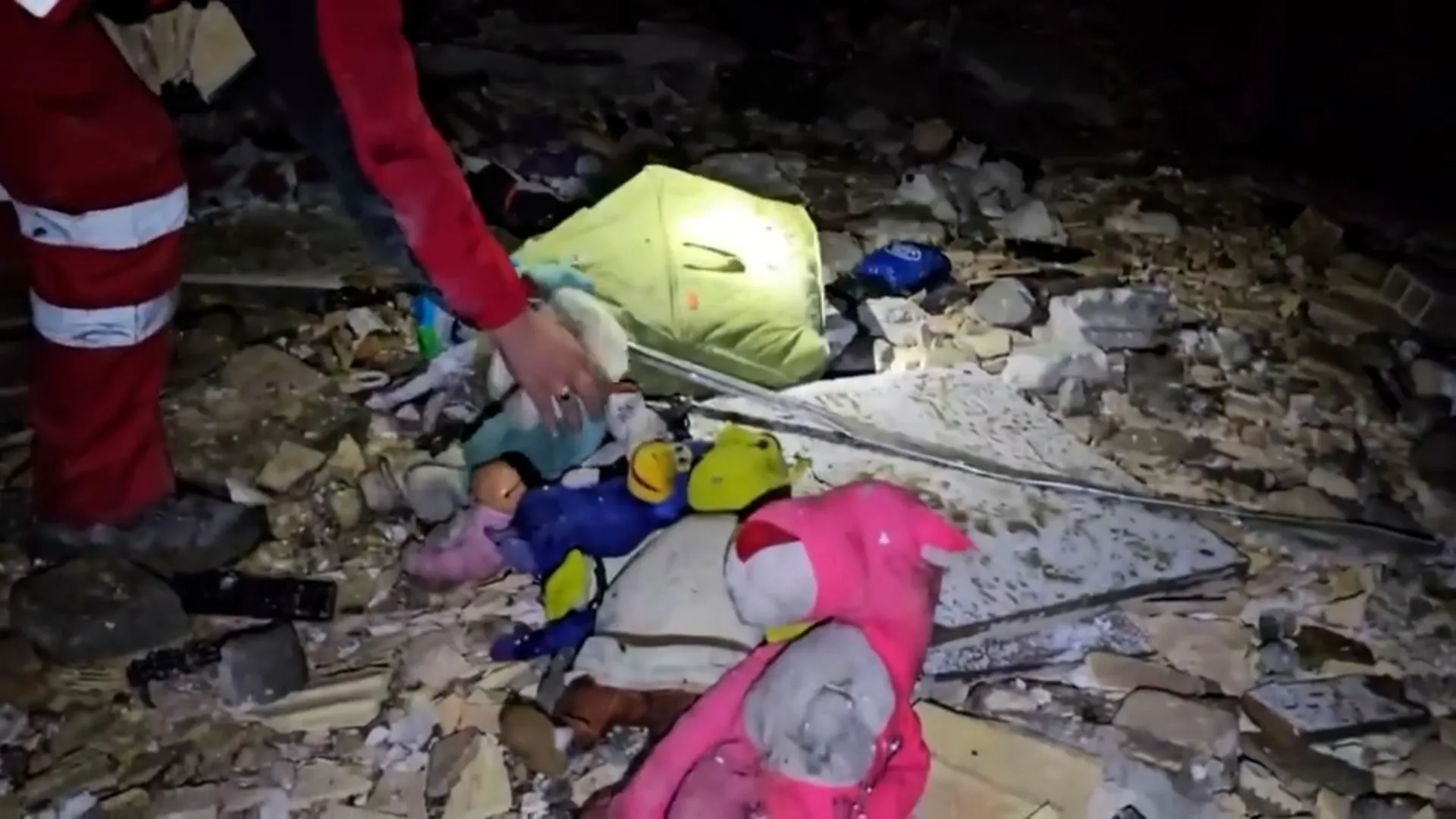
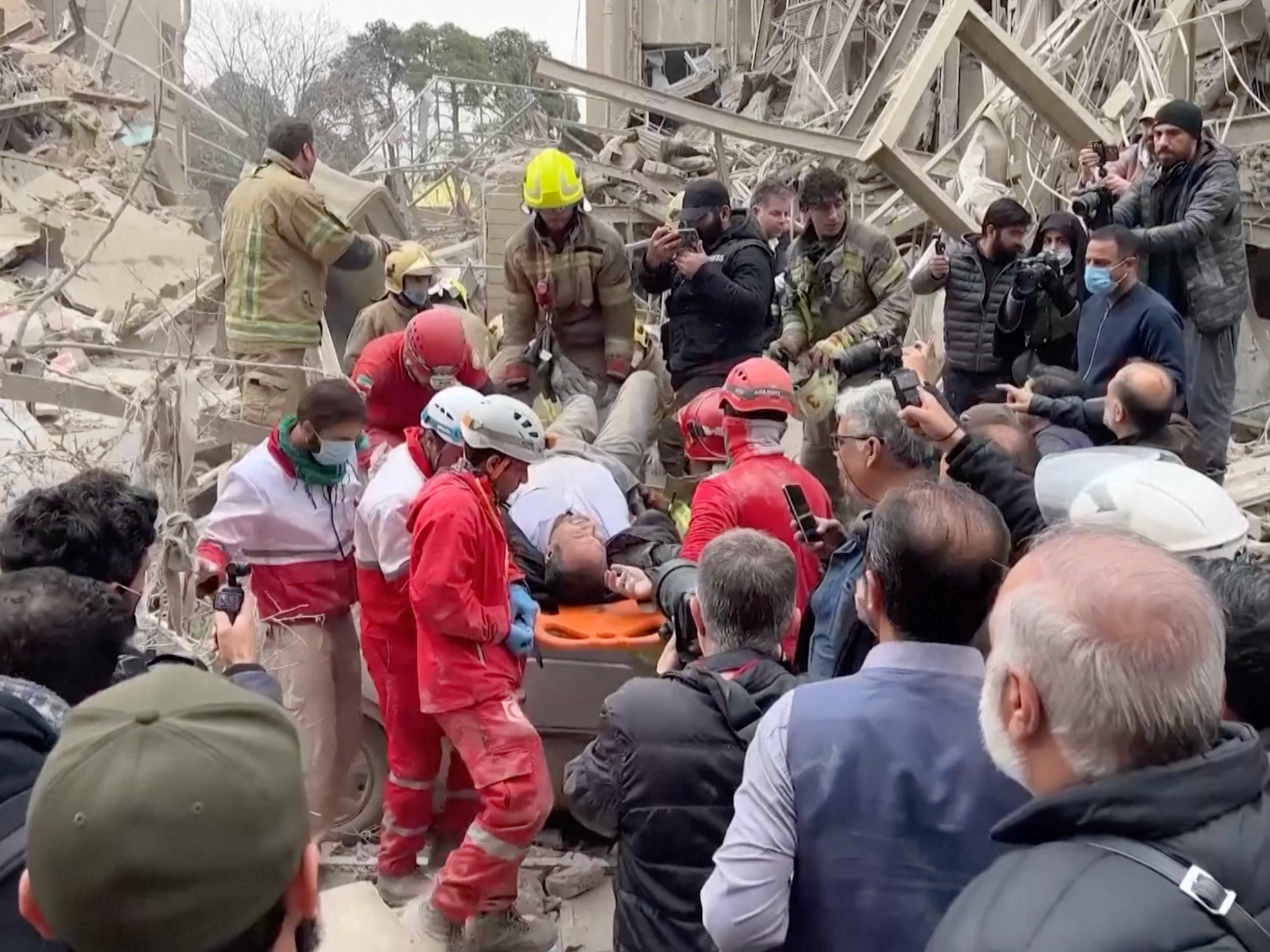
Al Jazeera’s Tohid Asadi said rescuers were digging through mounds of rubble as several multistorey apartment buildings were heavily damaged in recent attacks on a hard-hit eastern neighbourhood of Tehran.

“We saw bodies taken out [of the rubble] … and the situation was far beyond what I can call disastrous,” Asadi said.

Iran has responded to the US-Israeli assault by launching a barrage of missiles and drones at US bases and other sites in countries across the wider Middle East region.

It has also shut down the Strait of Hormuz, a critical Gulf waterway through which about one-fifth of the world’s oil transits, raising serious concerns of disruptions to global energy supplies.

Source link

Can Iran’s asymmetric warfare hold US-Israeli military power at bay? | US-Israel war on Iran News

Despite United States President Donald Trump’s repeated declarations of victory in the US-Israeli war on Iran, Tehran’s retaliatory strikes on Israel and US military assets in the region have continued, upending global financial and energy markets.

“We’ve had two decades to study defeats of the US military to our immediate east and west. We’ve incorporated lessons accordingly,” Iranian Foreign Minister Seyed Abbas Araghchi wrote in a post on X on March 1, the day after US and Israeli strikes on Tehran killed Iran’s Supreme Leader Ayatollah Ali Khamenei and other senior Iranian officials.

Recommended Stories

list of 3 itemsend of list

“Bombings in our capital have no impact on our ability to conduct war,” he wrote.

According to analysts, Iran has made use of “asymmetric” warfare tactics while striking the US and Israel. So, are Tehran’s war tactics working?

Here’s what we know:

What is ‘asymmetric’ warfare?

When the balance of capabilities is unequal in a conflict – as it is in relation to weapons in this one – the weaker party can turn to unconventional methods of warfare, John Phillips, a British safety, security and risk adviser and a former military chief instructor, told Al Jazeera.

This is known as “asymmetric” warfare.

This can include the use of guerrilla tactics, terrorism, cyberattacks, use of proxies and other indirect tools, Phillips said, in order “to offset conventional inferiority, avoid the enemy’s strengths, and exploit vulnerabilities in political will, logistics, and legal or ethical constraints”.

“Iran is conventionally weaker than the US and Israel, but relatively strong compared to many neighbours,” he said.

“What makes Iran distinctive is not that it uses these methods at all, but that they sit at the centre of its grand strategy rather than at its margins.”

Why is Iran using asymmetric warfare?

In the ongoing war between Iran and the US-Israel, Washington and Tel Aviv have been using expensive missiles and drones to attack Iran and to intercept missiles Iran has fired back. The Patriot and THAAD defence systems, for example, which launch interceptors to take out incoming drones and missiles, can cost millions of dollars for each missile they fire. This compares with the $20,000-$35,000 cost of each Iranian Shahed drone.

As a result, the US has reportedly spent $2bn a day in its war on Iran and there are fears it could run out of interceptor missiles altogether if the war goes on for more than a few weeks.

It is therefore in Iran’s interests to focus on holding out against strikes and protecting its own weapons supplies while it does so, military experts say.

However, Phillips explained that precision strikes and sabotage by Israel and the US have demonstrated that Iran is not able to fully shield its missile, drone and nuclear‑related assets, while sanctions and domestic pressures have limited its capacity to sustain a very high‑tempo confrontation.

“As a result, Iran’s asymmetric approach is best understood as an effective ‘survival and leverage’ mechanism that produces a chronic, costly ‘shadow war’, rather than a path to decisive regional hegemony or victory,” he said.

Iran began using asymmetric warfare techniques following the 1979 Iranian revolution, which overthrew Shah Mohammad Reza Pahlavi.

“Instead of trying to match high‑end aircraft, precision munitions, or blue‑water fleets, [Iran] has built a ‘forward deterrence’ posture that operates in the grey zone between war and peace,” Phillips said.

“This is backed by large inventories of ballistic and cruise missiles, mass‑produced drones [often handed to proxies], cyber-operations, and a posture of underground, dispersed and hardened facilities that make preemption difficult and preserve some retaliatory capability.”

What asymmetric tactics has Iran been using?

Enemy depletion tactics

Since US-Israeli strikes on Iran began on February 28, Tehran has launched a wave of ballistic missiles targeting Israel and US military bases across the Gulf region.

Using a mix of short and medium-range ballistic missiles, as well as drone swarms through this defence system, Iran aims to deplete Israeli and US interceptor stockpiles.

Economic warfare

Iran has shut down the Strait of Hormuz through which about 20 percent of global oil and gas supplies are shipped. Linking the Gulf to the Gulf of Oman, the strait is the only waterway to the open ocean available to Gulf oil producers.

On Thursday, Iran attacked fuel tankers in Iraqi waters. Instability in and around the Strait of Hormuz drove Brent crude oil prices past $100 a barrel last week, with wild swings ongoing, prompting fears of a global energy crisis.

Iran has also targeted civilian infrastructure like airports and desalination plants which are crucial for water supply in the region, and it has launched drones targeting oil depots.

INTERACTIVE - Strait of Hormuz - March 2, 2026-1772714221
(Al Jazeera)

War on global finance

Meanwhile, on Wednesday this week, Iran’s Islamic Revolutionary Guard Corps (IRGC) threatened to attack “economic centres and banks” with links to United States and Israeli entities in the Gulf region after what it claimed was an attack on an Iranian bank, with the war in its 12th day.

Since then, many banks like Citibank and HSBC in Qatar, have begun shutting, further threatening global financial stability.

Top technology companies such as Google, Microsoft, Palantir, IBM, Nvidia and Oracle, as well as the listed offices and infrastructure for cloud-based services, are also located in several Israeli cities and in some Gulf countries, which Iran has also threatened to attack.

Use of proxies

Iran has aimed to keep the much more powerful US military and its allies off balance through proxies in Iraq, Lebanon and Yemen. Hezbollah in Lebanon, for example, has fired missiles and drones into northern Israel since March 2 as part of Iran’s retaliatory strikes.

“At the core of this [asymmetric] approach is a network of proxies and partners – Hezbollah in Lebanon, Shia militias in Iraq, groups in Syria, Hamas and Palestinian Islamic Jihad in Gaza and the Houthis in Yemen – which receive weapons, training, funding and ideological guidance from Iran,” Phillips said.

These actors allow Tehran to threaten Israeli and US forces, as well as regional shipping lanes, on multiple fronts, “often with a degree of deniability and at a fraction of the cost of deploying its own regular forces”, Phillips noted.

‘Mosaic’ defence system

Iran has organised its defensive structure into multiple regional and semi-independent layers instead of concentrating power in a single command chain that could be paralysed by a decapitation strike. This concept is most closely associated with the formation of the parallel military force, the Islamic Revolutionary Guard Corps (IRGC), particularly under former commander Mohammad Ali Jafari, who led the force from 2007 to 2019.

The doctrine has two central aims: to make Iran’s command system difficult to dismantle by force, and to make the battlefield itself harder to resolve quickly by turning Iran into a layered arena of regular defence, irregular warfare, local mobilisation and long-term attrition.

What damage have these tactics done to the US and Israel?

Iran’s asymmetrical playbook has made the war more expensive for the US. It has been forced to spend money on replacing stockpiles of expensive missiles like Tomahawks and defensive systems such as Patriot and THAAD interceptors.

According to the Center for Strategic and International Studies (CSIS), the first 100 hours alone of Operation Epic Fury – the codename for the US-Israeli assault on Iran – cost the US approximately $3.7bn, mostly unbudgeted. Israel, already reeling from the economic strain of its prolonged wars in Gaza and Lebanon, faces mounting domestic pressure as daily sirens force millions into bunkers.

While the Pentagon has not yet announced an official estimate for the cost of the war, late last week, two congressional sources told US broadcaster MS NOW that the war is costing the United States an estimated $1bn a day.

A day later, Politico reported that US Republicans on Capitol Hill privately fear the Pentagon is spending close to $2bn a day on the war.

Meanwhile, officials from President Donald Trump’s administration estimated during a congressional briefing this week that the first six days of the war on Iran had cost the US at least $11.3bn, a source familiar with the matter told the Reuters news agency.

Reporting from Washington, DC, following the publication of the CSIS analysis last week, Al Jazeera’s Rosiland Jordan said the Pentagon had put together a $50bn supplemental budget request in order to replace Tomahawk and Patriot missiles and THAAD interceptors already used in the first week of the war, along with other equipment that had been damaged or worn out so far.

Are Iran’s tactics working?

To a certain extent, they are.

According to a report by The Soufan Center, the “pattern of Iranian counterattacks suggests a layered operational approach designed to generate pressure on Gulf states, create regional disruption on land, sea, and air, while simultaneously attempting to exhaust US and allied defensive resources”.

“Tehran appears to be fighting a war of endurance: prolong the conflict, expand the economic battlefield, make the costs increasingly prohibitive, ration advanced capabilities, and impose steady human and financial costs on its adversaries. All with the hope that political tolerance erodes faster in Jerusalem and Washington than in Tehran,” the report noted.

This may be working. Questions about the cost of the war are already causing a political headache for the Trump administration in Washington.

Congress’s House Minority Leader Hakeem Jeffries told reporters at a Capitol Hill news conference last week that President Donald Trump is “plunging America into another endless conflict in the Middle East” and “spending billions of dollars to bomb Iran”.

“But they can’t find a dime to make it more affordable for the American people to go see a doctor when they need one,” he said. “Can’t find a dime to make it easier for Americans who are working hard to purchase their first home. And they can’t find a dime to lower the grocery bills of the American people.”

Trump won the presidency in 2024 largely on the back of a promise to handle the rising cost of living and he faces mid-term elections this year. It is likely that the cost of the war will not play well with voters, analysts say.

In Israel, opposition politician Yair Golan has also criticised his government’s economic management of the war.

In a post on X on Sunday, he wrote: “The war with Iran has been planned for months. The fact that the Israeli government has not prepared an orderly economic plan to support citizens during the war period is a disgrace.

“The serving and working public should not be the one footing the bill for the war out of its own pocket while billions of shekels go to the evading and non-working sector,” he said, adding that the opposition will soon replace the government.

Ali Vaez, director of the Iran Project at the International Crisis Group, told Al Jazeera that at a fraction of the cost – and despite a significant technological gap – Iran has demonstrated an ability to hold the global economy at risk, to pressure Washington into “blinking first”.

“A steady stream of inexpensive drones and limited missile strikes can disrupt the thriving economies of Israel and the Gulf, sending shockwaves through energy markets and ultimately translating into higher prices at American gas stations,” he said.

Phillips, the British safety, security and risk adviser, said the strategy has worked in important but limited ways.

“It has helped the Islamic republic survive intense sanctions, clandestine campaigns and periodic strikes while maintaining a credible ability to hit US bases, Israeli territory and Gulf infrastructure, which in turn raises the political and military cost of any attempt at regime-change war,” he said.

“Iran’s reach – stretching from Lebanon and Syria to Iraq and Yemen – allows it to shape crises, quickly raise the stakes of local conflicts, and force adversaries to devote substantial resources to missile defence, counter‑UAV systems, naval protection and regional coalition management,” he noted.

“However, there are clear constraints and growing problems. Key proxies such as Hezbollah and various militias have suffered leadership and infrastructure losses; the network has become more fragmented and sometimes less controllable, increasing the risk of unwanted escalation even as its coherence as an instrument of policy erodes,” he added.

Source link

Known Unknowns and Unknown Unknowns: The US-Israeli War on Iran

Modern wars are fought not only with weapons but with assumptions—and the most dangerous assumptions are often invisible to those making them. Donald Rumsfeld’s distinction between known unknowns (questions we recognize but cannot answer) and unknown unknowns (risks we have not even framed as questions) captures something essential about the current confrontation between the United States, Israel, and Iran.

The Nuclear Material Problem

The June 2025 12-day war struck several of Iran’s nuclear facilities but left the most consequential question unanswered: where is the material? The March 2026 campaign has struck deeper, targeting hardened and dispersed sites that June’s operations left intact. Yet the fundamental uncertainty has not resolved—it has compounded. Iran reportedly retains roughly 400 kilograms of uranium enriched to 60%, approaching weapons-grade, and the precise location of that stockpile is now more opaque than before. On March 2, the International Atomic Energy Agency (IAEA) reported the entrance buildings of Iran’s underground Natanz enrichment plant had been bombed, but without inspection access, the agency cannot reconstruct a monitoring baseline.

The strategic paradox is acute. Any Iranian government—this one or a successor—must now confront a nuclear-armed Israel and a United States willing to strike Iranian territory twice in nine months. Under those conditions, nuclear capability looks less like a provocation and more like a rational insurance policy. The war may have permanently entrenched the very incentive it was designed to dismantle. A further risk of escaping conventional arms-control frameworks is if Iranian institutions fragment, specialized nuclear expertise disperses internationally, potentially becoming available to states or non-state actors.

Regime Change and What Follows

The war’s stated objective rests on uncertain ground. Intelligence assessments before the conflict reportedly concluded that even a large-scale assault was unlikely to produce regime collapse—yet the campaign proceeded anyway. The Iranian state has shown remarkable institutional resilience, with no visible defections among senior leadership, a government operating under its constitutional framework, and a regime that has absorbed the Iran-Iraq War, the Green Movement, and decades of sanctions.

War has accelerated the succession question around Ali Khamenei. One trajectory involves Mojtaba Khamenei, whose rise would mean dynastic continuity rather than transformation; another sees the IRGC consolidating power—equally misaligned with Western hopes. The question of what comes after was not answered before the bombs fell.

Retaliation, Major-Power Shadows, and Strategic Incoherence

Iran’s retaliation has demonstrated its asymmetric reach. The IRGC claims attacks on at least 27 bases hosting American troops across the region, alongside Israeli military facilities. Tehran appears to be pacing its response, sustaining an attrition campaign designed to exhaust interceptor stocks rather than overwhelm them in a single strike.

The major power dimensions compound this. Russia has reportedly been providing intelligence on American naval deployments; Chinese-linked entities have allegedly tracked US forces via satellite. Meanwhile, strategic incoherence in Washington compounds every other risk. Vice President J.D. Vance and Secretary of Defense Pete Hegseth have framed this as a limited campaign against nuclear infrastructure; Trump has simultaneously floated regime change on social media.

The Munitions Race

The deepest structural vulnerability may not lie on the battlefield but in the arithmetic of an industrial system never designed to fight this kind of war. The first 36 hours consumed more than 3,000 precision-guided munitions and interceptors. Joint Chiefs Chairman General Dan Caine had warned that stockpiles were already significantly depleted before the first strike. Secretary Marco Rubio subsequently acknowledged that Iran produces an estimated 100 missiles a month versus roughly six or seven high-end interceptors that American industry can manufacture in the same period.

That deficit has a history. The US likely expended 100 to 150 THAAD interceptors and 80 SM-3s supporting Israel during June’s Twelve-Day War. Those stocks were never fully replenished. The bottlenecks are physical as well as financial. Lockheed Martin’s plan to raise PAC-3 MSE production to 2,000 units per year addresses a six-to-seven-year horizon, not the current emergency.

The drone dimension adds a layer officials have been slow to acknowledge. Hegseth and Caine admitted in a closed-door briefing that Iran’s Shahed drones present a challenge US air defenses cannot fully meet. The Shahed flies low and slow—hard to detect and poorly matched to the high-end interceptors THAAD and SM-3 are optimized to defeat. Intercepting a drone can cost roughly five times what it costs to manufacture one.

This crystallizes the war’s most consequential known unknown: how much of Iran’s arsenal reflects genuine capability, and how much reflects deliberate restraint? The IDF assessed Iran possessed roughly 2,500 ballistic missiles on February 11.

The search for emergency solutions has produced one remarkable geopolitical inversion. The Pentagon has approached Ukraine about purchasing drone interceptors. They are low-cost systems Ukrainian manufacturers developed specifically to hunt Shaheds, built from years of adapting to exactly the threat now confounding American air defenses in the Gulf. The US is buying drone killers from a country it recently all but abandoned! The implications extend to the Indo-Pacific. Every interceptor fired over the Gulf of Bahrain is one fewer available in the Taiwan Strait.

The Energy Shock

The Strait of Hormuz has moved from a textbook chokepoint to a live emergency. Tanker traffic has come to a near standstill. War-risk insurance premiums have made commercial passage unviable even where it remains physically possible. At least five tankers have been struck across the Gulf, the Gulf of Oman, and nearby waters. Approximately 20 million barrels of oil per day—a fifth of global consumption—normally transit the strait, alongside roughly 20% of global LNG trade. Traders are warning that oil prices could surge past $100 a barrel if the conflict in Iran continues to escalate. Goldman Sachs Research estimates that a full one-month closure would add $15 per barrel, assuming no compensating measures like spare pipeline utilization or releases from strategic petroleum reserves. Bank of America sees tail risk far higher, estimating a prolonged shutdown could add $40–$80 per barrel above current prices.

The LNG dimension may prove more immediately damaging than oil. QatarEnergy has halted production at Ras Laffan, the world’s largest LNG facility, after Iranian drone attacks. This has already caused European natural gas futures to spike. If global LNG tightens, Europe must compete with Asian buyers on price. That competition may, in turn, force Europe back toward Russian gas, quietly reversing one of the most consequential geopolitical achievements of the post-Ukraine sanctions era.

The exposure is global and unevenly distributed. China, India, Japan, and South Korea account for roughly 75% of Hormuz crude exports and 59% of its LNG flows. South Korea has warned it could exhaust LNG reserves within nine days and has announced a 100 trillion won stabilization fund. India is pivoting toward Russian crude. These developments structurally benefit Moscow regardless of the war’s outcome.

The fertilizer dimension compounds the energy shock with a slower fuse. Nitrogen fertilizers are manufactured from natural gas; roughly a third of globally traded urea transits Hormuz. QatarEnergy’s halt removes fertilizer output simultaneously with LNG. Urea prices have already surged $60 to $80 per ton at New Orleans, with the spring planting window closing. The food-price consequences will not appear in grocery stores for months. But they are already locked in.

The Gulf Security Paradox

For decades the Gulf states managed their rivalry with Iran below the threshold of open confrontation, relying on the American security umbrella while avoiding direct entanglement. The war has collapsed that strategy. The Gulf states did not arrive at this crisis as Iran’s adversaries but rather as reluctant bystanders who had invested enormous diplomatic capital in preventing it. They gave ironclad assurances to Tehran, both before the war and up to its eve, that their territories would not serve as launchpads. That Iran responded by striking these same neighbors is a strategic miscalculation of historic proportions and a moral failure that may poison relations for a generation.

This has opened a structural debate now conducted in public. Is American military presence a protective shield or a magnet for retaliation? Citizens and analysts are asking why Gulf states should bear the risk of hosting US forces when Washington appears unable to protect them. Undoubtedly, Tehran understands this dynamic. Drone strikes on UAE-based data centers targeted Gulf publics’ confidence in the connectivity model as much as American commercial interests. The UAE and Saudi Arabia have staked their post-oil futures on projecting stability and attracting mobile capital. Intercepting most of the incoming fire is not sufficient when global firms are deciding where to invest next decade.

The crisis confronts the Gulf Cooperation Council with a strategic fork. One path leads toward deeper collective security, featuring integrated missile defense, expanded intelligence sharing, and coordinated maritime protection that could reduce dependence on any single external patron. The other leads toward renewed fragmentation as internal rivalries re-emerge.

Former Qatari prime minister Hamad bin Jassim bin Jaber Al Thani warned that the Gulf “must not be dragged into a direct confrontation with Iran,” arguing that such a clash would “deplete the resources of both sides and provide an opportunity for outside forces to control us under the pretext of helping us escape the crisis.” Yet the same crisis that could finally catalyze genuine Gulf collective security could just as easily deepen the divisions that have historically prevented it.

The Mediator’s Dilemma and the Meta-Unknown

The conflict has also damaged the diplomatic architecture that previously helped manage US-Iran tensions. Oman and Qatar built genuine credibility as intermediaries through years of patient back-channel work. Effective mediation requires neutrality. When conflict spreads into the territory of potential mediators, that credibility erodes. Iran’s decision to strike the very states whose neutrality made diplomacy possible may have burned the bridges needed to end the war—which is perhaps the most consequential unknown unknown in the entire conflict, second only to the US twice striking Iran in the span of nine months while negotiations were still ongoing.

At the deepest level lies a question no intelligence assessment can answer: whether the strategic logic of the war is coherent at all. Negotiations failed because each side demanded outcomes the other could not accept. The same incompatibility that made diplomacy impossible may make military victory equally elusive. Iran cannot surrender unconditionally without ceasing to be the Islamic Republic. And the conditions that make nuclear deterrence attractive to any Iranian government—this one or a successor—have not been removed by the strikes; they have been reinforced.

Conclusion

In sum, the US-Israeli campaign against Iran has illuminated the limits of military certainty. Known unknowns—munition shortages, asymmetric retaliation, and energy vulnerabilities—interact with unknown unknowns—nuclear dispersal, regime succession, and Gulf fragmentation—to create a conflict whose trajectory is inherently unpredictable. Rather than eliminating threats, the strikes may have entrenched incentives for nuclear retention, incentivized strategic caution, and stressed regional and global systems. The coherence of the war itself is in question, as military action and diplomacy pull in contradictory directions. Ultimately, the conflict underscores that modern warfare is as much about managing uncertainties as it is about destroying targets.

Source link

Russia, China raise diplomatic voices against US-Israeli attacks on Iran | Military News

China’s foreign minister tells Israel to end attacks; Russian FM Lavrov says no sign Tehran seeking nuclear bomb.

Russia and China have criticised the US and Israeli attacks on Iran, with Moscow saying it had seen no evidence that Tehran was developing nuclear weapons, and Beijing demanding an immediate halt to the joint attacks.

Chinese Minister of Foreign Affairs Wang ⁠Yi told his Israeli counterpart, Gideon Saar, on Tuesday that the attack on Iran came as negotiations between Washington and Tehran had “made significant progress, including addressing Israel’s security concerns”, China’s Foreign Ministry said in a statement.

Recommended Stories

list of 4 itemsend of list

“Regrettably, this process has been interrupted by military action. China opposes any military strikes launched by Israel and the US against Iran,” Wang told the Israeli foreign minister during a phone call, according to the ministry.

“China calls for an immediate cessation of military operations to prevent the further escalation and loss of control of the conflict,” Wang said.

“Force cannot truly solve problems; instead, it will bring new problems and serious long-term consequences,” he added.

According to the Chinese Foreign Ministry, Saar agreed to a request from Wang to take “concrete measures to ensure the safety of Chinese personnel and institutions” in Iran.

The call on Tuesday with Israel and Beijing’s apparent efforts to stabilise the spiralling regional situation followed calls Wang made on Monday to discuss the conflict with the foreign ⁠ministers of Iran, Oman and France.

‘US doesn’t attack those who have nuclear bombs’

Russian Foreign Minister Sergey Lavrov also criticised the US and Israel on Tuesday, saying their war on Iran could lead to the very outcome they claimed they wanted to prevent: nuclear proliferation.

Lavrov told a news conference that the logical consequence of the US and Israel’s actions could be that “forces will emerge in Iran… in favour of doing exactly what the Americans want to avoid – acquiring a nuclear bomb”.

“Because the US doesn’t attack those who have nuclear bombs,” Lavrov said.

Lavrov also said that Arab countries could now join the race to acquire nuclear weapons, given the experience of recent days and “the nuclear proliferation problem will begin to spiral ⁠out of control”.

Israel is widely seen as the Middle East region’s only nuclear-armed state, which it neither confirms nor denies.

“The seemingly paradoxical declared noble goal of starting a war to prevent the proliferation of nuclear weapons could stimulate completely opposite trends,” he said.

Lavrov, who said that Moscow had still seen no evidence that Iran was developing ⁠nuclear weapons, spoke with his Iranian counterpart, ⁠Abbas Araghchi, on Tuesday, and said that Russia stood ready to help find a diplomatic solution to the conflict, while rejecting the US and Israel’s use of “unprovoked military aggression” in the region.

As the US and Israel launched their first strikes on Iran on Saturday, Russia’s Foreign Ministry accused the close allies of carrying out a “premeditated and unprovoked act of armed aggression against a sovereign and independent UN member state”.

The two countries had hidden their true intention of regime change in Tehran “under the cover” of negotiations to normalise relations with Iran, the ministry said.

The US and Israel were “swiftly pushing the region toward a humanitarian, economic, and potentially even radiological disaster”, the ministry warned.

“Responsibility for the negative consequences of this manmade crisis, including an unpredictable chain reaction and spiralling violence, lies entirely with them,” the statement added.

Russia has faced its own accusations of aggression against a sovereign state after it launched a full-scale invasion of Ukraine, a war now in its fifth year.

Source link

Are US-Israeli attacks against Iran legal under international law? | Israel-Iran conflict News

US and Israeli strikes against Iran, which have sparked a regional war, likely violate the UN Charter’s prohibition on aggression and lack any valid legal justification, experts say.

“This is not lawful self-defence against an armed attack by Iran, and the UN Security Council has not authorised it,” the United Nations special rapporteur on the promotion of human rights and “counterterrorism”, Ben Saul, told Al Jazeera.

Recommended Stories

list of 3 itemsend of list

“Preventive disarmament, counterterrorism and regime change constitute the international crime of aggression. All responsible governments should condemn this lawlessness from two countries who excel in shredding the international legal order.”

The administration of United States President Donald Trump did not seek authorisation from the UN Security Council – or even from domestic lawmakers in Congress – for the war.

And Iran did not attack the US or Israel prior to the strikes that killed Iranian Supreme Leader Ali Khamenei and several other senior officials, as well as hundreds of civilians.

Yusra Suedi, assistant professor in International law at the University of Manchester, said there are grounds to believe that the attacks against Iran amount to a crime of aggression.

“This was an act of use of force that was unjustified,” Suedi told Al Jazeera.

International law is a set of treaties, conventions and universally accepted rules that govern relations between countries.

Imminent threat?

The Trump administration has argued that Iran posed a threat to the US with its missile programme and nuclear programme, arguing that military action was necessary.

But the UN Charter prohibits unprovoked attacks against other countries.

“All Members shall refrain in their international relations from the threat or use of force against the territorial integrity or political independence of any state, or in any other manner inconsistent with the Purposes of the United Nations,” the founding document of the UN says.

Rebecca Ingber, a professor at Cardozo School of Law at Yeshiva University who previously served as an adviser to the US Department of State, said that the prohibition of the use of force is a “bedrock” principle of international law that allows for only limited exceptions.

“States may not use force against the territorial integrity of other states except in two narrow circumstances — when authorised by the UN Security Council or in self-defence against an armed attack,” said Ingber.

Suedi said one instance in which the use of force can be legal is when a country seeks to thwart an imminent attack by another state.

Trump has said that the goal of the war is to “defend the American people by eliminating imminent threats from the Iranian regime”.

But Suedi cast doubt over that assertion.

“Imminence in international law is really understood to be something that is instant, something that is overwhelming, something that leaves really no other choice but to act first, something that is pretty much happening now,” Suedi said.

She noted that Trump himself had said repeatedly that the June 2025 US attacks on Iran “obliterated” the country’s nuclear programme, and that Tehran and Washington were holding talks when the war broke out on Saturday.

“There really was no evidence of an imminent threat, and that the attack was a pre-emptive strike,” Suedi told Al Jazeera.

“If it’s pre-emptive, it means that you are acting to counter something that is in the future, hypothetical, speculative, and that is not imminent, but that’s exactly what happened here. That is illegal under international law.”

US officials, including Trump, have said that Iran was building a ballistic missile arsenal to protect its nuclear programme and later build a nuclear bomb.

‘Scattershot’ arguments

Trump has also said that he is seeking “freedom” for the Iranian people, as the US president’s aides have described the regime in Tehran as brutal.

In January, Iran responded to a wave of anti-government protests with a heavy security crackdown. The violence killed thousands of people.

Trump encouraged the demonstrators to take over government buildings at that time, promising them that “help is on the way”.

Experts say a humanitarian intervention to help protesters in Iran would have required UN Security Council authorisation to cross the legal threshold.

“The rationales have been scattershot,” Brian Finucane, a senior adviser for the US programme at the International Crisis Group, said of the US justifications for the strikes.

“Certainly none of them amount to a serious international legal argument.”

Beyond the possible breaches of the UN Charter, the US-Israeli attacks risk violating provisions of international humanitarian law that are meant to shield civilians from war.

An Israeli or US attack on a girls’ school in the southern Iranian city of Minab on Saturday killed at least 165 people, local officials have said.

“Civilians are already paying the price for this military escalation,” Annie Shiel, US Director at Center for Civilians in Conflict (CIVIC), told Al Jazeera in an email.

“We are seeing deeply alarming reports of attacks on schools and critical civilian infrastructure in Iran and across the region, with devastating casualties, including many children. These strikes risk igniting a wider regional catastrophe.”

Embrace of military power

The strikes on Iran are the latest instance yet of Trump’s reliance on the brute force of the US military power to promote his global agenda.

During Trump’s second term, the US has threatened to use military force to seize the Danish territory of Greenland, killed at least 150 people in a campaign targeting alleged drug trafficking vessels in Latin America, and abducted Venezuelan President Nicolas Maduro in a military attack that killed at least 80 people.

The legality of all of these policies has been questioned domestically and internationally, with UN experts saying that the boat strikes amount to extrajudicial killings.

Trump told The New York Times in January that he is driven by his own morality.

“I don’t need international law. I’m not looking to hurt people,” the US president said at that time.

In recent years, both Democratic and Republican US administrations have also continued to send Israel billions of dollars of weapons despite the Israeli military’s genocidal war on Gaza, which has been documented by rights groups and UN experts.

Ingber, the law professor, said that the use of wanton military force has contributed to a sense of impunity for powerful states and has degraded the international law system that has sought to place some constraints on conflict since the end of World War II.

“The prohibition on the use of force is a relatively recent innovation in the span of things. This rule is policed through the actions and reactions of states, and it feels fragile right now,” she said. “Do we want to go back to a world where states could use force as a tool of policy?”

Iran itself has lashed out against countries across the region in response to the US strikes, launching missiles and drones at military bases as well as civilian targets – including airports, hotels and energy installations.

“In the context of war, from the moment that the first strike was launched, the rules of warfare apply, and they’re very clear that civilian objects and spaces cannot be targeted,” Suedi said.

She said Iran also appears to have violated international law with its response.

Suedi told Al Jazeera that Russia’s invasion of Ukraine and Israel’s brutal assault on Gaza have been showing the “unravelling fragility” of international law.

The war on Iran “is a next episode in that very worrying trend”, she said.

Source link

Iran begins 40-day mourning after Khamenei killed in US-Israeli attack | Israel-Iran conflict News

Iran has begun 40 days of mourning after Supreme Leader Ayatollah Ali Khamenei was killed in ongoing attacks by the United States and Israel, according to Iranian state media.

Top security officials were also killed in Saturday’s strikes, along with Khamenei’s daughter, son-in-law and grandson. The killings mark one of the most significant blows to Iran’s leadership since the 1979 Islamic revolution.

Recommended Stories

list of 4 itemsend of list

President Masoud Pezeshkian condemned the killing as “a great crime”, according to a statement from his office. He also declared seven days of public holidays in addition to the 40-day mourning period.

Reporting from Tehran, Al Jazeera’s Tohid Asadi said people were pouring into the streets of the capital following the news of Khamenei’s killing.

“There will be expected ceremonies,” he said, noting they would likely take place amid continuing bombardment across the country.

Iran's Supreme Leader Ayatollah Ali Khamenei killed in Israeli and U.S. strikes
People mourn at the Enghelab Square in Tehran [Majid Asgaripour/West Asia News Agency via Reuters]

Protests denouncing Khamenei’s killing were also reported elsewhere, including Shiraz, Yasuj and Lorestan.

“There will be expected ceremonies,” he said, noting they would likely take place amid continuing bombardment across the country.

Footage aired by Iranian state media showed supporters mourning at the shrine of Imam Reza in Mashhad, with several people seen crying and collapsing in grief.

The killing also led to protests in neighbouring Iraq, which declared three days of public mourning. In Baghdad, protesters confronted security forces in the heavily fortified Green Zone, which houses Iraqi government buildings and foreign embassies.

Videos verified by Al Jazeera showed demonstrators waving flags and shouting slogans, with witnesses saying some were attempting to mobilise towards the US Embassy. Footage also showed protesters blocking vehicles at a roundabout near one of the entrances to the area.

Supporters of Iraqi Shi'ite armed groups gather after the killing of Iran's Supreme Leader Ayatollah Ali Khamenei, in Baghdad
Protesters demonstrate near the entrance of the Green Zone after the killing of Iran’s Supreme Leader Ayatollah Ali Khamenei, in Baghdad, Iraq, March 1, 2026 [Thaier Al-Sudani/Reuters]

There was also a protest in the Pakistani city of Karachi, where footage, verified by Al Jazeera, showed people setting fire to and smashing the windows of the US consulate.

However, there have also been reports of celebrations in Iran, with the Reuters news agency quoting witnesses as saying some people had taken to the streets in Tehran, the nearby city of Karaj and the central city of Isfahan.

Meanwhile, the official IRNA news agency reported that a three-person council, consisting of the country’s president, the chief of the judiciary, and one of the jurists of the Guardian Council, will temporarily assume all leadership duties in the country. The body will temporarily oversee the country until a new supreme leader is elected.

Khamenei assumed leadership of Iran in 1989 following the death of Ayatollah Ruhollah Khomeini, who had led the Islamic revolution a decade earlier.

While Khomeini was regarded as the ideological force behind the revolution that ended the Pahlavi monarchy, Khamenei went on to shape Iran’s military and paramilitary apparatus, strengthening both its domestic control and its regional influence.

Attacks across the region

Meanwhile, the Islamic Revolutionary Guard Corps (IRGC) pledged revenge and said it had launched strikes on 27 bases hosting US troops in the region, as well as Israeli military facilities in Tel Aviv.

Explosions have continued to be reported in Qatar and the United Arab Emirates, while security alerts are in place in several countries across the region.

US President Donald Trump, in a social media post on Sunday, warned Iran that it would be hit “with a force that has ⁠never been seen before” if it retaliated.

Iran’s retaliatory attacks since Saturday have targeted Israel and US assets across multiple Middle East countries, including Qatar, the UAE, Kuwait, Bahrain, Jordan, Saudi Arabia and Iraq.

Harlan Ullman, chairman of the strategic advisory firm Killowen Group and an adviser to the Atlantic Council in Washington, DC, said the US may have made a “big mistake” by killing Khamenei.

“Decapitation only works when you get all the leaders, and I don’t think that we got all the leaders,” Ullman said, adding that the US should not expect Iran’s leadership to enter negotiations in the immediate aftermath.

Iranian state media reported on Saturday at least 201 people have been killed in the joint US-Israeli attacks across 24 provinces, citing the Red Crescent. In southern Iran, at least 148 people were killed and 95 wounded in a strike on an elementary girls’ school in Minab on Saturday, with the toll continuing to rise, according to state media.

Source link

UN’s Guterres condemns US-Israeli strikes, retaliatory attacks by Iran | United Nations

NewsFeed

United Nations Secretary-General Antonio Guterres is calling for “genuine dialogue and negotiations” after the US and Israel launched massive military strikes across Iran, calling the attacks a grave threat to “international peace and security.”

Source link