“If there’s one thing we’ve learned about President Trump, particularly in this term, it also applies to his first term, you have to draw a distinction between what he says and how he says it, particularly on social media, and what he does,” Streeting said.
US Vice President JD Vance is leaving Pakistan after 21 hours of talks with Iran, saying Tehran chose not to accept their ‘final and best offer’. Here’s his full press conference in Islamabad.
Pakistan’s ambassador to the US has told Al Jazeera that weeks of intense diplomatic efforts have led to a shared commitment from all sides to pursue a negotiated settlement, as US-Iran talks are set to begin in Islamabad.
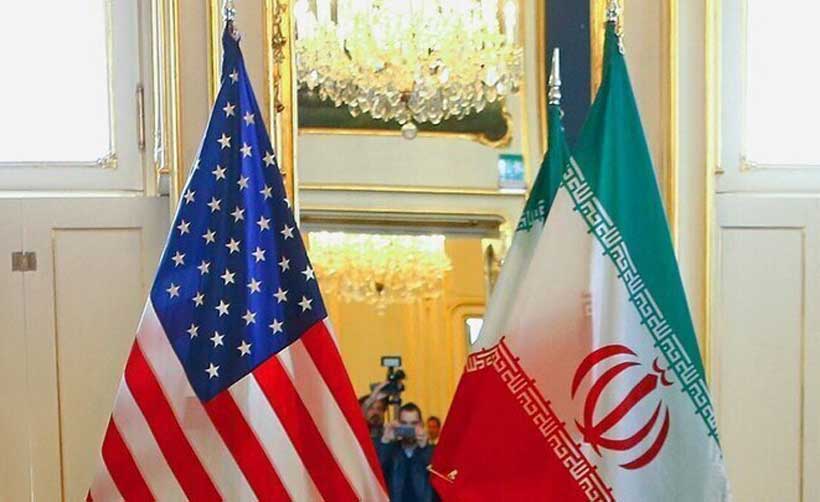
Islamabad, Pakistan – With key differences in the Iranian and American positions seemingly intact, Pakistan is aiming for what officials describe as a realistic – if modest – outcome from the negotiations between the two warring nations set to commence in Islamabad on Saturday.
The aim: to get the United States and Iranian negotiators to find enough common ground to continue talks.
On Friday, US Vice President JD Vance left Washington for Islamabad, where he will lead the American team, which will also consist of President Donald Trump’s chief negotiator Steve Witkoff and son-in-law Jared Kushner. While Iran has not formally confirmed its representatives at the talks, Foreign Minister Abbas Araghchi and Parliament Speaker Mohammad Bagher Ghalibaf are expected to lead Tehran’s team.
These high-level talks follow days after the US and Iran agreed to a Pakistan-mediated two-week ceasefire, and will be held exactly six weeks after the US and Israel launched their war on Iran with the killing of Iranian Supreme Leader Ayatollah Ali Khamenei on February 28.
Experts and sources close to the mediation effort said there was little expectation that a major breakthrough would be reached on Saturday. But by setting a more realistic ceiling – an agreement in Islamabad to continue deeper negotiations aimed at finding a lasting peace deal – Pakistan is hopeful it can help build on a truce that led to a collective sigh of relief globally.
“Pakistan has succeeded in getting them together. We got them to sit at a table. Now it is for the parties to decide whether they are willing to make the sacrifices necessary to reach an eventual solution,” Zamir Akram, Pakistan’s former ambassador to the United Nations, told Al Jazeera.
Now, he added, it will aim to secure an agreement for the US and Iran to continue dialogue.
The ‘proximity format’
The US and Iranian delegations will land at the Nur Khan airbase outside Islamabad and then drive to the Serena Hotel, where they will stay, and where the talks will be held.
Though the two teams will be in the same hotel, they will not come face to face for the negotiations, officials said.
Instead, they will sit in two separate rooms, with Pakistani officials shuttling messages between them.
In diplomatic jargon, such negotiations are known as proximity talks.
Pakistan’s experience with such a dialogue is not new. In 1988, Islamabad itself participated in the Geneva Accords negotiations on the Soviet withdrawal from Afghanistan, where UN-mediated indirect talks between Pakistan and Afghanistan produced a landmark agreement.
Akram, who has represented Pakistan at the UN in Geneva from 2008 to 2015, said that history was relevant.
“Proximity talks have been used before. Pakistan itself participated in one in Geneva in 1988 on the Afghan issue,” he told Al Jazeera. “If the parties did not trust Pakistan, they would not be here. The metric of success should be an agreement to continue this process in search of a solution. It will not happen in a couple of days.”
Building diplomatic momentum
In the days between the ceasefire announcement on April 7 and the arrival of the delegations in Islamabad, world leaders moved quickly to register support.
UN Secretary-General Antonio Guterres welcomed the ceasefire and expressed appreciation for Pakistan’s role. Kazakhstan, Romania and the United Kingdom also issued statements endorsing Islamabad’s mediation.
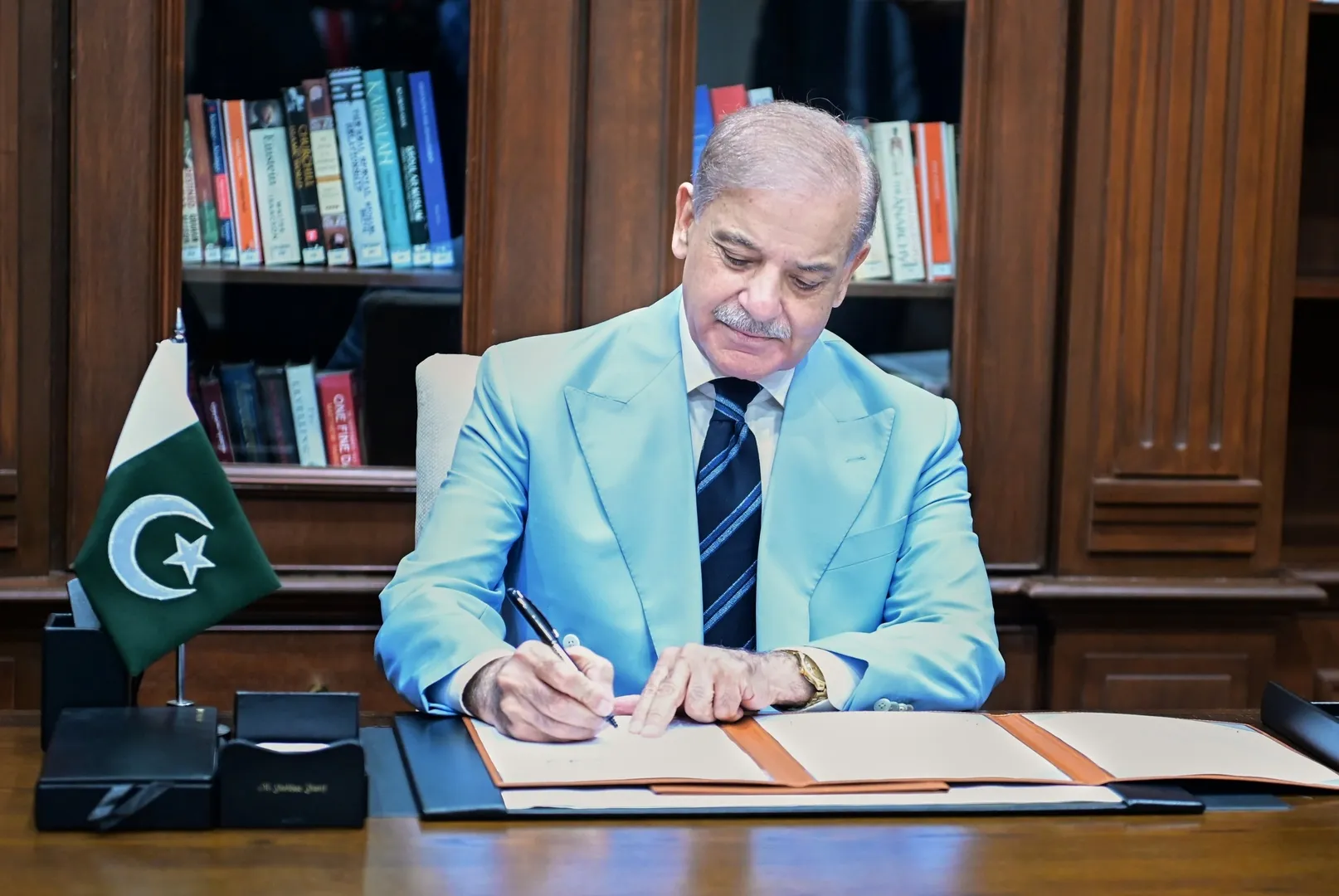
French President Emmanuel Macron called Prime Minister Shehbaz Sharif to congratulate him, while Turkiye’s President Recep Tayyip Erdogan also spoke to the Pakistani leader.
Analysts say these calls were not only expressions of goodwill but signals of international backing, aimed at strengthening Pakistan’s hand in pushing both Washington and Tehran to deliver results.
Sharif spoke with eight world leaders, including the emir of Qatar, the presidents of France and Turkiye, the prime ministers of Italy and Lebanon, the king of Bahrain and the chancellors of Germany and Austria.
Foreign Minister Ishaq Dar, who is also deputy prime minister, engaged with more than a dozen counterparts over the past two days and held an in-person meeting with China’s ambassador in Islamabad.
In total, Pakistan’s leadership made or received more than 25 diplomatic contacts in roughly 48 hours.
Salma Malik, a professor of strategic studies at Quaid-i-Azam University, said the scale of engagement reflected confidence in Pakistan’s role.
“The two main parties showed confidence in Pakistan to act as a neutral agent, that is the first and most critical litmus test for any mediating country, and Pakistan passed it,” she told Al Jazeera.
The Lebanon problem
The most immediate threat to Saturday’s talks lies outside the negotiating room.
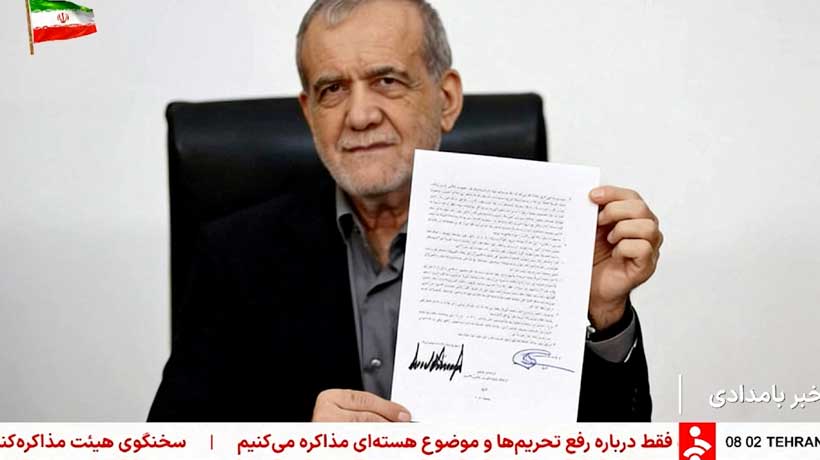
Iran has framed Israeli strikes on Lebanon as a direct challenge to the ceasefire. Iranian President Masoud Pezeshkian, who spoke to Sharif earlier this week, warned that continued attacks would render negotiations meaningless.
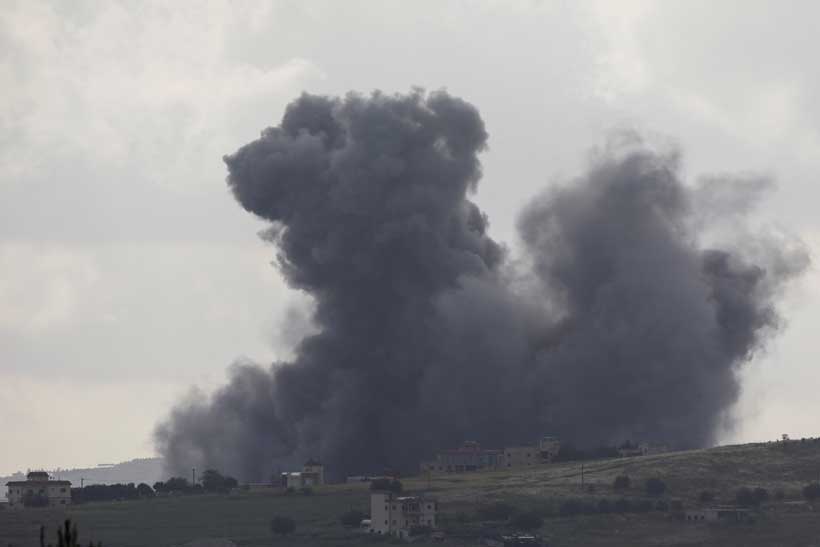
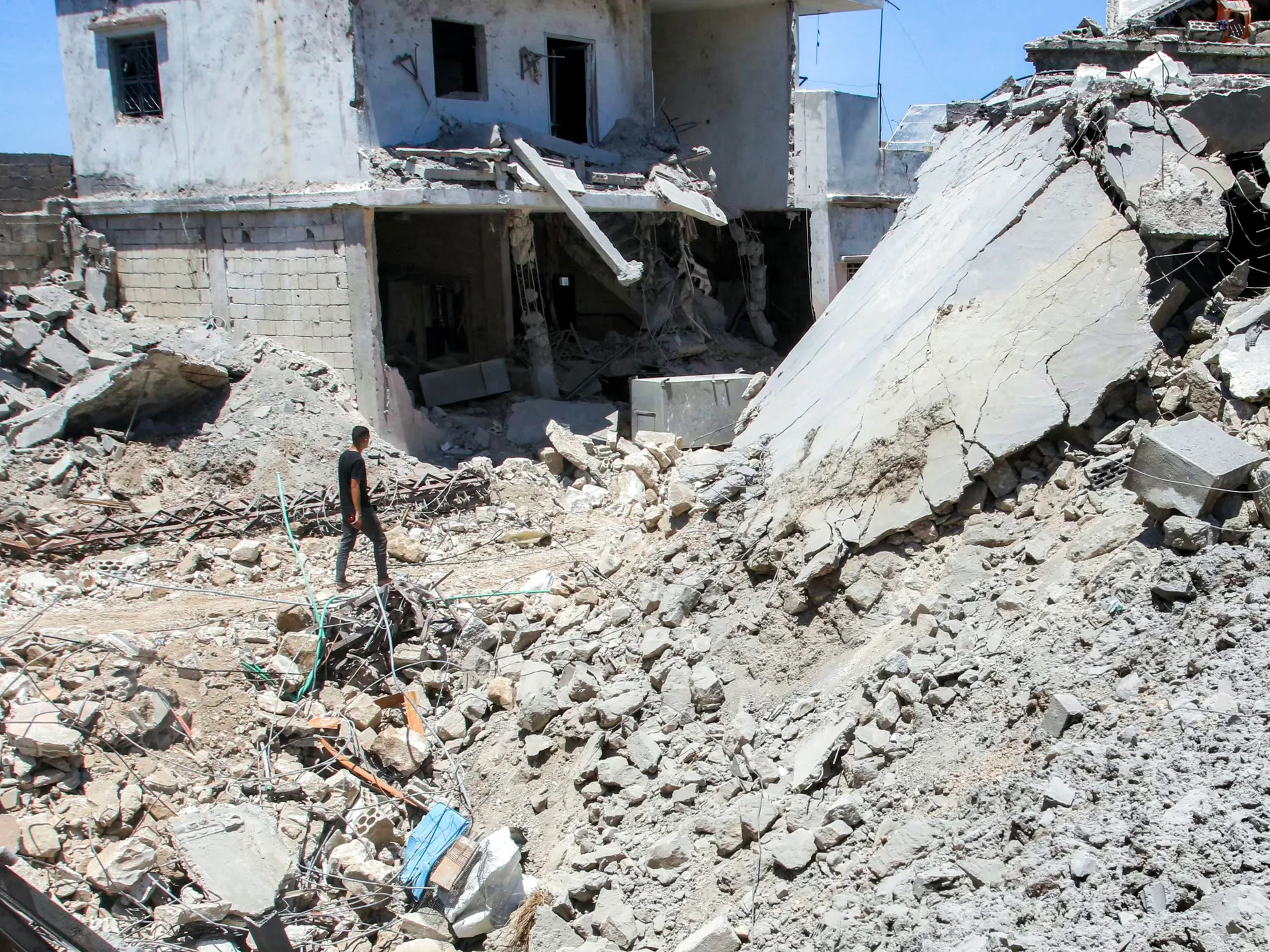
Hours after the ceasefire was announced, Israel launched its most widespread bombardment of Lebanon since the start of the conflict, killing more than 300 people across Beirut and southern Lebanon in a single day.
Rescuers stand at the site of an Israeli strike carried out on Wednesday, in El-Mazraa in Beirut, Lebanon, on April 9, 2026 [Raghed Waked/Reuters]
Foreign Minister Abbas Araghchi said Tehran could abandon the ceasefire entirely if the strikes continued.
Sharif, in a call with Lebanese Prime Minister Nawaf Salam on April 9, strongly condemned Israel’s actions.
Whether Lebanon is covered by the ceasefire remains contested. Pakistan has maintained that the truce extends across the wider region, including Lebanon, as reflected in Sharif’s statement earlier this week.
Washington has taken a different view. US Vice President JD Vance, who will lead the American delegation, said in Budapest that Lebanon falls outside the ceasefire’s terms, a position echoed by President Donald Trump and the White House.
Seema Baloch, a former Pakistani envoy, said the issue ultimately rests with Washington.
“Lebanon is key and Israel will use it to play the spoiler role,” she told Al Jazeera. “It is now the US decision whether it will allow Israel, which is not seated at the negotiating table, to play that role.”
There are, however, signs of limited de-escalation.
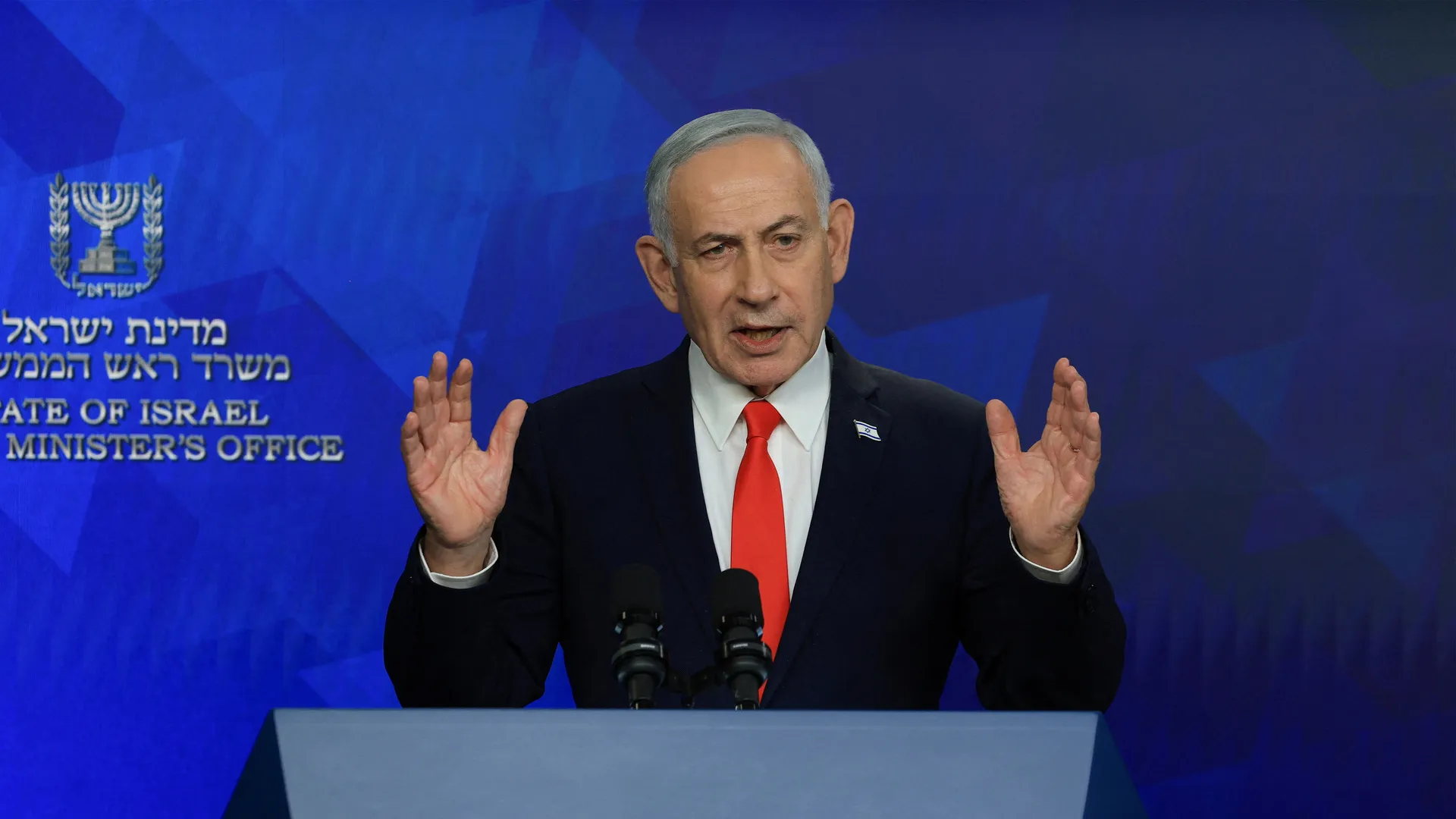
Israeli Prime Minister Benjamin Netanyahu said on Thursday that Israel was ready to begin direct negotiations with Lebanon “as soon as possible”, focusing on disarming Hezbollah and reaching a peace agreement.
The announcement followed US pressure. Trump told NBC he had asked Netanyahu to “low-key it” on Lebanon.
However, Netanyahu made clear there was no ceasefire in Lebanon, saying Israel would continue striking Hezbollah even as talks proceed.
Salman Bashir, a former Pakistani foreign secretary, said Lebanon remains within the ceasefire’s scope.
“Lebanon is very much part of the ceasefire, as was mentioned in the prime minister’s statement,” he told Al Jazeera. “The Israelis may be inclined to keep the pressure on Lebanon, but not for long if the US is keen on a cessation of hostilities, as it seems.”
Stumbling blocks
Beyond Lebanon, several other obstacles remain.
Washington is expected to push for verifiable restrictions on Iran’s nuclear programme, including limits on enrichment and the removal of stockpiled material.
Tehran, in turn, is demanding full sanctions relief, formal recognition of its right to enrich uranium and compensation for wartime damage.
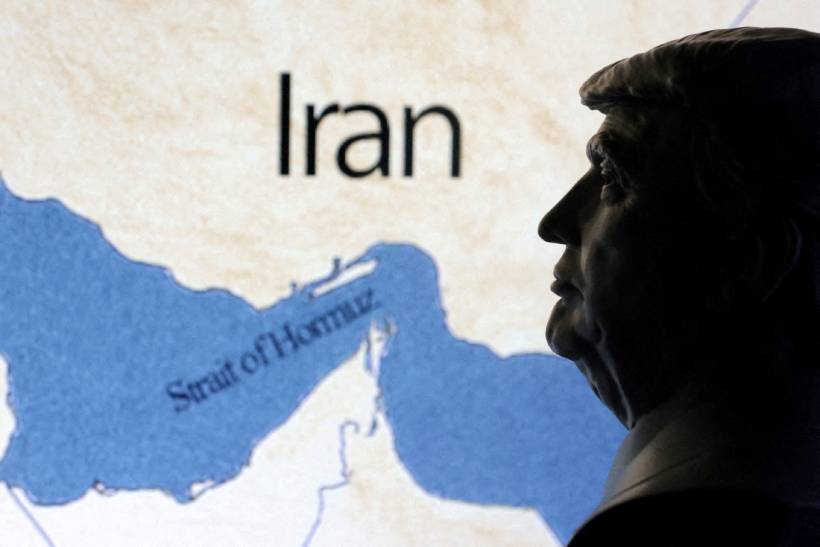
The Strait of Hormuz, through which roughly a fifth of the world’s oil and gas passes in peacetime, remains a key pressure point, with Iran retaining the ability to disrupt maritime traffic.
Bashir said there could be movement on some of these issues.
“There may be an opening on the Strait of Hormuz, under Iranian control. Iran will not give up on the right to enrichment. If nothing else, there should be an extension of the ceasefire deadline,” he told Al Jazeera.
Muhammad Shoaib, a professor of international relations in Islamabad, said progress would depend on movement on core issues.
“Both parties agreeing on the need to continue or even extend the ceasefire, while in principle agreeing on crucial points such as the Strait of Hormuz, Iran’s right to enrichment and respect for sovereignty, will suggest that the first round is meaningful and successful,” he told Al Jazeera.
The regional atmosphere has also been shaped by sharp rhetoric from some of Iran’s Gulf neighbours.
The United Arab Emirates, which faced hundreds of missile and drone attacks during the conflict, has been among the most vocal.
Its ambassador to Washington wrote in The Wall Street Journal that a ceasefire alone would not be sufficient and called for a comprehensive outcome addressing Iran’s “full range of threats”.
Bahrain, meanwhile, presented a United Nations Security Council resolution on April 7 calling for the reopening of the Strait of Hormuz. The measure received 11 votes in favour but was vetoed by Russia and China, with Pakistan and Colombia abstaining.
Saudi Arabia, Turkiye and Egypt are not expected to have a formal presence at the talks, despite being closely involved in pre-negotiation diplomacy. The four countries held meetings in Riyadh and later in Islamabad aimed at securing a pause in hostilities.
Israel, a party to the conflict, will also not be represented. Pakistan, like most Muslim-majority countries, does not recognise Israel and has no diplomatic relations with it.
A slight easing
There are, however, tentative signs of easing tensions ahead of Saturday’s talks.
On Friday, as he was departing from Washington, Vance said that the US team was “looking forward to the negotiations”.
“We think it’s going to be positive. We’ll, of course, see. As the president of the United States said, if the Iranians are willing to negotiate in good faith, we are certainly willing to extend an open hand,” the US vice president said. “If they try to play us, they’re going to find that the negotiating team is not that receptive. So we’ll try to have a positive negotiation.”
He also said that Trump had given the US team “some pretty clear guidelines”.
Earlier this week, Saudi Arabia’s foreign minister spoke with his Iranian counterpart for the first time since the war started.
And Iran’s Supreme National Security Council said on April 8 that discussions could continue for up to 15 days, suggesting readiness for a prolonged process.
Akram, the former envoy, said the benchmark for success was clear.
“What they need to agree is that they will find a solution, and that in itself would be a step in the right direction,” he told Al Jazeera. “Finding a long-term solution will take time. It will not happen in a couple of days.”
Malik, the academic in Islamabad, said Pakistan’s expectations remained modest.
“What Pakistan expects is breathing space, an opportunity for peace. It is not expecting anything big. It is a small wish, but realising it will be very difficult,” she told Al Jazeera.
As UK Prime Minister Keir Starmer arrived in Doha as part of a Gulf tour spanning Saudi Arabia, the UAE, Bahrain and Qatar, he discussed efforts to secure the US-Iran ceasefire and reopen the Strait of Hormuz. Starmer warned there’s more ‘work to do’, stressing the need for regional partners to restore global energy flows.
Washington and Tehran accuse each other of not honouring truce agreement.
Published On 10 Apr 202610 Apr 2026
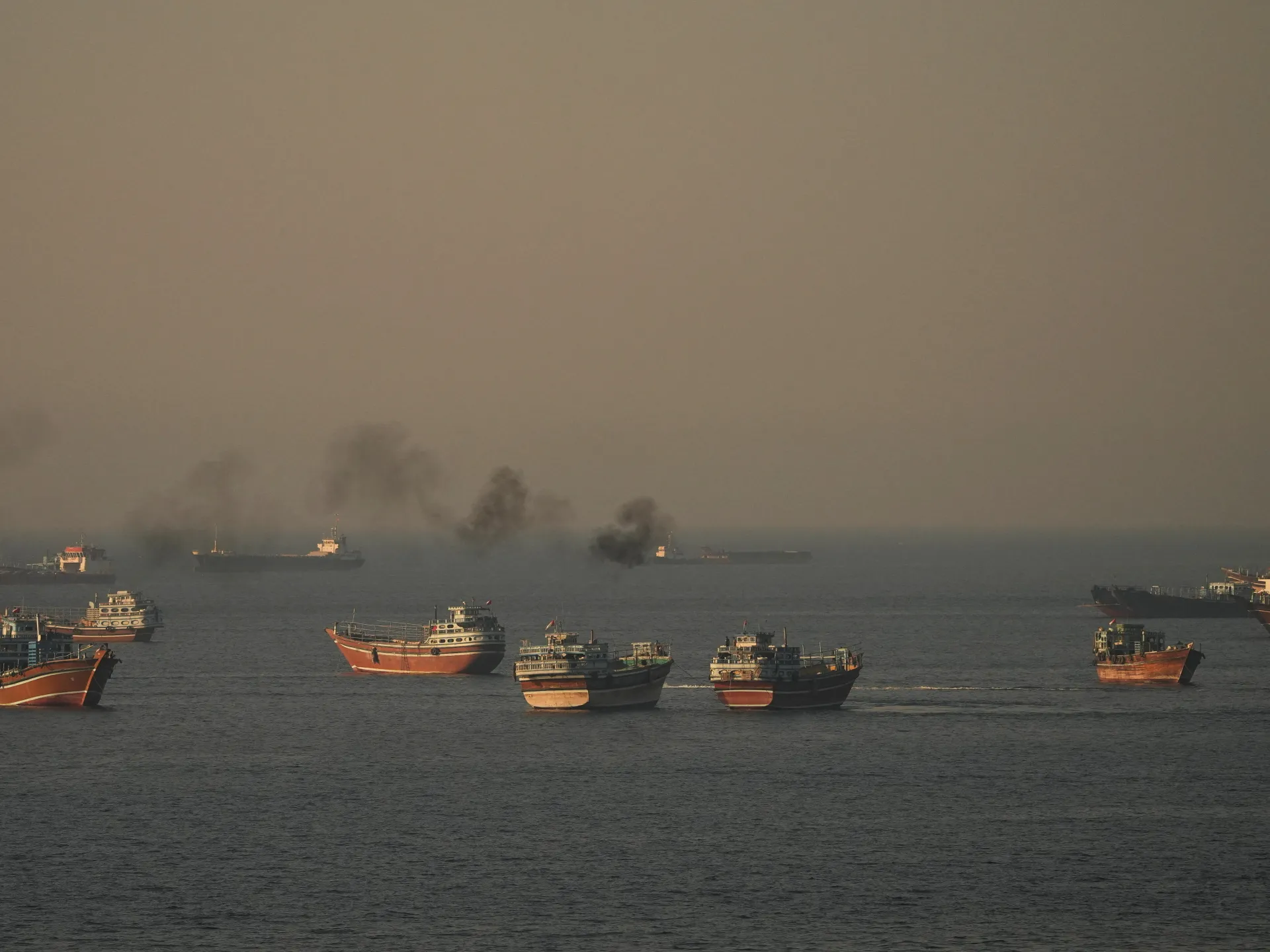
Shipping remains at a standstill in the Strait of Hormuz despite the ceasefire agreement between the United States and Iran, dampening hopes for a resolution to one of the worst global energy disruptions in history.
Only a handful of vessels have transited the critical strait since Washington and Tehran on Tuesday announced a two-week pause in fighting, according to ship tracking data.
Recommended Stories
list of 4 itemsend of list
Five vessels crossed the strait on Wednesday, down from 11 the previous day, and seven transited on Thursday, according to data from market intelligence firm Kpler.
More than 600 vessels, including 325 tankers, are still stranded in the Gulf due to the blockage of the strait, according to Lloyd’s List Intelligence.
“While some vessel movement has resumed, traffic remains very limited, compliant shipowners are likely to stay cautious, and safe transit capacity is expected to remain constrained at maximum 10–15 passages a day if the ceasefire holds, without consideration of tolls applied,” Kpler trade risk analyst Ana Subasic said in an analysis on Thursday.
The waterway, which usually carries about one-fifth of global oil and liquefied natural gas (LNG) supplies, typically handled about 120-140 transits before the US and Israel launched their attacks on Iran on February 28.
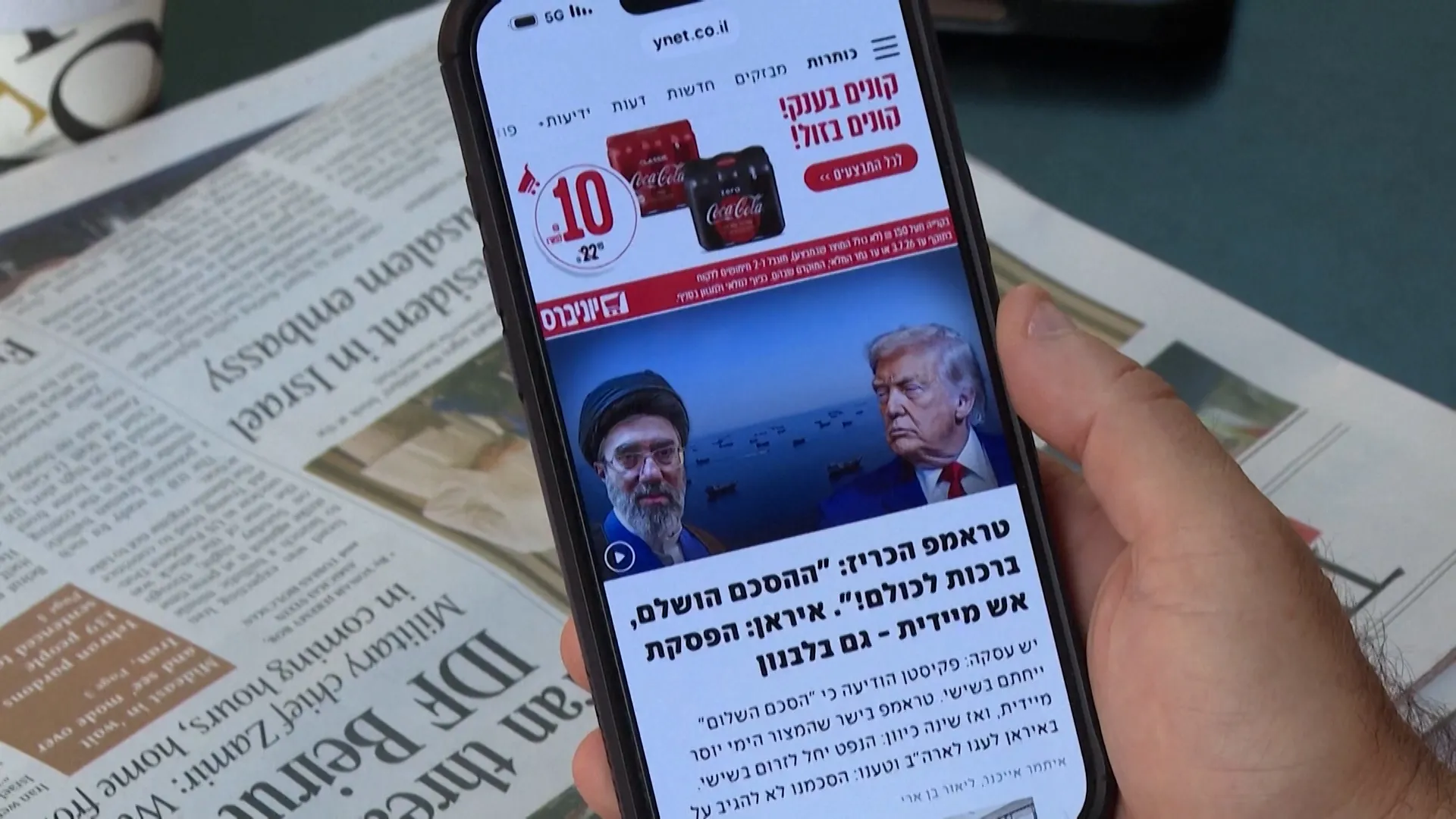
On Thursday, US President Donald Trump accused Iran of failing to live up to its part of the ceasefire agreement, which includes a commitment to allow “safe passage” through the waterway for two weeks.
“Iran is doing a very poor job, dishonorable some would say, of allowing Oil to go through the Strait of Hormuz,” Trump said in a post on Truth Social.
“That is not the agreement we have!”
Iranian Foreign Minister Abbas Araghchi earlier accused the US of not honouring the deal, warning, in reference to Israel’s ongoing attacks on Lebanon, that it had to choose between a ceasefire or “continued war” via its ally.
“The world sees the massacres in Lebanon,” Araghchi said in a post on social media.
“The ball is in the US court, and the world is watching whether it will act on its commitments.”
After plummeting on the back of the ceasefire announcement, oil prices have begun to tick up as markets digest the reality that maritime traffic remains effectively halted despite the truce.
“This moment requires clarity. So let’s be clear: the Strait of Hormuz is not open,” Sultan Ahmed Al Jaber, the CEO of the United Arab Emirates’ state-run oil company, ADNOC, said in a social media post on Thursday.
“Access is being restricted, conditioned and controlled. Iran has made clear – through both its statements and actions – that passage is subject to permission, conditions and political leverage. That is not freedom of navigation. That is coercion.”
Brent crude, the international benchmark, stood at $96.39 as of 02:00 GMT on Friday, after falling below $95 a barrel on Wednesday.
Asia’s main stock markets opened higher on Friday, following overnight gains on Wall Street driven by hopes of a resolution to the war.
Japan’s benchmark Nikkei 225 was up 1.8 percent in early trading, while South Korea’s KOSPI and Hong Kong’s Hang Seng Index were up about 2 percent and 1 percent, respectively.
French President Emmanuel Macron welcomed the US-Iran ceasefire as “very good news,” saying it appears to be holding, but warned the situation in Lebanon remains critical and must be fully included in any regional truce. He also praised Iran’s readiness to reopen the Strait of Hormuz.
US Vice President JD Vance says Lebanon is not part of the US-Iran ceasefire, stressing that neither Washington nor Israel agreed to that. After Pakistan said Lebanon was included, Israel killed hundreds of people when it carried out around 100 strikes across Lebanon in just 10 minutes.
Israeli forces have launched an intense bombardment across Lebanon, killing hundreds of people, hours after a two-week ceasefire was announced in the United States-Iran war.
Lebanon’s Civil Defence said at least 254 people were killed and 1,165 others were wounded in air strikes that targeted areas in Beirut, the Bekaa Valley, Mount Lebanon, Sidon, and several villages in southern Lebanon.
Recommended Stories
list of 3 itemsend of list
The Israeli military said that the attack was its largest coordinated assault on Lebanon since it started a new military operation in the country on March 2, “targeting more than 100 Hezbollah command centres and military sites”.
In a written statement, the head of Lebanon’s syndicate of doctors, Elias Chlela, urgently called for “all physicians from all specialities” to head to any hospital they could to offer help, with one of Beirut’s biggest hospitals saying it needed donations of all blood types.
Parliament Speaker Nabih Berri called the attacks on densely populated areas a “full-fledged war crime.”
“Today’s crime, coinciding with the ceasefire agreement declared in the region — an agreement that Israel and its political and security apparatus have failed to uphold — is a serious test for the international community and a blatant challenge to all international laws, norms, and conventions, which Israel violates daily through its unprecedented campaign of human assassination in modern history,” Berri said.
“It is also a test for all Lebanese — political, religious, and civil leaders — to unite in solidarity with the martyrs. May God have mercy on the martyrs, grant a speedy recovery to the wounded, and protect Lebanon,” he added.
Hezbollah
The Lebanese armed group said it had a “right” to respond to the attacks.
“We affirm that the blood of the martyrs and the wounded will not be shed in vain, and that today’s massacres, like all acts of aggression and savage crimes, confirm our natural and legal right to resist the occupation and respond to its aggression,” Hezbollah said in a statement.
Hezbollah lawmaker Hassan Fadlallah told the news agency Reuters that the Israeli strikes were “a grave violation of the ceasefire”, adding there would be “repercussions for the entire agreement” if they continued.
Israel
Defence Minister Israel Katz said Israel “insisted on separating the war with Iran with the fighting in Lebanon in order to change the reality in Lebanon”.
Prime Minister Benjamin Netanyahu also told a news conference that Israel would “continue to strike” Lebanon as the US-Iran ceasefire did not apply to Hezbollah.
First responders and residents gather at the site of an Israeli air strike in Beirut’s Tallet al-Khayyat neighbourhood [AFP]
Iran
The Iranian Revolutionary Guard Corps (IRGC) warned that it will respond to the attacks on Lebanon if Israel does not stop the assault.
“We issue a firm warning to the United States, which violates treaties, and to its Zionist ally, its executioner: if the aggression against beloved Lebanon does not cease immediately, we will fulfil our duty and deliver a response,” the IRGC said in a statement carried on Iran’s state-owned TV channel, using a reference to Israel.
In a post on X, Foreign Minister Abbas Araghchi said the terms of the ceasefire were “clear and explicit: the US must choose — ceasefire or continued war via Israel. It cannot have both.”
“The world sees the massacres in Lebanon. The ball is in the US court, and the world is watching whether it will act on its commitments,” he added.
Qatar
The foreign ministry condemned the “brutal series” of Israeli attacks on Lebanon that had killed hundreds of people, calling the attacks a “dangerous escalation and a flagrant violation of the sovereignty of the sister Lebanese Republic, the rules of international humanitarian law, and United Nations Security Council Resolution (1701).”
“The Ministry of Foreign Affairs calls on the international community to fulfill its responsibilities by compelling the Israeli occupation authorities to halt their barbaric massacres and repeated attacks on Lebanon, and to hold them accountable for respecting international covenants and laws,” a statement posted on X read.
It added that Qatar was in “full solidarity” with Lebanon.
Egypt
The Ministry of Foreign Affiars called Israel’s attacks on Lebanon had a “premediatated intent” to undermine regional and international efforts to reduce escalation.
The ministry added that the attacks were an attempt by Israel to drag the region into “total chaos”.
Spain
In a post on X, Prime Minister Pedro Sanchez said Netanyahu’s “contempt for life and international law is intolerable” in light of the attacks.
“It’s time to speak clearly: – Lebanon must be included in the ceasefire. – The international community must condemn this new violation of international law. – The European Union must suspend its Association Agreement with Israel. – And there must be no impunity for these criminal acts,” Sanchez said.
Italy
Foreign Minister Antonio Tajani said he spoke to the Lebanese President Joseph Aoun and expressed solidarity for the “unjustified and unacceptable attacks he is suffering from Israel.”
“We want to avoid there being a second Gaza. We will reiterate this concept to the Israeli Ambassador as well, whom I have summoned to the Farnesina. We condemn the bombings on the Lebanese civilian population, including the gunfire incidents suffered by our UNIFIL [UN Interim Force in Lebanon] troops, for which we continue to demand guarantees of total safety. We must absolutely avoid any further expansion of the conflict that would jeopardise the ceasefire in Iran and the reopening of the Strait of Hormuz,” Tajani added.
United Nations
The deputy spokesperson for United Nations Secretary-General Antonio Guterres, Farhan Haq, said the UN “strongly condemns” Israel’s attacks on Lebanon.
“The United Nations strongly condemns the strikes by Israel across Lebanon that resulted in significant civilian casualties,” said Haq.
“We continue to call on all sides to avail themselves of diplomatic channels, cease hostilities”, and use the new US-Iran ceasefire as an opportunity to prevent further loss of life,” he added.
The United States and Iran have agreed to a two-week ceasefire, with talks to finalise a peace deal set to begin in Pakistan’s Islamabad on Friday.
The truce, announced by US President Donald Trump on Tuesday, will see Iran reopen the Strait of Hormuz, a vital maritime corridor through which a fifth of the world’s oil supply passes.
Recommended Stories
list of 4 itemsend of list
Countries around the world have welcomed the development.
Here’s a roundup of the reaction:
Israel
Israeli Prime Minister Benjamin Netanyahu said on X that he supports Trump’s decision to suspend strikes on Iran, and the “US effort to ensure that Iran no longer poses a nuclear, missile and terror threat to America, Israel, Iran’s Arab neighbours and the world”.
Netanyahu said, however, that the ceasefire does “not include Lebanon“, where Israeli forces have launched a ground invasion and are fighting with the Iran-aligned Hezbollah.
Iraq
Iraq’s Ministry of Foreign Affairs welcomed the news of the ceasefire but said that both the US and Iran must commit to the deal to achieve a lasting resolution.
“As the ministry asserts its support for regional and international efforts to contain crises and prioritise the language of dialogue and diplomacy, it stresses the need for full commitment to the ceasefire and refraining from any escalations,” the ministry said.
Iraq has been drawn into the US-Israeli war on Iran, with Tehran-backed armed groups and US forces trading fire in an escalating cycle of violence.
Egypt
The Egyptian Ministry of Foreign Affairs said the ceasefire “represents a very important opportunity that must be seized to make room for negotiations, diplomacy, and constructive dialogue”.
The ministry said in a statement on Facebook that a truce must be built upon with a full commitment to “stopping military operations and respecting freedom of international navigation”.
The post also said that Egypt will continue efforts with Pakistan and Turkiye “to promote security and stability in the region”, and that the talks between the US and Iran “must take into account the legitimate security concerns” of Gulf nations.
United Nations
UN Secretary-General Antonio Guterres welcomed the announcement and called on all parties to abide by the terms of the ceasefire “in order to pave the way toward a lasting and comprehensive peace in the region”, according to his spokesperson.
Guterres underscored “that an end to hostilities is urgently needed to protect civilian lives and alleviate human suffering”, and thanked Pakistan and other nations involved in facilitating the truce.
Japan
Japan’s Chief Cabinet Secretary Minoru Kihara told reporters that Tokyo welcomes the news of a two-week ceasefire between the US and Iran as a “positive move” as it awaits a “final agreement”.
Minoru said the de-escalation of hostilities in the Middle East remains a top priority, according to the Kyodo News Agency.
Indonesia
Indonesia’s Foreign Ministry Yvonne Mewengkang said Jakarta welcomes a ceasefire deal and called on Iran and the US to respect the “sovereignty, territorial integrity and diplomacy” of each side, according to the Reuters news agency.
Mewengkang also called for a thorough investigation into the deaths of three Indonesian UN peacekeepers killed by explosions in Lebanon in late March amid fighting between Israeli forces and Hezbollah fighters.
Malaysia
Malaysia’s Ministry of Foreign Affairs said the ceasefire marks a “significant development [and] serves as a crucial step towards de-escalating tensions and restoring much-needed peace and stability” to the Middle East.
It also urged “all parties to fully respect and implement all terms of the ceasefire in good faith to prevent any return to hostilities”, while also avoiding any “provocative actions or unilateral measures that could negatively impact the fragile stability of the region or jeopardise global economic and energy security”.
Australia
Australian Prime Minister Anthony Albanese and Minister for Foreign Affairs Penny Wong issued a joint statement welcoming the news and expressing their hopes that the deal will lead to a long-lasting resolution.
“Iran’s de facto closure of the Strait of Hormuz, coupled with its attacks on commercial vessels, civilian infrastructure, and oil and gas facilities, is causing unprecedented energy supply shocks and impacting oil and fuel prices,” they said.
“We have been clear that the longer the war goes on, the more significant the impact on the global economy will be, and the greater the human cost.”
Albanese and Wong thanked Pakistan, Egypt, Turkiye, and Saudi Arabia for their work as negotiators.
New Zealand
New Zealand Minister of Foreign Affairs Winston Peters said his government welcomes the news of a ceasefire, although many concerns remain.
“While this is encouraging news, there remains significant important work to be done in the coming days to secure a lasting ceasefire”, as the war has had “wide-ranging impacts and disruptions” on the Middle East and beyond, he wrote in a post on X.
Peters praised countries like Pakistan, Turkiye, and Egypt for their work negotiating a deal.
Israeli prime minister’s office welcomes US decision to suspend attacks on Iran, but says the two-week truce does not apply to Lebanon.
Published On 8 Apr 20268 Apr 2026
Prime Minister Benjamin Netanyahu’s office has announced that Israel backs the United States’s decision to suspend strikes against Iran for two weeks, but said the truce “does not include Lebanon”.
In a statement on X on Wednesday, Netanyahu said Israel supported US President Donald Trump’s efforts to ensure “Iran no longer poses a nuclear, missile and terror threat to America, Israel, Iran’s Arab neighbors and the world”.
He said the US has told Israel that it is committed to achieving these goals in the upcoming negotiations in Pakistan’s Islamabad on Friday.
But the two-week ceasefire “does not include Lebanon”, he added.
Netanyahu’s statement comes after Pakistani Prime Minister Shehbaz Sharif announced that the US, Iran and their allies “have agreed to an immediate ceasefire everywhere including Lebanon and elsewhere”.
Sharif said the move was “effective immediately”.
Lebanon was drawn into the war on March 2 after Iran-aligned Hezbollah launched attacks on Israel.
Hezbollah said the attacks were in retaliation for Israel’s killing of Iran’s Supreme Leader Ayatollah Ali Khamenei on February 28 as well as its near-daily violations of a ceasefire it agreed in Lebanon in November of 2024.
Israeli attacks on Lebanon have since killed more than 1,500 people and displaced more than 1 million people. The Israeli military has also launched an invasion of southern Lebanon and said it aims to seize more territory for what it calls a buffer zone.
There’s been no immediate comment from Hezbollah or Lebanon.
Celebrations have erupted in Iraq’s capital, Baghdad, following the announcement of a two-week ceasefire between Iran and the United States. Iraq had been pulled into the war with pro-Iran armed groups and US forces carrying out attacks on each other.