user

Supreme Court makes it harder for music and movie makers to sue for copyright infringement

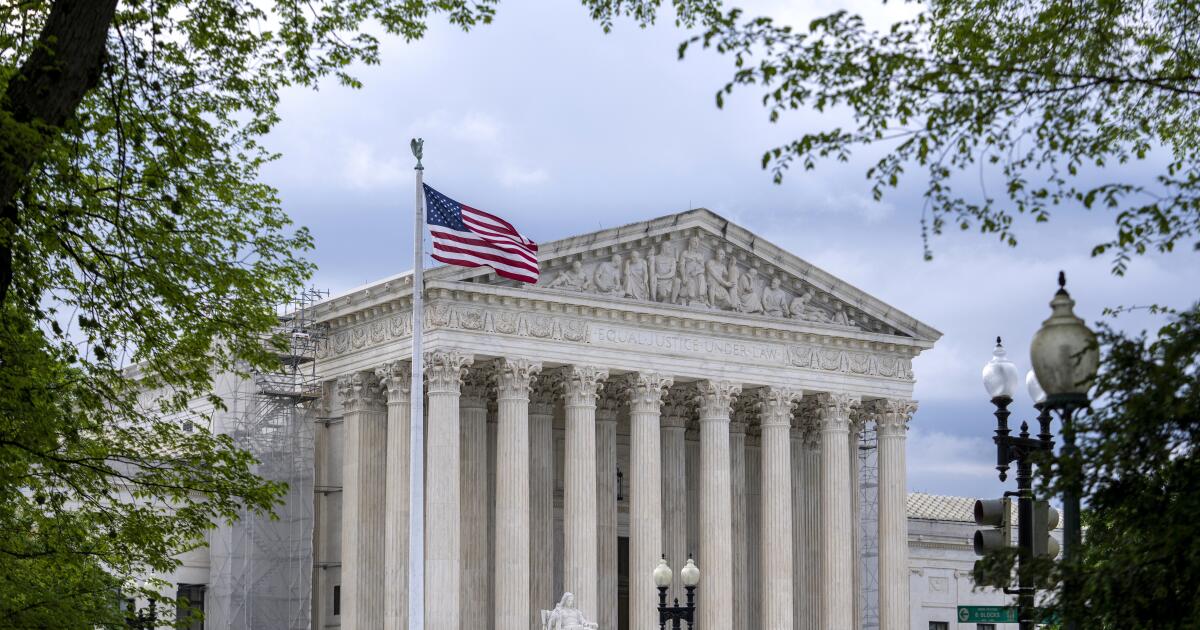
The Supreme Court made it harder for music and movie makers to sue for online piracy, ruling Wednesday that internet providers are usually not liable for copyright infringement even if they know their users are downloading copyrighted works.

In a 9-0 decision, the justices threw out Sony’s lawsuit and a $1-billion verdict against Cox Cable for copyright infringement.

Lower courts upheld a jury’s verdict against Cox’s internet service for contributing to music piracy, which the company did little to stop.

Sony’s lawyers pointed to hundreds of thousands of instances of Cox customers sharing copyrighted works. Put on notice, Cox did little stop it, they said.

But the high court said that is not enough to establish liability for copyright infringement.

“Under our precedents, a company is not liable as a copyright infringer for merely providing a service to the general public with knowledge that it will be used by some to infringe copyrights,” Justice Clarence Thomas wrote for the court.

Two decades ago, the court sided with the music and motion picture producers and ruled against Grokster and Napster on the grounds their software was intended to share copyrighted music and movies.

But on Wednesday, the court said “contributory” copyright infringement did not extend to internet service providers based on the actions of some of their users

“Cox provided Internet service to its subscribers, but it did not intend for that service to be used to commit copyright infringement,” Thomas said. “Cox neither induced its users’ infringement nor provided a service tailored to infringement.”

In its defense, Cox argued that internet service providers could be bankrupted by huge lawsuits for copyright infringement, which they said they did not cause and could not prevent.

Source link

California considers restrictions on social media for kids

Meta, YouTube and Snapchat are already under scrutiny for risks they pose for young people. Now they are facing another hurdle in their home state.

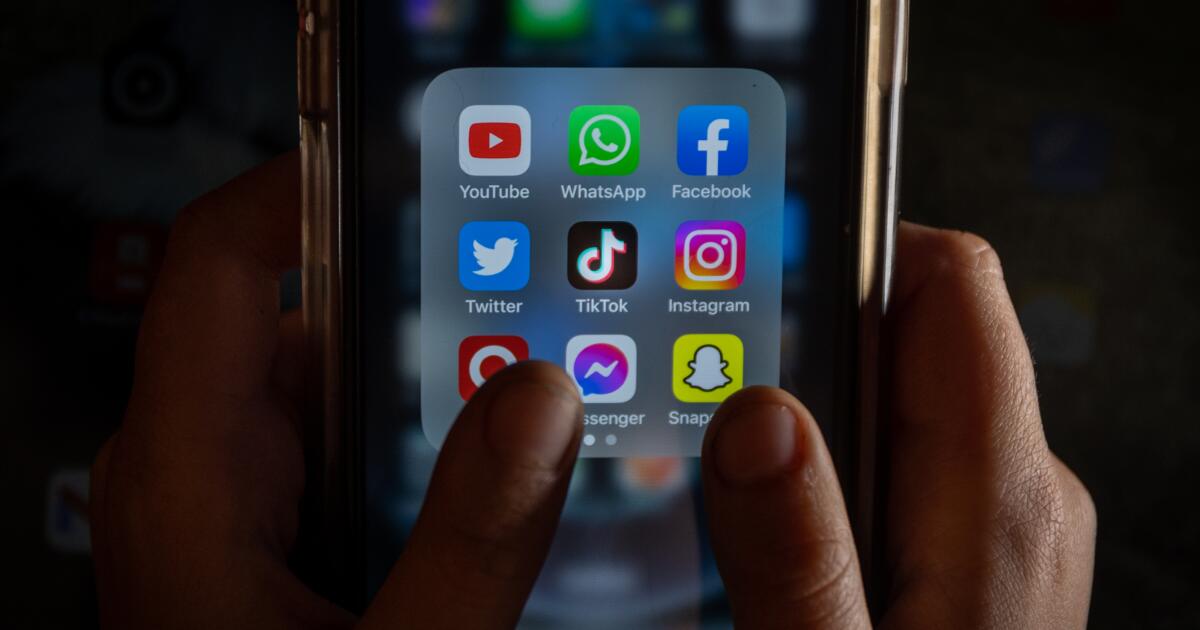
California lawmakers are considering legislation to restrict social media use for teens and children under 16 years old. Assemblymember Josh Lowenthal (D-Long Beach) and others introduced a bipartisan bill that would bar social media platforms from allowing users under 16 years old from creating or maintaining accounts.

The legislation comes amid mounting concerns about how social networks impact the mental health of young people. Anxiety among parents and lawmakers has heightened as platforms and AI chatbots become more intertwined with people’s daily life.

Last month, tech executives, including Meta’s chief executive and co-founder Mark Zuckerberg, testified in a landmark trial in Los Angeles over a lawsuit that alleges social media is addictive and harms children.

The trial centers on whether tech companies such as Instagram, which is owned by Meta, and YouTube can be held liable for allegedly promoting a harmful product and addicting users to their platforms.

California has passed legislation before aimed at making social media platforms and chatbots safer but faced pushback from tech industry groups that have sued to stop new laws from taking effect. Tech companies are have responded by releasing more parental controls and restrictions for young users.

Other countries have been moving forward with restrictions on social media. Last year, Australia barred children under 16 years old from having social media accounts.

TechNet, whose members include Meta and Google, said in a statement that it hasn’t taken a position on the California bill but doesn’t believe a ban will effectively achieve the Legislature’s goal’s.

“We support balanced, evidence-based solutions that strengthen protections for young people, equip parents with meaningful tools, and ensure accountability across platforms. Our companies have made significant investments in teen safety and parental controls, and we remain committed to building on that progress,” said Robert Boykin, TechNet Executive Director for California and the Southwest in a statement.

The use of social media by young people has divided tech executives.

Pinterest Chief Executive Bill Ready wrote in an op-ed in TIME published on Friday that governments should follow Australia’s lead and ban social media for kids under 16 years old if tech companies don’t prioritize safety.

“Social media, as it’s configured today, is not safe for young people under 16,” he said.”Instead, it’s been designed to maximize view time, keeping kids glued to a screen with little regard for their well-being.”

Lowenthal’s bill cited social media’s dangers such as “exposure to harmful content, compulsive use patterns, exploitation, and adverse impacts on mental health and well-being.”

“Existing age-based restrictions that rely primarily on user self-attestation have proven ineffective and place an unreasonable burden on children and families rather than on the entities that design, operate, and profit from social media platforms,” the bill states.

A spokesman for Lowenthal didn’t immediately respond to a request for comment.

Source link

Spotify doubles down on $11 billion music industry payout

Back in the early 2010s, the music industry was at a low point.

Piracy was rampant. Compact disc sales were on a steady decline. And the then-new audio streaming services, like Spotify, were taking hits from creators for paying low royalty rates.

Today, Spotify has grown into the world’s most popular audio streaming subscription service and the highest-paying retailer globally — paying the music industry over $11 billion last year. The Swedish company said in a recent post that the payouts aren’t strictly going to ultra-popular artists, but that “roughly half of royalties were generated by independent artists and labels.”

“A decade ago, a lot of the questions were really fair. Spotify had to be able to prove out if it could scale as an economic engine. People didn’t know if streaming would scale as a model,” said Sam Duboff, Spotify’s global head of marketing and policy of music business.

Duboff said Spotify’s payouts aren’t “plateauing — we’re still growing that royalty pool on Spotify more than 10% per year.” He credits the streaming platform’s growth to “incentivizing people to be willing to pay for music again” by providing personalized experiences and global accessibility.

The company, founded in 2006, serves more than 751 million users, including 290 million subscribers, in 184 markets.

“The average Spotify premium subscriber listens to 200 artists every month, and nearly half of those artists are discovered for the first time,” Duboff said. “When you build an experience where people can explore and fall in love with music, it inspires them to upgrade to premium and keep paying.”

The platform offers a wide variety of playlists, curated by editors like the up-and-comer-driven Fresh Finds or rap’s latest, RapCaviar. There are also personal playlists generated for users, such as the weekly round-up Discover Weekly and the daily mix of tunes called the “daylist.”

The streamer considers itself the first step toward “an enduring career” for today’s indie artists. Last year, more than a third of artists making $10,000 on the platform in royalties started by self-releasing their music through independent distributors.

“Streaming, fundamentally, is about opportunity and access. It’s artists from all over the world releasing music the way they want to and reaching a global audience from Day One,” Duboff said. He adds that when fans have a choice, they will discover new genres and music cultures that may have otherwise languished in obscurity.

In 2025, nearly 14,000 artists earned $100,000 from Spotify alone. The streamer’s data also show that last year the 100,000th highest-earning artist made $7,300 in Spotify royalties, whereas in 2015, an artist in that same spot earned around $350.

The company, with a large presence in L.A.’s Arts District, emphasizes that the roster of artists on its platform who earn significantly more money — well into the millions — is no longer limited to the few. A decade ago, Spotify’s top artist made around $10 million in royalties. Today, the platform’s top 80 artists generate over $10 million annually. Some of 2025’s top artists globally were Bad Bunny, Taylor Swift and the Weeknd.

Spotify claims those who aren’t household names can earn six figures, with more than 1,500 artists earning $1 million last year.

For some musicians, the outlook is not as clear

Damon Krukowski, a musician and the legislative director for United Musicians & Allied Workers, argues that Spotify’s money isn’t necessarily going to artists — it’s going to their labels.

Those without labels usually upload music through distributors such as DistroKid and CD Baby. These platforms charge a small fee or commission. For example, DistroKid’s lowest-level subscription is $24.99 a year, and the site states users “keep 100% of all your earnings.”

”There are zero payments going directly to recording artists from Spotify,” Krukowski asserts. “Recording artists deserve direct payment from the streaming platforms for use of our work.”

The advocacy group, which has mobilized more than 70,000 musicians and music workers, recently helped draft the Living Wage for Musicians Act to address the streaming industry. The bill, introduced to the U.S. House of Representatives last fall, calls for a new streaming royalty that would directly pay artists a minimum of one penny per stream.

In the Q&A section of Spotify’s Loud and Clear website, the streamer confirms that it “doesn’t pay artists or songwriters directly. We pay rights holders selected by the artist or songwriter, whether that’s a record label, publisher, independent distributor, performance rights organization, or collecting society.”

Instead of following a penny-per-stream model, Spotify pays based on the artist’s share of total streams, called a “streamshare.”

“Streaming doesn’t work like buying songs. Fans pay for unlimited access, not per track they listen to,” wrote the company online. “So a ‘per stream’ rate isn’t actually how anyone gets paid — not on Spotify, or on any major streaming service.”
Source link