Raise your pretend glasses, Kyle Juszczyk and Jake Ferguson, and chug the imaginary beverages of your choice. Your recent five-figure fines have been rescinded!
The NFL and the NFL Players Assn. released a joint statement Wednesday to clarify some of the on-field celebrations that are and are not allowed during NFL games.
Of particular significance to San Francisco 49ers fullback Juszczyk and Dallas Cowboys tight end Ferguson is this sentence: “Recent celebrations imitating drinking a beverage will not be considered violations or result in discipline.”
Juszczyk had been fined $29,852 after celebrating two catches during a Sept. 20 win over the Miami Dolphins by pantomiming the act of drinking a beverage, something he’s done for years. The league initially ruled it an “imitation of chugging a beer” that “constituted an offensive demonstration and could reasonably be construed as being in poor taste.”
“I wasn’t drinking beer in my celebration,” Juszczyk told reporters on Sept. 24. “I think you guys all know my nickname is Juice. I have Juice on my pads. The stadium yells ‘Juice!’ when I catch the ball. When I celebrate, I celebrate by drinking juice, and it’s been that way for years. So I was surprised as anybody when I got a fine this week.”
Ferguson was fined $13,611 for a similar celebration during a Cowboys win over the Washington Commanders also on Sept. 20. The fifth-year player later said that his invisible drink was actually Gatorade.
The fines to Juszczyk and Ferguson had been reported as rescinded before the joint statement from the league and its players union came out. Colts offensive lineman Matt Goncalves also should be off the hook for his fine of $8,847 for a similar celebration during a game against the Kansas City Chiefs on the same day. His fake beverage of choice for that particular celebration, Goncalves has said, was Coke.
It seems like the NFL realized players could claim to have been demonstrating their love for anything from water to a wild huckleberry mint mojito mocktail and decided to let this one go. As for the still-prohibited celebrations, those include gestures that depict violence (including the use of guns/weapons and gang-related signs), imitate smoking or drug use, or are sexual in nature
WASHINGTON — Six years after he was released from a California immigrant detention facility, Wilfredo Gonzalez Mena has to sleep with his back propped up by pillows, nearly in a seated position, to avoid gasping for air.
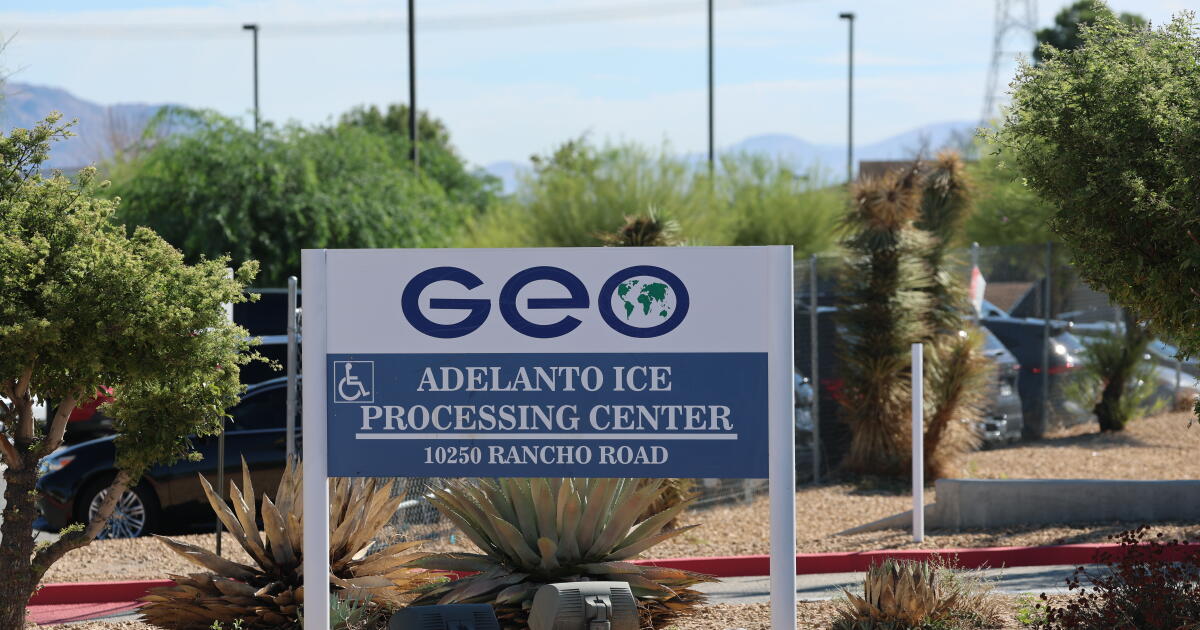
He blames his lasting medical issues on the 10 months he spent in custody until September 2020 at the Adelanto ICE Processing Center, about 60 miles northeast of Los Angeles, during which guards sprayed him and fellow detainees nearly around the clock with a concentrated disinfectant meant to guard against COVID-19.
Now Gonzalez Mena, who is one of six named plaintiffs in a class-action lawsuit filed in 2023 over the use of the cleaning solution, is expected to get a six-figure payout as part of a proposed settlement in the case, which was given preliminary approval on Sept. 25 by a federal judge in Riverside. The settlement applies to around 2,700 people detained at the Adelanto facility between March 11 and Sept. 30, 2020, who were exposed to the disinfectant called HDQ Neutral.
“When you least expected it, you would feel the mist,” Gonzalez Mena said. “They would spray us like we were animals.”
The Adelanto facility is operated by the GEO Group, a Florida-based private prison corporation that has faced criticism for years over conditions at its immigrant detention facilities. The company has also pushed back against California laws seeking to increase oversight of its facilities and inform the public about health and safety shortcomings.
Under the settlement, GEO Group and Spartan Chemical Co. Inc., the company that manufactures HDQ Neutral, acknowledged that HDQ Neutral — which is classified as a pesticide — can cause symptoms including blistering, chemical burns, vomiting, permanent eye damage, and damage to the respiratory tract, throat and stomach.
Those findings can now be used by class members who weren’t named plaintiffs and may pursue their own lawsuits, the settlement says.
Neither GEO Group nor the Department of Homeland Security responded to requests for comment. After the lawsuit was filed, GEO Group denied its allegations and said cleaning products are used safely and securely, in accordance with the manufacturer’s guidelines and sanitation standards, at all detention centers.
At the time, a GEO Group spokesperson called the allegations “part of a radical politically motivated campaign to attack ICE contractors, abolish ICE and end federal immigration detention.”
The company later swapped HDQ Neutral for a different cleaning product.
Lawyers from the Los Angeles-based civil rights nonprofit Trial Impact Project who are representing the former detainees called the settlement a victory.
Executive Director Sara Haji referenced other pending lawsuits addressing allegations such as medical neglect, retaliation and substandard food and water. Each one is a different lens into the same problem, she said.
“When a company like GEO settles instead of defending itself at trial, and when it admits that the pesticide it sprayed everywhere can cause serious health problems, it should cause us all to sit up and pay attention to what detained people have been telling us about the everyday cruelty of immigration detention,” Haji said.
The lawsuit alleged that GEO Group engaged in a “months-long poisoning” of detainees when its employees sprayed HDQ Neutral inside the facility. Before the pandemic, staffers had used it as a cleaning product. But as COVID-19 spread, they began spraying the concentrated solution across wide areas, “directly into the air and on all types of surfaces,” the lawsuit said.
Detained immigrants quickly began experiencing the effects, the lawsuit claimed, including nosebleeds, headaches and dizziness.
Spartan Chemical warns that inappropriate exposure can cause the types of effects detainees experienced. Long-term exposure has been linked to asthma and, in laboratory studies on animals, reproductive issues and birth defects.
In 2021, the Environmental Protection Agency found that GEO Group had violated federal law by misusing HDQ Neutral. The report found that staff and detainees were instructed to apply the pesticide inside the facility as often as every 30 minutes, without proper ventilation and at a dilution rate of 2 ounces per gallon of water, which is double the amount allowed for disinfectant use.
In September 2021, a federal judge ordered GEO Group to discontinue use of HDQ Neutral at the Adelanto facility, writing that it had been used “with a callous disregard for the safety of Adelanto’s detainees.”
Among the more than 100,000 pages of documents released during discovery for the lawsuit was an email from a nurse at the facility to Wendy Baca, who was acting health services administrator at the Adelanto facility for Wellpath, the company providing its medical care at the time.
The nurse wrote that patients were arriving with headaches, rashes and blisters, “we believe, due to the chemicals being used to spray.”
“Some of the officers have also reported ‘feeling burned’ after touching their skin with the same gloves that were used to handle the chemical. Please look into this so we do not endanger everyone we are trying to protect,” the nurse wrote.
Baca appeared dismissive of the nurse’s concern. She forwarded the email to GEO Group’s chief of security, asking him to look into it.
“Please also remind them not to put metal into light sockets, run with scissors, or anything usually avoided with a little common sense,” she wrote.
Mark Anthony Ferretiz, a former GEO Group cook supervisor who worked at the Adelanto facility for 14 years until March 2025, wrote in a declaration that his team was told to spray the red chemical “like Lysol.”
“I could taste the spray in my mouth when I used it, and it felt heavy in my lungs,” he wrote.
At some point, the facility’s safety manager brought men from HD Supply to talk to the staff about HDQ Neutral. After learning how often the chemical was being sprayed, one of the men told Ferretiz that it was “rat poison” and that “you’re going to kill someone like that,” he said.
Years later, former detainees such as Gonzalez Mena say they’re still living with the fallout. The former long-haul truck driver said his health deteriorated so significantly while he was detained that, afterward, he could no longer pass the required physical assessment because of his vision and breathing issues.
To make ends meet, he has turned to online resale.
“My wife says that after I was released, I didn’t go back to being the same person,” he said. “I’ve had depression and I often dream that I am there, in that place, and I want to get out.”
Citing lingering concerns about the potential misuse of police license plate readers, the Los Angeles City Council voted Tuesday to delay an agreement that would enable the deployment of hundreds of the controversial devices until officials are satisfied that the technology will be wielded responsibly.
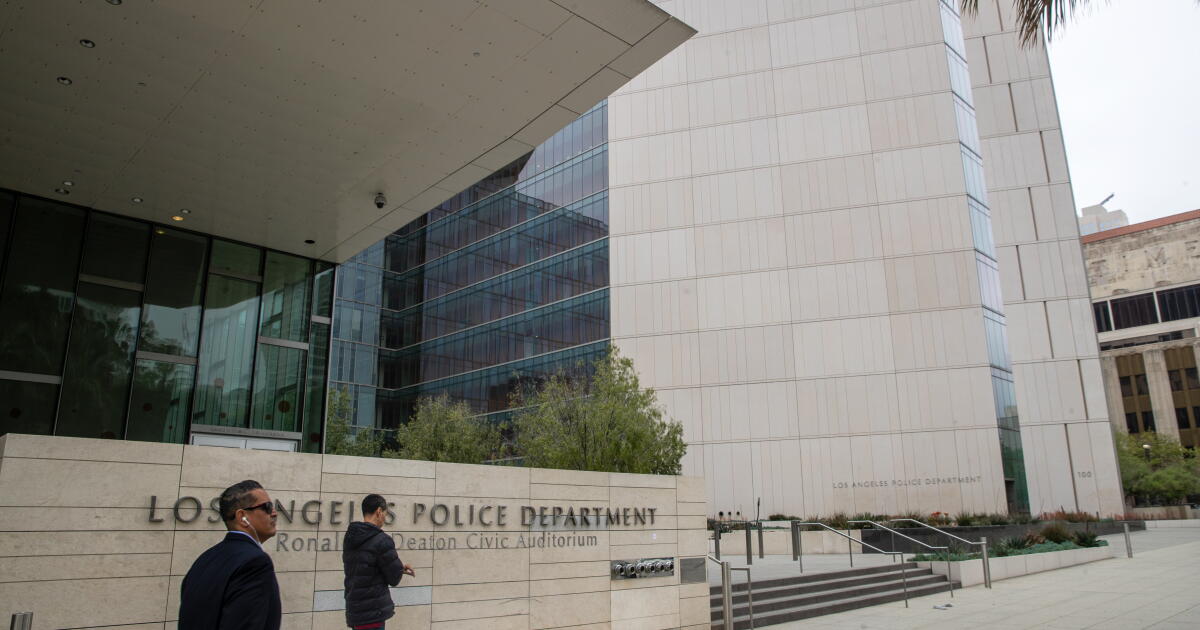
By a 10-4 vote, the council opted to overrule approval of the 10-year, $235-million contract between the Los Angeles Police Department and Axon Enterprise, halting a deal that had previously been signed off on by the Board of Police Commissioners.
Axon is seeking to outfit hundreds of LAPD patrol squads with plate scanners, which track the movements of vehicles around the city. Under the agreement, the company would also replace thousands of body-worn cameras, supply new Tasers, provide cloud video storage, and roll out a program that uses artificial intelligence to assist officers in writing police reports.
In addition, Axon is seeking to launch a pilot program that would attach plate scanners to streetlights around Los Angeles, offering the LAPD a souped-up version of its current systems by using AI to identify vehicles, license plates, pedestrians and objects that appear on streets and sidewalks.
The council’s decision — which was preceded by several fiery comments from members of the public who oppose the use of license plate readers — sends the contract back to the Police Commission for reconsideration.
A commission spokesperson said that the board’s members weren’t immediately available for comment.
Several council members voiced unease about proceeding without a better sense of the LAPD’s internal policy on license plate reader use. Delaying the contract, Councilmember Hugo Soto-Martínez said, would give the public and city leaders more time to review the safeguards and policies written into the LAPD’s proposed memorandum of understanding with Axon.
Councilmember Traci Park, a staunch supporter of plate reader technology, said there is an urgent need to get the devices “up and running.”
Councilmember Eunisses Hernandez shot back that it would be irresponsible to deploy the technology, citing news reports about officers misusing plate readers to stalk romantic partners and track women seeking reproductive health services.
Earlier this year, the LAPD allowed its agreement with one of Axon’s chief competitors, Flock Safety, to lapse over concerns that the Trump administration is using the data it collects to locate immigrants targeted for deportation. Police officials say they no longer have access to the company’s cameras, many of which are owned by homeowners associations and other private groups.
LAPD Chief Jim McDonnell and other department leaders have pushed to expand the use of license plate readers, saying they are a valuable tool for solving crimes, enabling investigators to more easily locate stolen vehicles and fugitives.
Hernandez noted that other police technologies, such as a robot dog used in situations involving barricaded suspects, had quietly moved from a pilot to a full-fledged program without input from the council.
Council President Marqueece Harris-Dawson said he still had privacy concerns about license plate readers, while noting that their deployment along the Figueroa corridor had assisted in the rescue of dozens of juvenile sex trafficking victims.
“Now having said that, if I’m honest I don’t know what else the cameras are doing,” he said.
Councilmember Monica Rodriguez said that as the license plate reader technology is adopted by other, non-police agencies such as sanitation and street services, the city needs a universal policy governing its use.
The matter will next be heard by the public safety committee — likely at its Oct. 20 meeting — before being taken up by the full council later that week.
In a presentation to the Police Commission last month, the LAPD’s technology czar, Dean Gialamas, said that the department understood the privacy and civil liberty concerns raised about companies such as Flock. This summer, the department announced it was pausing its relationship with the Atlanta-based firm, but police officials have said they are still hopeful to negotiate a new deal with the company that would include more data-sharing safeguards.
Much like the initial debate over the use of forensic DNA testing, Gialamas said, the answer wasn’t to abandon the technology but to create safeguards to “ensure responsible and trusted use.”
Gialamas told commissioners that Axon had agreed to terms that would give the LAPD complete ownership of the data captured and bar the sharing of data with federal authorities. The proposed deal, he said, would also limit the use of plate readers to criminal investigations, missing persons cases and other “serious public safety matters.” Investigators, for instance, would not be able to conduct searches based solely on protests or other 1st Amendment-protected activities, he said.
Under the proposed contract, investigators would no longer be given “unfettered access” to license plate data and the retention period would be significantly cut down, he said. The department would also be permitted to conduct regular audits to flag officers who use the system frequently or conduct unusual searches.
A report issued last month by the LAPD inspector general’s office found numerous “limitations” in the department’s existing agreements with its three plate reader vendors — Flock, Axon and Motorola — including a lack of clear language about how long data are retained and how they are shared with third parties or other law enforcement agencies.
The inspector general recommended that the department update its current license plate reader contracts to address data security and privacy concerns, conduct regular audits and develop standardized rules for traffic stops based on plate reader hits.
WASHINGTON — Late September in the Oval Office, President Trump declared, “Iran will never have a nuclear weapon. We’re gonna win that war very soon.”
It wasn’t the first time he’s described the hostilities as “war.”
On Feb. 28, the day U.S. and Israeli began bombarding Iran, he warned that “the lives of courageous American heroes may be lost, and we may have casualties. That often happens in war, but we’re doing this not for now. We’re doing this for the future, and it is a noble mission.”
But throughout seven months of back-and-forth strikes with Iran, Trump administration officials, and sometimes Trump himself, have performed verbal acrobatics to avoid the “W” word.
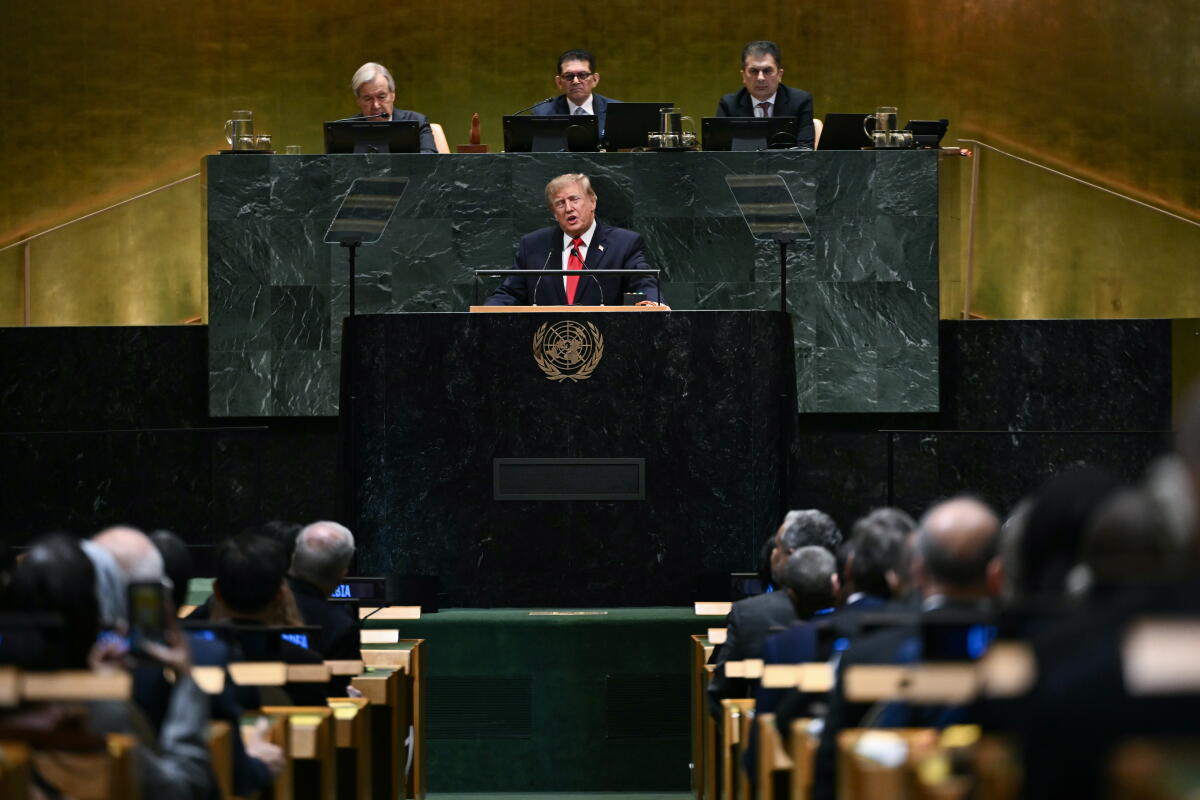
President Trump, addressing the United Nations General Assembly on Sept. 22, used the word “war” one time when referring to hostilities with Iran.
(Pool / Getty Images)
Senior administration officials loosely tossed around “war” during the first stages of conflict, but with polls showing the war in unpopular and congressional support waning, “war” and even “Operation Epic Fury” have become taboo among members of the Trump administration.
Trump has called attacks on Iran a “military operation,” “military decimation,” “excursion” and “skirmish.”
At a White House press briefing last month, Vice President JD Vance attempted to clear the air when a reporter asked about a potential end to what she called a “war in Iran.”
“I wouldn’t call it a war right now,” Vance said. “Major combat operations lasted for about six weeks.”
Vice President JD Vance, addressing reporters at the White House on Sept. 3, said, “I wouldn’t call it a war right now” when asked about the conflict with Iran.
(Chip Somodevilla / Getty Images)
Defense Secretary Pete Hegseth tread carefully in front of the Senate Appropriations Committee in July, repeatedly referring to a “conflict” in Iran that needed additional funding to continue.
On May 5, during the first of two delicate ceasefires with Iran, Secretary of State Marco Rubio announced an end to the objectives laid out in Operation Epic Fury and the beginning of “Project Freedom” — an effort to escort merchant ships through the Strait of Hormuz.
In April, Trump announced the blockade of Iranian ports. When asked about whether the blockade constituted an act of war, Rubio replied, “That’s not an act of war, that’s a defensive measure. It’s a counter to what they have decided to do.”
Senior Trump officials have maintained that the conflict can no longer be viewed as war because the intensity of strikes between the two countries has been reduced.
The “end” of Operation Epic Fury, the name Trump used when he announced hostilities on Feb. 28, was declared on May 5 — 60 days after the fighting began.
The timing was no coincidence. Under the War Powers Resolution of 1973, a president must cease all hostilities abroad after 60 days if there is no congressional declaration of war.
Legal and political considerations
Under the Constitution, only Congress declares war, but past presidents have routinely circumvented this rule by exercising their authority to direct the military and initiate strikes on targeted nations.
Nearly every modern president, from Dwight D. Eisenhower to Trump, has used this justification to undertake military action without the declaratory approval of Congress.
Congress can also choose to approve an Authorization for Use of Military Force, which grants the president legal authority to conduct military operations overseas.
Unless Congress sets a time limit on the authorization, authority to use the legal justification to launch military strikes can theoretically span multiple administrations.
Rep. Jamie Raskin (D-Md.), a former constitutional law professor at American University, said that presidents of both parties have avoided the term “war” when attempting to evade congressional approval of hostile action abroad.
“Trump has followed some of his predecessors in playing word games with the war power,” Raskin said. “What makes his case so extreme is that he proudly described it as a war and depicted it in glorified military terms.”
In March, seven days into the fighting, Trump said, “The war itself is going unbelievably. It’s as good as it can be.”
Congress has not officially declared war since World War II. The Vietnam War, the invasion of Afghanistan and both wars in Iraq were all approved by Congress under the umbrella of an Authorization for the Use of Military Force.
This year Congress has not approved such an authorization for the action with Iran. Fourteen Senate votes for a War Powers Resolution to curb Trump’s war efforts have failed in the chamber so far.
According to a CNN/SSRS poll last month, only 26% of Americans approve of the Trump administration’s handling of the Iran war.
Raskin said that he believes Trump’s terminology has shifted with the public mood, adding that he hasn’t heard any of his Republican colleagues “play along with the semantic games.”
“When things have turned south in the fortunes of this war, he has tried to pretend it’s something else,” Raskin said. “I think that has just further enraged the population.”
Past handling of congressional war power
The administration’s declaration that Operation Epic Fury had concluded echoed May 2003, when then-President George W. Bush stood in front of a banner reading “Mission Accomplished” aboard the USS Abraham Lincoln, approximately six weeks after Operation Iraqi Freedom began.
“Major combat operations in Iraq have ended,” Bush said. “And now our coalition is engaged in securing and reconstructing that country.”
President George W. Bush speaks aboard the aircraft carrier USS Abraham Lincoln off the California coast on May 1, 2003.
(J. Scott Applewhite/AP)
Despite the victory lap, combat operations in Iraq and across the Middle East continued through the aughts. The Iraq war wouldn’t officially end until 2011, with President Obama’s signature.
Obama himself relied heavily on the 2001 Authorization for the Use of Military Force — passed by Congress under Bush — in his military campaign against Islamic State during his presidency.
According to Council on Foreign Relations data, Obama launched 542 drone strikes and killed 3,797 people in Yemen, Pakistan and Somalia without renewed approval from Congress.
A case more analogous to Trump’s comes in former President Truman’s unilateral decision to deploy U.S. troops to Korea in 1950. The Truman administration forwent congressional approval altogether and used United Nations Security Council resolutions to justify the intervention against Communist forces in the north, according to a White House news release from the time.
There were many critics of this exercise of executive war powers, most notably, Ohio Republican Sen. Robert A. Taft, who argued that Truman had usurped congressional war powers.
However, that Congress still provided monetary support, granting Truman military funds and extensions to the draft to raise additional troops for the Korean War effort. According to historical Gallup polls, 78% of Americans in 1950 approved of U.S. intervention in Korea.
Trump sticking with ‘war’
While Vance and other administration officials continue to avoid “war,” it does slip out now and then. Trump has been, perhaps, the most discordant messenger of the administration when discussing Iran.
After referring to the “war” on social media and public interviews more than a dozen times, Trump backed Vance’s comments about the Iran war no longer being active as he spoke to reporters in the Oval Office in September. He refuses to call the conflict a “war,” Trump said, because “you are supposed to get approval.”
“I call it a military conflict, because it’s small potatoes for us,” Trump said.
WASHINGTON — The Supreme Court on Friday upheld President Trump’s expanded use of government data to spot non-citizens who are registered to vote.
The justices granted an emergency appeal from Trump’s lawyers and set aside a judge’s order that blocked use of this data on the grounds it was error-prone, particularly for naturalized citizens.
Justices Ketanji Brown Jackson, Sonia Sotomayor and Elena Kagan dissented.
The decision will aid states that seek to scrub their voter rolls and remove those who are not citizens.
Several Republican-led states including Texas and Florida supported the administration’s appeal.
The use of the new database “allowed Texas to more efficiently, promptly, and economically ensure the accuracy of its voter rolls,” the state said. It was “able to run its entire list of 18 million voters” through the expanded system of checks “in bulk and for no cost.”
It’s not clear the decision will have much impact in California and other Democratic-led states. It is likely to have a limited impact in the month ahead because the law forbids states from purging their voter rolls in the 90 days prior to an election.
The court, in an unsigned opinion, said the law supported use of the data.
“The federal Government has an obligation to respond to requests from state and local election officials seeking to verify the citizenship of voters,” the court said. “The order below prevents the federal government from using the program it believes is best suited to the task.”
The administration said the Department of Homeland Security can respond to more than 1 million requests per day to check if a person appears to be a citizen or not based on Social Security records and other data files.
If not, state or county election officials may require these suspect voters to furnish proof of their citizenship.
However, states and local election boards are not required to conduct these searches. The administration also said its data reports are not final proof of citizenship.
Upholding these data searches “would not require states, candidates, parties, or voters to do anything,” Solicitor Gen. D. John Sauer told the court. “It would simply make available to states additional information. … States that wish to use that information in the course of ensuring that only eligible citizens cast ballots this November should be free to do so.”
In dissent, Jackson said the court’s order creates the “risk that states might cancel the voter registrations of at least some recently naturalized citizens or force such persons to provide proof of citizenship before voting.”
The new system of voter checks is based on the 40-year-old Systematic Alien Verification for Entitlements, or SAVE, that was created by Congress. Then, the goal was to check if applicants were entitled to receive federal benefits.
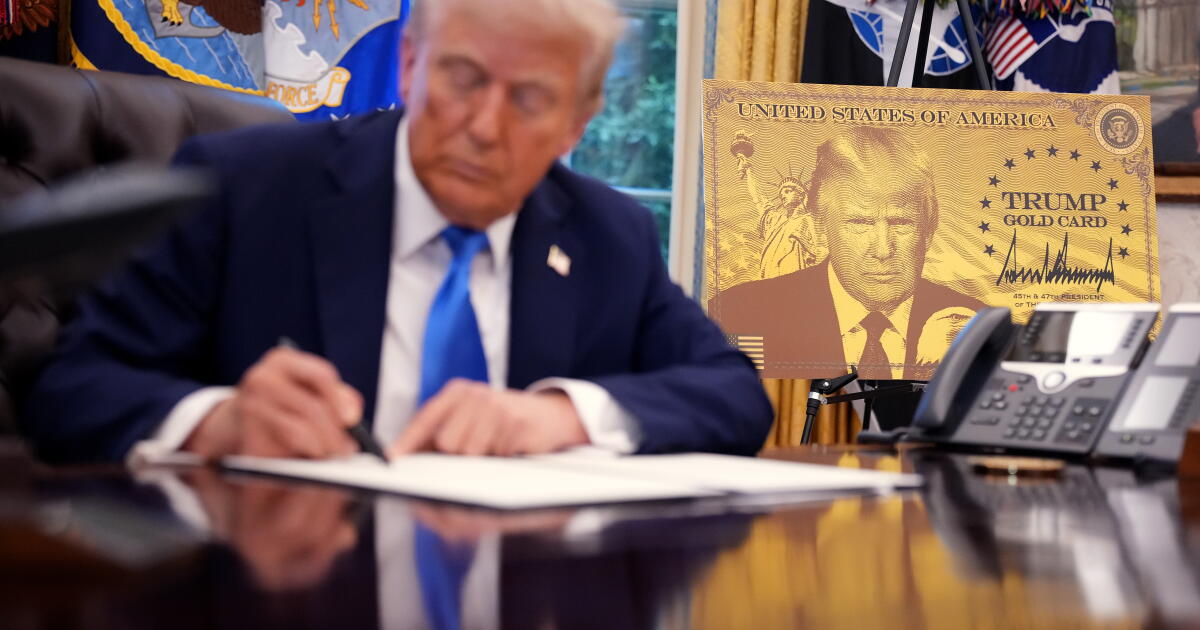
Last year, Trump issued an executive order directing Homeland Security to expand the reach of SAVE to provide states “access to appropriate systems for verifying the citizenship or immigration status of individuals registering to vote or who are already registered to vote.”
It is a federal crime for non-citizens to register and vote.
Trump has long maintained that non-citizens are voting, but he has had little evidence to support that claim.
Voting rights advocates sued, contending the new “mass verification” system was not authorized by Congress and relied on data that is protected as private under the law.
In June, U.S. District Judge Sparkle Sooknanan, a Biden appointee, agreed and blocked use of the expanded searches. The administration has “trampled on the privacy rights of American citizens in a manner that threatens the sacred right to vote,” she said.
On Sept. 4, the U.S. court of appeals by a 2-1 vote refused to overturn her ruling, prompting the administration’s fast-track appeal.
The voting rights advocates, led by the League of Women Voters, had urged the court to stand aside.
“The government has recklessly created an error-laden master citizenship database that endangers millions of Americans’ privacy and voting rights,” they said.
The data searches are flawed, they argued, because they “only reflect a person’s citizenship status when they applied for a Social Security number. That status does not automatically update if the person later naturalizes.”
Texas admitted that the mass checks yield “some inaccurate information.” It said 2,724 people were cited as “potential non-citizens” among its 18 million registered voters.
In response, county officials had to check further to confirm the citizenship of these voters, the state said.
Last week, the Supreme Court dealt Trump a defeat when it blocked use of his proposed postal rules that could have prevented millions of voters from casting ballots by mail.
In a brief order, the court said Trump’s claims of power over states and their voting were “unlikely to succeed.”
But in the case of the expanded data files, the court said the law appears to favor the administration.