Mike Waltz: US offered to sell Iran uranium for civilian programme | US-Israel war on Iran News
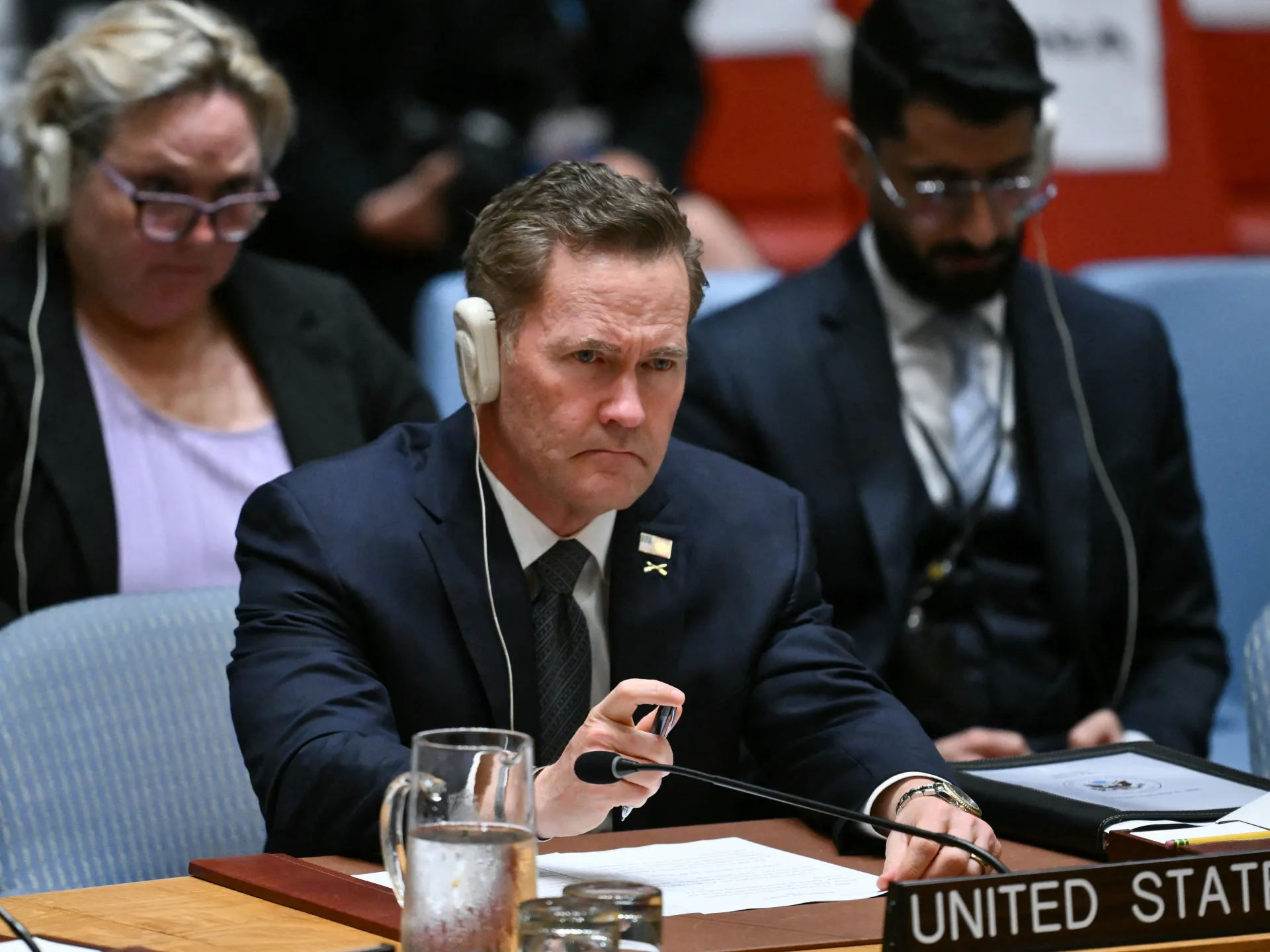
As part of previous negotiations aimed at ending its war on Iran, the United States offered to sell Tehran uranium for use in a civilian programme, but Iran refused, a top US official said on Sunday.
“Heck, our negotiators even offered to sell them uranium,” US Ambassador to the United Nations Mike Waltz said on NBC’s Meet the Press. He said the agreement would have been akin to that with the United Arab Emirates, which has “a peaceful programme, right there in their neighbourhood, and they abide by international law and inspection regimes”.
Recommended Stories
list of 3 itemsend of list
Waltz said the administration of US President Donald Trump was open to allowing Iran to keep a civilian nuclear programme, provided it agreed to its obligations in accordance with international law and the Nuclear Non-Proliferation Treaty (NPT).
There were “a number of ways” President Trump was open to dealing with Iran to ensure it did not have access to highly enriched uranium, or the ability to reconstitute highly enriched uranium, including by having Tehran “hand over” any such material it currently has, Waltz said.
The UAE, a signatory to the NPT, generates electricity from a nuclear power plant and signed an agreement with the US in 2009. Under those agreements, the UAE has agreed not to produce enriched uranium domestically, and not to reprocess spent fuel on its own. Trump said Saudi Arabia and the US reached an agreement on civilian nuclear use this year, but details have not yet been made public, and the US president has also claimed the deal is contingent on Riyadh agreeing to the controversial Abraham Accords. Around the region, Egypt and Turkiye also operate civilian nuclear programmes.
Pakistan openly operates a nuclear arsenal, while experts have long believed Israel secretly possesses one of its own. Neither country is a signatory to the NPT.
A key point of contention between Iran and the US has been what should be done with the uranium that Tehran currently has, and how, or even if, to ensure any future supply of the material is not capable of being used for producing a nuclear weapon. Iran has insisted it has no plans to create a nuclear weapon, and any uranium it possesses and enriches is only for civilian purposes, including for generating electricity and use in medical treatments and scientific research.
Iran is estimated to have more than 440kg (970lb) of uranium enriched at 60 percent purity. Uranium enriched to around 90 percent purity is suitable for a nuclear weapon. Enriching uranium is a complex process that involves isolating the most radioactive isotope in a quantity of uranium. Under the 2015 Joint Comprehensive Plan of Action (JCPOA), Iran agreed to cap its uranium enrichment at 3.67 percent under strict international supervision in exchange for lifting sanctions against its economy. Trump scrapped that deal in 2018, saying it was too generous to Iran.
On September 10, the International Atomic Energy Agency (IAEA) said it was concerned over Iran’s “continued noncompliance” with the Nuclear Non-Proliferation Treaty, of which it is a signatory. Under the treaty, Iran agrees not to produce nuclear weapons and to meet IAEA safeguards to control its supply of uranium used for civilian purposes. The agency has not had access to key Iranian nuclear facilities since June 2025, when Israel and the US attacked sites in the country as part of a 12-day war.
Iranian officials have responded to the IAEA by saying the finding was made “under political pressure from the US and its allies”, and that they have not stopped respecting their treaty obligations, but could not allow inspections until facilities were safe from US and Israeli attacks.
At times, Trump has said he will destroy the enriched uranium Iran has or retrieve it by force. In April, the US president claimed to have convinced Iran to turn over the enriched uranium it had, which he referred to as “nuclear dust”. Iranian officials quickly dismissed those claims, saying enriched uranium would not be transferred outside the country under any circumstances.
On Saturday, Trump rejected a plan submitted by Iran to reopen the Strait of Hormuz within seven days, as Tehran continued to insist that only diplomacy can solve the conflict between the two countries. Speaking to reporters at the White House, Trump said on Saturday that Iran wants to make a deal to open the vital maritime corridor immediately only “because they are losing so badly”.
In an interview on Meet the Press on Sunday, Iran’s foreign minister, Abbas Araghchi, said that Iran is prepared for war to resume, “even if it comes to a doomsday war”.
He added, “If you ask us, there is no reason why we should go back to diplomacy. But I’m still trying diplomacy, because I think we shouldn’t miss any chance for peace.”