Iran Wants To Make Deal To End War, Trump Claims (Updated)
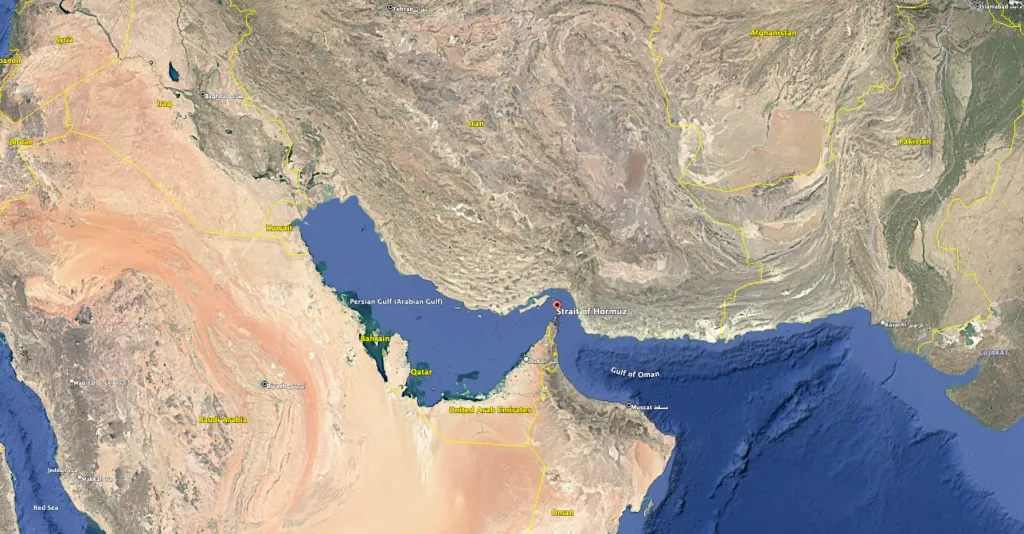
President Donald Trump claims that Washington and Tehran have had “very good and productive conversations regarding a complete and total resolution of our hostilities in the Middle East.” On the back of this development, the U.S. leader said today that he would order a five-day pause in all U.S. airstrikes against Iranian power plants and energy infrastructure. Iran has denied any knowledge of these talks, however. Over the weekend, the Trump administration had also given 48 hours for Tehran to lift its blockade of the strategic Strait of Hormuz, or to face the consequences.
Speaking to reporters today, Trump reaffirmed his claim that discussions were taking place with Iran about ending the war and that there were “major points of agreement” between the two parties. He said he expects a deal to be agreed on very soon, adding “I didn’t call, they called — and they wanted to make a deal.”
On Saturday, Trump had threatened to bomb Iran’s power plants after 48 hours unless Iran agreed to fully reopen the Strait of Hormuz, the strategic oil shipping route that Iran has effectively blocked.
As of today, however, Trump says he has instructed the Pentagon to postpone all airstrikes against Iranian power plants and energy infrastructure for a five-day period, which he said reflected the progress made on a possible deal.
In a post on Truth Social, Trump added that his latest instruction to the Pentagon is subject to the “success” of ongoing “meetings and discussions.”
“We’re doing a five-day period, and we’ll see how that goes. If it goes well, we’re going to end up with settling this,” Trump told reporters, referring to earlier comments about the bombing pause. “Otherwise, we’ll just keep bombing our little hearts out.”

Trump has said that the latest talks took place on Sunday and involved his Middle East envoys, Jared Kushner and Steve Witkoff. Trump claims they were talking to a “respected” Iranian leader, but that it was not the new supreme leader, Ayatollah Mojtaba Khamenei.
The status of Mojtaba Khamenei remains unclear, after U.S. War Secretary Pete Hegseth last week said that the new supreme leader was wounded and “likely disfigured,” presumably as the result of an airstrike.
For its part, Tehran has denied that it has conducted talks with Washington and instead has said that the U.S. president’s comments show that he has “backed down.”
Iran’s Fars News Agency, which is linked to the Islamic Revolutionary Guard Corps (IRGC), quoted a source as saying there has been “no direct or indirect” contact between Iran and Trump.
Iran continues to warn that it will “irreversibly destroy” essential infrastructure across the Middle East, a message that it began to push in response to U.S. threats to hit Iranian power plants. Iran said it would hit power plants in all areas that supply electricity to American bases, “as well as the economic, industrial, and energy infrastructures in which Americans have shares.”
The U.S. president also said that “we’re gonna get” the “nuclear dust,” referring to the enriched uranium in Iran. Asked how, he said, “We’re going down, and we’re going to take it ourselves.”
Trump has said that ending Iran’s nuclear program is critical for any deal and has now claimed that Iran has agreed to that.
“We are very willing to make a deal. It’s got to be a good deal, and it’s got to be no more wars, no more nuclear weapons. They’re not going to have nuclear weapons anymore. They’re agreeing to that. Any of that stuff, there is no deal,” Trump said when asked about the Iranian nuclear program.
It should be recalled that Iran has always insisted it was not going to pursue the development of nuclear weapons, and that its uranium-enrichment efforts were entirely peaceful.
Iran’s foreign ministry hit back at Trump’s statements, saying they were “part of efforts to reduce energy prices and buy time to implement his military plans,” which could still involve a possible occupation or blockading of Iran’s strategically crucial Kharg Island — a prospect that we have discussed in detail in the past.
“Yes, there are initiatives from regional countries to reduce tensions, and our response to all of them is clear: We are not the party that started this war, and all these requests should be referred to Washington,” the Iranian Foreign Ministry was quoted as saying.
UPDATES:
We have ended today’s rolling coverage.
3:50PM EST—
Iranian officials have repeatedly threatened the United States and Israel with secretive new super-weapons, the details of which are notably thin.
The latest such threat comes from Major General Ali Abdollahi Aliabadi, who heads up the unified combatant command headquarters of the Iranian Armed Forces. “The use of a new, secret weapon will begin soon, and it will bring an end to the enemy’s operations,” he claimed.
The U.K. Royal Navy’s Type 45 destroyer HMS Dragon has arrived on station in the eastern Mediterranean. The U.K. government faced criticism for the slow pace of response, three weeks after an Iranian-made drone hit the British base of RAF Akrotiri in Cyprus. U.K. Defense Secretary John Healey said that the destroyer will begin “operational integration into Cyprus’s defense” starting on Monday night.
3:45PM EST—
Abigail Hauslohner, Washington-based correspondent for the U.K. Financial Times, reports that Trump today claimed the idea of launching a war against Iran came from the U.S. War Secretary Pete Hegseth.
“Pete, I think you were the first one to speak up, and you said: ‘Let’s do it because you can’t let them have a nuclear weapon’,” Trump is quoted as saying.
There are signs, too, that Hegseth may be lined up as a negotiating partner with Iran. Abas Aslani, a journalist and senior research fellow at the Center for Middle East Strategic Studies (CMESS), reports that Washington has suggested that Vance take part in talks with Iran’s Parliament Speaker Mohammad Bagher Ghalibaf. Iran has not yet responded to the idea, which apparently derives from Iranian distrust of Steve Witkoff.
3:35PM EST—
Barak Ravid, global affairs reporter with Axios, writes that U.S. Vice President JD Vance spoke today with Israeli Prime Minister Netanyahu, updating him on plans for negotiations between the United States and Iran. Ravid cites an unnamed source who says that Vance and Netanyahu discussed the components of a possible agreement to end the war with Iran. Such a development would seem to suggest that Trump’s talk of an imminent deal with Iran may be premature.
A video circulating on social media this evening shows apparent Israeli airstrikes targeting what is reported to be an Iranian missile complex in Isfahan. Iran’s largest missile production and assembly facility is in Isfahan, and the plant has manufactured solid and liquid rocket fuels as well as various missile components. Also located close to Isfahan city is the Isfahan Nuclear Research Center, formerly known as the Uranium Conversion Facility.
Open-source intelligence sources have collated more information pointing to the ongoing deployment of U.S. forces from the Continental United States. Based on this, at least 35 C-17 transport flights to the Middle East have been identified since March 12, with 11 more flights on the way. Among the origins of these flights are key CONUS military installations, including Fort Bragg, North Carolina, and Fort Campbell, Kentucky. Fort Bragg is notably the home of the 82nd Airborne Division. Reported destinations of these flights include airbases in Israel and Jordan.
1:50PM EST—
Additional details about the talks with Iran, as reported by Barak Ravid, global affairs reporter with Axios:
Turkey, Egypt, and Pakistan are the countries that conveyed messages between the US and Iran in the last two days
Senior officials from the three countries held separate talks with White House envoy Steve Witkoff and Iranian Foreign Minister Abbas Araghchi
“The mediation continues and is progressing. The discussion is about ending the war and resolving all remaining open issues. We hope to receive answers soon,” the source said
This is in line with other reporting, including from the British Financial Times, that suggests that Pakistan is taking an increasingly important role in brokering talks between Tehran and Washington.
Iranian police say they have arrested 68 people for filming areas hit by airstrikes. It also says 67 were basically anti-regime individuals. Regardless, arrests for doing similar activities are also happening in allied Arab countries.
If the war explodes into a focus on targeting basic infrastructure, desalination plants would be among the most troubling targets, as they provide clean water to populations and industry.
Prime Minister of the U.K. Keir Starmer says it is totally unclear if Diego Garcia was targeted by Iranian ballistic missiles, which has been the prevailing narrative of the strange long-range missile attack by Iran.
1:21PM EST—
B-52s are now launching from the United Kingdom with full loads of GBU-31 JDAMs equipped with BLU-109 bunker buster warheads. This indicates that the bombers are now making direct attacks on targets in Iran, although these would still be in the lowest threat areas, and especially not deep into the eastern part of the country. Up until now, B-52s, which are the most vulnerable type within the U.S. bomber force, have been burning through stealthy AGM-158 JASSM cruise missiles for standoff strikes in Iran, as air supremacy has not been in place across the country, which you can read all about in our past report here.
Some tankers are trickling through the Strait of Hormuz:
Iran’s missile technology continues to be quite impressive, with more advanced types still being fired at Israel and eluding air defenses. We have seen multiple occasions where Iranian maneuverable reentry vehicles (MaRVs) have been able to pierce interceptor barrages during the terminal stage.
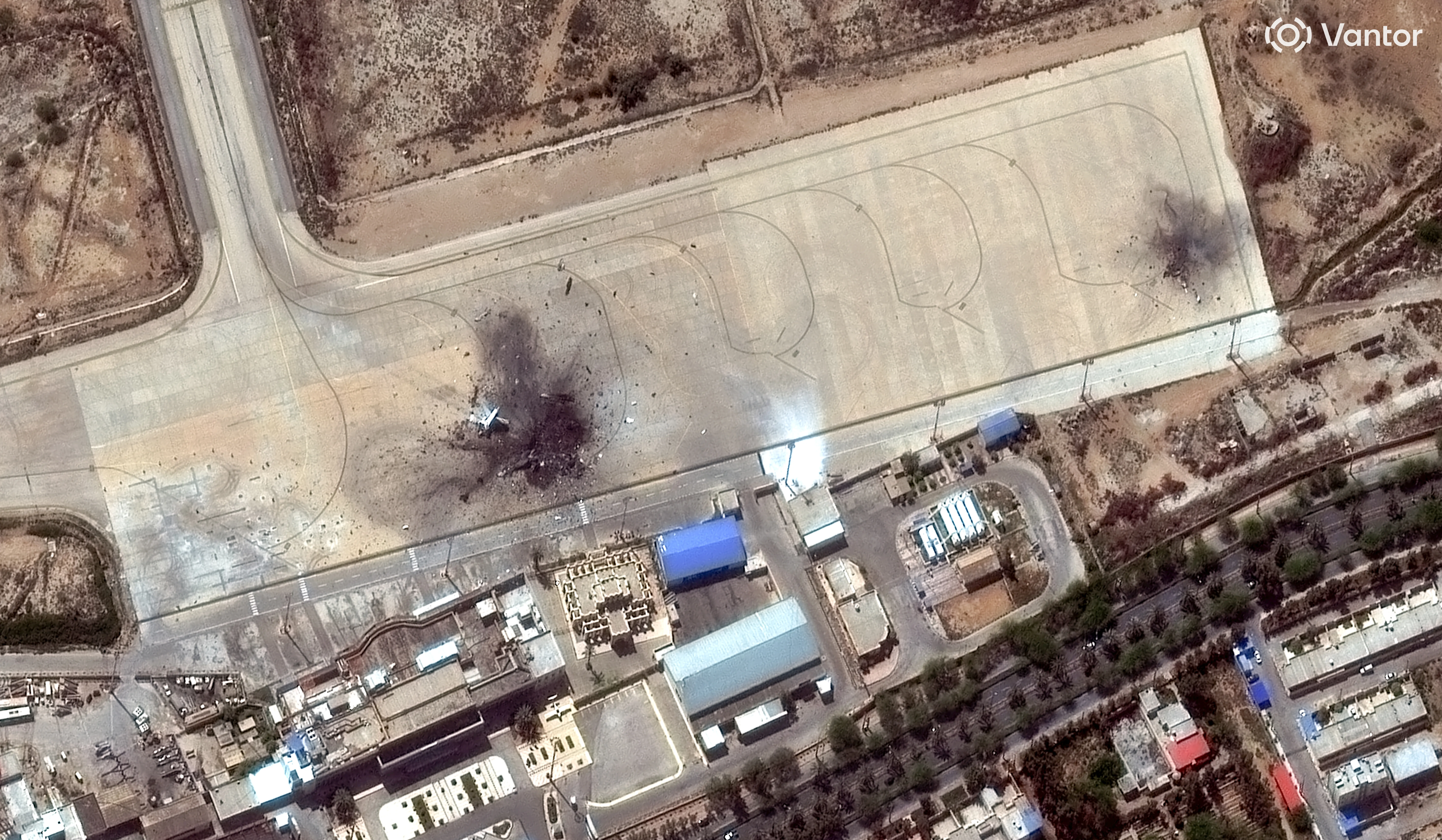
The U.S. and Israel continue to strike at Iran’s ability to quickly restart production of standoff weaponry.
The damage done to energy production infrastructure in the Middle East is becoming more clear. AFP states at least 40 energy assets have been destroyed or badly damaged in nine countries. The long-term economic fallout from Iran’s strikes on these targets remains unclear, but economists are warning that the damage done, as well as the Strait remaining closed for a prolonged period, could spark a global recession.
Iran has released a new video showing its underground ‘missile cities,’ this time showcasing air defense weapons still stored there. Clearly, this is intended to convey that air supremacy is not achieved and won’t be achieved, although many of these facilities have had their entrances collapsed by strikes, trapping everything inside from being used.
South Korea’s military is active in the UAE and has supplied air defense assets to help counter the Iranian barrages, according to The Diplomat.
New York Times reports that Israel had a secret plan to spark a rebellion in Iran that would quickly overrun the regime, but that never occurred:
NATO Secretary Rutte says 22 nations are working together to reopen the Strait. Currently, this appears to be a diplomatic endeavor not a military one.
Data centers continue to be new high-profile targets in the age of AI and cloud computing.
12:40PM EST—
In a further effort to put pressure on the United States, Iran’s defense council today threatened to lay sea mines to block the entire Gulf if Iran’s coasts or islands are attacked.
The fact that two U.S. Navy Independence class Littoral Combat Ships (LCS) configured for minesweeping duties — representing a substantial portion of the Navy’s mine countermeasures capacity for the Middle East region — were last reported thousands of miles away in a completely different part of the world is something TWZ has already reported on.
Oman, which has emerged as a key player in terms of its efforts to mediate between Tehran and Washington, is also seeking a way to reopen the strait.
The Omanis are “working intensively” to “put in place safe passage arrangements” for the strait, Omani Foreign Minister Badr Albusaidi wrote on X.
“Whatever your view of Iran, this war is not of their making. This is already causing widespread economic problems, and I fear they promise to get much worse if the war continues,” Albusaidi added.
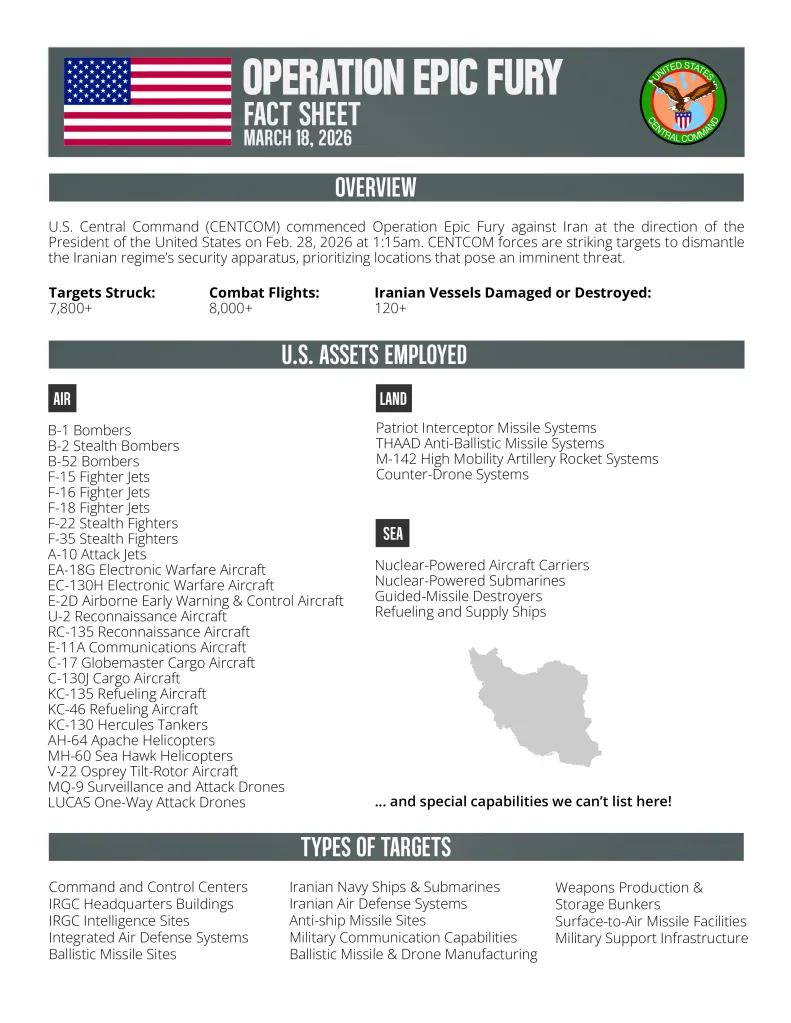
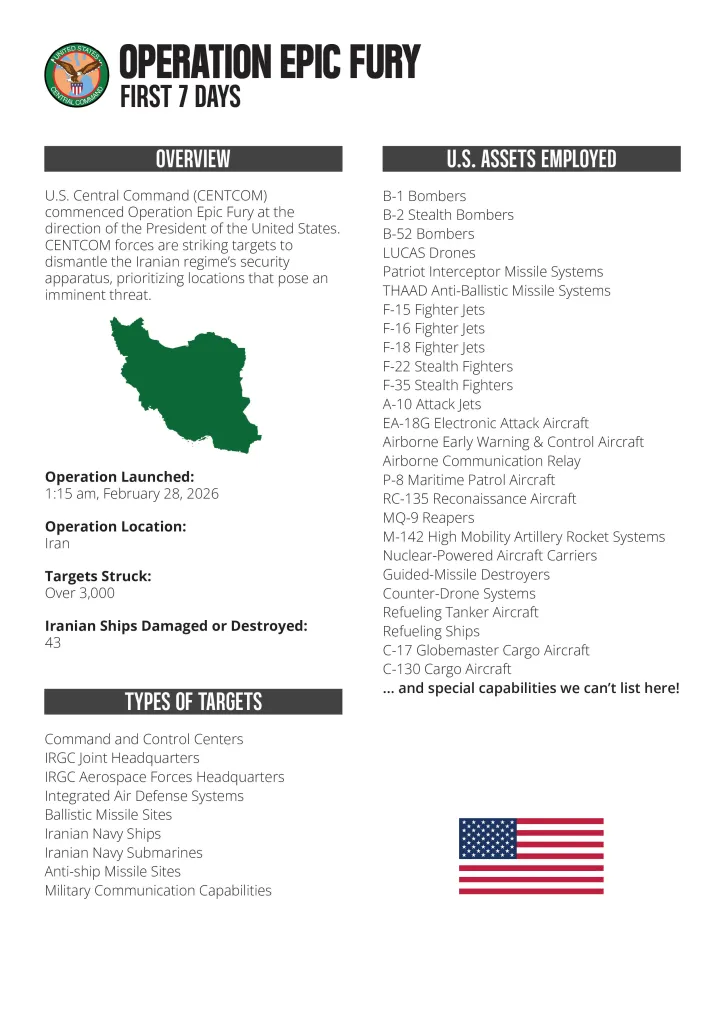
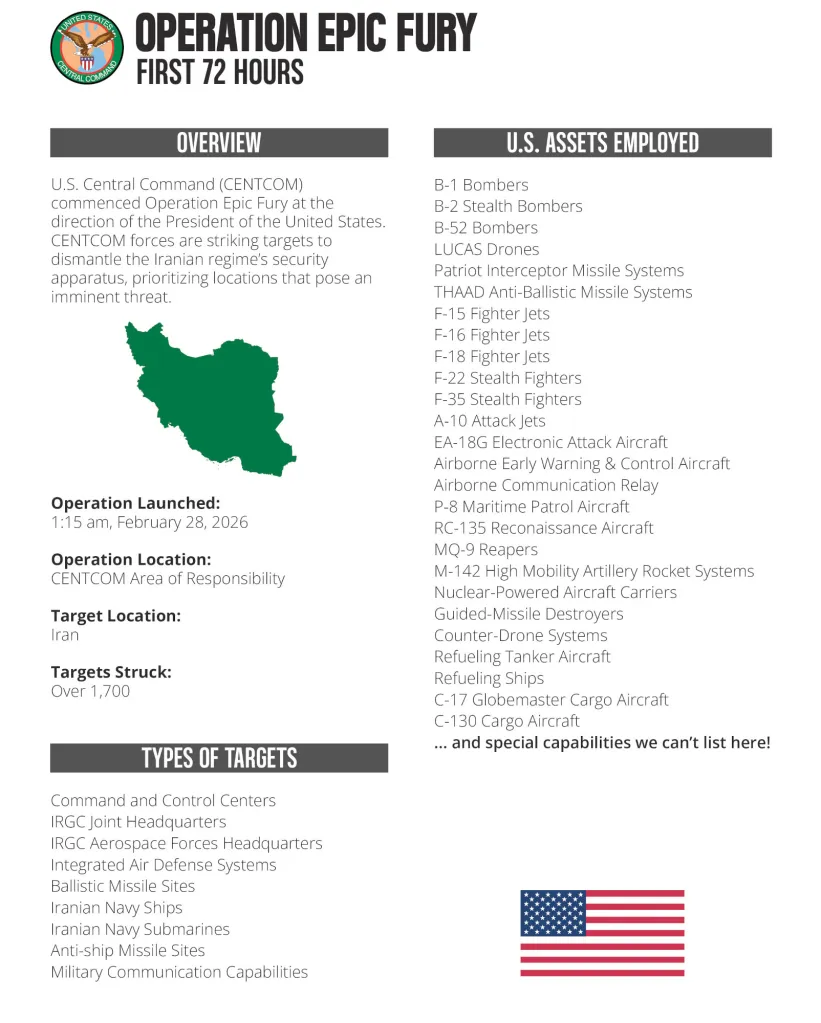
The U.S. military’s recent use of the new Precision Strike Missile (PrSM) short-range ballistic missiles against Iran was the longest field artillery strike launched by the U.S. Army in its history. This is the claim of Adm. Brad Cooper, commander of U.S. Central Command (CENTCOM), in his latest update on Operation Epic Fury.
The PrSM strike, on March 19, “took out Iranian military infrastructure, demonstrating the U.S. military’s unmatched reach and lethality,” Cooper said. The CENTCOM chief said that Iran “has lost significant combat capability,” with U.S. forces having destroyed “thousands” of Iranian missiles, advanced attack drones, and “all of Iran’s Navy.”
The Iran conflict was the first combat use of the PrSM, which only began entering service roughly two years ago. The new missiles offer significantly greater range compared to their predecessors, the Army Tactical Missile System (ATACMS), and provide a much-expanded area in which American units can now hold targets at risk.
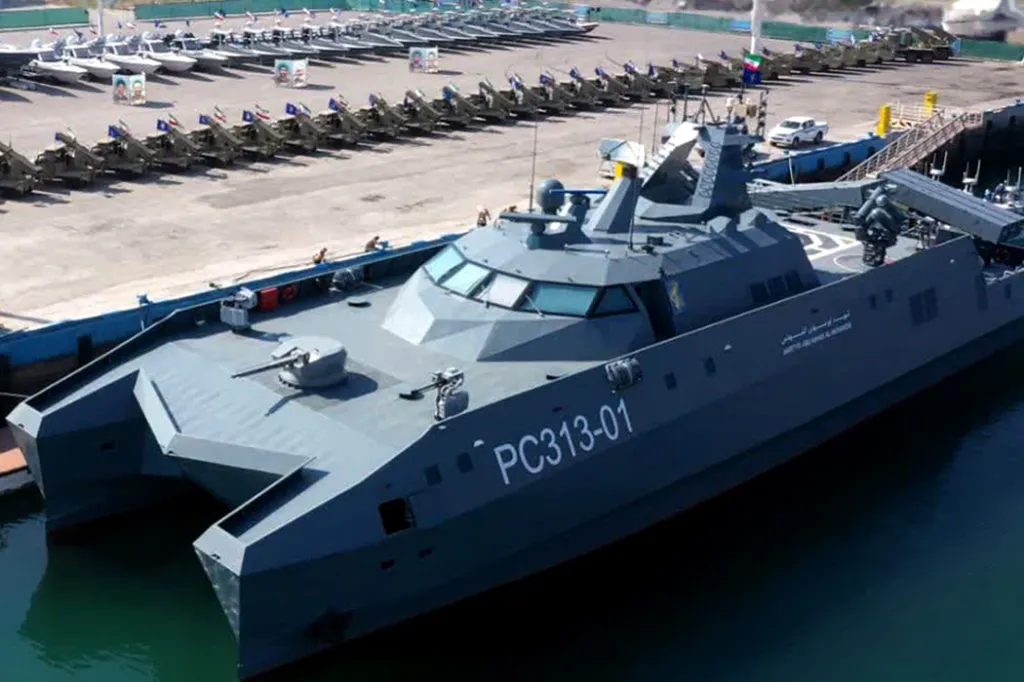
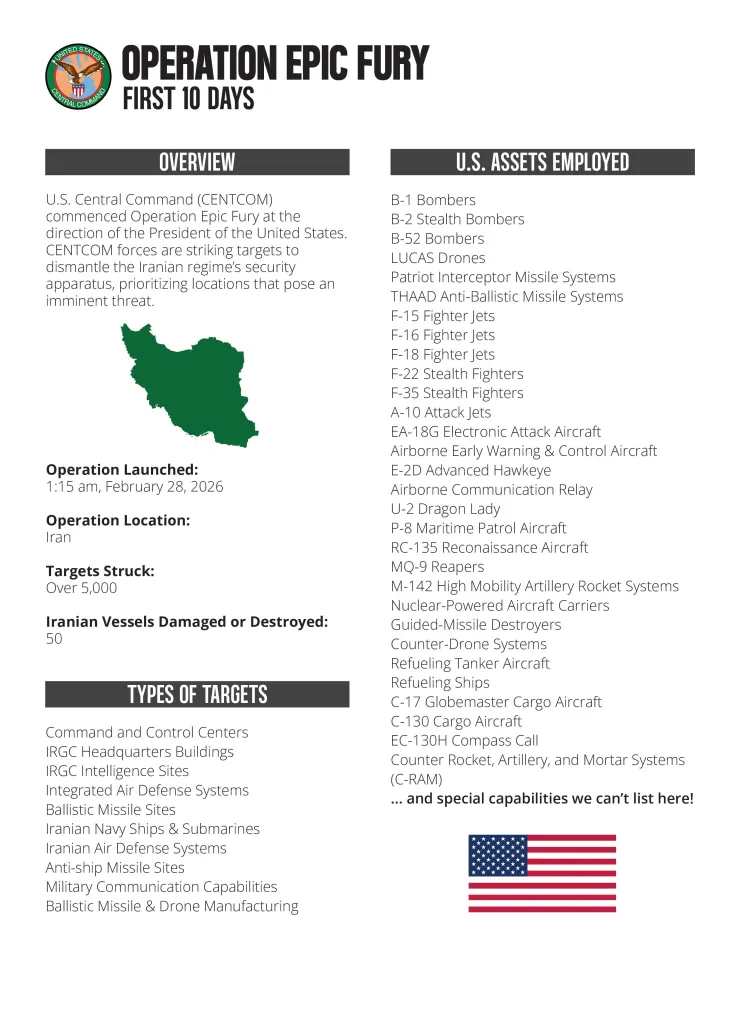
Cooper also said that the U.S. military has struck a total of 130 Iranian vessels, which constitutes “the largest elimination of a navy over a three-week period since World War II,” Cooper said.
“Their navy is not sailing, their tactical fighters are not flying, and they’ve lost the ability to launch missiles and drones at the high rates seen at the beginning of the conflict,” Cooper added. He also claimed that the U.S. military has been able to “maintain air superiority over Iran’s skies” in the course of over 8,000 combat flights. The reality of the air picture over Iran is somewhat different, as we have discussed in the past, and the continued risk to U.S. and Israeli aircraft appears to have been underscored by the emergency landing of a U.S. Air Force F-35A fighter after a mission over Iran last week.
The F-35 in question was apparently hit by ground fire, and, while the incident is still under investigation, the U.S. military has confirmed that the pilot suffered shrapnel wounds.
Iran’s IRGC posted a video on March 19 purporting to show an F-35 being targeted and struck by an Iranian air defense system. The authenticity of the video has not been confirmed.
There are signs that the storied 82nd Airborne Division of the U.S. Army could be headed to the Middle East. Based on the movement of cargo flights between Fort Bragg in North Carolina and the Middle East, the Pentagon could be moving elements of the elite paratrooper unit into the region.
There had been earlier signs that the 82nd Airborne was at least being prepared for a possible deployment, with the cancellation of a major training exercise in which its headquarters unit would have been involved.
The division includes a brigade combat team of between 4,000 and 5,000 soldiers that are on constant alert for rapid deployment anywhere in the world within hours. They can be assigned various high-priority missions, including seizing critical objectives, reinforcing U.S. embassies, and enabling emergency evacuations.
It is also quite possible that at least part of the deployment was scheduled in advance of the war.
The Israel Defense Forces (IDF) today said they have launched another wave of strikes in Tehran. Among the claimed targets were a Quds Force base used as a command post, an IRGC aerial defense headquarters, a Ground Forces headquarters, a Quds Force intelligence headquarters, and a naval cruise missile manufacturing site.
While unconfirmed, it appears that the IDF is on board with the U.S.-announced five-day pause on strikes against Iranian energy infrastructure.
Yesterday, the IDF issued details of its overnight airstrikes, claiming to have struck several Iranian weapon production sites and various headquarters of the regime. The IDF said that Israeli Air Force fighters had hit targets including an Iranian Army training base that included a storage site for anti-aircraft missiles; a weapons production and storage site of the Iranian defense ministry; a weapons production site of the IRGC Air Force; a headquarters of the Iranian intelligence ministry; and a headquarters of Khatam-al Anbiya, the Iranian military emergency command.
Meanwhile, Israel continues to fight on a second front in Lebanon. Among the targets that have been struck repeatedly are bridges across from the Litani River in southern Lebanon. The video below purportedly shows an Israeli Air Force strike on the Qasmiya Bridge yesterday. The IDF says strikes like these are meant to prevent Hezbollah from moving operatives and weapons into southern Lebanon.
The U.S. State Department has issued a “worldwide caution” to all Americans. “The Department of State advises Americans worldwide, and especially in the Middle East, to exercise increased caution. Americans abroad should follow the guidance in security alerts issued by the nearest U.S. embassy or consulate,” the State Department said in a statement.
Over the weekend, remarkable footage emerged showing the apparent interception of an Iranian medium-range ballistic missile. The video was reportedly captured in the Deir ez-Zor governorate of eastern Syria. While its authenticity cannot be confirmed, it bears the hallmarks of an exoatmospheric interception, of the kind that could be carried out by a Standard Missile-3 (SM-3) fired by a U.S. Navy Arleigh Burke class destroyer. It is important to remember that Israel’s own Arrow 3 anti-ballistic missile interceptors are also capable of engaging threats outside of the Earth’s atmosphere and use kinetic kill vehicles to destroy their targets.
Iranian missiles continue to threaten the air defense umbrella over Israel, as the video below confirms. In this case, an apparent cluster munition delivered by an Iranian missile, or otherwise debris from an intercepted missile, struck a car in the city of Tel Aviv.
Footage has emerged showing the immediate results of apparent airstrikes on Yazd, in central Iran. The site has been struck by the United States and Israel on multiple occasions this month and is considered one of the most significant underground missile-launch facilities in the country. The fact that the base has been targeted repeatedly suggests that it is proving tricky to render inoperational.
According to a recent CNN investigation, satellite images from 27 Iranian underground bases indicate that the U.S.-Israeli campaign has struck 77 percent of the tunnel entrances that could be imaged. However, construction equipment was seen appearing at bombed sites typically within 48 hours. This would be used for digging out blocked entrances and restoring access to the tunnel systems below, likely making the sites operational again.
Last Friday morning local time, Iran reportedly launched two intermediate-range ballistic missiles at Diego Garcia in the Indian Ocean, but neither of them struck the base.
More analysis of that abortive attack is now emerging. This airbase has hosted a significant build-up of U.S. military aircraft, although not, so far, long-range bombers. This would be an option, however, since the United Kingdom gave the go-ahead for the United States to use the island for strikes on Iran. The threat posed to Diego Garcia by Iranian long-range attack drones and missiles is something we have discussed in the past.
In his analysis of the attempted attack, missile and drone expert Fabian Hinz outlines the various weapons that Iran could have called upon, as well as their various advantages and disadvantages.
While we have seen similar footage before, it is interesting to note that U.S. Navy F/A-18E/F Super Hornets continue to use their onboard 20mm cannons to strafe targets along the Iranian coast.
A photo from the perimeter fence at RAF Fairford in England confirms that U.S. Air Force bombers — and planespotters — have been busy in recent days.
Contact the author: thomas@thewarzone.com