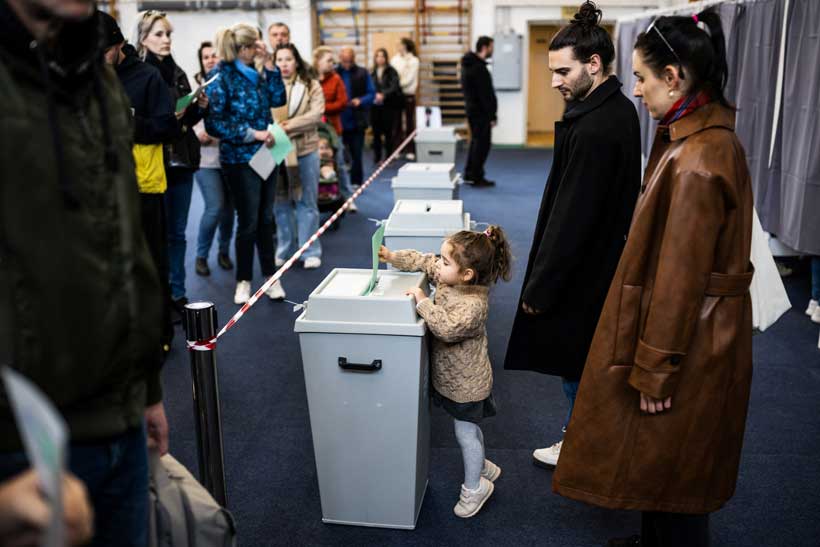
Record turnout in Hungary as election could oust Orban and unsettle Russia
Hungarians were voting on Sunday in an election that could potentially end Prime Minister Viktor Orban’s 16-year rule. Orban’s leadership has drawn international attention, also affecting right-wing politics in the West, including the U. S. under President Donald Trump. Despite having been in power for many years, many Hungarians are dissatisfied due to economic stagnation, rising living costs, and perceived wealth accumulation by government-linked oligarchs.
Recent opinion polls indicated that Orban’s Fidesz party was trailing the new center-right opposition, Tisza party led by Peter Magyar, by 7-9 percentage points. Tisza was polling around 38-41%. Voter turnout was predicted to be a record high, with 74.23% having voted by 1500 GMT, up from 62.92% at the same time during the 2022 election. Long queues were observed at voting stations in Budapest.
Magyar encouraged voters to report any election irregularities, calling election fraud a serious crime, and expressed hope for a majority in parliament, which would allow Tisza to amend Hungary’s constitution. Orban emphasized the importance of respecting the people’s decision and following the constitution. Four years earlier, the OSCE noted that, while the election was run well, an uneven playing field may have affected the results.
Voter opinions varied; some wanted change due to tension in society, while others supported Orban for his welfare policies, claiming Fidesz delivered on promises since the end of communism. Orban characterized the election as a choice between “war and peace” and campaigned against claims that a Tisza victory would lead Hungary into Russia’s war in Ukraine.
The election drew attention from Brussels and could reshape Hungary’s ties with the EU, particularly concerning Russia. An Orban loss could weaken Russia’s influence within the EU and possibly facilitate financial aid for Ukraine. Despite Tisza’s lead in polls, analysts warned of uncertainties due to undecided voters and support for Fidesz among ethnic Hungarians in neighboring countries. Polling stations were set to close at 7 p.m. (1700 GMT).
With information from Reuters