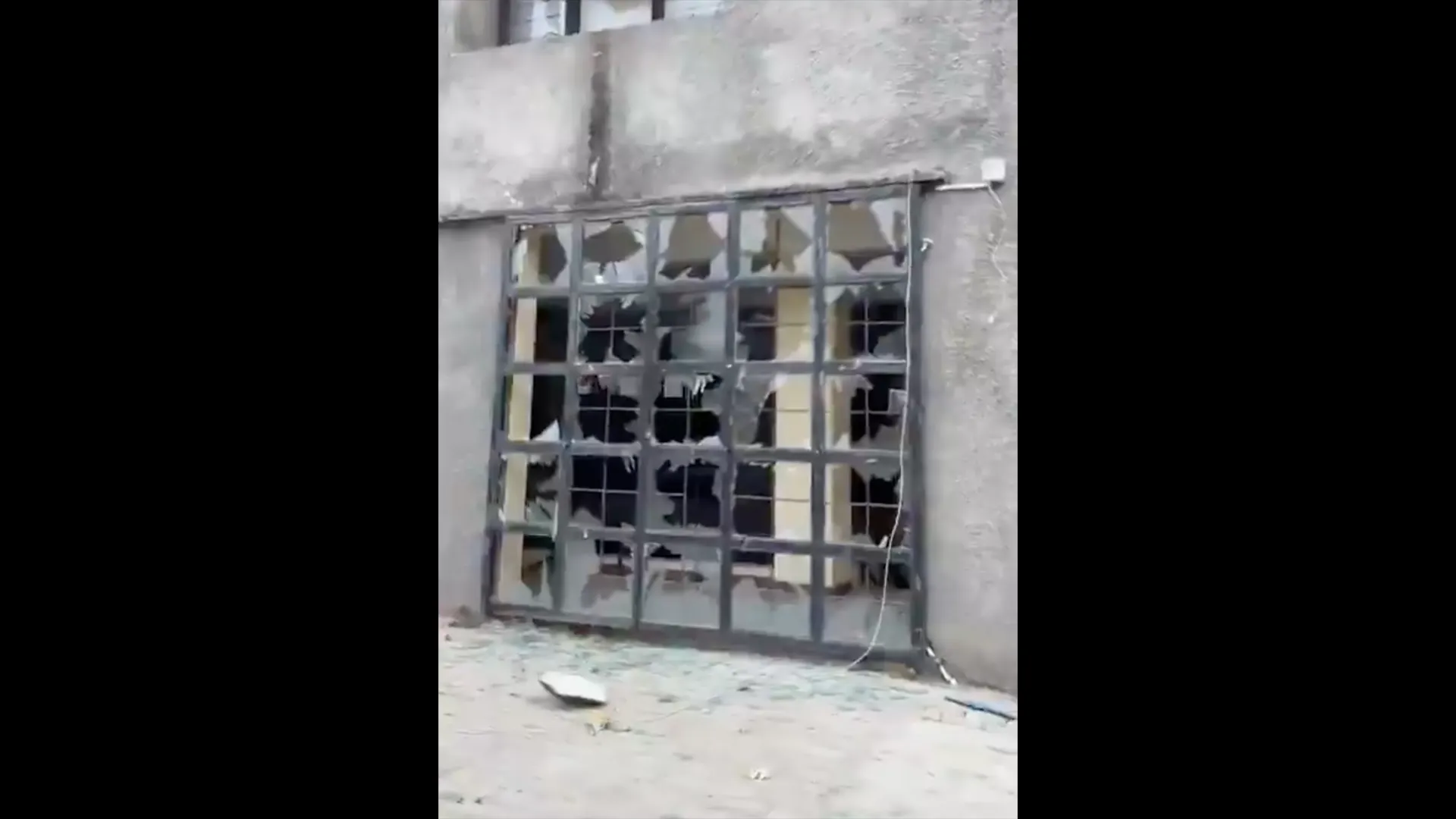
Student protests at Lovely Professional University in northern India have turned violent following social media claims that a female student was raped at a girls’ hostel by a worker. The university has denied the allegations as rumours, while police have launched an investigation.
In the second week of the college football season, in a clash of titans, the University of Texas scored 21 unanswered points to surge past Ohio State in the fourth quarter and win, 24-23.
The comeback, Gov. Greg Abbott decreed, was the greatest home victory in more than 130 years of Longhorn football.
A screen grab of one celebratory moment showed a group of students ecstatic beyond belief. They were clad in the university’s signature burnt orange. Two wore cowboy hats. One flashed “Hook ‘em Horns,” the university’s proud hand signal.
To see the picture earlier this month was to witness pure, untempered joy.
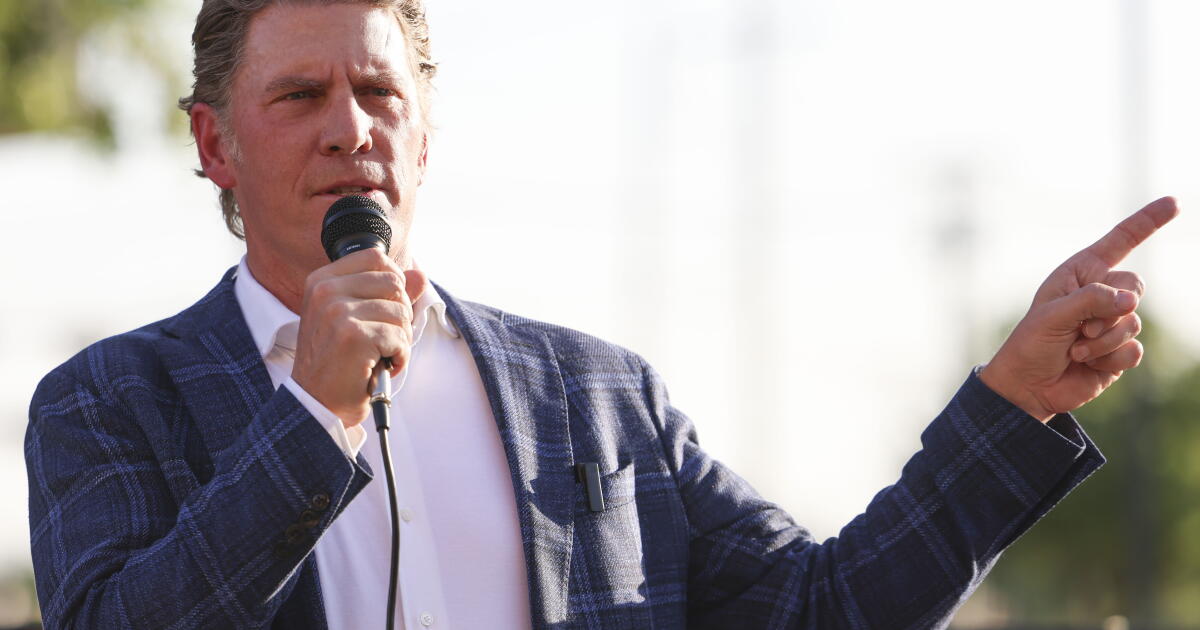
Most of the students were darkly complected and apparently of South Asian heritage. French posted the photo and wrote on X, “I heard UT graduation this year looked like this. I didn’t believe it. The problem is now obviously far worse than anyone imagined.”
“Like body-cams exposed criminals, social media is exposing how many Americans have been displaced by foreigners,” French spewed. “It’s everywhere and far worse than any of us could imagine.”
In many places, French’s unapologetic, unvarnished bigotry would be disqualifying. But given Texas’ strong Republican leaning he stands a better-than-even chance of being elected in November to the state Railroad Commission, which, despite its name, oversees Texas’ vast oil and gas industry.
The hateful gibe was perfectly in character. “In some ways in Texas this is old news,” said Brandon Rottinghaus, who teaches political science at the University of Houston.
Last year, as chairman of the Tarrant County GOP, French posted an online poll asking, “Who is a bigger threat to America?” The choice on offer: Muslims or Jews.
Speaking in March at a political conference, he urged President Trump to round up and deport every Muslim in the country, calling the Islamic faith subversive and a clear and present danger to America.
“The Republican Party is used to Bo French making these kinds of outrageous statements,” Rottinghaus said.
Still, the response to French’s latest acrid emission was telling, not least for what it says about reflexive partisanship and today’s political reward structure.
As you’d expect, his Democratic opponent, state Rep. Jon Rosenthal, was scathing. “I spent 25 years as an oil and gas engineer,” he wrote on social media. “Bo French spent Sunday morning sorting our student section by skin color … A man who can’t tell a Longhorn from a foreigner has no business regulating anything in TX.”
The state’s outgoing U.S. senator, Republican John Cornyn, was also quick to denounce French. “This is the Republican nominee for statewide office,” Cornyn said in a post. “Are other Republican elected officials going to condemn the intolerance and racism, or look the other way while it becomes normalized.”
“That is not my message,” Abbott said in a written statement, summoning the moral clarity and political courage of a puff pastry. “We all support our college football teams. The way we win the state is the same way we win football games. We unite under the brand of Texas.”
Then, just to have it both ways, Abbott suggested “that doesn’t mean that Texas cannot also lead in having the toughest immigration laws of any state in America and freezing H1B visas at our universities.” (The overwhelming majority of those holding H1B visas are Asian nationals from India and China.)
Paxton responded by attacking his Democratic opponent, state Rep. James Talarico, for saluting Cornyn for taking a stand against French’s prejudice. “I condemn racism in all its forms,” Paxton wrote on X, adding, “Only one person in this race has a history of dividing Texans by race, and it’s James Talarico.”
A simple, straightforward condemnation shouldn’t have been hard. Lacey Hull, a Republican state representative from Houston, was among those in the GOP who showed how.
“Please delete this,” she urged French on X. “This post breaks my heart. I see college kids cheering on their football team. I see Texans.”
Both need a robust GOP turnout to win in November and neither wants to risk alienating too many within the party’s xenophobic, anti-immigrant wing.
“They’re concerned about turnout,” said Mark Jones, a political scientist at Rice University. “Texas is a red state, but one thing that Republicans are concerned about is that the base may not turn out in as large a number as they need.”
Given French’s loathsome history, Abbott and others in the party establishment worked hard to keep him from winning the Republican nomination, Rice noted. But not Paxton. He headlined the kickoff to French’s campaign and has good reason to be glad he won and is now part of the GOP ticket.
His presence means that Paxton is only the second most odious figure seeking statewide office in Texas in November.
A new chapter in Saudi Arabia’s cultural and creative journey begins this morning as the inaugural cohort of students at Riyadh University of the Arts starts their first academic semester. The university launches with immense ambition, bold objectives, and a steadfast foundation: a Saudi identity built on global standards.
Since its inception, the university has enjoyed historic support from the Custodian of the Two Holy Mosques and the Crown Prince — may God protect them — alongside regulatory empowerment that reflects their dedication to the role of culture in the nation’s progress. This culminated in the royal decree authorizing its establishment and approving its charter, representing the highest regulatory authority in the Kingdom.
The overwhelming response to enrollment at the university highlights the genuine passion of Saudis for culture and the arts, a passion rooted in their authentic cultural heritage and ambitious future vision. Since the opening of applications was announced, the university has received thousands of enrollment requests across various cultural disciplines and degree programs offered in its inaugural year. This underscores a true belief in the present and future of the arts within the Kingdom’s major developmental journey, coinciding with a phase in which the entire world is witnessing a remarkable expansion in the creative economy and cultural investment.
The university serves as a major milestone in the human capability development project within the cultural sector. This massive undertaking has seen the Kingdom’s cultural ecosystem make significant strides, with human capability and development initiatives accounting for more than a quarter of all initiatives launched by the ministry and its cultural commissions over the years. These initiatives have served a long list of beneficiaries, with more than 63,000 individuals receiving education and training across various cultural sectors since the establishment of the Ministry of Culture in 2018. The project continues to grow, with its creative impact visibly reflecting on all facets of development within our flourishing society.
I congratulate all the creative men and women who began their academic journey today at Riyadh University of the Arts.
Because education is the foundation for building cultural capabilities, the university has arrived to strengthen the development of the cultural sector, achieve global excellence in culture and arts education, and elevate Saudi culture and its presence both locally and globally. It also aims to bridge the current gap in the cultural labor market, foster an environment that stimulates cultural initiatives in the private sector, and boost overall cultural production in society. This comes at a time when Ministry of Culture forecasts indicate that demand for cultural jobs will exceed 7 percent annually of total employment, with the number of jobs across various cultural sectors projected to reach nearly 346,000 by 2030. Additionally, demand for roles in arts, technology, and design is growing annually by 40 percent in the Middle East, alongside a growth in cultural tourism of more than 109 percent between 2019 and 2022.
The university offers its programs in cooperation with the world’s most prestigious universities through partnerships that facilitate knowledge transfer and the exchange of expertise. This educational framework combines academic rigor with creative innovation and the integration of technology, while balancing theoretical sciences with practical application. It further enables researchers to expand their scope of awareness and knowledge within a fertile cultural environment like Saudi Arabia, where the cultural sector has proven its ability to effectively contribute to the national economy, achieving rapid growth thanks to the support of our wise leadership and the contributions of Saudi creatives across all fields.
The university aims to become a specialized, leading institution in the field of culture in the Middle East and North Africa region, rank among the top 50 cultural universities internationally, and serve as a global hub for academic achievement, scientific research, and cultural and knowledge exchange from Riyadh to the entire world. Among its core missions, the university focuses on strengthening the value chain across all cultural sectors and supplying them with creative and leadership talents, including artists, producers, administrators, and entrepreneurs. This spans the fields of cultural management, film, music, museum management, theater, performing arts, design arts, architecture, fashion, visual arts, photography, heritage and civilization studies, culinary arts, and cultural education.
I congratulate all the creative men and women who began their academic journey today at Riyadh University of the Arts. I am entirely confident that this major milestone will enhance their creative paths, given the university’s commitment to providing top-tier education through partnerships with leading institutions. It offers an exceptional student experience through a diverse range of disciplines, programs, and innovative educational methods, while enabling research and collaboration across cultural sectors. Together, we will enhance the competitiveness of national capabilities in the cultural sector so that Saudi Arabia may flourish with diverse cultural expressions that enrich individual lifestyles, strengthen national identity, and foster cultural dialogue with the world.
I extend my thanks and appreciation to Custodian of the Two Holy Mosques King Salman bin Abdulaziz, and to Prince Mohammed bin Salman bin Abdulaziz, Crown Prince and Prime Minister, for the care, empowerment, and encouragement that Saudi culture receives.
— Prince Badr bin Abdullah bin Farhan is Saudi Minister of Culture and Chairman of the Board of Trustees at Riyadh University of Arts.
— This article was first published in Arabic in Asharq Al-Awsat.
WASHINGTON — A sporadic global trade war led by President Trump is fueling inflation across the U.S. economy, elevating prices on everyday goods, as the war with Iran sends the price of gas on a roller coaster.
Aggressive tax cuts have pushed the national debt past $40 trillion, driving a growing crisis in the bond market. And an unprecedented immigration crackdown is disrupting the labor supply in agriculture, construction, hospitality and food processing, raising prices even further.
Approaching the halfway point of Trump’s second term, a president who won reelection based on a promise to turn the economy around now faces a reckoning in the midterm elections centered largely on his economic record.
Trump’s economic agenda has emerged as an increasingly awkward liability for Republicans heading into the November elections, leaving lawmakers to defend policies that have delivered political pain at home, even as the White House argues they will pay off in the long run.
Polling on Trump’s handling of the economy has remained in precariously low territory throughout the summer, entering Labor Day weekend with less than a third of Americans supporting his job performance on their most pressing concerns. One recent poll, from the University of Massachusetts Amherst, found that only 22% perceive the economy in a good or fair state.
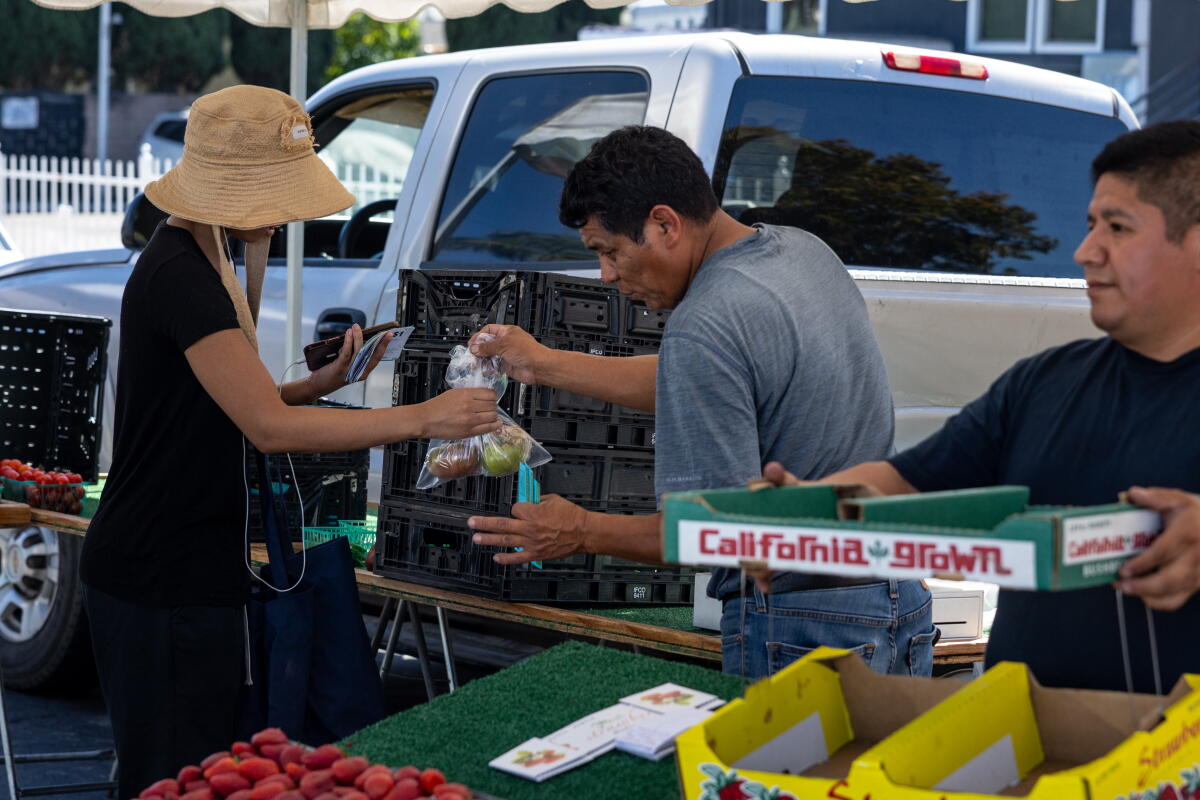
Shoppers at Lincoln Heights Certified Farmers Market in Los Angeles on Wednesday.
(Jason Armond / Los Angeles Times)
And Americans’ confidence in the economy is unlikely to improve much ahead of election day, Nov. 3, in part because bad economic news has shown to sink confidence fast. Good news takes much longer to win people back, experts said.
“Voters’ opinion of the economy has mostly hardened,” said Aaron Klein, chair of economic studies at the Brookings Institution. “People vote the economy of the spring and summer, not November.”
Good news has been harder to come by.
Heading into the holiday weekend, Trump dismissed communities opposed to data-center construction as “backwards and poor.” A rapidly escalating trade dispute with Canada threatens Republican gains in battlegrounds along the northern border that could determine control of the Senate.
Sean Zabriskie, center, helps his son Connor, 7, try on hockey pants at The Ice Box Hockey shop in Harbor City. The trade war between the U.S. and Canada is affecting products like hockey gear, most of which is made in Canada and imported to the U.S.
(Genaro Molina / Los Angeles Times)
And fresh polling found that more than 90% of Americans believe corruption is rampant in Trump’s government, even as the president spends hundreds of millions of dollars on vanity projects across the capital.
Susan Collins, the incumbent Republican senator from Maine seeking another term in a strategically critical race, chastised the Trump administration for its latest trade spat with Ottawa as “making the job harder” of securing reelection.
“There’s just nothing good you can say about them,” Collins said of the tariffs.
Trump has pushed back on criticisms of his record, declaring the country has “the greatest economy we’ve ever had” and touting what he calls a manufacturing boom, all while distancing himself from potential midterm losses.
“I’m not affected by the election,” Trump told reporters last week. “I’m not running. But my party’s running, and I’m going to help my party.”
But Rep. Mike Johnson, a Louisiana Republican and speaker of the House, said last week that the midterms would serve as a referendum on Trump’s presidency.
Rep. Aisha Wahab (D-Hayward) and Speaker of the House Mike Johnson (R-La. ) arrive for a ceremonial swearing-in at the Capitol in Washington, D.C., on Sept. 2.
(Andrew Harnik / Getty Images)
“Even though his name isn’t in the midterm, his legacy is,” Johnson said. “The America First priorities and principles are. His administration is.”
Several embattled incumbents fear that’s the case and are distancing themselves from the president. Several Republican lawmakers — including Reps. Tom Barrett of Michigan and Zach Nunn of Iowa — plan on skipping a midterm GOP convention called by Trump for this week in Texas.
Joanne Hsu, director of the University of Michigan’s Survey of Consumers, said that gas prices were a chief frustration among Americans, and found that consumer sentiment soured rapidly once it became clear the conflict in Iran would not be short-lived.
“Consumers are absolutely not feeling great about the economy right now, and the factors that are underpinning their frustrations with the economy at this time are factors that are pretty tough to turn around on short notice,” Hsu said.
Even if the Iran conflict reached a resolution, confidence in the economy is likely to change only when the prices are reflected at the gas station, she said.
“When it comes to the views of the economy, it’s really about what’s happening to my wallet,” Hsu said.
During a White House press media briefing on Thursday,Vice President JD Vance acknowledged the Iran war has led gas prices to rise and that he does not know when Americans can expect those prices to go down.
Vice President JD Vance talks to reporters during a news briefing at the White House on Sept. 3.
(Chip Somodevilla / Getty Images)
“The reason gas prices are so high now is because the Iranians are shooting at commercial shipping,” Vance said. “Gas, frankly, could have been much, much higher were it not for our efforts. But I am not going to make a promise about when it is going to return to $3.”
The day after Vance spoke, diesel hit a record all-time high of $5.85 a gallon. In California, it sold for as much as $7.71.
Yet Trump has tried to downplay the economic pressure the war in Iran is placing on Americans, in particular as the Strait of Hormuz — a vital shipping corridor for oil and gas — remains under threat by Iranian troops.
Diesel prices over $7 a gallon are displayed at a gas station in Los Angeles on Aug. 21.
(Justin Sullivan / Getty Images)
“We have the Strait of Hormuz in extremely good shape,” Trump said, adding that the U.S. Navy has escorted ships through the channel. “A lot of oil is coming out. That’s why you haven’t seen the price of oil going the way they thought it might have to go.”
Trump on Monday also touted an agreement with the Venezuelan government to develop a vast amount of the South American country’s oil reserves. Asked how he sees the deal affecting American consumers, Trump said: “Ultimately prices are going to come down.”
One of the Arts of War statues, newly covered in gold leaf, is visible at Arlington Memorial Bridge near the Lincoln Memorial in Washington, D.C.
(Andrew Harnik / Getty Images)
“Now, will it happen before the election? I can’t tell you that. But I think people are very smart,” he said.
For some Americans, the economic pressures are a key driver ahead of the midterm elections.
Monica Escalante, a home care provider who is a member of the United Domestic Workers union, said she started feeling the pinch on her wallet after Trump imposed sweeping tariffs on a number of products she buys at the grocery store. Gas, she noticed, became harder to cover after the Iran war started.
Escalante, who lives in Bakersfield, said she also has to drive her client to the grocery store, and that mileage reimbursements are not enough to cover her costs.
“It’s really hard when I don’t have the money for gas, and she doesn’t have the money for gas. Then it is like: What do we do?” she said. “It is either she’s borrowing or I’m trying to figure out how I can get gas in my tank.”
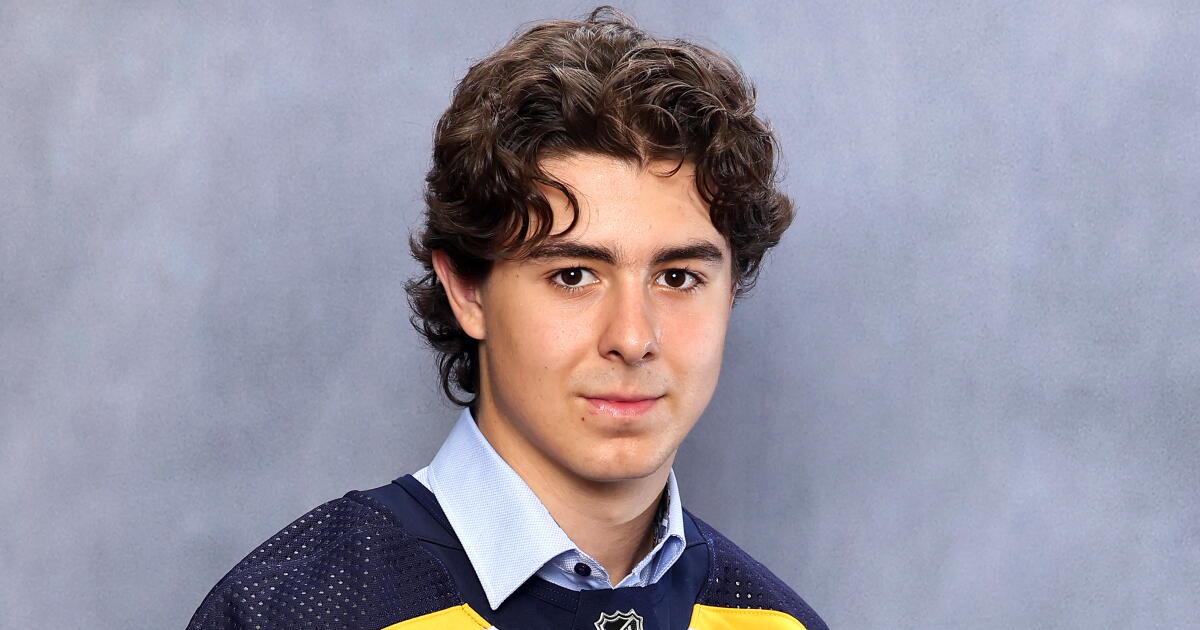
Arizona State hockey player Matthew Mayich remains incapacitated more than two weeks after he collapsed during an outdoor team practice in Tempe.
“Matthew’s injuries [are] from exertional heat stroke that caused the lack of oxygen to his brain,” the family’s attorney, Robert Carey, told The Times on Thursday. “There were no other contributing conditions, only exertion-related heat. This is not a coma, and the family is at his bedside praying for a miracle.”
While the family has not given up on the 21-year-old former draft pick of the St. Louis Blues, Carey said the prognosis they have received is not good.
“He’s been incapacitated from the moment he left the field, and with no chance of recovering,” said Carey, who added that he is limited on what he has been authorized to discuss concerning Mayich’s condition.
He added that the family is “just giving him a chance to have a miracle. And when they decide that’s not coming — I don’t know. They’re in a position no parent should ever be in.”
Mayich was selected by the Blues in the sixth round of the 2023 draft but never signed with the team. He played four seasons in the Ontario Hockey League and one at Clarkson University last season before transferring to Arizona State.
Arizona State and its police department referred questions from The Times to a recent statement from the university. In its statement, the university did not mention Mayich by name because of “privacy interests” but talked about an ASU hockey player “who collapsed during an outdoor workout on Aug. 20” and “remains hospitalized.”
Arizona State said that the workout was a team event at which coaches and training staff were present, “along with a third party who had previously worked with the ASU Hockey team.”
The university stressed that it has policies regarding the engagement of “outside entities who interact with ASU student-athletes” and heat-illness guidelines for outdoor workouts. It added that James Rund, senior vice president for educational outreach and student services, would lead a review into the “circumstances surrounding the workout and related university policies, procedures and training protocols.”
“The review will take the time needed to collect and assess information in a manner that is thoughtful, respectful of the student-athlete, his family, his teammates and ASU’s privacy obligations,” the statement says.
The practice took place on a field outside the team’s on-campus arena. According to the university’s statement, the campus police department responded to a 911 call at approximately 8:30 a.m. “and began investigating as they would anytime they are called to a serious incident.”
The temperature at around that time in Tempe that morning was in the upper 80s.
Carey said that from talking to people who were present at the practice and relying on “other objective evidence,” he has determined that it was a military-style practice that ran “nonstop for well over an hour. And there was no rest, and there was almost no water.”
“Matthew was struggling,” Carey said, based on the information he has gathered. “He was disoriented, confused, dizzy, well before he collapsed. … Matthew was demonstrating signs of a problem well before he collapsed, and they did nothing.”
After Mayich’s collapse, Carey said, the staff was “completely and utterly unprepared” to treat him.
“So when he left the field that day, by the time he got to the hospital, there was almost zero chance of recovery,” Carey said.
Carey, who was chief deputy attorney general of Arizona during the 1990s, said he has been retained as the family’s counsel to help guide them through the situation, but no decision about any kind of legal action has been made at this point.
“They’re not going to make any decisions, and I’m not going to make any recommendations, until we get an investigation completed that’s transparent and robust and competent,” Carey said. “We need to know what happened before we can say you have rights or here’s a way to fix things for other kids down the road. …
“We just need to see what the evidence is. That’s our main goal right now, let’s go get the evidence and figure out what happened.”
He added that the family wanted him to express their gratitude for the outpouring of support they’ve gotten during this time.
“They’re from Canada and they’re in Arizona, where they had no connection really, and they’re sitting in a hospital every day,” Carey said, “and they’re just very appreciative of the support they’ve received across the country to help them.”
Dolly Parton may have been a worldwide musical icon, but she shared a special connection with her home state.
Parton died last week at age 80 after a brief battle with cancer. And now the University of Tennessee will honor that special relationship with the singing superstar with a helmet decal to be worn by Volunteers players all season.
Coach Josh Heupel announced the tribute Monday while talking to reporters ahead of his No. 20-ranked team’s opener against Furman this weekend.
“I’d be remiss if I didn’t also talk about the passing of Dolly Parton — all that she’s meant across the world, this country, and certainly, the queen of East Tennessee and a lady that was extremely proud of her roots,” Heupel said.
“You look at her impact, you know, just her ability to give back, make an impact to people, certainly here in East Tennessee — she means a lot to people across this country but certainly here inside the state of Tennessee, too, so we’ll be wearing a sticker patch on the back of our helmet to recognize her, her accomplishments and everything that she’s meant.”
The sticker will feature a butterfly — an image that Parton had long used in her logos — with the singer’s first name in her handwriting in the middle, all in Tennessee orange and white.
Parton grew up in Sevierville, Tenn., roughly 30 miles east of the university’s Knoxville campus.
While she did not attend college, Parton was presented with an honorary doctorate of humane and musical letters from Tennessee in 2009 following her commencement address to the graduating class of that year. She also received an honorary doctorate degree of letters from Carson-Newman University in Jefferson City, Tenn., in 1990.
In 2023, Parton was escorted onto the field by legendary Tennessee quarterback Peyton Manning to lead the crowd in singing “Rocky Top” following the first quarter of the Volunteers’ game against the Georgia Bulldogs. The Pro Football Hall of Fame quarterback paid tribute to Parton following her Aug. 25 death.
Share via
“There was only one Dolly and I feel lucky to have known her,” Manning wrote in an Instagram post that also included a photo of the two of them at the 2023 event. “We’ll miss you, Dolly. Tennessee won’t be the same without her!”
Last week, Middle Tennessee State University announced its football team would wear a patch honoring Parton during its home opener against Murray State on Saturday. In addition, the Blue Raiders will display QR codes on the scoreboard screen for donations to Parton’s book-gifting program, the Imagination Library.