universal

Billionaire investor Ackman makes $64bn bid for Universal Music Group | Music News

Billionaire investor Bill Ackman’s Pershing Square has proposed a takeover of Universal Music Group in a $64bn deal, the latest twist in his nearly five-year quest for the music label giant.

Pershing Square proposed a cash-and-shares offer on Tuesday through its acquisition vehicle that values Universal Music at about 30.40 euros ($35) per share, a 78 percent premium to the last closing price of 17.10 euros ($20), making the deal worth 55.75 billion euros ($64.31bn).

Recommended Stories

list of 4 itemsend of list

Universal Music Group (UMG) – the company behind international superstars, including Taylor Swift, Billie Eilish and Kendrick Lamar – is expected to move its listing to New York from Amsterdam, paving the way for more investors, including index funds, to own the company and ultimately lead to more robust earnings and a higher valuation.

Universal Music declined a Reuters news agency request for comment.

For Ackman, one of the world’s most voluble investors, who cemented his fame and fortune as an activist investor, forcefully pushing corporate America to adopt changes, this is a far friendlier approach, investors and industry analysts said.

Even as the music industry is flourishing, UMG’s share price has lagged, something Ackman is pledging to fix with this proposed deal.

Ackman’s letter to Universal Music Group’s board carried a mixed tone, at times complimentary of current management, led by chairman and chief executive Lucian Grainge, and critical of the company’s “underutilized balance sheet” and handling of its 2.7 billion euro ($3.1bn) investment in Spotify Technology.

Fears of AI disrupting the music industry have played a role in UMG’s lacklustre performance. Its share of the music market has been sliding, and streaming growth is decelerating, Wells Fargo analysts noted. In March, UMG delayed its plans for a US listing.

Nonetheless, Ackman will need the support of UMG’s top shareholders – Bollore Group, which holds an 18.5 percent stake, and Vivendi, which owns 13.4 percent – to push through any transaction. China’s Tencent is a significant shareholder. French billionaire Vincent Bollore’s family controls 80 percent of UMG’s voting rights.

Old target

Ackman first flirted with Universal Music Group in 2021, when his Pershing Square Tontine Holdings, a shell corporation created to take a private company public, zeroed in on its target. But Ackman shelved the complex deal in the wake of heavy US regulatory scrutiny. Instead, Pershing Square became one of UMG’s biggest investors in 2021, and Ackman sat on its board until last year.

Post transaction, Ackman said Grainge should remain Universal Music’s chief executive.

Ackman said he and former Hollywood super-agent Michael Ovitz met with Grainge over dinner “a couple of weeks ago” to discuss the potential merger.

“Lucian encouraged us to send it in,” Ackman said.

Ackman proposed adding new directors, including Ovitz – who shepherded the careers of Madonna and Michael Jackson – who would become the board chair. Additionally, two representatives from Pershing Square would get seats, he said, not saying yet whether he would be one of the directors.

Shares of UMG, which is listed in Amsterdam, were up 13 percent on Tuesday, while Bollore Group climbed 5 percent. Shares in Vivendi were up more than 10 percent.

Pershing bought a 10 percent stake in UMG from Vivendi ahead of its 2021 Amsterdam IPO and has since repeatedly pressed for a New York listing, arguing it would boost UMG’s share price and liquidity.

Pershing currently has a 4.7 percent stake, making it UMG’s fourth-biggest shareholder.

UMG’s shares have lost almost a third of their value since its IPO.

Even as global music revenues grow year after year, UMG and other major labels, like Sony and Warner Music, are scrambling to stay competitive as streaming services from Spotify, Amazon, Apple and Deezer take an ever greater share.

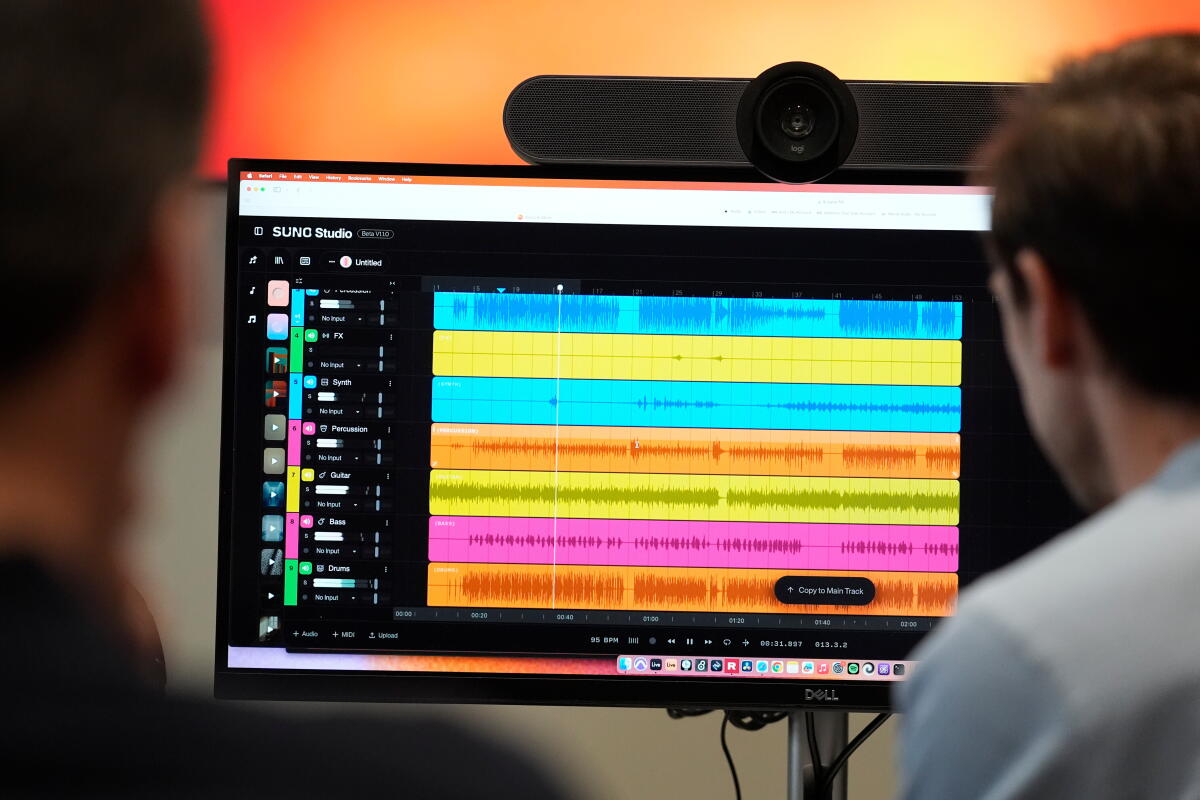
They are now also contending with disruptions brought on by the expansion of AI – from copyright disputes to the advent of song-generating AI tools – that threaten to upend how music is created, consumed and monetised.

One survey last year found that a staggering 97 percent of listeners could distinguish between AI-generated and human-composed songs.

Under Tuesday’s proposal, Pershing’s SPARC Holdings would merge with UMG, and the new entity would become a Nevada corporation listed on the New York Stock Exchange.

Source link

Billionaire investor launches $65 billion Universal Music takeover bid

Billionaire investor Bill Ackman has launched a $65 billion bid to purchase Universal Music, the label representing some of music’s biggest names like Taylor Swift, Kendrick Lamar and Bad Bunny.

As part of the proposed deal, UMG would merge with Ackman’s investment firm, Pershing Square Capital Management, and the company’s stock listing would be relocated from Amsterdam to the New York Stock Exchange.

Pershing Square already holds more than 4.5% of the music giant’s shares. Ackman said the move to a U.S.-based stock exchange would increase the value of UMG .

“UMG’s stock price has languished due to a combination of issues that are unrelated to the performance of its music business and importantly, all of them can be addressed with this transaction,” said Ackman in a statement.

The proposed deal includes Universal Music merging with Pershing Square SPARC Holdings, an acquisition company approved by the Securities and Exchange Commission in 2023. If agreed upon, the proposed transaction could close at the end of the year, according to the company.

Universal Music Group currently has its corporate headquarters in the Netherlands and a local L.A. office in Santa Monica. The label was founded in 1996. Over the years, it’s cemented its reputation as one of the music industry’s “Big Three,” alongside Warner Music Group and Sony Music Entertainment. Universal also controls smaller labels like Republic Records, Interscope Geffen A&M, Capitol Music Group, and Def Jam Recordings.

The news has drawn a level of skepticism, as Ackman will need two-thirds of UMG’s investors to approve the proposed deal, including French billionaire Vincent Bolloré, who is UMG’s largest shareholder with a morethan 18% stake, according to Bloomberg.

If finalized, UMG shareholders would receive €9.4 billion in cash, around €5.05 per share, or roughly $10.9 billion and $5.84 per share.

Investors would receive 0.77 shares in the new merged company. This would value the total consideration package of cash and stock estimated to be worth €30.40 per share, a 78% premium to UMG’s stock price. The transaction will also include the cancellation of 17% of UMG outstanding shares. The new UMG will have 1.541 billion shares outstanding.

UMG’s stock price has jumped over 11% to €19.05 Tuesday morning, due to this potential acquisition.

Source link

Universal to keep its movies in theaters for at least five weekends

Universal Pictures will now keep its new films in theaters for at least five weekends, a reversal from the studio’s previous policy of at least 17 days that was set during the pandemic.

The change takes place immediately, the studio said Thursday. That means it will apply to its newest film, the Colleen Hoover romance “Reminders of Him,” which is out in theaters this weekend. Other upcoming films include Christopher Nolan’s “The Odyssey,” which will be released in July.

“Our windowing strategy has always been designed to evolve with the marketplace, but we firmly believe in the primacy of theatrical exclusivity and working closely with our exhibition partners to support a healthy, sustainable theatrical ecosystem,” Donna Langley, chair of NBCUniversal Entertainment, said in an email to the New York Times, which first reported the news.

Focus Features, Universal Pictures’ specialty film arm, will keep its existing theatrical exclusivity policies, which vary on a case-by-case basis. Chloé Zhao’s “Hamnet,” for instance, was in theaters for 99 days, while 2024’s “Nosferatu” played for 58 days. The minimum is 17 days.

The amount of time films are available exclusively in theaters — known as “windowing” in industry jargon — has become a contentious topic of conversation in Hollywood.

That debate ramped up during the pandemic, when some studios shortened theatrical exclusivity periods in order to move films to release for video on demand or streaming.

Prior to the pandemic, those windows could be as long as 90 days. Now, the average is around 30 days.

Theater owners have argued that shorter windows cut into box office profits and train audiences to wait to watch a movie at home. Distributors have countered that a one-size-fits-all approach doesn’t necessarily work for smaller or mid-budget films, which may find a bigger audience via at-home viewing.

At last year’s CinemaCon trade conference, top theater lobbyist Michael O’Leary called on distributors to establish a minimum 45-day window, arguing there needed to be a “clear, consistent starting point” to set moviegoers’ expectations and affirm commitment to theatrical exclusivity.

The debate has become even more fierce as box office profits still have not recovered from the pandemic. Last year, theatrical revenue in the U.S. and Canada totaled about $8.87 billion, just 1.5% above 2024’s disappointing $8.74-billion tally.

Source link