In 2020, “We Bare Bears” creator Daniel Chong came to Pixar leaders with an idea.
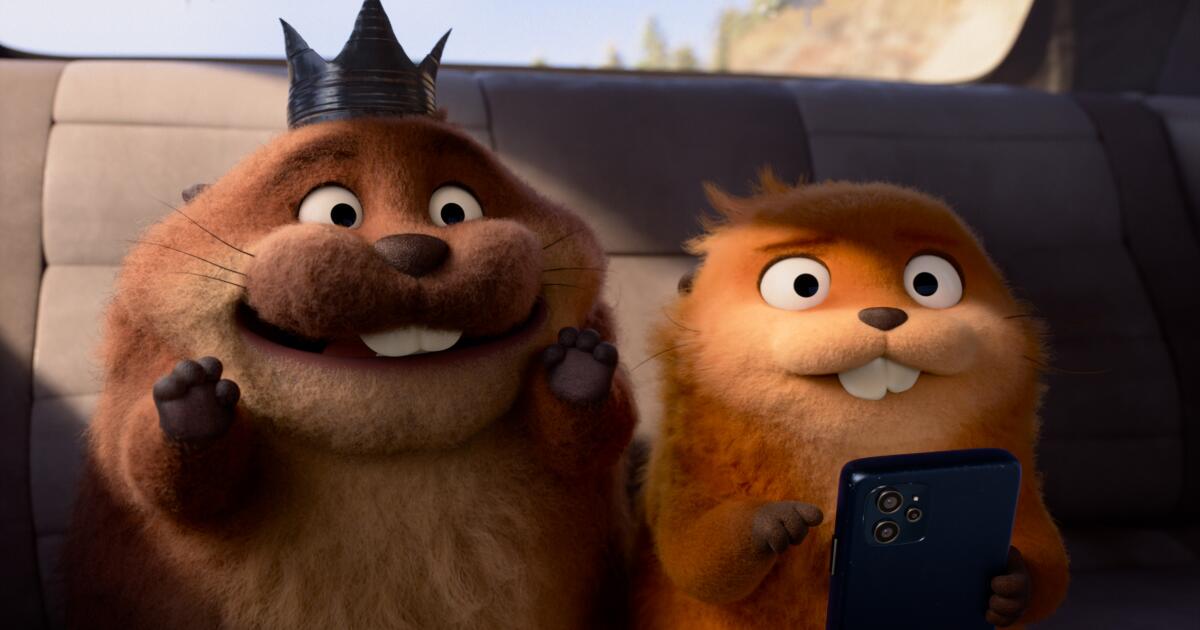
He had seen documentaries in which robotic animals with eyeball cameras captured footage of natural habitats. But what if that technology was so good that no one could tell the difference? And to make it even more zany — what if someone went undercover in that animal body?
That idea became the basis of Walt Disney Co. and Pixar’s new animated movie, “Hoppers,” which debuts this week. The film is Pixar’s latest attempt to break through at the box office with an original story, something that has been a struggle for the storied animation studio since the pandemic.
The pressure of Pixar’s legacy can be a little overwhelming and coming up with an original idea is difficult, said Chong, who directed “Hoppers” and also serves as a writer on the film.
“For a Pixar movie, it’s very high stakes,” he said. “But I just felt like I had a really funny idea, and I thought as long as we made it really funny and had characters you loved, to me that’s the key to every Pixar movie — really awesome characters that really connect emotionally with people.”
Recent theatrical success for Pixar as well as other animation studios has come from sequels, such as 2024’s “Inside Out 2,” which grossed $1.7 billion globally. But the reputation of Emeryville-based Pixar is built on its string of blockbuster originals, including 1995’s “Toy Story,” 2001’s “Monsters, Inc.” and 2004’s “The Incredibles,” making new stories crucial to the studio’s future.
People like coming back to familiar characters like Woody and Buzz from “Toy Story,” but the studio can do only so many sequels, said Pete Docter, Pixar’s chief creative officer. And some films don’t lend themselves to new chapters, he said, noting the studio’s efforts to look at “Monsters, Inc.”
“We’ve been trying, struggling for a long time to get somewhere with that, and we’ll see in the future how things go, but it’s been an uphill battle,” he said. “For whatever reason, that movie seems to be self contained and doesn’t want to go forward without repeating some of the same themes, which I think would be disappointing.”
Opening weekend expectations for “Hoppers” are wide-ranging, from $25 million to $40 million, on a production budget of $150 million. So far, the reviews have been strong, with a 96% approval rating on aggregator Rotten Tomatoes.
“If we don’t continue to do originals, we’re going to run out of stuff,” Docter said. “If ‘Hoppers’ can really catch on, it could show that audiences still want original movies. They’re still excited to see things that surprise them, that are not just following through on characters and worlds that they’ve seen before.”
It’s been a tough time for original animated movies — and new films in general. As the theatrical market continues to find its footing after the pandemic, audiences still largely have gravitated toward familiar fare, including sequels and reboots, even as they profess to want new stories.
Pixar’s previous original film, 2025’s “Elio” cratered at the box office, partially beset by the tough climate for new animated stories as well as strong competition from other kids’ movies such as live-action adaptations of Universal Pictures’ “How to Train Your Dragon” and Disney’s “Lilo and Stitch.”
The pandemic played a major role in Pixar’s recent track record with originals. When COVID-19 hit, original films like 2020’s “Soul,” 2021’s “Luca” and 2022’s “Turning Red” all were sent straight to the Disney+ streaming service to give families something to watch during the stay-at-home orders. But that also got audiences accustomed to waiting to watch Pixar films at home, and as theaters started opening up again, families were some of the last groups to return because of concerns about health and safety.
“There had been a conditioning process,” said Heather Holian, a professor of art history at the University of North Carolina at Greensboro. “It was challenging to turn the ship around a little bit, or getting people to rethink how they engage with Pixar films and getting them back to theaters.”
To connect with audiences, Pixar films need to feel familiar in some way, but with a surprising twist — something that is incredibly difficult to do, Docter said. “Hoppers” also involved extensive, early stage collaboration with the studio’s story artists. Chong would give them a rough idea of his thoughts, which the artists would then use to develop dialogue and other details that expanded on his vision. That’s a bit of a departure from Pixar’s typical process, which involves writing pages and giving them to the artists, who then go to work..
Chong worked as a story artist at Pixar before he went on to create Cartoon Network’s “We Bare Bears” and then returned to the studio in 2019.
“Hoppers” could get strong tailwinds from the success of Sony Pictures Animation’s “Goat,” which was produced by Golden State Warriors star Stephen Curry and tells an original story set in an all-animal world about an undersized “roarball” player who pushes to make it in the big leagues.
That film has netted nearly $75 million in the U.S. and Canada, with a global total of more than $131 million..
The two movies are the beginning of a potentially big year for animated films. After “Hoppers,” Nintendo and Universal Pictures’ sequel “The Super Mario Galaxy Movie” is out in April, followed by Pixar’s “Toy Story 5” in June and Universal Pictures and Illumination Entertainment’s “Minions & Monsters” in July. In the fall, Warner Bros. Pictures Animation plans to release “The Cat in the Hat.”
High-performing years at the box office traditionally are anchored by strong family movies, said Shawn Robbins, director of movie analytics at Fandango and founder of the site Box Office Theory.
“A lot of us are so optimistic about what the box office can do overall this year because of the animated releases,” he said. “When there is appealing content out there, families are a big driver for this industry.”