United Nations

Venezuela warns US ‘aggression’ is first stage amid ‘continental ambitions’ | US-Venezuela Tensions News

Venezuela’s UN ambassador denounces US military strikes and naval blockade at a meeting of the UN Security Council.

Venezuela has told the United Nations Security Council (UNSC) that the United States has “continental ambitions” over much of Latin America as it wages an unofficial war to remove the government of Venezuelan President Nicolas Maduro.

“It’s not just about Venezuela. The ambition is continental,” Venezuela’s UN ambassador, Samuel Moncada, told a meeting of the 15-member UNSC on Tuesday.

Recommended Stories

list of 4 itemsend of list

“The US government has expressed this in its National Security Strategy, which states that the future of the continent belongs to them,” Moncada said.

“We want to alert the world that Venezuela is only the first target of a larger plan. The US government wants us to be divided so it can conquer us piece by piece,” he said.

Venezuela, earlier this month, requested that the UNSC meet to address the “ongoing US aggression”, which began in September when the White House launched air strikes against vessels in the Caribbean Sea and eastern Pacific Ocean. The White House claimed, without providing any evidence, that the vessels were trafficking drugs to the US.

At least 105 people have been killed so far in the attacks by US forces, which legal experts and Latin American leaders have branded “extrajudicial killings”, but which Washington claims are necessary to stem the flow of drugs to US shores.

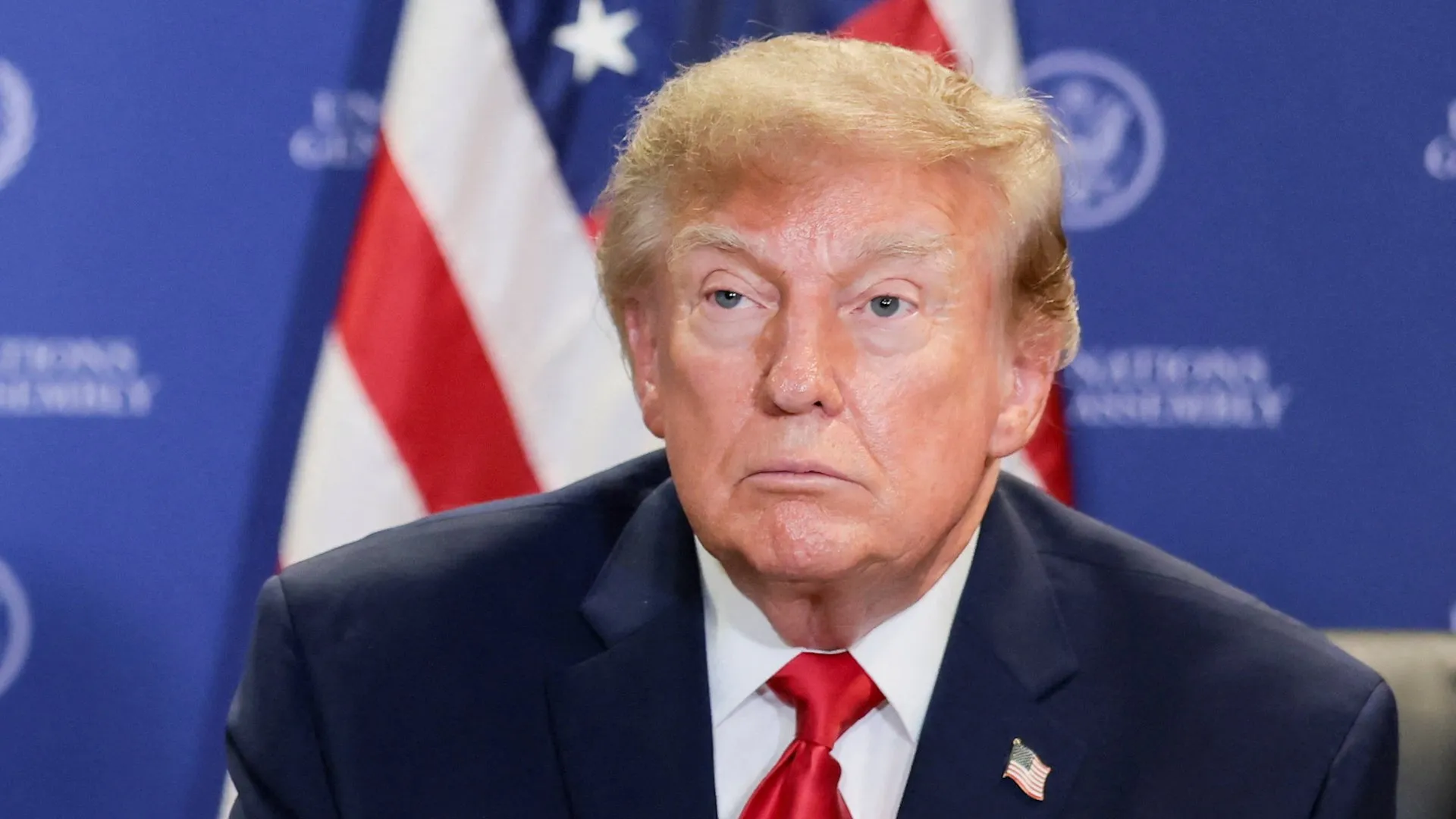
At the UNSC meeting, Moncada also accused the administration of US President Donald Trump of violating both international and US domestic law, since the White House has been acting without the approval of the US Congress, whose authority is required to formally declare war on another country.

Moncada said that Trump’s imposition last week of a naval blockade on all Venezuelan oil tankers sanctioned by the US was a “military act aimed at laying siege to the Venezuelan nation”.

“Today, the masks have come off,” Moncada said. “It is not drugs, it is not security, it is not freedom. It is oil, it is mines and it is land.”

US envoy denounces ‘Maduro and his illegitimate regime’

US forces have seized at least two Venezuelan oil tankers and confiscated at least 4 million barrels of Venezuelan oil, according to Moncada, in a move he described as “a robbery carried out by military force”.

The US has defended its naval blockade of Venezuela as a “law enforcement” action to be carried out by the US coastguard, which has the authority to board ships under US sanctions. A naval blockade, by contrast, would be considered an act of war under international law.

The US ambassador to the UN, Mike Waltz, told the UNSC that Latin American drug cartels remain the “single most serious threat” and that Trump would continue to use the full power of the US to eradicate them. Waltz also said that Venezuelan oil is a critical component in funding the cartels in Venezuela.

“The reality of the situation is that sanctioned oil tankers operate as the primary economic lifeline for Maduro and his illegitimate regime,” he said.

The White House earlier this year designated several international drug cartels, including Venezuela’s Tren de Aragua, as terrorist organisations. Washington also added the “Cartel de los Soles,” which it claims is headed by Maduro, to the list in November.

The Venezuelan leader has denied the US allegations and accused the Trump administration of using the drug trafficking claims as a cover to carry out “regime change” in his country.

Russia’s ambassador to the UN separately warned that US “intervention” in Venezuela could “become a template for future acts of force against Latin American states”.

China’s ambassador told the UNSC that the US actions “seriously infringe” on the “sovereignty, security and legitimate rights” of Venezuela.

Source link

Israel kills two Palestinians in Gaza City as ceasefire violations mount | Gaza News

Deadly attack comes as Gaza government media office says Israel violated ceasefire 875 times since it began in October.

Israeli forces have killed at least two Palestinians in the Gaza Strip as Israel continues to violate a ceasefire agreement and block desperately needed humanitarian aid to the war-ravaged coastal enclave.

The Palestinian news agency Wafa reported on Monday that two people were killed after Israeli troops opened fire in the Shujayea neighbourhood of eastern Gaza City.

Recommended Stories

list of 3 itemsend of list

Their deaths bring the total number of Palestinians reported killed in Gaza over the past 24 hours to at least 12, including eight whose bodies were recovered from the rubble in the territory.

The Gaza City attack is the latest in hundreds of Israeli violations of a United States-brokered ceasefire between Israel and Hamas, which came into effect on October 10.

Gaza’s Government Media Office on Monday condemned Israel’s “serious and systematic violations” of the truce, noting that the Israeli authorities had breached the ceasefire 875 times since it came into force.

That includes continued Israeli air and artillery attacks, unlawful demolitions of Palestinian homes and other civilian infrastructure, and at least 265 incidents of Israeli troops shooting Palestinian civilians, the office said in a statement.

At least 411 Palestinians have been killed and 1,112 others wounded in Israeli attacks on Gaza since the ceasefire began, it added.

Worsening shelter conditions

Meanwhile, hundreds of thousands of Palestinian families displaced by Israel’s genocidal war on Gaza continue to grapple with a lack of humanitarian supplies, including adequate food, medicine and shelter.

As the occupying power in Gaza, Israel has an obligation under international law to provide for the needs of Palestinians there.

But the United Nations and other humanitarian groups say it has systematically failed to allow unimpeded deliveries of aid into Gaza.

The situation has been worsened by a series of winter storms that have pummelled the Strip in recent weeks, with rights groups saying Israel’s refusal to allow tents, blankets and other supplies into Gaza is part of its genocidal policy and threatening Palestinian lives.

On Monday, the Gaza Government Media Office said that only 17,819 trucks entered the territory out of the 43,800 that were supposed to be allowed in since the ceasefire came into effect in October.

That amounts to an average of just 244 trucks per day – far below the 600 trucks that Israel agreed to allow into Gaza daily under the ceasefire agreement, the office said.

On Monday, a spokesperson for UN chief Antonio Guterres reiterated the call “for the lifting of all restrictions of the entry of aid into Gaza, including shelter material”.

“Over the past 24 hours, and despite the ceasefire, we have continued to receive reports of air strikes, shelling and gunfire in all five governorates of Gaza. This has resulted in reported casualties and disruptions to humanitarian operations,” Stephane Dujarric said.

He said that the UN’s humanitarian partners are working to address the significant shelter needs, particularly for displaced families living in unsafe conditions.

“Our partners continue to work to improve access to dignified shelter for approximately 1.3 million people in Gaza in the past week, about 3,500 families affected by storms are living in flood prone areas,” he said.

Dujarric said that aid deliveries have included tents, bedding sets, mattresses and blankets, as well as winter clothing for children, but the needs remain overwhelming.

Flooding hits displaced Palestinians’ tents after heavy rain in Gaza
Palestinians struggle with flooding after heavy rain hits the Bureij refugee camp in Gaza City [File: Moiz Salhi/Anadolu]

The appeals come a day after the Palestinian Ministry of Health in Gaza said that a lack of drugs and other healthcare supplies was making it difficult to provide care to patients.

Nearly all of Gaza’s hospitals and healthcare facilities were attacked during Israel’s two-year bombardment of the territory, damaging at least 125 facilities, including 34 hospitals.

The Israeli army has killed at least 70,937 Palestinians in Gaza, mostly women and children, and injured 171,192 others since its genocidal war began in October 2023.

Source link

At least three killed in Israeli attack on southern Lebanon’s Sidon | Israel attacks Lebanon News

Deadly Israeli air strike is latest in Israel’s near-daily violations of 2024 ceasefire agreement with Hezbollah.

At least three people have been killed in an Israeli attack near the southern Lebanese city of Sidon, the country’s National News Agency (NNA) is reporting, in the latest Israeli breach of a ceasefire agreement with Hezbollah.

Lebanon’s Ministry of Health said on Monday that the three people were killed in an Israeli air strike on a vehicle on Quneitra Road in the southern Sidon district, according to NNA.

Recommended Stories

list of 4 itemsend of list

The Israeli military said in a statement that it had targeted Hezbollah members in the Sidon area, without providing further details.

The deadly strikes come a day after another Israeli attack on southern Lebanon on Sunday killed one person and wounded two others. The Israeli army said it killed a Hezbollah member in that attack.

Israel has repeatedly violated the November 2024 ceasefire agreement with the Lebanese group, carrying out near-daily attacks across Lebanon, particularly in the south, that have drawn widespread condemnation.

Between January and late November, Israeli forces carried out nearly 1,600 strikes across Lebanon, according to data compiled by the Armed Conflict Location and Event Data Project (ACLED).

Late last month, the United Nations said at least 127 civilians had been killed in Israeli attacks on Lebanon since the ceasefire took effect, prompting a call from the United Nations human rights office for a “prompt and impartial” investigation.

Delegations meet in southern Lebanon

Israel’s attacks have continued despite the November 2024 ceasefire agreement, which includes provisions for Hezbollah’s disarmament in parts of southern Lebanon and the withdrawal of Israeli forces.

On Saturday, Prime Minister Nawaf Salam said Lebanon was close to completing the disarmament of Hezbollah in the area south of the Litani River.

That is a key provision of UN Security Council Resolution 1701, which designates the zone between the Litani River and the Israeli border as an area where only the Lebanese army and UN peacekeepers are permitted to operate.

Hezbollah has long rejected calls for full disarmament, saying its weapons are necessary to defend Lebanon against Israeli attacks and occupation.

Hezbollah leader Naim Qassem has consistently said the group will end its military presence south of the Litani River in line with the ceasefire, but insists it will retain its weapons elsewhere in Lebanon.

Under the 2024 ceasefire agreement, Israeli forces were also required to withdraw fully from southern Lebanon, south of the Litani River, by January. But Israeli troops have only partially pulled back and continue to maintain a military presence at five border outposts inside Lebanese territory.

Hezbollah officials have previously said the group would not fully implement its commitments under the ceasefire while Israeli forces remain deployed in southern Lebanon.

Meanwhile, a committee overseeing the ceasefire agreement continues to hold talks in southern Lebanon as Israel and the United States increase pressure on Hezbollah to disarm.

Civilian and military delegations from Israel and Lebanon met in the southern town of Naqoura on Friday in closed-door discussions.

Following the talks, Lebanese President Joseph Aoun met with diplomat Simon Karam, who has been appointed as Lebanon’s chief civilian negotiator.

Hezbollah has been critical of the appointment of Karam, who has previously served as the ambassador of Lebanon to the US.

In a statement, the Lebanese presidency said Aoun stressed that enabling tens of thousands of displaced Lebanese civilians to return to their villages and homes was “an entry point for addressing all other details” of the agreement.

Aoun said the committee’s next meeting is scheduled for January 7.

He also welcomed a separate diplomatic agreement reached in Paris between the US, France and Saudi Arabia to organise an international conference in early 2026 to support the Lebanese army and internal security forces.

Source link

UN chief Guterres condemns Houthi detention of 10 more UN staff in Yemen | Houthis News

A spokesperson for Antonio Guterres calls for UN staffers’ immediate release, as 69 now detained in the country.

United Nations Secretary-General Antonio Guterres has condemned the detention of 10 more UN staff members by the Houthis in Yemen.

Stephane Dujarric, a spokesperson for Guterres, confirmed on Friday that the previous day’s arrests had brought the total of detained local staffers to 69, calling for their immediate release.

Recommended Stories

list of 3 itemsend of list

“These detentions render the delivery of UN humanitarian assistance in Houthi-controlled areas untenable. This directly affects millions of people in need and limits their access to life-saving assistance,” Dujarric said.

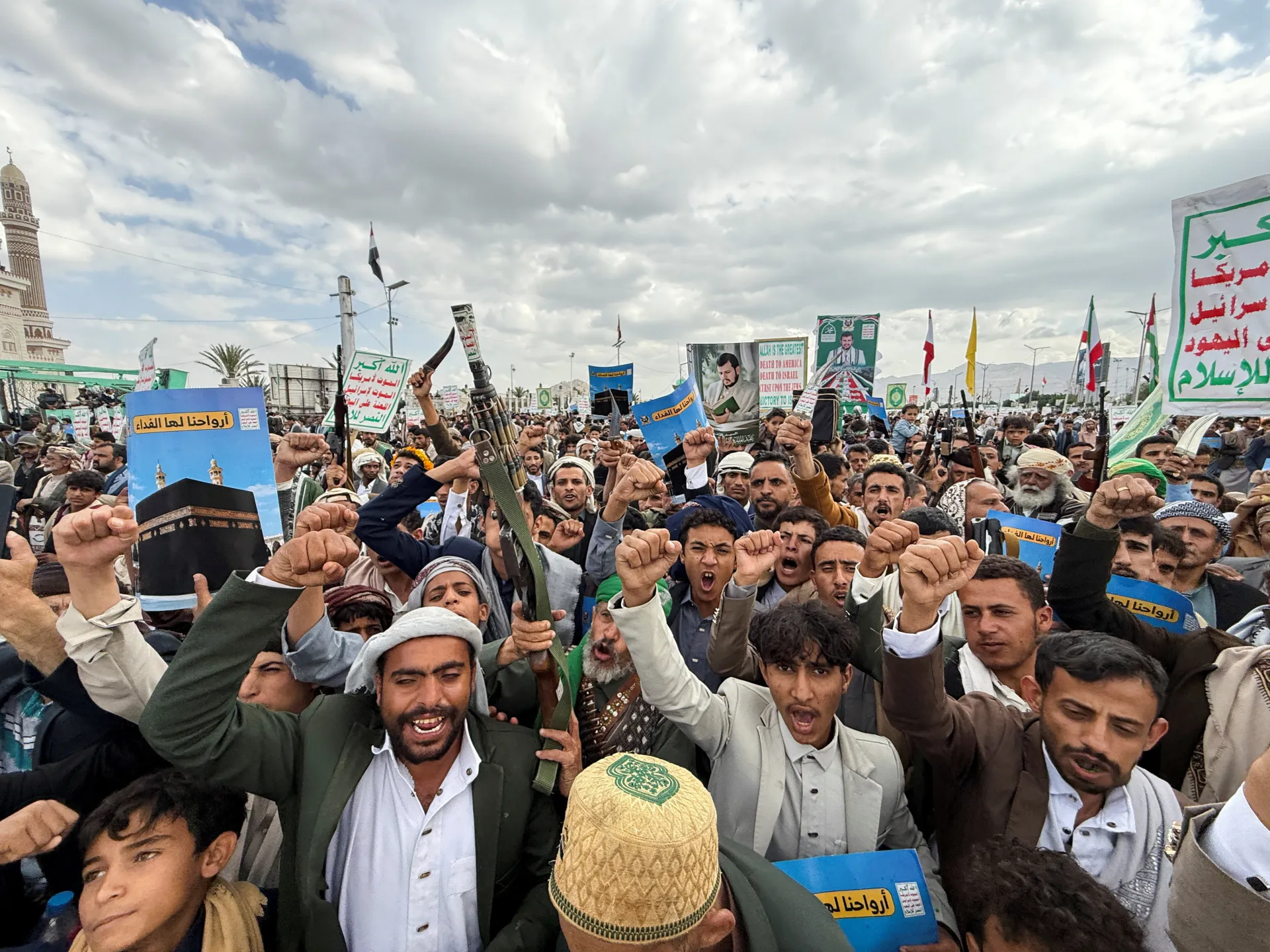
The Houthis, who control most of northwestern Yemen, including the capital Sanaa, have stepped up their arrests of UN staff since the start of Israel’s genocidal war on Gaza in October 2023, accusing them of spying for the United States and Israel.

The UN has repeatedly rejected Houthi accusations that its staff or operations in Yemen are involved in spying, a charge that carries the death penalty in the country.

On Thursday, the organisation confirmed that the detainees were all Yemeni nationals.

The latest arrests came days after Guterres discussed detained UN, diplomatic and NGO staff with Sultan Haitham bin Tariq of Oman, which has served as a mediator in the conflict in Yemen.

Guterres also commented this week on the Houthis’ recent referral of three detained UN staffers to a criminal court, saying they had been charged in relation to “their performance of United Nations official duties” and calling for charges to be dropped.

Shift in balance of power

A decade of civil war has plunged Yemen into one of the world’s worst humanitarian crises, according to the UN.

Guterres said this week that 19.5 million people in the country – nearly two-thirds of the population – need humanitarian assistance.

The conflict has recently entered a new phase, as separatists with the Southern Transitional Council (STC) extended their presence in southeastern Yemen – marking one of the largest shifts in power since the war began.

They now claim to control areas including the eastern governorates of oil-rich Hadramout and al-Mahra and the port city of Aden.

The STC, which wants to establish an independent state in the south of Yemen, has fought in the past alongside the internationally recognised, Saudi-backed government, which is based in Aden, against the Houthis.

However, the STC’s advance in the south brings it into direct confrontation with the government in Aden, known as the Presidential Leadership Council (PLC), which condemned the seizure of territory as “unilateral and a blatant violation”.

The STC’s leader, Aidarous al-Zubaidi, has a seat on the PLC, officially as one of its vice chairmen.

But relations have often been shaky between the group and the internationally recognised government, which came under major pressure in areas under its control over power outages and a currency crisis this year.

The two entities have previously fought, most notably in 2018 and 2019, in Aden and its surrounding governorates.

This week, Guterres urged all parties to exercise “maximum restraint, de-escalate tensions, and resolve differences through dialogue”.

Source link

Bangladesh says six peacekeepers killed in attack on UN base in Abyei | Conflict News

Eight people also injured in fighting with ‘terrorists’ in disputed region between Sudan and South Sudan.

At least six Bangladeshi peacekeepers were killed in a “terrorist” attack on a United Nations base in Abyei, a disputed region between Sudan and South Sudan, the Bangladesh army said.

The attack on Saturday also injured another eight people, the army stated.

Recommended Stories

list of 3 itemsend of list

“The situation in the area is still unstable and clashes with terrorists are ongoing,” the army said in a statement, adding that the authorities were working to provide medical treatment and rescue operations for those injured.

There was no immediate comment from the UN mission.

The attack comes just a month after the United Nations Security Council voted to renew a UN Interim Security Force for Abyei (UNISFA), the peacekeeping mission in the oil-rich disputed region between Sudan and South Sudan, for another year.

Bangladesh is one of the largest contributors to UN peacekeeping missions, and its troops have long been deployed in Abyei, a volatile region disputed between Sudan and South Sudan.

UNISFA’s peacekeeping mission was first deployed in 2011.

The 4,000 police and soldiers of UNISFA are tasked with protecting civilians in the region plagued by frequent armed clashes.

The Abyei region is split between two different groups with different loyalties.

The Ngok Dinka tribe have strong ethnic, cultural and linguistic ties to the Dinka of South Sudan, while the Misseriya are a nomadic Arab tribe with links to Sudan.

Abyei’s future was a critical feature of the 2005 peace deal that was signed between the Sudanese government and rebels that ended the civil war then and led the way to South Sudan’s independence.

However, unrest in the disputed area with South Sudan also continues at a time when Sudan is devastated by a more recent civil war that erupted in April 2023, when two generals started fighting over control of the country.

Sudan’s paramilitary Rapid Support Forces (RSF), which have been committing atrocities in Darfur and other regions, have also been active in Abyei.

Source link

‘A gesture of love’: Italy’s cuisine joins UNESCO’s cultural heritage list | Arts and Culture News

A UNESCO panel backed Italy’s bid, recognising Italian cuisine as a social ritual that binds families, communities.

Italian cuisine, long cherished for its deep regional traditions, has been officially recognised by UNESCO as an “intangible cultural heritage” – a designation the country hopes will elevate its global prestige and draw more visitors.

“We are the first in the world to receive this recognition, which honours who we are and our identity,” Italy’s Prime Minister Giorgia Meloni said in a statement on Instagram on Wednesday.

Recommended Stories

list of 4 itemsend of list

“For us Italians, cuisine is not just food, not just a collection of recipes. It is much more, it is culture, tradition, work, and wealth,” Meloni said.

The vote by a cultural panel of UNESCO – the United Nations Educational, Scientific and Cultural Organization – meeting in New Delhi capped a process Italy launched in 2023, with the government portraying the country’s culinary tradition as a social ritual that binds families and communities.

‘Cooking is a gesture of love’

UNESCO did not single out any famous dishes or regional specialities. Instead, the citation focused on how much Italians value the everyday rituals around food: the big Sunday lunch, the tradition of nonnas teaching kids how to fold tortellini just right, and simply sitting down together to enjoy a meal.

“Cooking is a gesture of love; it’s how we share who we are and how we look after each other,” said Pier Luigi Petrillo, part of Italy’s UNESCO campaign and a professor at Rome’s La Sapienza University.

In its announcement, UNESCO described Italian cuisine as a “cultural and social blend of culinary traditions”.

“Beyond cooking, practitioners view the element as a way of caring for oneself and others, expressing love and rediscovering one’s cultural roots. It gives communities an outlet to share their history and describe the world around them,” it added.

The UNESCO listing could deliver further economic benefits to a country already renowned for its cooking and where the agri-food supply chain accounts for about 15 percent of the national gross domestic product (GDP).

It could also bring some relief to traditional family-run restaurants, long the backbone of Italian dining, which are facing a harsh economic climate in a market increasingly polarised between premium and budget options.

The Colosseum is illuminated during a special light installation
The Colosseum is illuminated during a special light installation, after Italy won a place on UNESCO’s cultural heritage list [Remo Casilli/Reuters]

Honouring cultural expressions

Italy is not the first country to see its cuisine honoured as a cultural expression.

In 2010, UNESCO inscribed the “gastronomic meal of the French” on its intangible heritage list, calling out France’s tradition of marking life’s important moments around the table.

Other food traditions have been added in recent years, too, including the cider culture of Spain’s Asturian region, Senegal’s Ceebu Jen dish, and the traditional cheese-making of Minas Gerais in Brazil.

UNESCO reviews new candidates for its intangible-heritage lists every year under three categories: a representative list; a list for practices considered in “urgent” need of safeguarding; and a register of effective safeguarding practices.

At this year’s meeting in New Delhi, the committee evaluated 53 proposals for the representative list, which already includes 788 entries. Other nominees included Swiss yodelling, the handloom weaving technique used to make Bangladesh’s Tangail sarees, and Chile’s family circuses.

A woman spoons onto a plate some "spaghetti alla Carbonara" during a cooking competition on the eve of the Carbonara Day
A woman spoons ‘spaghetti alla Carbonara’ during a cooking competition [Andrew Medichini/AP Photo]


Source link